bio 2 - vertebrates animals ch 32 (post)
 Call Kai
 Learn
Learn Practice Test
 Spaced Repetition
 Match
Match Flashcards
 Knowt Play
1/53

There's no tags or description
Looks like no tags are added yet.
Name | Mastery | Learn | Test | Matching | Spaced | Call with Kai |
|---|
No analytics yet
Send a link to your students to track their progress
54 Terms
what is the chordate phylum?
Chordata
subphylums of chordata include:
urochordata, cephalochordata, and vertebata chordata
which animals have modified scales covering their bodies, scales on their feet, lay shelled eggs, and have internal organs and skulls that provide evidence to classify them as reptiles?
birds
what are the features of the three groups of living amphibians
moist skin, metamorphosis from aquatic larvae to terrestrial adults, and ectothermic metabolism
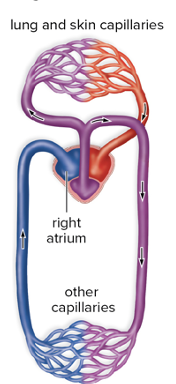
how many ventricles are present in the heart of an amphibian and most reptiles?
1 but there are three chambers because two atrium
which fish were the first to develop jaws?
Cartilaginous fish
which vertebrate chordates were the first to develop jointed appendages?
amphibians
Reptiles and mammals terrestrial adaptations for reproduction
They developed amnion and extraembryonic membranes support the embryo and prevent it from drying as it develops
where is the postanal tail
extends beyond the anus
pharyngeal pouches
final development depends on the adult chordate
•Most vertebrates have this only in embryonic development
in some non vert chordates this becomes functioning gills
notochord
dorsal supporting rod, replaced by vertebral column during development in vertebrates
Dorsal tubular nerve cord—nerve cord containing a fluid-filled canal
what are the four chordate characteristics?
notochord, dorsal hollow nerve cord, pharyngeal slits, and a post-anal tail
incomplete digestive tract means
only one digestive hole
what are the vertebrate chordates?
Fishes, amphibians, reptiles, birds, mammals
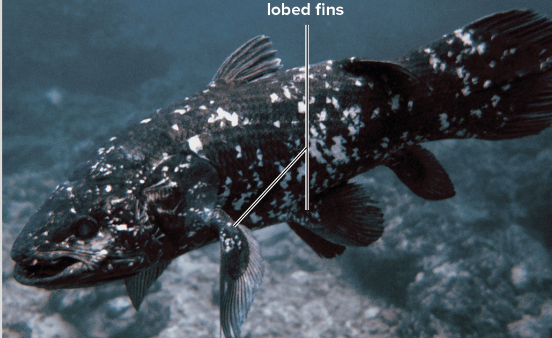
lobe finned fish
fishes from the Devonian era
fleshy appendages with bones homologous to those of terrestrial vertebrates
Believed to be ancestral to amphibians
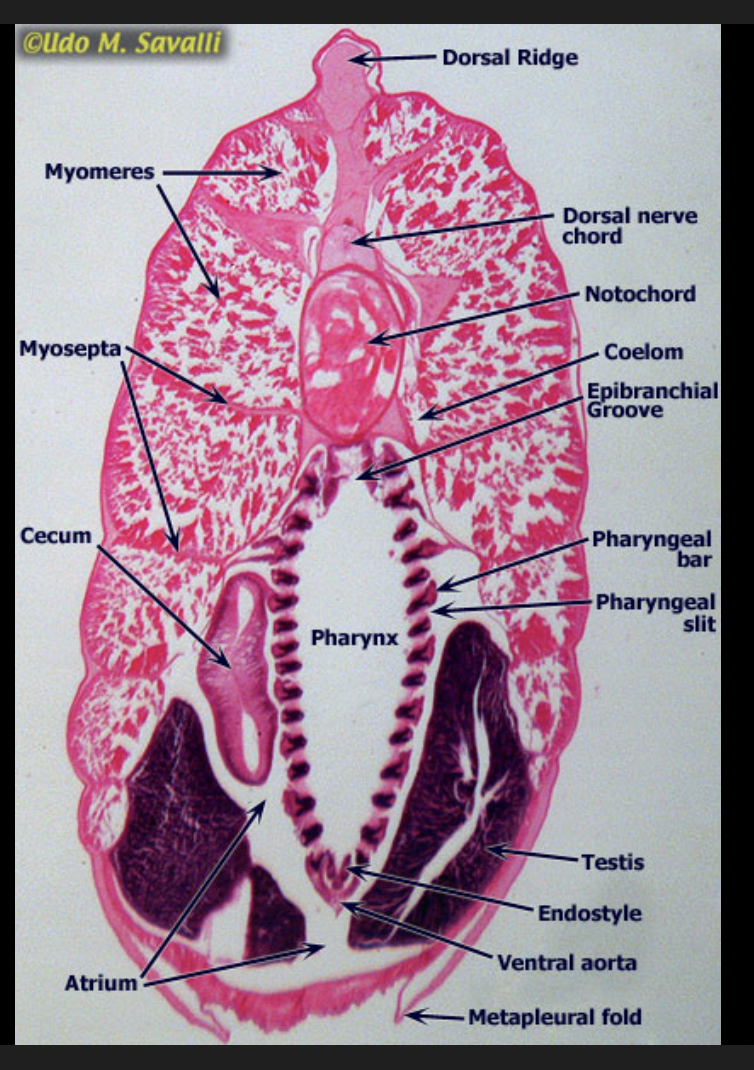
lancelet - nonvertebrate chordates
class Leptocardii
notochord never becomes a vertebral column
Live in shallow coastal waters
Retain all four chordate characteristics as an adult
Segmentation - muscles and branched nerve cord
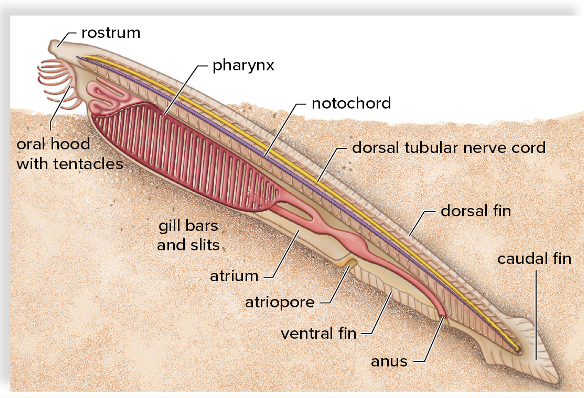
vertebrate features
have all four chordate characteristics at some time in their life history
The embryonic notochord is replaced by a vertebral column with individual vertebrae
Vertebral column proves vertebrate segmentation
vertebral column is part of endoskeleton
•Two pairs of appendages typical
•High degree of cephalization and complex sense organs (eyes, ears)
•Evolution of jaws provided variety of biological roles
•Complete digestive tract and large coelom
•Closed circulatory system
•Efficient respiration from water or air
Kidneys used for excretion and water regulation
the pectoral and pelvic fins of fish evolved into:
jointed appendages that allowed verebrates to move on land
milestones in veretbrate evolution
jaw allowed for predation
limbs allowed for locomotion
Amnion and shelled egg allowed for reproduction on land
fish - evolution of the jaw
cartilaginous and body fish now have them
they are tooth bearing structures in the head that evolved from gill arches and allow predatory way of life
jawless fish
Agnathans
clindrical with smooth, scaleless skin, no jaws, no paired fins
two groups: hagfishes and lampreys
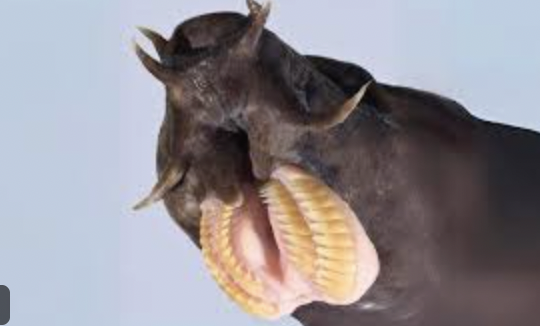
hagfish - jawless fish (agnathans)
class Myxini - are scavengers
Have a skull but lack vertebrae (may have been lost)
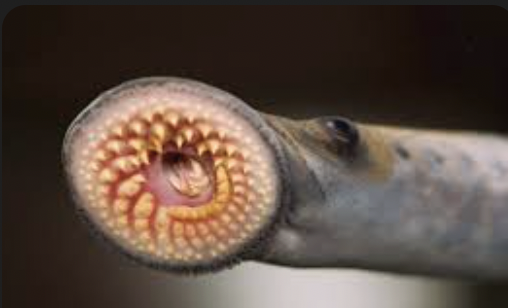
lamprey - jawless fish (agnathans)
class cephaaspinidomorphi
parasitic
have a true vertebral column
sucker mouth - attach to other fish
Water moves in and out of gills directly; not through mouth as in other fish
cartilaginous fish
•Sharks, skates, rays, and chimaeras
no bone
5-7 gill slits
no gill cover
have gill chambers (called spiracles) behind their eyes
Body covered with dermal denticles
lateral line system
what are dermal denticles?
tiny, teethlike scales that project posteriorly
gives sharks skin the sandpaper feel
shark teeth are large and specialiazed versions of scales
seen in cartilagenous fish
lateral line system
used to sense pressure caused by movement to detect prey in cartilagenous fish
bony fish
includes: ray-finned fish and lobe finned fish
paired fins supported by thin, bony rays
swim bladder for buoyance
streamlined shape
Skin covered with bony scales for protection
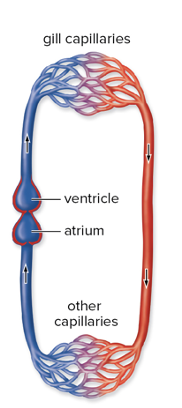
blood is pumped by two chamber heart through single circuit circulatory system
how do gills work for bony fish?
Water pumped across gills → enters mouth exists gill slits (where gas exchange is)
lobe finned fish - bony fish
Ancestors of the amphibians
fleshy appendages that could be adapted for movement on land
most have lungs
The coelacanth is one type thought to have gone extinct but that has been discovered again
vertebrate circulatory pathway of fish
vertebrate circulatory pathway of amphibians and most reptiles
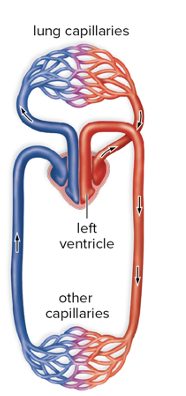
vertebrate circulatory pathway of some reptiles, birds, and mammals
amphibians
means living on land and water
includes salamanders, frogs, toads, and newts
Caecilians are fossorial, wormlike amphibians that are limbless and spend most of the time underground
amphibians characteristics
jointed appendages (other than in caecilians)
four limbs
eyelids
ears (tympanum) to pick up sound
larynx for vocalization
amphibians transition to land
larger brain than in fish relative to body size
small lungs - air goes through nose and to floor of mouth
three chambered heart
larval stages in water and adults on land. reproduce generally in water
reptiles
most abundant 245-65 MYA
include dinosaurs, ancestors of the mammals, and modern-day birds
turtles, alligators, snakes, lizards, and birds
ectothermic so they try regulate body temp by exposure to the sun
reptiles - amniotic egg reproduction on land
male penis passes sperm directly into female
fertilization is internal
amniotic egg made development on land possible and eliminated the need for a swimming larval stage
ectothermic
animals where their body temperature is the same as that of the external environment
fish, amphibians, living reptiles (Excluding birds)
birds - featured reptiles
class Aves
Feathers are modified scales; legs of birds have scales
Amniotic egg with a hard shell instead of leathery eggs of reptiles
anatomy and physiology of birds
features related to ability to fly
forelimb modified to be a wing
light and hoow bones
beak instead of jaw
sternum made for flight muscle attachment
lobular lungs with air sacs increase efficiency of gas exchange and lighten body for flight
heart/circulatory system for birds
four chambered hearts that separate o2 rich and poor blood
endothermic
feathers help maintain body temp
no bladder and excrete uric acid in semidry state
what are birds classified by?
by beak, foot type, habitat, and behavior
mammals
evolved from reptiles
chief characteristics: body hair and milk-producing mammary glands
endothermic - hair provides insulation
efficient respiratory and circulatory systems similar to birds
double loop circulation and four chambered heart
mammal classification
monotremes, marsupials, or placental mammals
monotremes - types of mammals
have a cloaca- terminal region of digestive tract that serves as a common chamber for feces, excretory wastes, and sex cells
lay hard shelled amniotic eggs
Secrete milk onto body surface (both males and females) of abdomen
young drink the milk
anteaters and platypus of Australia and New Guinea
marsupials
begin dev in female body and born immature but complete dev in pouch near abdomen w nipples of mammary glands in pouch
kangaroo, koalas, and opossums
placental mammals
majority of this species
classified by methods of obtaining food and mode of locomotions
Extraembryonic membranes of the reptilian egg are modified for internal development
dev occurs in uterus with chorion contributing to fetal part of placenta and portion of the uterine wall contribute to maternal part and maerials exchanged between fetus and moms blood at placenta
placenta mammals - adaptations to active life on land
limbs allove for movement
lungs expanded by rig cage and contraction of the diaphragm
four chambered heart
constant internal body temp
body insulating hair
well developed brain, enlarged due to expansion of cerebral hemispheres
placental mammals - differentiated teeth
Incisors and canines at the front of the mouth have cutting edges for capturing and killing prey
Premolars and molars chew food on the sides of the mouth
shape and size associated with if they are herbivores, carnivores, or omnivores
order rodentia
placental mammals with ever growing incisors
order carinvora
placental mammals with long canine teeth
order chiroptera
placental mammals with wings supporteed by digits for flights - bats
order perissodactyla
placental mammals with long hoofed legs for speed - horses
order cetacae
placental mammals like whales with paddlelike forelimbs