Chapter 35: Nerves and the Nervous System
 Call Kai
 Learn
Learn Practice Test
 Spaced Repetition
 Match
Match Flashcards
 Knowt Play
1/31

There's no tags or description
Looks like no tags are added yet.
Name | Mastery | Learn | Test | Matching | Spaced | Call with Kai |
|---|
No analytics yet
Send a link to your students to track their progress
32 Terms
The two main divisions of the human nervous system
The Central Nervous System (CNS) and the Peripheral Nervous System (PNS).
The three specific functions of the nervous system
Receiving sensory input, performing integration, and generating motor output.
Dendrites
Receives signals from sensory receptors or other neurons.
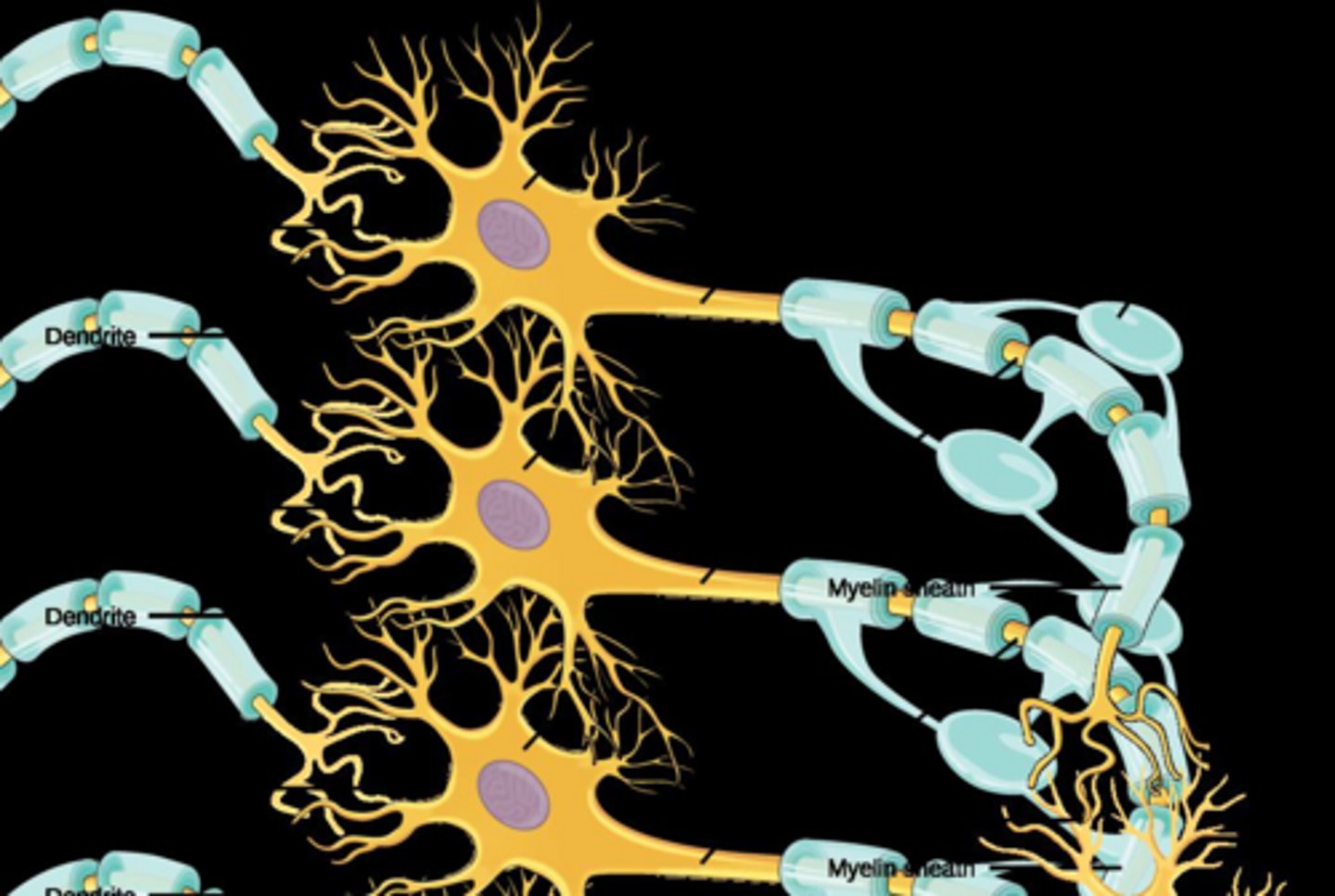
Nerve fiber
Any long axon of a neuron.
Motor neurons
Accept nerve impulses from the CNS and transmit them to muscles or glands.
Sensory neurons
Accept impulses from sensory receptors and transmit them to the CNS.
Interneurons
Convey nerve impulses between various parts of the CNS.
Glial cells
Support, protect, and nourish neurons.
Oligodendrocytes
Glial cells that form the myelin sheath in the CNS
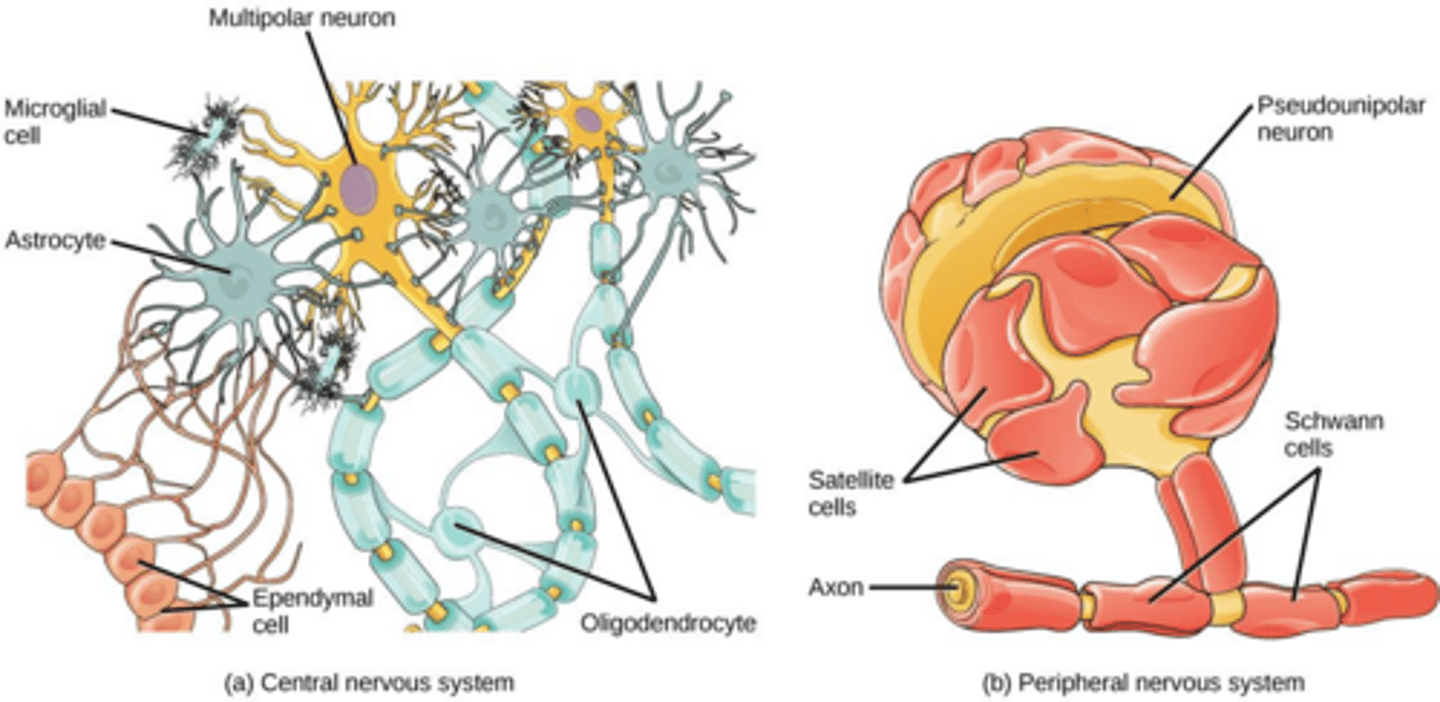
Schwann cells
Glial cells that form the myelin sheath in the PNS
Meninges
The three protective membranes that wrap around the brain and spinal cord
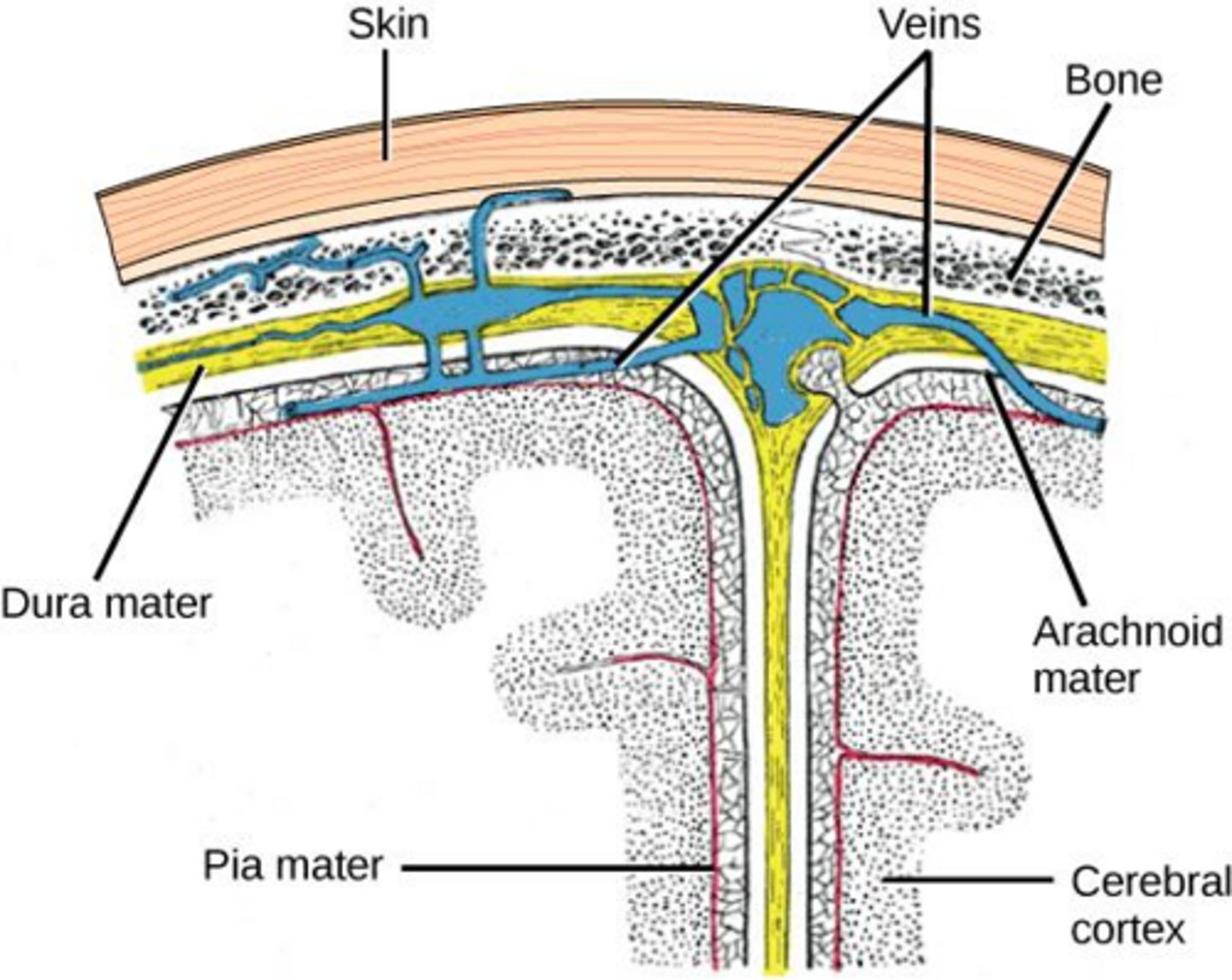
Other parts of the CNS
Cerebrospinal fluid(subarachnoid space), ventricles, dura mater, arachnoid mater, subarachnoid space(CSF lives here), and the pia mater
Gray matter in the spinal cord
Consists of cell bodies and short unmyelinated fibers
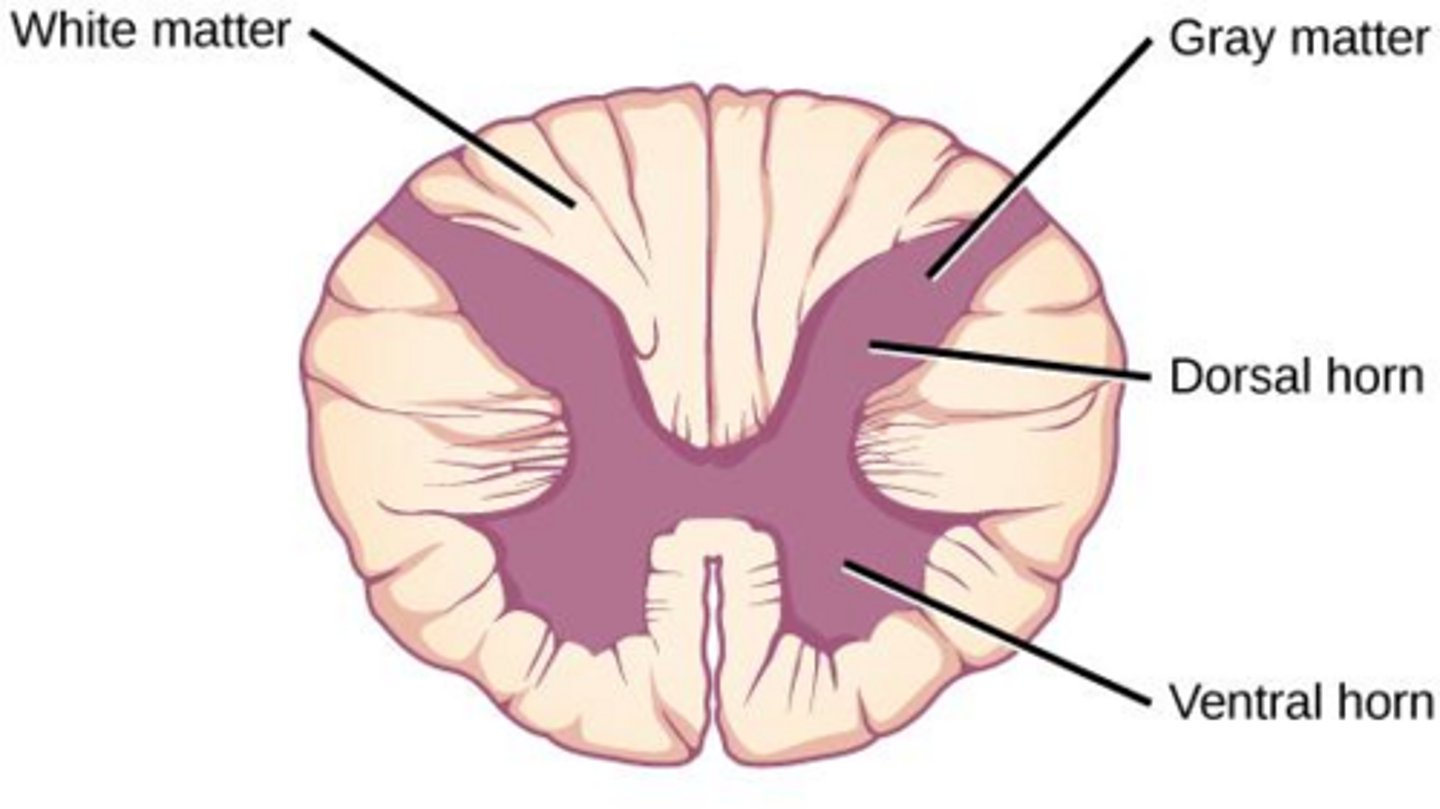
White matter in the spinal cord
Consists of myelinated long fibers
Cerebrum
Largest portion of the brain in humans
Cerebellum
Receives sensory input from eyes, ears, joints, and muscles to coordinate balance and movement from the brain
Longitudinal fissure
Divides the cerebrum into cerebral hemispheres
What are the two main functions of the spinal cord?
It is a center for many reflex actions and is the main means of communication between the brain and spinal nerves
What structures compose the brain stem?
The midbrain, the pons, and the medulla oblongata
Cerebral cortex
A thin but highly convoluted outer layer of gray matter that covers the cerebral hemispheres
Diencephalon
Consists of the hypothalamus and thalamus
Hypothalamus
Controls the endocrine system via the pituitary gland and acts as the body's thermostat.
Thalamus
Acts as the gateway for sensory information traveling to and from the cerebral cortex.
Pineal gland
Secretes melatonin and contributes to dreams and R.E.M. during sleep
Dorsal parts of the CNS
Tend to be sensory in function
Ventral parts of the CNS
Tend to be motor in function
What is the primary difference between the somatic and autonomic nervous systems?
The somatic system controls skeletal muscles consciously, while the autonomic system controls smooth muscles, cardiac muscles, and glands involuntarily.
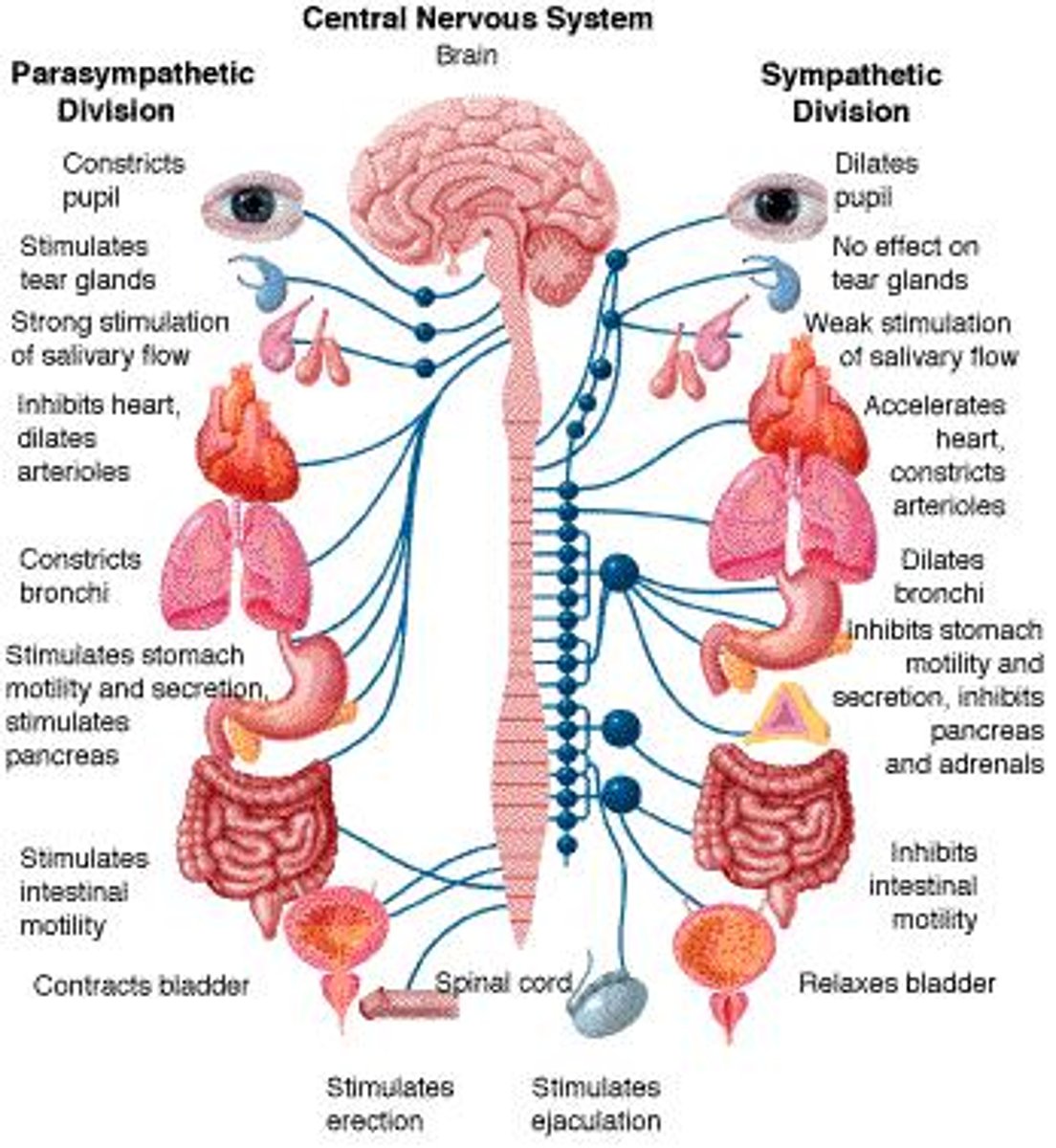
The two divisions of the autonomic nervous system
The sympathetic division and the parasympathetic division.
The primary function of the sympathetic division
Manages 'fight or flight' responses, such as accelerating the heartbeat and dilating bronchi.
The primary function of the parasympathetic division
Promotes internal responses associated with a relaxed state, such as digestion and slowing the heartbeat.
How many pairs of cranial nerves are there?
12
How many pairs of spinal nerves are there?
31