Chapter 3 - Leading teams
 Call Kai
 Learn
Learn Practice Test
 Spaced Repetition
 Match
Match Flashcards
 Knowt Play
1/50

There's no tags or description
Looks like no tags are added yet.
Name | Mastery | Learn | Test | Matching | Spaced | Call with Kai |
|---|
No analytics yet
Send a link to your students to track their progress
51 Terms
leadership paradox
the fact that teams usually need leaders, but the very presence of a leader threatens the autonomy of the team
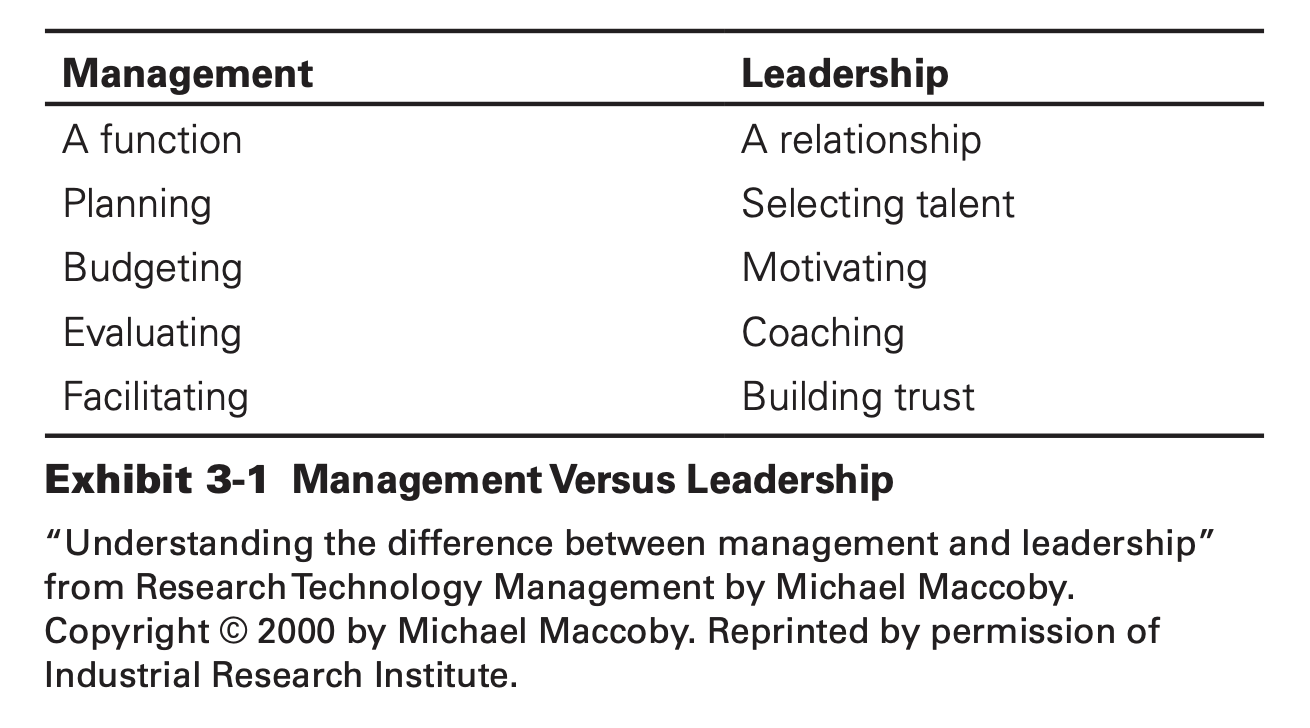
leadership vs management
people don’t want to be managed they want to be led. leadership is a relationship while management is a function. Leader can influence people to reach a goal
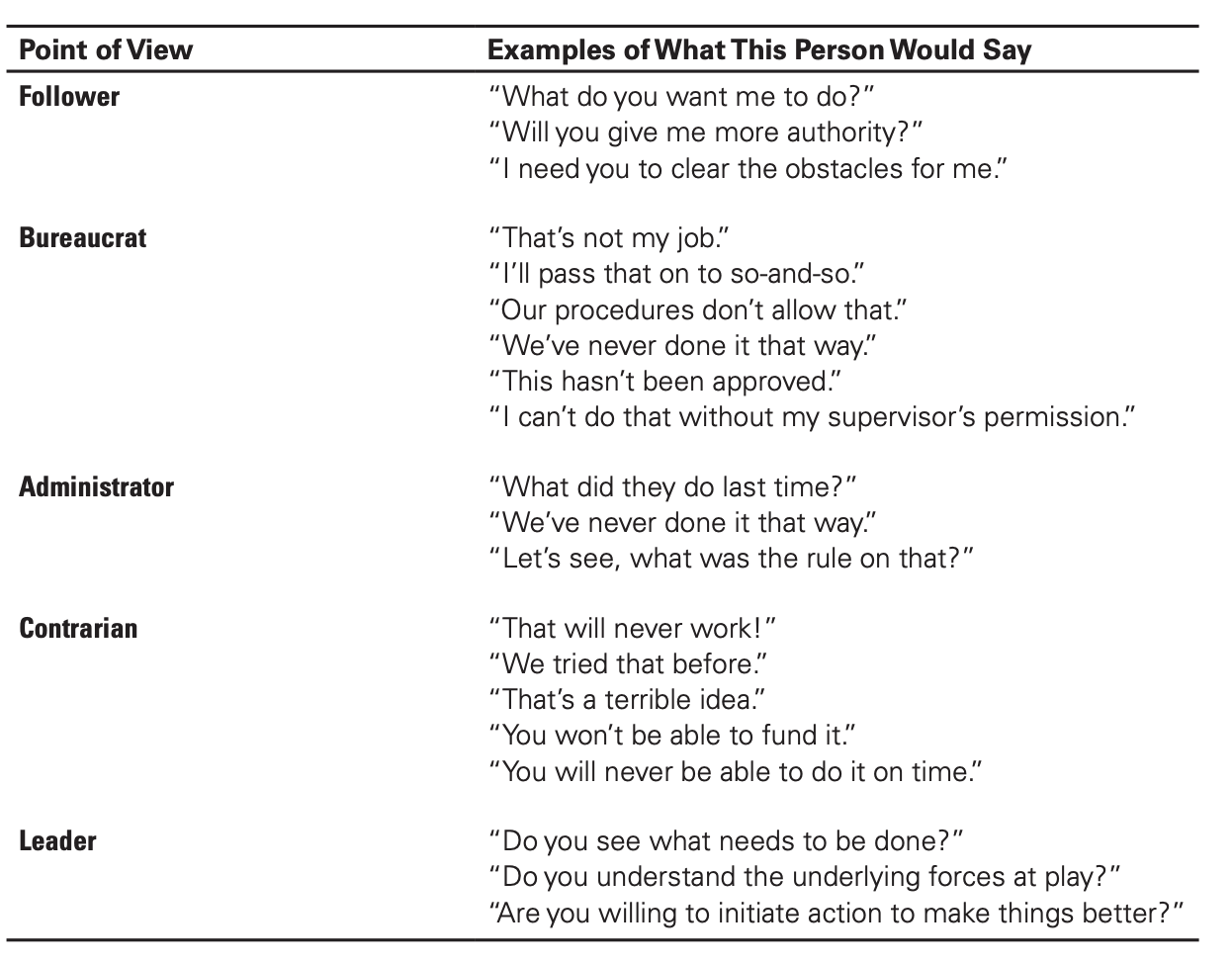
leader has a POV that allows them to see what needs to be done, understand the underlying forces working in the organization, initiate the action make things better
POV
follower, bureaucrat, administrator, contratian leader
entity theory
asserts that leaders are born that way
“trait theory”
incremental theory
leadership skills can be learned and leaders can develop.
more confident and less depressed
intelligence and leadership
intelligence testing to select leaders
personality leadership
personalities of leaders lead to common threads, but there is no agreed-upon list shared by all leaders. Big 5 has some correlations with leadership
birth order and leadership
leadership can be based on this
leadership over - emergence
leadership emergence rather than actual effectiveness. Men tend to over-emerge as leaders.
women → more democratic, less likely to naturally be a leader
men → autocratic, less risk adverse
fundamental attribution error
tendency to overemphasize the impact of stable personality and dispositional traits and underemphasize the impact of the situation on peoples behaviors
incremental theories of leadership
how leaders interact with their teams and structure the external environment so that the team can best achieve its goals
seating arrangements
person at head of table has a greater probability at emerging as the leader
random selection of leaders
these teams perform better on all organization decision making tasks
managerial grid
task vs person leadership
task → accomplish the objectives, act as a spokesperson, what should be done and how
person → members have more freedom, use own judgement in problem solving and grant authority
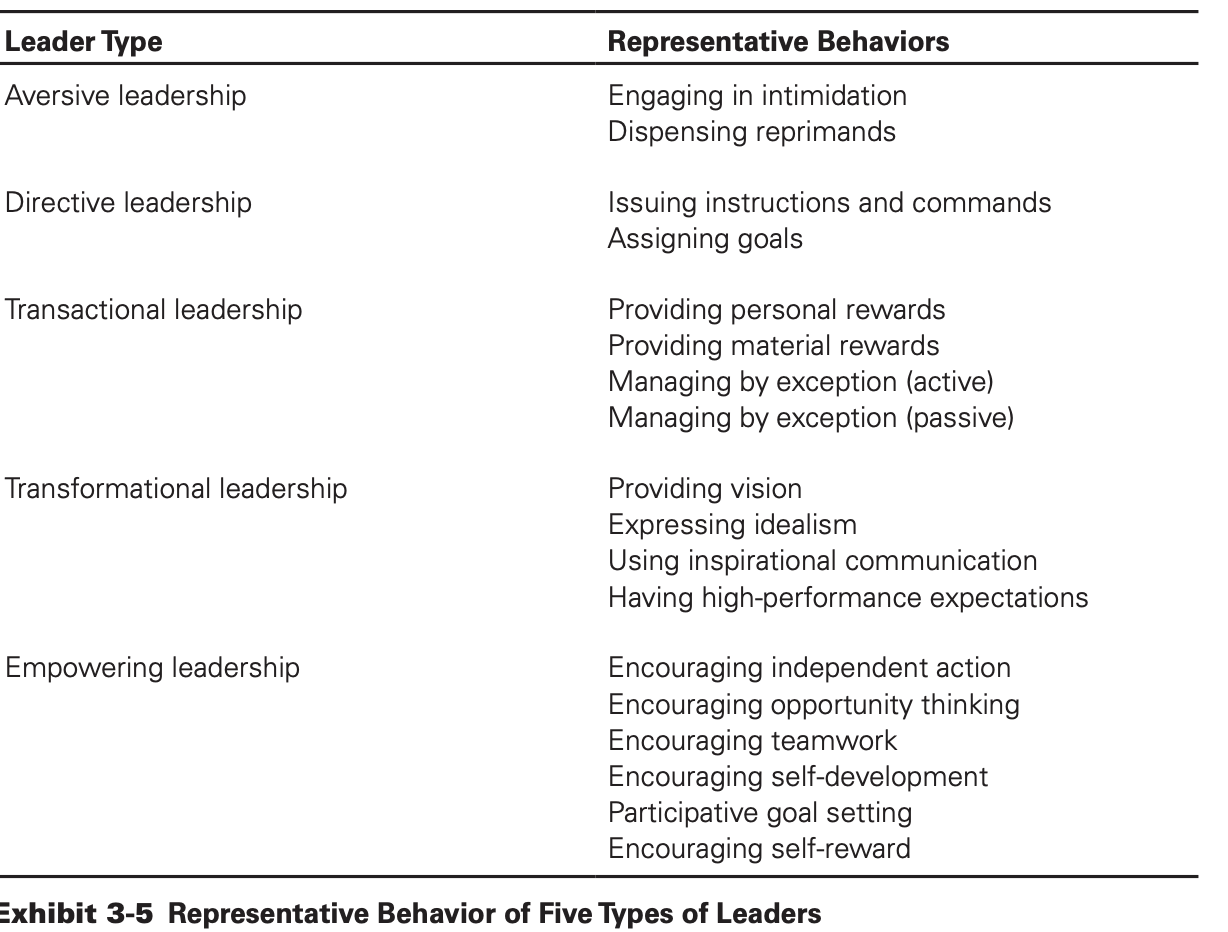
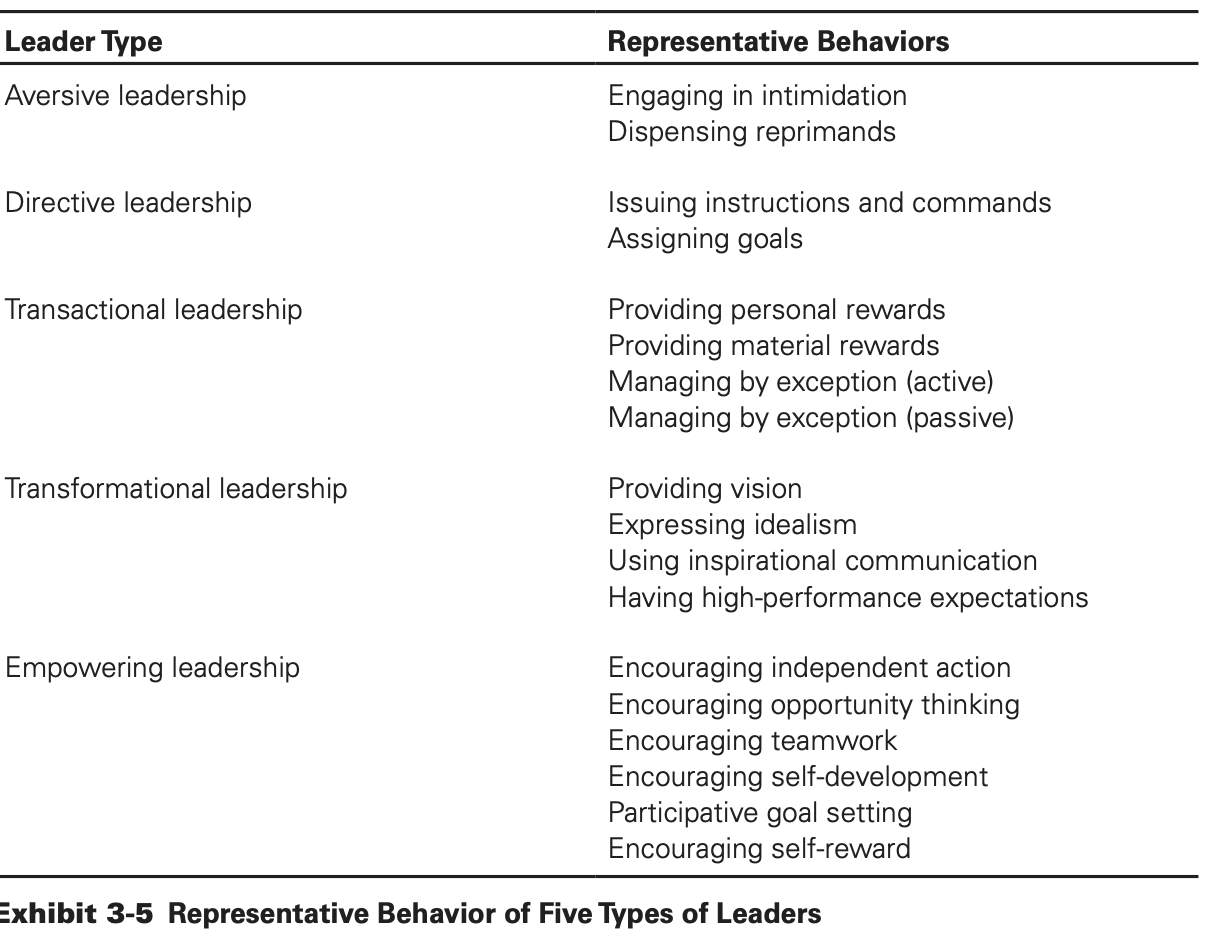
transformational leadership
developmental and beings with a transactional approach. Leaders and their teams are in an exchange relationship with negotiation to establish outcomes and awards
psychological contract → belief in mutual obligations between that person and another party
higher teamwork quality, better performance, intrinsically motivated leaders. motivate members to strive her higher outcomes, creates trust
more effective when you help your team → organizational citizenship behaviors
transactional leadership
leaders power to enforce subordinates for their successful completion of the bargain
competitive relationship
group-focused transformational leadership
positive impact on innovation but opposite on motivation. Can also promote dinenchantment
hypocrisy attribution dynamic
tendency for team members to draw sinister conclusions about a leaders behavior.
vertical leadership
stems from appointed or formal leader of a team
shared leadership
distributed among and is stemmed from team members
autocratic leadership
leader who seeks sole possession of authority, power, and control
democratic leadership
share authority, power and control
shared leadership
shared purpose, social support, voice and external coaching. Relates to group trust which enhances performance
mood contagion model
leaders transmit their own moods to team members with facial, vocal and postural cues
passion → desirable
obsessive passion → leadership competence increases this
harmonious passion → perceptions of team members competitors influences this
epistemic motivation → desire to thoroughly understand a situation, high in this teams perform better when leaders display anger
leader-team perceptual distance
difference between a leader and a team in terms of how thy perceive things
leader categorization theory
people use their mental image of an ideal leader as an implicit benchmark to determine their receptivity towards actual leaders and their own leadership potential
implicit leadership theories (ILT)
people who are dependent on leaders hold particular expectations of leaders about whether a leader is worthy of influences (LWI)
ITL drives LWI, the degree of LWI determined by the team impacts the effectiveness of the leader
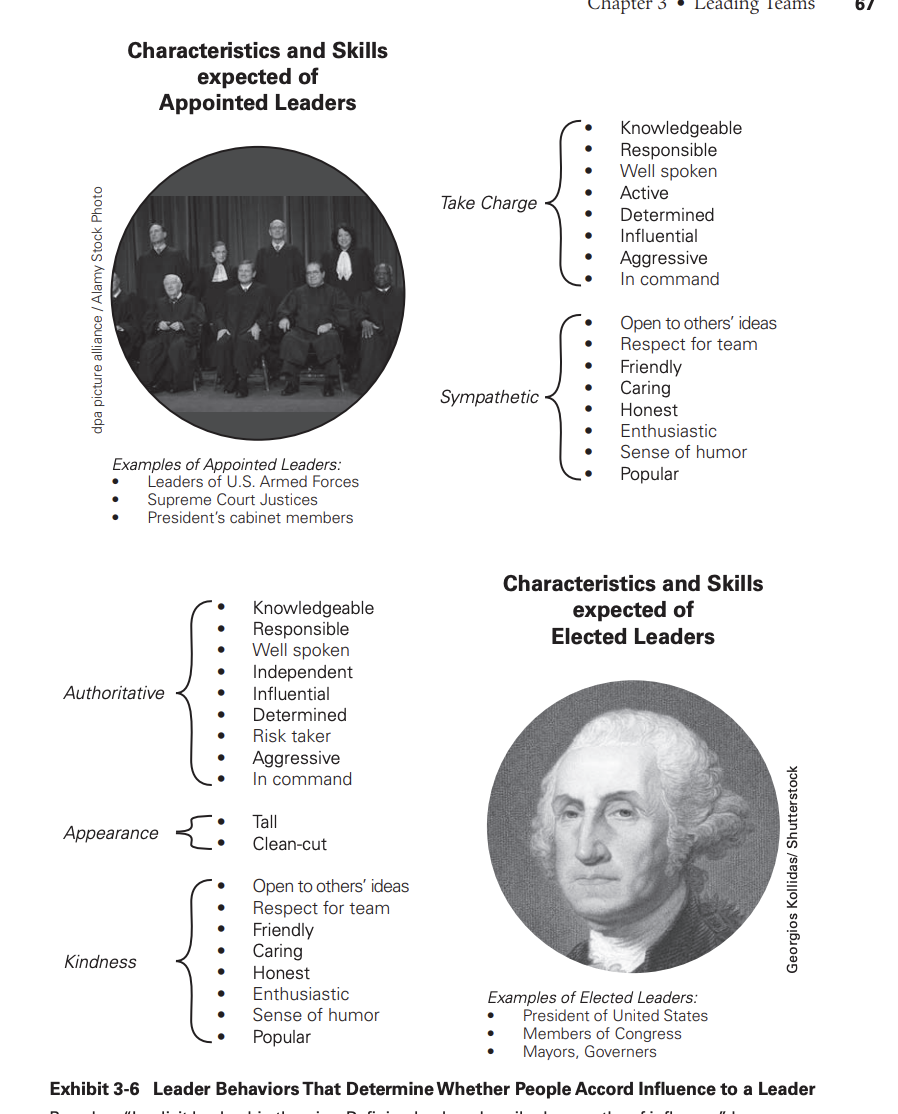
appointed leaders should be sympathetic and take charge
elected leaders → well dresses and authoritative
prortypicality
people prefer prototypical leaders and dislike non prototypical leaders especially in structured stable environments. Like team members are evaluated to be more effective than leaders who aren’t
status and uncertainty
perceived status affects the team’s preferences regarding leadership style.
Low-status → directive
High-status → participative style
leader-member exchange (LMX)
relationships that leaders develop with particular subordinates and what leaders and subordinates offer and receive in such relationships
leaders give different subordinates different amounts of attention and treatment
attributes that influence differential treatment
similarity to leader, demonstrated competence and extraversion
the more leaders embody the leadership behaviors that their employees and teams expect of them, the better the relationship
advantages of differential treatment
increase commitment, improved employee and team performance, increased job satisfaction, positive work perceptions, more willing to continue to work for the business
disadvantaged of differential treatment
negatively affect financial performance by disrupting team coordination. Can create an in-group, hurts group process and reduces perceptions of justice, resent the leader, some amy feel less involved and not perform well. Worse attitudes and coworker relations.
power
ability to control the outcome of another person in a relationship.
Direct or indirect, unilateral of bilateral
worry about maintaining this especially when another member poses a threat (get closer to these threats)
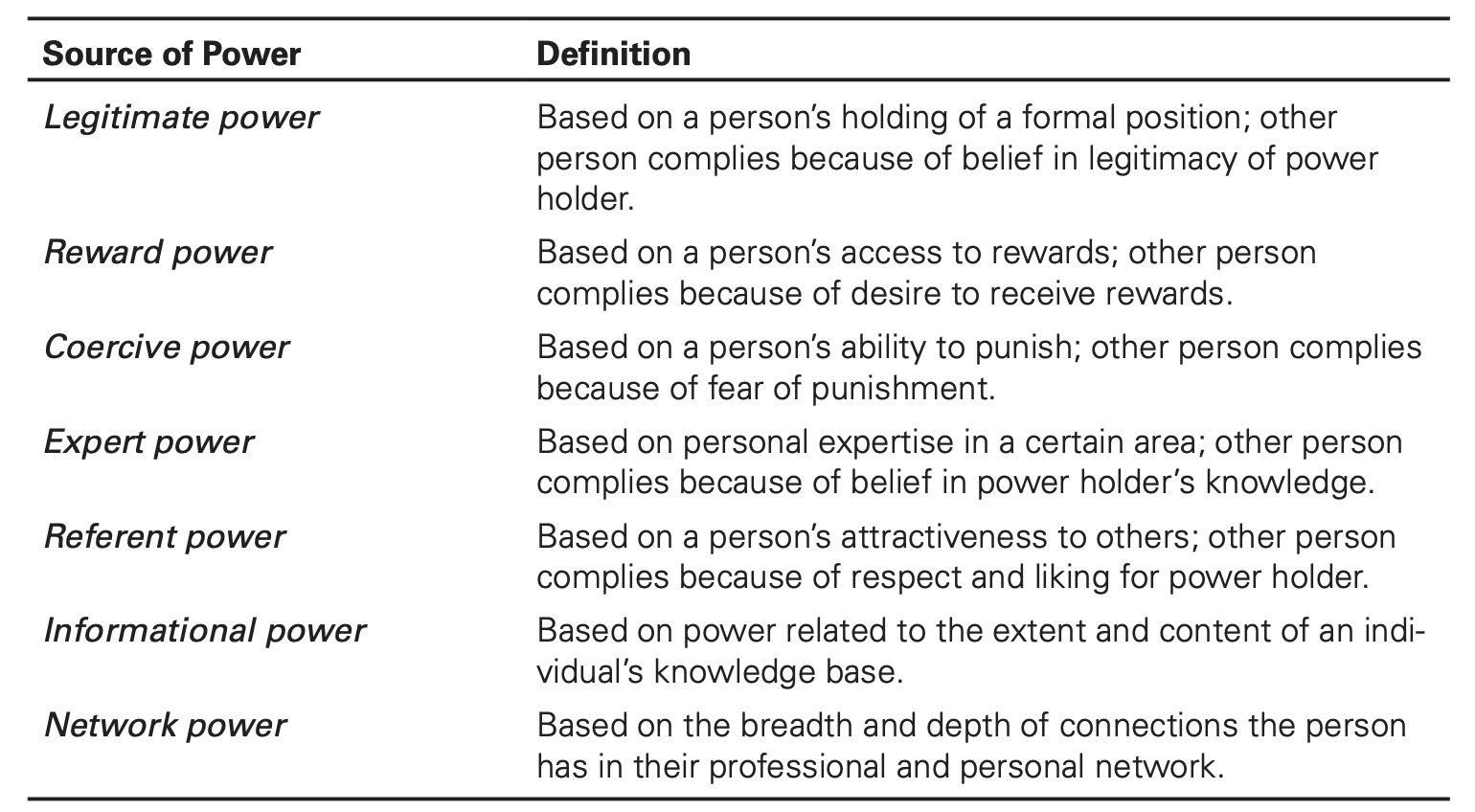
sources of power
expert, legitimate, incentive, coercive, informational and referent
power benefits performance when it’s dynamically aligned with task competence.
power distance
degree to which a person is accepting of unequal distribution of power
shared preferences regarding the degree to which their leaders directives should be respected
using power
overuse: member uses their power to exert influence over most aspects of group functioning to dominate the team
abdication: People who have an interdependent self-construal are more likely
to relinquish their power within a group when they believe their own leadership
performance is poor, but not if they can blame another person.
managing the resource → powerful team member influences other members only in the specific domain of his or her special resources
effects of power
enhanced role identification, self anchoring effect (people use themselves as a reference point when juding others internal states making them less perceptive), less motivated to scan the enviornment or process information, discount advice from others, produces verbal dominance, hurts communication and performance, less accurate judgements, “rose-colored glasses”, more optimistic, less risk adverse
empowering leadership
knowledge sharing and team efficacy → positively related to better team performance
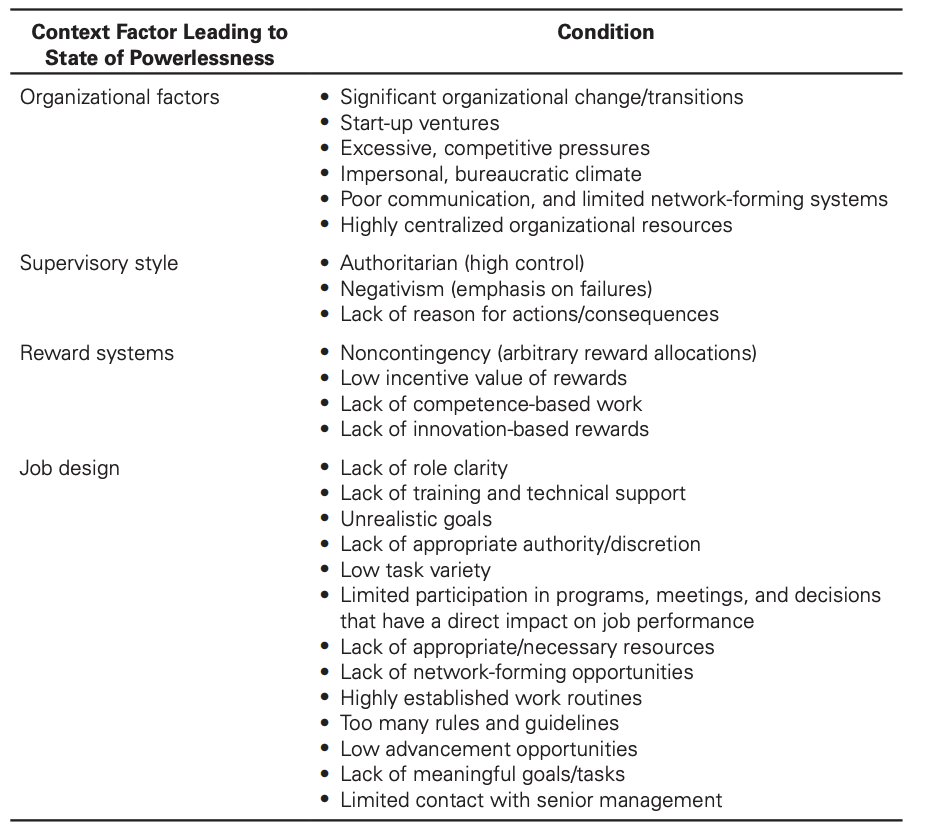
powerlessness
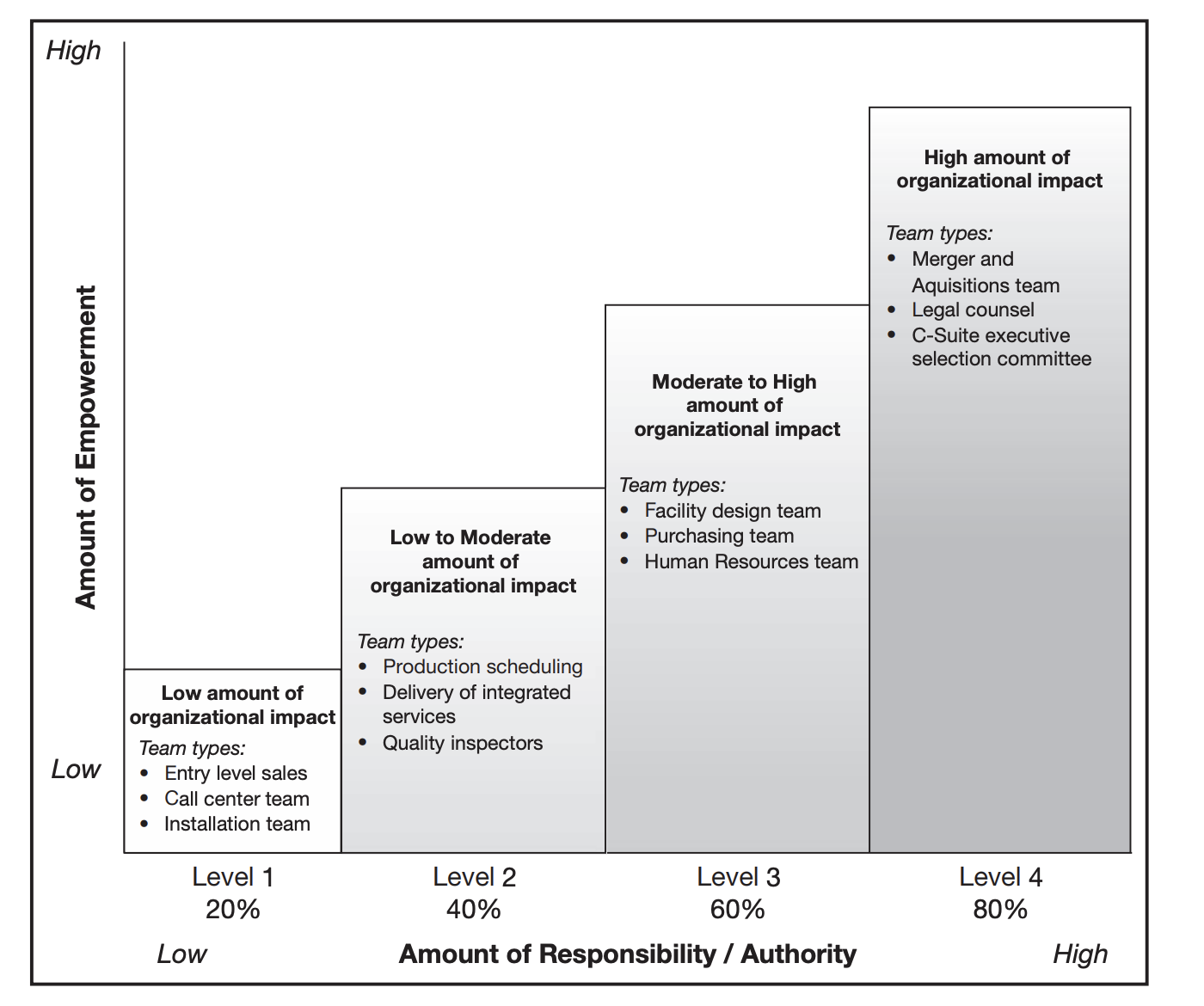
inviting participation in the workforce is four approaches
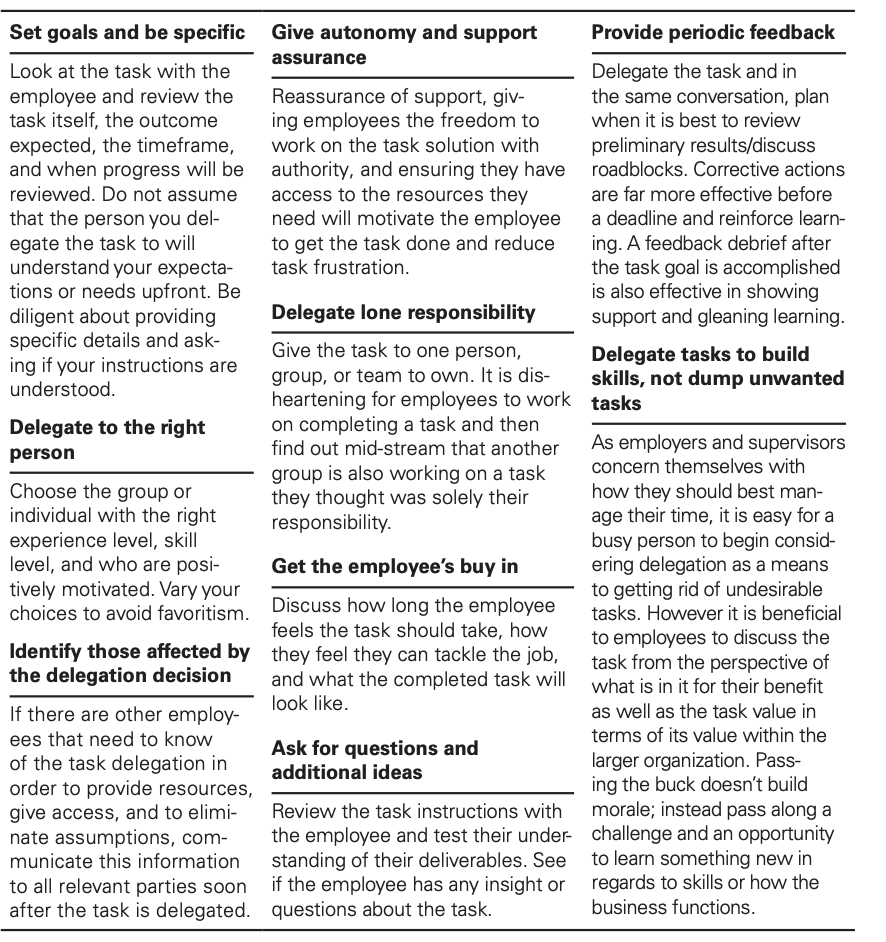
delegation
hand over responsibility and authority required to accomplish a task, without relinquishing final accountability, without this is can cause overload of executives and underused subordinates
parallel suggestion involvement
invite employees and team members to make suggestions about organizational procedures and processes.
ex. suggestion box, quality circles
accurately and differentially weigh staff input
job involvement
restructuring employee tasks to make them more rewarding, enriching and autonomous
train new skills, give feeback, complete a whole meaningful piece of work
new info, power and skills they may be rewarded differently
bureaucratic organizations
traditional, hierarchical style of leadership: information, rewards, knowledge, and power are concentrated at the top. Teams don’t exist; if they do, they’re ignored and suppressed
commitment orgs
teams shoulf form, power isn’t hierarchical and the organization has a flat structure
mcgregor method and theory y
increased involvement strategies where employees make decisions about work activities and organizational direction. If they want to contribute ti the organization they must know about it, influence it and be rewarded for it and have the knowledge and skills to do so.
implementation power
in organizational involvement and not in parallel suggestion involvement
top-management teams
represent a wide range of interests of the people and groups in the organization and provide valuable developemnt experiences for the members
idea that leadership is a team process
iron cage
highly rational but powerfully oppressive bureaucracy
out of desire for order people rationalize their bureaucratic relationships making them less negotiated and more structural.
leadership
listen, expectations (clear, success benchmarks), accountability, develop others (coaching), encourage others, relationship builder, support change, humility, influence, provide direction.