Baroque Period Stack
 Call Kai
 Learn
Learn Practice Test
 Spaced Repetition
 Match
Match Flashcards
 Knowt Play
1/21

Earn XP
Description and Tags
HAM 2026
Name | Mastery | Learn | Test | Matching | Spaced | Call with Kai |
|---|
No analytics yet
Send a link to your students to track their progress
22 Terms
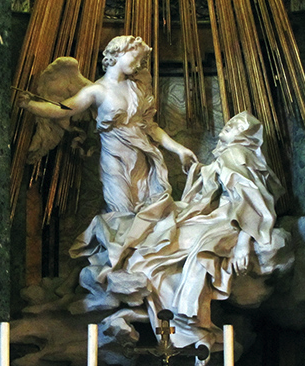
What is the title of this sculpture, who sculpted it, and describe in one sentence how it was significant.
Gian Lorenzo Bernini Significance: This sculpture captures the mystical vision of Saint Teresa with dramatic emotion and movement, embodying the theatrical qualities of Baroque art. Artwork: Ecstasy of Saint Teresa
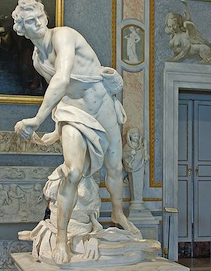
What is the title of this sculpture, who sculpted it, and describe in one sentence how it was significant.
Artist: Gian Lorenzo Bernini Significance: Unlike earlier depictions that show David before or after battle, Bernini portrays him in the midst of action. The twisting pose and intense expression create a sense of movement and viewer involvement characteristic of the Baroque style. Artwork: David
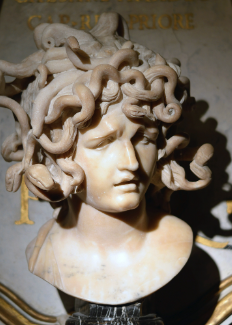
What is the title of this sculpture, who sculpted it, and describe in one sentence how it was significant.
Gian Lorenzo Bernini Significance: Bernini transforms Medusa into an expressive figure, emphasizing human suffering. Artwork: Medusa
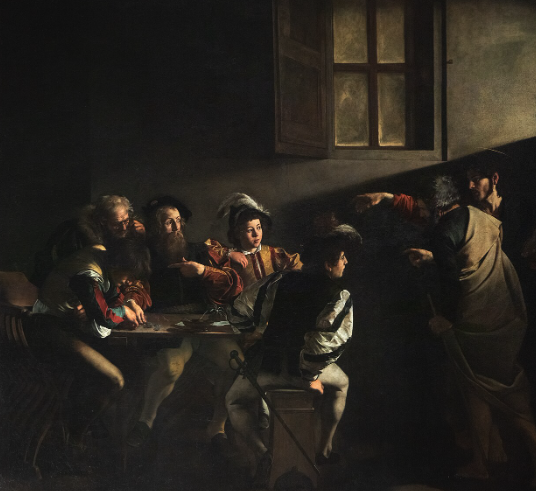
Title of this, artist, and describe in one sentence how it was significant.
Artist: Caravaggio Significance: This painting exemplifies Caravaggio's use of tenebrism to heighten emotional and spiritual impact. Artwork: The Calling of St. Matthew
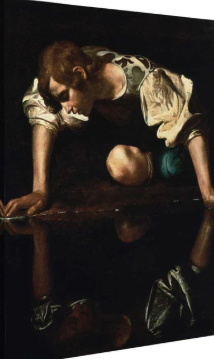
Title of this, artist, and describe in one sentence how it was significant.
Artist: Caravaggio Significance: The work depicts the mythological Narcissus absorbed in his own reflection.
Artwork: Narcissus
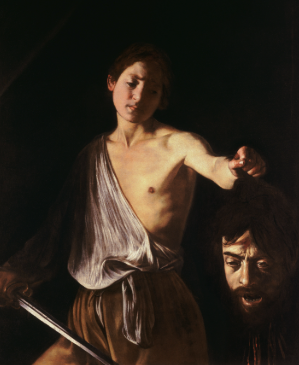
Title of this, artist, and describe in one sentence how it was significant.
Artist: Caravaggio
Significance: The painting combines intense realism with deep emotional complexity. Presenting it towards the audience enhances its impact and realism.
Artwork: David with the Head of Goliath
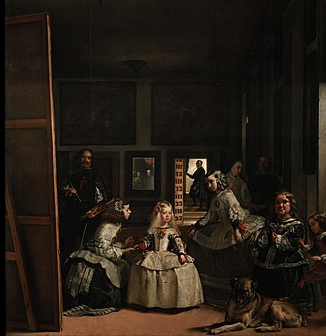
Title of this, artist, and describe in one sentence how it was significant.
Artist: Diego Velázquez
Significance: This masterpiece explores perception, reality, and the role of the artist through a complex arrangement of figures and reflections. Its innovative composition invites viewers to question who is observing whom.
Artwork: Las Meninas
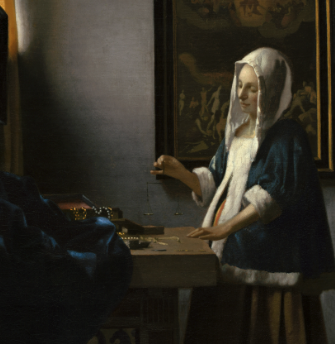
Title of this, artist, and describe in one sentence how it was significant.
Artist: Johannes Vermeer Significance: The painting symbolizes themes of balance + morality, reinforced by the depiction of a Last Judgment painting in the background. Artwork: Woman Holding a Balance
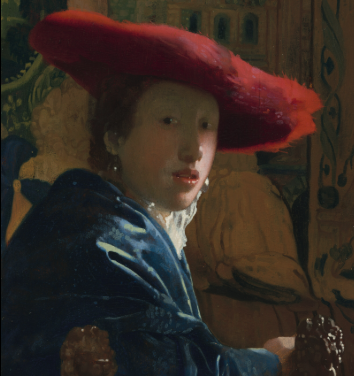
Title of this, artist, and describe in one sentence how it was significant.
Artist: Johannes Vermeer Significance: This intimate portrait-like work demonstrates Vermeer's skill in rendering sfumato and texture. The vibrant red hat created an unusual sense of immediacy and presence. Artwork: Girl with a Red Hat
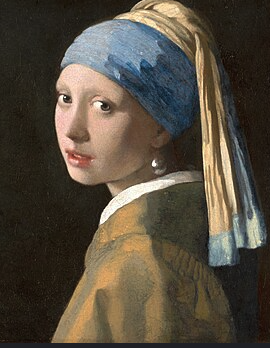
Title of this, artist, and describe in one sentence how it was significant.
Artist: Johannes Vermeer Significance: Focuses on the beauty of light, expression, and had detailed eyes. The luminous pearl and direct gaze make it one of the most recognizable works in Western art. Artwork: Girl with a Pearl Earring
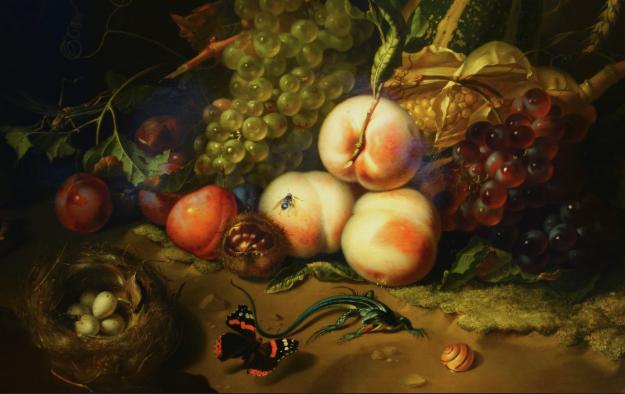
Title of this, artist, and describe in sentence how it was significant.
Artist: Rachel Ruysch Significance: Ruysch was one of the most celebrated female painters during this period, known for her scientifically accurate botanical studies. This still life showcases extraordinary detail while reflecting themes of fleeting nature of life. Artwork: Fruit, Flowers and Insects
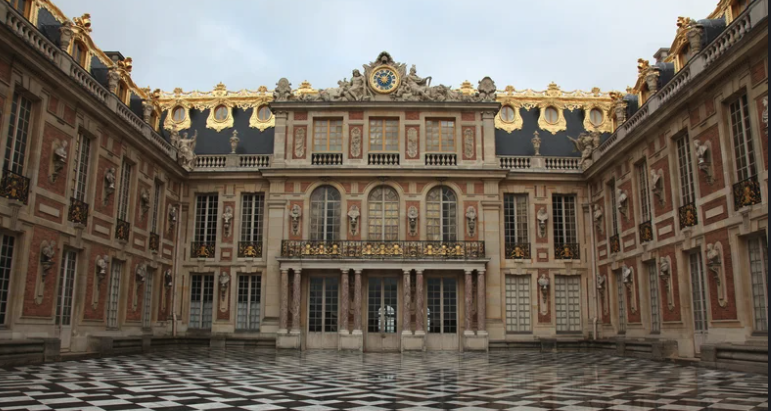
Title of this, builders, and describe in few sentences how it was significant.
Architects/Designers: Louis Le Vau, Jules Hardouin-Mansart, and André Le Nôtre
Significance: The palace served as the center of royal power under King Louis XIV and became the ultimate symbol of absolutism. Its grand architecture, gardens, and lavish decoration exemplify the scale and splendor of Baroque art and politics. Artwork: Palace of Versailles
Describe the significances of the following 4 artists during the Baroque Period: Bernini, Caravaggio, Vermeer, and Velázquez
Bernini: movement, drama, emotion, viewer participation.
Caravaggio: tenebrism, realism, psychological intensity.
Vermeer: light, quiet domestic scenes, symbolism.
Velázquez: perception and artistic status.
Chiaroscuro
Tenebrism
Vanitas
Technique using strong contrasts between light and dark to create a three-dimensional effect and dramatic spotlighting
Characterized by large areas of darkness, where figures emerge into sharp, dramatic light from a single source
Still-life genre featuring symbols of mortality and the fleeting nature of earthly pleasures, such as skulls, wilting flowers, or hourglasses
Genre Painting
Tronie
Libretto
Focuses on the depiction of everyday life
Depicts a character or “type” (such as a young girl, soldier, or exotic figure) rather than a specific, identifiable person. It focuses on expressive faces and emotions rather than portrait likeness.
A libretto is the written text used in an extended musical work, such as an opera
Librettist
Da Capo Aria
Oratorio
One who writes or arranges the words for the opera
A form of aria. The form is ABA or original idea, second idea, and return to the first idea. Da capo means to return to the beginning.
A religious work similar to an opera but without staging or costumes. It tells a religious story with aria, recitative, and instrumental interludes. Oratorios will generally have a narrator who shares the story in recitative style and there is often a larger chorus than in an opera.
Concerto
Fugue
Part of the Baroque orchestra which includes the higher voiced instruments like the violin, viola, recorder or oboe.
A composition in three movements. The three movements follow the tempos in the order of Fast, Slow, Fast.
Musical composition in which a single theme is introduced by one voice and then imitated and developed by multiple voices in a structured, overlapping way.
Ripieno
Part of the Baroque orchestra which includes the lower voiced instruments like the cello, bass, and lute
Terraced Dynamics
Musical accompaniment used almost universally during the Baroque era. It consists of a continuous bass line that outlines the harmonic foundation of a piece.
Continuo
abrupt use of dynamics where it goes quickly from soft to loud
Basso Continuo
What were about 7 popular instruments during the Baroque period?
Who was Antonio Vivaldi and what 2 nicknames did he go by? What school did he run and what was he famous for?
A German composer that wrote a lot of music as he created The Fugue which was polyphonic and used imitation of melodies.
Harps, oboes, violins, harpsichord, organ, Timpanu (pitched drums), and flutes.
Bach
Priest for the Catholic Church and writes a lot of secular pieces. Known as the Red Priest and Father of the Concerto. He was the head of school at the Oespedale de Piete (orphanage for girls). Vivaldi began teaching these girls to teach instruments (a good portion of his secular works were dedicated towards these girls). This orchestra was considered the 2nd best orchestra in Europe at the time (1st being the men's).
Stemming from the modal system of the Medieval/Renaissance Period, the current harmonic tonal system of ______ and ______ came to the forefront of composition.
The story or the libretto of Baroque Opera is generally about what topic or topics? In what language is opera generally written?
What is program music?
Major; Minor
Mythological stories, ancient history, or romantic dramas, often involving gods and moral conflicts. Opera was generally written in Italian, which was the dominant language of early opera.
Instrumental music that is intended to depict a story or emotion without using words and through sound alone.
Who is the father of the concerto? How many concerti did he compose?
What are some movements/dances of the Dance Suite?
Antonio Vivaldi; 500
Allemande (moderate, flowing German dance)
Courante (lively French or Italian dance)
Sarabande (slow, dignified Spanish dance)
Gigue (fast, upbeat, often finale)
How did the Counter-Reformation change art?
Caravaggio was known for?
Vermeer was known for?
Pushed Catholic art toward clear, realistic, and emotionally powerful images designed to inspire faith directly. Art became more dramatic and accessible to strengthen devotion to the Catholic Church.
Caravaggio was known for dramatic lighting (tenebrism), intense realism, and emotionally powerful religious scenes that made biblical figures look ordinary and human.'
Johannes Vermeer was known for quiet domestic scenes, masterful use of light, and calm, detailed compositions that often feel intimate and timeless.