Genetics and Molecular Techniques: DNA Sequencing, Cloning, and Gene Editing
 Call Kai
 Learn
Learn Practice Test
 Spaced Repetition
 Match
Match Flashcards
 Knowt Play
1/80

There's no tags or description
Looks like no tags are added yet.
Name | Mastery | Learn | Test | Matching | Spaced | Call with Kai |
|---|
No analytics yet
Send a link to your students to track their progress
81 Terms
What is biotechnology?
The use of an organism or a component of an organism to make a product or process.
What are some examples of molecular techniques?
DNA Sequencing, Polymerase Chain Reaction (PCR), Gel Electrophoresis, DNA Cloning.
What is the purpose of PCR?
To make many copies of a specific DNA fragment.
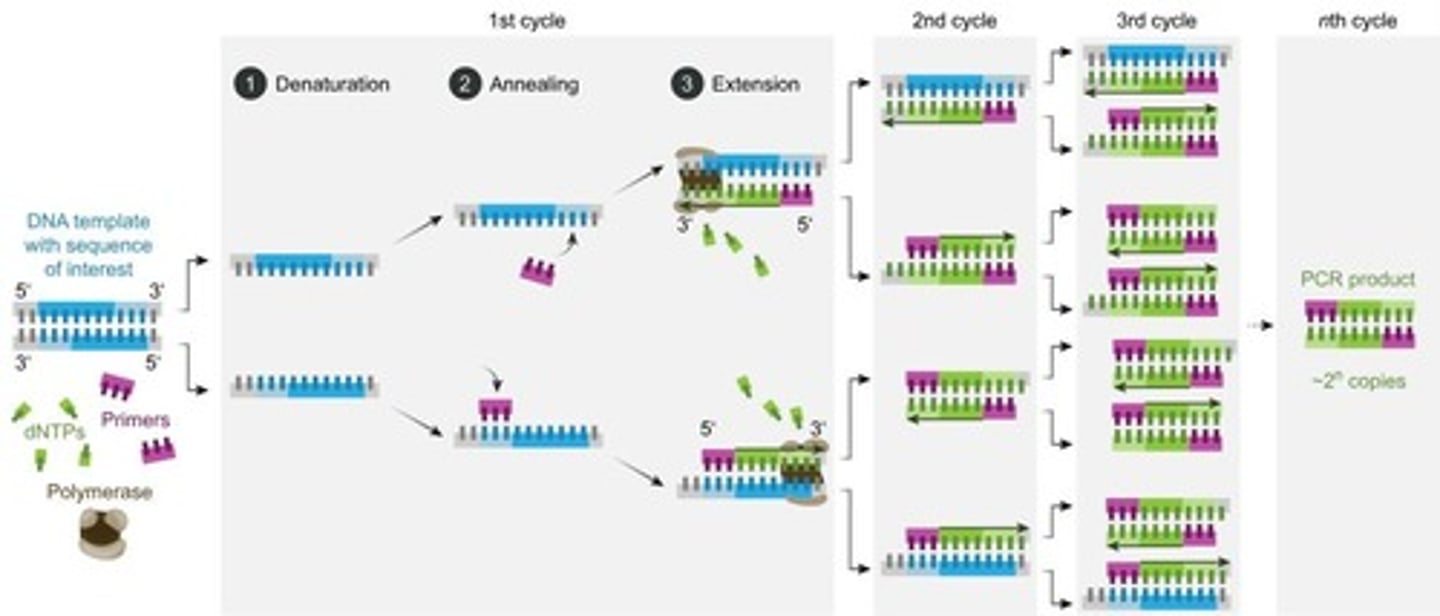
Who invented the Polymerase Chain Reaction (PCR)?
Kary Mullis.
What are the main reagents used in PCR?
DNA template, dNTPs, DNA polymerase, primers, and buffer.
What is recombinant DNA?
DNA that is formed by combining DNA from two or more different sources.
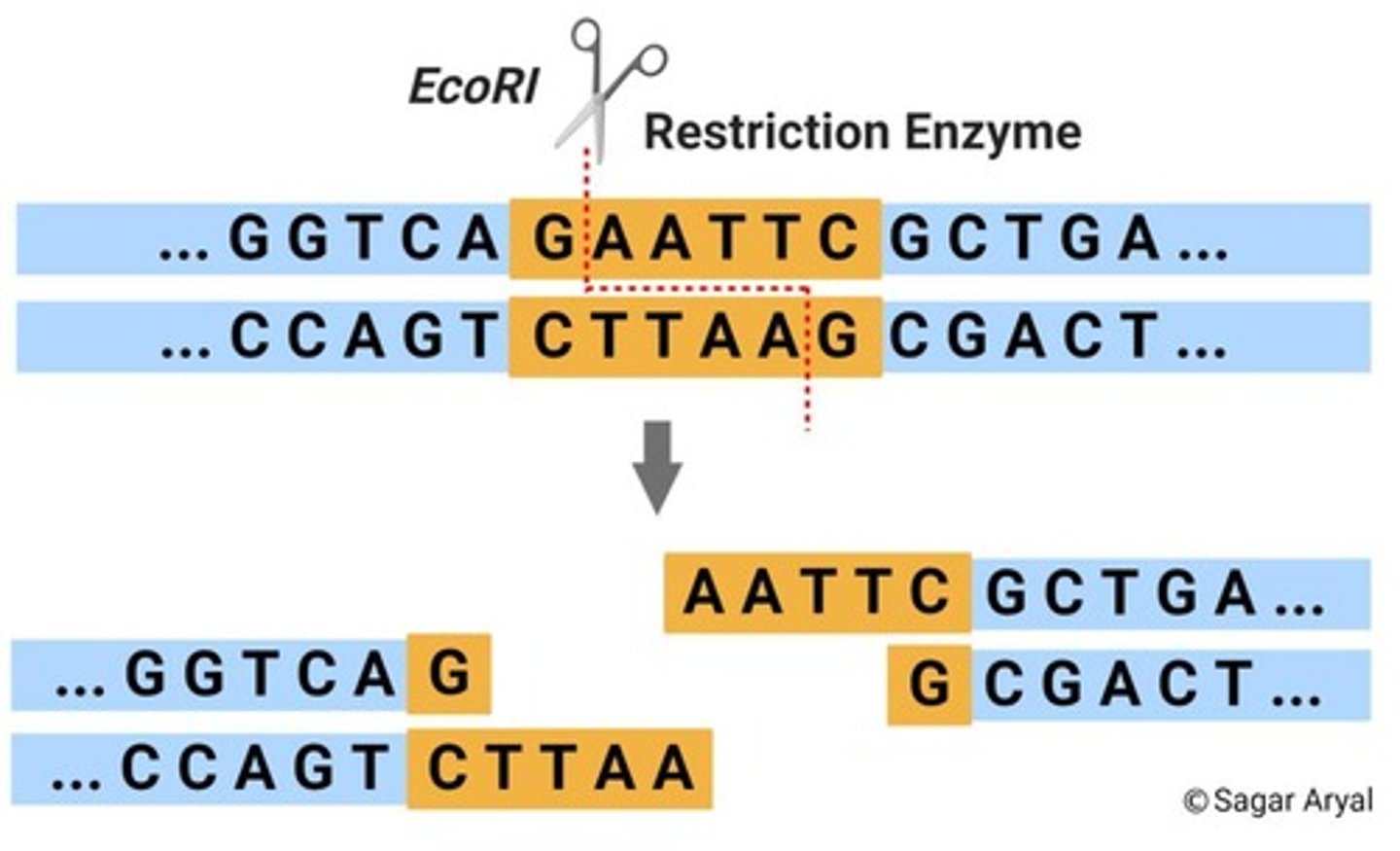
What is the role of restriction enzymes in molecular techniques?
They recognize and cut DNA at specific nucleotide sequences.
What is gel electrophoresis used for?
To separate DNA, RNA, and protein molecules based on size and electrical charge.
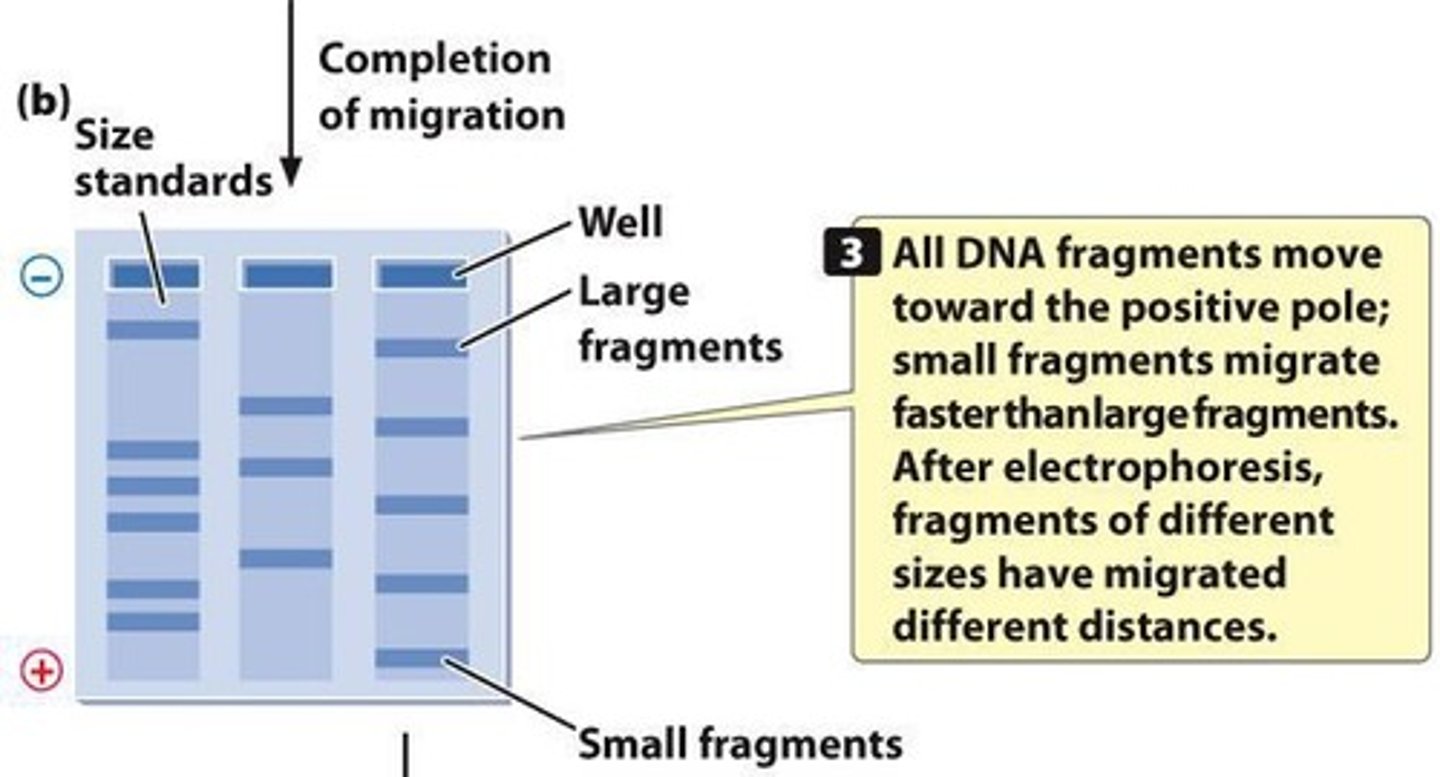
How do nucleic acids behave in gel electrophoresis?
They are negatively charged and move towards the positive side of the gel.
What is DNA fingerprinting?
A technique used to identify an individual's unique genetic makeup.
What is the significance of the universal genetic code?
It allows genes from one organism to be expressed in another organism.
What is gene therapy?
A technique for treating genetic abnormalities by fixing or replacing nonfunctional genes.
What does RFLP stand for?
Restriction Fragment Length Polymorphism.
What is the function of Taq polymerase in PCR?
It is a heat-stable DNA polymerase that synthesizes new DNA strands.
What is the purpose of a thermocycler?
To perform cycles of PCR by changing temperatures.
How can DNA fingerprinting be used in crime scene investigations?
To compare DNA samples from suspects with evidence found at the crime scene.
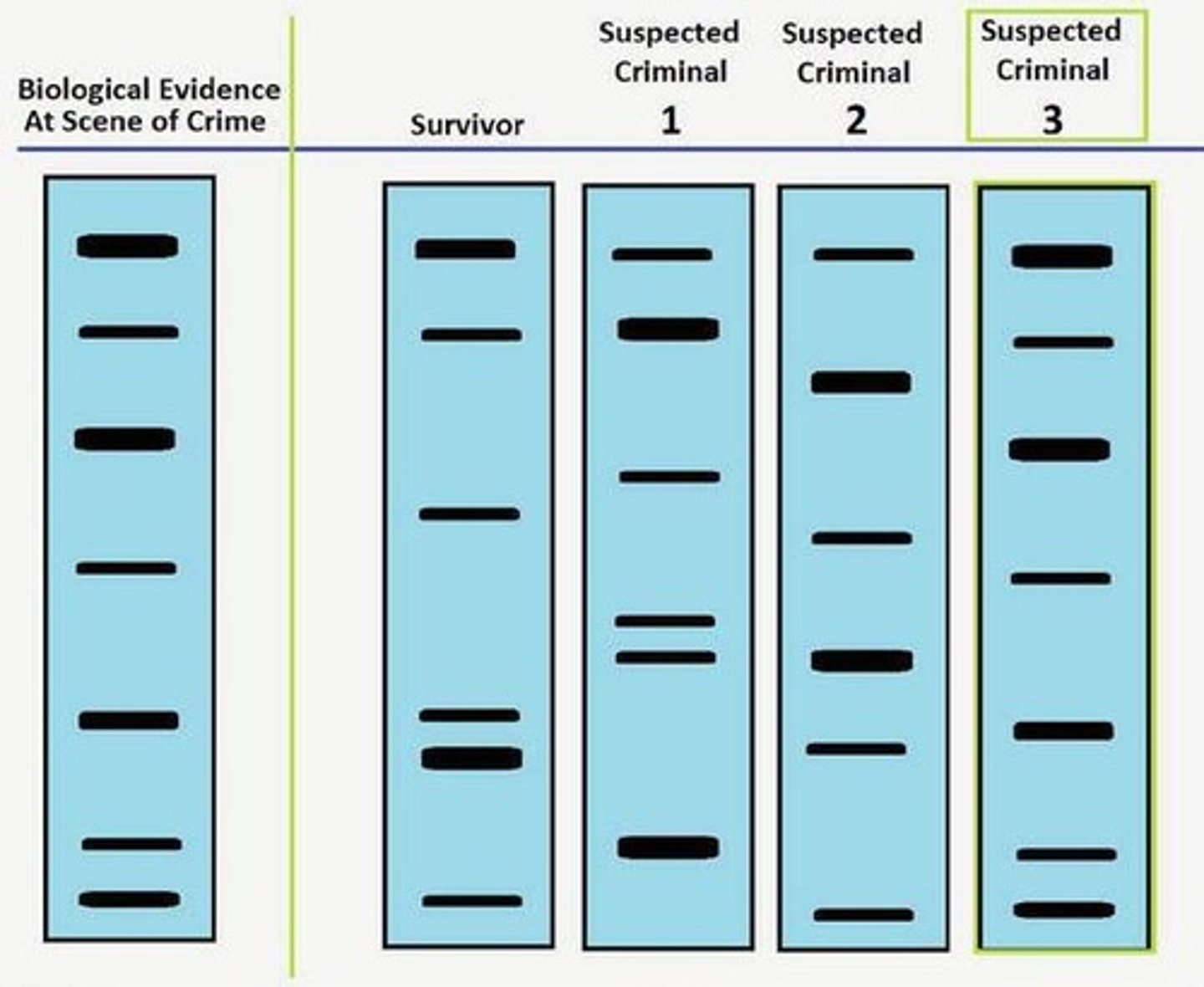
What is the purpose of using a DNA ladder in gel electrophoresis?
To compare the sizes of DNA fragments against known standards.
What is the main goal of genetic engineering?
To locate, isolate, alter, and study DNA.
What is the significance of using organisms in biotechnology?
Organisms can be used to create products for human use, such as antibiotics and food.
What is the first step in DNA fingerprinting?
Amplifying DNA via PCR.
What does PCR stand for?
Polymerase Chain Reaction.
What is the role of primers in PCR?
Primers are short sequences that provide a starting point for DNA synthesis.
What can DNA fingerprinting help determine besides identity?
Parentage and genetic associations with diseases.
What is the outcome of running a DNA sample through gel electrophoresis?
Samples appear as bands that can be compared to known sequences.
What is one application of biotechnology in agriculture?
Breeding crops and animals to generate products for human consumption.
What is the significance of the phrase 'working at the molecular level' in biotechnology?
It refers to employing techniques to manipulate biological systems at the DNA or molecular scale.
What is DNA cloning?
The isolation and production of specific DNA segments in bacterial cells.
What are cloning vectors?
Tools used to insert foreign DNA into a host organism for replication.
What is the role of restriction enzymes in cloning?
They cut DNA at specific sites, allowing for the insertion of foreign DNA.
What is a plasmid?
A circular piece of DNA in bacteria that replicates independently.
What are the three essential components of cloning vectors?
1) Origin of replication, 2) Selectable marker, 3) Unique restriction site(s).
What is a selectable marker?
A gene that allows for the identification of cells that have taken up the vector.
What is transformation in the context of molecular biology?
The process by which bacteria absorb DNA from their environment.
What is the purpose of heat shocking bacteria during transformation?
To induce the uptake of plasmids by the bacterial cells.
What does the lacZ gene do?
It helps metabolize lactose and can break down X-gal to produce a blue compound.
What color do colonies turn if the lacZ gene is disrupted?
White colonies indicate the lacZ gene is inactive.
What are bacteriophages?
Viruses that infect bacteria and can be used as cloning vectors.
What are cosmids?
Small plasmids carried by viruses that can hold more DNA than regular plasmids.
What are bacterial artificial chromosomes (BACs)?
Large DNA molecules derived from F plasmids that can hold significantly more DNA than plasmids.
What is a microarray?
A tool used to measure differential gene expression across different tissues.
How do microarrays indicate gene expression?
By using fluorescent probes to label control and experimental samples, resulting in colored dots.
What does a green dot on a microarray indicate?
Control tissue expression is greater than experimental tissue expression.
What is a Single Nucleotide Polymorphism (SNP)?
A variation at a single position in a DNA sequence among individuals.
What is forward genetics?
A method that starts with a known phenotype to discover the associated gene.
What is reverse genetics?
A method that starts with a known gene to discover the associated phenotype.
What is gene silencing with RNAi?
A technique used to inhibit gene expression by targeting mRNA for degradation.
What is the purpose of using knockout mice in genetics?
To study the effects of specific gene deletions on phenotype.
What is the significance of using transgenic animals?
They are used to study gene function and the effects of gene modifications.
What happens to bacteria that do not take up the plasmid during transformation?
They do not survive on antibiotic plates containing the selectable marker.
What is the function of the origin of replication in a cloning vector?
It ensures that the vector can be replicated in future cell divisions.
What is the role of unique restriction sites in cloning vectors?
They provide specific locations where foreign DNA can be inserted.
What is the typical size limit for plasmids in terms of DNA bases?
Plasmids can typically hold about 15,000 bases of DNA.
How can we differentiate between bacteria with correct and incorrect plasmids?
By observing colony color on plates with X-gal; white indicates correct insertion, blue indicates incorrect.
What is random mutagenesis?
A technique used to increase the number of mutants in an experimental population.
What are common mutagens?
Radiation (like UV) and chemical agents.
What is site-directed mutagenesis?
Inducing a mutation at a specific location in the genome.
What are oligonucleotides used for in mutagenesis?
They can be used when restriction sites aren't available.
What is a transgene?
A gene that has been transferred from one organism to another.
Give an example of a natural transgene.
Sweet potatoes contain Agrobacterium genes.
What is a knockout mouse?
A mouse in which a normal gene has been fully disabled.
What is the difference between knock-out and knock-down?
Knock-out results in permanent loss of function, while knock-down reduces gene expression temporarily.
What is RNA interference (RNAi)?
A process that involves siRNA to silence gene expression.
What role does Dicer play in RNAi?
Dicer cleaves dsRNA into smaller molecules like siRNA.
How does siRNA function in RNAi?
It binds to target mRNA and activates the RNA-induced silencing complex (RISC).
What is Sanger sequencing?
A method used to determine the sequence of bases in a DNA fragment using dideoxynucleotides (ddNTPs).
What are the general steps in Sanger sequencing?
Isolate target DNA, amplify via PCR, split into test tubes, add primers, dNTPs, ddNTPs, and DNA polymerase.
What is the purpose of gel electrophoresis in sequencing?
To separate DNA fragments by size to determine the sequence.
What is Next-Generation Sequencing?
A term for modern sequencing technologies that are less expensive and quicker than Sanger sequencing.
What are the three major gene editing tools?
Zinc finger nucleases (ZFNs), transcription activator-like effector nucleases (TALENs), and CRISPR/Cas9.
What is the difference between NHEJ and HDR in gene editing?
NHEJ repairs DNA breaks with mutations, while HDR uses a template to accurately repair the break.
What is Bt corn?
Genetically modified corn that incorporates a gene from Bacillus thuringiensis to kill corn borer larvae.
What is Golden Rice?
A genetically modified crop that produces beta-carotene to combat vitamin A deficiencies.
What is the significance of polled cattle?
Polled cattle have a lower risk of injury compared to horned cattle and can be genetically modified for desirable traits.
What are glow-in-the-dark cats?
Cats genetically modified to express a green-fluorescent protein for research on HIV resistance.
What are spider goats?
Goats genetically engineered to produce spider silk protein in their milk for strong materials.
What is biofortification?
The process of increasing the nutritional value of crops, as seen in Golden Rice.
What does the TRIMCyp gene do in glow-in-the-dark cats?
It codes for HIV resistance and is tagged with a green-fluorescent protein.
How does CRISPR/Cas9 work?
It uses a guide RNA to direct the Cas9 nuclease to cleave a target DNA sequence.
What is the role of PAM in CRISPR/Cas9?
PAM indicates where the Cas9 nuclease should cut the DNA.
What is the purpose of inserting donor DNA in gene editing?
To add a sequence of interest or correct a mutation in the genome.
What is the main advantage of Next-Generation Sequencing?
It can process millions of DNA fragments simultaneously, making it efficient for whole genomes.