DK Ching VD - Load
 Call Kai
 Learn
Learn Practice Test
 Spaced Repetition
 Match
Match Flashcards
 Knowt Play
1/55

There's no tags or description
Looks like no tags are added yet.
Name | Mastery | Learn | Test | Matching | Spaced | Call with Kai |
|---|
No analytics yet
Send a link to your students to track their progress
56 Terms
load
forces to which a structure is subjected
static load
a load applied slowly to a structure until it reaches its peak value without fluctuating rapidly in magnitude or position
concentrated load
a load acting on a very small area or particular point
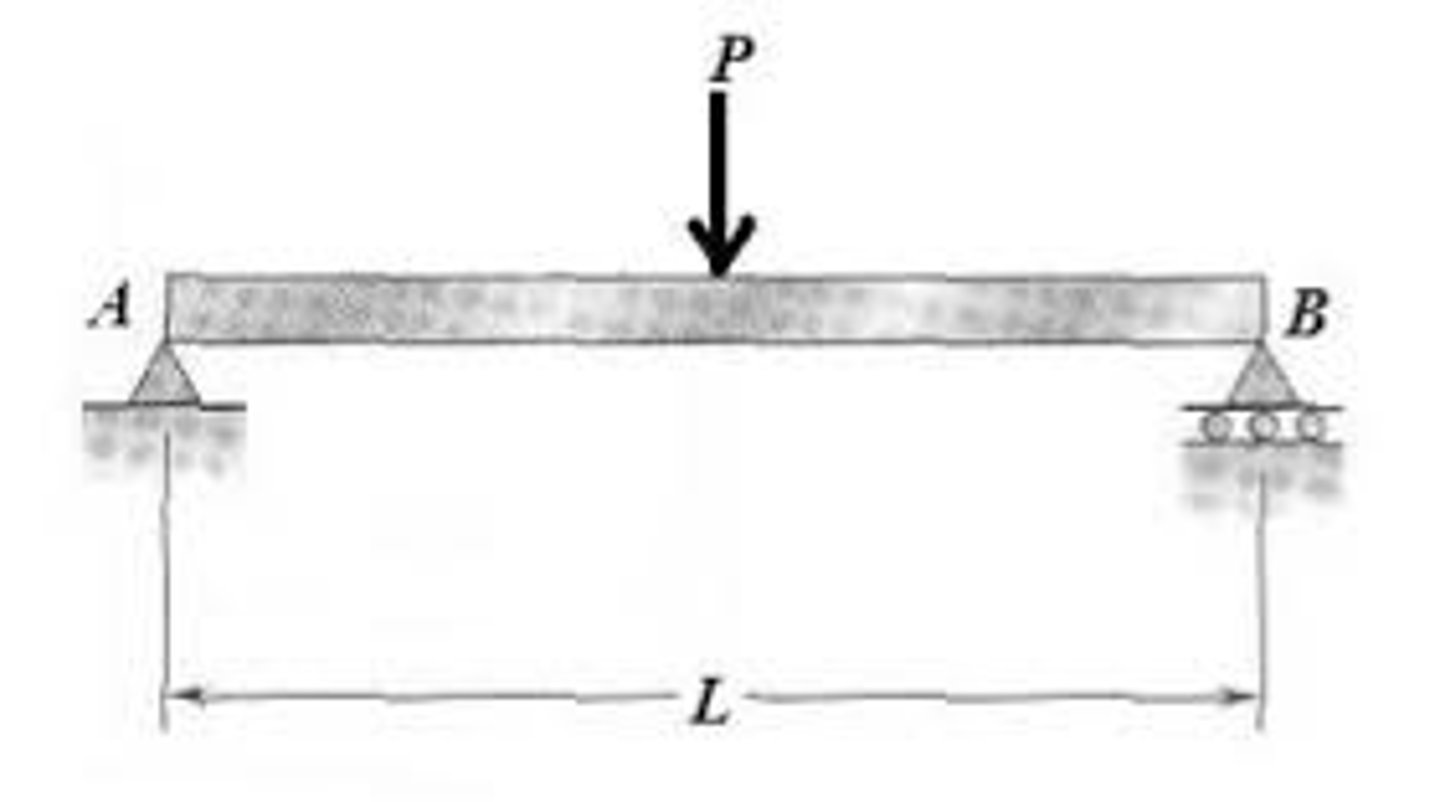
distributed load
a load extending over the length or area
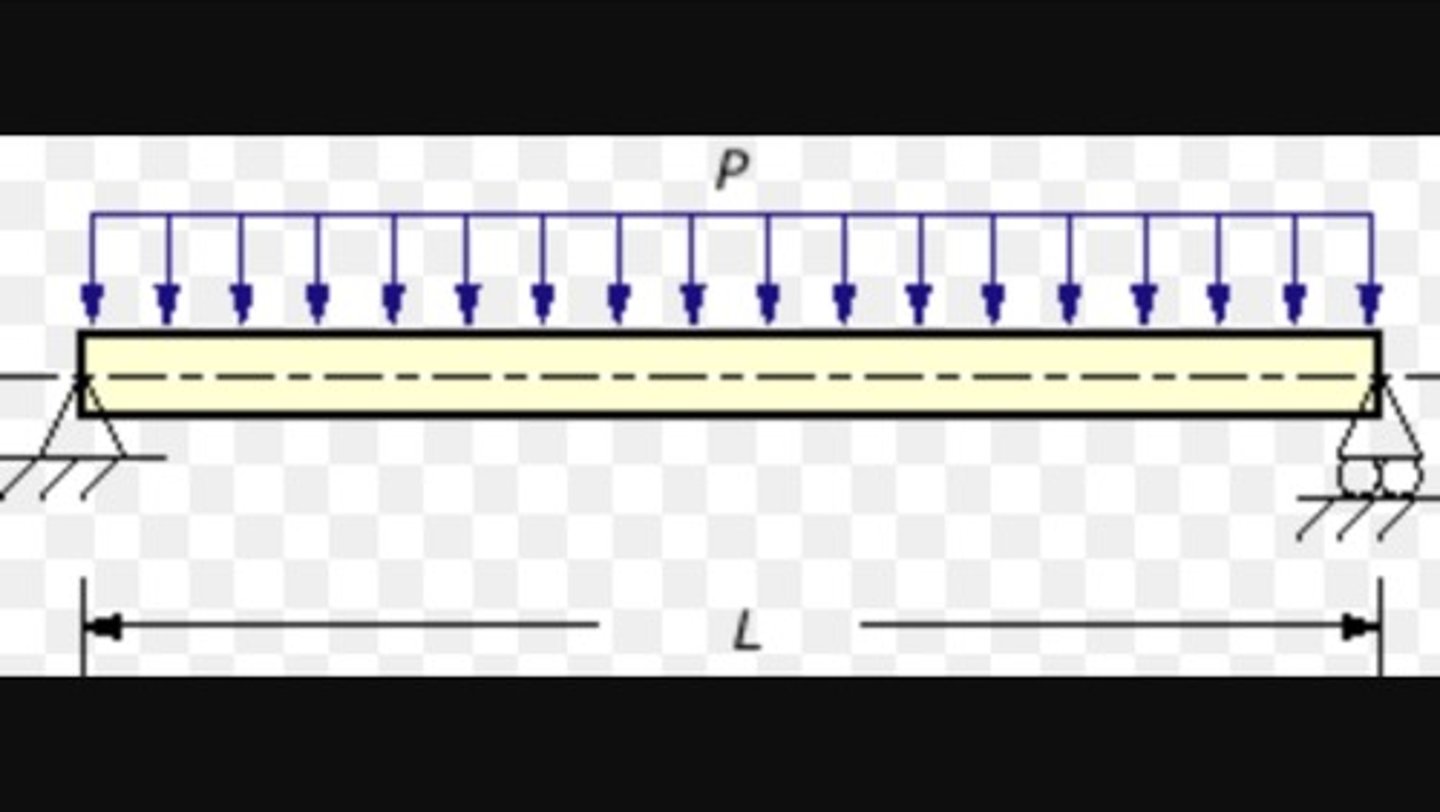
uniformly distributed load
a distributed load of uniform magnitude
occupancy load
live load on a structure resulting from the weight of people, furniture, stored material, and other similar items in a building
water load
live load of water that may accumulate on a roof because of its form, deflection, or the clogging of its drainage system
live load
moving or movable load
dead load
static load acting vertically downward; comprising the self-weight of the structure and the weight of building elements, fixtures, and equipment permanently attached to it
water pressure
the uplifting force a water table exerts on a foundation system
earth pressure
the horizontal force a soil mass exerts on a vertical retaining structure
settlement load
a load applied suddenly to a structure
moving load
a kinetic load of short duration due to moving vehicles, equipment, and machinery; also called "impact load"
impact factor
factor by which the effect of a static load is multiplied to approximate the effect of applying the same load dynamically
equivalent load
a load substituted by a building code for an actual load
load combination
the dead load and two or more live loads assumed to occur simultaneously on a structure
erection stress
the stress induced on a building unit or component by loads applied during the erection process
erection bracing
the temporary brazing required to secure the units or components of a building until permanently fastened in place
construction load
a temporary load on a structure occurring during its erection, as from wind or the weight of construction equipment and stored materials
lateral load
a load acting horizontally on a structure, such as wind or earthquake
earthquake load
the forces exerted on a structure by an earthquake
seismic force
any of the forces caused by the vibratory ground motions of an earthquake
drift
the lateral deflection or movement of a structure due to wind, earthquake, or asymmetrical vertical loading
oscillation
a single swing of an oscillating body from one extreme limit to another
site class
the classification of a site according to the types of soils present within the upper 100 ft (30.48 m) of the site profile and their engineering properties of shear wave velocity, shear strength, and penetration resistance
site coefficient
any of the coefficients for modifying the mapped acceleration parameters according to the effects of site class
liquefaction
the sudden loss of shearing resistance in a cohesionless soil, causing the soil to behave as a liquid
seismic design category
the classification of a structure according to its occupancy category, site soil conditions, and the probability of significant seismic ground motion at the site
occupancy category
the classification of a building according to the nature of its occupancy or contents
seismic weight
the total dead load of a structure, including applicable portions of storage live loads, partition loads, permanent equipment loads, and design roof loads
seismic base shear
the shearing force (V) developed at the base of a structure by the tendency of its upper mass to remain at rest while the base is translated by ground motions during an earthquake
horizontal torsion
the torsion resulting from a lateral load acting on a structure having noncoincidental centers of mass and resistance
overturning moment
an external moment generated at the base of a structure by a lateral load applied at a distance above grade
restoring moment
a resisting moment provided by the dead load of a structure acting about the same point of rotation as the overturning movement
seismic-force-resisting system
the part of a building's structural system that provides the required resistance to the prescribed seismic force
story shear
the total shear in any horizontal plane of a structure subject to lateral loads, distributed according to the various lateral force-resisting elements in proportion to their rigidities
P-delta effect
the second-order effects on shear, axial forces, and moments introduced during displacement of a structure
story drift
the horizontal movement of one level of a structure relative to the level above or below
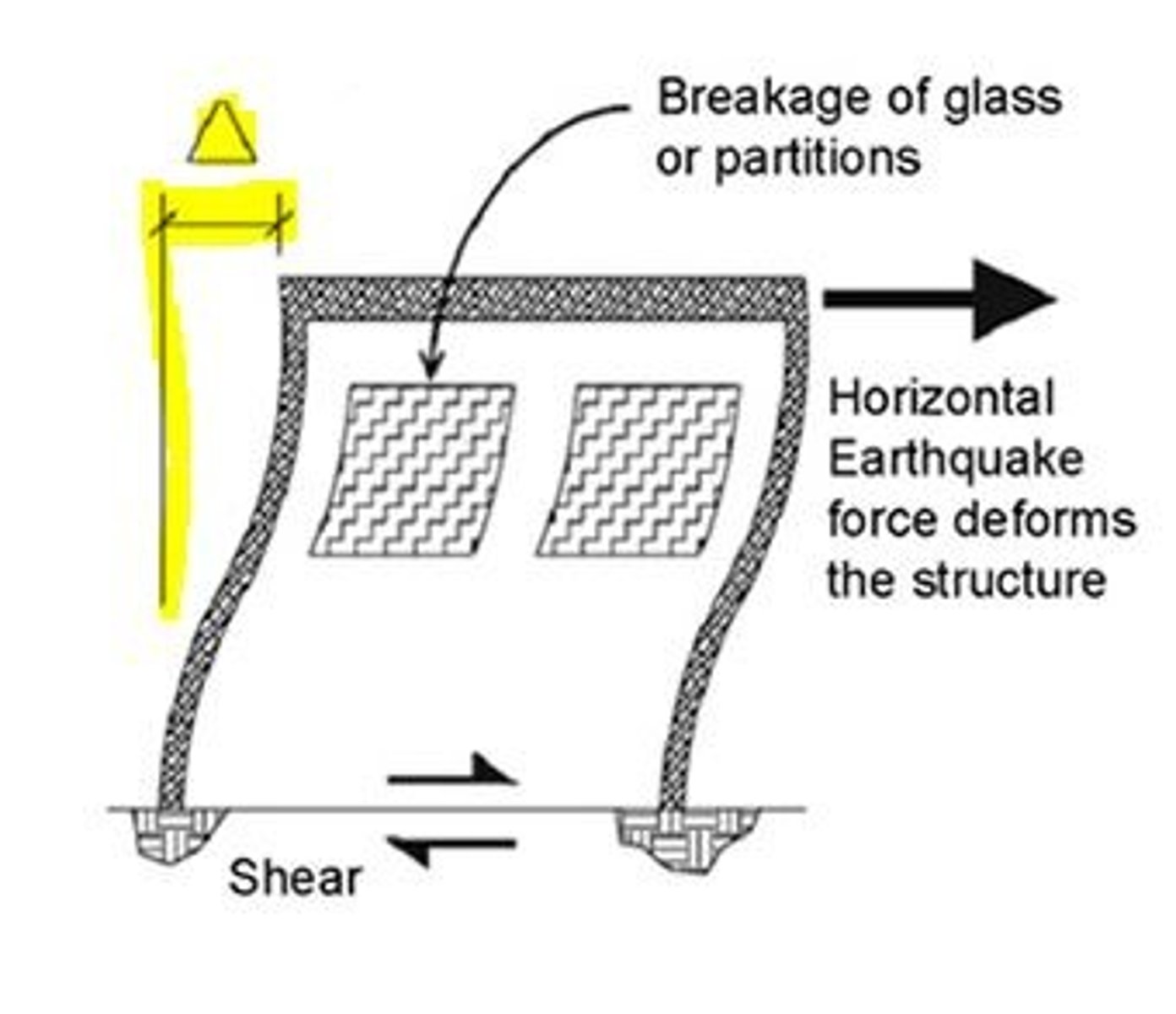
drift index
the maximum ratio of story drift to story height allowed by a building code in order to minimize damage to building components or adjacent structures; also called "drift limitation"
building separation
the distance required to avoid contact between separated structures under deflection from seismic action or wind forces
wind load
any of the forces exerted by the kinetic energy of a moving mass of air
sliding
the horizontal movement of a structure in response to a lateral load
uplift
the raising of a structure or portion of structure in response to an overturning moment or wind suction
flutter
the rapid oscillations of a flexible cable or membrane structure caused by the aerodynamic effects of wind; also called "aerodynamic oscillation"
height factor
a coefficient increasing design wind pressure to account for the increase in wind velocity with height above the ground
gust factor
a coefficient increasing design wind pressure to account for the dynamic effects of wind gusts
surface roughness category
a method for classifying the degree of roughness of the ground surface within each 45d sector for a specified distance upwind of a site for the purpose of assigning an exposure category
Surface Roughness B
urban and suburban areas, wooded areas, or other terrain with numerous, closely spaced obstructions having heights of 30 ft (9144 mm) or more
Surface Roughness C
open terrain with scattered obstructions having heights generally less than 30 ft (9144 mm), including flat open country, grasslands, and water surfaces in hurricane-prone regions
Surface Roughness D
flat, unobstructed areas and water surfaces outside hurricane-prone regions
wind suction
the negative pressure exerted by wind on the sides and leeward vertical surfaces of a building and normal to windward roof surfaces having a slope less than 30d
leeward
pertaining to, being in, or facing the direction toward which the wind is blowing
windward
pertaining to, being in, or facing the direction from which the wind blows
wind pressure
the pressure exerted by wind horizontally on the windward vertical surfaces of a building
normal force method
a design method in which wind pressures are assumed to act simultaneously normal to all exterior surfaces
projected area method
a design method in which the total wind effect is considered to be a combination of a single inward or positive horizontal pressure acting on the full vertical projected area of the building and an outward or negative pressure acting on the full horizontal projected area of the building