[C.1] ANCIENT EGYPTIAN PERIOD ✅
 Call Kai
 Learn
Learn Practice Test
 Spaced Repetition
 Match
Match Flashcards
 Knowt Play
1/63

There's no tags or description
Looks like no tags are added yet.
Name | Mastery | Learn | Test | Matching | Spaced | Call with Kai |
|---|
No analytics yet
Send a link to your students to track their progress
64 Terms
3500-1000 BC
When was the ancient Egyptian period?
Polytheistic
Religion of ancient Egypt; meaning “many gods”
Theocracy
Pharoah thought to be a god
Hieroglyphics
Egyptian writing that involved using pictures to represent words
False
True or false: Pyramids are new kingdom architecture
True
True or false: Egyptian art and architecture remained the same throughout history
Canopic Jars
Containers that were used by the ancient Egyptians during the mummification process, to store and preserve the viscera of their owner for the afterlife
Book of the Dead
Egyptian funerary text generally written on papyrus. It is a loose collection of texts consisting of a number of magic spells intended to assist a dead person's journey through the Duat, or underworld, and into the afterlife and written by many priests over a period of about 1,000 years
Staunch Conservatism
Stylized ideal of the human figure (ex: mirror image of faces to show perfection) and rigid poses
True
True or false: Egyptian art reflects political stability and the view of reality as external and unchanging
Nature
Egyptian architecture was inspired by
False
True or false: Important architecture was far from the Nile
Reddish Brown
Male figures were in [answer] color
Yellow
Female figures were in [answer] color
Frescoes
Stone surfaces were prepared by whitewash, or if rough, a layer of coarse mud plaster, with a smoother gesso layer above.; Egyptian painting typically decorated the walls of temples, tombs and palaces
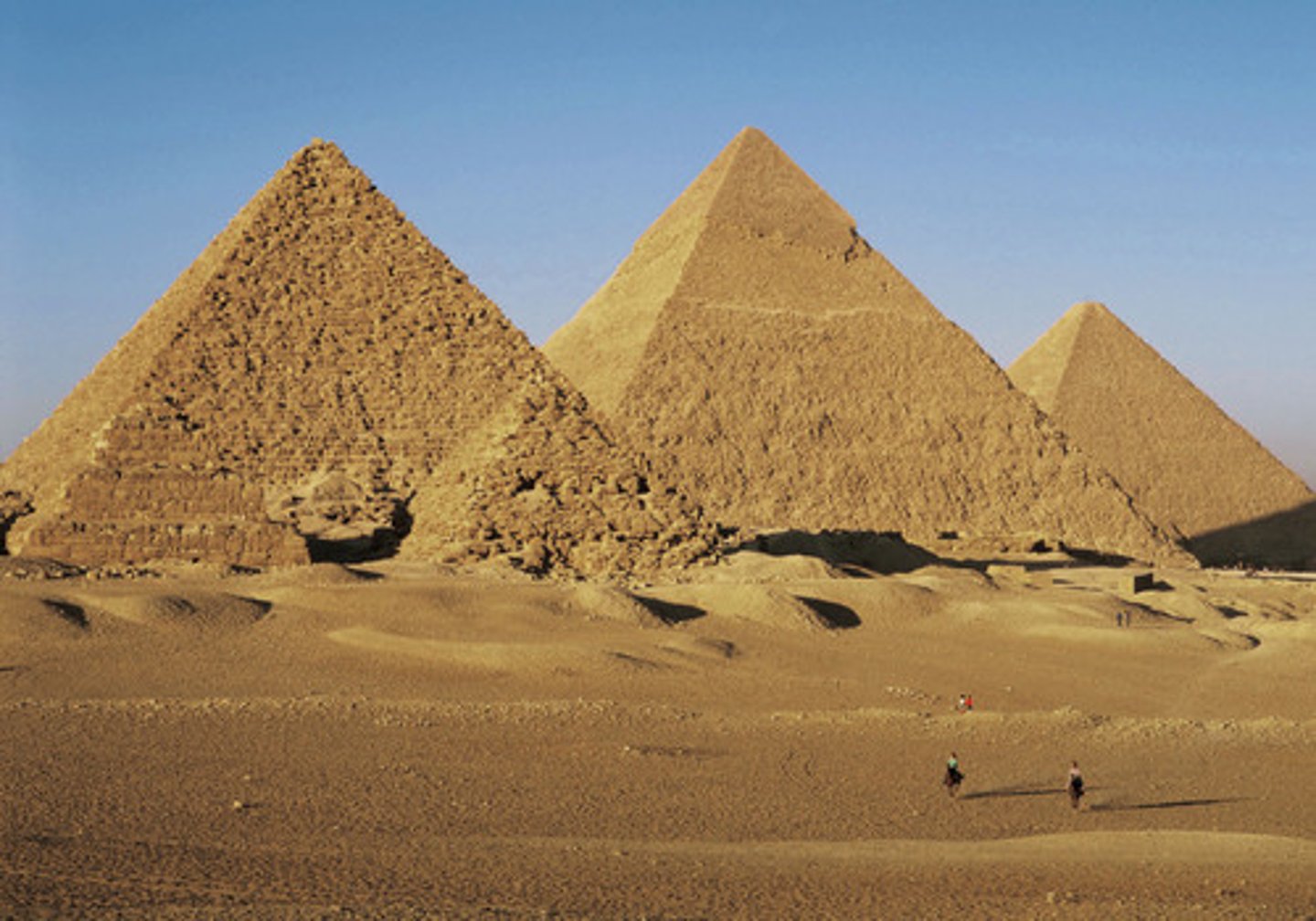
Pyramids of Giza
Pyramids built by the Kings Khufu, Khafre & Menkaure
Law of Frontality
Face must look straight ahead and each side must be exactly like the other, although the hands and feet are in profile; eyes, shoulders in front view
Trabeated Construction
A system of column and lintel
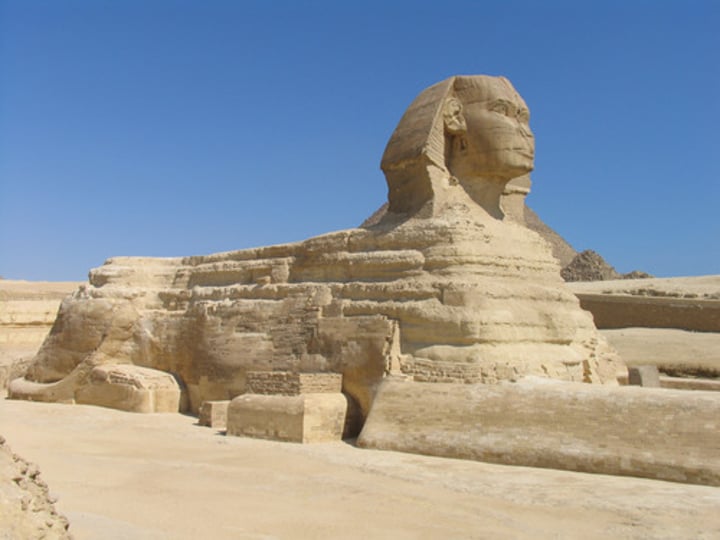
Sphinx
Sculpture usually in recumbent position with the head of a man and the body of a lion; guardian of the temple
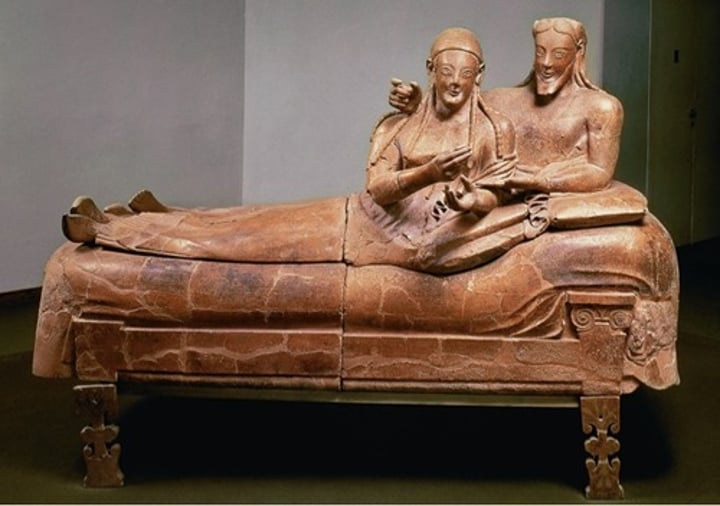
Sarcophagus
Stone case where linen wrapped mummies are put
Imhotep
First recorded artist of Western History, architect to Zoster
Mastabas
A funerary structure in Ancient Egypt that consisted of a rectangular superstructure over a subterranean burial chamber with sloping sides
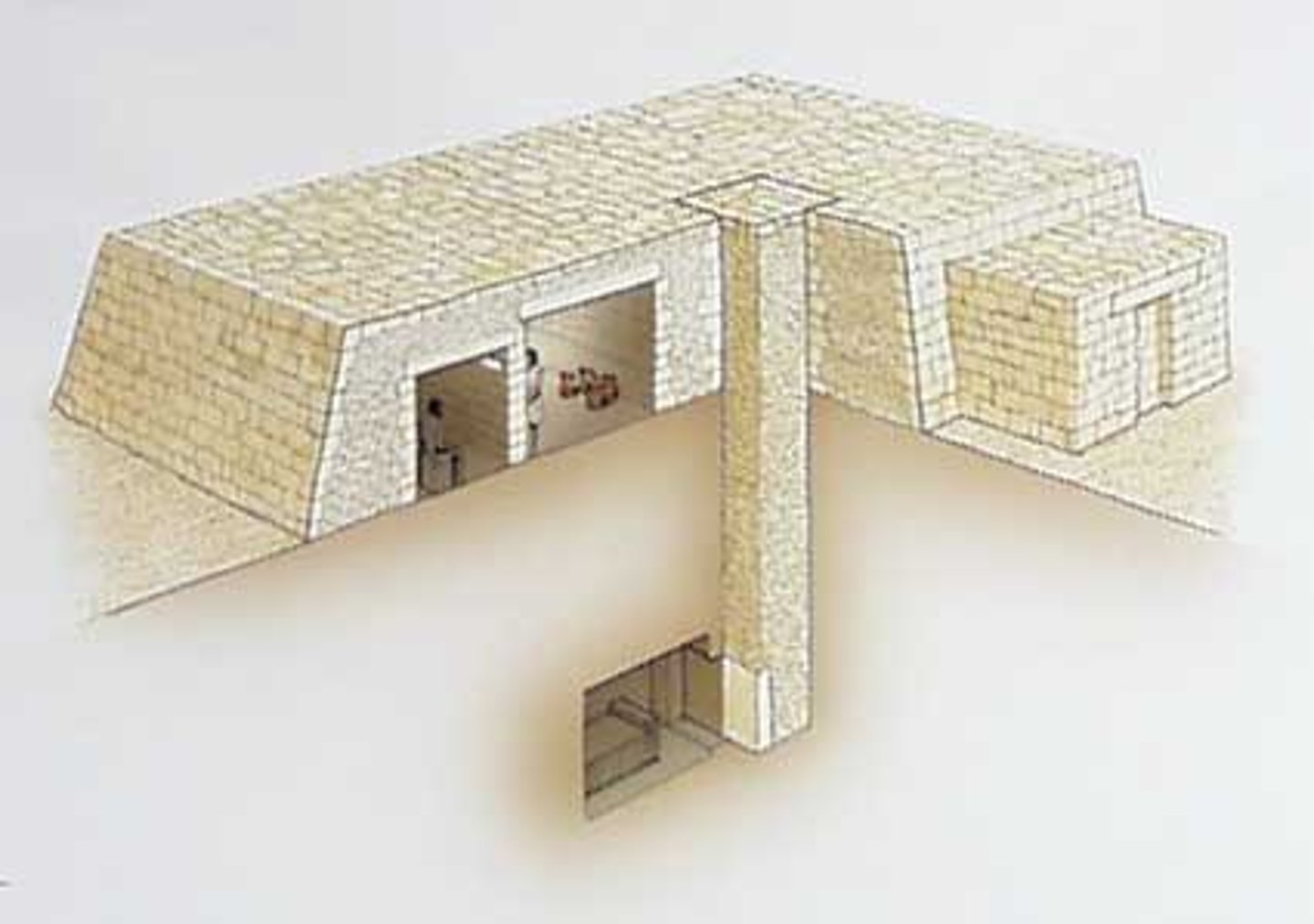
Mastabas
The 1st type of Egyptian tomb
Necropolis
City of mastabas
Pyramidm
Massive funerary structure of stone or brick with a square base and four sloping triangular sides meeting at the apex
Stepped Pyramid
Composed of series of stacked mastabas; each smaller, and stacked on top of each other
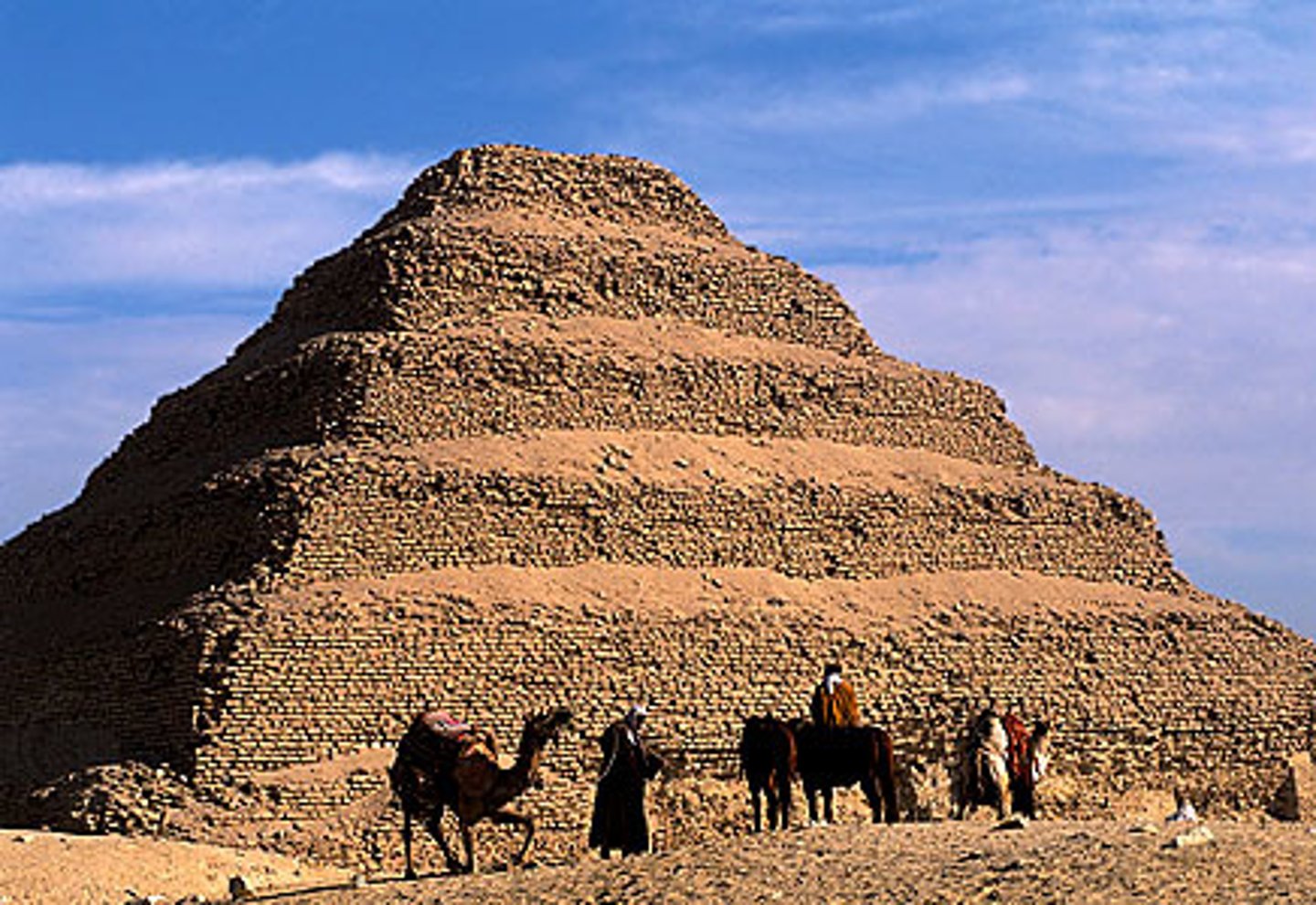
Imhotep
Invented the stepped pyramid which will later on lead to the invention of the true pyramid
Bent Pyramid
Built by Seneferu, first attempt at classic shape but made too steep and had to be sloped
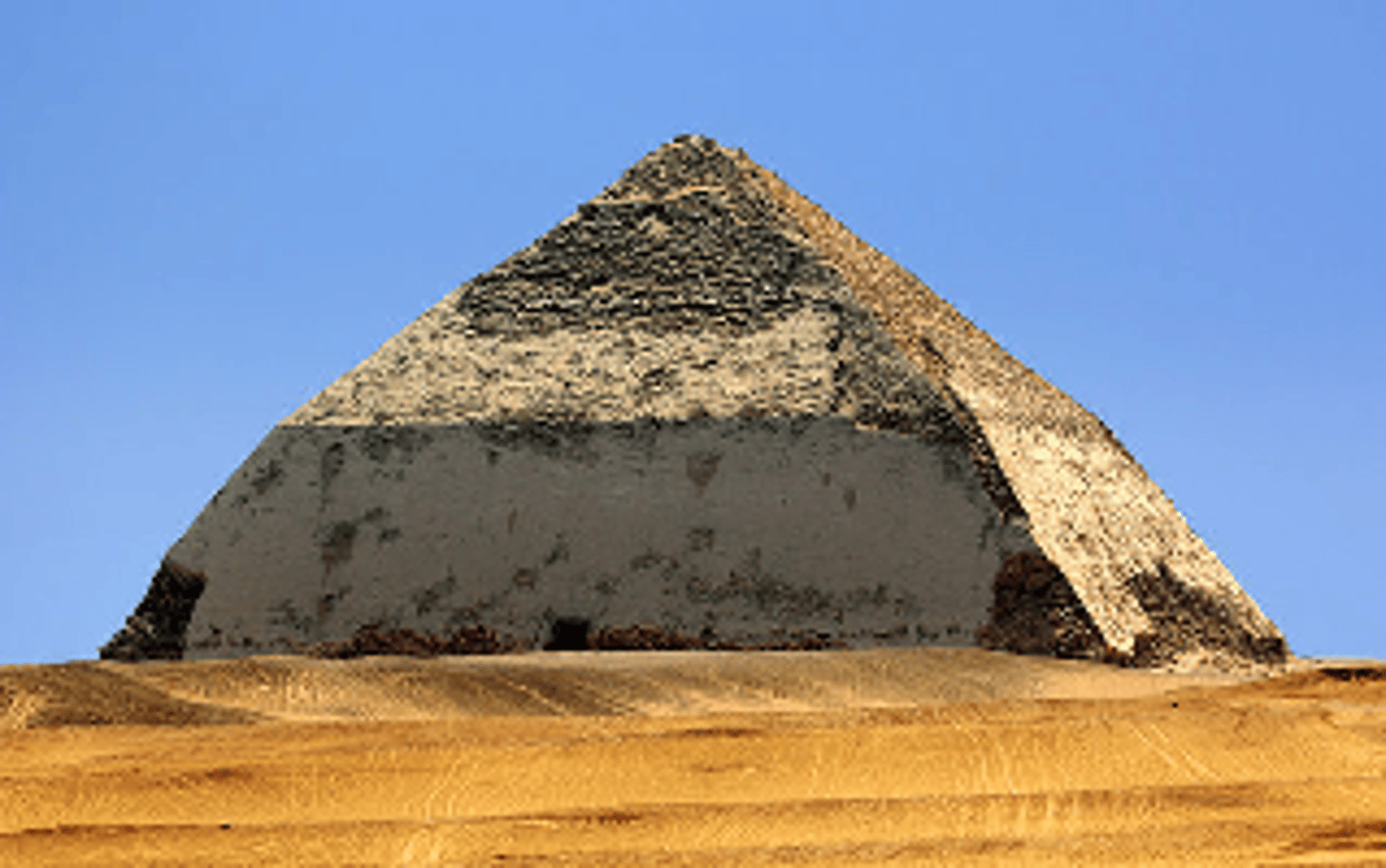
Straight Pyramid
Appearing to be straight
Obelisks
Tall, thin pillars with pyramid-shaped tops
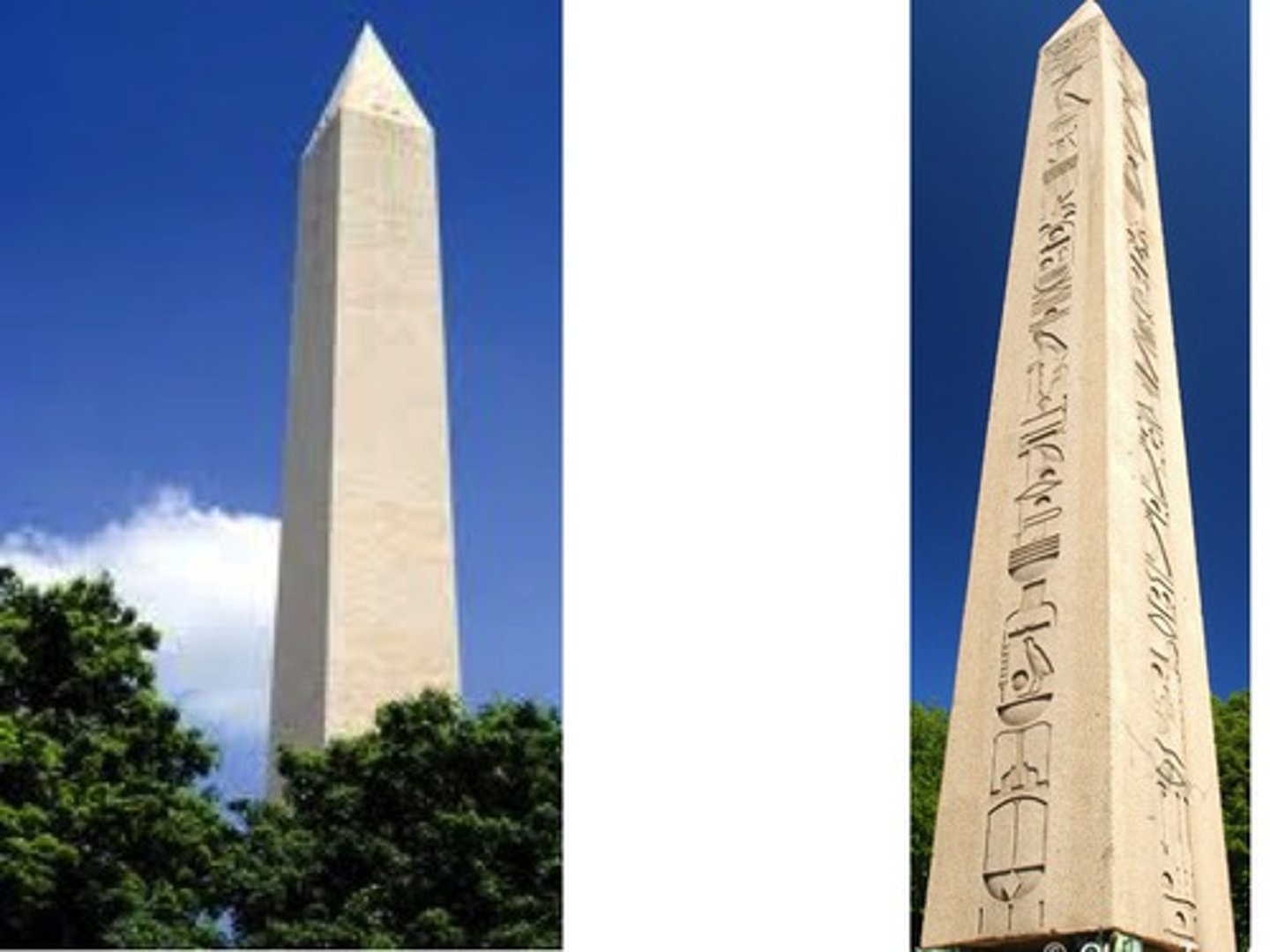
True
True or false: Obelisks in ancient Egypt always come in pairs
Temples
Post and lintel construction characterized as a forest of columns
Mortuary Temples
Temple for the dead pharaoh
Cult Temples
Temple for popular worship of the ancient gods
Rock-hewn Tombs
Located of cliffs where they cut labyrinth passageways that led to ceremonial and burial chambers which were later replaced by temples. Built after the old kingdom has passed by carving out hills
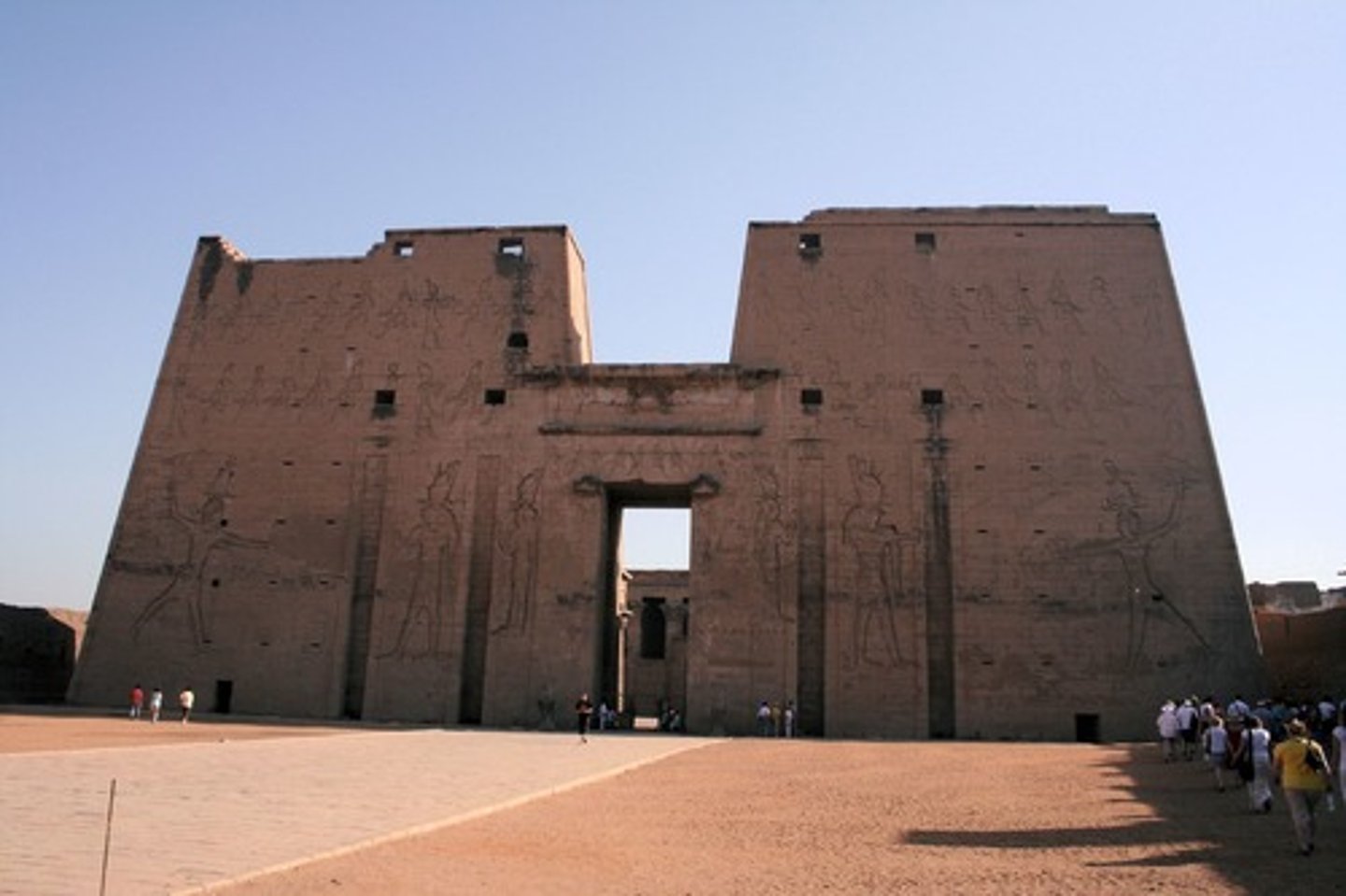
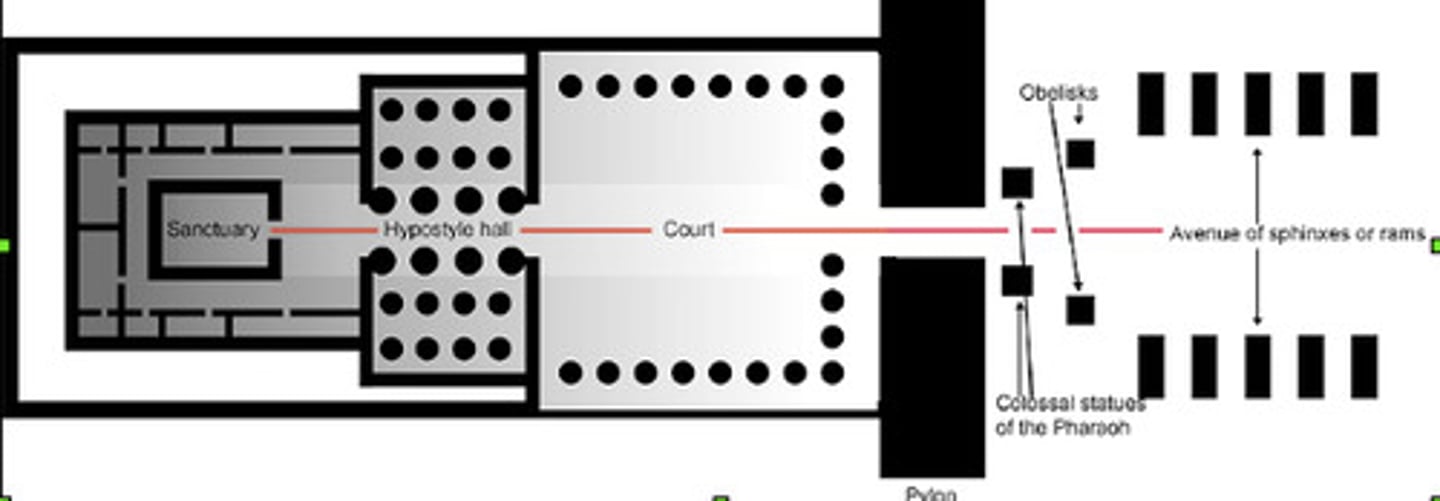
Pylon
A monumental gateway to an Egyptian temple marked by two tower structures with sloping walls flanking the entrance portal
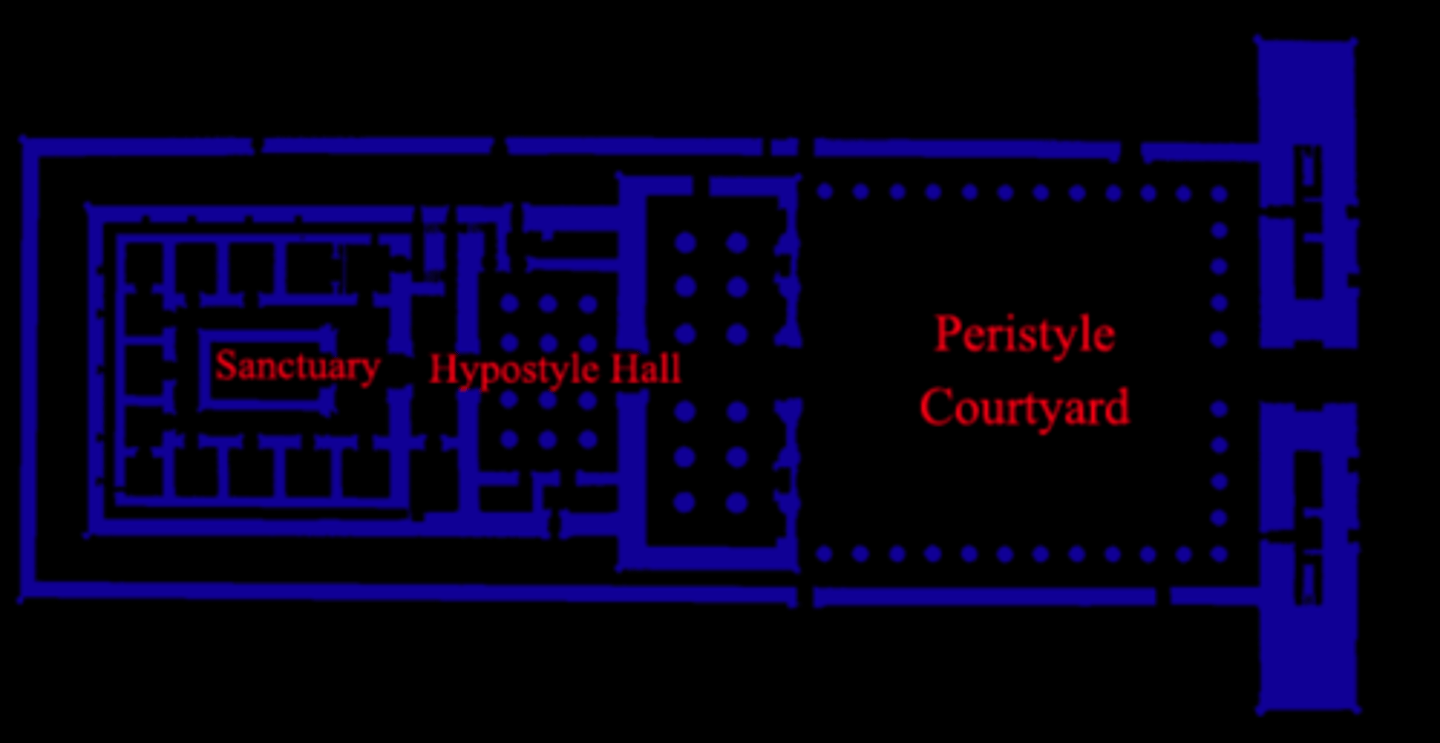
Peristyle
Open court; row of columns around a building or court
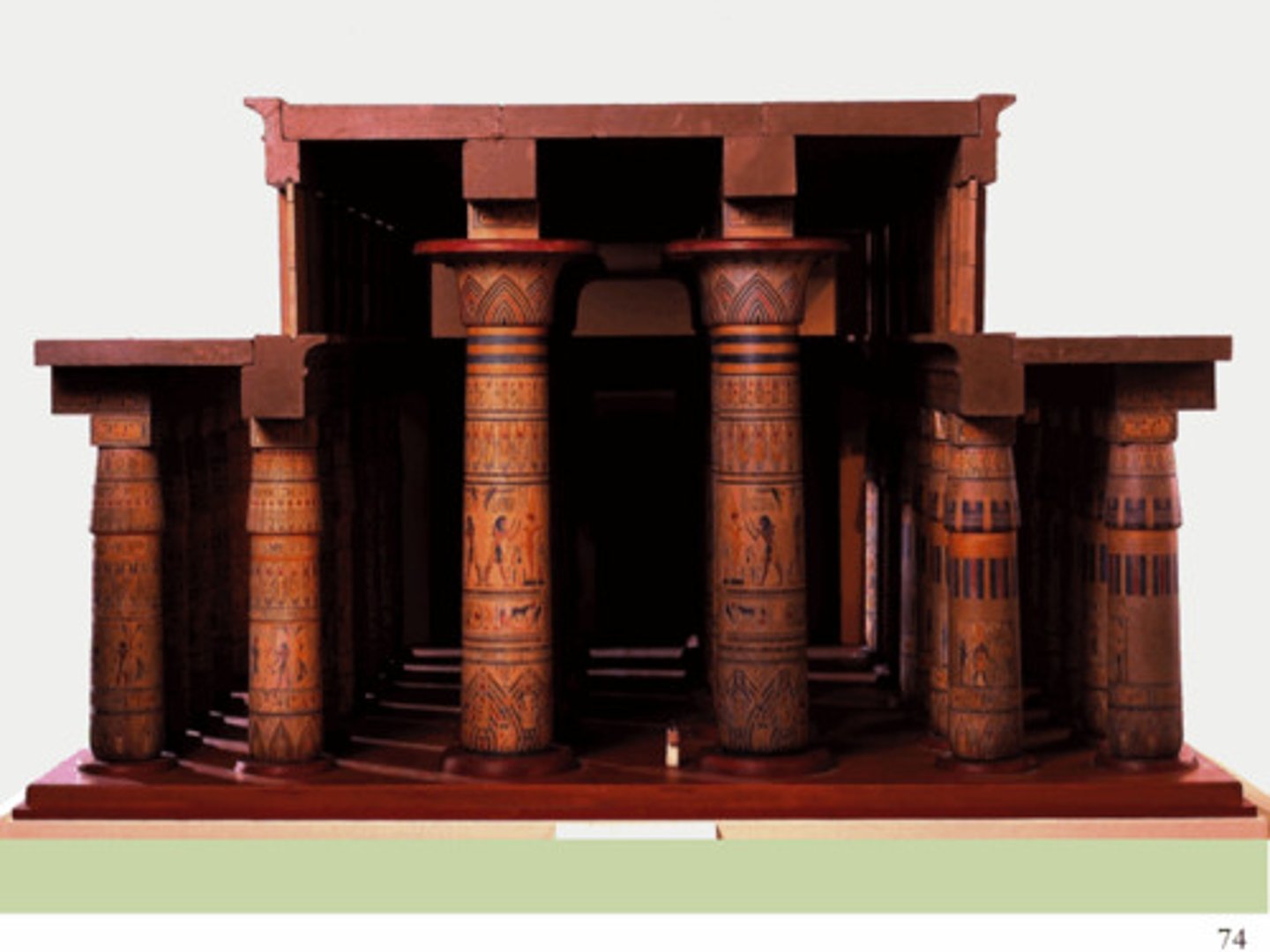
Hypostyle Hall
Contains a double row of columns higher than the others
Sanctuary
The innermost room of the Egyptian temple, contains small shrine where the god "lived," usually in the form of a statue
Tripartite Plan
A plan consisting of reception, central hall and private areas; reflect the Egyptian cosmology or worldview
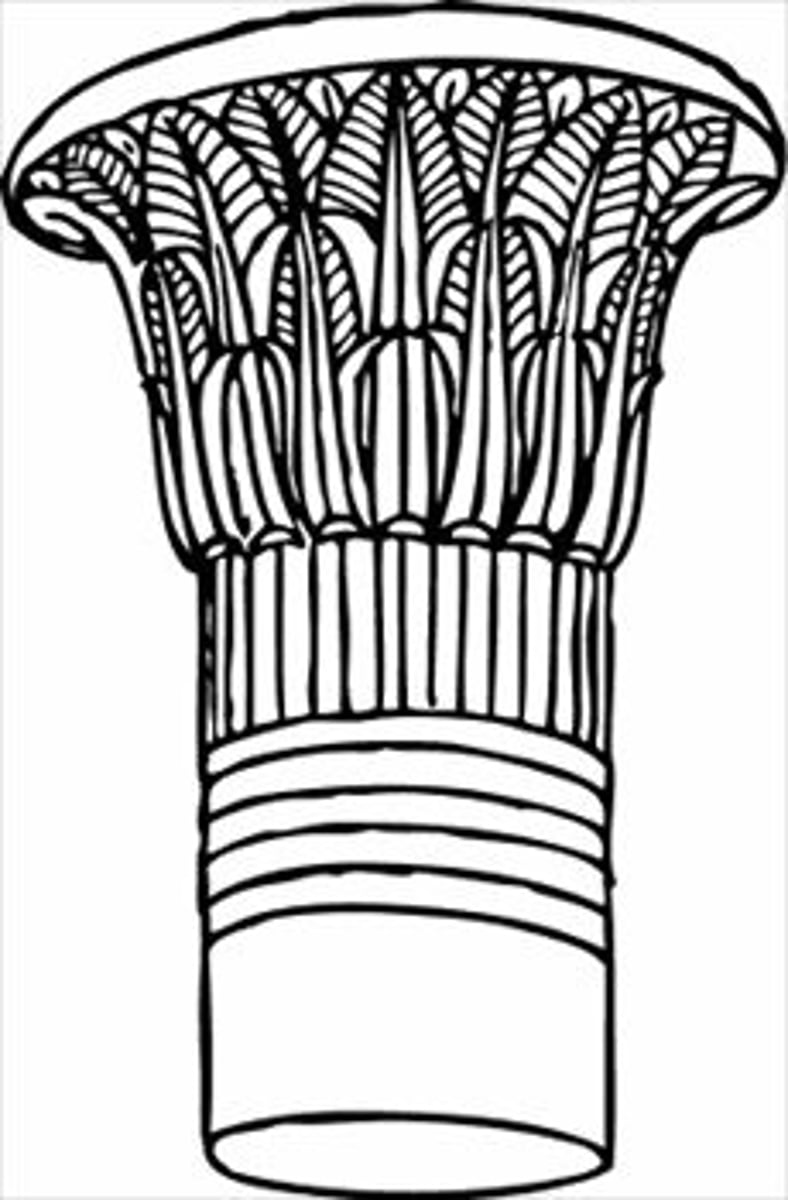
Papyrus Bundle Capital
What is this type of capital?
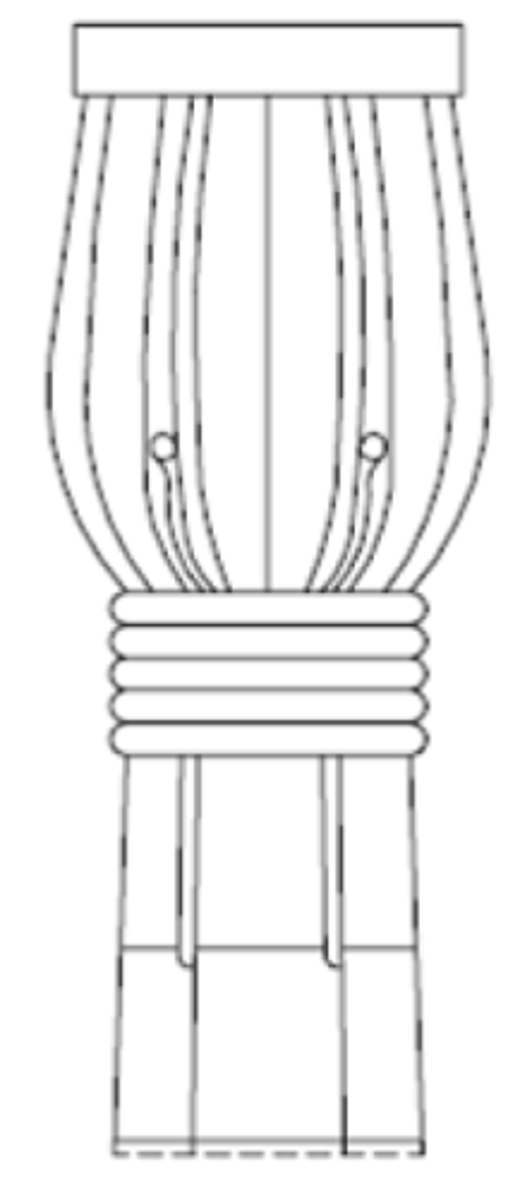
Lotiform Capital
What is this type of capital?
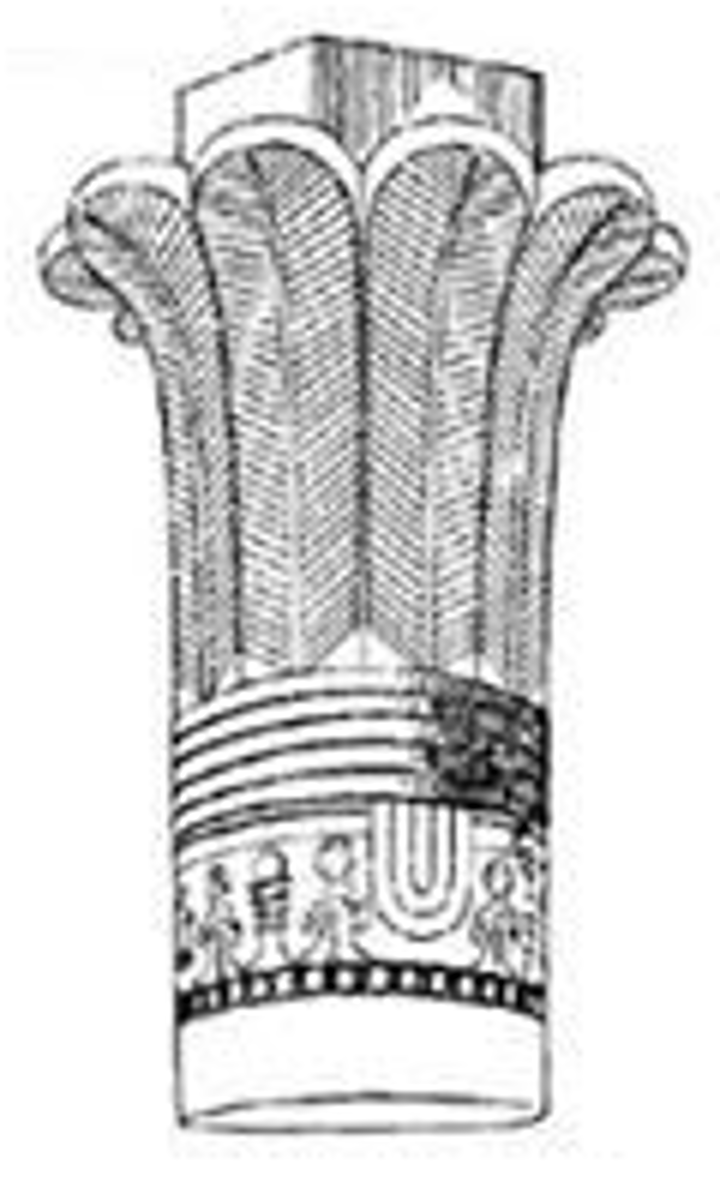
Palmiform Capital
What is this type of capital?
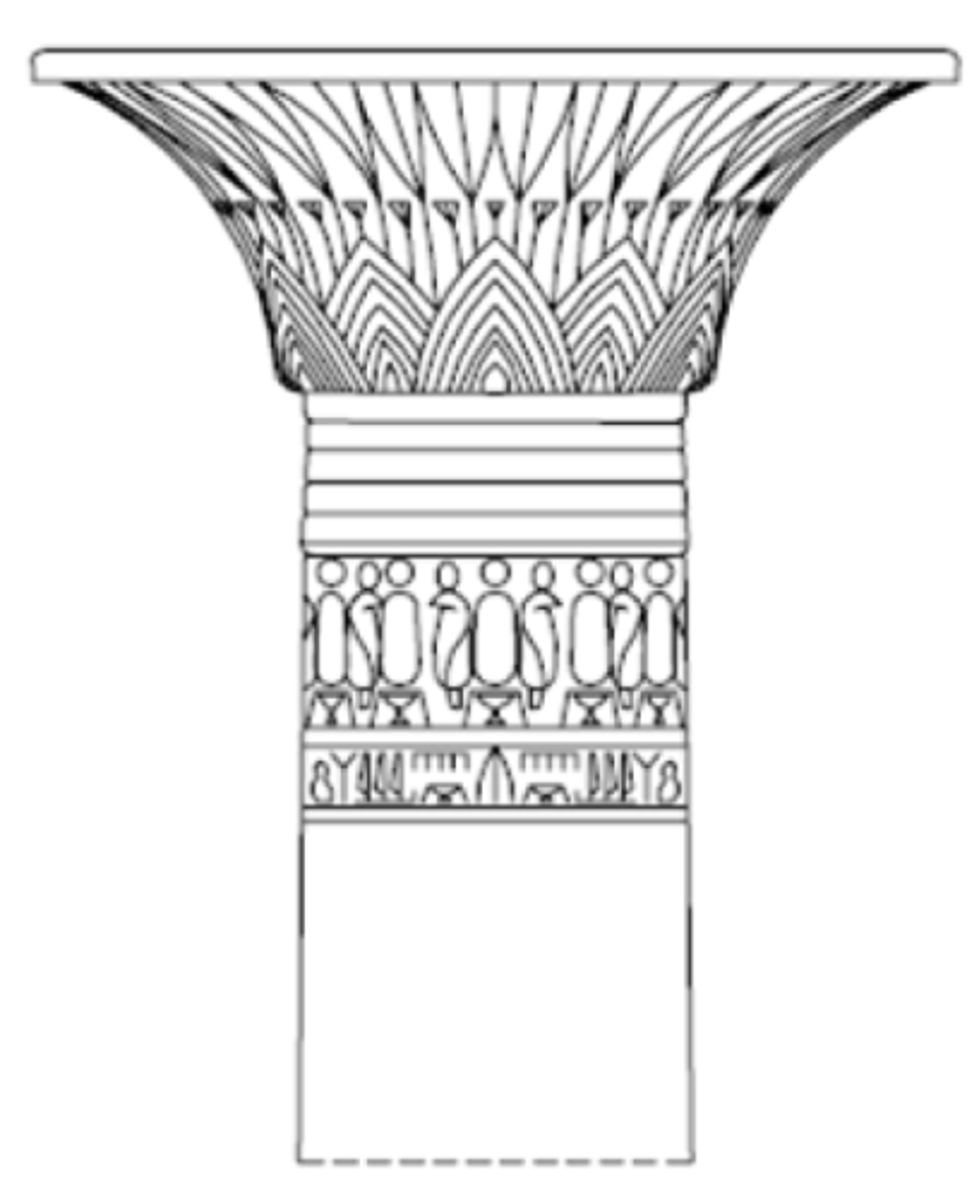
Campaniform Capital
What is this type of capital? Bell shaped form; either lotus or papyrus
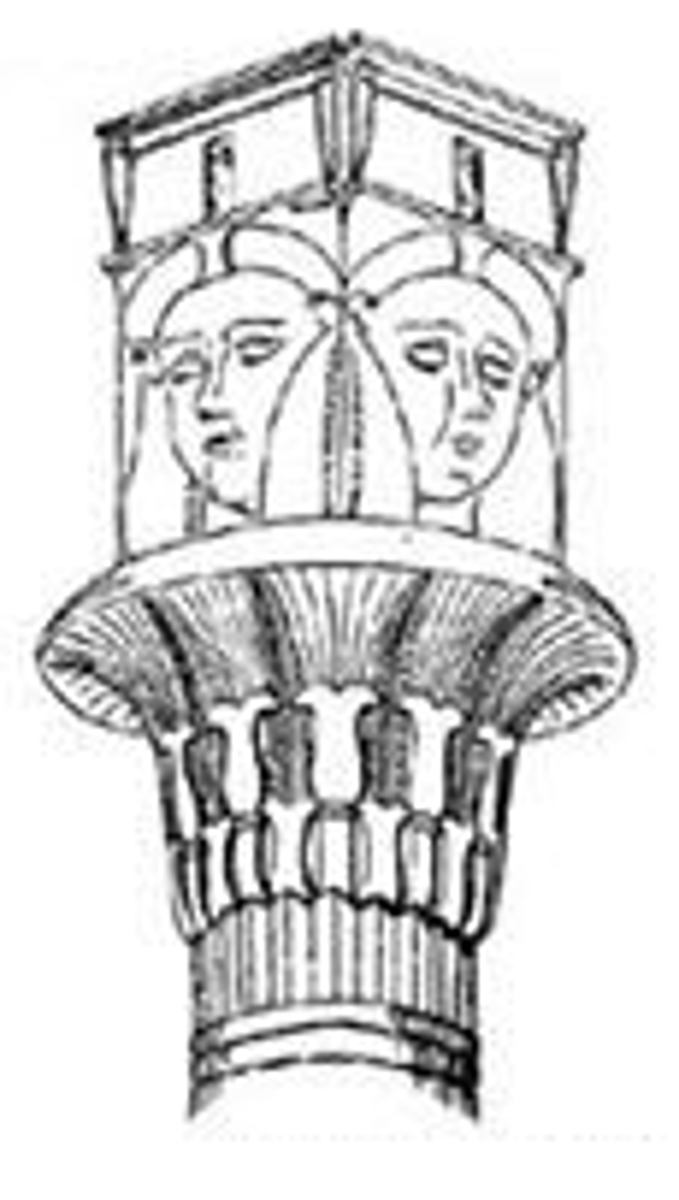
Hathor-headed Capital
What is this type of capital? 4 faced capital with heads of hathor
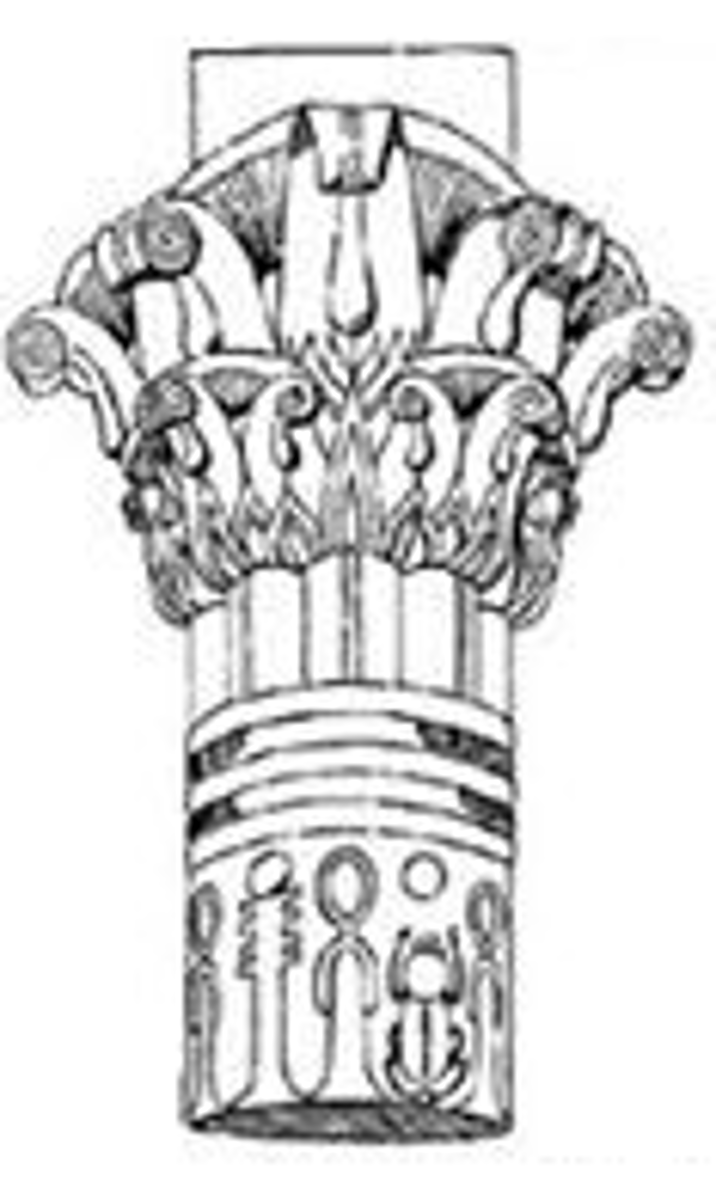
Volute Capital
What is this type of capital?
Pyramidion
A pyramid shaped block set as the finishing element atop an obelisk
The Giza Pyramids
The most elaborate of Egyptian requirement for the afterlife Pyramid of Khufu
Stepped Pyramid of Zoser
First stepped pyramid built
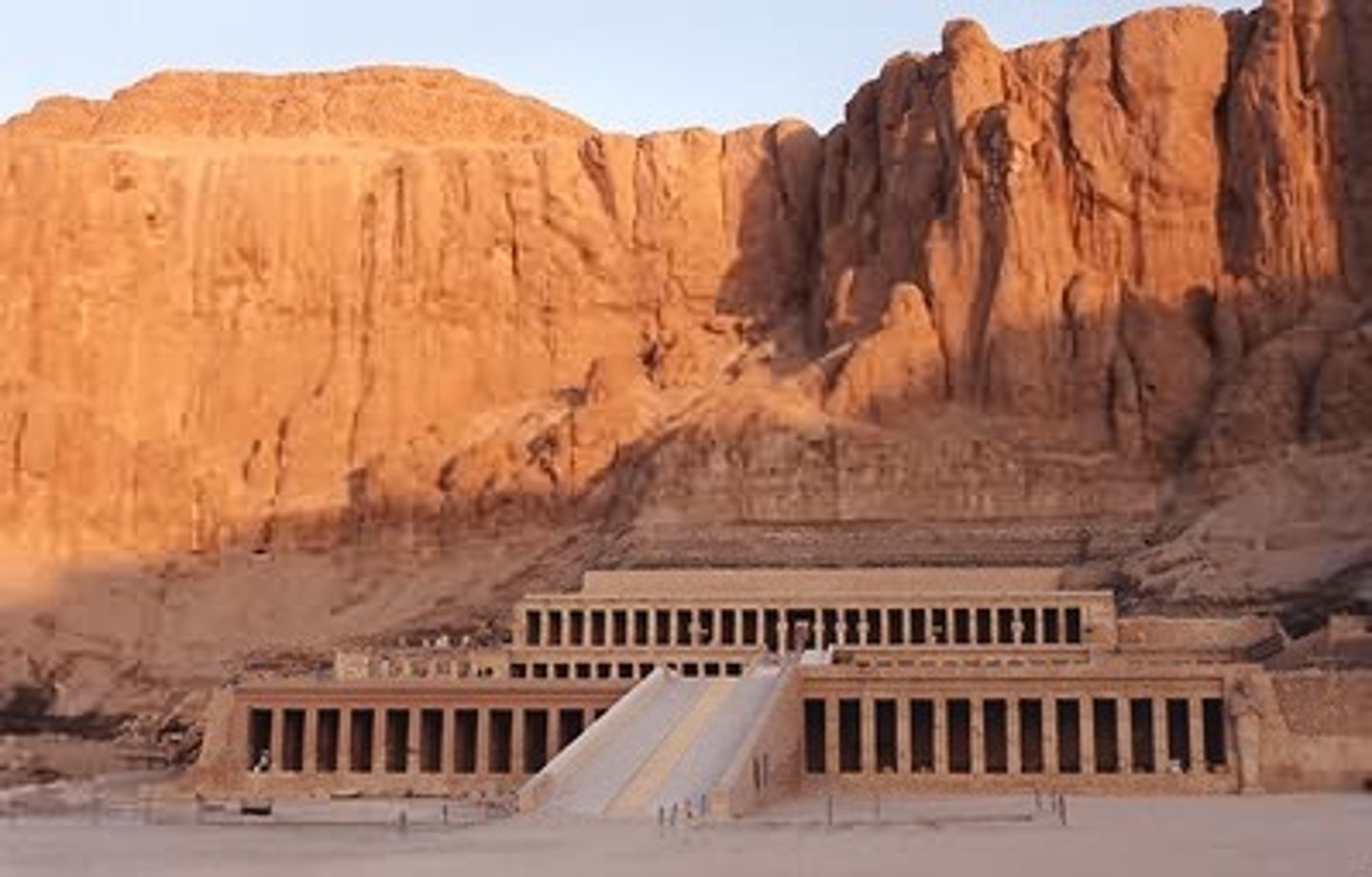
Mortuary Temple of Hatshepsut
Composed of three large terraces connected to each other by ramps
Great Temple of Amun, Karnak
Boasts if a hypostyle hall with 134 freestanding columns in 16 rows. The site is built by a sacred lake
Great Temple of Abu-Simbel
A rock-cut temple commissioned by Rameses II to honor his own memory
Characteristics of Egyptian interiors
Made of sun dried bricks with flat roofs and small flat windows
Larger homes had clerestory windows
Ceilings were blue and lightly painted
Loggia
A roofed arcade or gallery with open sides stretching along the front or side of the house
Portico
Roofed porch upheld by column
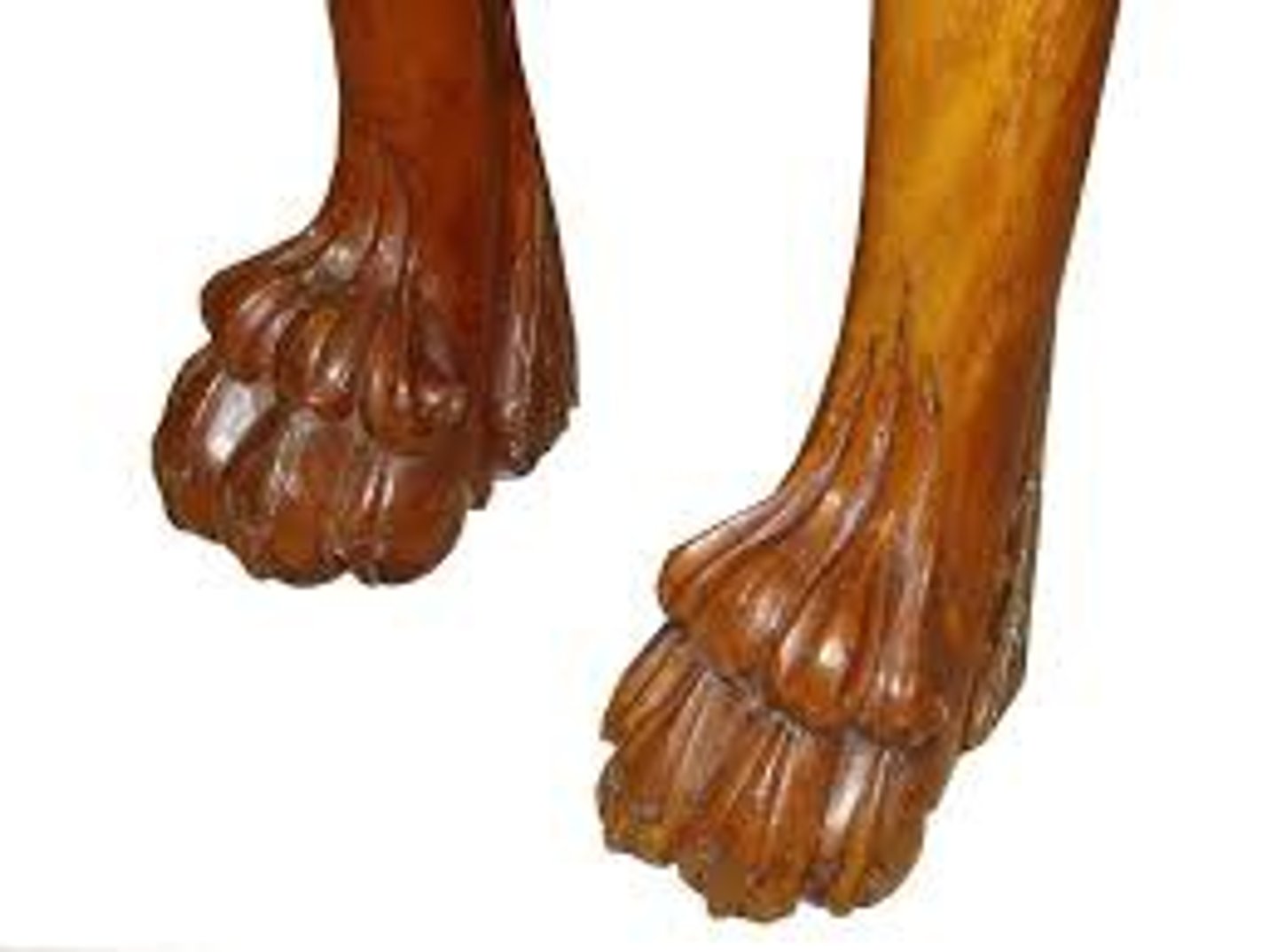
Lion's Paw Foot
What is this type of foot?
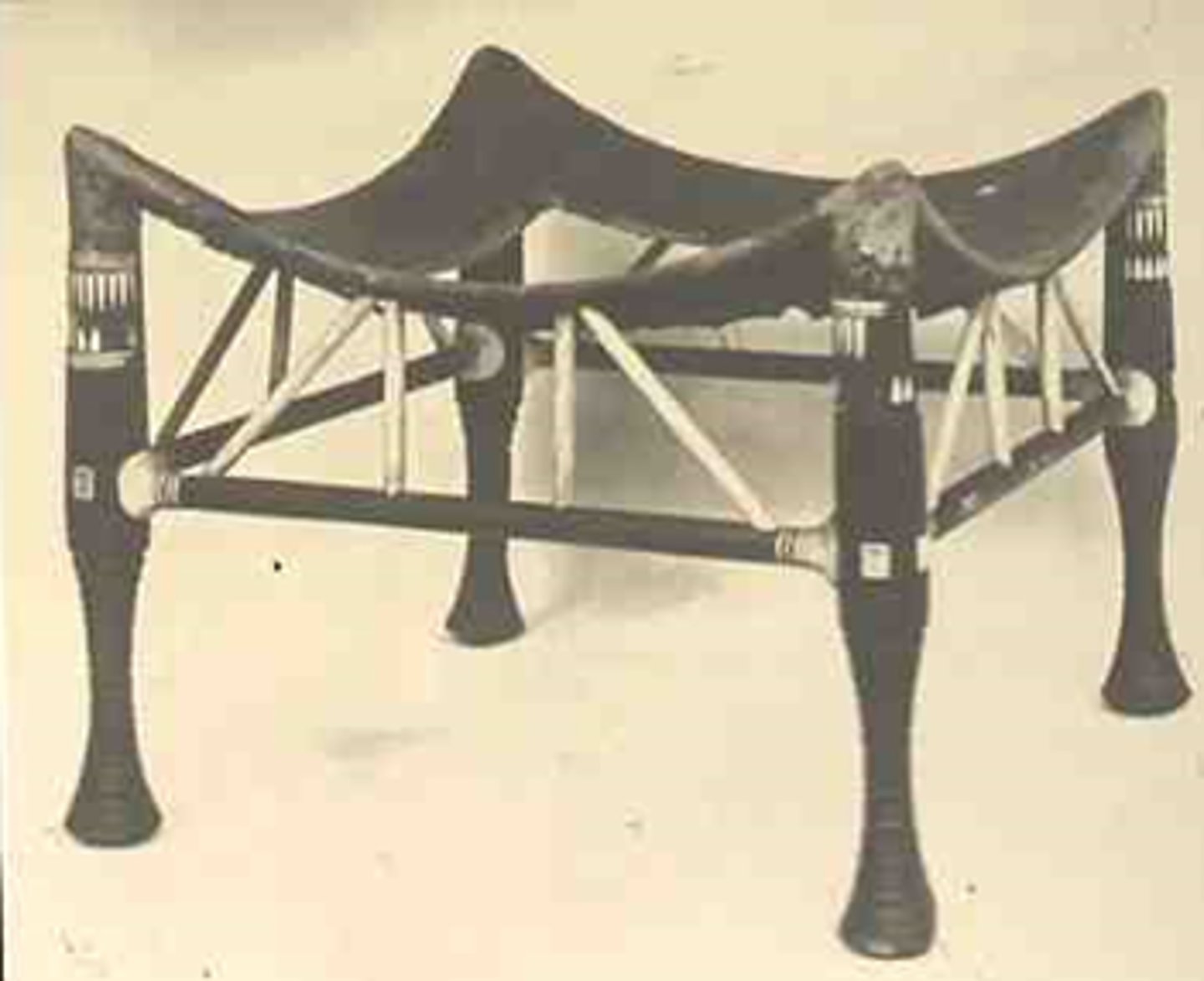
Stool (Collapsible Stool)
Most common of Egyptian furniture; they invented this
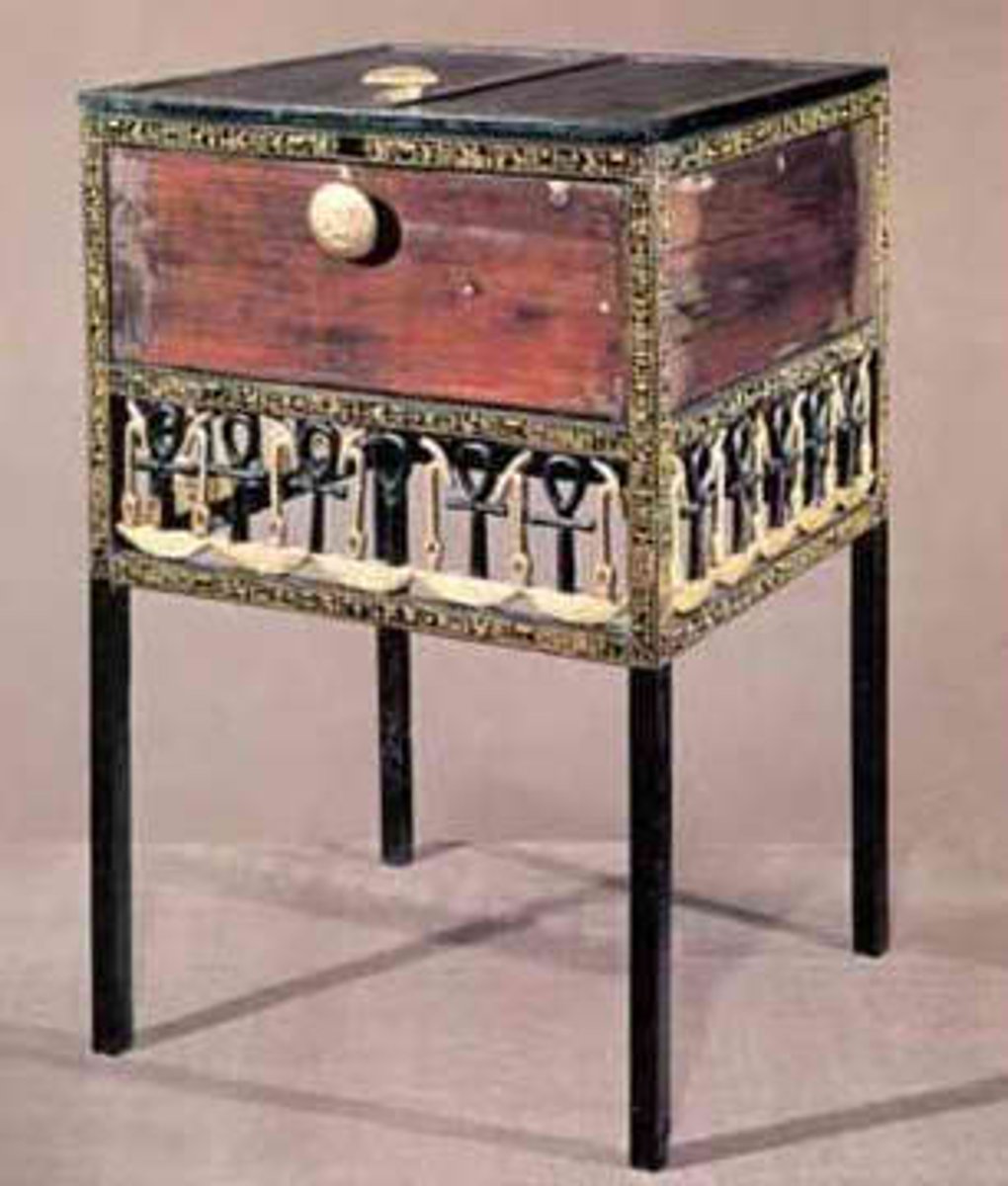
Chest
Important part of an egyptian household
Tables
Used for gambling and eating
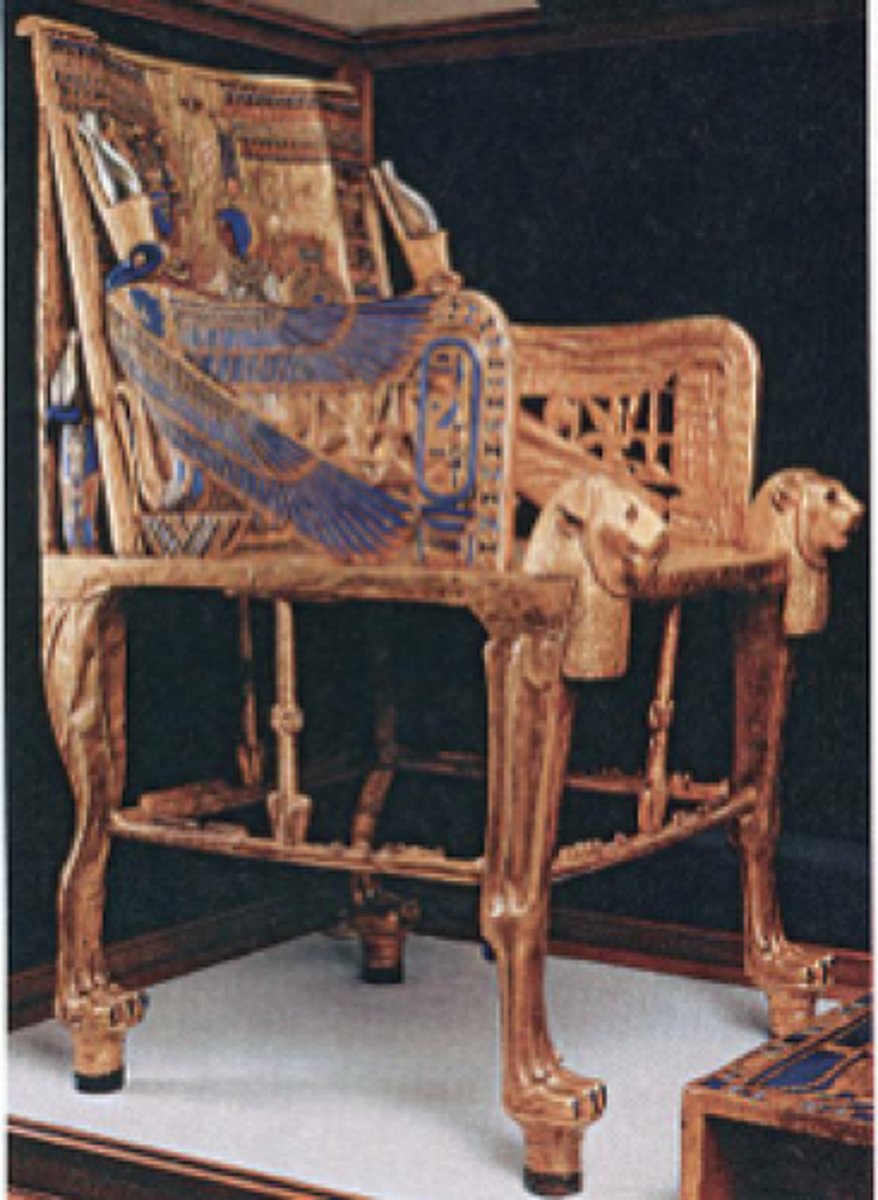
Chair
Furniture for important people only
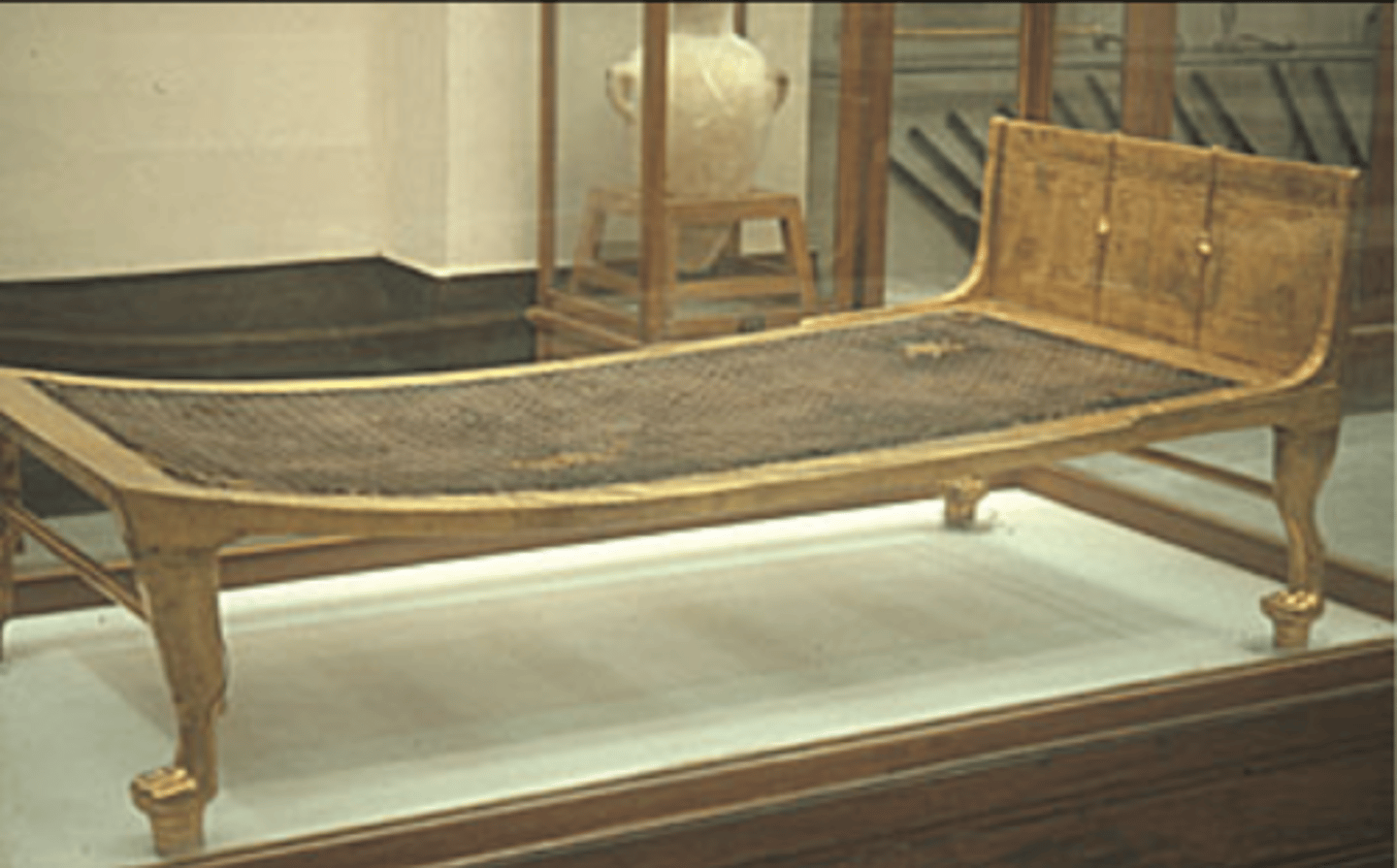
Bed
Bull's hooves and lion's paw
T&g construction
Rush leather seats
Varnish or gesso for finishing
Bas-relief
Type of carving in which the design is made prominent by raising it from the background
Incised
The inside of the outline is the one that is carved out
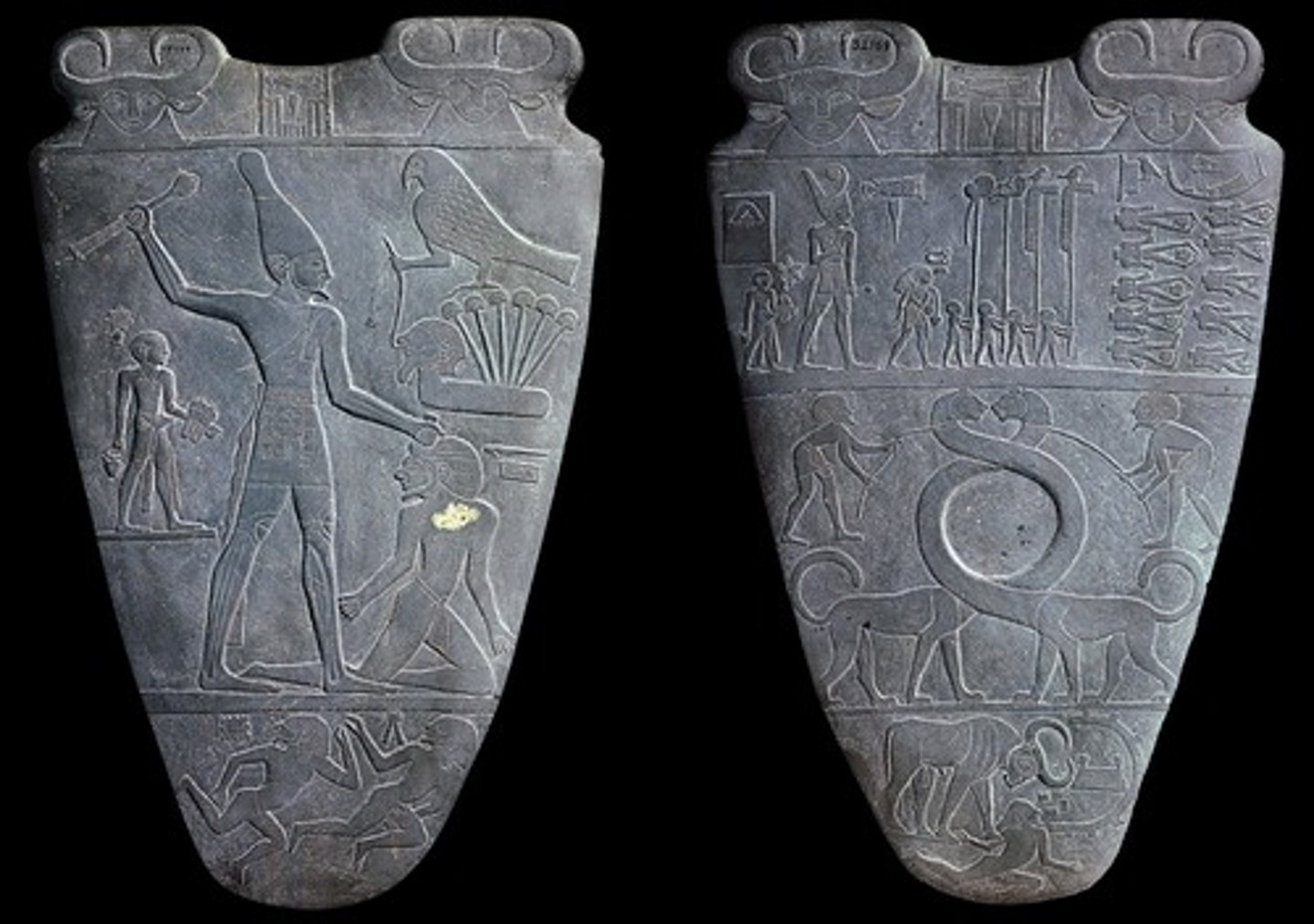
Palette of King Narmer
Used for mixing eye makeup