13 - Blood, Hemostasis & Blood coagulation Resistance of the body to Infection
 Call Kai
 Learn
Learn Practice Test
 Spaced Repetition
 Match
Match Flashcards
 Knowt Play
1/267

There's no tags or description
Looks like no tags are added yet.
Name | Mastery | Learn | Test | Matching | Spaced | Call with Kai |
|---|
No analytics yet
Send a link to your students to track their progress
268 Terms
Blood is a _______ _______ in fluid form.
connective tissue
Blood is considered as the 'fluid of life' because....?
it carries oxygen from lungs to all parts of the body and carbon dioxide from all parts of the body to the lungs.
Blood is known as ____ _____ ______ because it carries nutritive substances from the digestive system and hormones from endocrine gland to all the tissues.
fluid of growth
The blood is also called the 'fluid of health' because it protects the body against...?
the infectious diseases.
What is the function of red blood cells?
Transport and regulation
Red blood cells transports...?
O2 and CO2 in RBCs Hb (each RBC has about 280 million hemoglobin molecules)
What other essentials do red blood cells transport?
1. nutrients
2. Hormones
3. Metabolic Waste
What do RBC regulate?
1. body temp.
2. pH
3. Fluid Volumes
Normal human RBCs have a ________ shape, their diameter is about ___ µm, and their thickness is about ___ µm
biconcave, 7-8, 2.5
Typical concentration is ____ ± 0.3 million per cubic mm in females and ___ ± 0.3 million per cubic mm in males.
4.7, 5.2
RBC's lack a?
nucleus
RBC's contain...?
Carbonic anhydrase (critical for transport of carbon dioxide)
Blood is ____ in color. Arterial blood is ________ red because it contains ______ oxygen and venous blood is ______ red because of more _______ _______.
red,scarlet, more, purple, carbon dioxide.
Average volume of blood in a normal adult is ____. In a newborn baby, the volume is ______ . It increases during growth and reaches 5 L at the time of puberty. In females, it is slightly less and is about 4.5 L. It is about ____ of the body weight in a normal young healthy adult, weighing about 70 kg.
5 L, 450 ml, 8%
Persons living at high altitudes have ______ numbers of RBCs.
greater
In fact, erythrocytes are estimated to make up about ___ of the total cells in the body.
25 %
What are the different granulocytes? ( In order of abundance)
Neutrophils, Eosinophils, Basophils
What is the function of leukocytes?
All function in body defenses.
How to leukocytes move?
Exit capillaries and move into tissues.
What is the life span of leukocytes?
a few days
What is the function of granulocytes?
Non-specific resistance to disease, classified according to membrane bound granules in cytoplasm.
What is the most common leukocyte?
Neutrophil
What is the life span of neutrophils?
lifespan of minutes and days.
What is the characteristic of neutrophils?
Nuclear loves increase with age; pale lilac granules.
What is the function of a neutrophils?
phagocytosis, particularly effective against the bacteria. Release cytoxic chemicals from granules.
What is the characteristic of eosinophils?
Nucleus generally two-lobed bright red-orange granules.
What is the function of eosinophils?
Phagocytosis, particularly effective with antigen-antibody complexes. Release antihistamines. Increase in allergies and parasitic infections.
What is the life span of the eosinophils?
Lifespan of minutes to days.
What are the characteristics of basophils?
Nucleus generally two-lobed, but difficult to see due to presence of heavy, dense, dark purple granules.
What are the function of basophils?
Promotes inflammation
What is the lifespan of basophils?
Least common leukocyte, lifespan unknown.
What is the characteristics of agranulocytes?
Lack abundant granules in cytoplasm; have a simple-shaped nucleus that may be indented.
What is the function of agranulocytes?
body defenses
What is the lifespan of agranulocytes?
Group consists of two major cell types from different lineages.
What is the characteristic of lymphocytes?
Spherical cells with a single often large nucleus occupying much of the cell's volume; stains purple; seen in large, NK cells and small B & T cells.
What is the function of lymphocytes?
Primarily specific immunity, T cells directly attack other cells. B cells release antibodies; NK cells are similar to T cells but nonspecific.
What is the lifespan of lymphocytes?
Initial cells originate in bone marrow, but secondary production occurs in lymphatic tissues, several distinct subtypes, memory cells form after exposure to a pathogen and rapidly increase responses to subsequent exposure, lifespan of many years.
The monocytes are the largest...?
Largest leukocyte with an indented or horshoe-shaped nucleus.
What is the function of the monocytes?
Very effective phagocytic cells engulfing pathogens or worn out cells, also serve as APCs for other components of the immune system.
Where are monocytes produced?
red bone marrow
What are monocytes called after leaving circulation?
Macrophages.
What is the abundance of platelets?
150-500k, average 350k
What are platelets?
Cell fragments surround by a plasma membrane and contains granules, stain purple.
What is the function of platelets?
Hemostasis plus release growth factors for repair and healing of tissue.
Where are platelets formed?
formed in red bone marrow from megakaryocytes, shed platelets into circulation.
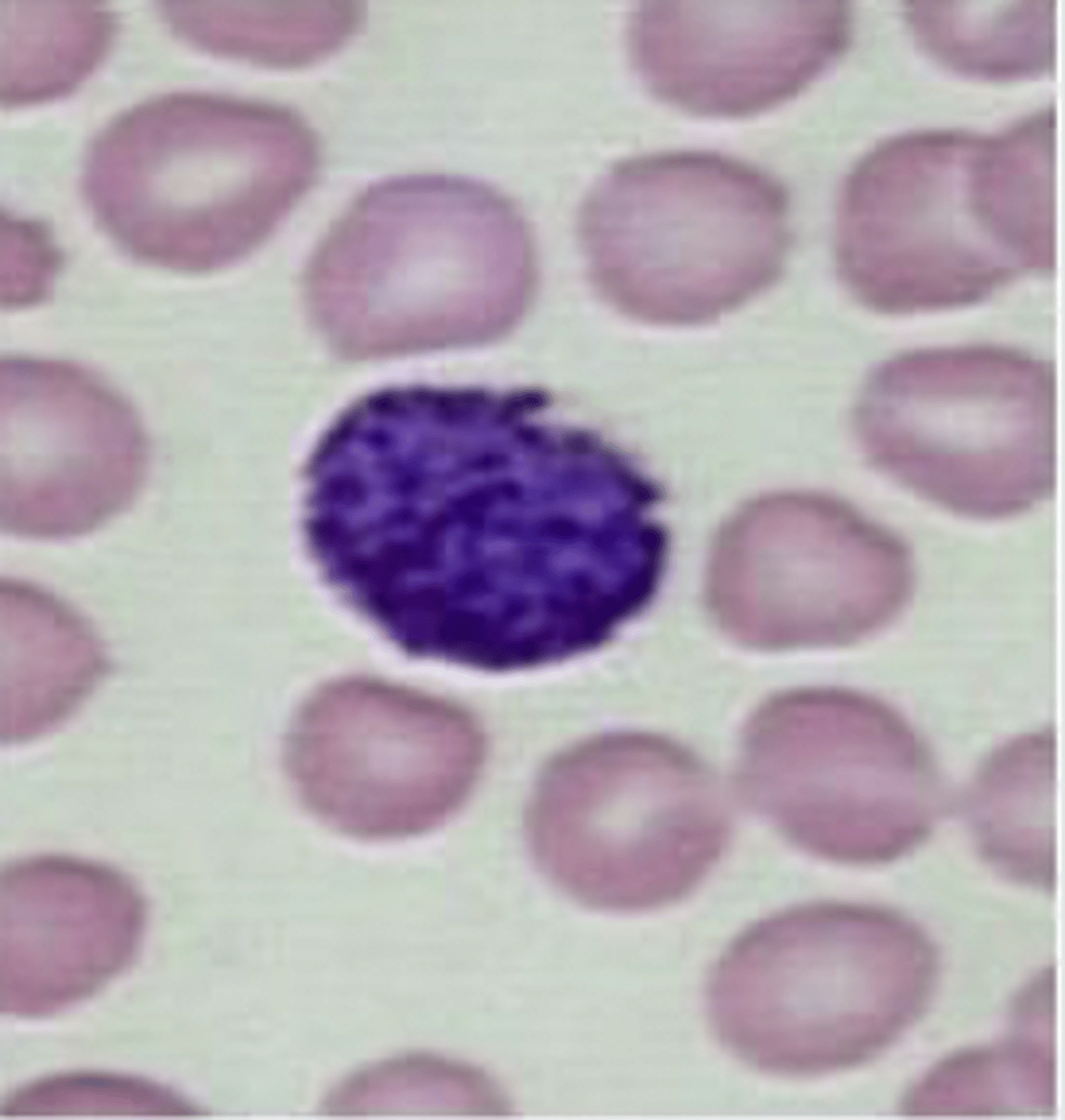
Basophil
What image is being depicted here?
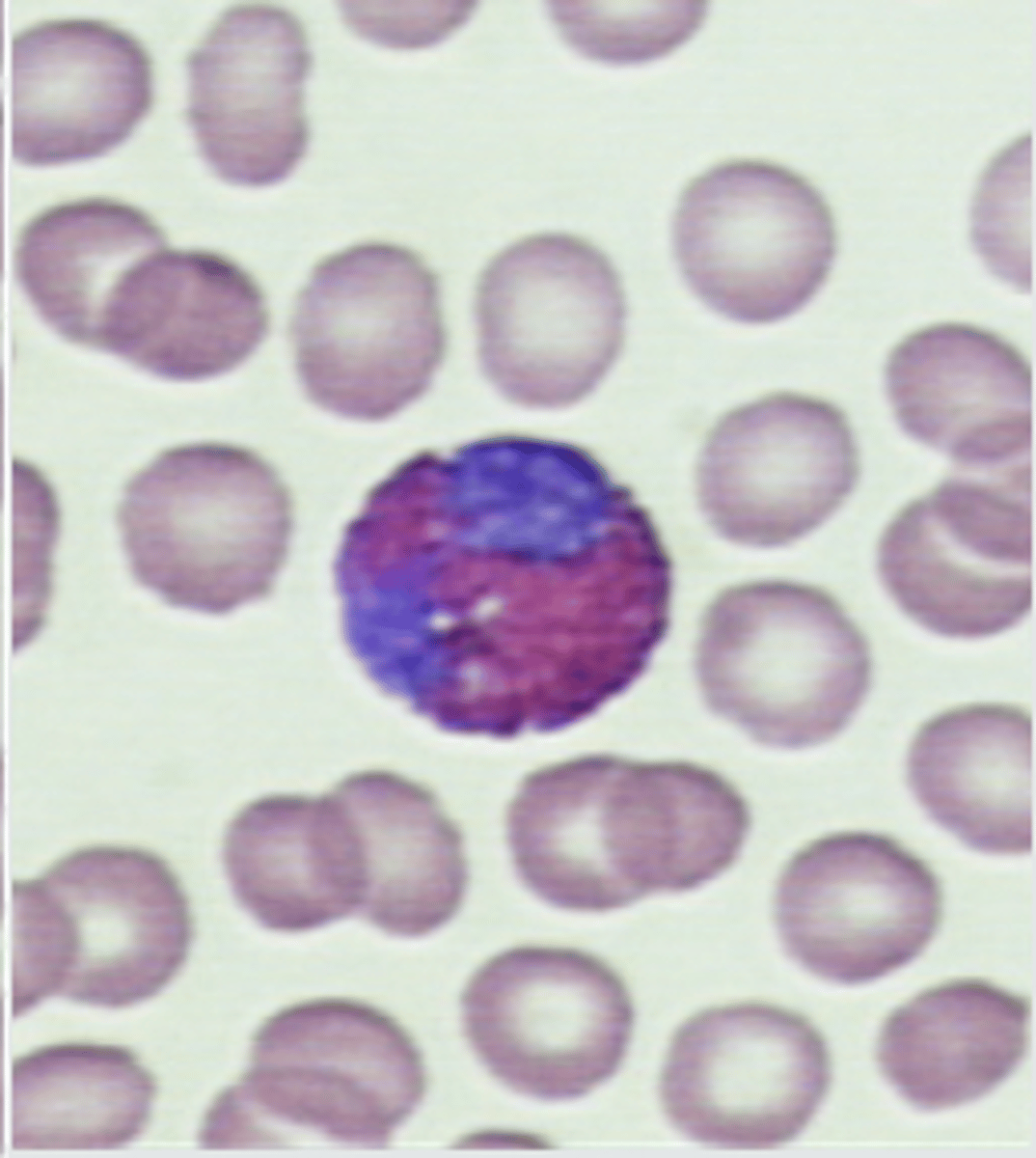
Eosinophil
What image is being depicted here?
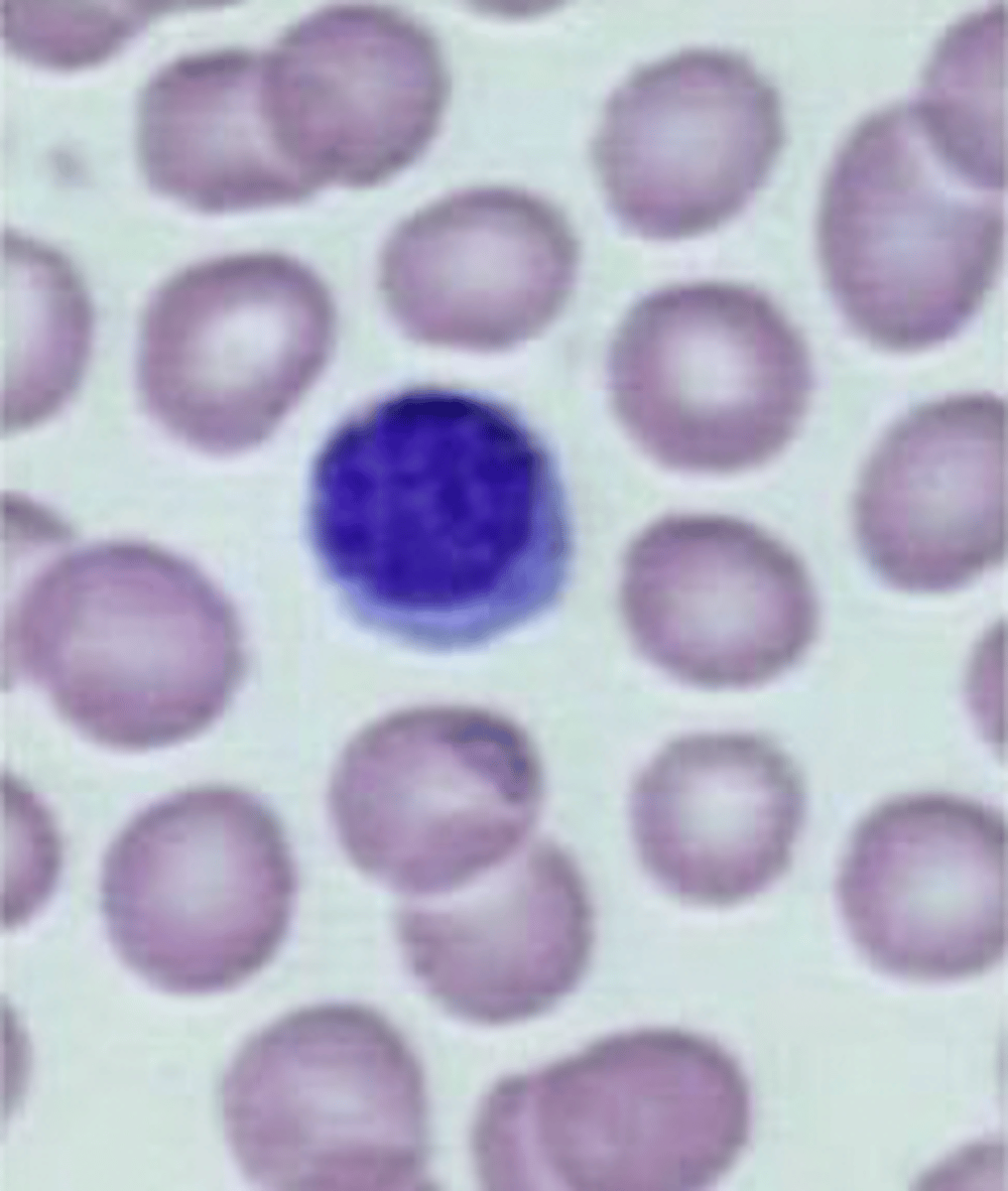
Lymphocyte
What image is being depicted here?
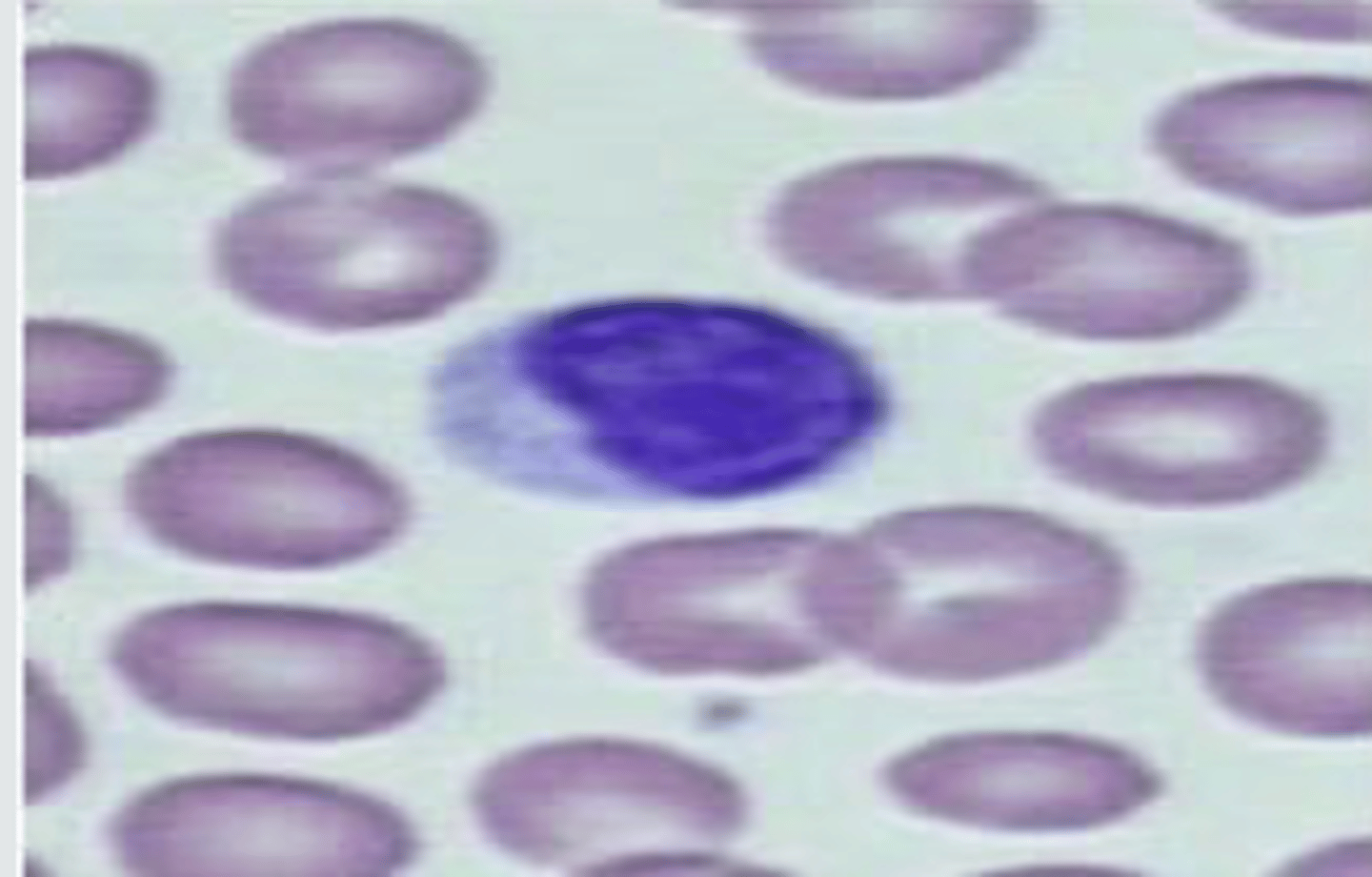
Monocyte
What image is being depicted here?
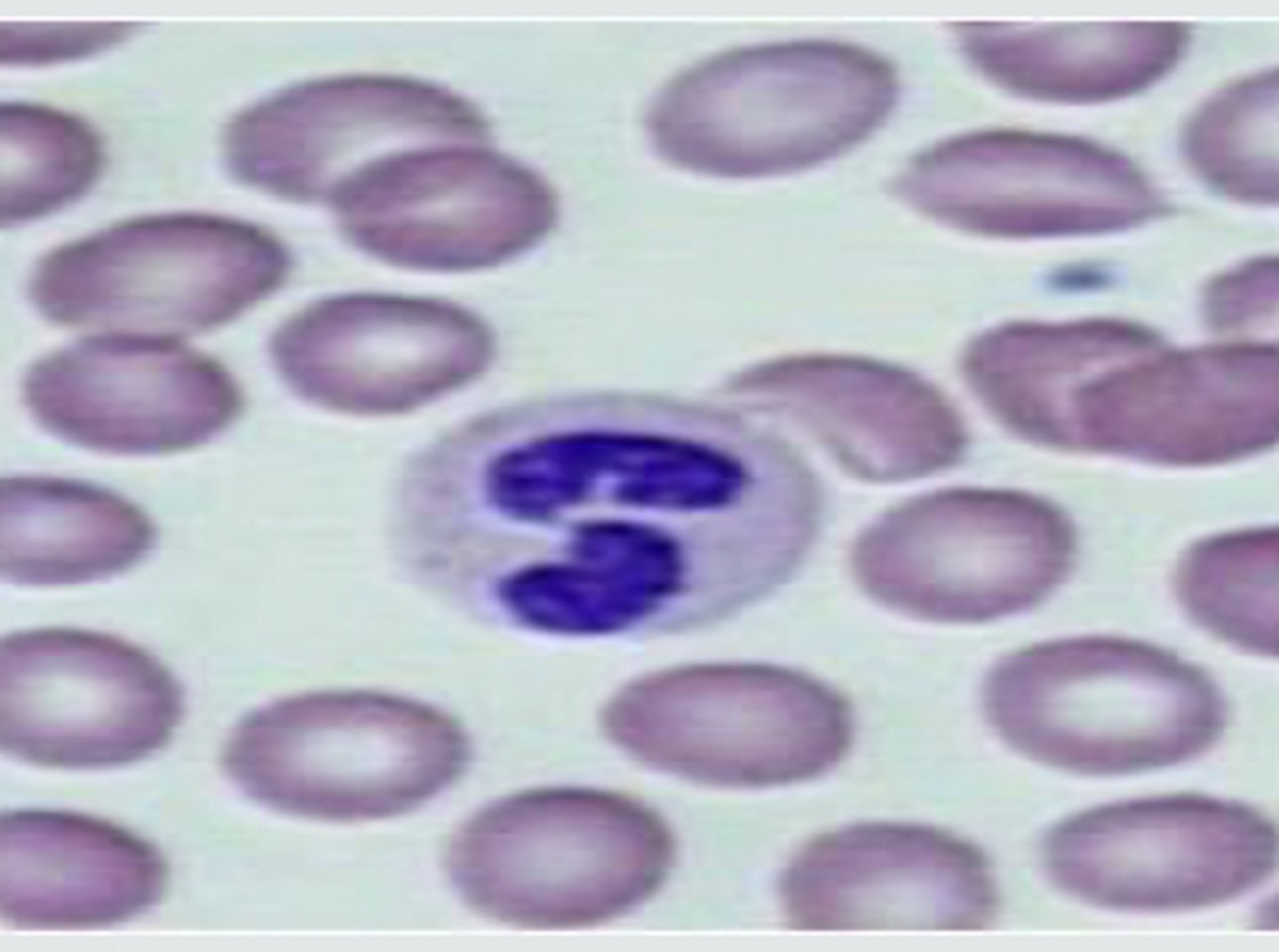
Neutrophil
What image is being depicted here?
What is erythropoiesis?
Entire process of RBC formation.
RBC formation begins in the red bone marrow as hematopoietic stem cells and goes through several stages of development to become erythrocytes
How long do RBC take to mature?
Approximately 4 days.
How often are RBCs created and destroyed?
RBCs are created and destroyed at approximately 200 billion per day in an adult.
Where do we find the red bone marrow?
Red marrow is found mainly in the flat bones such as hip bone, breastbone, skull, ribs, vertebrae and shoulder blades, and in the cancellous ("spongy") material at the proximal ends of the long bone's femur and humerus.
What are the stages of erythropoiesis?
1. Hemocytoblast
2. Proerythroblast
3. Basophilic erythorblast
4. polychromatophilic erythroblasts
5. Orthochromatophilic erythorblasts
6. nuclear extrusion
7. reticulocyte
What stage would we find a pluripotential stem cell?
Hemocytoblast
What stage of the erythropoiesis would we see dispersed chromatin, nucleoli and cytoplasmic basophilia?
proerythroblast
What stage of the erythropoiesis would we see clumped chromatin, no nucleoli, and maximum basophilia?
basophilic erythroblast
What stage of the erythropoiesis would we see condensed chromatin, grey-green cytoplasm?
polychromatophilic erythroblast?
What stage of the erythropoiesis would we see condensed eccentric nucleus and a pink cytoplasm?
Orthochromatophilic erythroblast
What stage of the erythropoiesis would we see an enucleate cell, spherical and slight basophililia?
Reticulocyte
Hemocytoblast
What stage of erythropoiesis is observed?
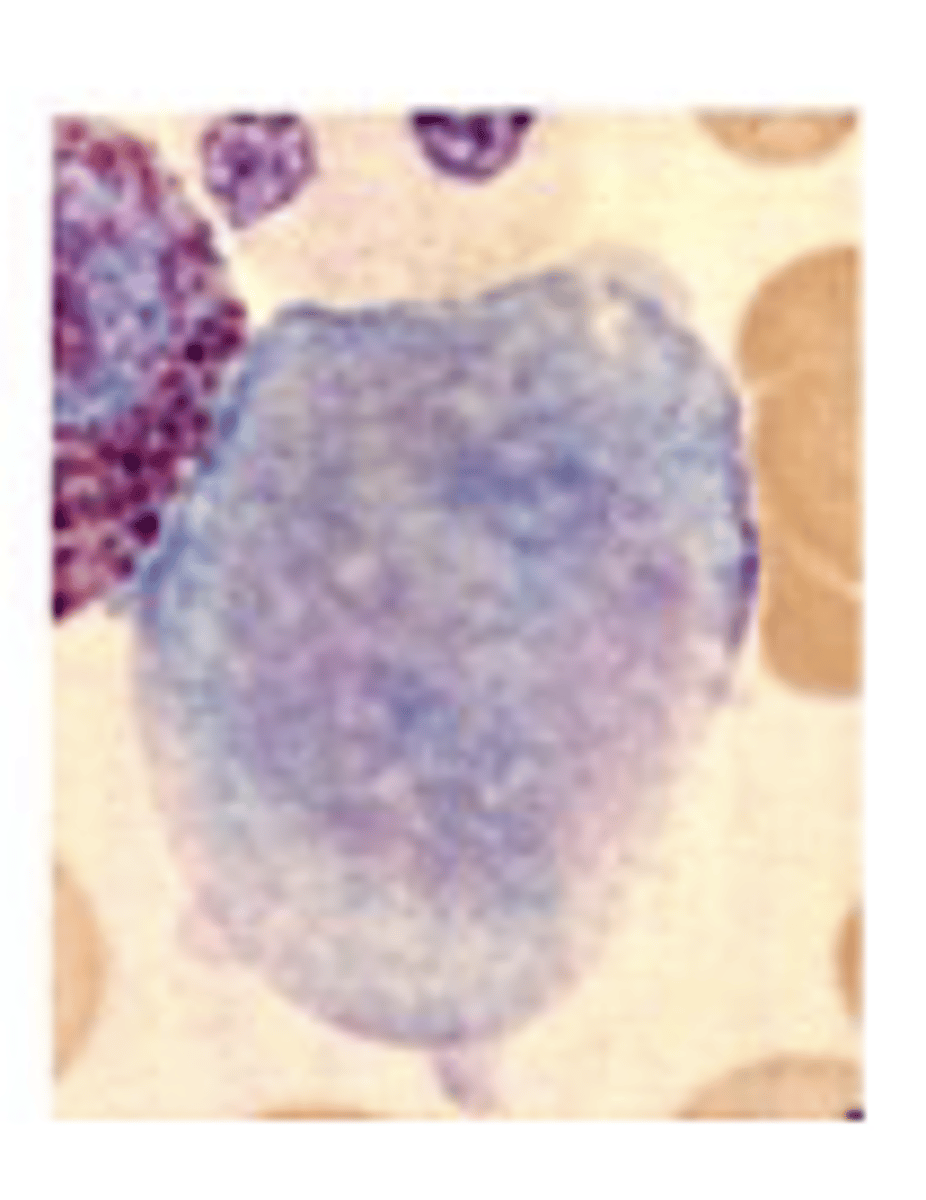
Proerythroblasts
What stage of erythropoiesis is observed?
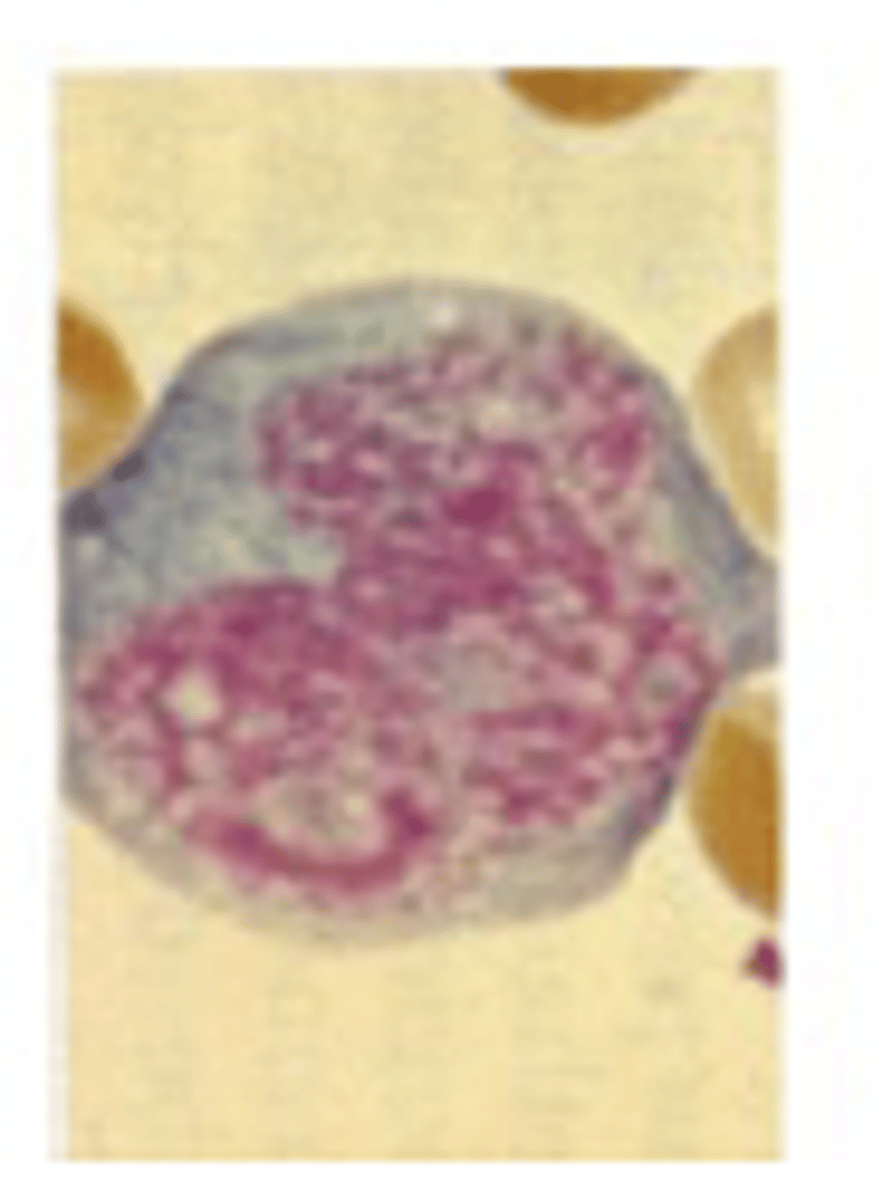
basophilic erythroblast
What stage of erythropoiesis is observed?
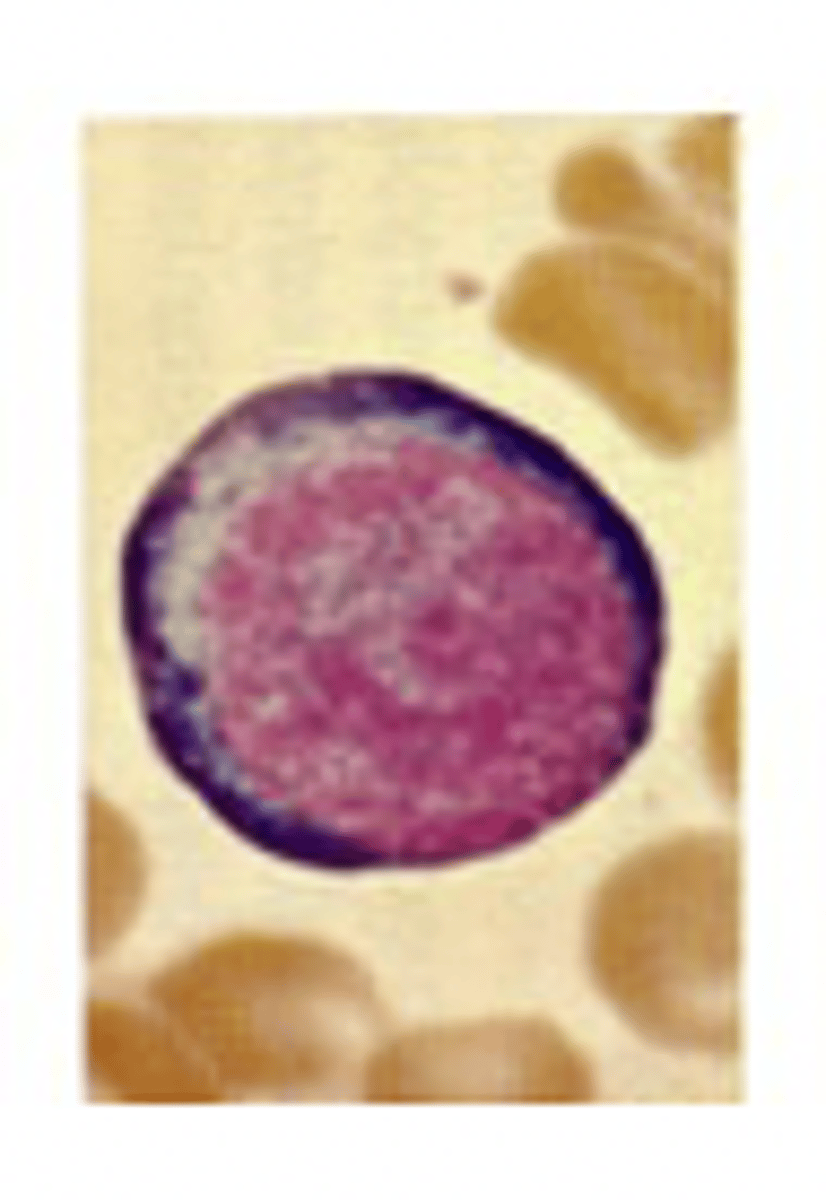
polychromatophilic erythroblast
What stage of erythropoiesis is observed?
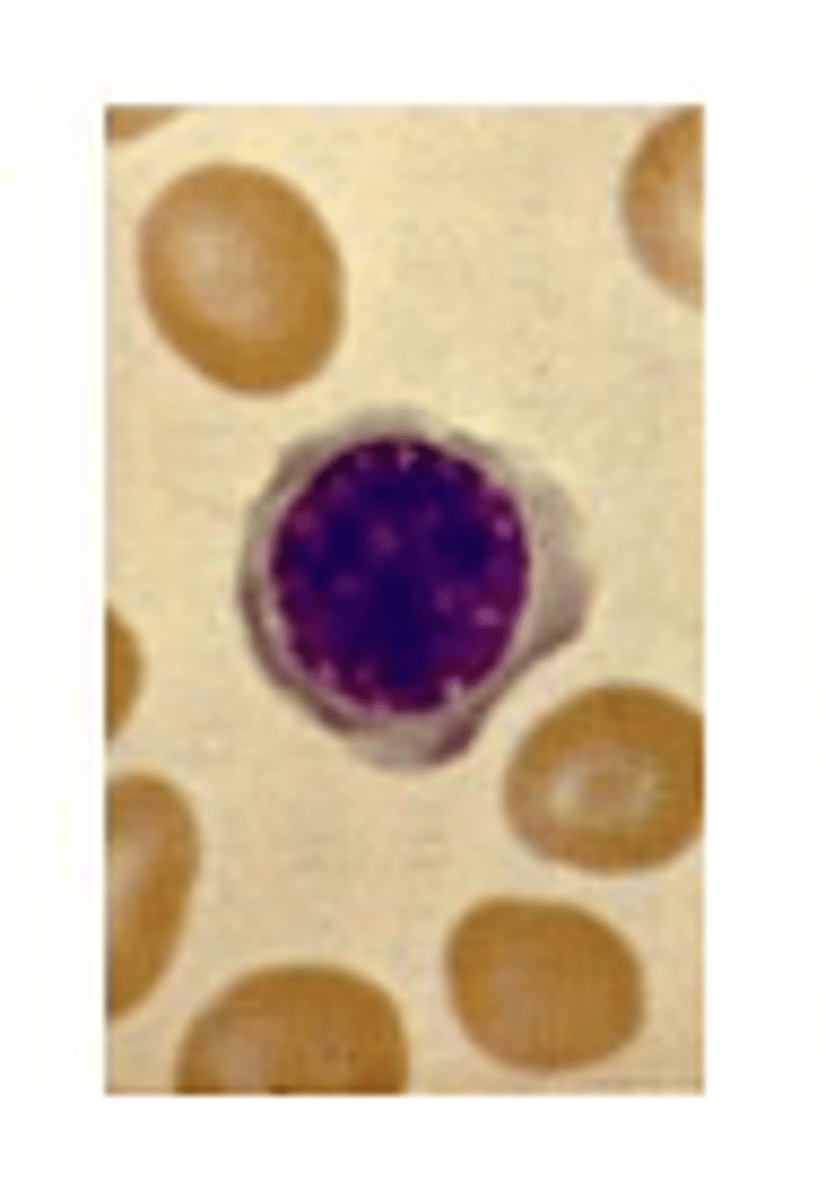
orthochromatophilic erythroblast
What stage of erythropoiesis is observed?
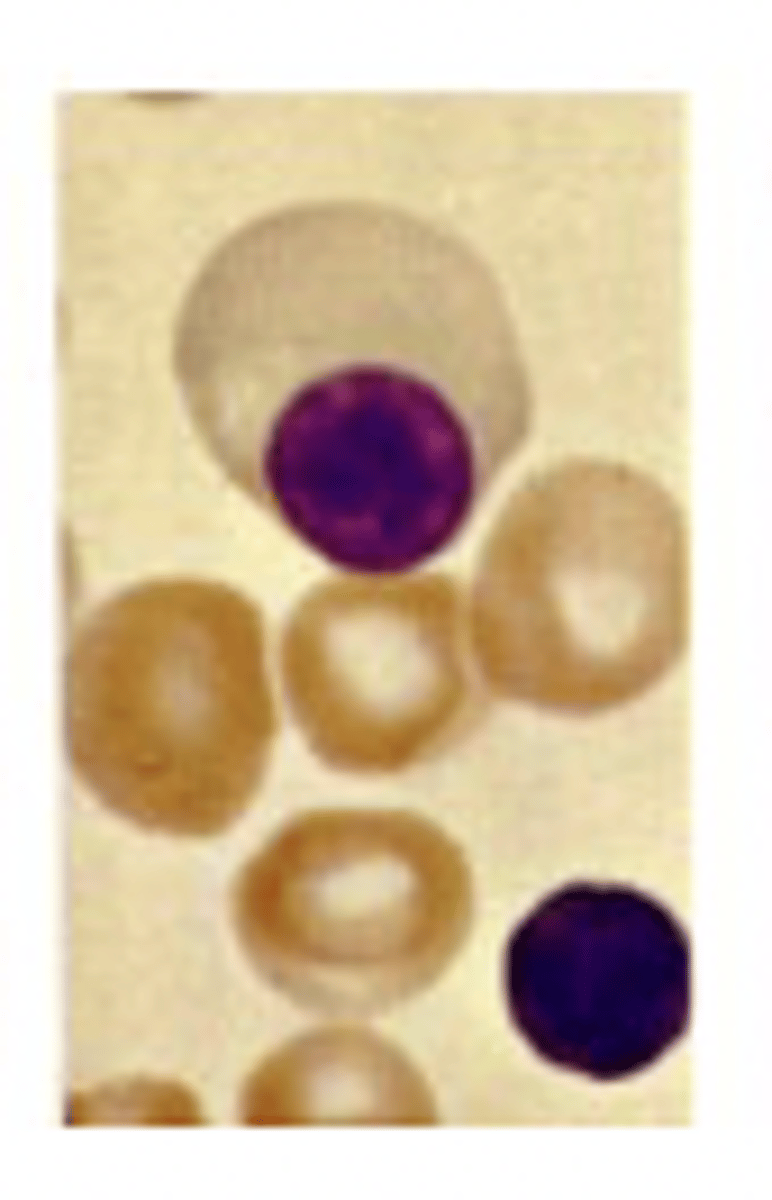
Nuclear extrusion
What stage of erythropoiesis is observed?
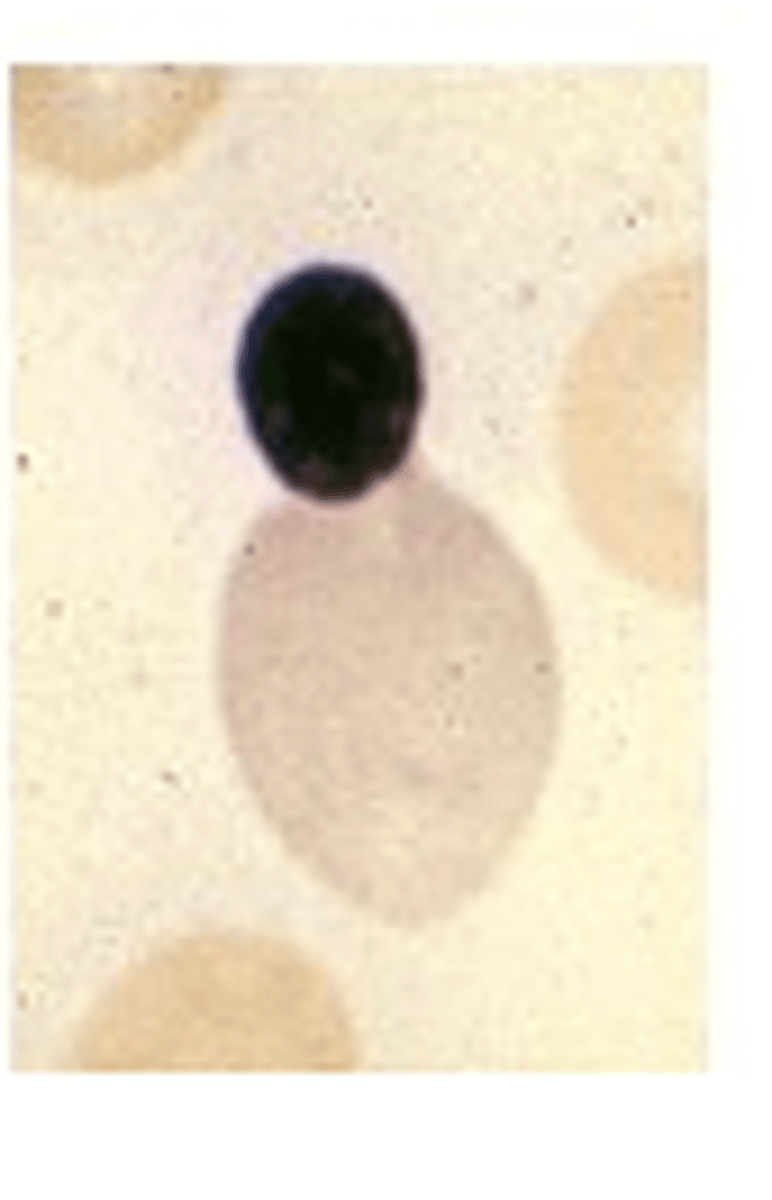
reticulocyte
What stage of erythropoiesis is observed?
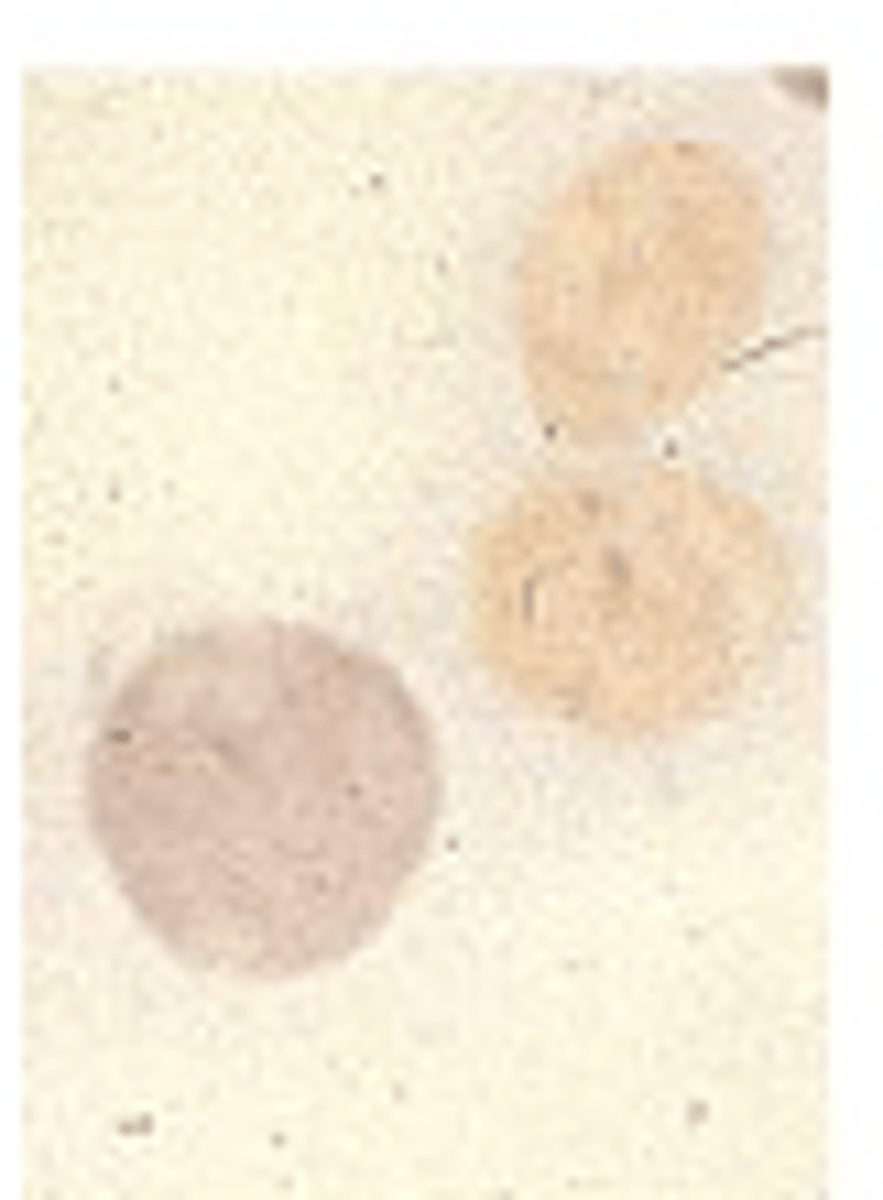
In what stage of erythropoiesis would we see ribosome synthesis?
Phase 1
In what stage of erythropoiesis would we see hemoglobin accumulation?
Phase 2
In what stage of erythropoiesis would we see ejection of nucleus?
Phase 3
_________ Regulates Red Blood Cell Production
Erythropoietin
What are the homeostatic mechanisms are used in blood cell regulation?
1. an adequate number of RBCs are always available to provide sufficient transport of oxygen from the lungs to the tissues
2. the cells do not become so numerous that they impede blood flow.
In what pathology would we see acanthocytic RBC?
Liver disease, abetalipoproteinemia
What type of RBCs would we observe projections of varying size at irregular intervals?
Acanthocytes
What RBCs are observed during liver disease, ESRD, pyruvate, kinase deficiency?
echinocytes
What are the characteristics of echinocytes?
Smaller and more uniform projections than acanthocytes
What RBCs are associated with bone marrow infiltration?
Dacrocytes
What are dacrocytes?
RBCs sheds a tear because it is mechanically squeezed out of its home in the bone marrow.
What cells are known as spur cells?
acanthocytes
What cells are known as burr cells?
Echonicytes
What cells are known as tear drop cells?
dacrocytes
What cells are known as helmet cells?
schistocytes
What cells are observed as fragmented RBCs?
schistocytes
Schistocytes are associated with what pathology?
MAHAs, mechanical hemolysis.
What cells are known as bite cells?
Degmacytes
When would one observe degmacytes?
C6PD deficiency
Why do degmacytes happen?
Due to removal of Heinz bodies by splenic macrophages
When would we observe elliptocytes?
Caused by mutation in genes encoding RBCs membrane proteins
What are spherocytes?
RBCs that are sphere-shaped rather than biconcave disc, no central pallor
When would we observe spherocytes?
Hereditary spherocytosis, autoimmune hemolytic anemia
When would we observe macro-ovalocytes?
megaloblastic anemia
What are target cells associated with?
HbC Disease
Asplenia
Liver Disease
Thalassemia
When does sicking of RBCs occur?
Sickling occurs with low O2 conditions
Within each RBC are ______ ______ _____ molecules of hemoglobin
It is made up of four globin chains, with each attached to a heme group
200 to 300 million
What condition is a decrease in number or volume of functional RBCs in each unit of whole blood?
Anemia
O2 transport bound to ______
HEME
, CO2 transport ______ by Hb but bound to globin
(20%)
What is the normal value of Hb in males?
13-18 g/dl
What is the normal value of Hb in females?
12-16 g/dl