BIO110 Chapter 8
 Call Kai
 Learn
Learn Practice Test
 Spaced Repetition
 Match
Match Flashcards
 Knowt Play
1/43

There's no tags or description
Looks like no tags are added yet.
Name | Mastery | Learn | Test | Matching | Spaced | Call with Kai |
|---|
No analytics yet
Send a link to your students to track their progress
44 Terms
One hypothesis is that chemical and physical processes with unique conditions of the primordial earth resulted in ______
biogenesis
What were conditions like on early earth?
frequent volcanic eruptions, thick atmosphere of water vapor, nitrogen, carbon dioxide, methane, ammonia, and hydrogen gases
Why is it likely that RNA preceded DNA as the original genetic material?
DNA requires proteins to replicate, whereas RNA can copy itself
The first life to evolve on earth was _______
prokaryotes
What are the three domains?
archaea, bacteria, eukarya
Bacteria and Archaea are classified as _______ while all other life including plants, fungi, animals, and protists are classified as _______
prokaryotes, eukaryotes
ALL prokaryotes are _____ celled
single
Prokaryotes have three important structures which are the _____ that propels the cell through the environment, the ______ _______ that helps the cell adhere to surfaces and lastly the ____ _____ which provides protection and allows the prokaryote to thrive in their environment.
flagella, sticky capsule, cell wall
What is an endospore?
thick shelled container that protects the cell when conditions become harsh
Binary fission
when a single cell splits and becomes two genetically identical cells which can double with each generation
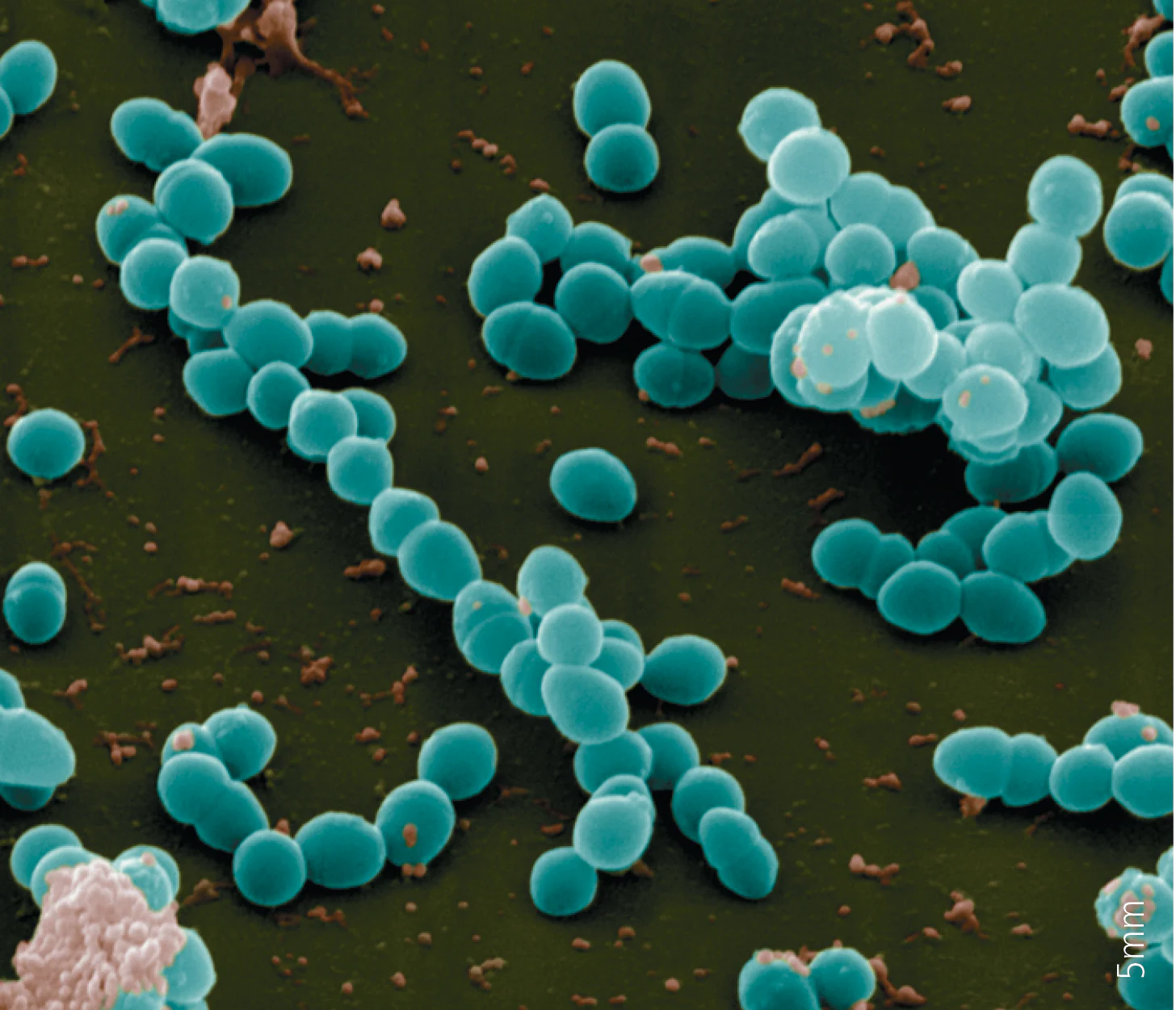
What are Cocci?
spherical cells that may be found alone, in chains, or in clusters
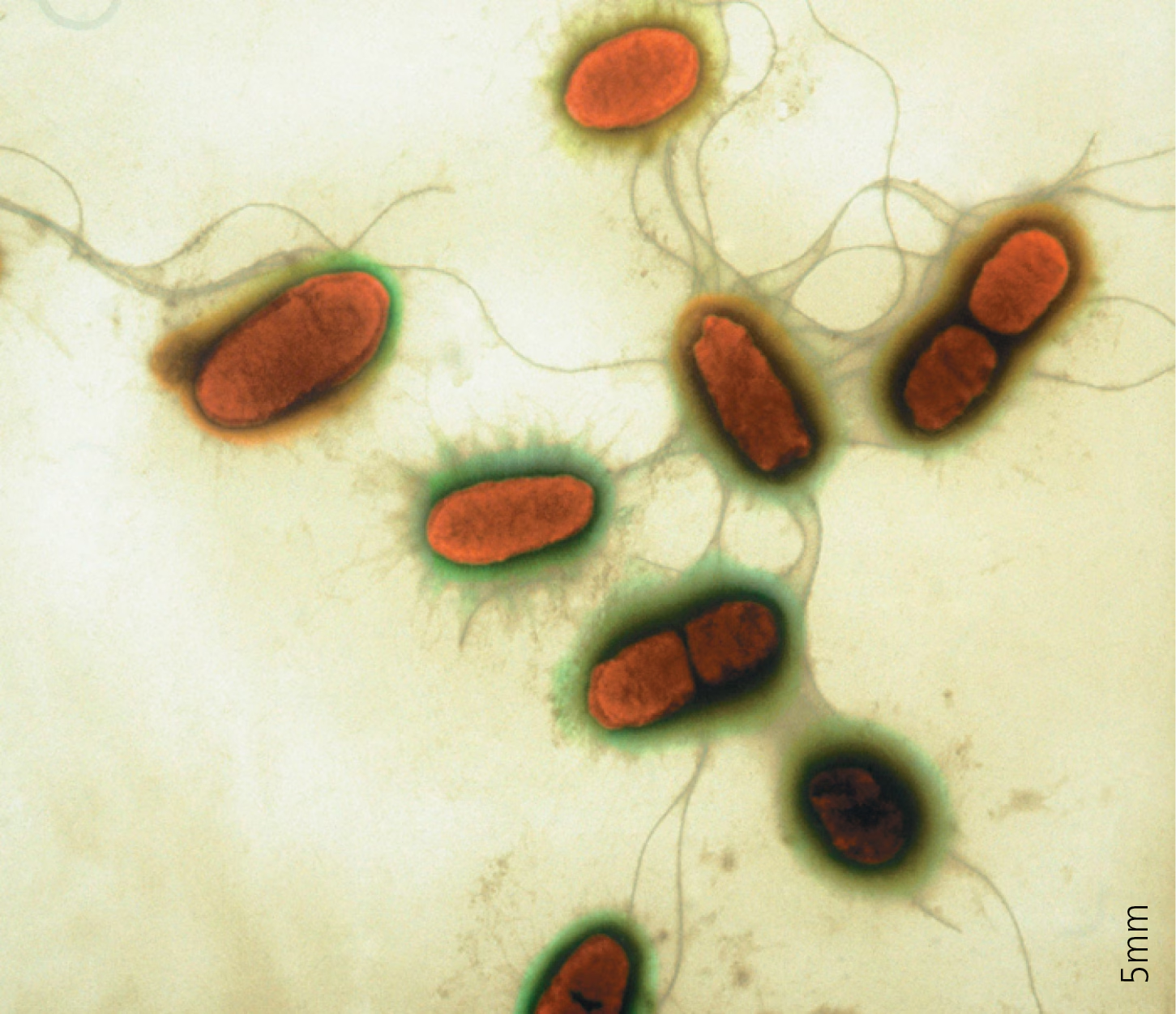
What are Bacilli?
rod-shaped cells that may be found singly or in chains
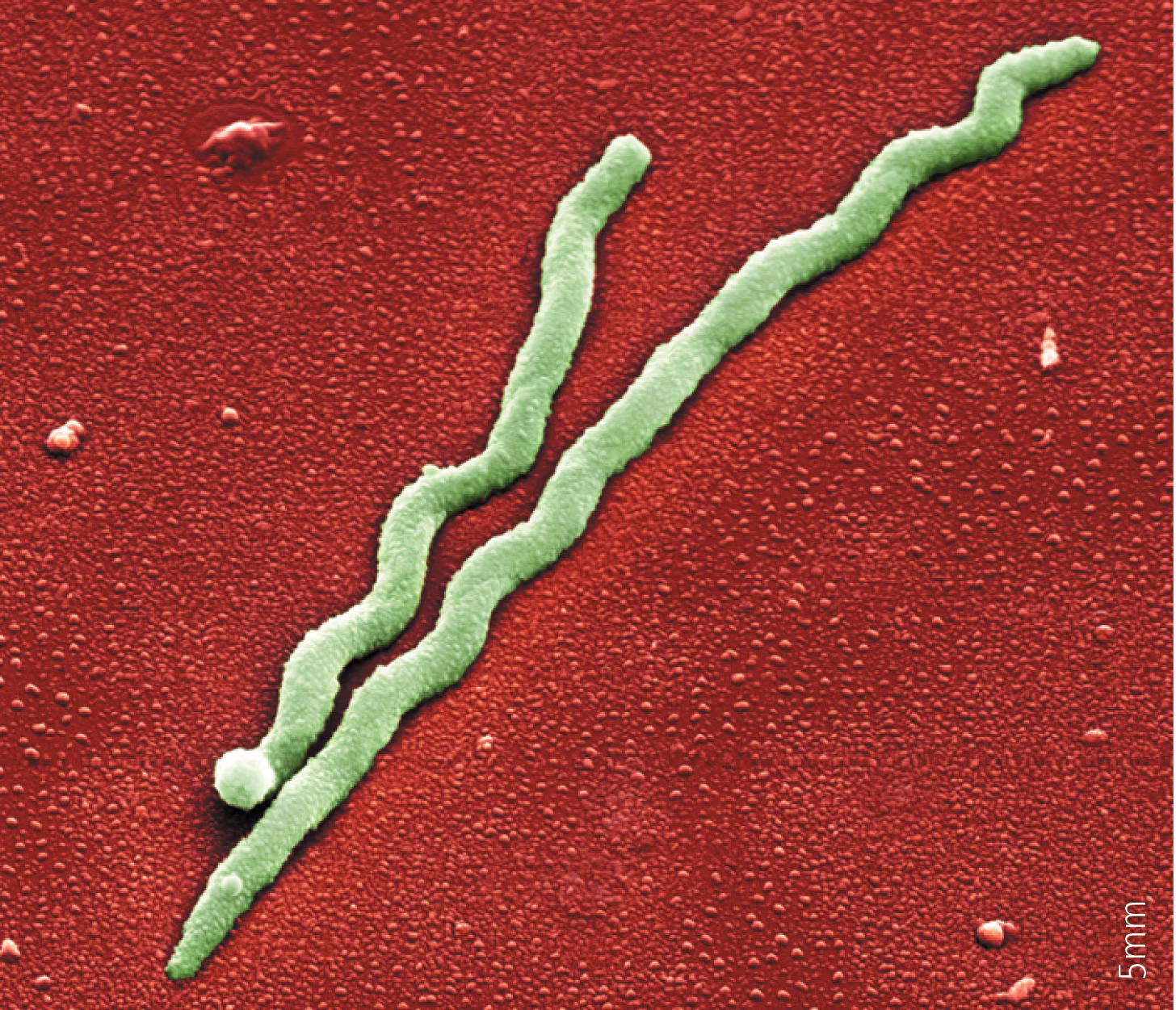
What are spirals?
prokaryotes with a curved or spiral shape and occur singly
Why do prokaryotes display much greater nutritional diversity?
they produce their own food using energy and building blocks directly obtained from the environment, in comparison to eukaryotes that survive by photosynthesis or consuming other organisms
Biofilms
prokaryotes that form communities of organisms attached to a surface through sticky molecular glue and attaches to rocks or living tissue.
Why are Archaea called extremophiles?
because they can thrive in habitats where no other types of organisms can survive. (extreme heat or cold)
Methanogens
archaea that live in anaerobic environments where they emit methane gase as a waste product of their metabolism. usually found in swamps
What kind of gas can be found in the digestive tracts of grazing animals such as cows and deer?
methanogens
Halophiles
archaea that thrive in very salty environments
Thermophiles
archaea that live and grow in high temperature environemnts and can grow in highly acidic ones too.
Pathogen
disease causing virus or organism
Transformation
uptake of naked DNA from the surrounding environment into a bacterial cell. A dead bacterium releases pieces of dna and it is taken up by other bacteria
Conjugation
transfer of DNA between two bacterial cells through a physical bridge. The donor cell uses a sex pilus
Transduction
transfer of bacterial genes by a bacteriophage (a virus that infects bacteria)
Plasmid transfer
a small circular DNA molecule that contains a few genes
Endomembrane system
a series of internal membranes and membrane-enclosed organelles that are largely interconnected
Endosymbiosis
occurs when one species lives inside another host species.
Protozoans
are protists that obtain nutrients primarily by eating. Some ingest bacteria and other protists, some absorb organic nutrients from their surroundings, and some live as parasites in animals. Found in water and moist environments.
Amoebas
single-celled protists with great flexibility in their body form. Can assume any shape as they crawl over surfaces or engulf food.
Seaweeds
large multicellular marine algae that grow on rocky shores and in shallow marine habitats
Colonies
loose physical associations of individual free-living cells. They probably represent an evolutionary intermediate between independent unicellular protists and multicellular organisms.
Virus structure is nothing more than ______________.
genes in a box
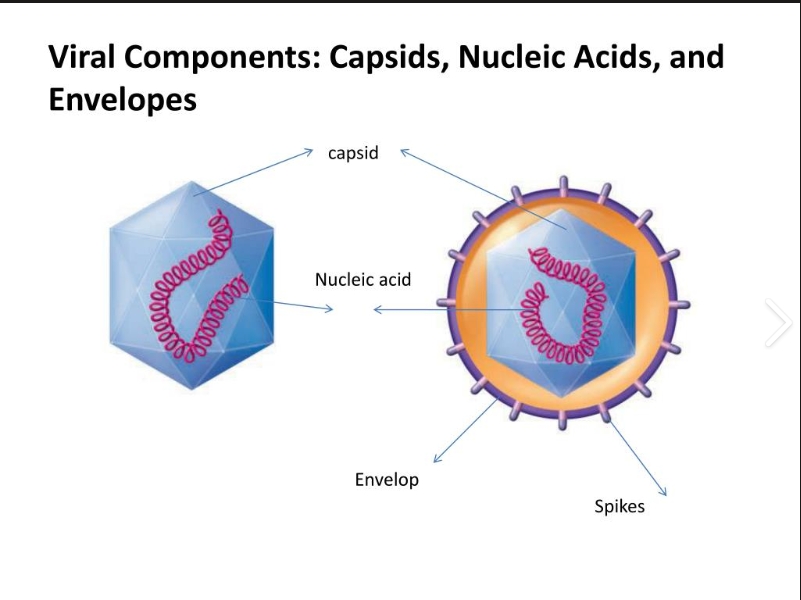
All viruses have genes made of ______ _____ that latch onto DNA or RNA. They have ______ _____ that are capable of binding to proteins on the outside of its host cells.
nucleic acids, recognition spikes
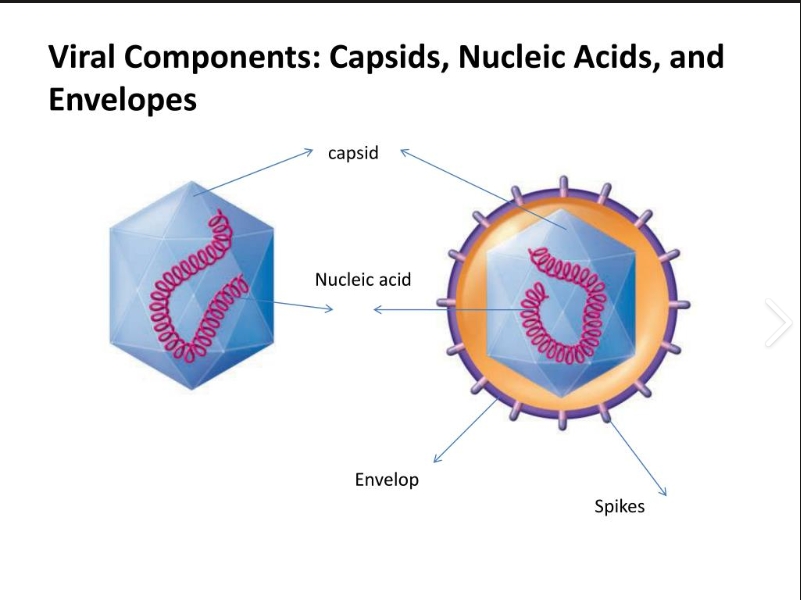
The _____ is the protein shell of a virus that protects its genetic material and plays a crucial role in the virus's ability to infect host cells.
caspid
What is the difference between the cells of colonies versus the cells of truly multicellular organisms?
cells of colonies can function independently while multicellular organisms are specialized and incapable of living independently
Multicellular eukaryotes evolved from ______
protists
Bacteriophage
a virus that infects bacteria
Lytic cycle
virus uses bacterium’s cellular machinery to create copies of itself and then bursts, so the bacteriophage can find and infect a new host
Lysogenic cycle
viral DNA can insert itself into the bacterial DNA where it remains dormant, then the bacterium multiplies and at some time later the viral DNA removes itself from the bacterial DNA
Why is HIV so deadly?
it is a virus that attacks the t-helpers which aids the body’s immune system.
What does the AZT drug do for people with HIV?
inhibits the action of HIV reverse transcriptase which is a vital step in the HIV life cycle
Retrovirus
carry their genetic information as RNA, upon infection they use an enzyme called reverse transcriptase to integrate into a host cells DNA in the nucleus becoming a provirus
Prions
infectious protein that are misshapen versions of normal brain proteins. Incurable and fatal
Viroid’s
small circular single-stranded RNA molecules that are capable of infecting and causing stunted growth and abnormal development in plants