Lecture 4 - Color
 Call Kai
 Learn
Learn Practice Test
 Spaced Repetition
 Match
Match Flashcards
 Knowt Play
1/43

There's no tags or description
Looks like no tags are added yet.
Name | Mastery | Learn | Test | Matching | Spaced | Call with Kai |
|---|
No analytics yet
Send a link to your students to track their progress
44 Terms
What is a practical use of the CIE diagram?
understanding how LED lights would combine to create a certain color
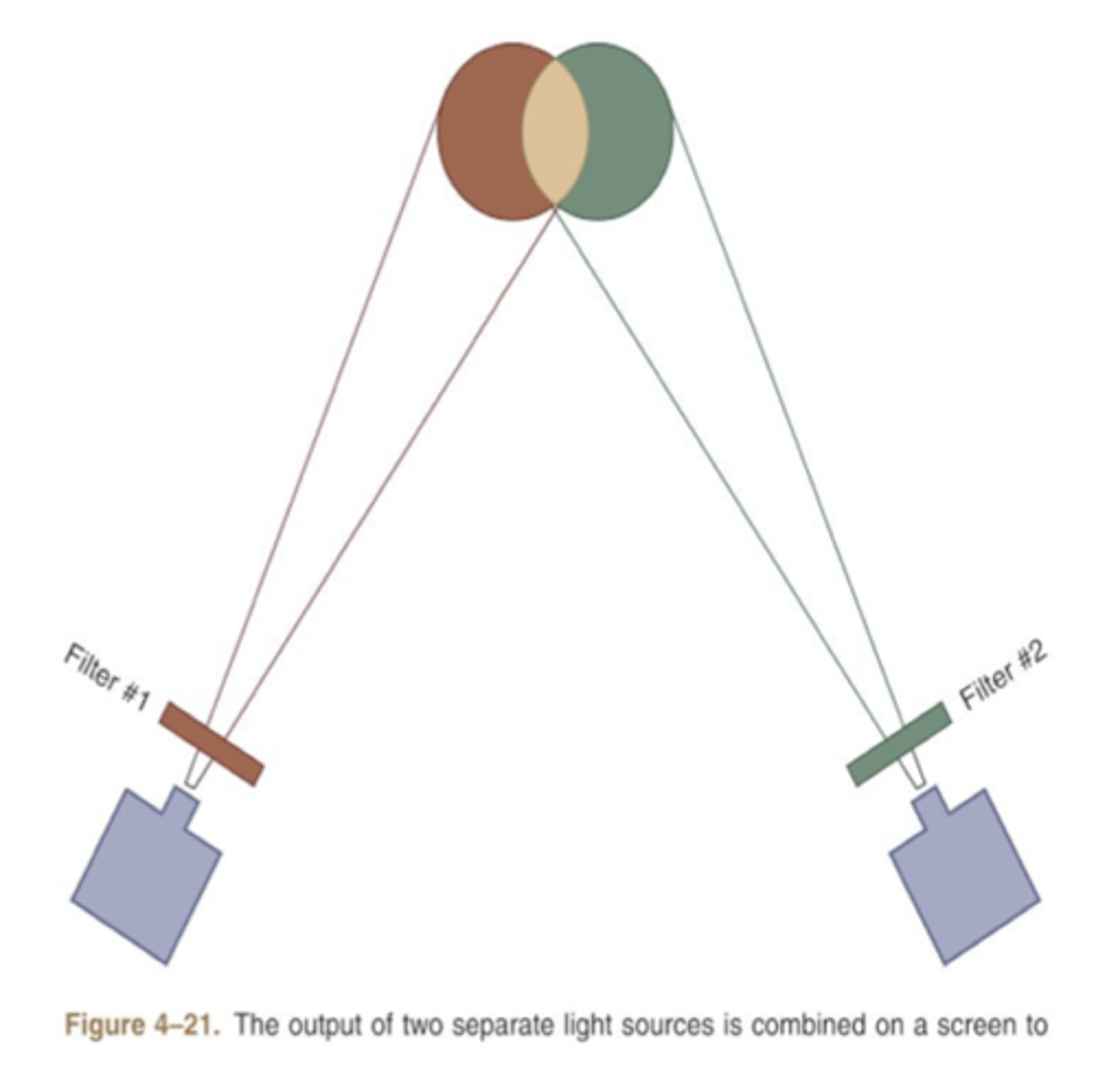
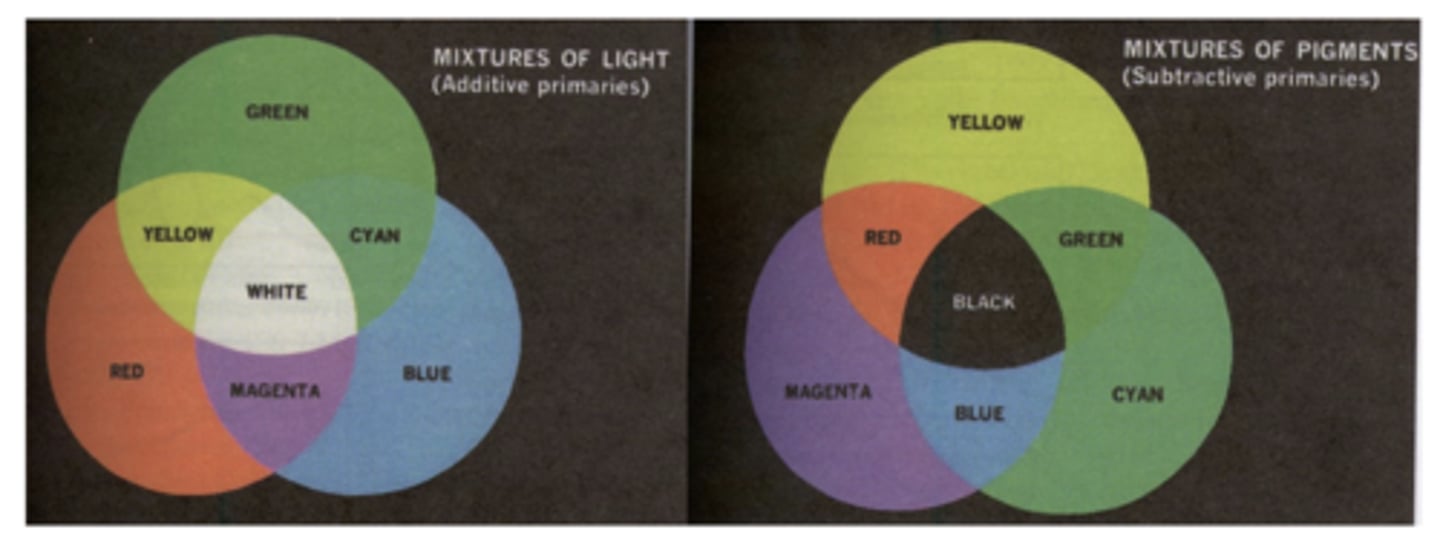
Why are pigment/paints color mixtures different than light color mixtures?
color light adds together - which is why all the colors create white light
pigment subtractive mixtures - which is why all the colors create black eventually
what does this mean?
red light is just red light, if you add to other light colors eventually you'll get wavelengths ranging from 400-700 nm i.e. white light
paint colors are defined by what they reflect, so red paint is technically every color but red (because it is reflected), so if you add a bunch of paints together eventually no colors will be reflected - subtracting which light can get reflected
What are the additive primaries (light)?
red, green, blue
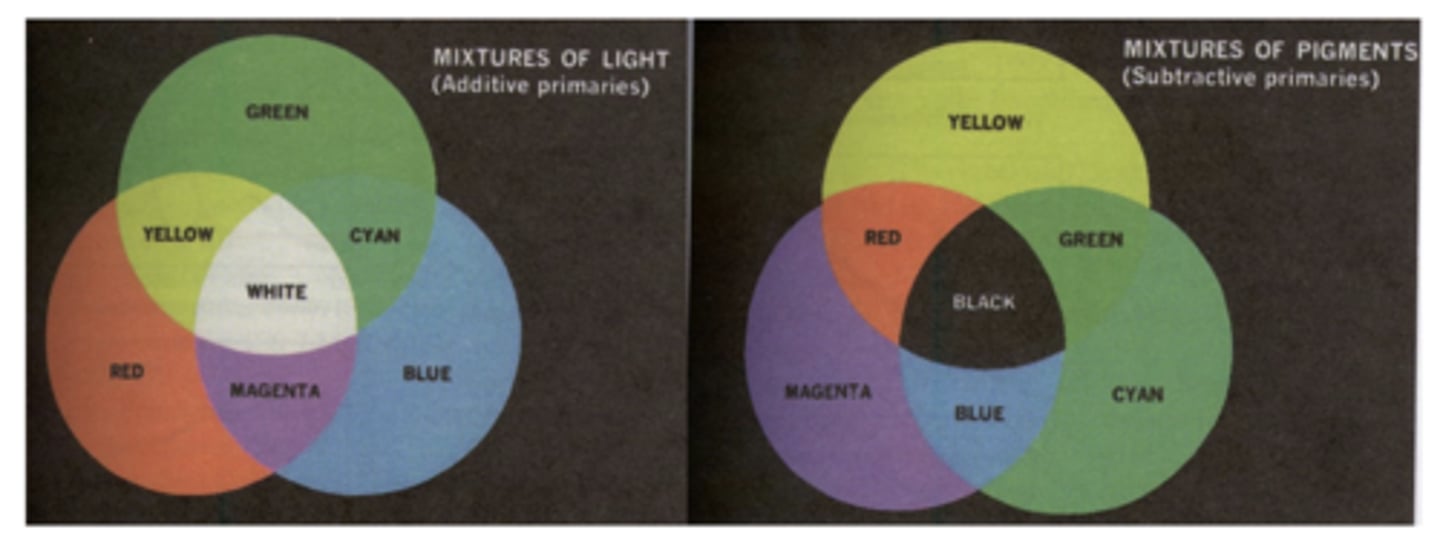
What are the subtractive primaries (pigment)?
yellow, magenta, and cyan
How would more cone types affect our color vision?
able to distinguish more spectrally distinct light i.e. metamers!
What is rod monochromacy?
no cones
What is the visual acuity of someone with rod monochromacy?
20/200
cones predominate the fovea
Why can someone with rod monochromacy only match using brightness?
rate of absorption (probability) for two different lights is different, that difference can be overcome by adjusting light intensity
What color does red look like to someone with rod monochromacy? Why?
black - Purkinje shifts!
What does the term "achromat" describe?
someone with no color vision - rod monochromacy
What is a big issue for individuals with rod monochromacy? And how it is fixed for?
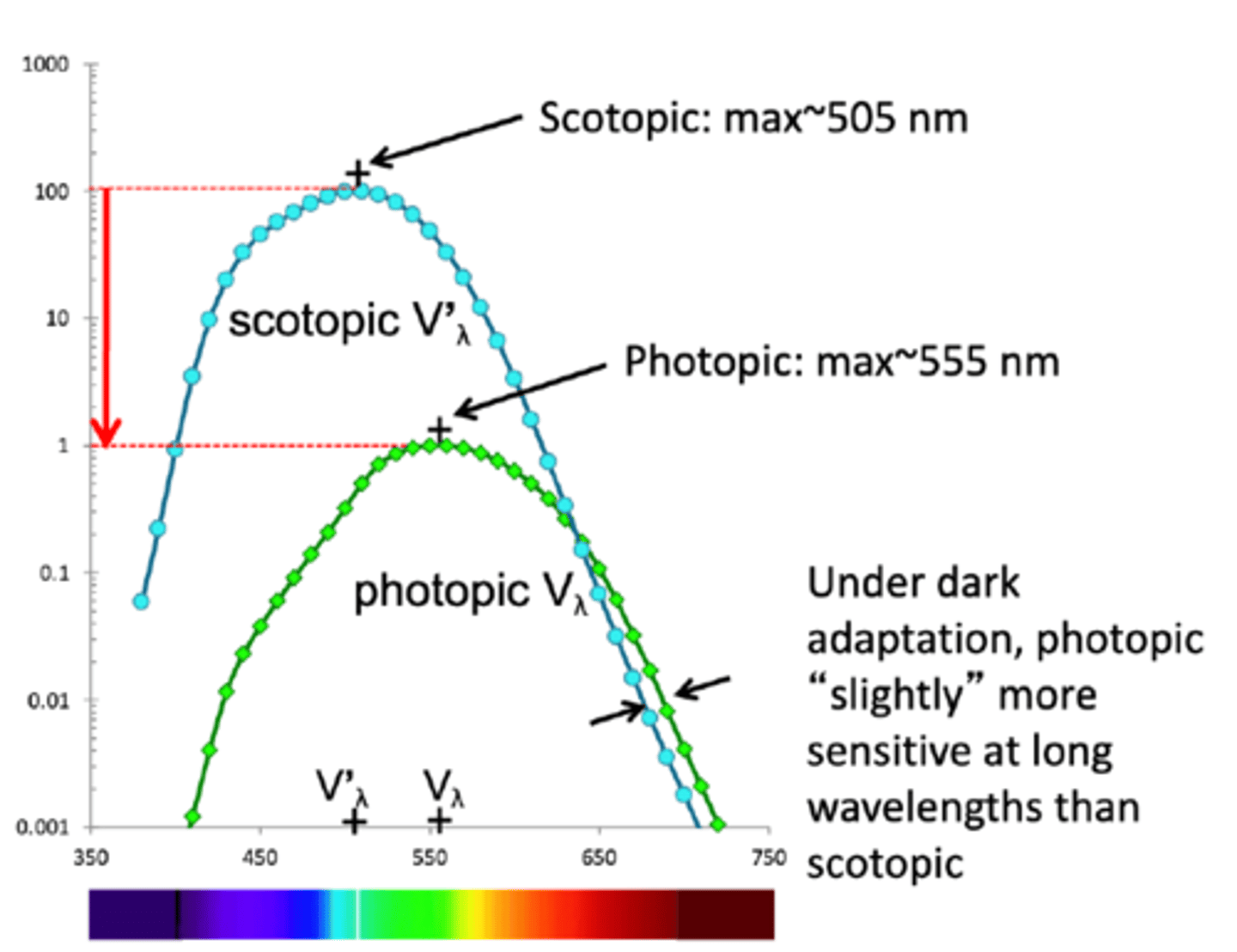
glare - shorter wavelength light has a higher sensitivity under both scotopic and photopic conditions for rods (compared to long wavelengths)
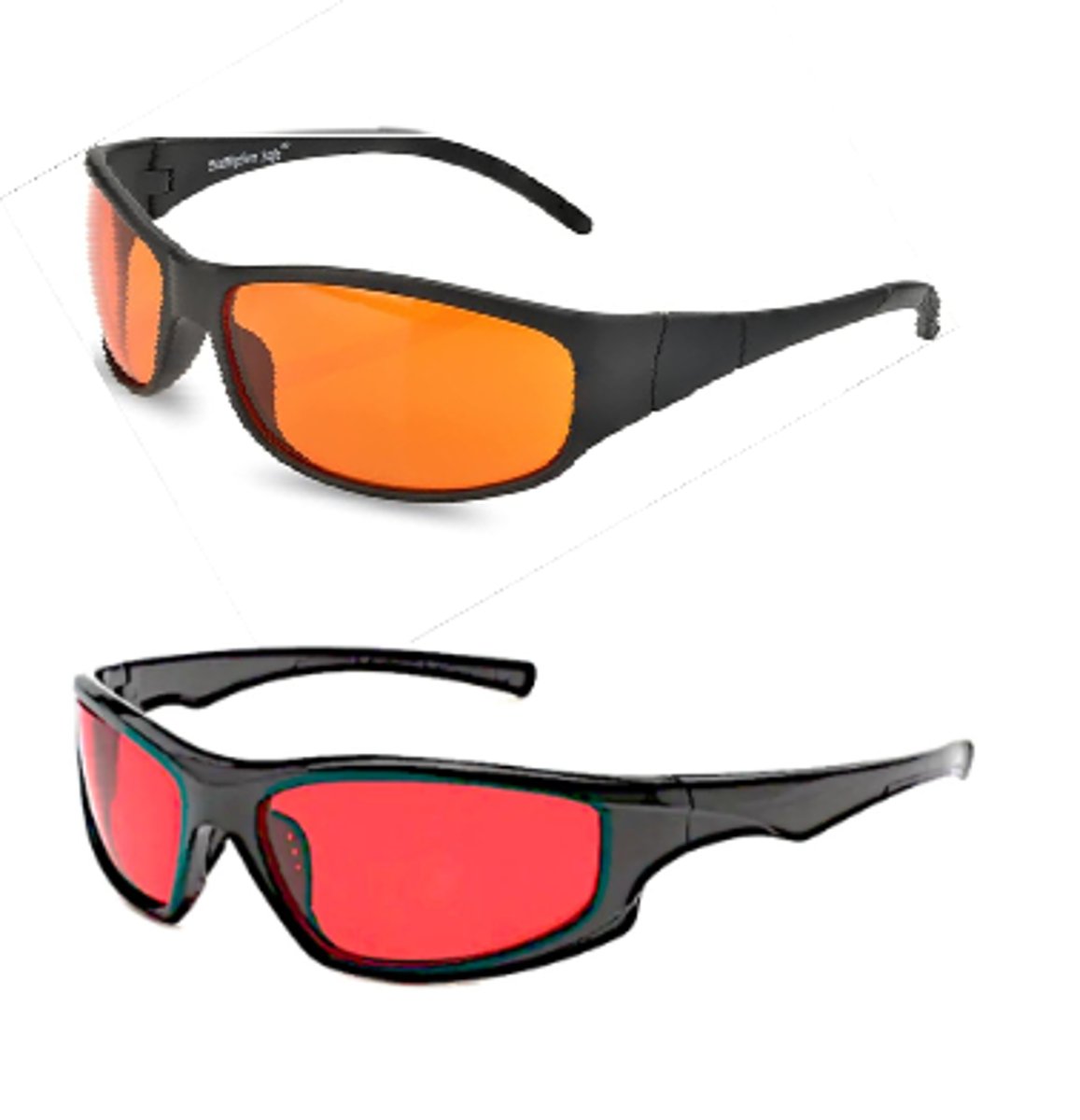
red glasses will block a lot of light reducing the bleaching of their rods
What is the minimum number of photoreceptors required for color vision?
two
why? - need differences in spectral absorption probabilities
What are blue-cone monochromats?
s-cones and rods (no M & L cones), poor visual acuity
What photopigment are deuteranopes missing?
missing M-opsin
What photopigment are protanopes missing?
missing L-opsin
What photopigment are trianopes missing?
missing S-opsin
What is the replacement model of dichromacy?
deuteranopes and protanopes will replace their missing opsin by the remaining functional L or M cones
If a normal colored vision person matches a color, will a dichromat also see a matching color?
yes! remaining opsin are normal
What is the difference between dichromats and an anomalous type defect?
dichromat - missing photopigment, remaining are normal
anomalous - altered photopigment, normal number of each photopigment
new explanation "deuteranomalous patient LACK the MWS cone, but have TWO versions of the LWS cone"
How does each dichromat behave while using the nagel anomaloscope?
protanope - monochromat
deuteranope - monochromat
tritanope - dichromat
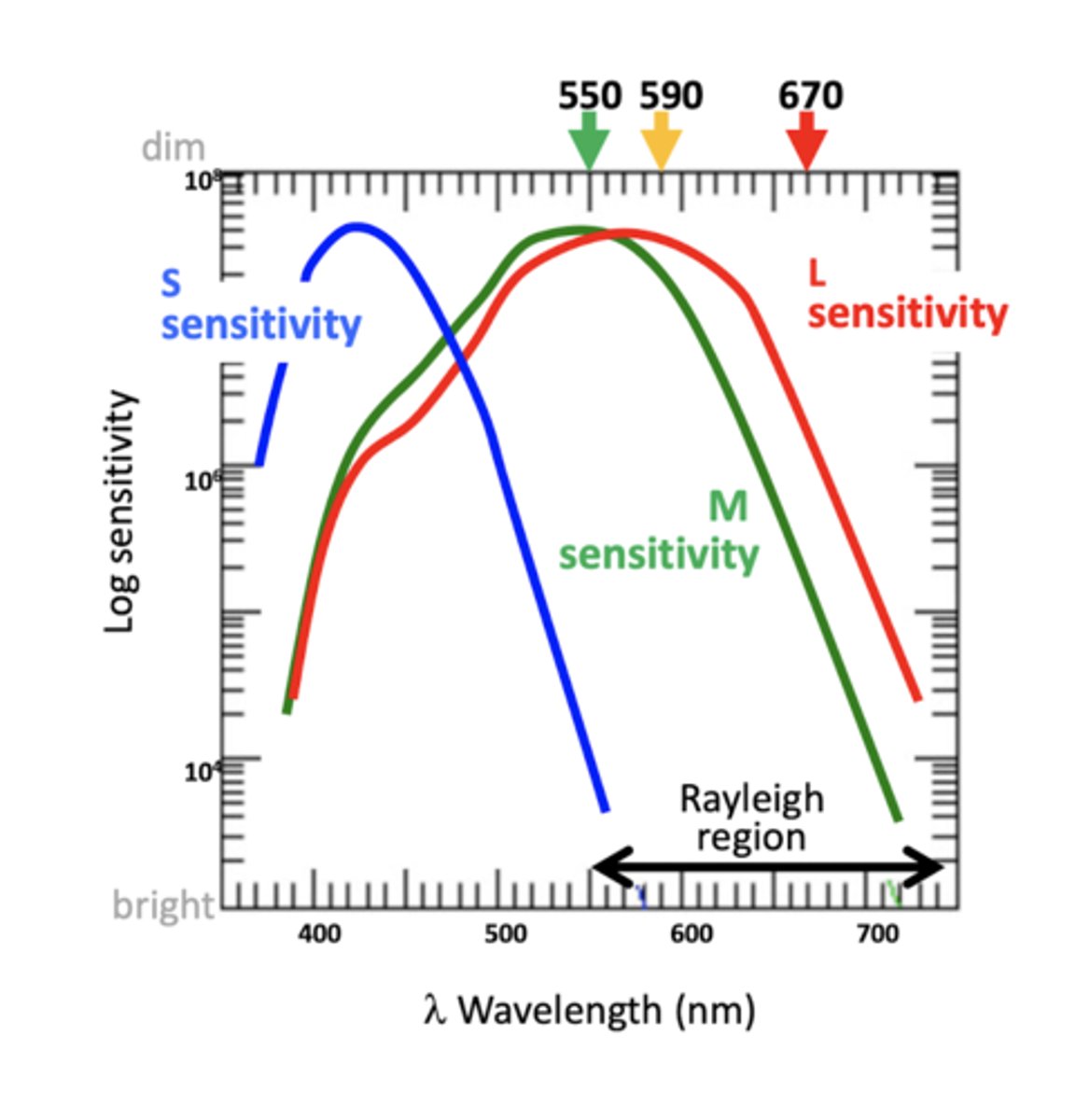
Why do tritanopes act like a dichromat while using the nagel anomaloscope?
only testing the Rayleigh region, still have both M and L cones
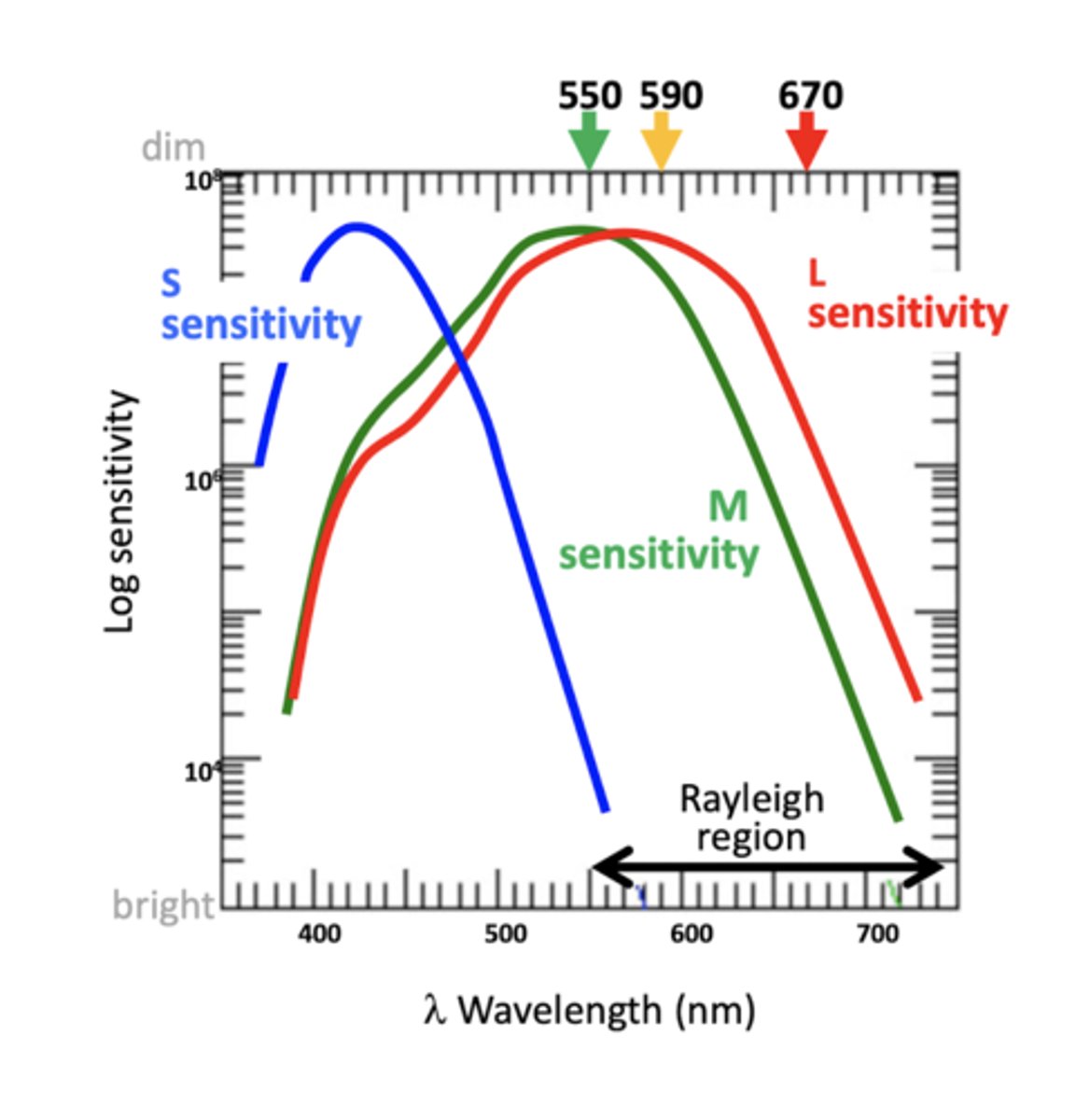
How do protanopes and deuteranopes behave differently while using the nagel anomaloscope?
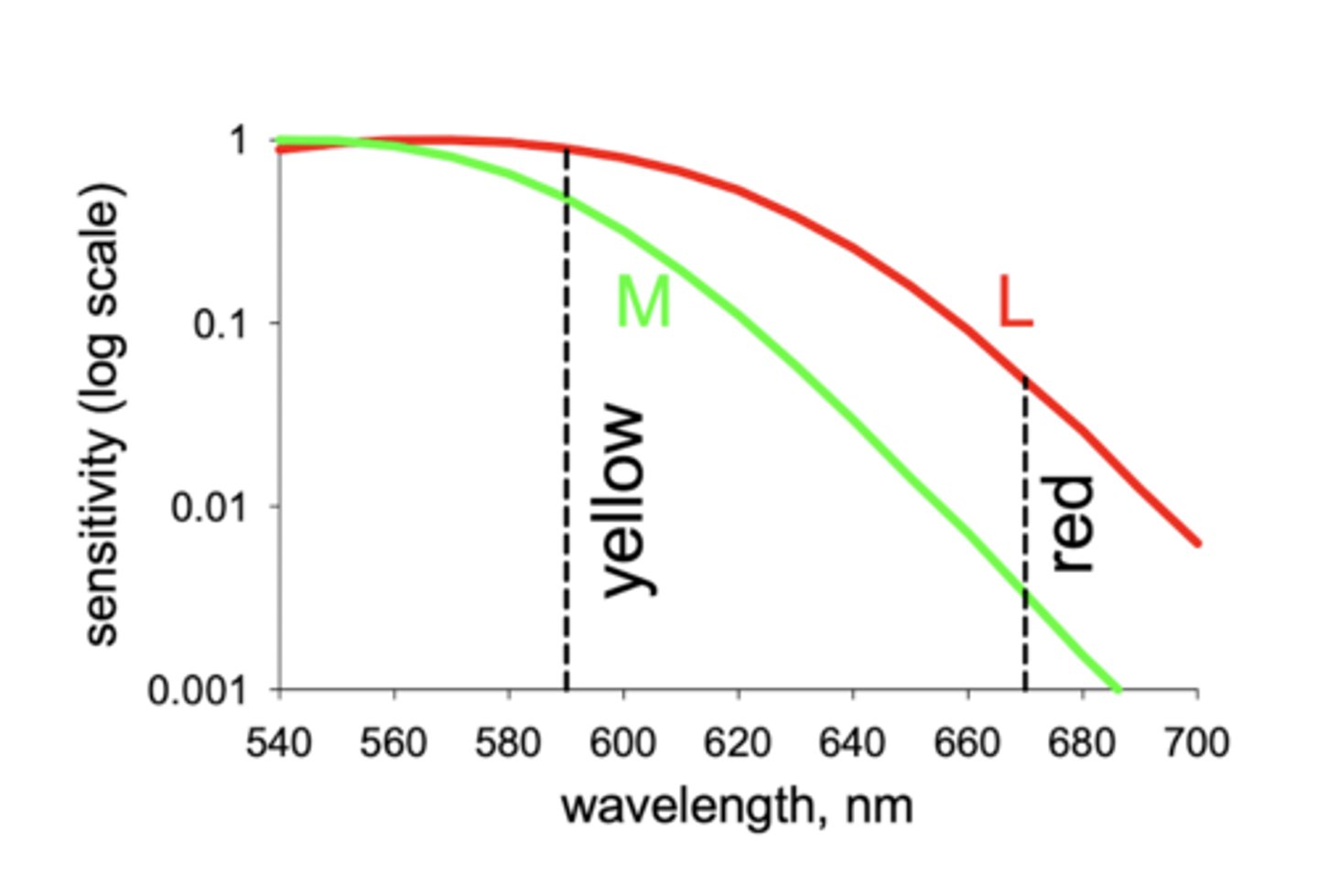
protonopes will be very insensitive to red
What photopigments do protanomalous patients have?
all three cones, L cones with an atypical sensitivity
What photopigments do protanopes have?
S and M, missing L
What photopigments do deuteranomalous patients have?
all three cones, M cones with an atypical sensitivity
What photopigments do deuteranopes have?
S and L, missing M
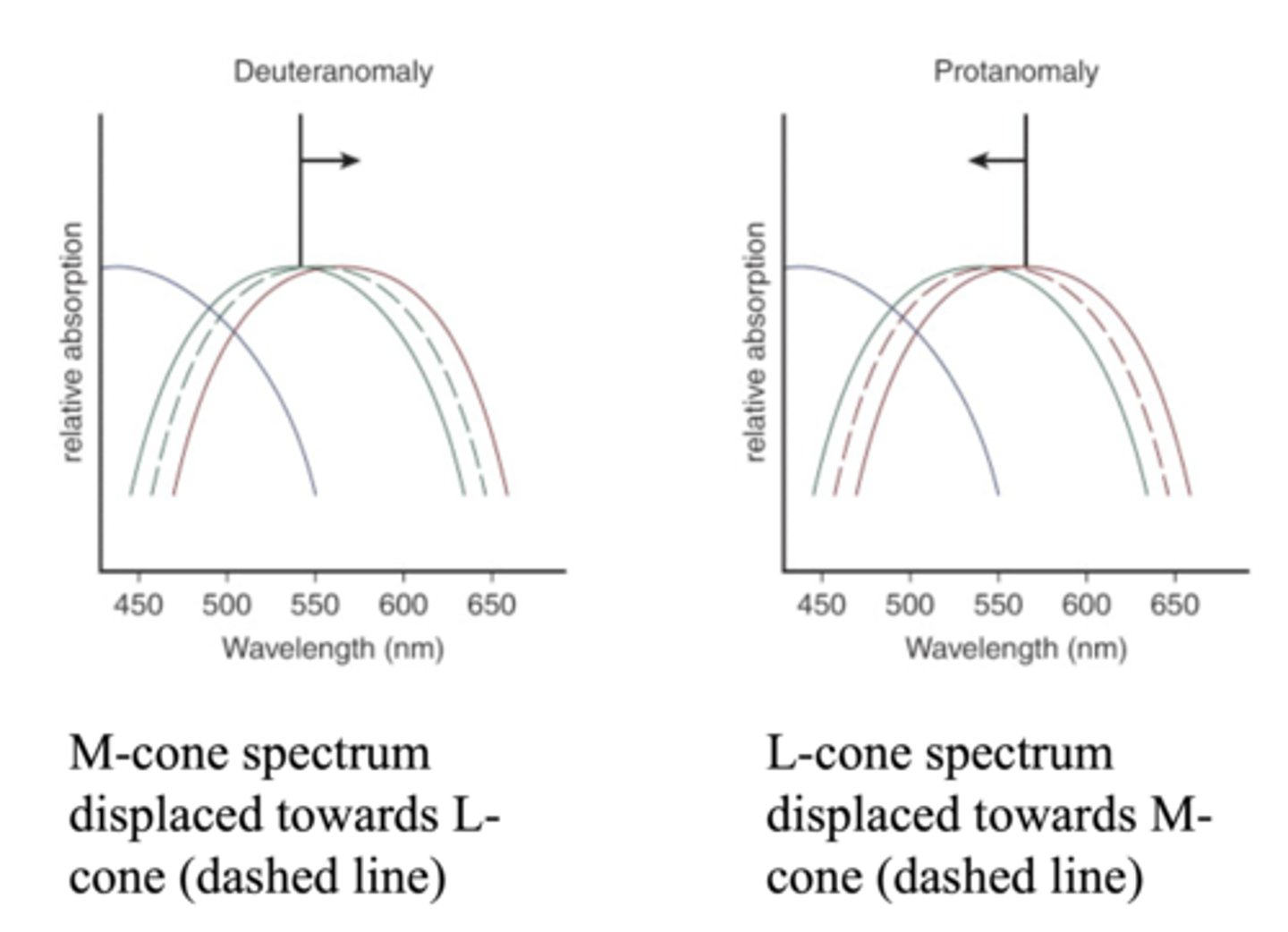
How are anomalous cone spectral sensitivities shifted?
abnormal photopigment is shifted towards the normal photopigment
deuteranomaly - M-cone spectrum displayed towards L-cone (dashed line)
How does the greater overlap of the M and L cone sensitivities affect color vision (anomalous trichromats)?
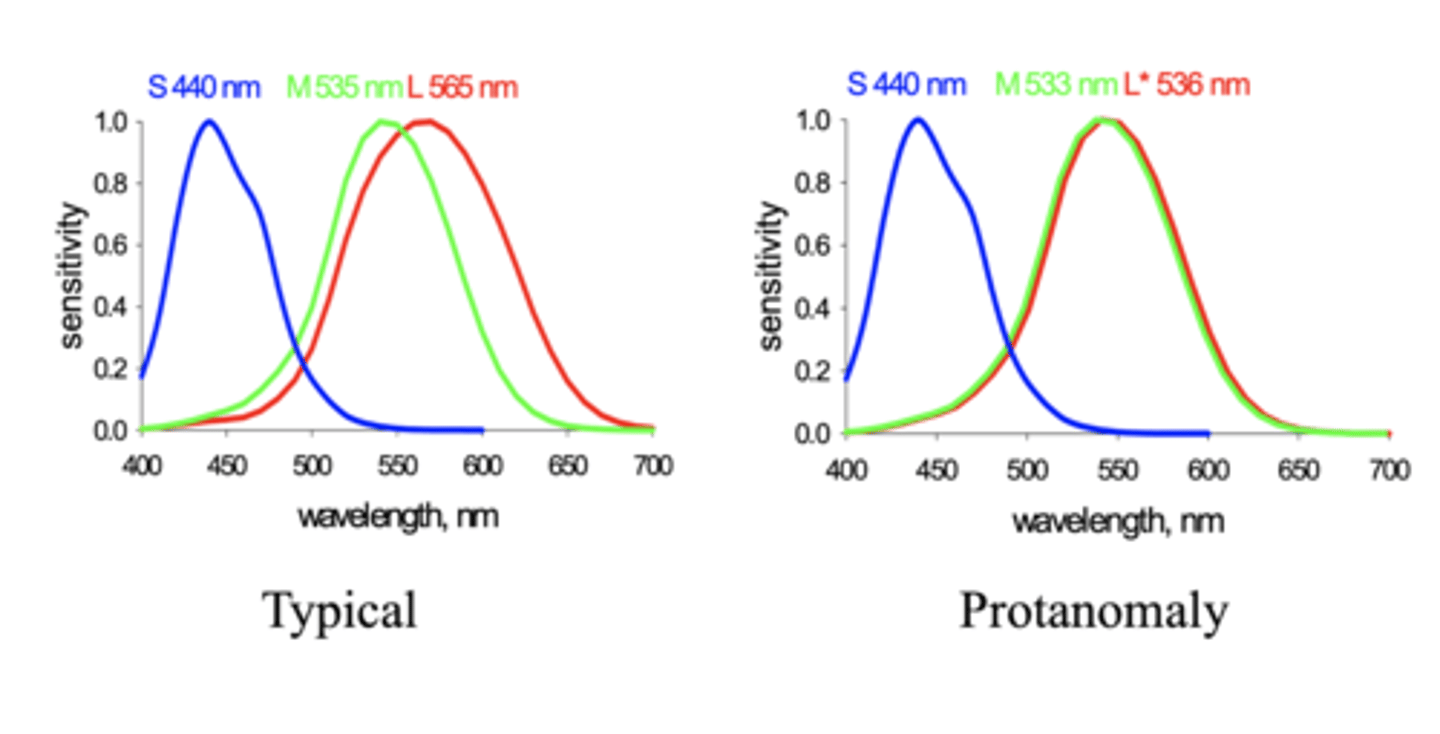
color discrimination between green and red lights is reduced
What is the newest genetic explanation for anomalous trichomacy?
often more than one set of MWS or LWS photopigment genes is present
example - deuteranomalous patients lack MWS cone, but have two versions of the LWS cone
What is the only test that can diagnose an anomalous trichromat?
nagel anomalous scope
What differences between M and L peak spectral sensitivities outline mild, moderate, and severe anomalies?
severe - 3 nm
moderate - 6 nm
mild - 12 nm
normal - 30 nm
remember these are differences in spectral sensitivities
Which color defect has the highest prevalence in the male population?
deuteranomaly
What is the mode of inheritance for color vision defects?
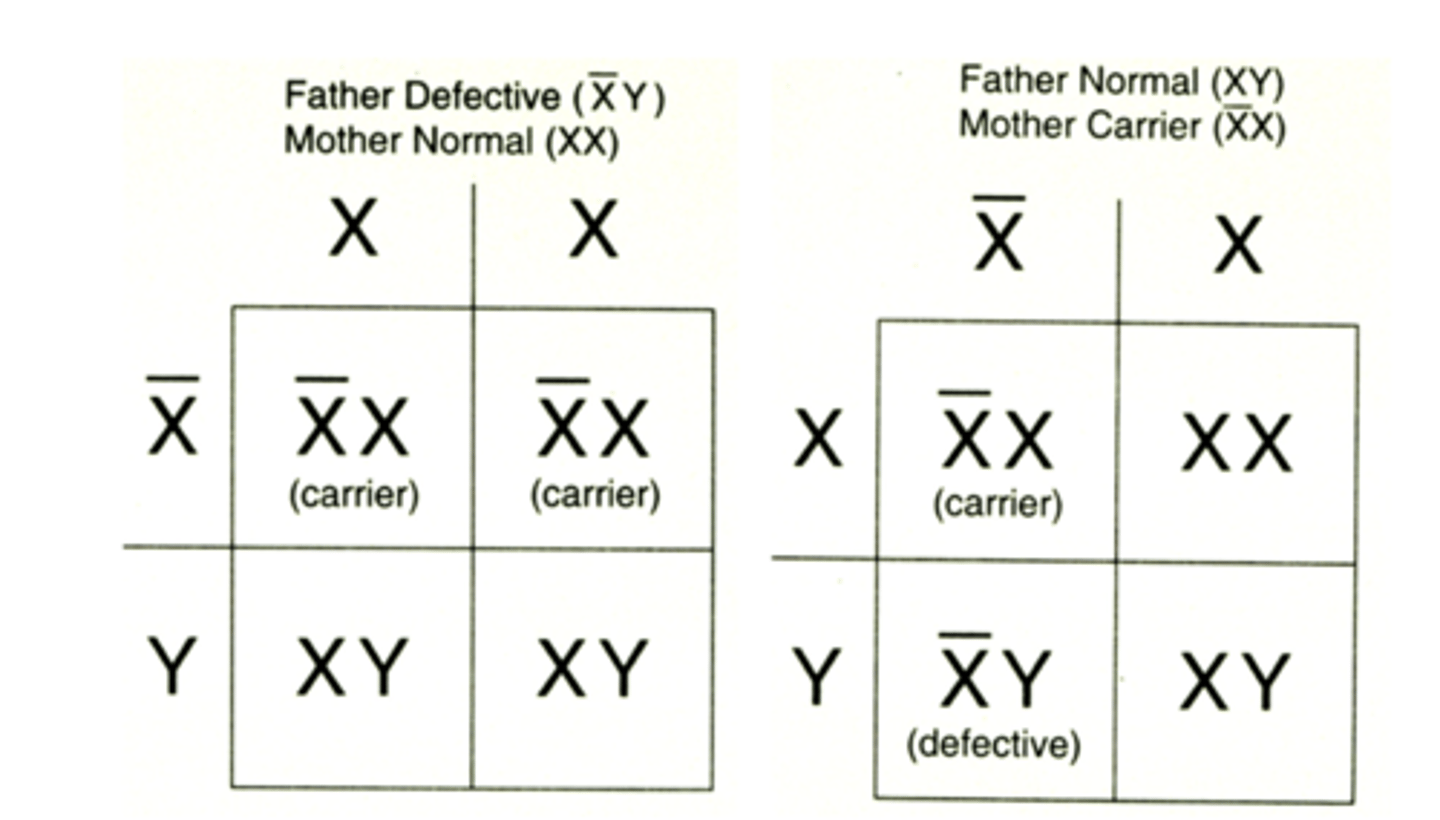
x-linked
Why can only carrier (or technically diseased) mothers transmit color defects to their sons?
x-linked inheritance pattern
sons receive their x chromosome from their mother
What happens to a cone once it becomes bleached?
becomes transparent to light
lighter - bleached photoreceptors
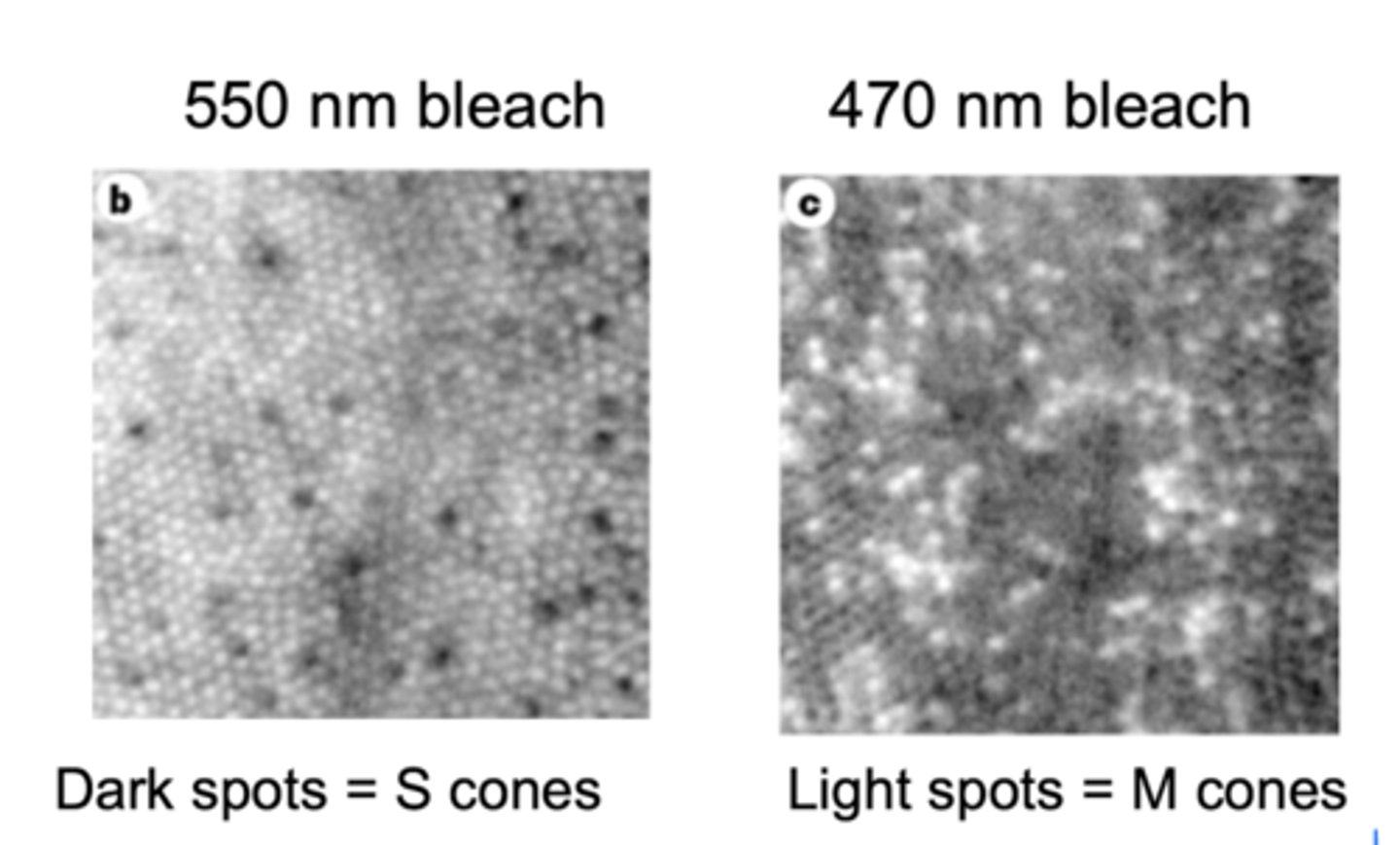
What are the percentages of cone distribution in the retina?
L-cone ~60%
M- cone ~30%
S-cone 7-10%
but there's variation amongst the population - these differences don't translate to differences with the standard color vision test
What is the purpose of the absence of S cones from the central fovea?
maximize acuity by reducing chromatic aberrations
How does each color defect see color?
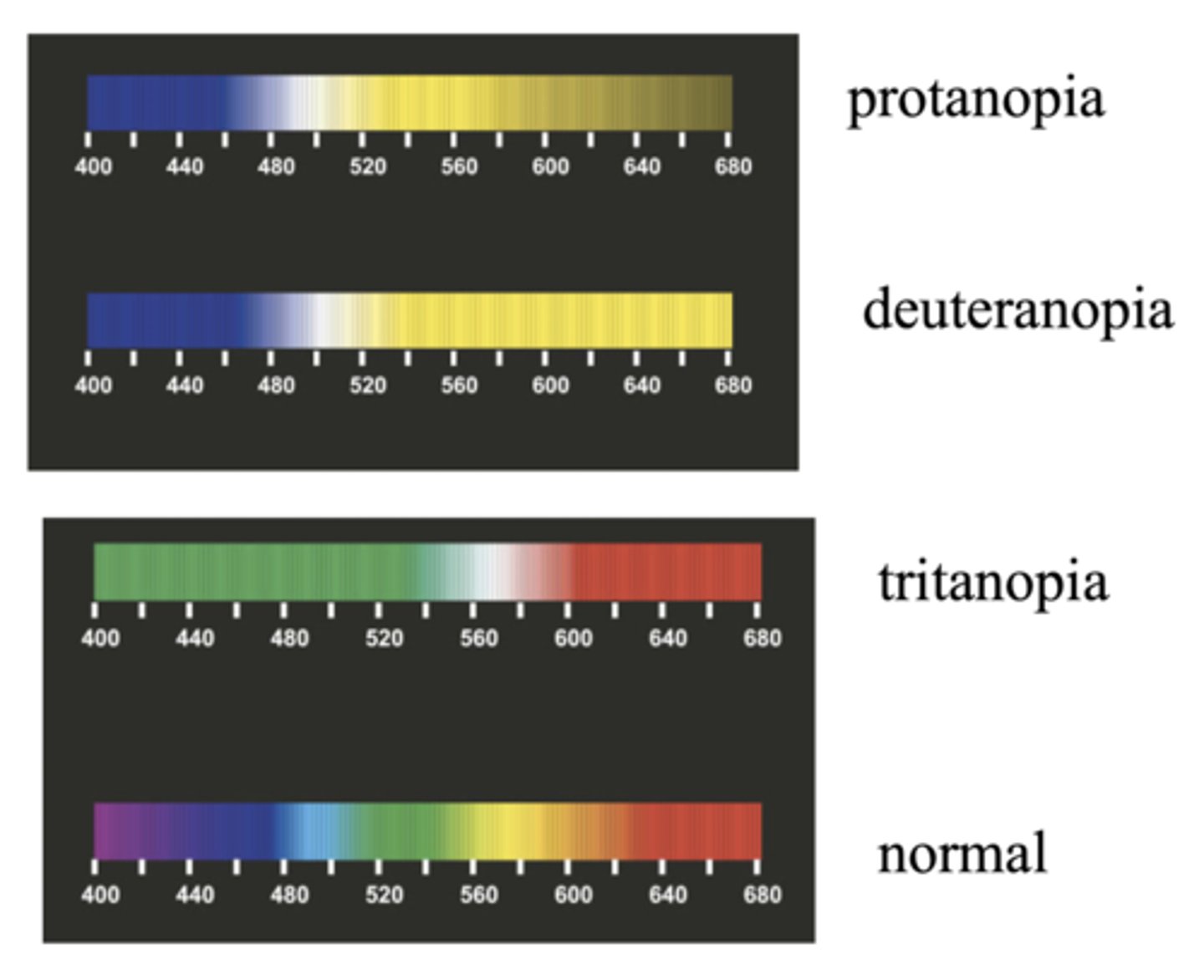
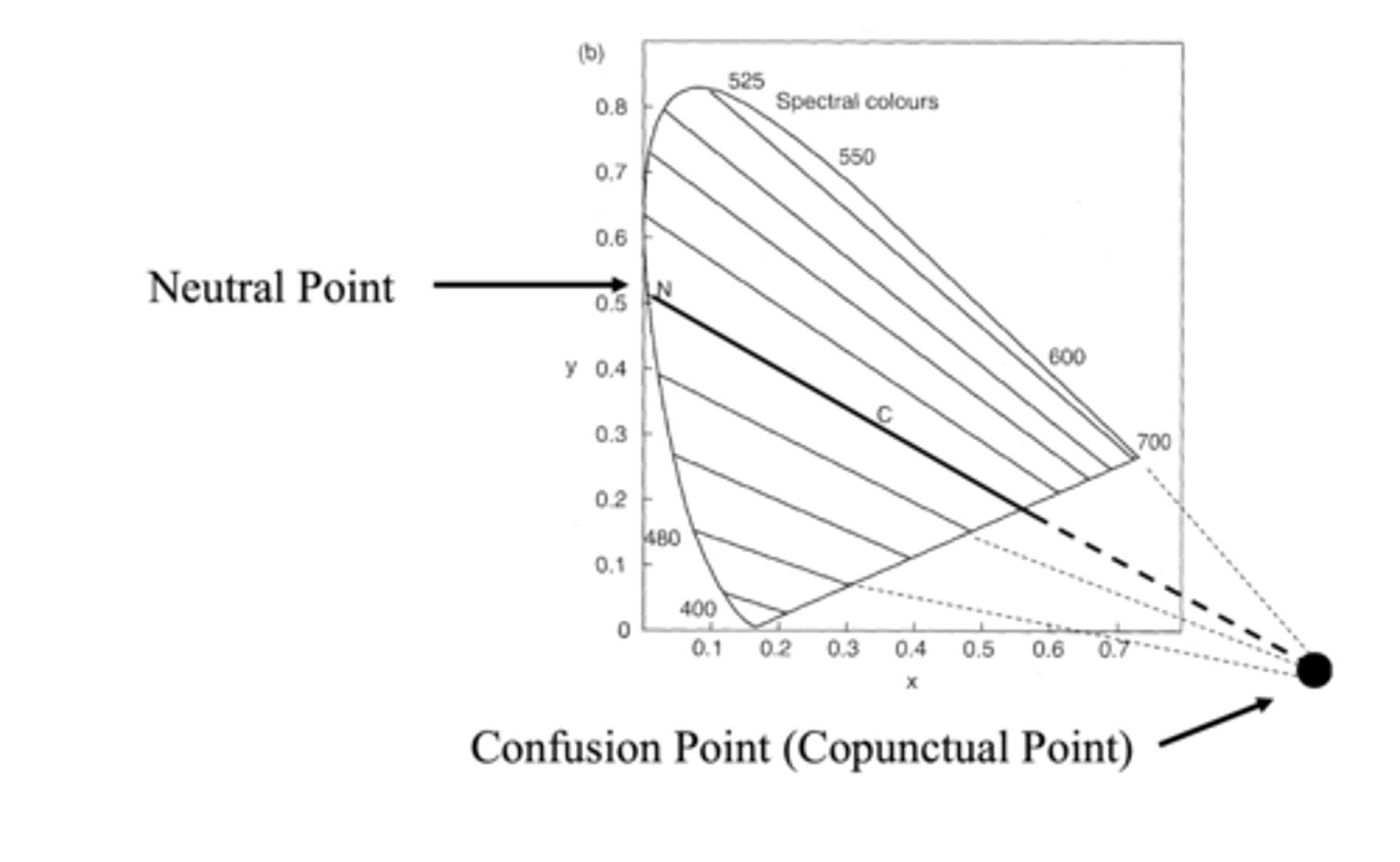
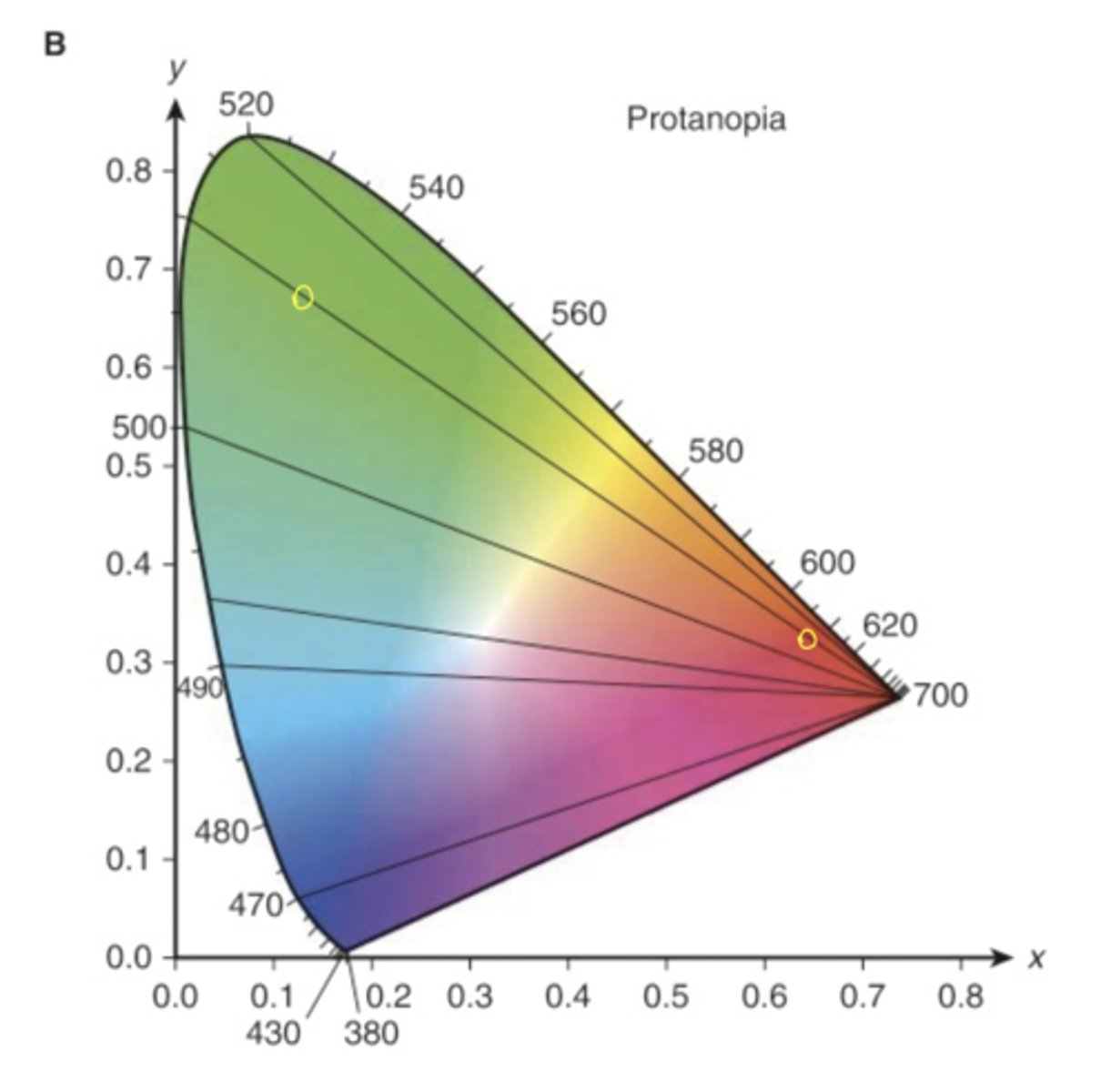
How can CIE color space help us understand color defects?
CIE color space can be used to inform us which color protans, deutans, and tritans are likely to confuse
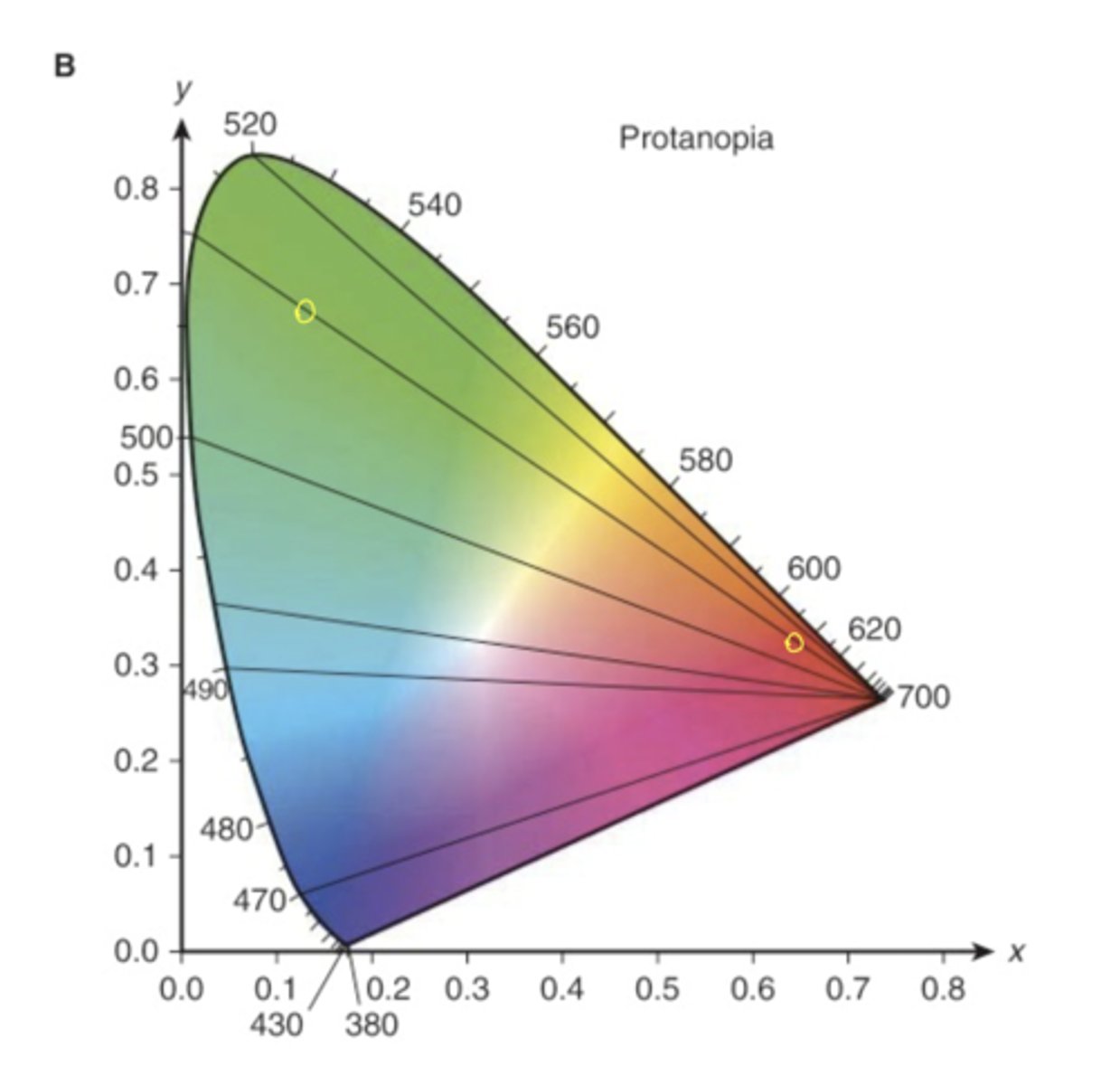
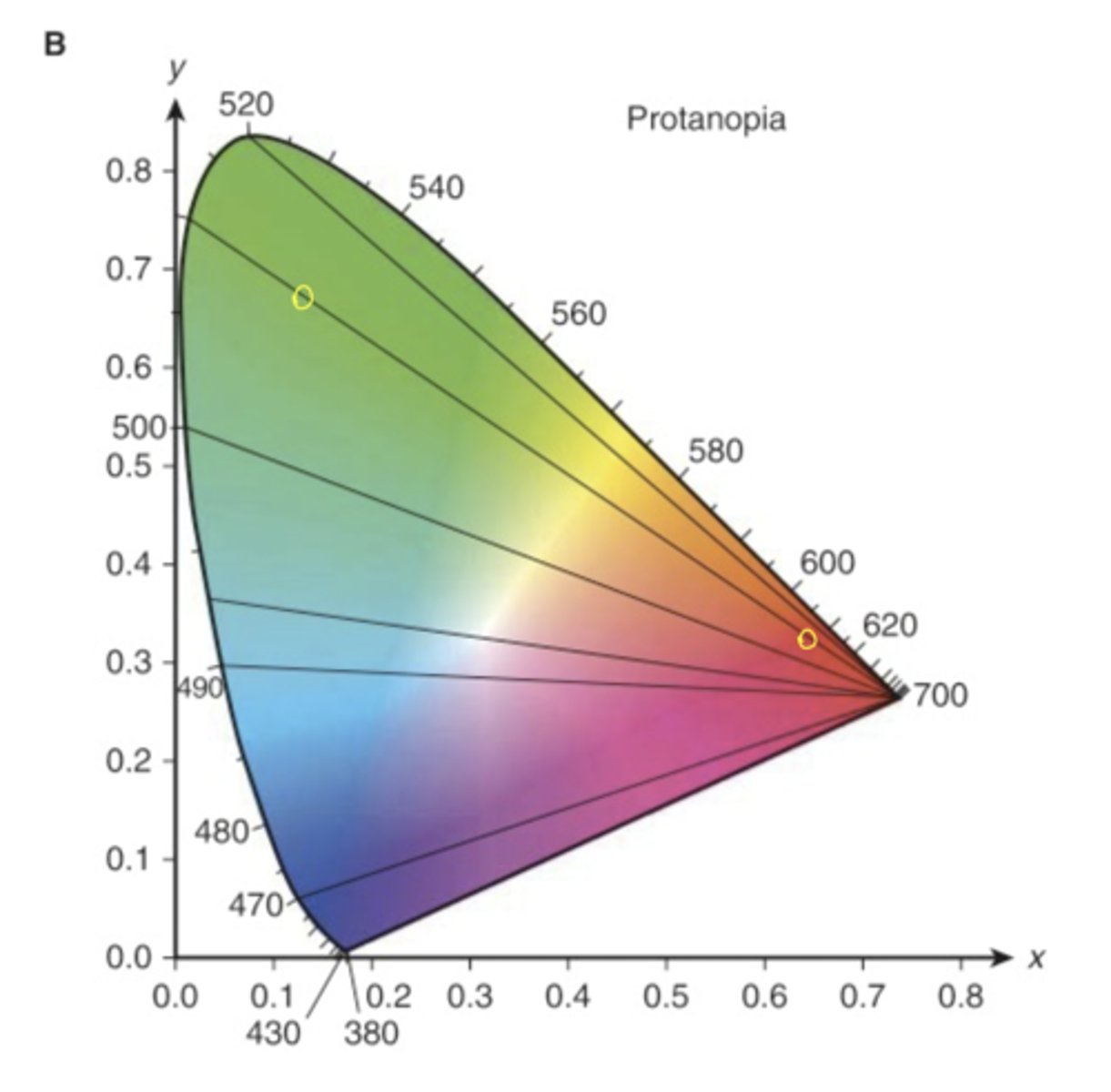
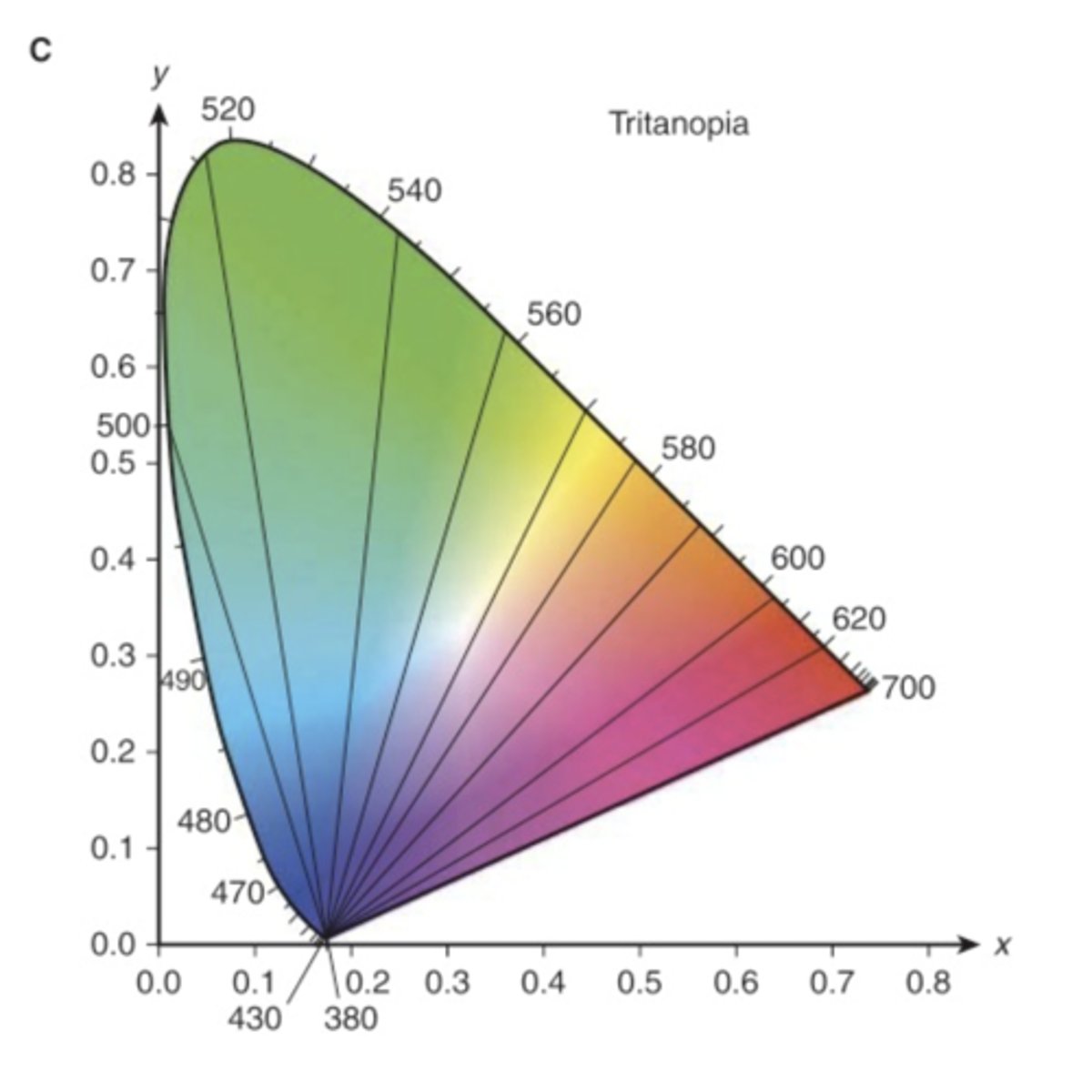
What are confusion lines?
all the lights on each line match for that certain color defect
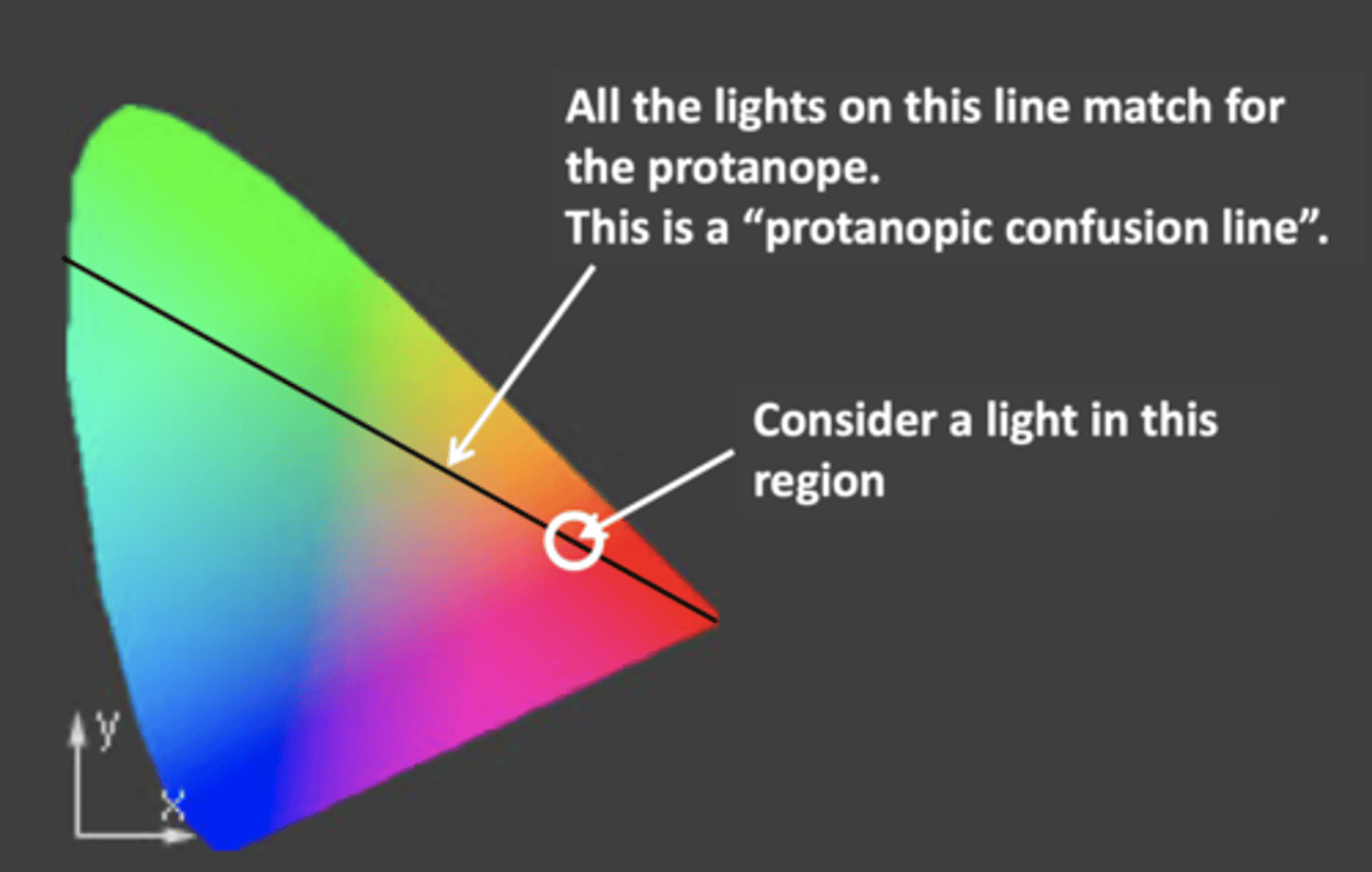
Where are protanopes color confusion lines centered (confusion/copunctual point)?
red
Where are deuteranopes color confusion lines centered (confusion/copunctual point)?
beyond red
Where are tritanopes color confusion lines centered (confusion/copunctual point)?
blue
What are neutral points?
monochromatic light that appears white - confusion line that goes through white (middle)