Organic Chemistry
 Call Kai
 Learn
Learn Practice Test
 Spaced Repetition
 Match
Match Flashcards
 Knowt Play
1/114

There's no tags or description
Looks like no tags are added yet.
Name | Mastery | Learn | Test | Matching | Spaced | Call with Kai |
|---|
No analytics yet
Send a link to your students to track their progress
115 Terms
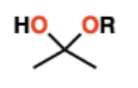
_____ + _______ = hemiacetal
aldehyde/ketone + alcohol

_____ + ______ = hemiketal
ketone + alochol
what connects sugars
glycosidic bonds
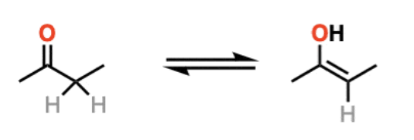
what is this
keto enol tautomerism; fructose can act as a reducing sugar after tautomerization
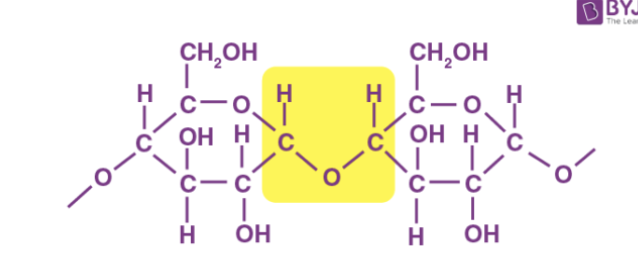
what is this
basic structure of starch
during nucleophilic addition what would have the most reactivity and why?
an aldehyde (-CHO) because it has less steric hindrance, less electron donation
during nucleophilic addition what would have the least reactivity and why?
a ketone (C=O) two alkyl groups donate electron density and block attackbecause
_______ protect carbonyls because they are stable under basic conditions and hydrolyzed under acidic conditions.
acetals
____ + ____ = imine
Aldehyde/ketone + primary amine
____ + _____= enamine
Aldehyde/ketone + secondary amine
why do hydride reagents like NABH4 and LiALH4 due
they are reducing agents - they reduce carbonyls (add hydrogens)
NaBH₄
reducses aldehydes (-CHO) to primary Alcohols (-OH) and ketones (C=O) to secondary alcohols
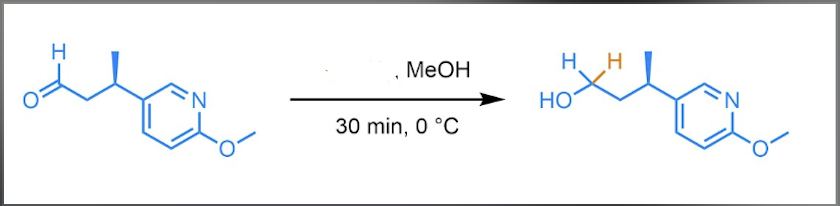
NABH4 (milder reducing agent)
what does LiALH4 do
reduces aldehydes, carboxylic acids, esters → primary alochols, reduces amides, and reduces ketones → secondary alocholis

LiALH4 (stronger reducing agent)

cyanohydrin formation - ketones and aldehudes reacting with cyanide. First step: nucleophilic attack. Second step: Deprotonation
Aldehydes can be oxidized to
carboxylic acids; RCHO → RCOOH
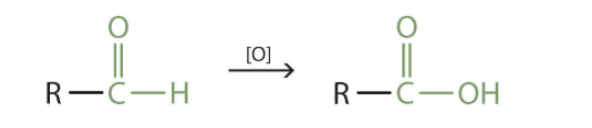
oxidation of aldehyde
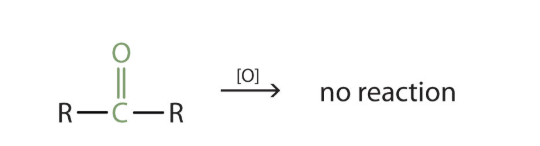
attempted oxidation of ketone (ketones can not be oxidized under standard conditions because oxidation would require breaking a carbon-carbon bond.)
KMnO4 and CrO3/H2SO4
strong oxidizing agents
Jones reagent
oxidizing agent
effect: aldehyde → acid
tollens reagent
oxidizing agent
effect: aldehyde → acid, silver mirror
Benedict’s reagent
oxidizing agent
effect: detects reducing sugars/aldehydes
forms when a base removes an alpha hydrogen from a carbonyl compound.
enolate
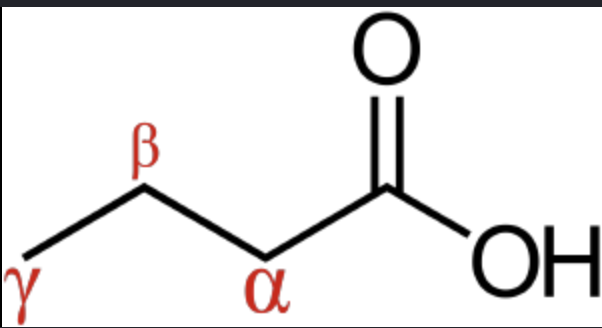
The alpha carbon is the carbon
directly next to the carbonyl
Carbonyls make nearby hydrogens
more acidic
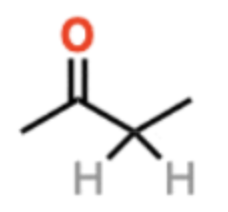
keto
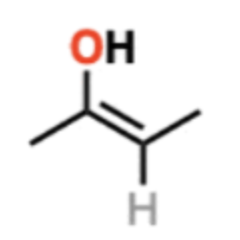
enol
what form is favored more keto or enol?
keto, because the carbonyl bond is strong.
when do enols become more stable
conjugation (adding double bonds), aromaticity, intramolecular hydrogen bonding
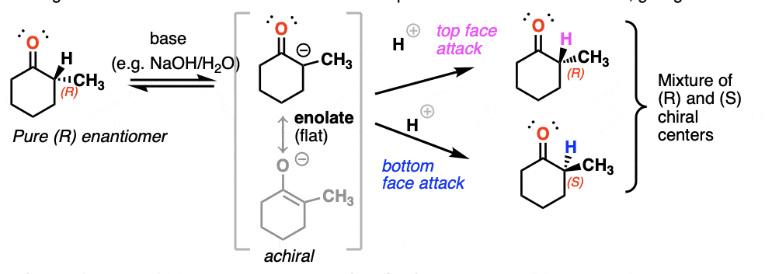
the process where an optically active carbonyl compound with a chiral (alpha) -carbon converts into a 50/50 mixture of enantiomers
alpha racemization
_______ can racemize under acidic or basic conditions
Carbonyl compounds with chiral alpha carbons

aldol addition - combines two aldehydes/ketones using an enolate.
general product of aldol addition
β-hydroxy aldehyde or ketone carbonyl

aldol condensation, product: α,β-unsaturated carbonyl (dehydration reaction)
what is the key difference between aldol addition and aldol condensation
aldol addition product: beta-hydroxy carbonyl
adol condensatoin product: alpha,beta-unsaturated carbonyl
Retro-Aldol Reaction - reverse of aldol

aldol reaction
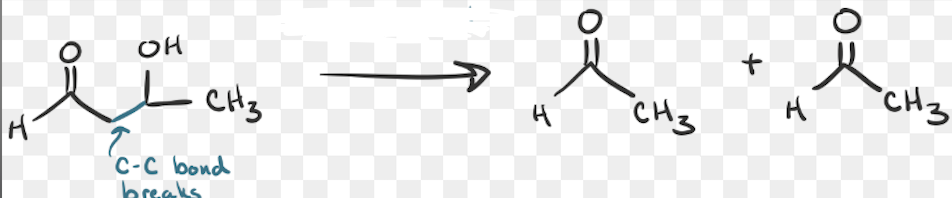
aldol reaction
kinetic enolate vs thermodynamic enolate
kinetic: forms fastest- less substituted, needs bulky/strong base, low temps
thermodynamic: more stable- more substitued, need small/reversible base, high temp
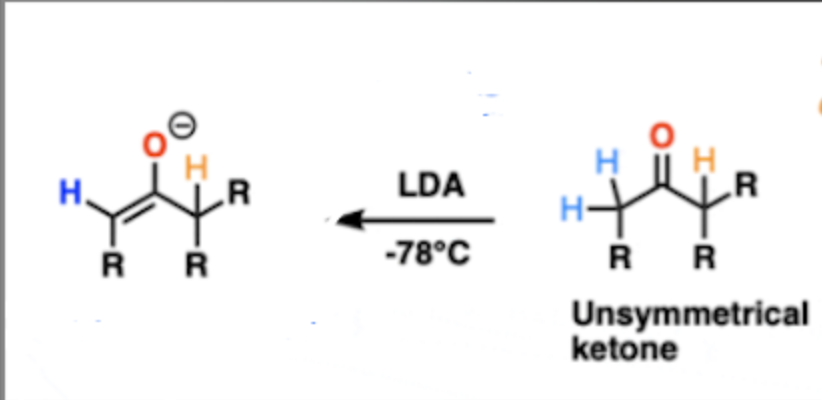
kinetic control - formed faster due to less steric hinderance at alpha carbon
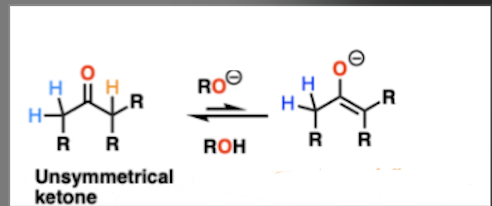
thermodynamic control
A carbonyl is more reactive when the
carbonyl carbon is more electrophilic and less hindered.
what increases a carbonyls reactivity
Electron-withdrawing groups and positive charges nearby
what decreases a carbonyls reactivity
electron donating groups, steric hindrances, and resonsane donation into carbonyls
in order to count carbons you must do what
count how many carbons are connected to the other carbon

0 carbons attached
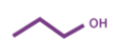
primary alcohol
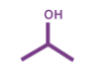
secondary alcohol
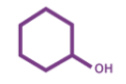
secondary alcohol
outcome of oxidation of primary alcohol
aldehyde, then carboxylic acid
oxidation of secondary alochol
ketone
oxidation of tertiary alcohols
no oxidation under normal conditions
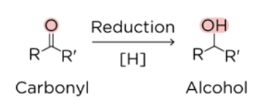
can LiAlH4 , NaBH4, Pd/C, DIBAL - H perform a reduction reactions with aldehydes (-CHO)?
yes
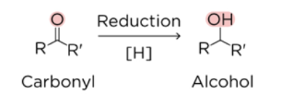
can LiAlH4 , NaBH4, Pd/C, DIBAL - H perform a reduction reactions with ketones (C=O) ?
yes

can LiAlH4 , NaBH4, Pd/C, DIBAL - H perform a reduction reactions with esters
only with LiAlH4 and DIBAL - H
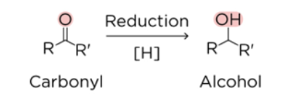
can LiAlH4 , NaBH4, Pd/C, DIBAL - H perform a reduction reactions with acids (-OH) ?
only with LiAlH4 and DIBAL - H

can LiAlH4 , NaBH4, Pd/C, DIBAL - H perform a reduction reactions with acid chloride?
only with LiAlH4, NaBH4, and DIBAL - H
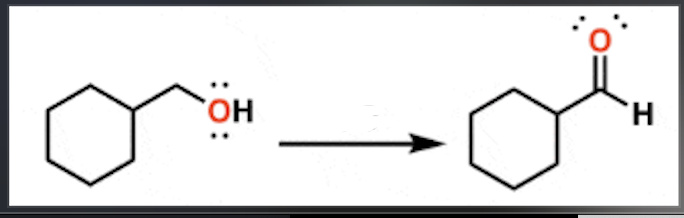
PCC, primary alochol → aldehyde
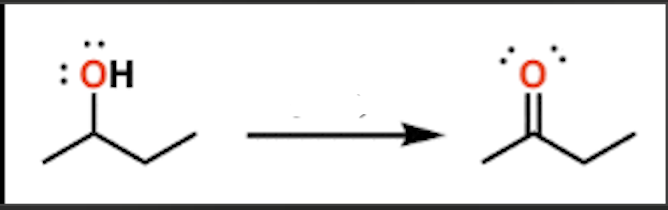
PCC - secondary alcohol → ketone
PCC, Jones reagent, KMnO4, Na2Cr2O7/H2SO4,
are all oxidizing agents (add O or take away H)
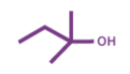
tertiary alcohol
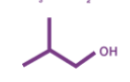
primary alcohol
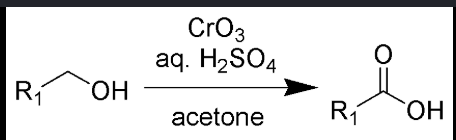
jones oxidiation. primary alochol → carboxylic acid
what resists oxidation and why
tertiary alcohols because the carbon bearing OH has no hydrogen to remove.
To react, OH usually must be
converted into a better leaving group which is done by protonation
describe SN1 alcohol substitution
favored by tertiary alcohol, weak nucleophile, polar protic solvent, acid catalyst
risks: rearrangements and racemization
2 steps
what are these examples of
Water (H₂O)
Methanol (CH₃OH)
Ethanol (CH₃CH₂OH)
Ammonia (NH₃)
polar protic solvents - favor SN1, slow down SN2 because they surround nucelophile
they are H bond donors and weakens nucleophiles
describe SN2 alcohol substitution
primary alcohol, needs strong nucleophile, converts to tosylate/mesylate, polar aprotic solvent
result: inversion of configuration if chiral center reacts
1 step
what are these examples of
Dimethyl sulfoxide (DMSO)
Acetone ((CH₃)₂CO)
Acetonitrile (CH₃CN)
DMF (dimethylformamide)
polar aprotic solvents - favor SN2
-does not hydrogen donate and keeps nucleophile strong
Alcohols can interfere with reactions because they are
nucelophilic/protic so protection temporarily masks OH
what are these examples of:
sillyl ethers and acetals/ketals
protecting groups - they temporality masks OH, to make alcohol less reactive (acetals/ketals protect carbonyls not alcohols directly)
a protected alcohol becomes
less reactive
what do meylates (MsCl) and tosylates (TsCl) do
convert OH into good leaving groups since OH is originally a bad leaving group
alkane → alkanoic acid =
ethanoic acid
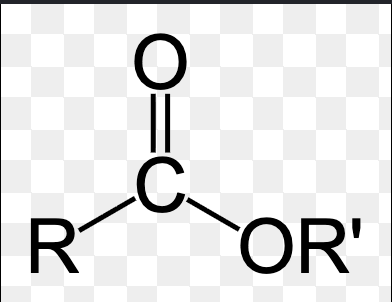
ester
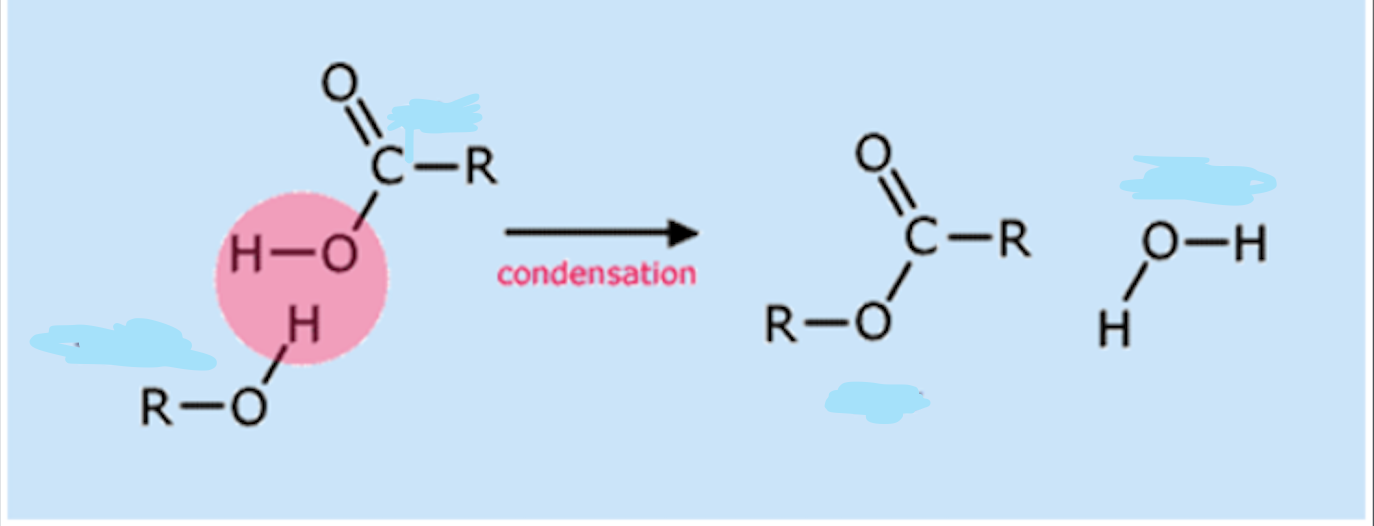
ester formation : Carboxylic acid + alcohol → ester + water.

amide formation: Carboxylic acid + amine → amide.
amide formation
Carboxylic acid + amine → amide.
“water is a byproduct” what does this mean
it is a condensation reaction
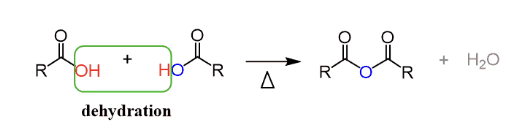
anhydride reaction. Two carboxylic acids can dehydrate to form an anhydride.
Anhydride Formation
Two carboxylic acids can dehydrate to form an anhydride.
usually does not reduce carboxylic acids.
NaBH4
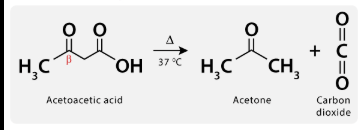
Decarboxylation - loss of carbon dioxdize
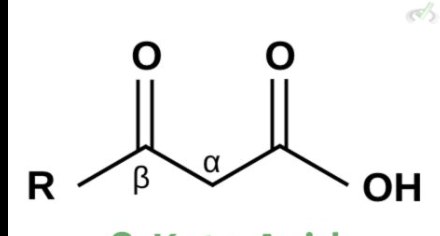
_______ decarboxylate easily because the transition state is stabilized.
beto-keto acids
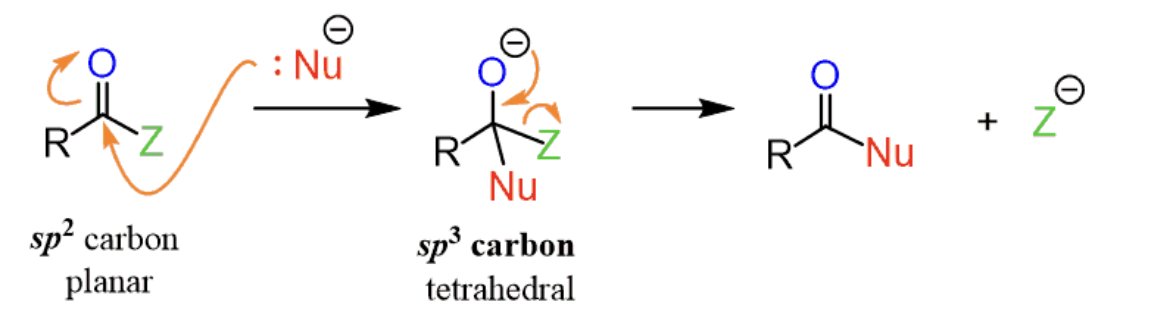
how does Nucleophilic Acyl Substitution differ from aldehydes/ketones
aldehydes/ketones undergo nucleophilic addition
Relative Reactivity of Acid Derivatives
acid chloride > anhydride > ester ≈ carboxylic acid > amide
better leaving group =
more reactive
what makes a good leaving group
a weaker base, more acidic
Good ones: I⁻, Br⁻, Cl⁻, H₂O
Bad ones: OH⁻, NH₂⁻ (strong bases are unstable alone)

Transesterification - One ester is converted into another ester by exchanging the -OR group

hydrolysis of amides - converts amides into carboxylic acids and amines (or ammonia) using water, catalyzed by strong acid or base with heat
Amides require what to hydrolyze
strong acid or base and heat
acidic hydrolysis:
carboxylic acid + ammonium
basic hydrolysis
carboxylate + amine/ammonia
Penicillin contains a
beta-lactam ring which reacts with bacterial cell wall. beta lactams are make things more reactive
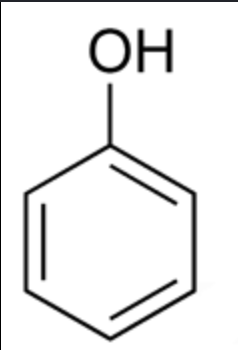
phenol
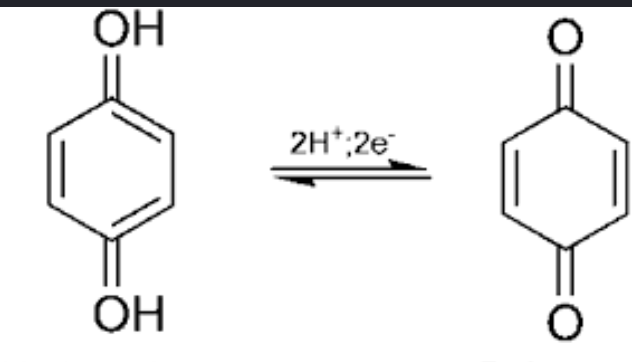
hydroquinone (reduced form) → quinone (oxidized form)
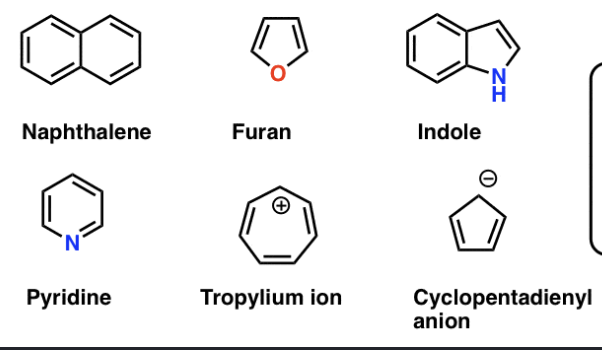
aromatic compounds -
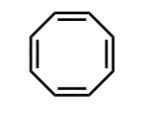
not aromatic also can’t be open