GEOG final exam review
 Call Kai
 Learn
Learn Practice Test
 Spaced Repetition
 Match
Match Flashcards
 Knowt Play
1/101

There's no tags or description
Looks like no tags are added yet.
Name | Mastery | Learn | Test | Matching | Spaced | Call with Kai |
|---|
No analytics yet
Send a link to your students to track their progress
102 Terms
political geography
= examines the geographical and spatial aspects of politics.
That is, how people in specific locations around the world have organized themselves into political groups, and how political groups influence and interact with each other.
Topics include: states, borders, nationalism, terrorism, “the war on terror,” armed conflict, resource extraction, governance, international relations, world political economy, urban political systems, peace building, refugee movements, and more.
Politics
concerns the distribution of power & resources within a community, and relationships among communities.
More narrowly, ‘politics’ refers to governance (organized control over a human community), particularly of states.
Geopolitics
study of the effects of geography (ie. space & place) on international politics and international relations.
The Domino Theory
Once on country falls to Communism, its neighbors will soon follow and eventually Communism will reach America
Patrice Lumumba
democratically elected nationalist and independence hero – assassinated by CIA & Belgian govt – replaced by Mobutu Sesse Seko, ruthless dictator
State
a territory with a population governed by an authority structure (government) that holds a legal monopoly on the use of force; a territorial organization
Nation
group of people with shared culture, history, ancestry, and territorial homeland
Nation state/plural states
The term "nation state" implies that the two coincide, but this doesn’t happen in practice.
As a result, all states have ethnic minority populations. All states are “plural states.”
Types of states
Organization of economic institutions
market economy ←→ centrally planned
Political governance
authoritarian ← → democratic
Position in world system
Global North: imperial states - US, Europe, Japan, Russia, also “white dominions” (Canada, NZ, Australia) - that have a lot of power and control over the global economy
Global South: formerly colonized states with little economic power; often with little control over their own economy which may be controlled by other states, IFIs or corporations = neocolonialism
Borders
Drawn by colonial powers without reference to reality on the ground; often straight lines
E.g. Partition “70 years after the partition of India, Al Jazeera examines the history and troubled legacy of the event that shaped the subcontinent.”
Borders (& states) are political and social constructions whose location and meaning can change.
Limits on state power
• Climate change; pollution
• Armed groups/individuals
• International agreements and treaties
• MNCs
• Refugees fleeing persecution
• Independence movements
• Macro-regional groupings (eg. EU)
• Supra-state organisations (eg. WTO, IMF, UN, NATO)
• Sub-national bodies (eg. provincial govts)
The personal is political
=political decisions affect the personal lives of individuals
Oppressions and inequalities that people face cannot be addressed through individual solutions; they require collective or political interventions (eg. unemployment is not an individual problem, but a systemic issue).
THE PERSONAL IS GEOPOLITICAL
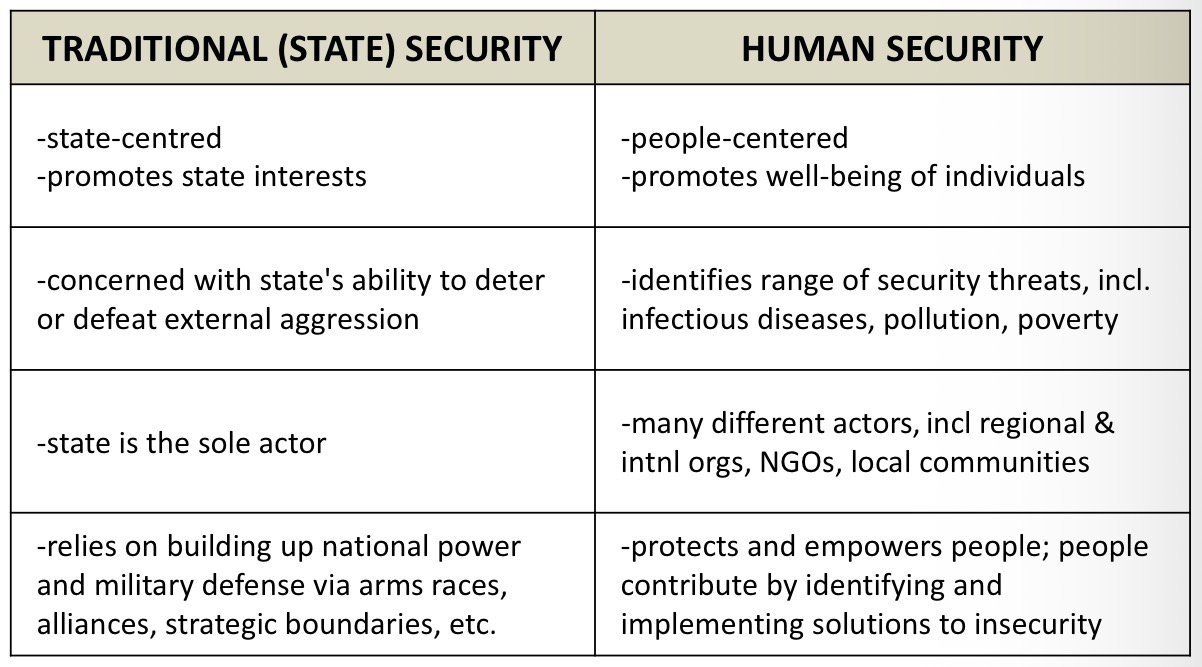
Traditional (state) security
concerns a state's ability to defend itself against external and internal threats.
Human security
argues the proper referent for security should be the individual rather than the state.
The personal is political!
UN Human security threats
• Economic security
• Food security
• Health security
• Environmental security
• Personal security
• Political security
• Community security
State vs human security
Animals used in war
horses, camels, mules, dogs, cats, bats, pigeons, dolphins, rats, chickens, monkeys, bears, elephants, cows, canaries, lions, pigs, glow worms, turtles.
They are used as bombs, transport, messengers, to detect gas or mines, and for companionship.
Many millions of wild & domesticated OTH animals are killed in every war.
Women in war
For women, war and peace and long been blurred.
• Impunity for sexual and intimate partner violence during “peace”
• Increased sv against women during “war”
“What do you expect - that’s just what happens.” → unacceptable!
Security council resolution 1325 (SCR 1325)
• broadly, recognizes that men and women experience security differently, and that to build sustainable peace, women need
to be fully involved.
― examples? US & Taliban, Jugoslavia, Rwanda, Myanmar
Everywhere wars
e.g.
• “War on drugs”
• “War on terror”
• Drone strikes
o Commuter killers
o City as battlefield
o Civilian & Combatant
US drone attacks in Pakistan
“High-value militant leaders” make up around 2% of those killed.
Apart from proven civilians, the remainder of those killed, even according to the White House, are “low-level, alleged militants” or “suspected militants.”
However, “militant” is never defined. Also, all “militants” are not legitimate targets of lethal force!
The US administration considers “all military-age males [killed] in a strike zone” to be “combatants…unless there is explicit intelligence posthumously proving them innocent.” (which there never is)
-You must ask gender questions to understand international relations
-The personal is (geo)political
Urban geography: urbanization
-Increase in # and proportion of people living in cities
-Process by which a landscape becomes more densely populated with more complex functionality, mixed land use, and infrastructure
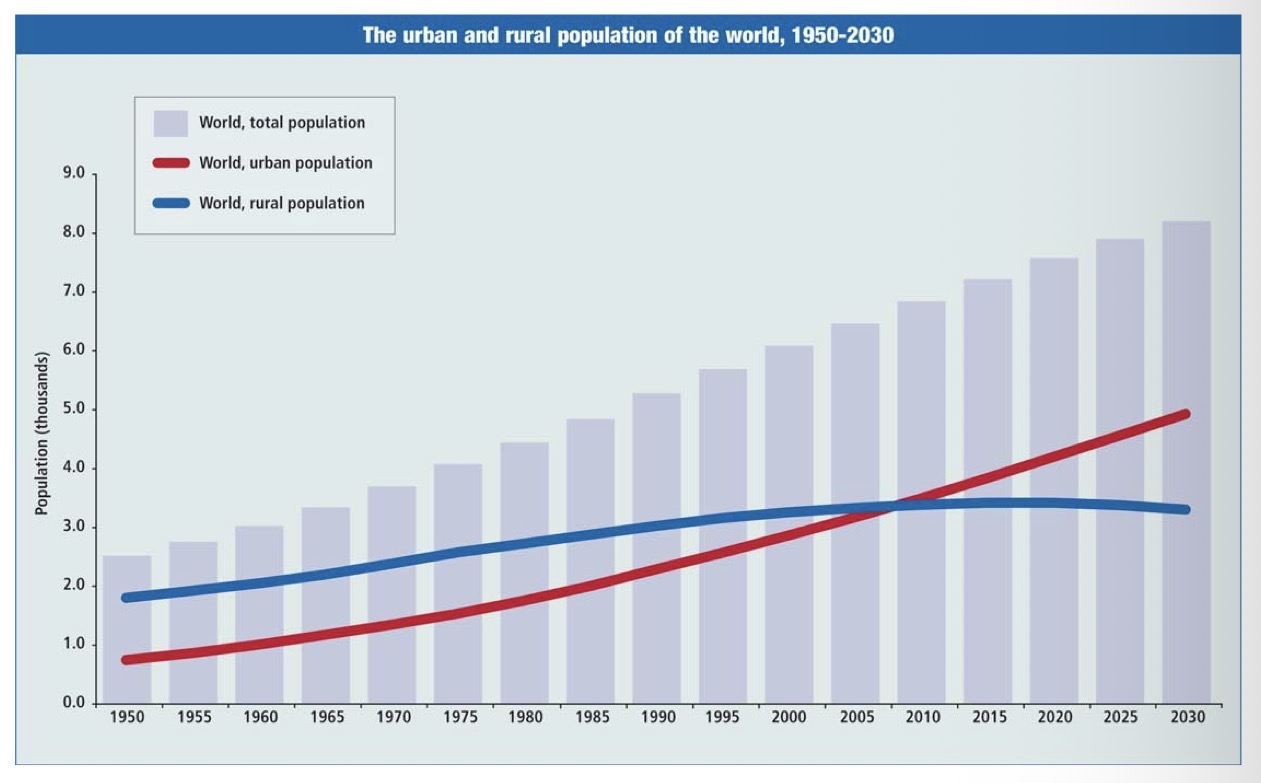
Urban form: land use and built environment; changes over time
• Early cities
• European colonial cities
• Industrialization - Europe 19th c
• Transportation - canal, railway, car
• 20th c - deindustrialization in GN, shift to services and gentrification
Automobile oriented development problems
Parking
Pollution
Congestion
Role of governments
Current efforts to address problems
Tolls, congestion charges
Car share programs
Banning cars
Promoting cycling and walking
Removing free ways
Permits
Funding public transit
Urban wildlife
MTH (more than human) species that utilize human dominated urban ecosystems
• Typically, generalists
• Can change their behavior and adapt to major environmental disturbances
• Urban development fragments natural landscapes
• Refuges and parks can act as stepping-stones for navigating human-dominated landscapes
• Best way to avoid human-wildlife conflict? —> Reduce availability of attractants
Urban social landscape: spaces of elite consumption
luxury goods retailers, elite office spaces, expensive residences; wealthy migrants
Spaces of non-elite consumption
low-income neighbourhoods, SROs, strip malls, slums; temporary foreign workers
Residential (spatial) segregation
-race / ethnicity
-class
Informal settlements
• 1/3 world urban pop = 1b+ people
Issues
• Inadequate, informal housing
• Poor/no sanitation
• Little/no investment
• Informal employment
• Slum clearance
Alternative
• “Self-help” housing
Sh*t (i.e. excrement)
- Is it a political issue??? —> YES.
The politics of shit (Appadurai, 2002):
Reveals the situation of postcolonial urban residents who, by virtue of their social location (class, caste & gender), cannot distance themselves from the stigma and dangers of waste.
Geographers are interested in how “the politics of shit” is spatialised.
The politics of sht
• highlights that the provision and distribution of infrastructure is not a technical issue, but rather a political process
• reveals how the planning, installation, and maintenance of infrastructure can produce and reinforce political power in urban spaces
The personal is political!
Capitalism and cities
-Need for endless, exponential growth
-Urbanization as capitalist investment
• Cities for profit
• Gentrification
Housing
Housing is a class struggle playing out in urban land markets, between those living in housing precarity and finance capital.
One form this struggle takes is gentrification.
Gentrification
= rebuilding and renovation of residences and businesses,
accompanied by an influx of middle-class residents into the gentrified
area, usually displacing existing lower income residents (LIR)
-Gentrification is a spatial expression of class inequality.
Results
• Rent increases → LIR can’t afford to live there
• Expensive shops, restaurants move in → LIR can’t afford to eat, shop
• Look and feel of the place changes → LIR no longer feel comfortable
• Security guards move people along; police ticket minor offences
(jaywalking, selling items on the street); illegal to sit/lie on
pavement; bum proof benches → LIR driven out and/or criminalised
“Accumulation by dispossession” - David Harvey
Agriculture: subsistence
• Production primarily to meet family needs, plus a small amount for local trade/sale
• Challenges: farmers driven off land by mining companies, plantations, debt (govt & IMF encourage focus on exports which require expensive inputs), free trade (can’t compete with flood of subsidized products from the GN)
-e.g. Farmer in Ethiopia who lost his farm, animals, and everything else when a Chinese factory was built on his land. Now he has nothing.
-Beach in Pakistan to be destroyed as part of new Chinese port
development; many subsistence fishers will lose their livelihood,
which is already negatively affected by port traffic. Violence in Balochistan is aimed explicitly at Chinese investment in the region.
Pastoral nomadism
• Subsistence agriculture
• Moving around to graze animals; land recovers in the meantime
• Typically where agriculture isn’t feasible (too dry)
• Challenges: most state govts have stopped this practice as part of enclosure movement (land wanted for industrial development); pastoralists often have no land title, no rights
Swidden
• Subsistence agriculture
• “Shifting agriculture” in tropical forests where soil is very fragile
• Gives land time to recover
• Challenges: enclosure; no land title/rights; people no longer have enough land to move around on, so land doesn’t have time to recover
Plantations
• Commercial agriculture
• Started by European colonizers in colonized countries, mostly operated with slave labour on land stolen from indigenous people
• Monoculture - cash crops – examples?
• Challenges: Still mostly owned by Europeans and NAs; requires massive amounts of industrial chemical fertilisers, pesticides,
herbicides; species extinction; destruction
Population
-Human population keeps growing, but farmland is disappearing due to urbanization/urban sprawl; over-use of chemical pesticides & fertilizers; global warming & desertification
Aquaculture
• Commercial agriculture (factory farm)
• Accounts for over 50% of fish eaten
• Issues: animal welfare; large amounts of chemicals – pesticides, dyes; waste, parasites, diseases enter wild chains; seals, sea lions, birds, dolphins, whales, other animals affected/killed
Subsistence farming
-production primarily to meet family needs, plus a small amount for local trade/sale
-small scale
-farming as a way of life
Commercial farming
-production primarily for sale and profit
-small scale or large scale (increasingly large scale as small farms can’t compete with large agribusinesses)
-farming as capitalist enterprise, may be based on factory system model
Agribusiness
-production exclusively for sale and profit
-large scale, capitalist production
-may be family owned or owned by a corp.
-farm as factory
Consolidation
1. Farms: fewer + larger
2. Food supply: small number of corporations control breeding (animals and seeds/plants), production, processing, marketing, and sales (e.g. Monsanto, Cargill, Tyson, DuPont, Smithfield, Kraft, Nestle, Unilever, Colgate-Palmolive, Mars)
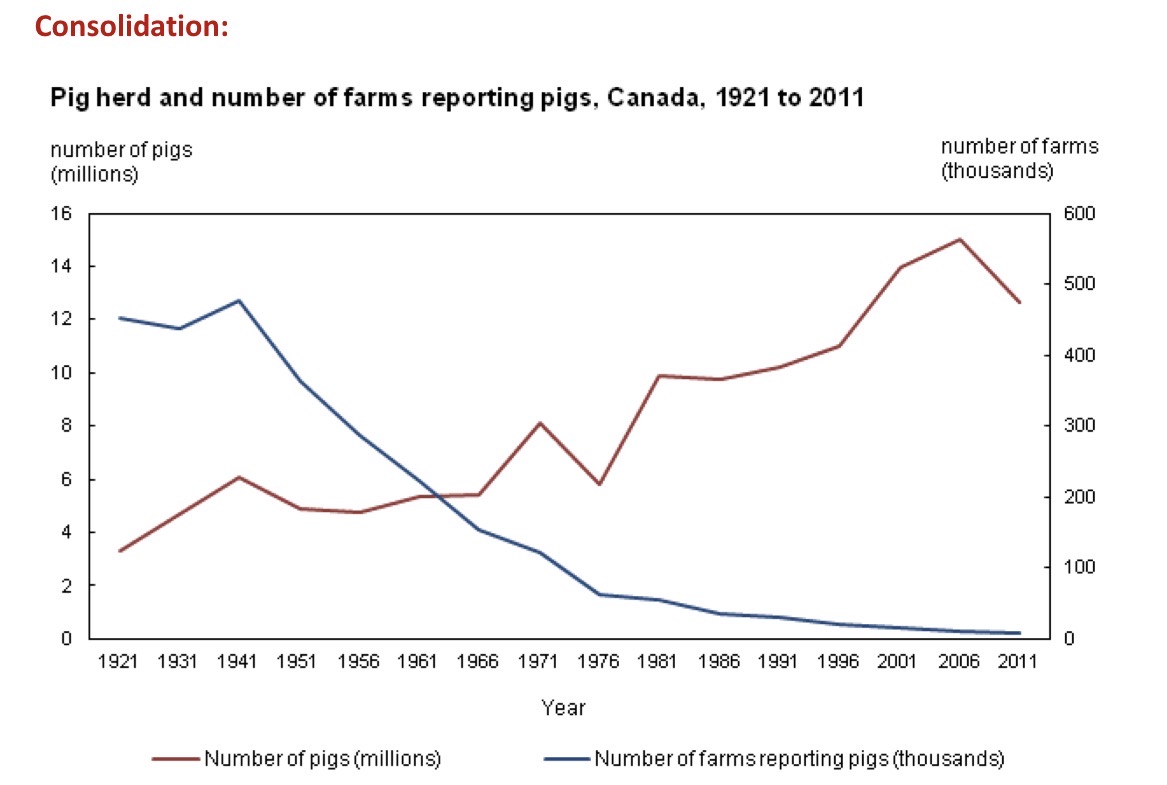
Pigs/chicken
Almost all 35m pigs in Canada live in barns in individual cages (sows) or overcrowded pens (hogs) and never see daylight.
Killing piglets by body slamming them on concrete is routine.
Baby pigs are castrated by having their testicles cut open and ripped out, without anesthetic.
Clipping baby’s teeth—> Done without anesthetic
Their tails are cut off with pliers, without anesthetic (tail = part of the spine)
Male baby chicks are ground up alive or simply thrown in the garbage (7b/yr).
Almost all 130m chickens in Canada live in barns in cages and never see daylight or go outside.
“cage free” chickens
Chickens’ beaks are burned off
Cows (13m) in Canada
branded; tails cut off with pliers; udders burned; given electric shocks; horns removed; milked by machine; stand on concrete or thick manure; eat corn; severe health problems. Calves removed from mothers and put into veal crates or thrown in the garbage.
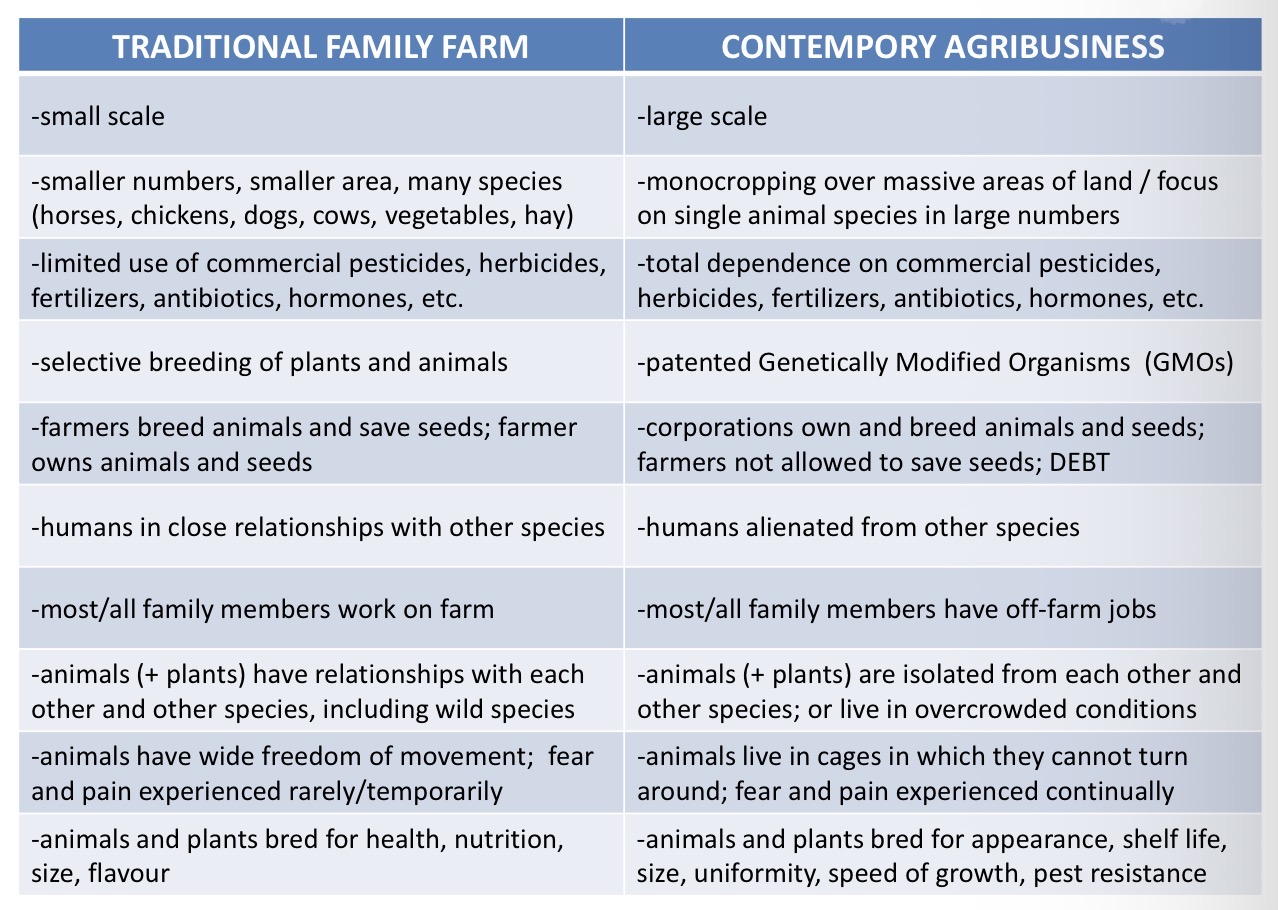
Traditional farm vs. contemporary agribusiness
Negative externalities
• Negative effects of a transaction between two parties on a third party who is not involved in the transaction
• Costs that are not included in the price of goods
• Technical sounding term that means “let somebody else deal with the problems that a corporation creates”
Example:
an agribusiness corporation is able to produce large amounts of meat
at a low cost – but only by draining public wetlands for water;
causing intense pain and suffering to animals; using antibiotics,
hormones and pesticides that harm human health; employing
migrant workers at below living wage; and allowing the waste to
drain into surrounding land/water systems.
Common externalities
GHGs, pollution, chronic health problems in human and MTH populations, environmental destruction, extinction, cost of building roads + railways, evictions, pain, cancer, ocean dead zones, deforestation, homelessness…
A profitable exchange between a buyer & seller is only desirable for society as a whole when prices reflect the full social and environmental costs involved in the exchange.
Insect pollinators
The world’s insect pollinators are dying off due to:
• destruction of their homes and livelihoods
• use of pesticides
• climate change
Indian farmers
in the past 30 years, 300,000 Indian farmers have committed SS (typically by drinking pesticide)
Economic geographies of industry
3 economic sectors:
Primary
Extracting materials, animals, plants from the earth
Secondary
Assembly, manufacture, processing into finished goods
Tertiary
services
Location of industry, incl. services: SITE factors (land, labour, capital)
• Cost of land, labour, energy
• Available natural resources, including land
• Availability of capital & local tax rates
• Labour laws
• Local environmental regulations
Situation (relational/external) factors
• Proximity to market (consumption) or raw materials (production)
• Transportation options
• Proximity to amenities
• Agglomeration effects
Location of industry; scale: Local/regional scale
• Site & situation
• eg. North America/Europe CBD→ suburbs→ neoliberal regions
Global scale
• Site & situation
• eg. NIDL
-Europe/NA → Asia & LA
New international division of labour (NIDL)
=spatial division of labour in which production is no longer confined to national economies; shift of mfg from Europe & NA → Asia & LA
Context:
Globalization, neoliberalism (free trade, deregulation, free movement of $)
Site & situation factors:
• Cheap land & low taxes
• Low labour costs & weak labour laws
• Weak environmental regulations
• Next to large emerging markets
• Near skilled, controlled labour force
Issues (EXTERNALITIES):
• Working conditions, gender
• Pollution & environmental destruction
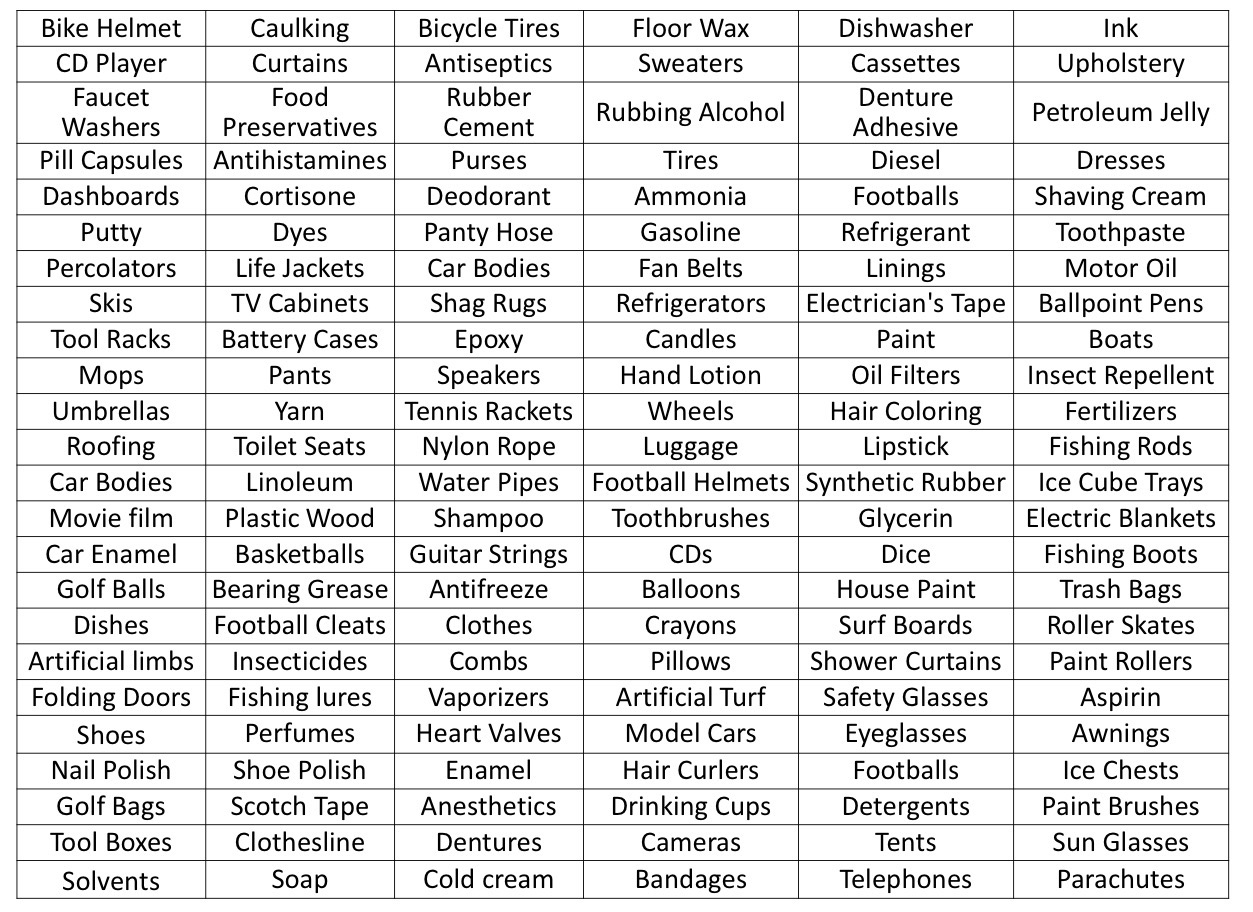
Peak everything
Peak Fossil Fuels
-peak oil, natural gas, and coal
Peal Minerals
-peak uranium, peak metals
Peak Food
-peak fish, peak soil, peak water, fertilizer (peak gas, peak phosphate rock, peak potash)
Peak sand
• No sand → no concrete, ceramics, computer chips, glass, plastics,
abrasives, paint, etc.
• Illegal mining in 70+ countries → environmental destruction, death of sea life. Indian Sand Mafia very powerful
• Dozens of islands have disappeared completely
• 75%-90% of beaches are receding; by 2100 all beaches may be gone
-Sand comes from mountains and flows down rivers to the sea. But thanks to millions of dams, most rivers no longer take sand to the sea.
Energy
• Rare earth elements for “clean energy” generate 2,000 t of toxic
waste for every t. produced
• As ore quality ↓, industry uses ↑energy to mine it
“The current global mining footprint is already “unsustainable” …the world needs a better plan to avoid collapse than replacing one unsustainable fossil fuel system with another intensive mining system powered by even more extreme energies… Fundamentally, we need to talk about a future of less instead of a future of more.”
Military industrial complex
+ military (soldiers)
+ industry & tech (owners)
+ US Congress (legislators)
+ other governments
+ private mil contractors (mercenaries)
+ REVOLVING DOOR:
elites moving between industry, regulation, contracting, government,
conservative think tanks, industry, regulation…
Mining companies
75% of the world’s mining companies are based in Canada
These companies operate in: Papua New Guinea, Congo, Philippines, Tibet, Eritrea, El Salvador, Guatemala, Sudan, DRC, and other places
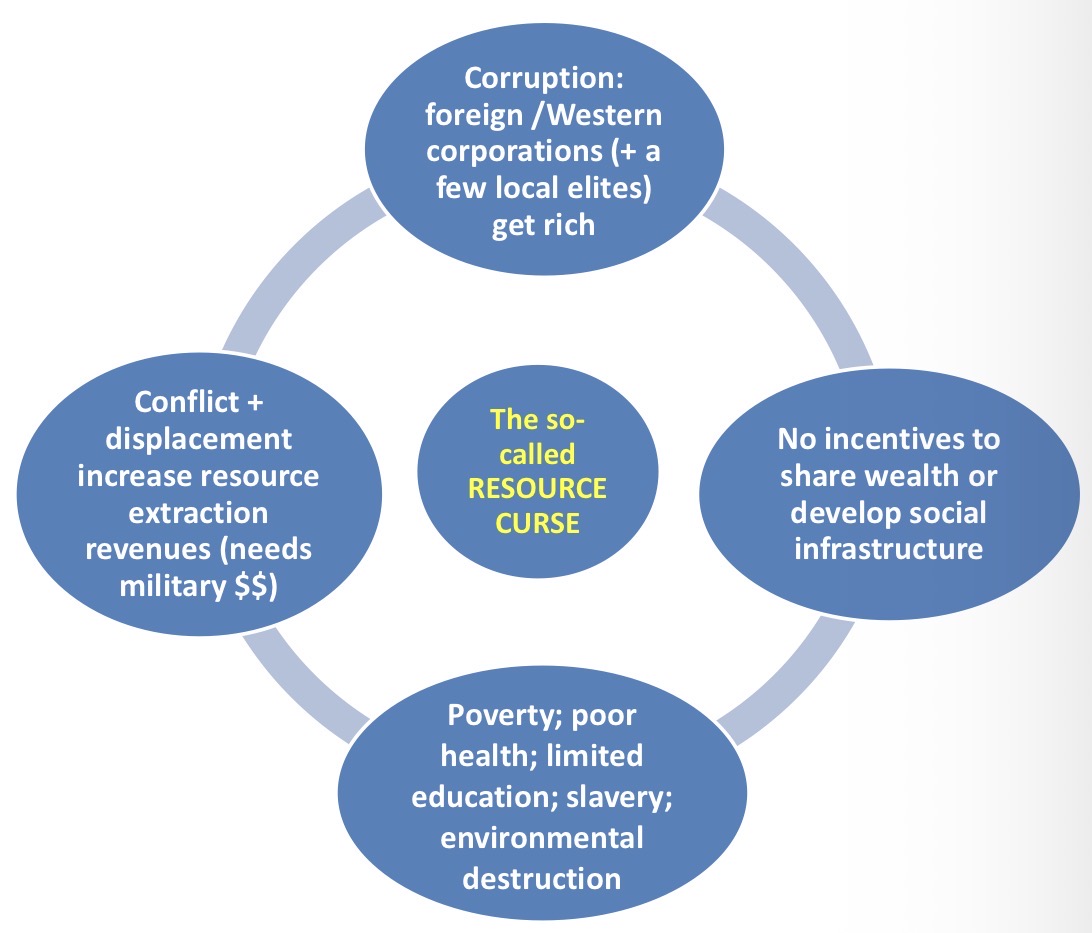
Resource curse (aka paradox of plenty)
Paradoxical situation in which countries with abundant non-renewable resources (esp. minerals & FFs) experience less economic growth and worse development outcomes than countries with fewer resources.
Neo-colonialism
The continuation of colonial-type geopolitical relations through the use of economic, political, and cultural pressures to control or influence former colonies.
Oil accidents
-During the last 50 years, nearly 7,000 oil accidents occurred in the Niger Delta, and the several billion litres of spilled oil have transformed the former natural paradise into hell on earth. A further 13 million barrels of crude oil contaminate the Delta every year, causing widespread cancer and death.
Conflict minerals
• Tantalum (coltan)
• Cassiterite (tin)
• Wolframite (tungsten)
• Gold
• Other minerals & their derivatives
• Children in Congo risk their lives to supply our mobile phones
• Boys as young as 12 spend days underground digging minerals
• You handle conflict minerals every time you use your mobile phone – but business has the power to change the situation…IF we demand it
-Around 14 million tons of plastic enter the oceans each year
What to do
-advocate for systemic change
-reduce consumption (& vote with your wallet)
-avoid/reduce use of plastics
-educate yourself so that you can make informed choices
-support local & organic food production
-demand corporations stop externalizing costs onto others
-let politicians know you care about these things
-identify source(s) of hope and hang on to them!
Environmental geography: Who are non-humans?
“They are all the creatures with which we share this world—flora and fauna, and all sorts of creatures that are too small for us to see with our eyes, but that are nonetheless our daily companions. Non-humans include the plants that convert solar radiation into food and the microorganisms that ferment milk to make cheese.
We cannot exist without them. We cannot breathe without oxygen being produced by plants and trees. We cannot live without eating plants and animals, and we cannot digest some foods without the microbes in our gut that turn what we eat into metabolites that we need to be healthy. We cannot shelter or clothe ourselves without the materials that come from our ecosystems. We cannot do anything at all without non-human help.
More-than-human theory attempts to fill gaps in the social sciences and humanities, fields that have, for the most part, left non-humans out of the analysis.”
Environmental geographers
Environmental geographers ask, “Where do environmental issues occur and why do particular issues appear where they do? What are the implications for different groups and individuals? So what –why should we care?”
“What is where,
why is it there, and
why does that matter?”
A holistic perspective is needed because of how ecosystems work: everything is connected.
Value
Use value: e.g. birds having value just by being watched; sacred Shinto tree in Japan
Exchange value: just about money
Climate
= temp + precipitation
Currently in a cool period
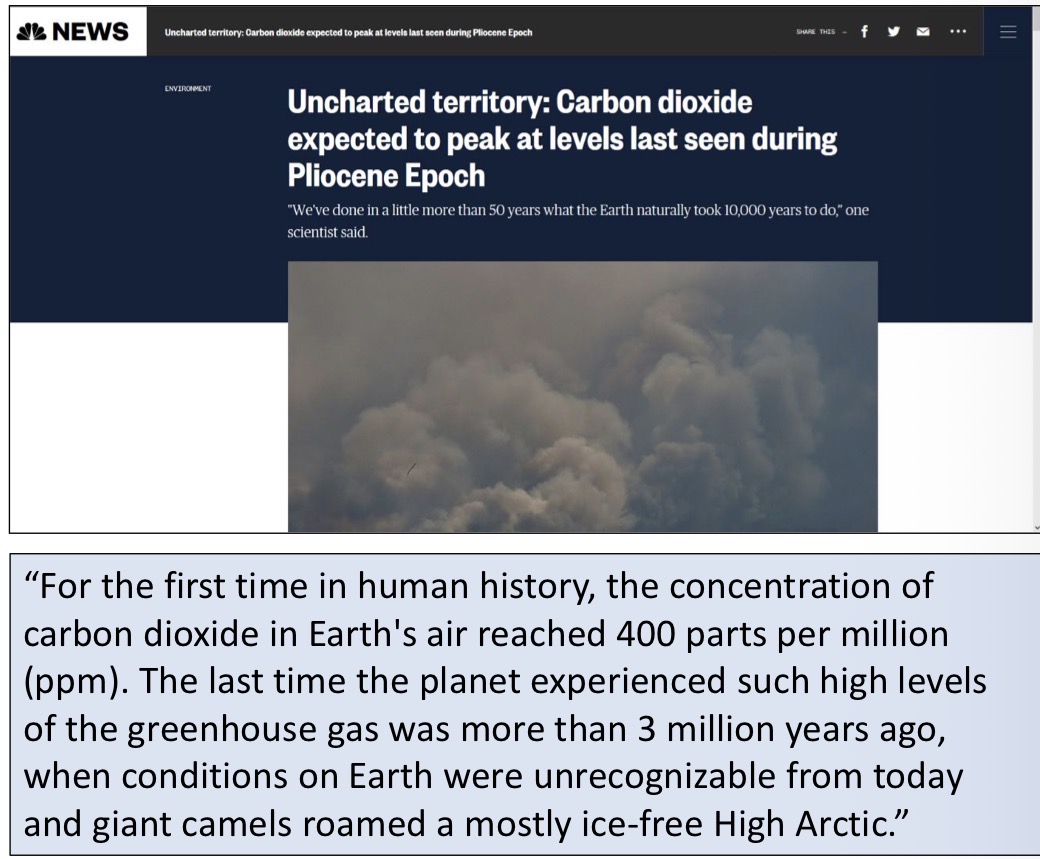
CO2 and Temp concentration relationship
-the same
-temp will rise (human activity)
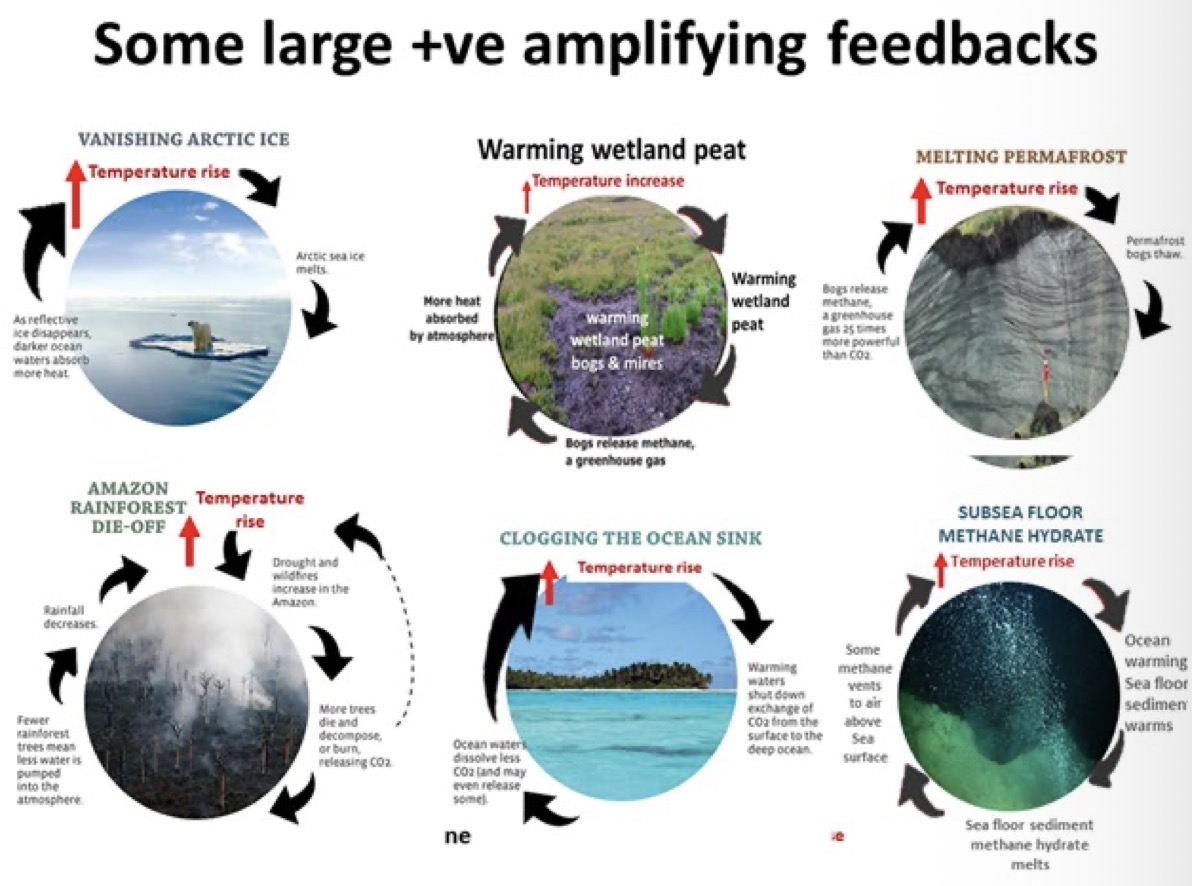
Some large positive amplifying feedbacks
Feedback mechanism: promotes change —> enhanced
Development geography (how the rich get richer); Development:
Development: processes that bring about positive changes in economic prosperity and quality of life
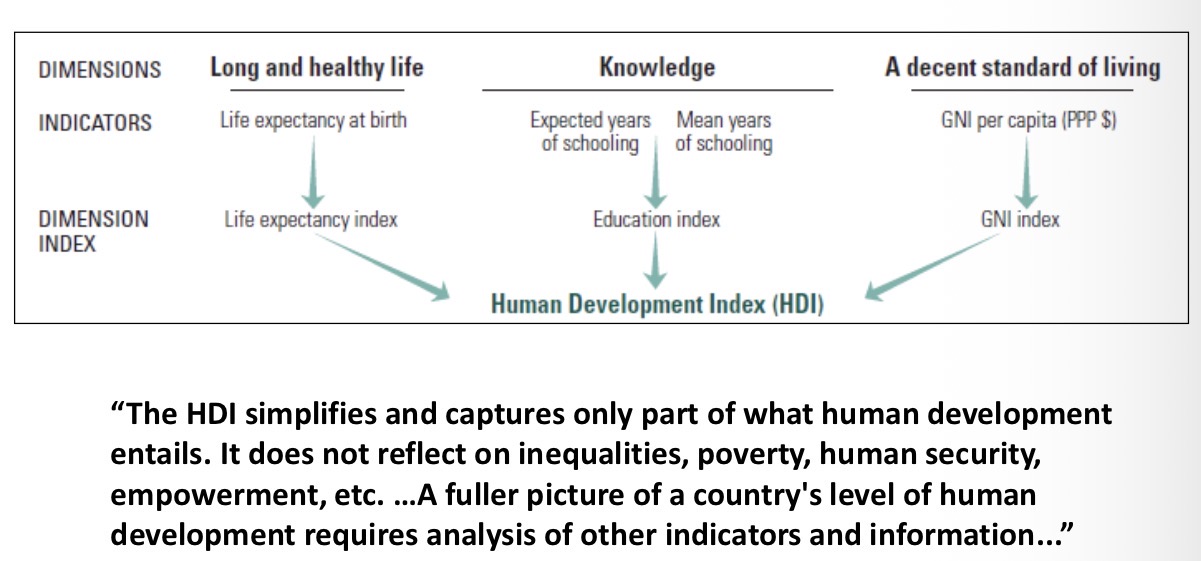
Measuring Development: UN Human Development Index (HDI)
Income
Health
Education
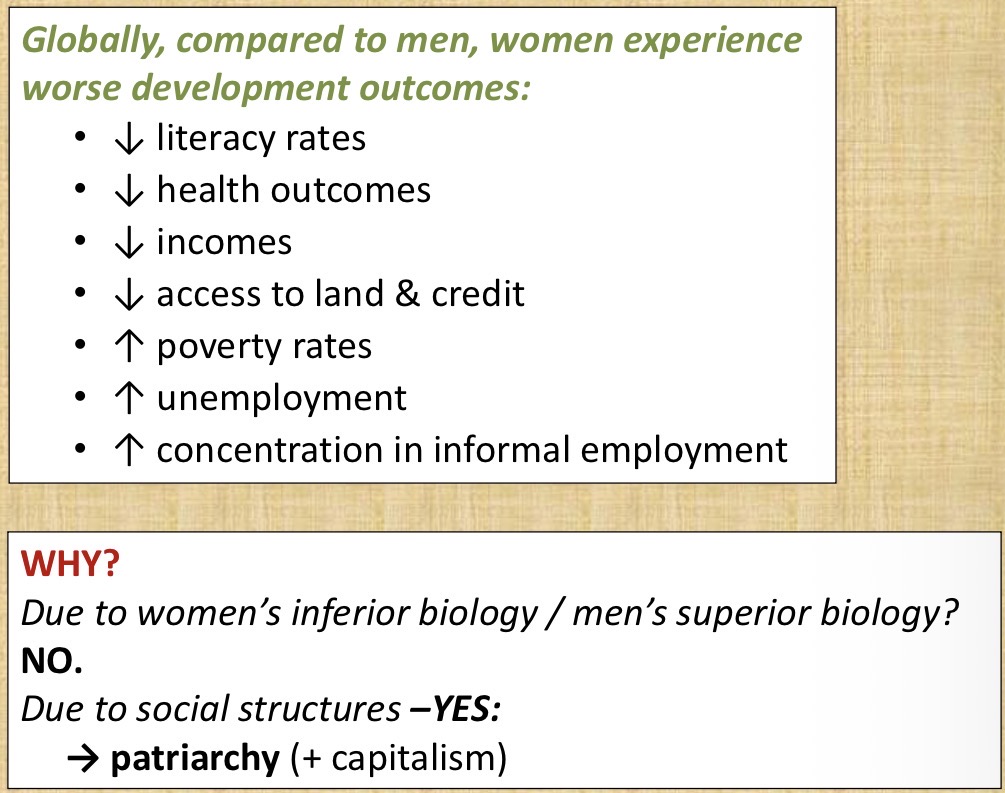
Men vs. women development
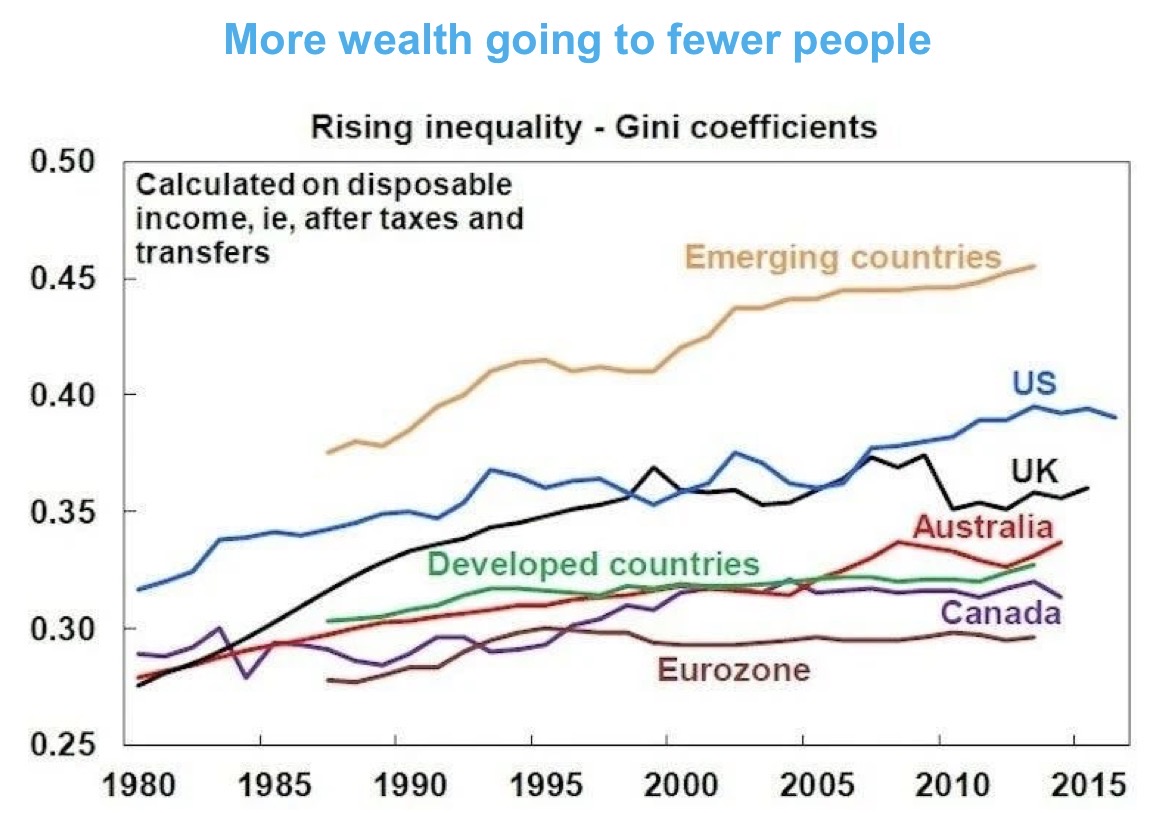
More wealth going to fewer people
Even in china, there is rising income inequality and rising GDP (but can’t just look at GDP)
Economic globalization
Deepening and widening of trade & investment around the world so that more places are integrated into economic processes that operate beyond the scale of the locality, region or state.
What has enabled globalization?
– Cheap, fast transportation & communications
– Global capital markets
– ↑ Consumer demand
– Creation of IFIs—(IMF (int. monetary fund) & WB (world bank); also WTO)
– Neoliberal economic policies, especially privatization, deregulation, & free trade
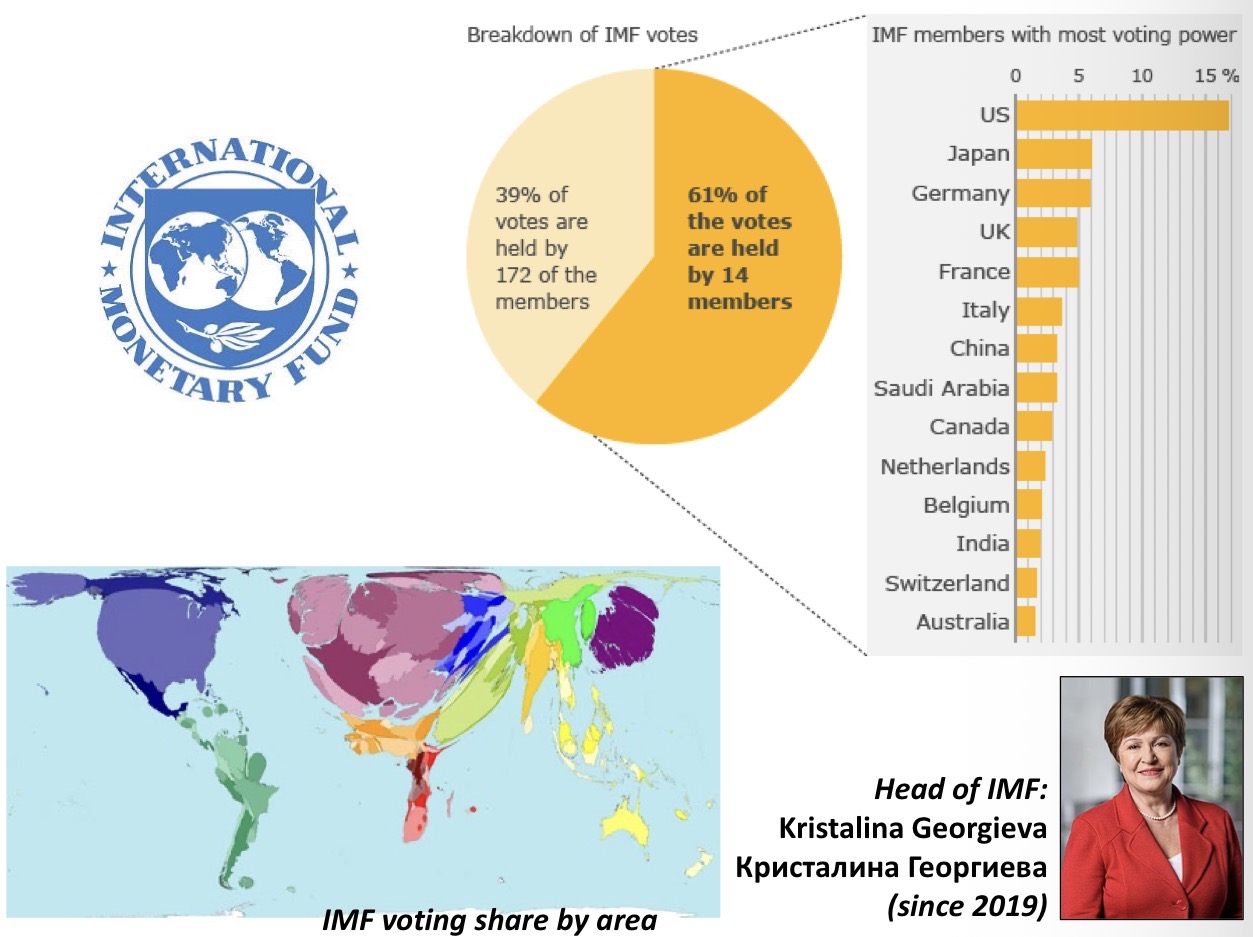
IMF (international monetary fund)
The more money a country puts in, the more voting power it as
-head is always from Europe
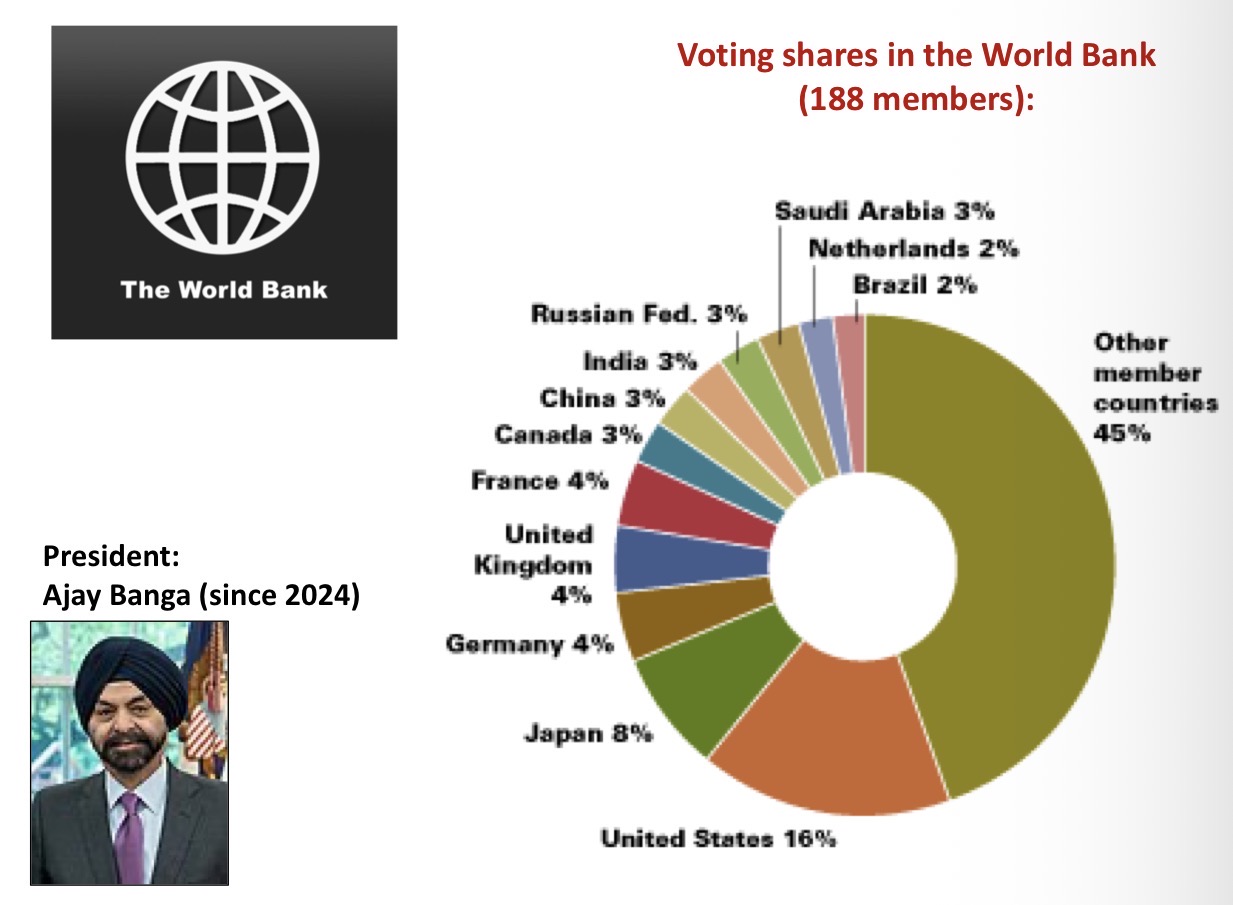
The world bank
HOB always from U.S.
2 key processes giving market forces greater power (benefitting corps over govts)
Deregulation
-weakening laws/policies
-corps have greater power
-2008 financial crisis
Privatization
-process of taking govt assets/services and moving it to private sector
Arguments for: govt needs $; gives it $; incentive to innovate; efficiency and produce monopolies
Arguments against: access goes down; nothing left for future gen; undermines democracy (undemocratic)
TNCS
In today’s globalised world, TNCs have become richer and more powerful than states
• (l) < 10% of companies earn > (m) 80% of all profits globally
• The top 10 corporations’ combined revenue > (m) the 180 ‘poorest’ countries combined
• 69 of the world’s 100 largest economic entities are corporations rather than countries
• 153 of the world’s 200 largest economic entities are corporations
“Free trade” policies
•elimination of tariffs (taxes on imported goods) and import quotas (limits on the amount of a product that can be imported)
•creation of “free trade zones” where there are only small or no tariffs, as well as cheap land and skilled, but controlled, labour
•reduction or elimination of controls on the movement of capital out of a country so profits can easily be returned to the base country or a tax-haven
•reduction or elimination of subsidies for local businesses so that overseas firms are more competitive
Increasingly, free trade policies override national legislation,
thereby undermining democracy.
7 key features of neoliberalism (+ related sound bite slogans)
1. Trade liberalization – “adopt free trade”
2. Privatize public services – “use business efficiency”
3. Deregulate business and finance – “cut red tape”
4. Cut public spending & welfare-state policies – “shrink gov’t”
5. Reduce & flatten taxes – “be business friendly”
6. Encourage foreign investment – “reduce capital controls”
7. De-unionize – “respect rights to work & labour flexibility”
These policies favour private enterprise and discourage govt investment in social infrastructure
2 possible routes to “develooment”
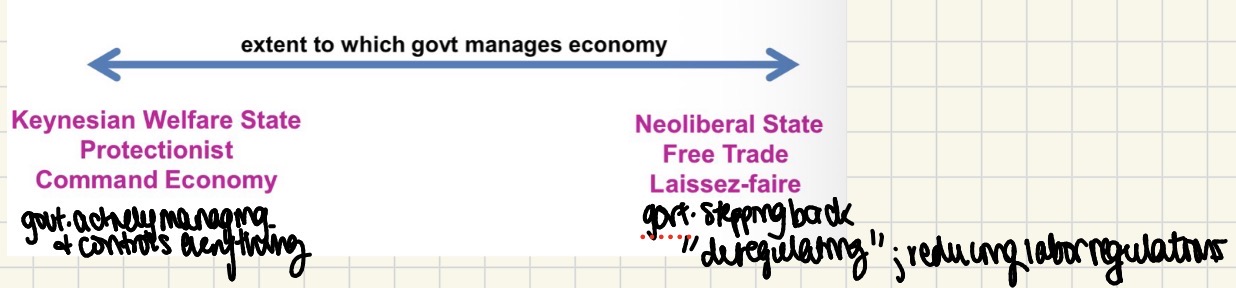
Scholars argue what is needed is a balance of:
Competition
Subsidies
State ownership/control
Openness to trade
“Aid” —loan (debt)
Promises vs. reality
Tied aid (purchases in donor countries)
Aid = loan (must be paid back/interest)
Affects gender/power dynamics
Military aid
Charity vs. wealth creation
No accountability to recipients
Cover for inaction
Rich countries rely on a large net appropriation of resources from the GS
• $242 trillion over the period 1990–2015
→ 30x the amount of aid received
→ major driver of underdevelopment & global inequality
“There is no catch-up development happening. This is not because poor countries are ‘behind’. It is because they are exploited.”
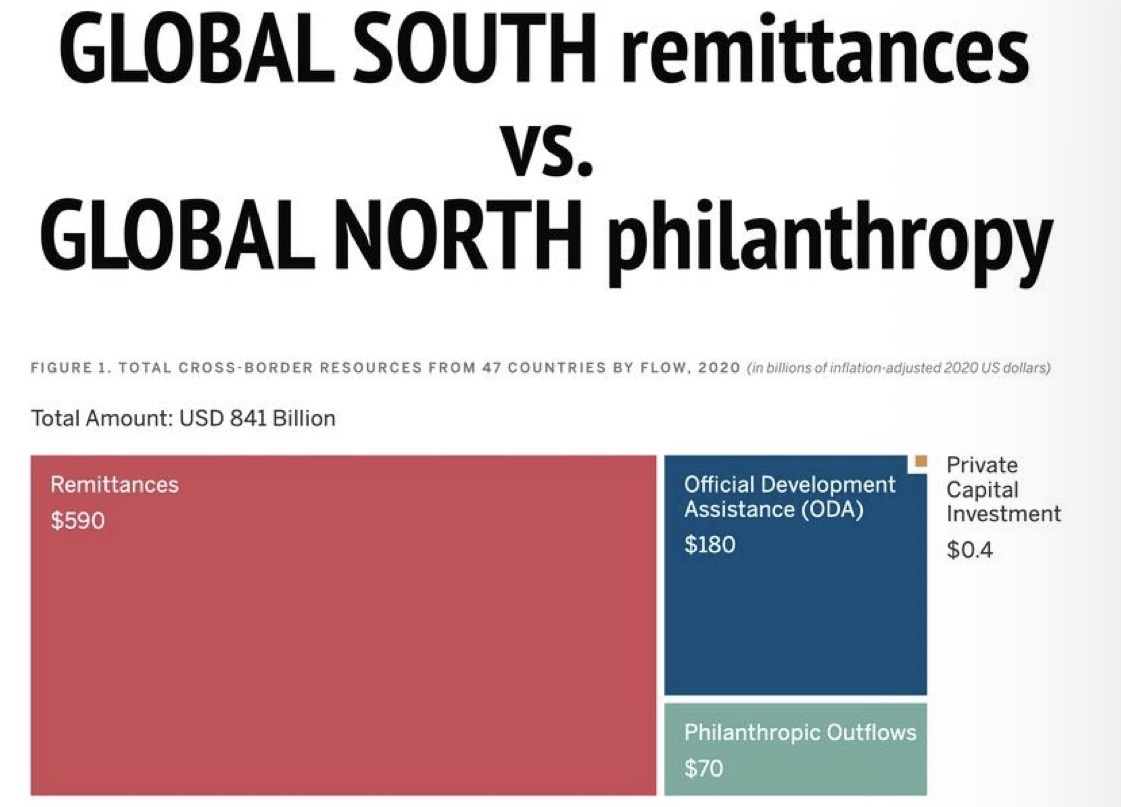
GS remittances vs. GN philanthropy
Remittance: $ sent back to home country