Anat & Phys Final Exam Review
 Call Kai
 Learn
Learn Practice Test
 Spaced Repetition
 Match
Match Flashcards
 Knowt Play
1/178

There's no tags or description
Looks like no tags are added yet.
Name | Mastery | Learn | Test | Matching | Spaced | Call with Kai |
|---|
No analytics yet
Send a link to your students to track their progress
179 Terms
Describe the effects of fast and slow hormones on the body from chronic stress, explain why they are often beneficial/adaptive, and what health problems can result if prolonged:
Effect:
Benefit/why an adaptive response:
Risk/health problems cause if excessive/chronic:
Effect: increased heart rate
Benefit/why an adaptive response: more blood to tissues
Risk/health problems cause if excessive/chronic: causes stress on the heart/overworks it and prolonged stress can cause serious heart problems
Describe fast endocrine hormones (epi and noroepi) effects on the body
Effect:
Benefit/why an adaptive response:
Risk/health problems cause if excessive/chronic:
Effect: increased heart rate, breathing rate, and quick activation of glucose
Benefit/why an adaptive response: instant energy (for short term dangers)
Risk/health problems cause if excessive/chronic: constant elevation can damage blood vessels/arteries, stress on heart, and hypertension
Describe slow endocrine hormones (cortisol) effects on the body
Effect:
Benefit/why an adaptive response:
Risk/health problems cause if excessive/chronic:
Effect: increased blood sugar (glucose usage), suppresses non-essential functions (digestion, reproduction, immunity)
Benefit/why an adaptive response: supplies sustained energy for prolonged challenges, suppresses immunity from auto-inflammation
Risk/health problems cause if excessive/chronic: can have negative effects of metabolism (insulin resistance, weight gain, type 2 diabetes), and weakens the immune system
Releasing and inhibiting hormones from the hypothalamus control hormone release from target cells in what endocrine gland
Anterior Pituitary
The ___________ does not produce hormones; it only stores and releases those made in the hypothalamus. For example it releases ADH when the body is dehydrated for water retention and is triggered by the hypothalamus to release oxytocin to cause milk ejection.
Posterior Pituitary
What structure assists the fast transport of releasing and inhibiting hormones to their target cells?
Hypophyseal Portal System
The ______ produces hormones like T3 and T4 to control metabolism, energy, body temperature, and heart rate. The pituitary gland regulates it by releasing TSH.
Thyroid Gland
Why is orthostatic hypotension (head rush) more likely to occur when you are sick?
Due to dehydration and reduced blood volume
Red blood cells have an extreme surface area: volume ratio. The SA:V ratio of these cells is particularly:
High
Red blood cells have an extreme surface area: volume ratio. This trait benefits cell function by maximizing:
Oxygen exchange
The equation F alpha changeP/R shows that when peripheral resistance (opposing blood flow) increases, what must our body do to maintain blood flow?
Main increased pressure differentials
Sympathetic nerves trigger the release of what hormone from the adrenal medulla?
Amines: Epinephrine and Neuroepinephrine
By volume, most of our blood plasma consists of:
Water
By volume, most of our formed elements consists of:
Red Blood Cells
Breakdown blood components:
Plasma (water, nutrients, waste, proteins), RBCs, WBCs and platelets
What type of capillary would be most likely found in an endocrine gland and why?
Fenestrated: it has “windows” in the epithelium which helps in rapid hormone transport into the blood, high-rate exchange of small molecules and limited proteins
Where are fenestrated capillaries commonly found?
Kidneys and intestines
Where are continuous capillaries commonly found?
Muscles, lungs, and brain
Where are discontinuous capillaries commonly found?
Liver, spleen, and bone marrow
Movement of water out of the bed is driven by:
Capillary Hydrostatic Pressure (CHP)
Capillary Hydrostatic Pressure (CHP)
Filtration, pushes fluid out of the capillary into tissues
Osmosis
Reabsorption, draws water back into the capillary from tissues
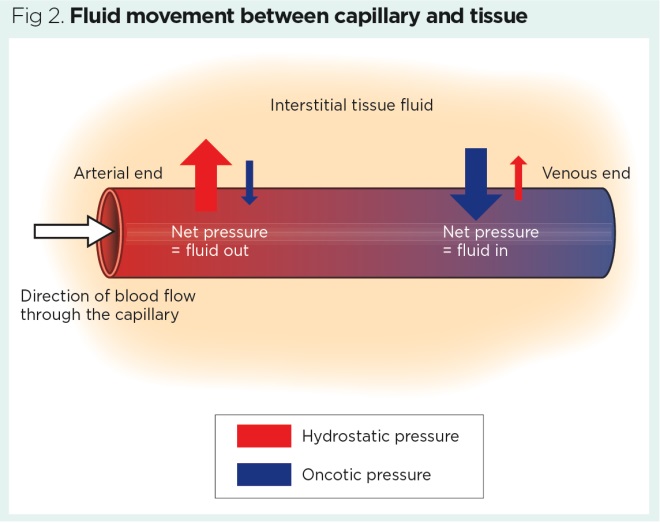
Movement of water into the bed happens on the ______ end.
Venous
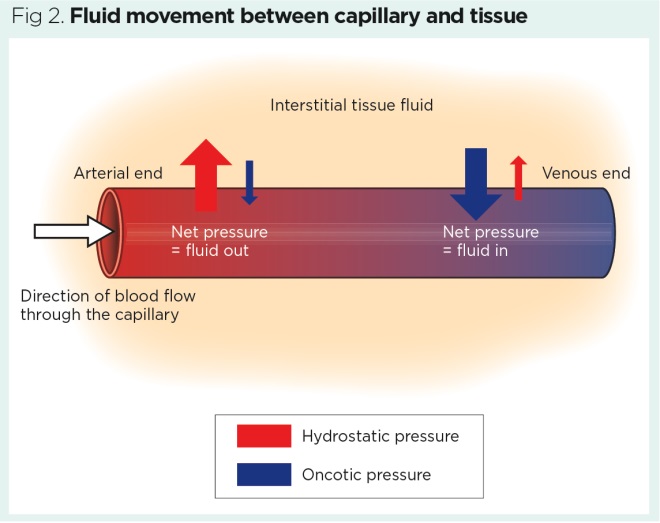
Movement of water out the bed happens on the ______ end, and blood flow moves from this direction to the other.
Arteriole
Water movement OUT of the bed is __________ water movement INTO the capillaries.
Greater than
Blood movement OUT of the bed is __________ blood movement INTO the capillaries.
Less than
Hematopoiesis: stem cells called hemocytoblasts ultimately give rise to
All formed elements (erythrocytes (RBCs), leukocytes (WBCs), and thrombocytes (platelets))
What hormone is produced mainly by kidneys to regulate the production of RBCs in bone marrow
Erythropoietin (EPO)
EPO increases erythrocyte production by binding to receptors in the ________.
Bone marrow
If the body constricted a vessel to the body surface only, how would that change the resistance in that vessel?
Increase
Constricting a vessel to the body surface only and increasing resistance would keep the body _________
Warm
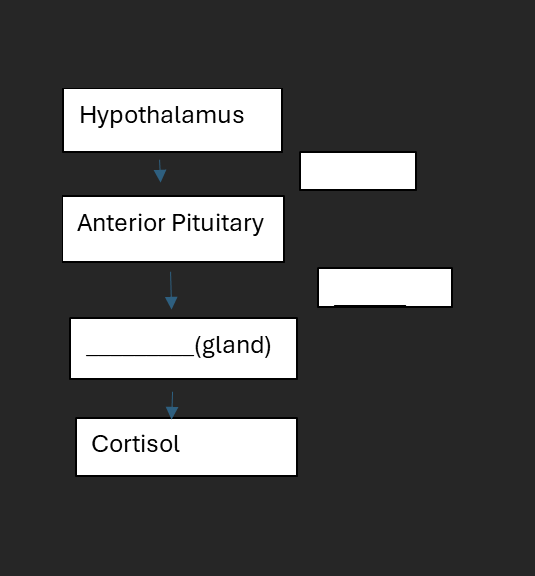
In the cascade, what would be in the space with gland?
Adrenal Cortex
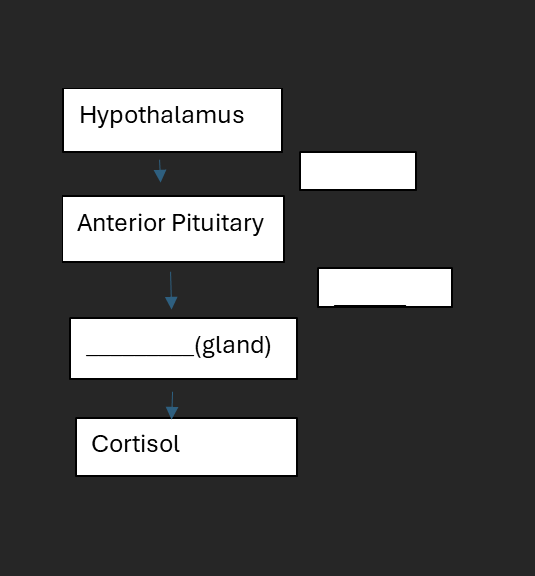
In the cascade what hormone is produced to trigger the anterior pituitary?
CRH
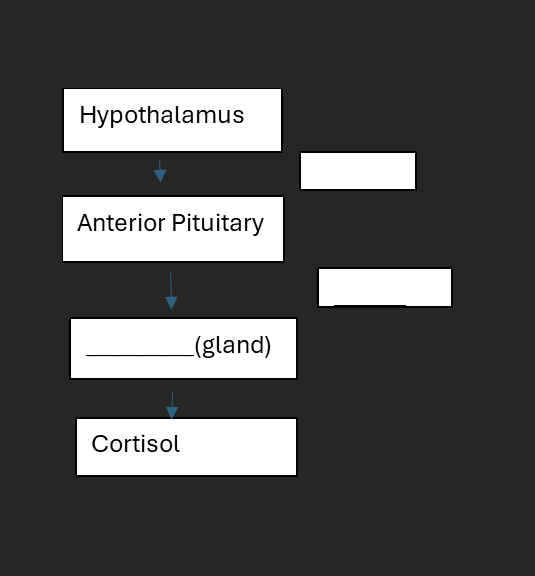
In the cascade what hormone is produced to trigger blank gland?
ACTH
A bulge in the arterial wall is called a(n) _________.
Aneurysm
Aneurysms are often asymptomatic and may have no ill effects on health. Why are they often monitored anyway?
In case they burst
Baroreceptors are located in ______ arteries
Carotid
Baroreceptor _____ cardiovascular centers in the medulla oblongata
send signals to
A blood pressure drop causes activation of ________ nerves
Sympathetic
Activation of parasympathetic nerves would ______ heart rate
Decrease
Activation of sympathetic nerves would trigger widespread ________.
Vasoconstriction
Vessels to the brain are ______ responsive to sympathetic nerve signals than vessels in most parts of the body.
Less
Epi and Noroepi release follows sympathetic activation. This generally ______ the effects of sympathetic nerves on blood pressure.
Continues
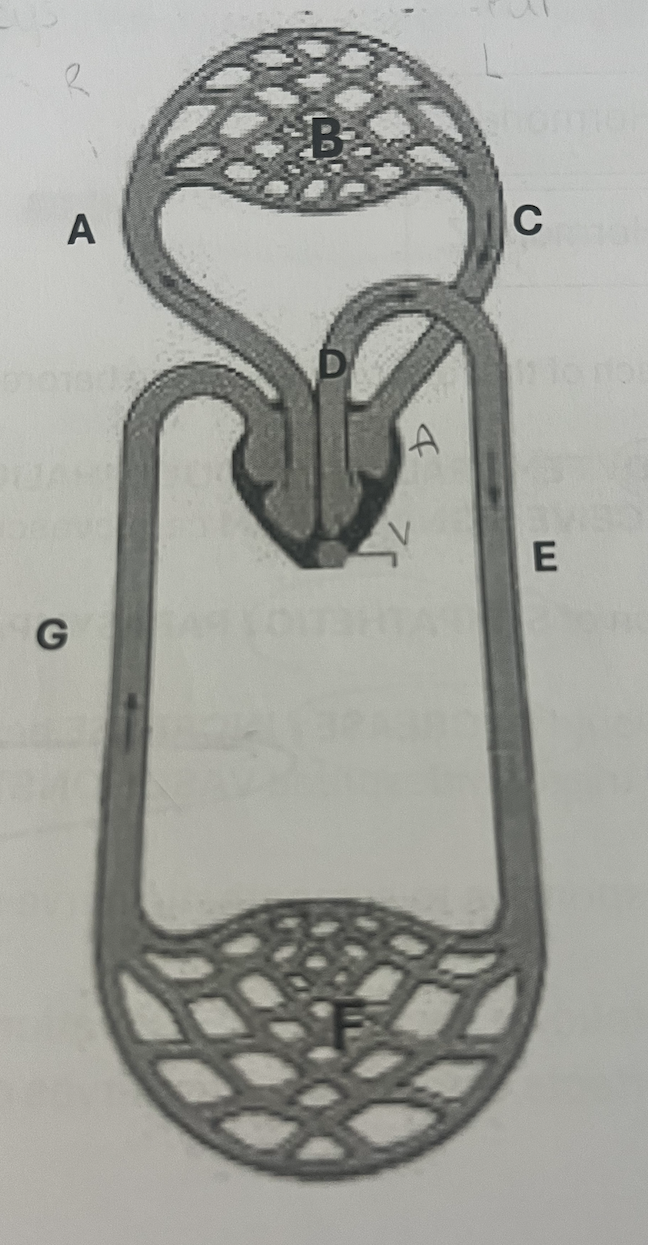
Which is “O2 poor”
A
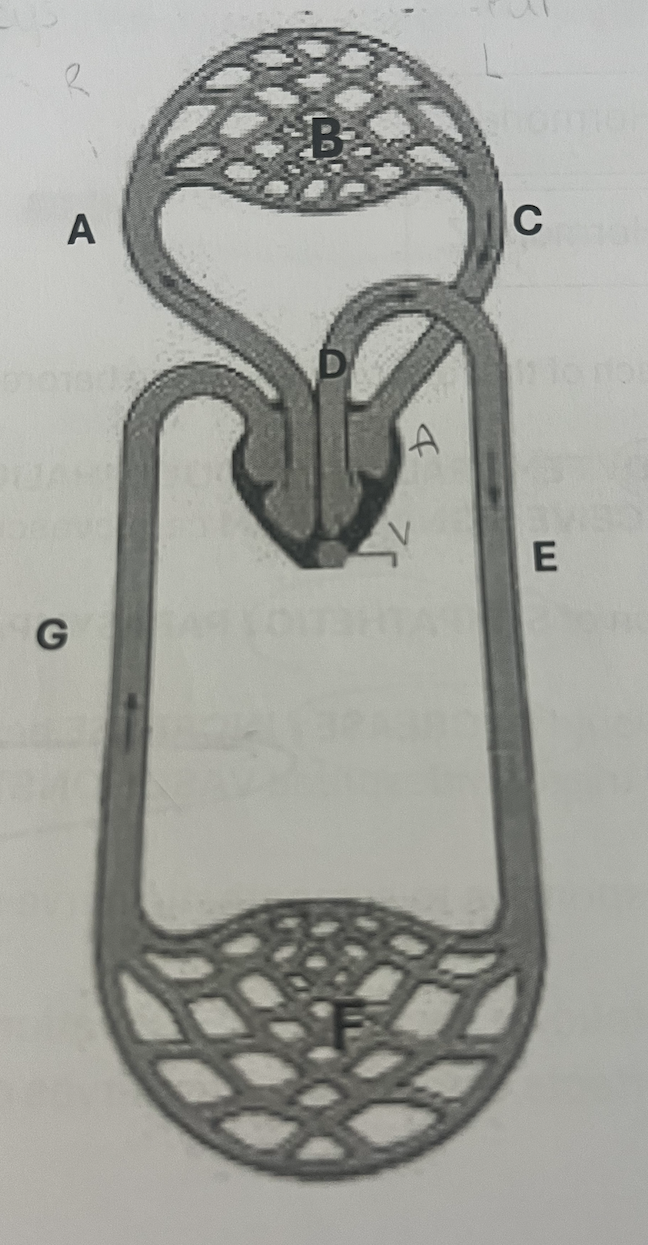
Which is an artery? (one)
A
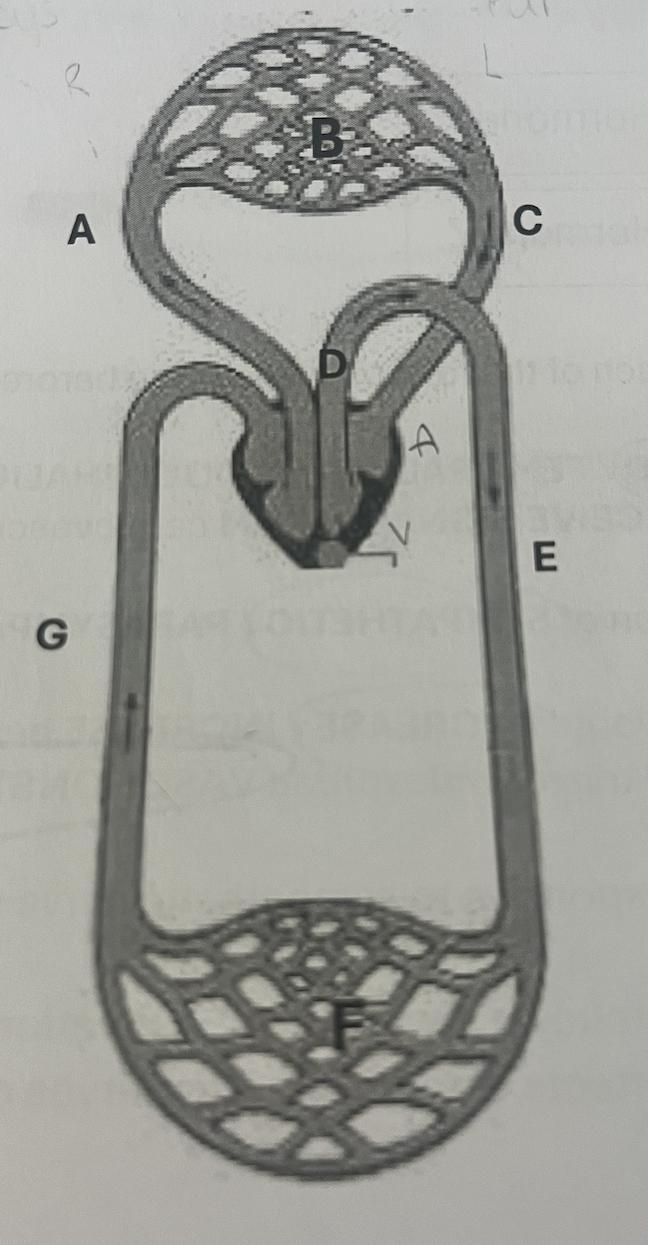
Pressure differentials are lowest in (one)
C
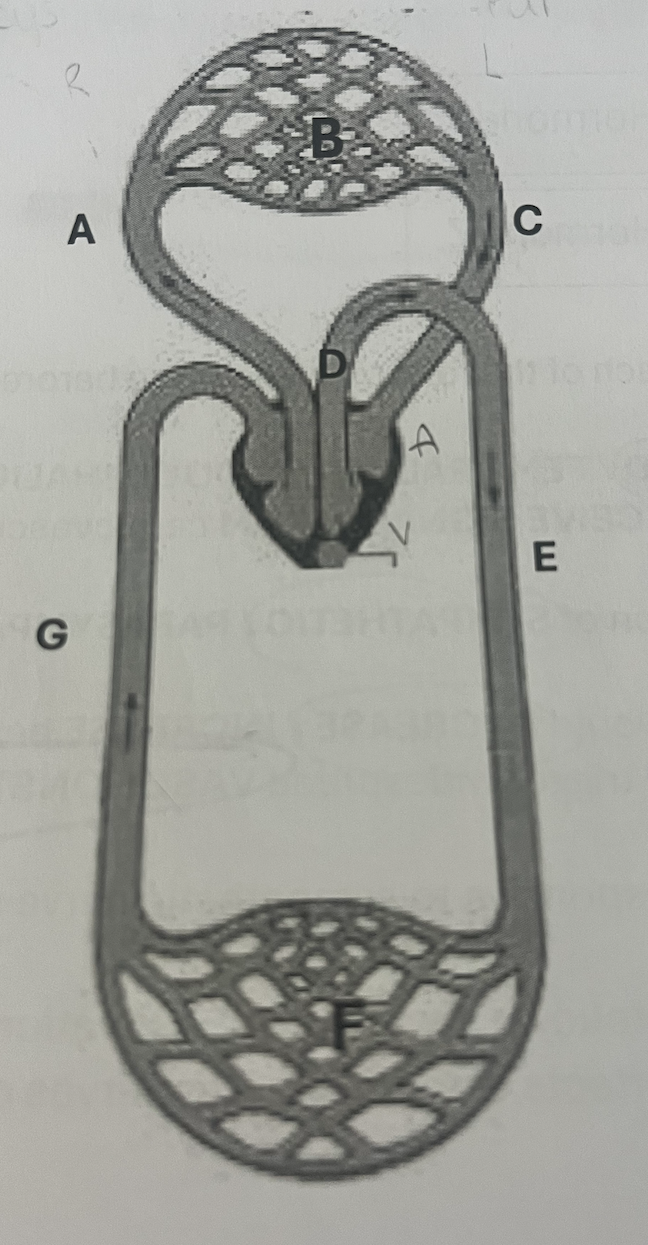
Velocity is slowest in (one)
B
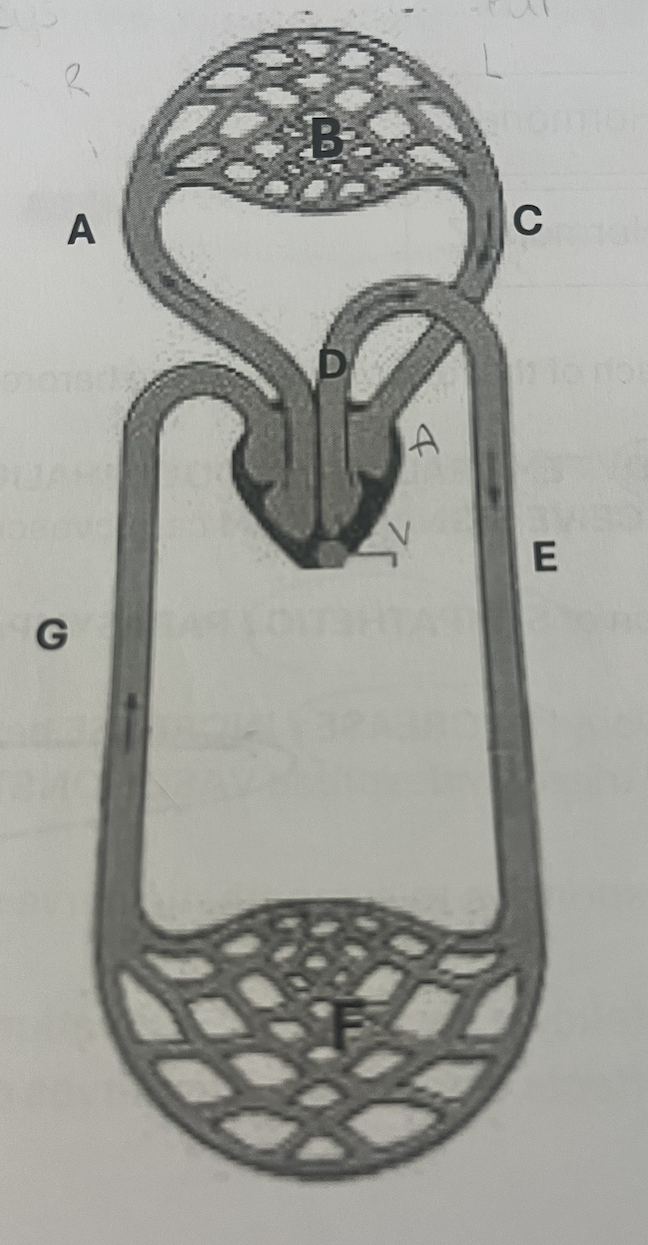
Which one has more elasticity and less muscle
D
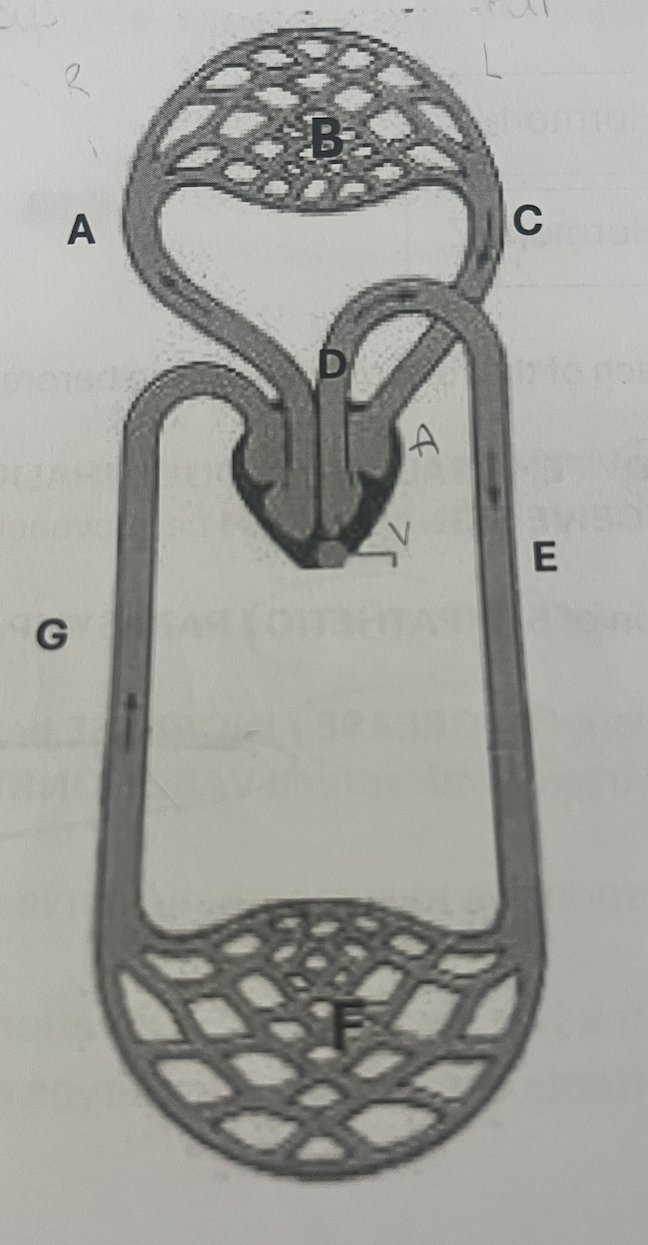
Valves are found in
G
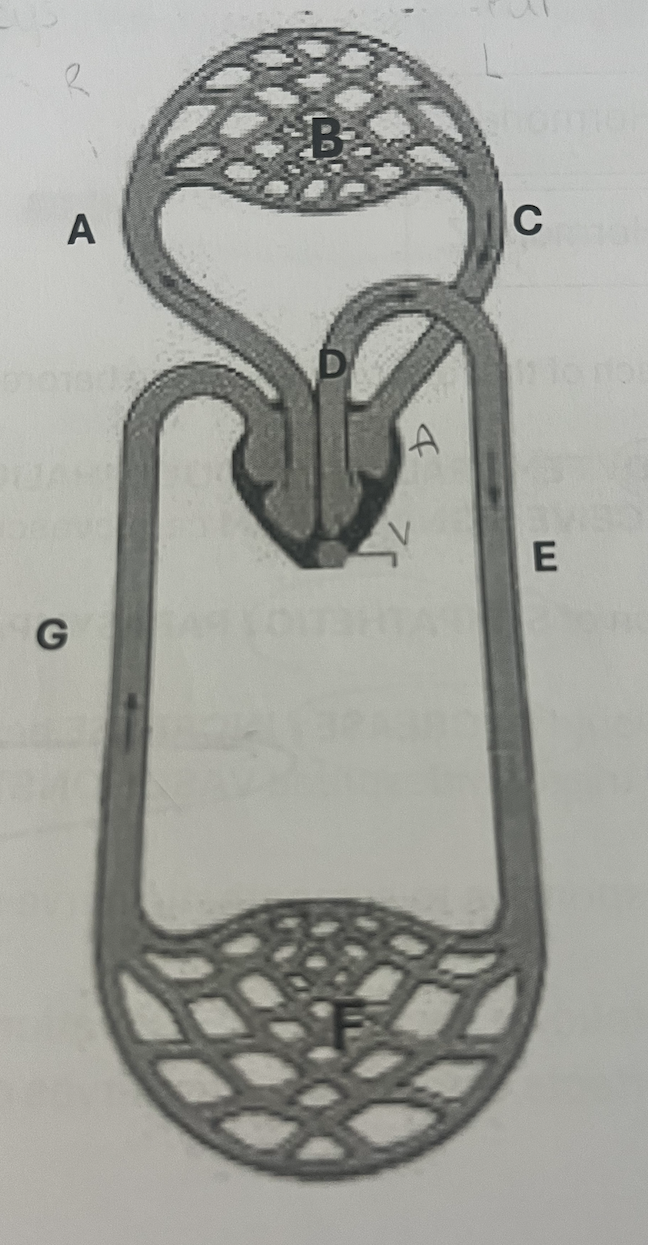
A blood draw would most likely be taken from:
G
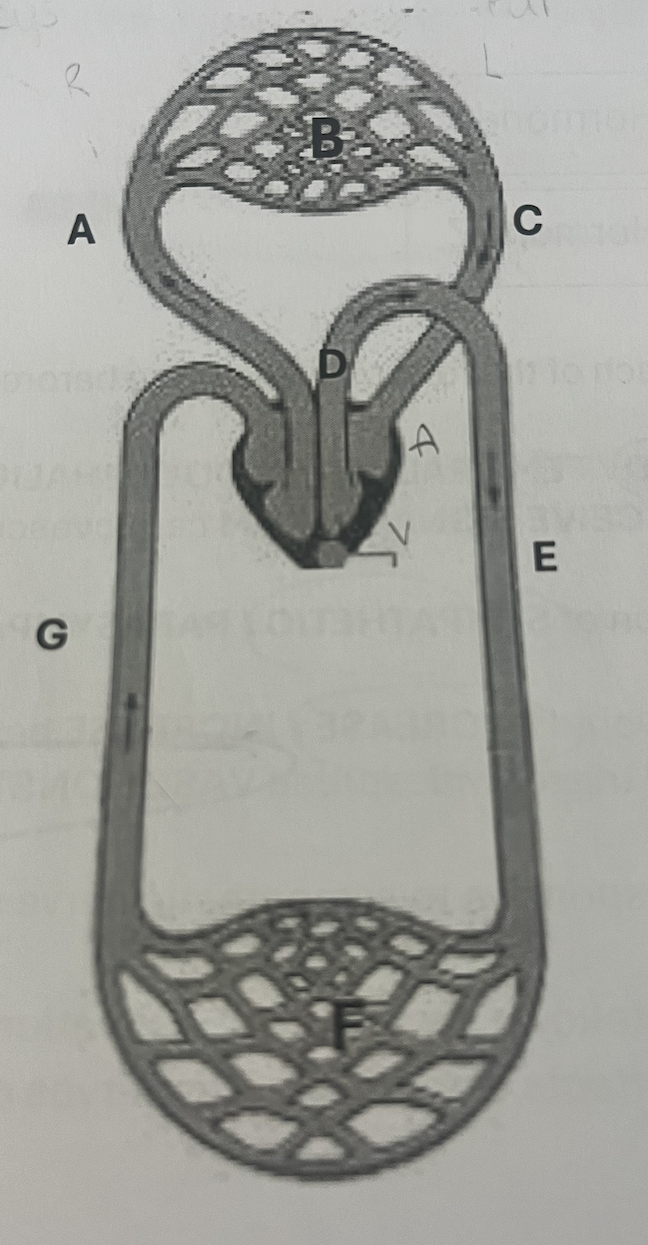
Blood pressure is most commonly take from:
E
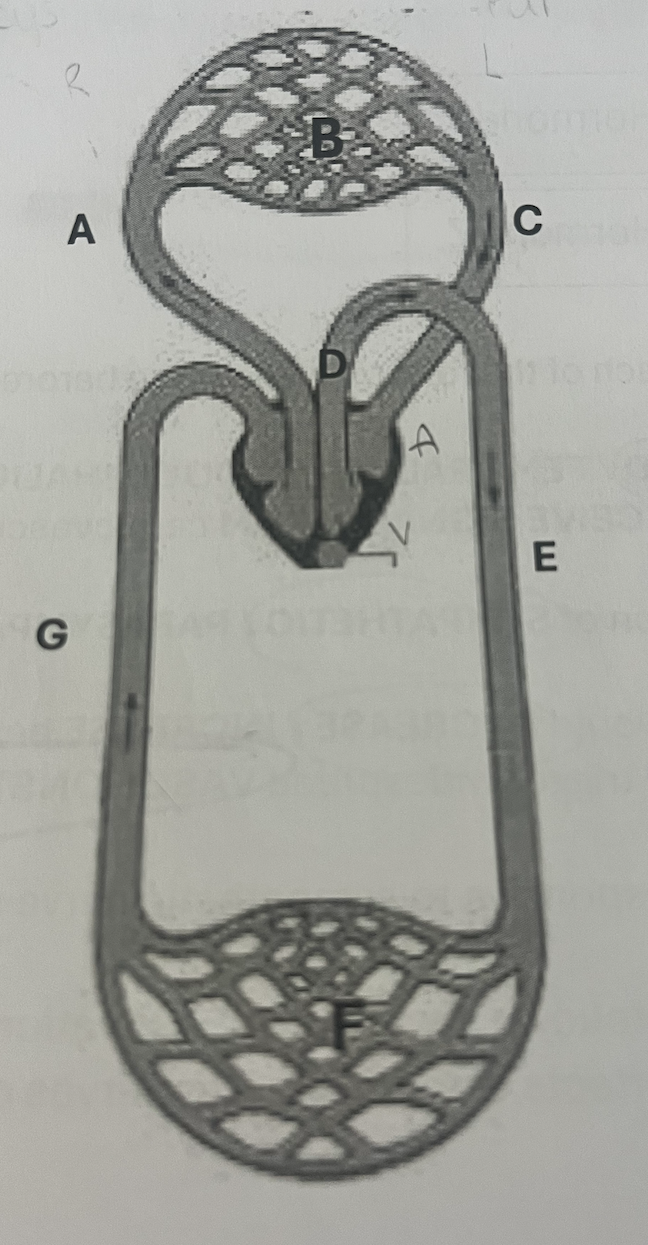
What circuit is D in?
Systemic
Which of the following is NOT synthesized from a single amino acid (like tyrosine)
Steroid hormone
Which of the following IS synthesized from a chain of amino acids?
Peptide (proteins)
Which often acts vis second messenger systems:
Peptide
Cortisol is a(n):
Steroid
High Solubility in water:
Protein
Much of the hormone released is broken down by enzymes in the blood/fluids:
Amine
Often stored in vesicles prior to release:
Amine
This storage (in vesicles) primarily decreases the:
Response time
These hormones are mostly bound in the blood
Thyroid
Binding generally increases hormones
Duration
Generally triggers genomic hormones
Steroid
Thyroid hormone effects are
Both
Genomic responses are generally ____ than non-genomic
slower
Antagonistic with calcitonin
Parathyroid hormone
Blocks inflammation and triggers amino acid and glucose release/production
Cortisol
Made by the anterior pituitary, this hormone is in a positive feedback loop initiated by nursing. It has similar effects on pigeons!
Prolactin
Made by the adrenal cortex, this steroid increases blood volume, in part by changing activity in kidneys
Aldosterone
Made by the adrenal cortex, this steroid increases hematocrit and muscle mass
Androgens
The SCN coordinates when this hormone is made from serotonin
Melatonin
Made by the posterior pituitary, this hormone increases blood volume, in part by changing activity in the kidneys
ADH
This pituitary hormone has many triggers including sleep and (for infants) being held. Release triggers changes in skeletal muscles, bone and cartilage.
Growth Hormone
Triggers milk release/ “let down” for mammary glands
Oxytocin
Triggers widespread vasoconstriction, but dilation of vessels feeding the heart
Epi & Noroepi
This category of substances can be quickly converted to an active enzyme, for example in a clotting cascade
Zymogen
This forms the structural basis of a clot
Fibrin
This is a product of hemoglobin breakdown that occurs as erythrocytes die
Bilirubin
This process allows cells to recruit immune cells to areas of infection
Chemotaxis (taxi!)
This process of platelets helps form a plug
Adhesion
This response occurs in the first phase of hemostasis, reducing blood loss even before platelet activation
Vascular spasm
This triggers the conversion of fibrinogen to fibrin
Thrombin
Steps of hemostasis
vascular spasm, platelet plug formation, coagulation cascade, clot retraction, fibrinolysis
In hemostasis, what process helps platelets stick to damaged tissue?
Platelet adhesion
In hemostasis, what enzyme converts fibrinogen into fibrin?
Thrombin
In hemostasis, what is the structural basis of a clot?
Fibrin
True or false: b. Arteries always carry oxygen-rich blood.
False: pulmonary artery carries deoxygenated from heart to lungs
True or false: Genomic hormone effects are usually slower than non-genomic effects.
True
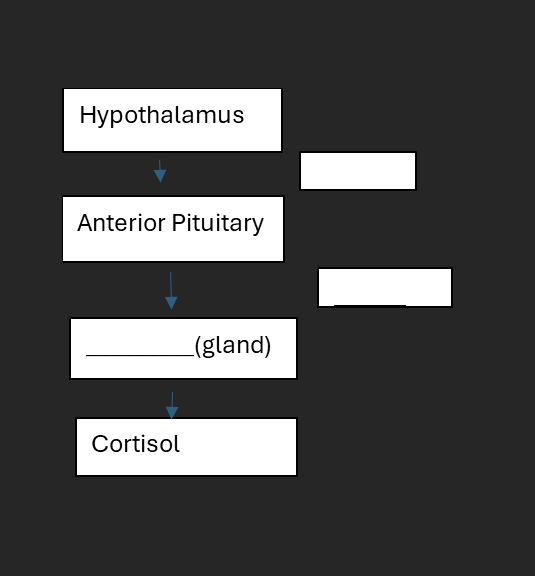
What hormone is produced to trigger the anterior pituitary in this cascade (think about female repro)?
GnRH
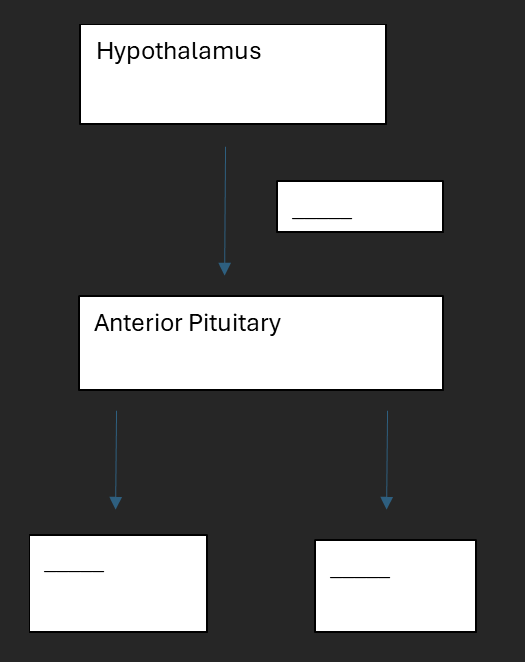
What hormones are produced by the anterior pituitary in this cascade (think about female repro)?
LH and FSH
What is the function of LH
It causes the mature follicle to rupture, releasing the egg (ovulation)
What is the function of FSH
It matures the ovarian follicles
The appearance of glucose in urine usually means:
Blood glucose exceeded renal threshold
Which hormone is responsible for increasing RBC production?
EPO
What is the function of ACTH
Produced by the pituitary gland, stimulates cortisol, androgen release, responds to stress and maintains blood pressure/immune function