L9.1 - Methods in Neuroethics: the survey
 Call Kai
 Learn
Learn Practice Test
 Spaced Repetition
 Match
Match Flashcards
 Knowt Play
1/6

Earn XP
Description and Tags
What consists of a good VS bad survey
Name | Mastery | Learn | Test | Matching | Spaced | Call with Kai |
|---|
No analytics yet
Send a link to your students to track their progress
7 Terms
What are the different methods in neuroethics? (quantitative VS qualitative approaches)
Quantitative = numerical, objective
methods that involve measuring, counting and using statistical models to test hypotheses
neuroimaging studies (fMRI, PET, MRI)
electrophysiology (EEG)
stimulation techniques (TMS)
Qualitative = descriptive, interpretive
methods that involve interpreting contextual behaviours and subjective expriences
interviews & focus groups
survey => contrasting vignette
case study
Discuss active VS passive data capture + some examples
Active Data Capture = directly asking people, involving participants
questionnaire
interviews
focus groups
events
Passive Data Capture = collecting data without people being aware
internal comms
databases
observations
social media
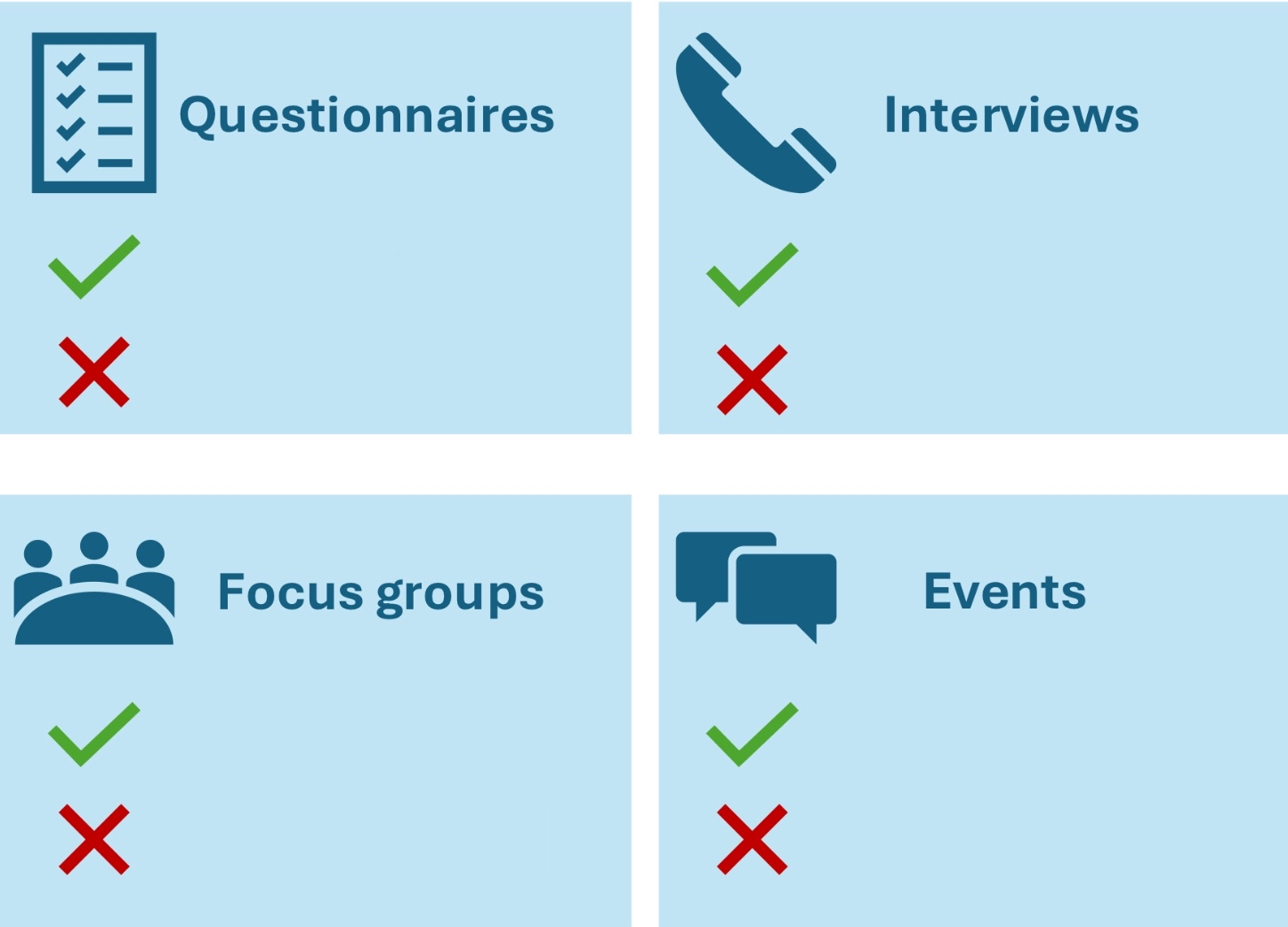
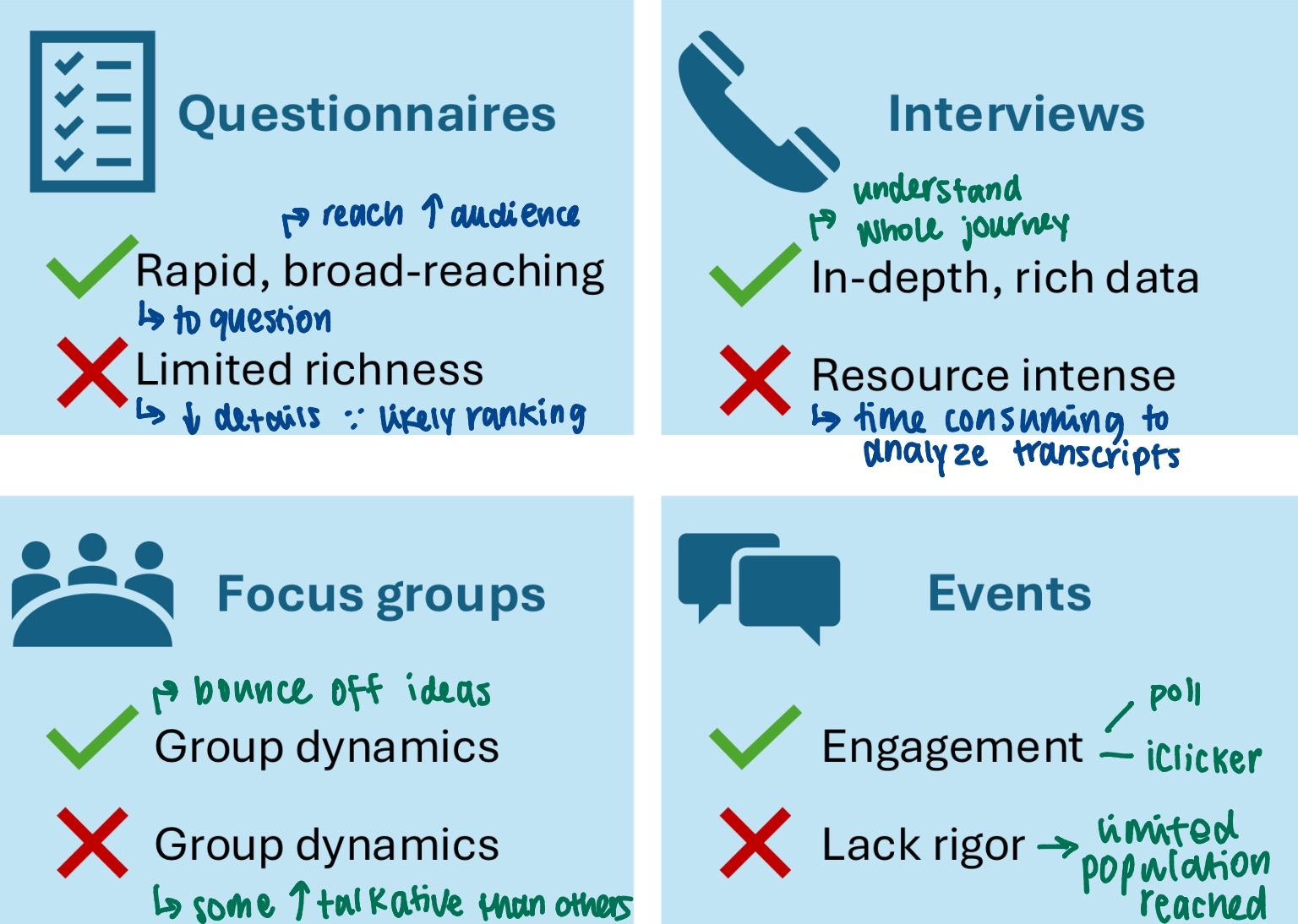
What are these? + Fill in the blanks of their pros and cons
ACTIVE data capture
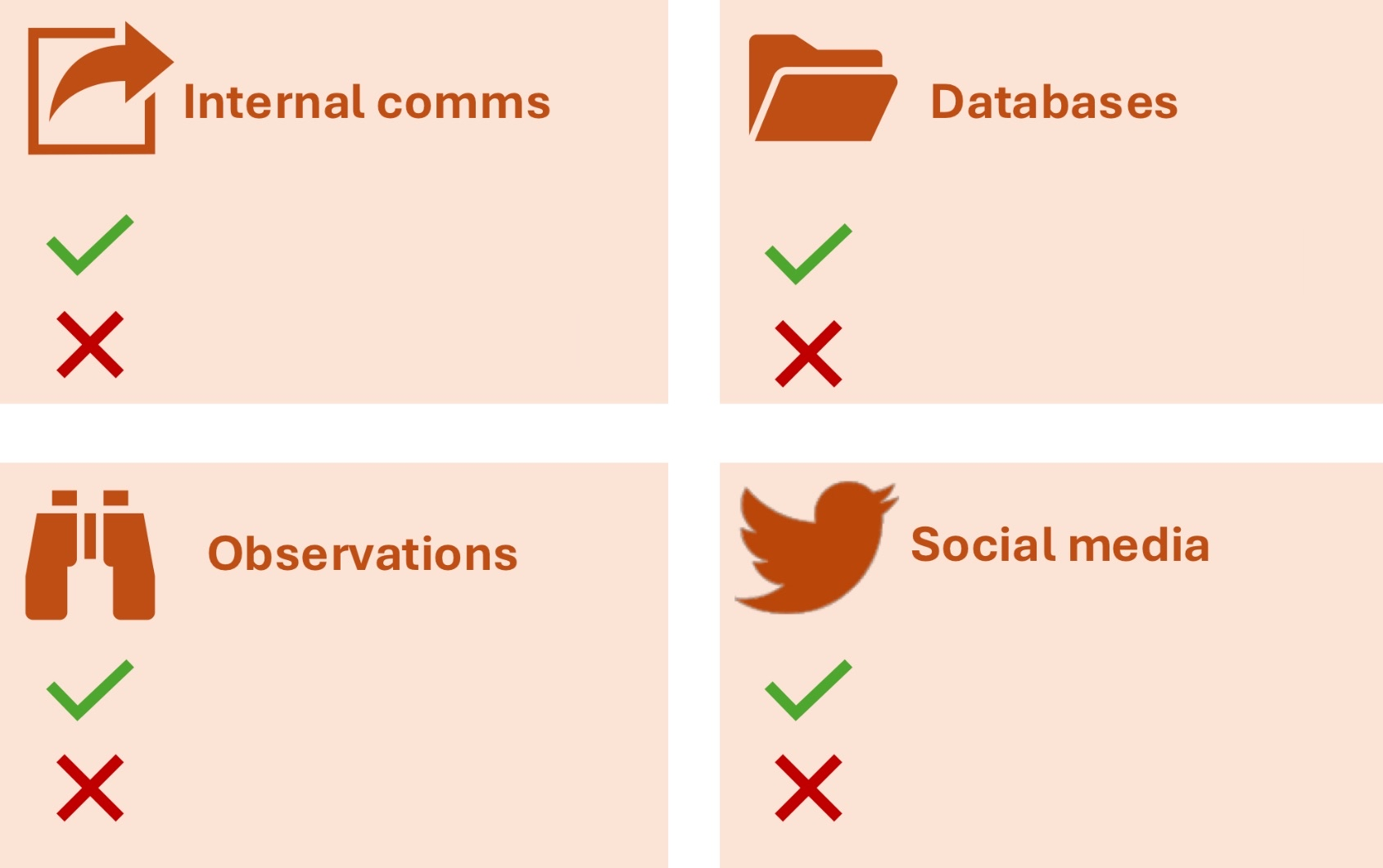
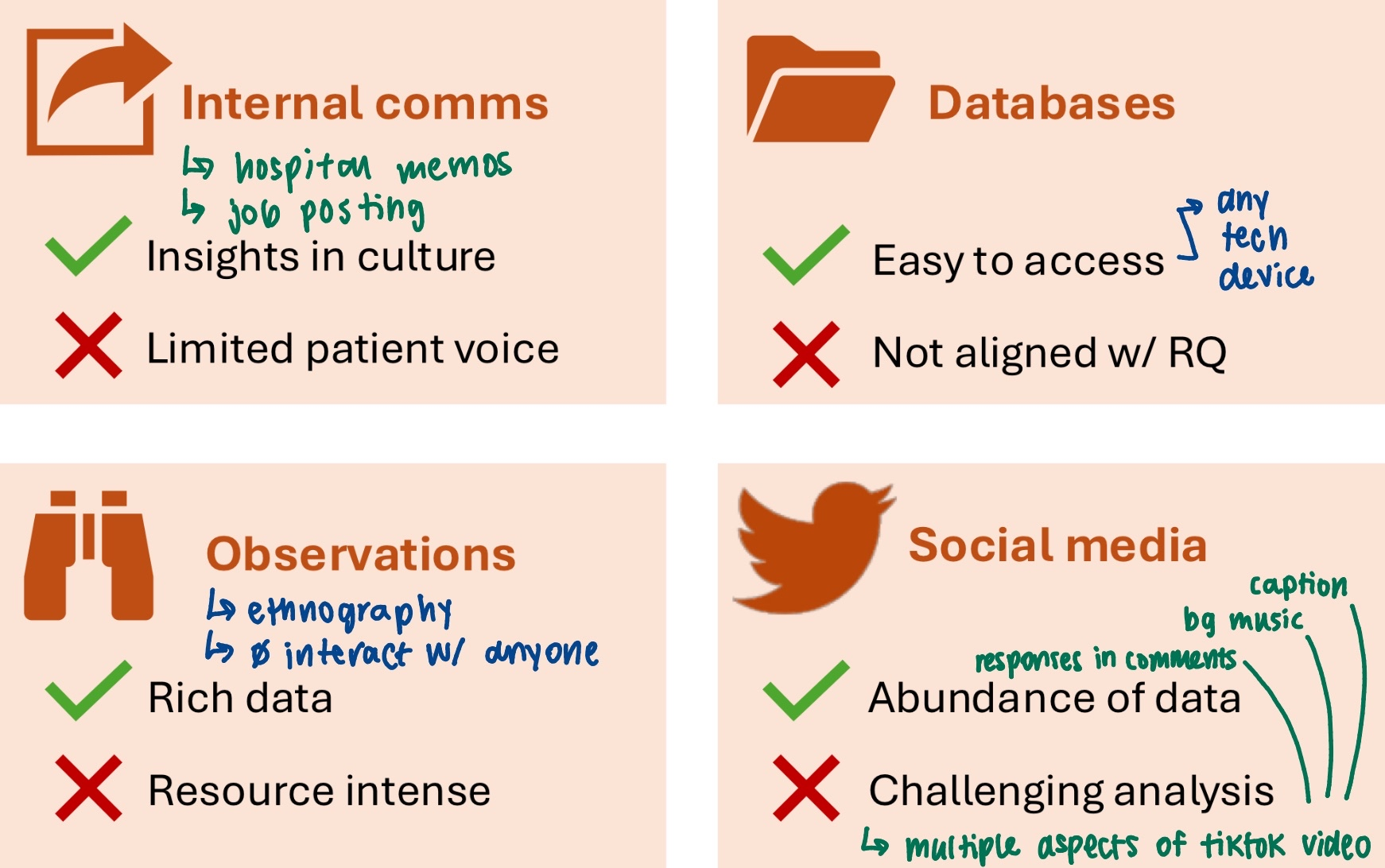
What are these? + Fill in the blanks of their pros and cons
PASSIVE data capture
Explain the evolution of survey (old, new, old?)
1930s -1960s : going door to door, sampling at different geographic areas
1960s -1990s : telephoning to reach people => ↑reach BUT ↓response rate (hang up)
1990s - Now : lots of PASSIVE data capture (EX: social media data) => ↓costs BUT ↑fraud
What are surveys trying to capture?
public attitudes
patient experience / satisfaction
factors in decision making
Describe a good survey VS common problems with surveys
Good
questions related to the purpose of the study / research question
not measuring other concepts (unrelated)
account for language & cultural differences => concepts that have same meaning to all respondents
Problems
low readability SO prioritize simple vocabulary / comprehensible by large population
double-barreled questions (asking 2 things but only allow 1 answer, careful for the word AND in the question)
answers not matching the questions
incomplete answer scales & uneven increments SO account for no and neutral options