part 2: 744 Postural Control Slides
 Call Kai
 Learn
Learn Practice Test
 Spaced Repetition
 Match
Match Flashcards
 Knowt Play
1/21

There's no tags or description
Looks like no tags are added yet.
Name | Mastery | Learn | Test | Matching | Spaced | Call with Kai |
|---|
No analytics yet
Send a link to your students to track their progress
22 Terms
Sensory/Perceptual Systems in Postural Control: sensory inputs for Steady-State balance
________
Inputs from visual, somatosensory (proprioceptive, cutaneous, and joint receptors), and vestibular systems are important sources of information about the body’s position and movement in space with respect to gravity and the environment. Each sense provides the CNS with a different kind of information about position and motion of the body; thus, each sense provides a different frame of reference for postural control.
Sensory/Perceptual Systems in Postural Control: visual contributions
_______
Vision is not necessary (can close eyes and not fall) but its very important to understand where you are etc.
Sensory/Perceptual Systems in Postural Control: somatosensory contributions
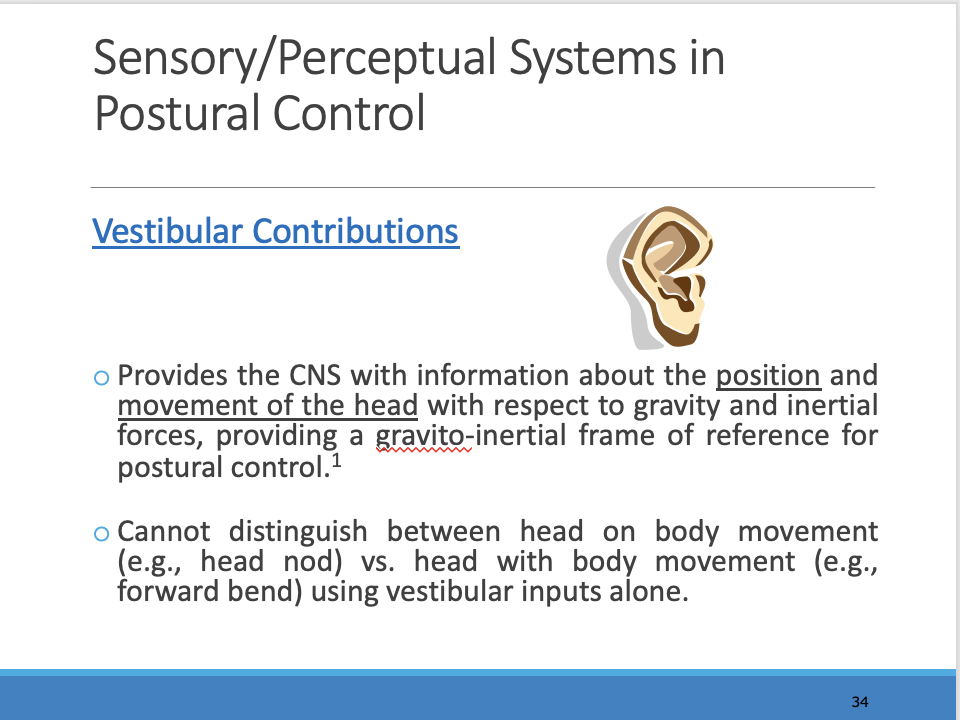
Sensory/Perceptual Systems in Postural Control: vestibular contributions
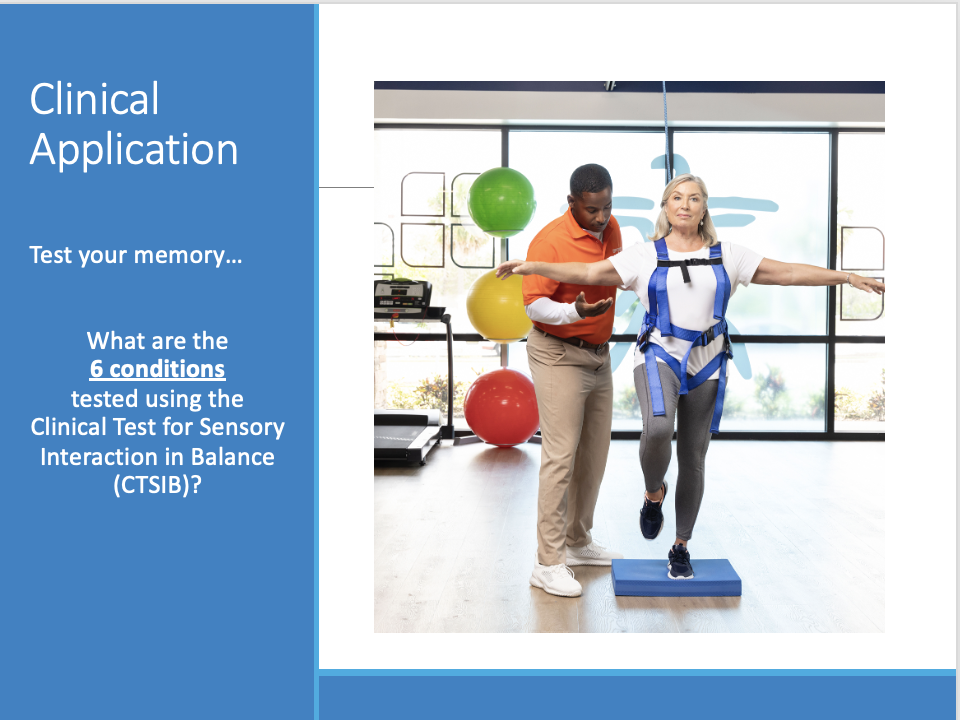
Ground
Eyes open
Eyes closed
Visual conflict (dome)
Foam
Eyes open
Eyes closed
Visual conflict (dome)
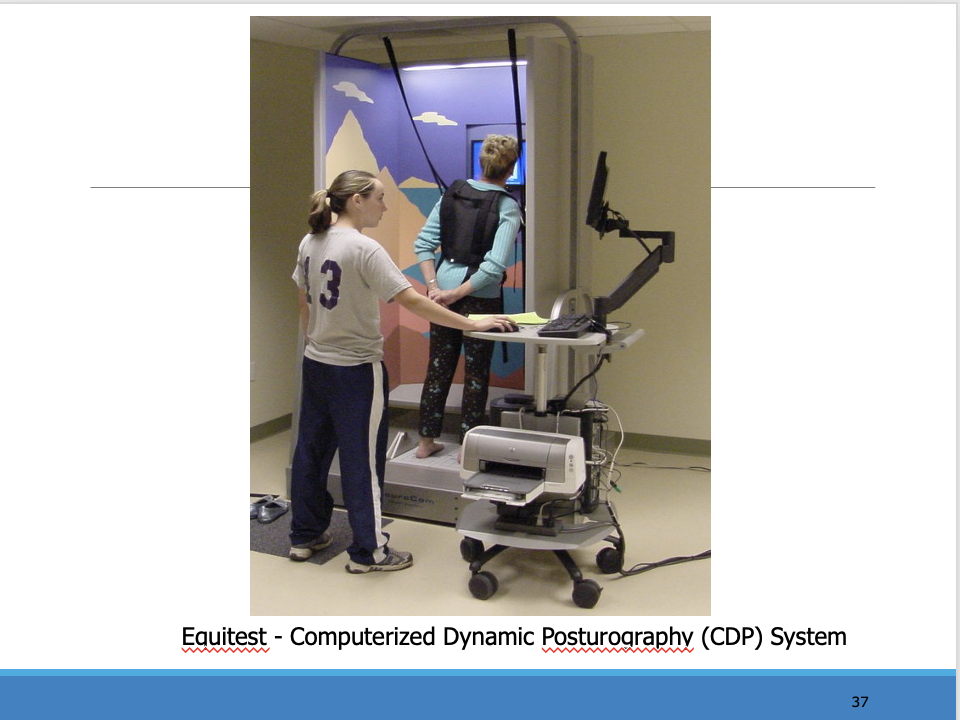
Sensory/Perceptual Systems in Postural Control: sensory integration - SOT
________
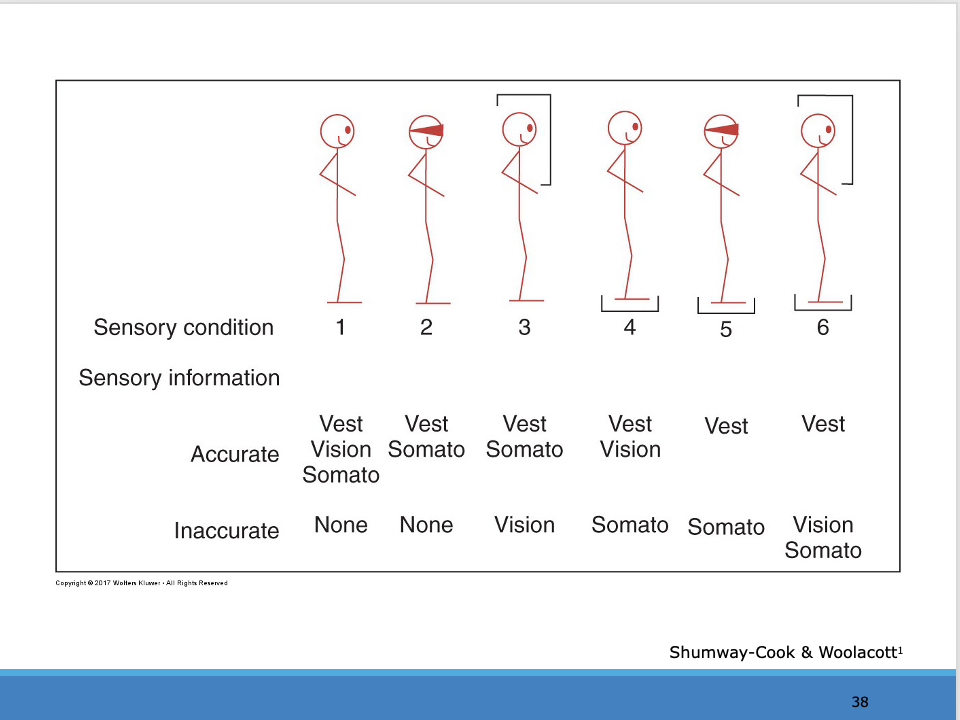
Because of the redundancy of senses available for orientation and the ability of the CNS to modify the importance of any one sense for postural control, individuals are able to maintain stability in a variety of environments.
Once it starts moving under them its inaccurate or if they are on foam it is innacurate
Understand what is accurate vs innacurate in each condition is important to help you diagnose
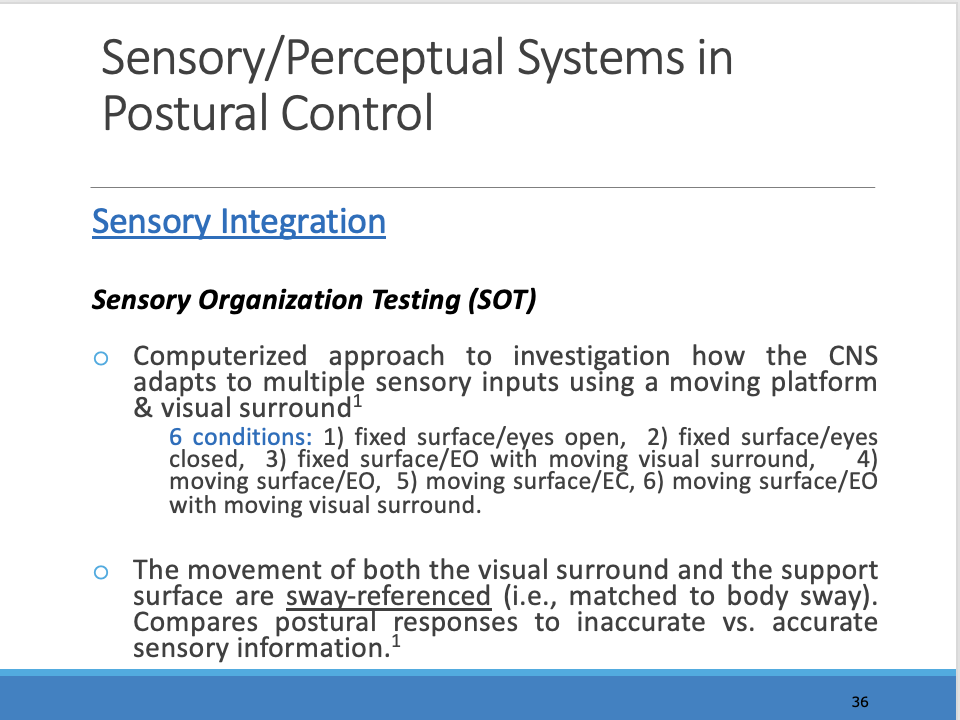
KNOW THIS SLIDE IT IS IMPORTANT
Dome for CTSB is condition 3 and 6
Normally do do modified which gets rid of 3 and 6
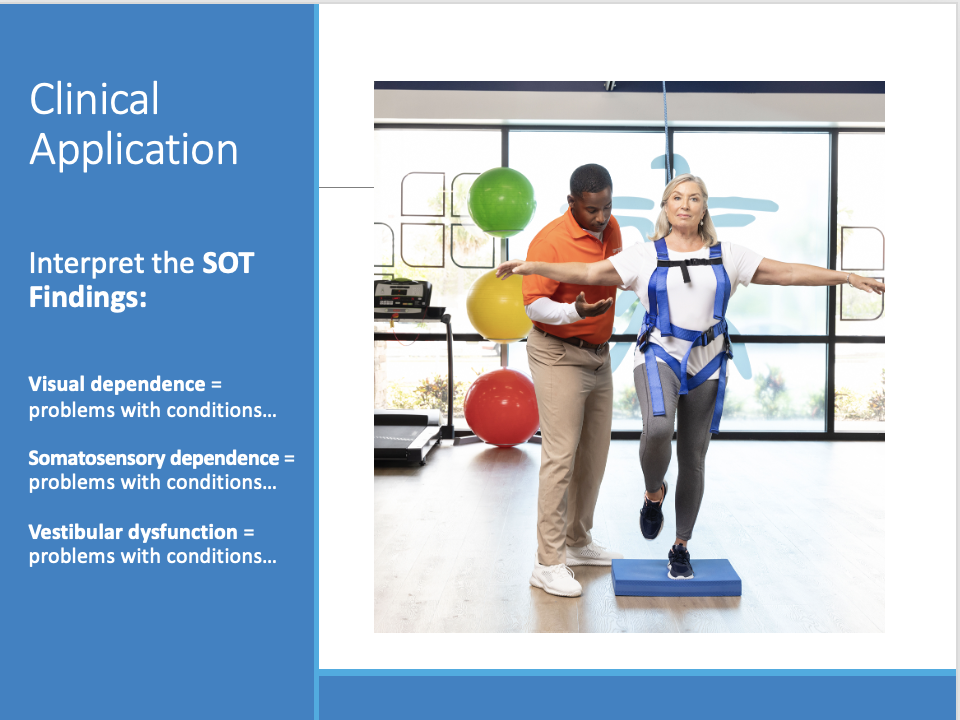
Visual dependence = problems with conditions… 2,3,5,6 (only do well when vision is accurate such as 1,4)
Somatosensory dependence = problems with conditions… 4,5,6 (problems on foam or with moving forceplate)
Vestibular dysfunction = problems with conditions… 5,6 (no vision or somatosensory to rely on)
__
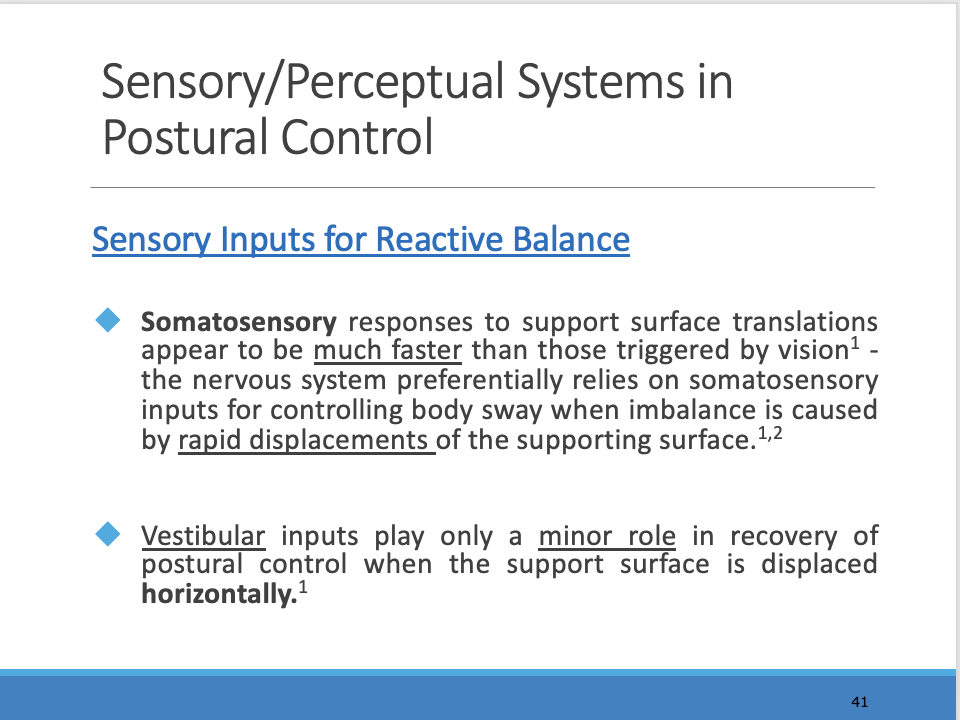
Vision is slowerthensomatosensory system
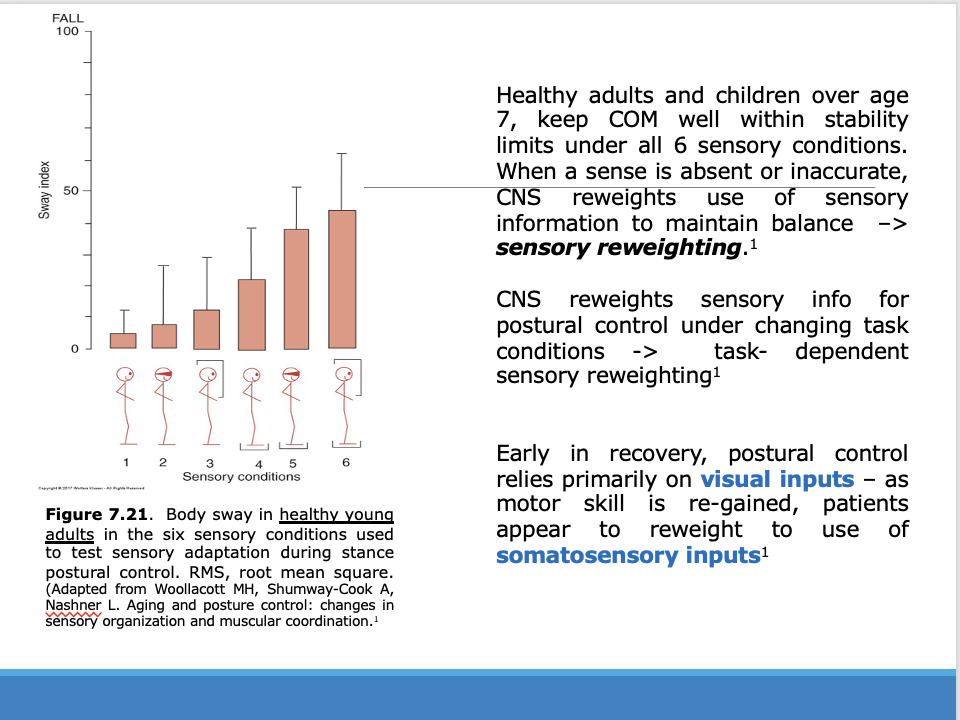
sensory reweighing - Early in recovery, postural control relies primarily on
Early recovery relies more on vision early on so we have to help them shift because somatosensory signals are faster
Vestibular inputs play ____ in recovery of postural control when the support surface is displaced horizontally
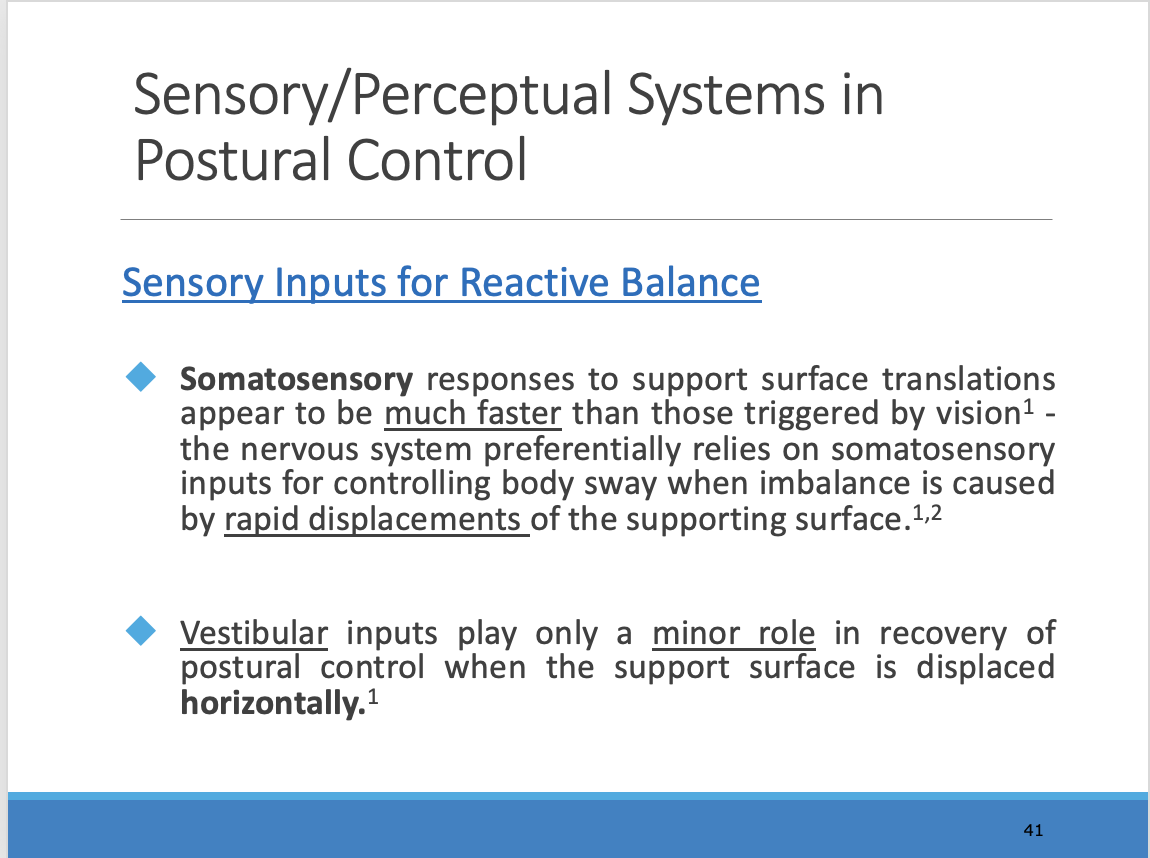
Sensory/Perceptual Systems in Postural Control: sensory inputs for reactive balance
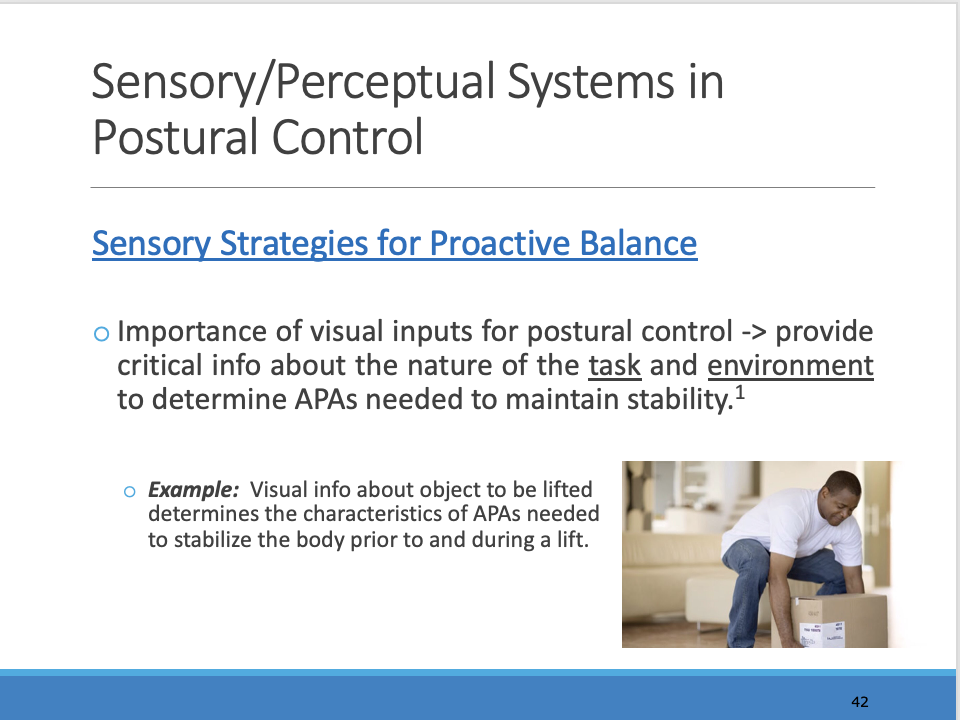
Sensory/Perceptual Systems in Postural Control: sensory inputs for proactive balance
______
You see a large box you guess its heavy so sometimes you put more effort then you need to but hopefully you are close to what it is
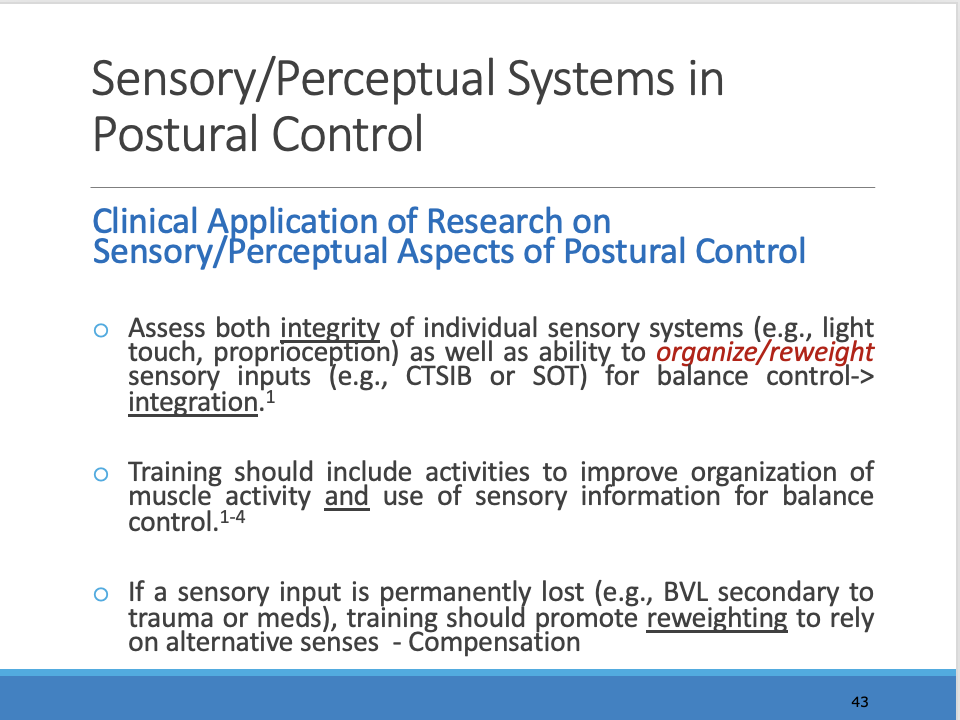
Sensory/Perceptual Systems in Postural Control: clinical application of research on sensory/perceptual aspects of postural control
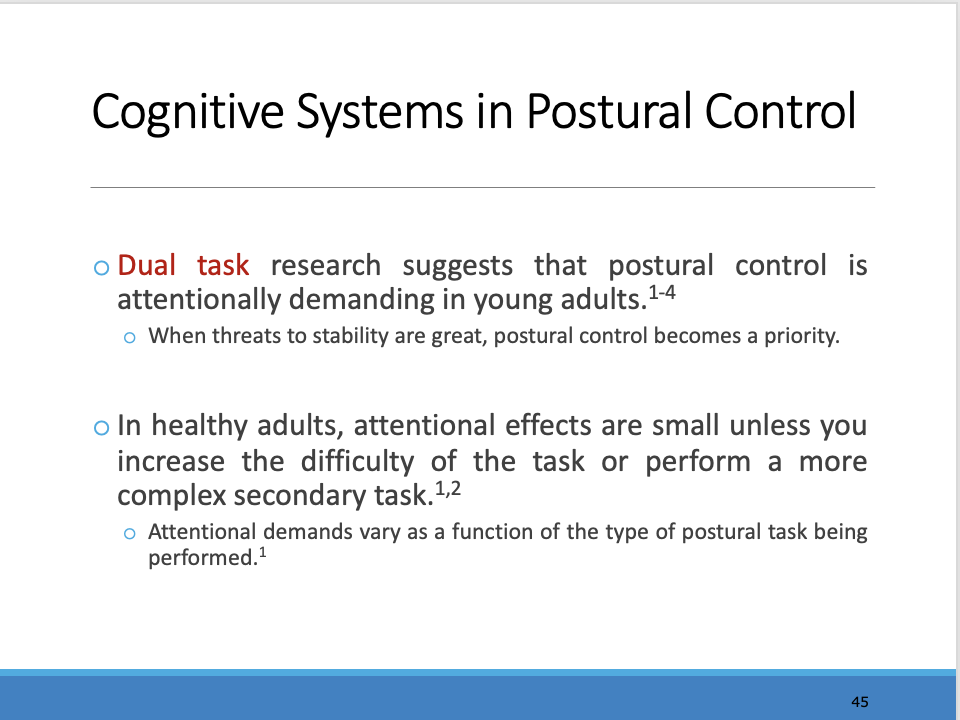
cognitive systems in postural control: dual task
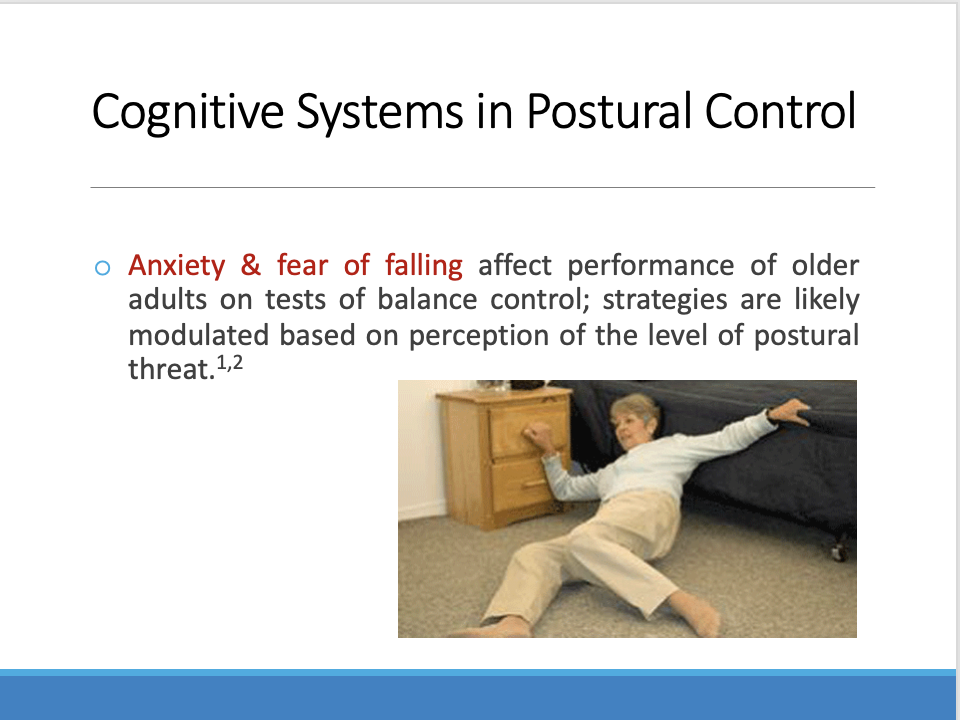
cognitive systems in postural control: anxiety and fear of falling
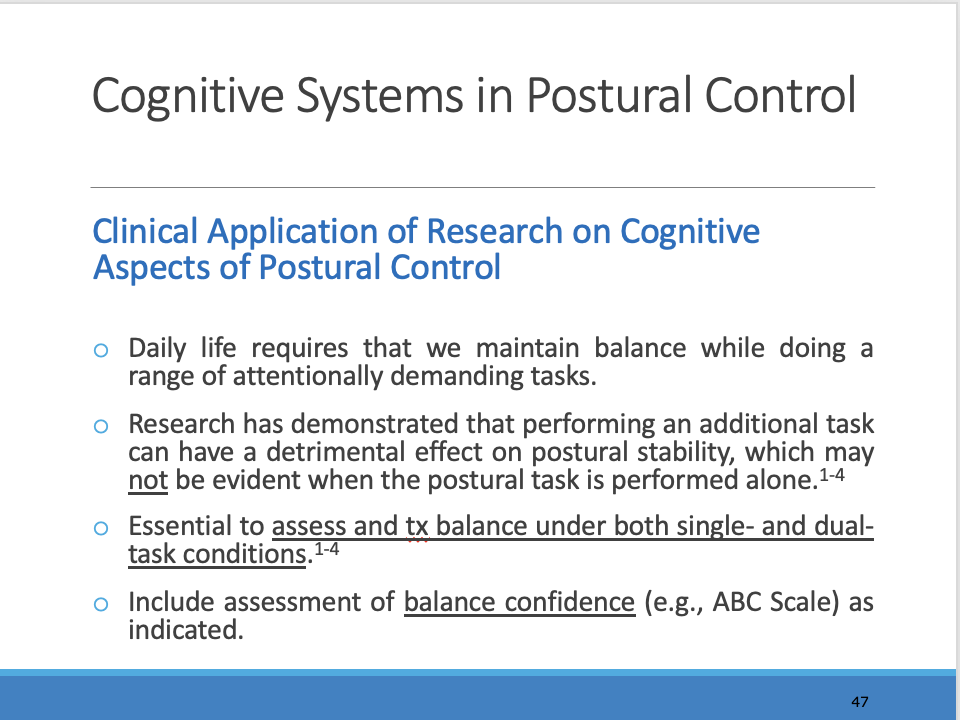
cognitive systems in postural control: clinical application of research on cognitive aspects of postural control - Essential to ____
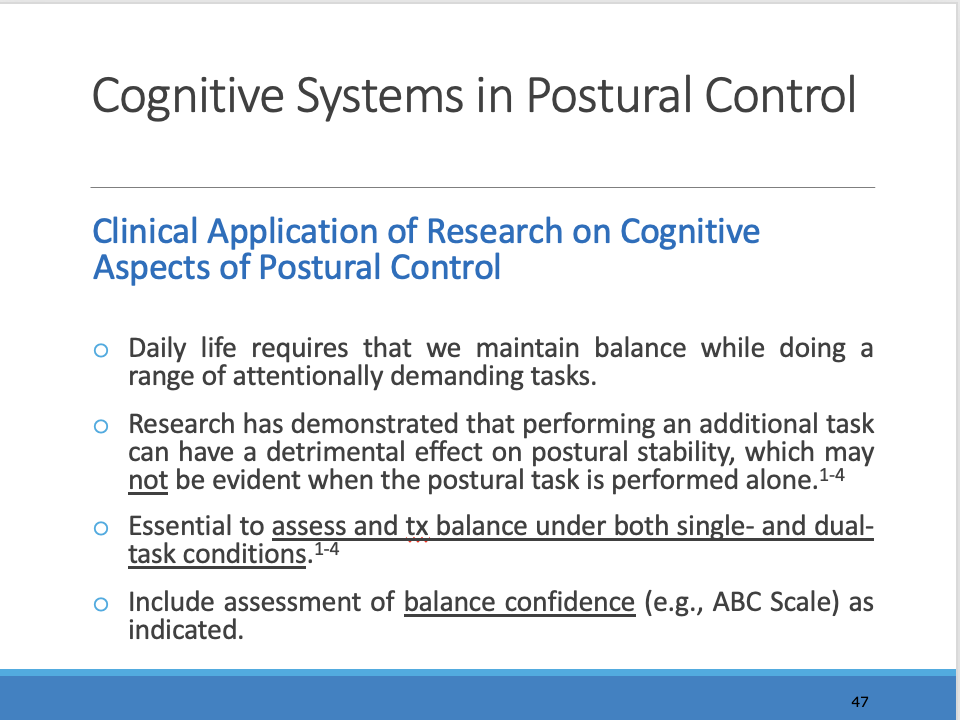
cognitive systems in postural control: clinical application of research on cognitive aspects of postural control - include assessment of ____
summary: The task of postural control involves controlling the body’s position in space for
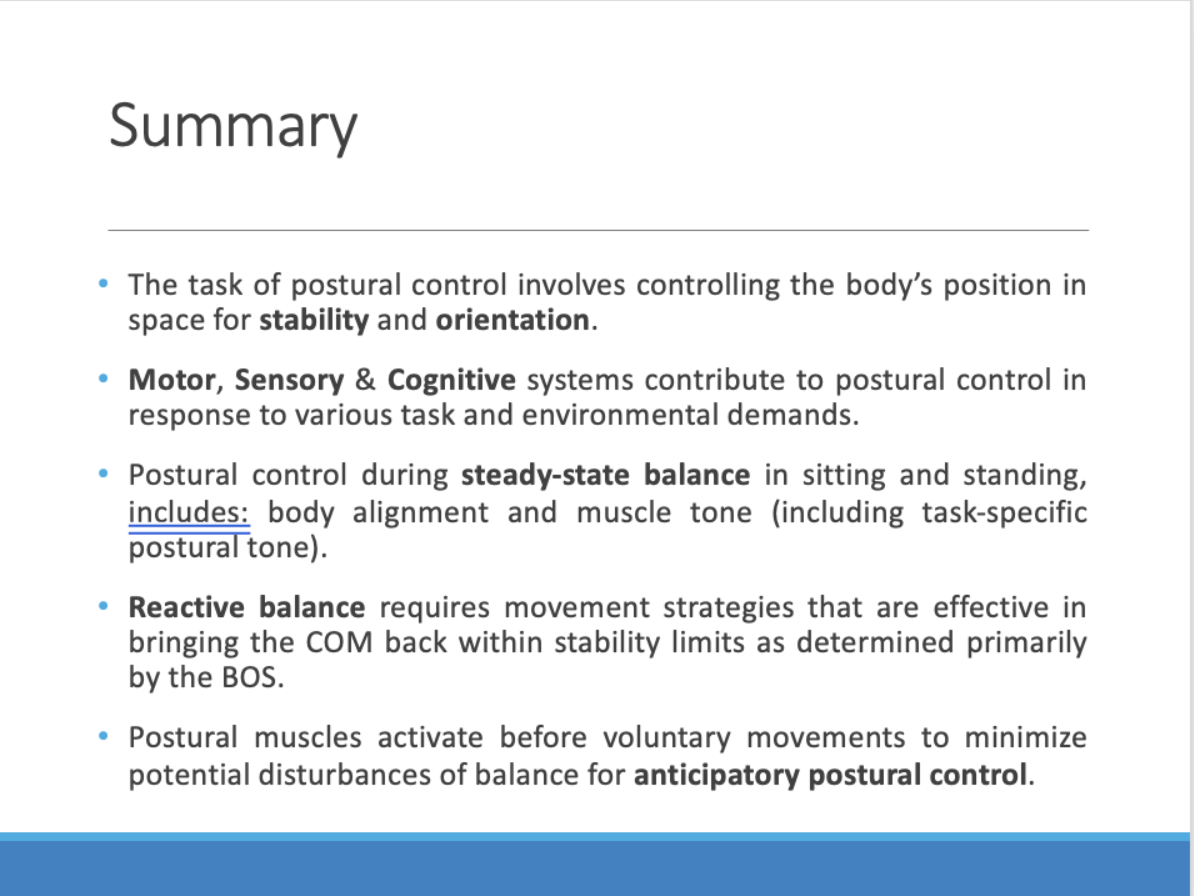
summary: __________ systems contribute to postural control in response to various task and environmental demands
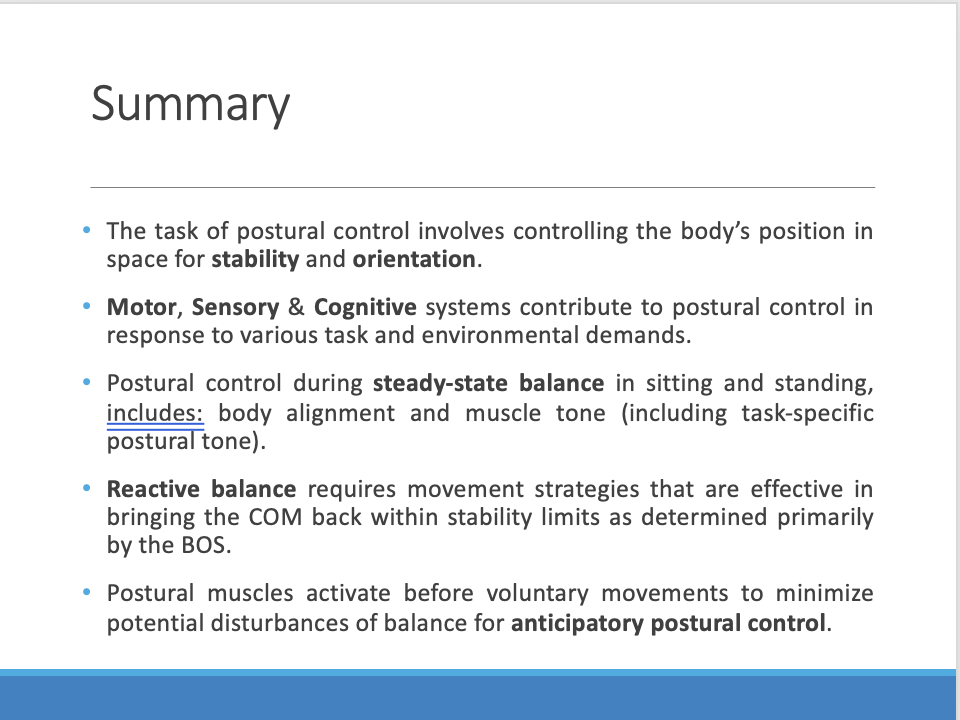
summary: Postural control during steady-state balance in sitting and standing, includes:
body alignment and muscle tone (including task-specific postural tone).
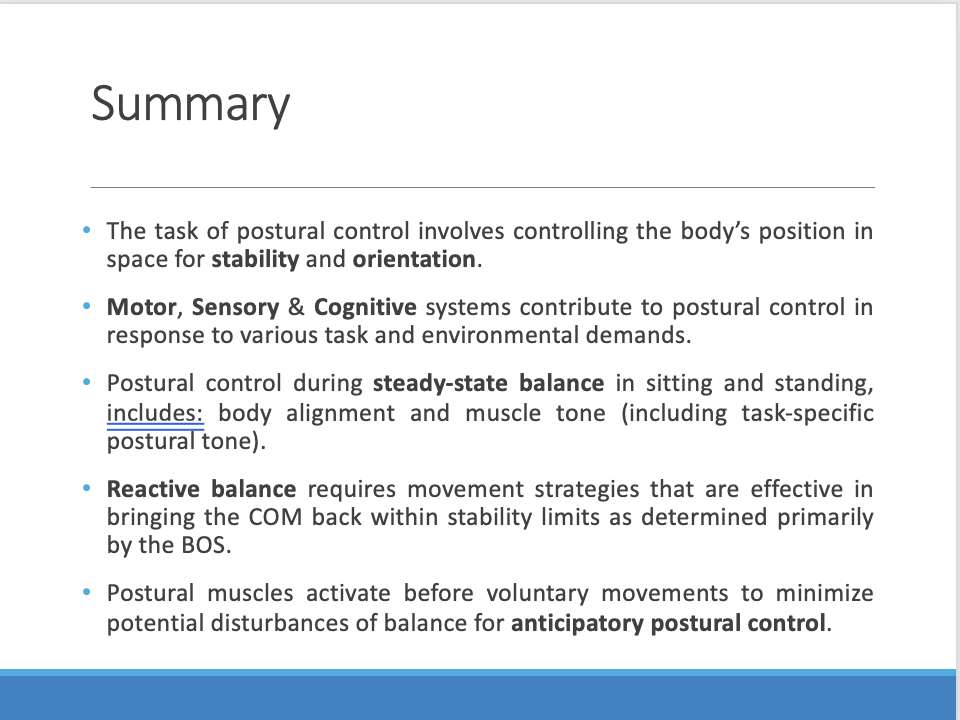
summary: Reactive balance requires
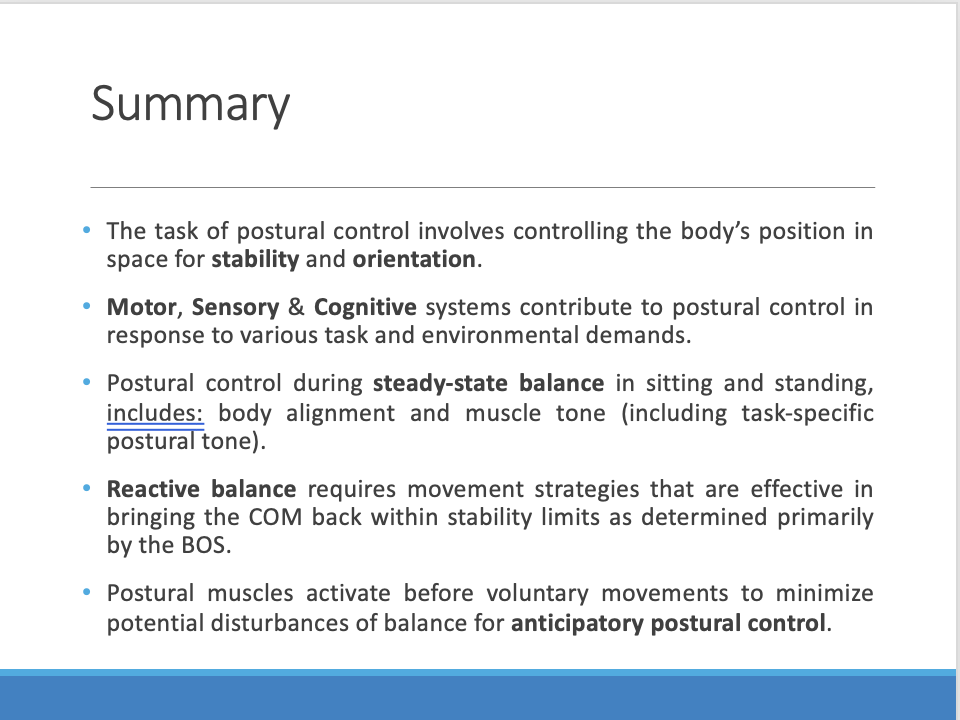
summary: Postural muscles activate before voluntary movements to minimize potential disturbances of balance for