19. Globlal Ecology
 Call Kai
 Learn
Learn Practice Test
 Spaced Repetition
 Match
Match Flashcards
 Knowt Play
1/32

There's no tags or description
Looks like no tags are added yet.
Name | Mastery | Learn | Test | Matching | Spaced | Call with Kai |
|---|
No analytics yet
Send a link to your students to track their progress
33 Terms
Human Impacts
As the human population has grown, out activities have disrupted the trophic structure, energy flow, and chemical cycling of many ecosystems
in addition to transporting nutrients from one location to another, where they shouldn't be, humans have added new materials, some of them being toxins, to ecosystems
Nutrient Enrichment
Human activity often removes nutrients from one part of the biosphere and adds them to another
Farming illustrates how activities can lead to nutrient enrichment
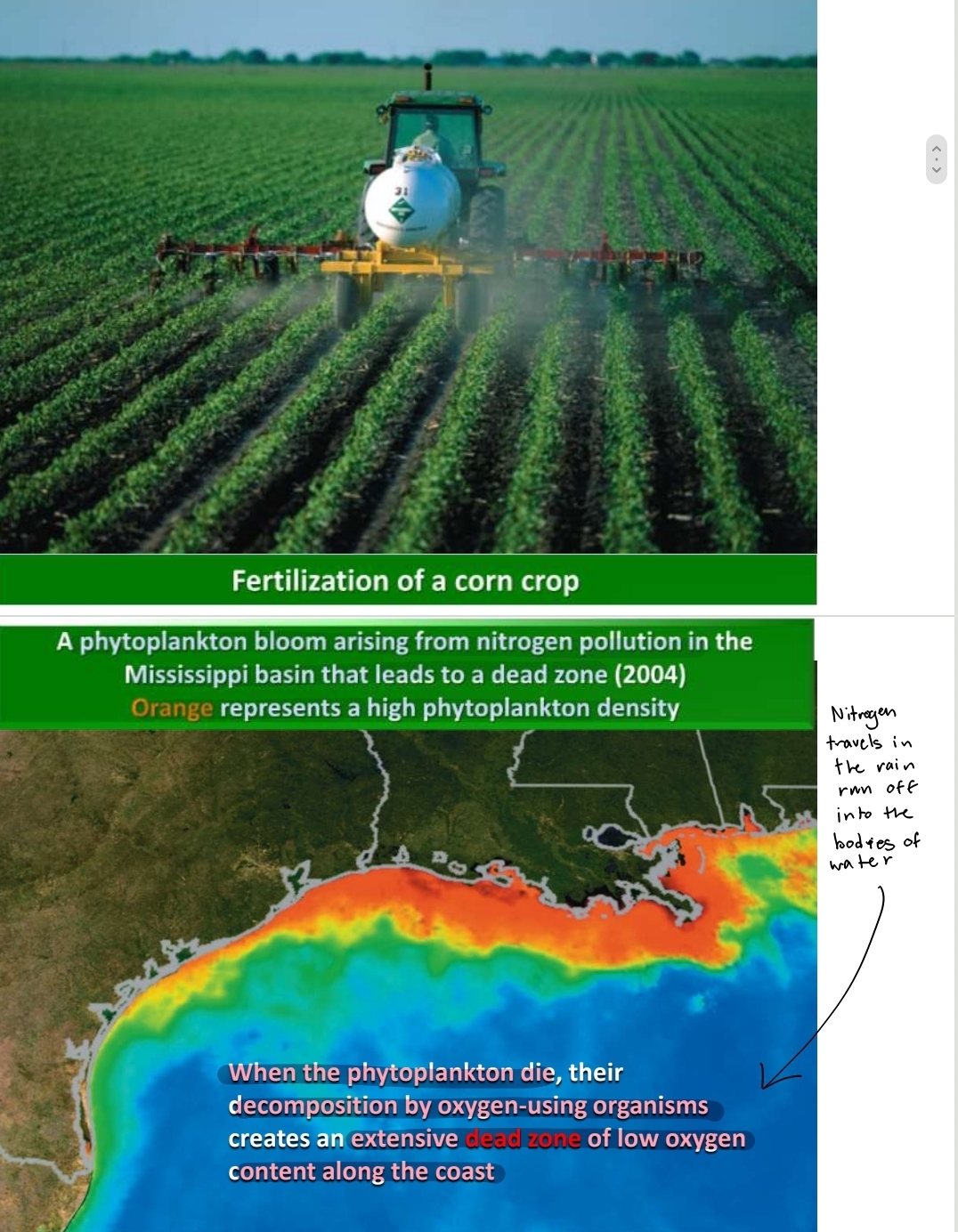
Agriculture and Nitrogen Cycling
The quality of soil varies with the amount of organic material it contains
Agriculture removes from ecosystem nutients that would ordinarily be cycled back into the soil
Nitrogen is the main nutrient lost, which means it greatly affects the nitrogen cycle
industrially produced fertilizer is typically used to replace lost nitrogen, but the effects on an ecosystem can be harmful
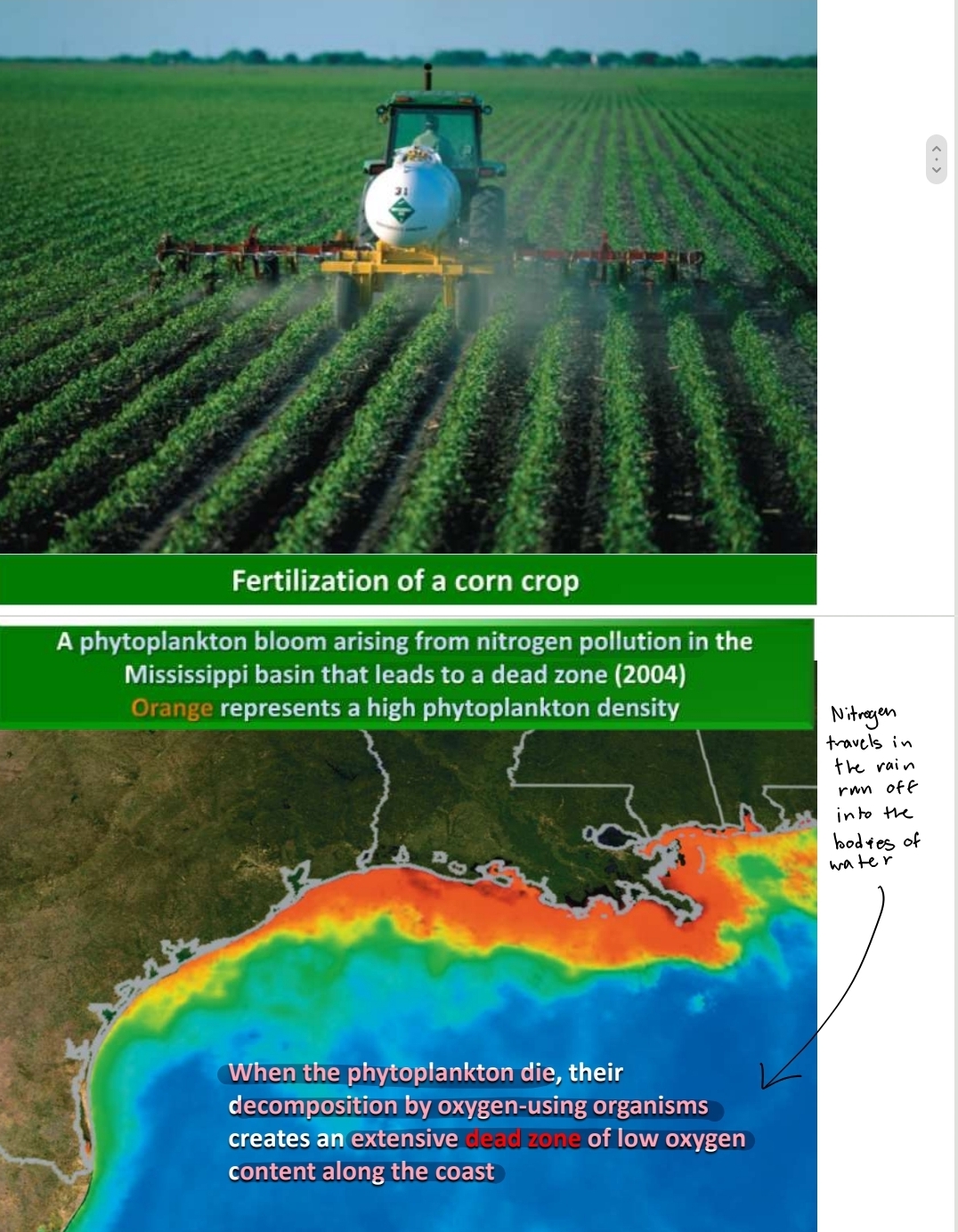
What does added nitrogen do to other ecosystems?
After being added to the crops, rain causes it to accumulate in ground water and run off which then travels into the bodies of water.
This causes an increase of phytoplankton and when they die their decomposition by oxygen-using organisms creates and extensive dead zone of low oxygen content along the coast
Critical Load
Critical load for a nutrient is the amount that plants can absorb w/o damaging the ecosystem
When excess nutients are added to an ecosystem, the critical load is exceeded
Sewage runoff causes cultural eutrophication, over-enrichment, which then causes excessive algal growth that can greatly harm freshwater ecosystems
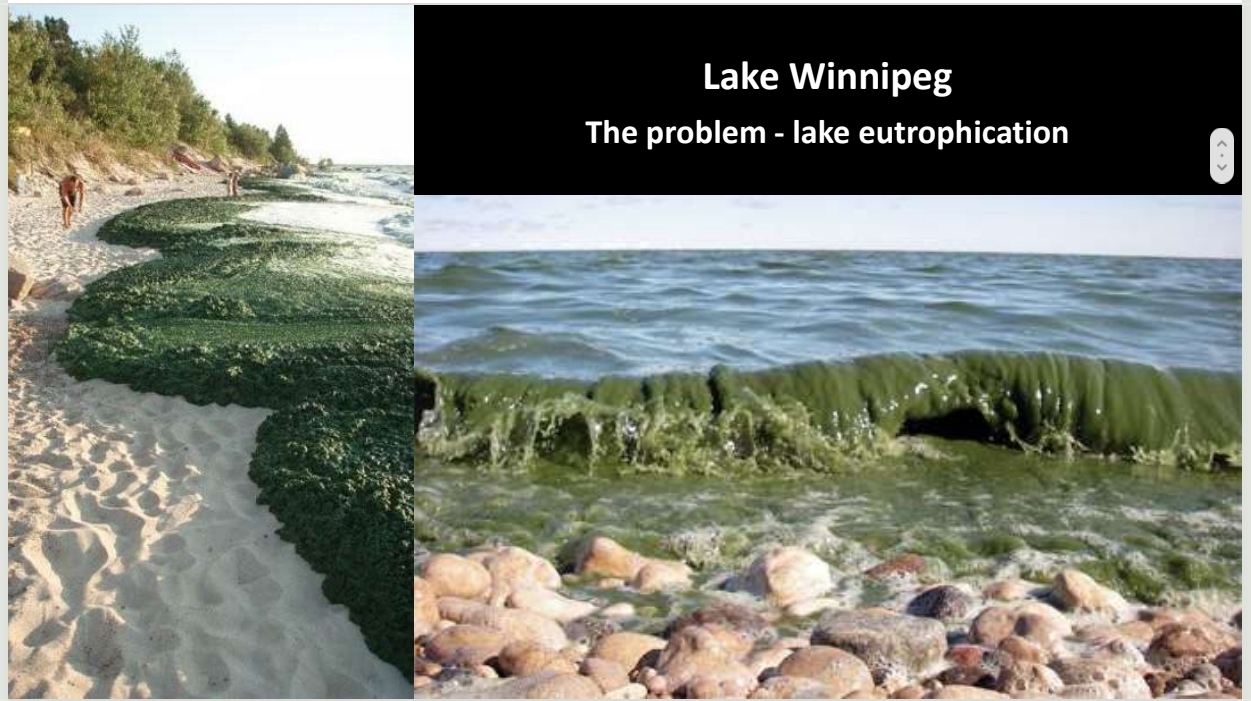
Critical Load: Lake Winnipeg
Nutrient overloading is currently affect Lake Winnipeg negatively
Lake Winnipeg - 10th largest freshwater lake in the world
It is subject to nutrient (nitrogen/phosphorus) overloading from a variety of sources
Solution will require reducing nutrient inputs in the lake
Toxins in the Environment
Humans release an immense variety of toxic chemicals into the environment
Many are synthetic compounds previously unknown in nature
One of the reasons that toxins are particularly harmful is that they may become more concentrated at higher levels of the food web
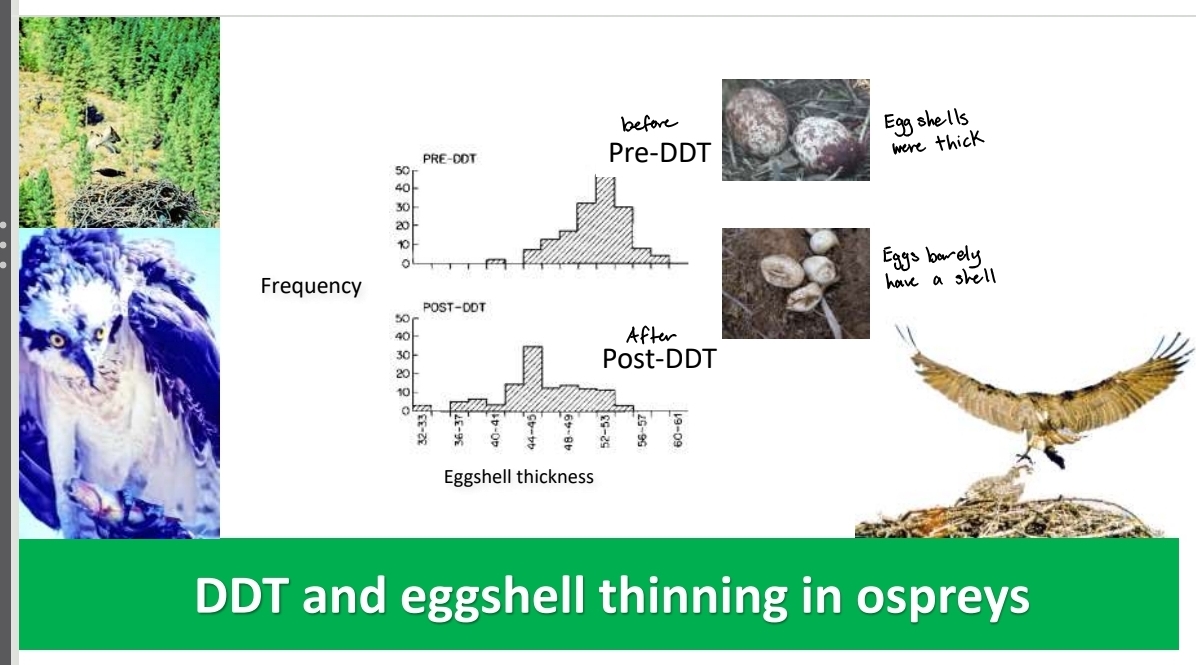
Silent Spring & Rachel Carson
PCBs and many pesticides such as DDT are subject to biological maginification in ecosystems
In the 1960s Rachel Carson brought attention to the biomagnification of DDT in birds in her book Silent Spring
Named b/c the forests were turning silent
aka birds were gone b/c of DDT
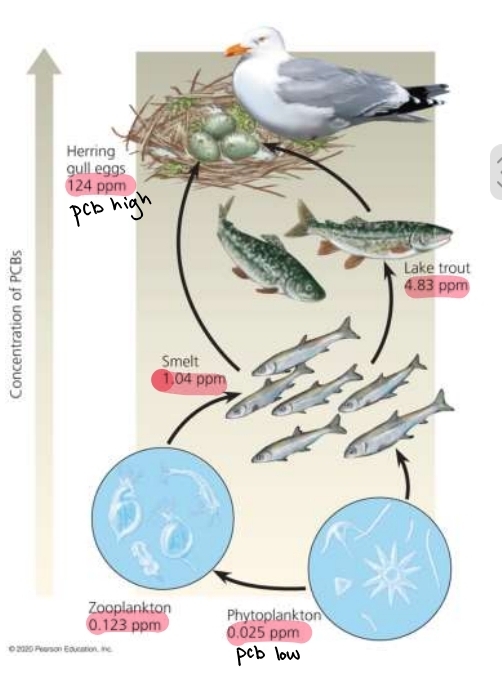
Biological Magnification
where toxins become more concentrated at higher trophic levels where biomass is lower
e.g. toxins in the phytoplankton are miniscule but you would find large amounts of it in birds
As a consequence, top-level carnivores tend to be most severely affected by toxic compounds in the environment
e.g. PCBs in great lakes food web
The DDT Ban
DDT is an organochlorine pesiticide that breaks down in the environment very slowly over time
DDT and it's metabolites were identified as causing the decline of apex predators such as ospreys and bald eagles
DDT was banned in Canada and the U.S. in 1972, and eagle/osprey populations recovered by the 1990s
Greenhouse gases and Climate Change
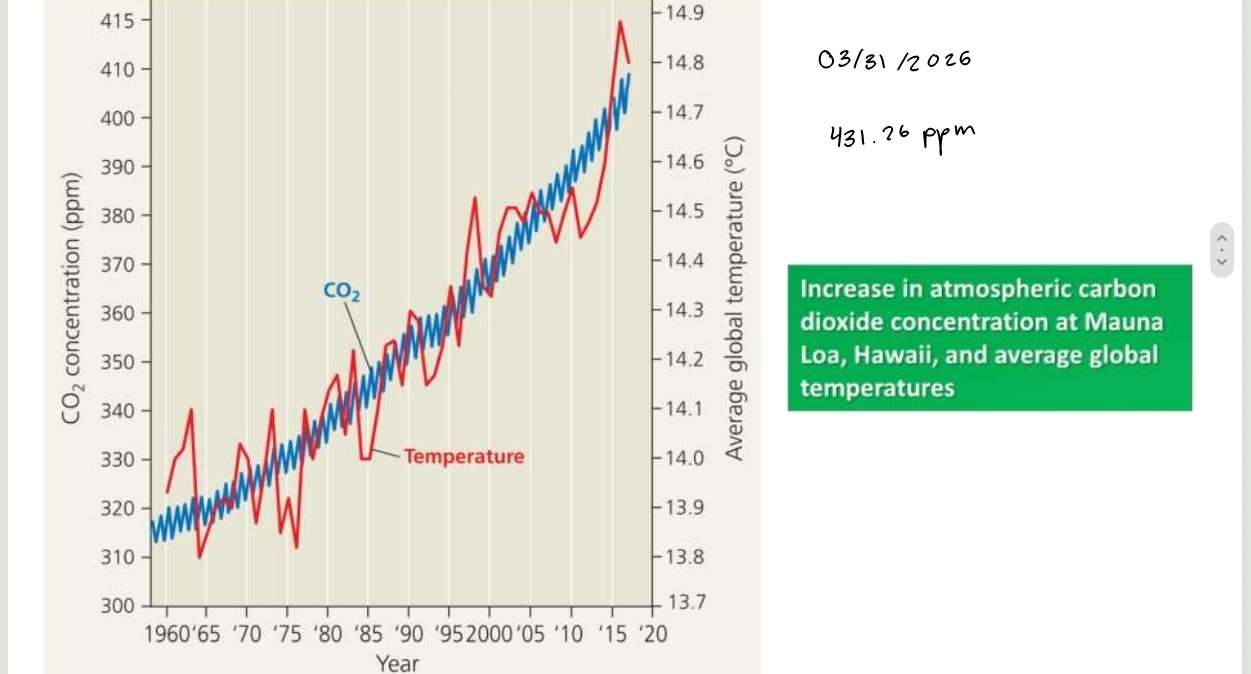
The rising level of atmospheric carbon dioxide is caused by human activities
This is due to the burning of fossil fuels and other human activities
The Greenhous effect
Where CO2, methane, water vapor, and other greenhouse gases reflect infared radiation back toward earth
this effect is important for keeping Earth's surface at a habitanle temperature
Increased lvls of CO2 are magnifying the effect which causes global warming and climate change
The effect is only good at moderate levels which means its really bad at extremes
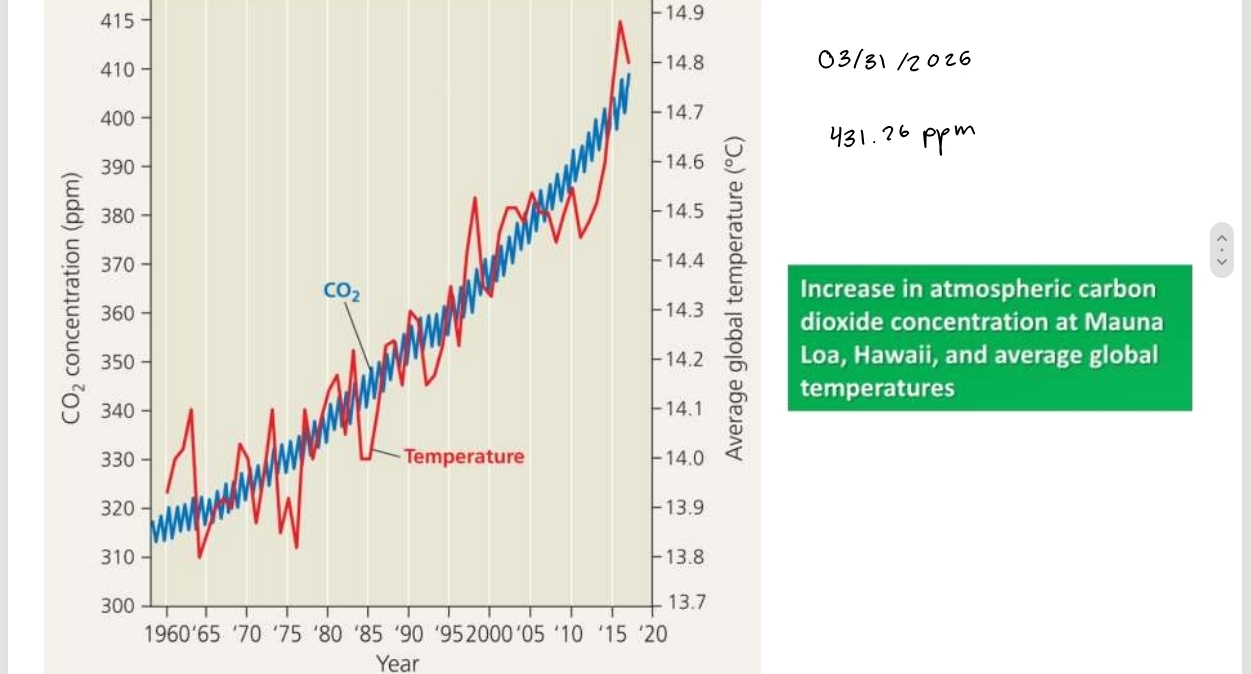
The Greenhouse effect and Climate
Increasing the [ ] of CO2 is linked to increasing global temperature
this causes:
significant effects on Northern coniferous forests and tundra
affects the geographic distribution of precipitation
Global warming can be slowed by reducing energy needs and converting to renewable sources of energy
Ocean Acidification
When carbon dioxide dissolves in water, carbonic acid is formed
Since the Industrial Revolution, the pH of the ocean has decline 0.1 pH units, which represent a 30% increase in acidity
Higher CO2 levels will result in increased ocean acidity will have widespread effects on marine life
e.g. loss of coral reefs
Rising Sea Level
Global Warming causes higher sea levels because of:
Expansion of water with higer temps
Melting of glaciers, ice sheets
Current rate of rise 3.4mm per year that has increased from 1990 when the rate of rise was 2.5mm per year
Harbingers of Climate Change
Biologists were among the first to see the effects of climate change directly:
Plants flowering earlier
Birds migrating sooner
Ranges of many orgaisms moving toward the poles in a warming climate
e.g. Chinook salmon leaving BC b/c rivers are too hot
Harbingers of Climate Change: Pacific Salmon in the Arctic and Chum Salmon up North
Pacific salmon are disappearing from California and Northern Mexico and are showing up in larger numbers in the arctic
Atlantic salmon are moving east in the Arctic
Chum Salmon are now found in the Mackenzie River as far as the Liard River, Great Bear and Great slave Lake
Harbingers of Climate Change: Pacific Salmon shark
A pacific salmon shark was caught in Kugluktuk, Nunavut in 2019
possibly there because it was following salmon spreading into the western Arctic
Deep Decarbonization
We need to eliminate the use of most fossil fuels by mid-century or find technologies that capture carbon or both
this means replacing coal, oil and natural gas with renewables and nuclear
However, carbon capture technology is a wild card; the cost of it is falling, which means it can't help yet
How quickly do we need to decarbonize?
QUICK.
The annual production of anthropogenic CO2 is ~40 GT reaching a record high
The total carbon budget from preindustrial levels to keep the temp from rising to 1.5 degrees is about 2900 GT
We have already spent 2770 GT of out budget
thus if do nothing we will hit the 1.5 mark by 2028 and a lot of bad stuff will occur
How do the rise of CO2 levels relate to the permian
This is because we are essentially going back.
The Permian occurred in 60-70k yrs about 252mya
9-10 species went extinct
it was caused by Greenhouse warming from volcanic activity
CO2 levels rose from 400 PPM to 2500 PPM which led to temps to rise to 10-15 degrees
Under a business-as-usual policy (no GG reductions) we could be 20% of the way to a Permian extinction by 2100; 35-50% by 2200
How does Greenhouse levels challenge Manitoba?
Manitoba could hit it's greenhous gas reduction goals with only a modest economic impact
we would need to make everything electric powered and home heating
We have the advantage of a surplus of renewable energy: 99% of MB's electricity is renewable (97% from Hydro & 2% from wind & solar
however 70% of the energy consumption is from fossil fuels
What about Canada as a whole in relation to the Greenhouse gas production?
Canada's contribution to GG is relatively small (700MT= 1.6% of global production)
but per capita production (22 metric tons/yr) is more than treble the global avergae of ~6 metric tons/yr
Canada is responsible for 5-6% of global oil & gas production
Real argument for Canada's GHG reduction is moral suasion: If Canada doesn't play it's part , it can't expect large GHG emitters to do their part
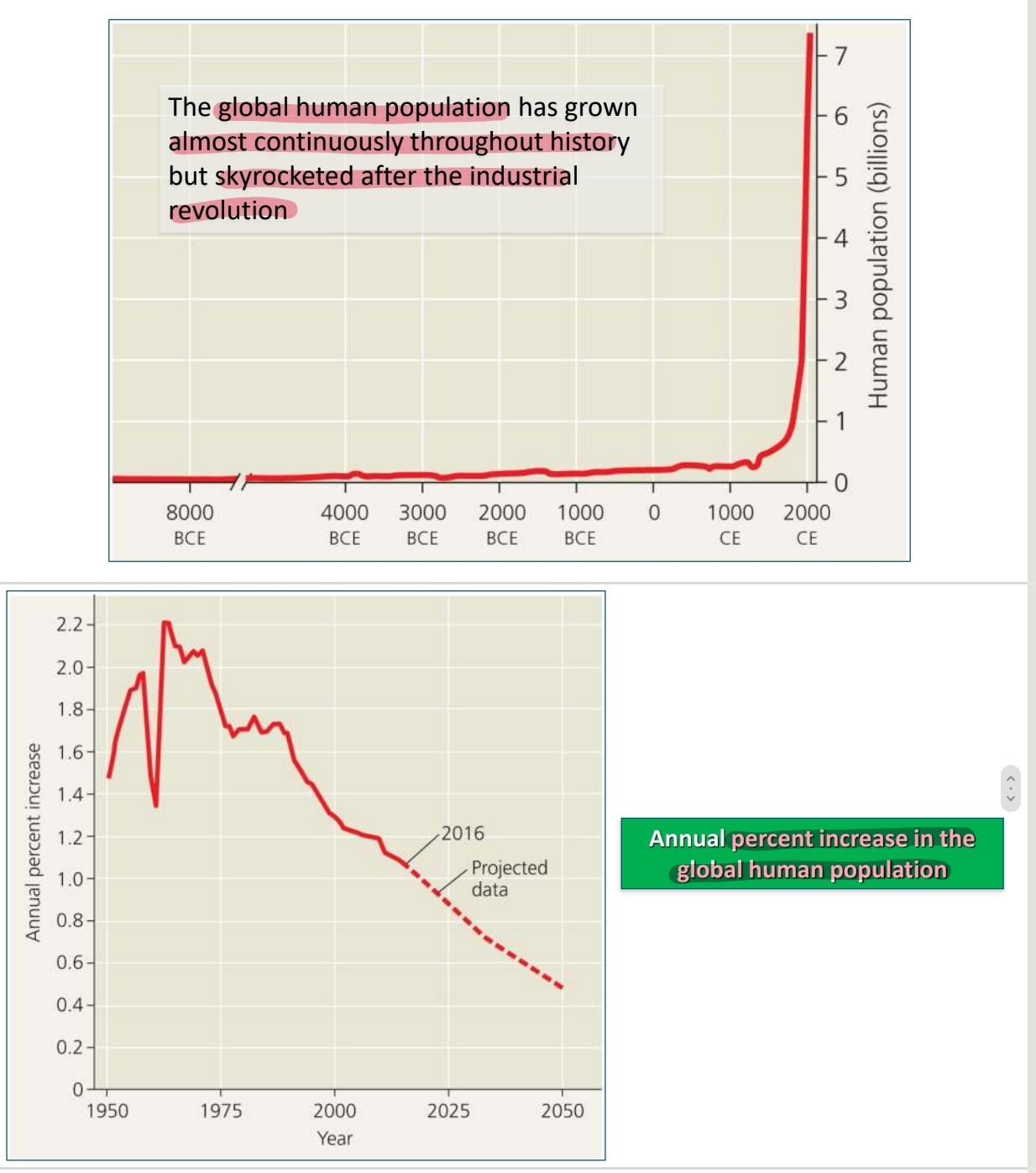
The Global Human population
The Human population inc relatively slowly until 1650 which it then began to grow exponentially
Since the Industrial Rev., rapid population growth is due to drop in death rate due primarily to lower infant mortality
the rate of growth began to slow in the 1960s
but since the Indus. Rev. it has skyrocketed
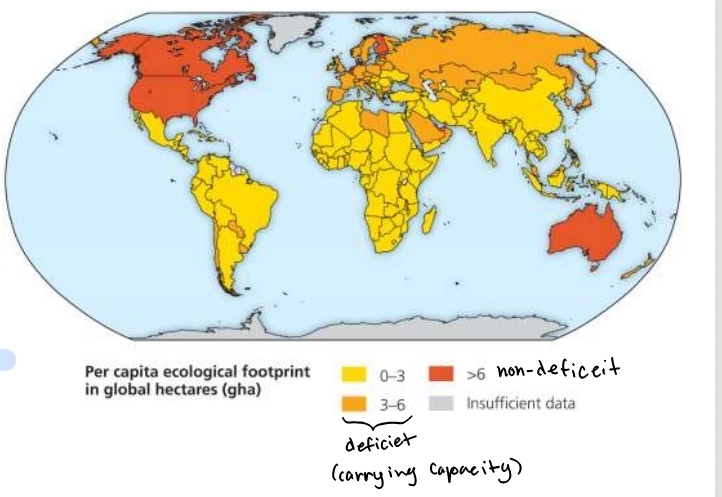
Ecological Footprint Concept
Summarizes the aggregate land and water area needed to sustain the people of a nation
It is one measure of how close we are to the carrying capacity of earth
varies from country to country
Canada is large country will small population so it is one of the few countries that are not facing a deficit
Are we living Unsustainably?
Currencies other than area can be used to assess our impact on the planet. One of these is energy use
A typical person in Canada, Norway or the United States consumes 30 times the energy that a person in central Africa does.
Fossil fuels account for 80% of the energy use in developed nations, and is changing the Earth’s climate
Global Carrying capacity and Limits on Population size
Global population growth has been slowing since the 1960’s
The world’s population is now expected to reach between 8.1 to 10.6 billion by 2050
How many humans can the Earth support?
The carrying capacity of Earth for humans is uncertain: most estimates fall between 10 and 15 billion
Limitations can be food, space, nonrenewable resources or build up of wastes
What is sustainable development
Development that meets the needs of people today without limiting the ability of future generations to meet their needs
What does Sustainable development require?
Sustainable development requires connections between life scienes, social scienes, economics and humanities
this has led to global efforts to manage fisheries sustainably
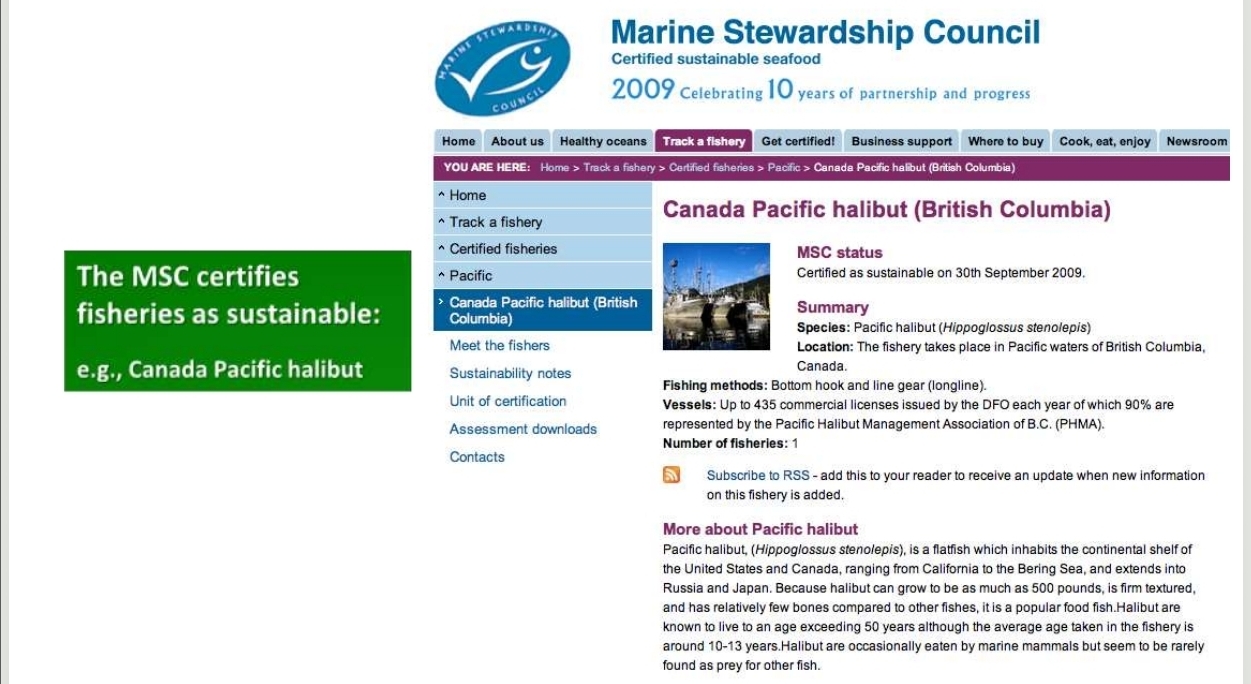
Marine Stewardship Counciln (MSC)
The Marine Stewardship Council (MSC) is an international non-profit organization
The mission of the MSC is to use their ecolabel and fishery certification program to contribute to the health of the world’s oceans by:
recognizing and rewarding sustainable fishing practices
influencing the choices people make when buying seafood
working with their partners to transform the seafood market to a sustainable basis
MSC Criteria for Sustainable Fisheries: Principle 1
A fishery must be conducted in amnner that does not lead to over-fishng or depletion of the exploited populations
for those populations that are depleted, the fishery must be conducted in a manner that demonstrably leads to their recovery
MSC Criteria for Sustainable Fisheries: Principle 2
Fishing operations should allow for the maintenance of the structure, productivity, function and diversity of the ecosystem (including habitat and associated dependent and ecologically related species) on which the fishery depends
MSC Criteria for Sustainable Fisheries: Principle 3
The fishery is subject to an effective management system that respects loacal national and international laws and standards
Must also incorporate institutional and operational framworks that require use of the resouce to be responsible and sustainable