Exercise and Movement
 Call Kai
 Learn
Learn Practice Test
 Spaced Repetition
 Match
Match Flashcards
 Knowt Play
1/35

There's no tags or description
Looks like no tags are added yet.
Name | Mastery | Learn | Test | Matching | Spaced | Call with Kai |
|---|
No analytics yet
Send a link to your students to track their progress
36 Terms
What is systolic blood pressure?
Pressure of blood against artery walls during vesicle contraction
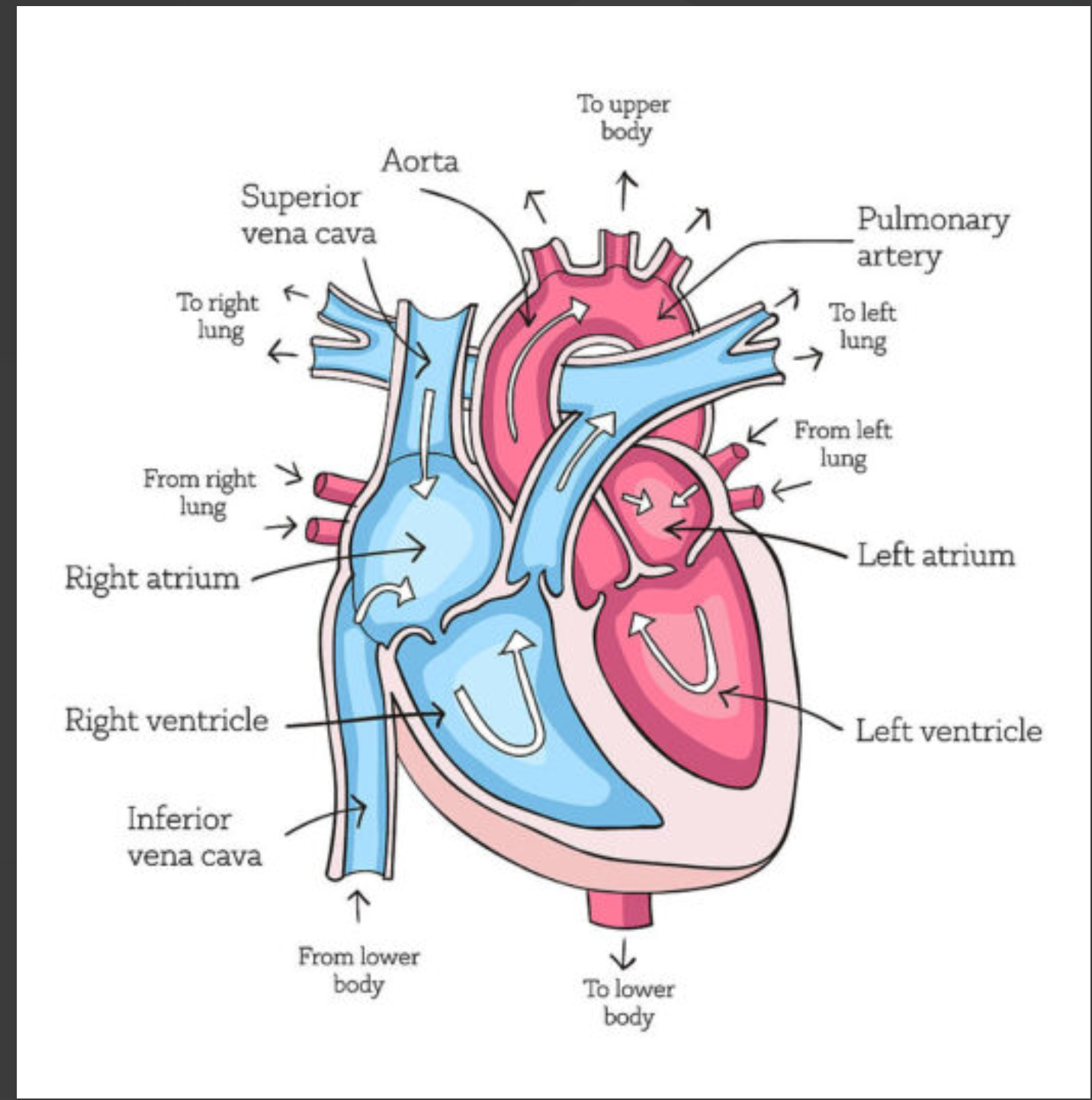
What is diastolic blood pressure?
Pressure of blood against artery walls when ventricles relax
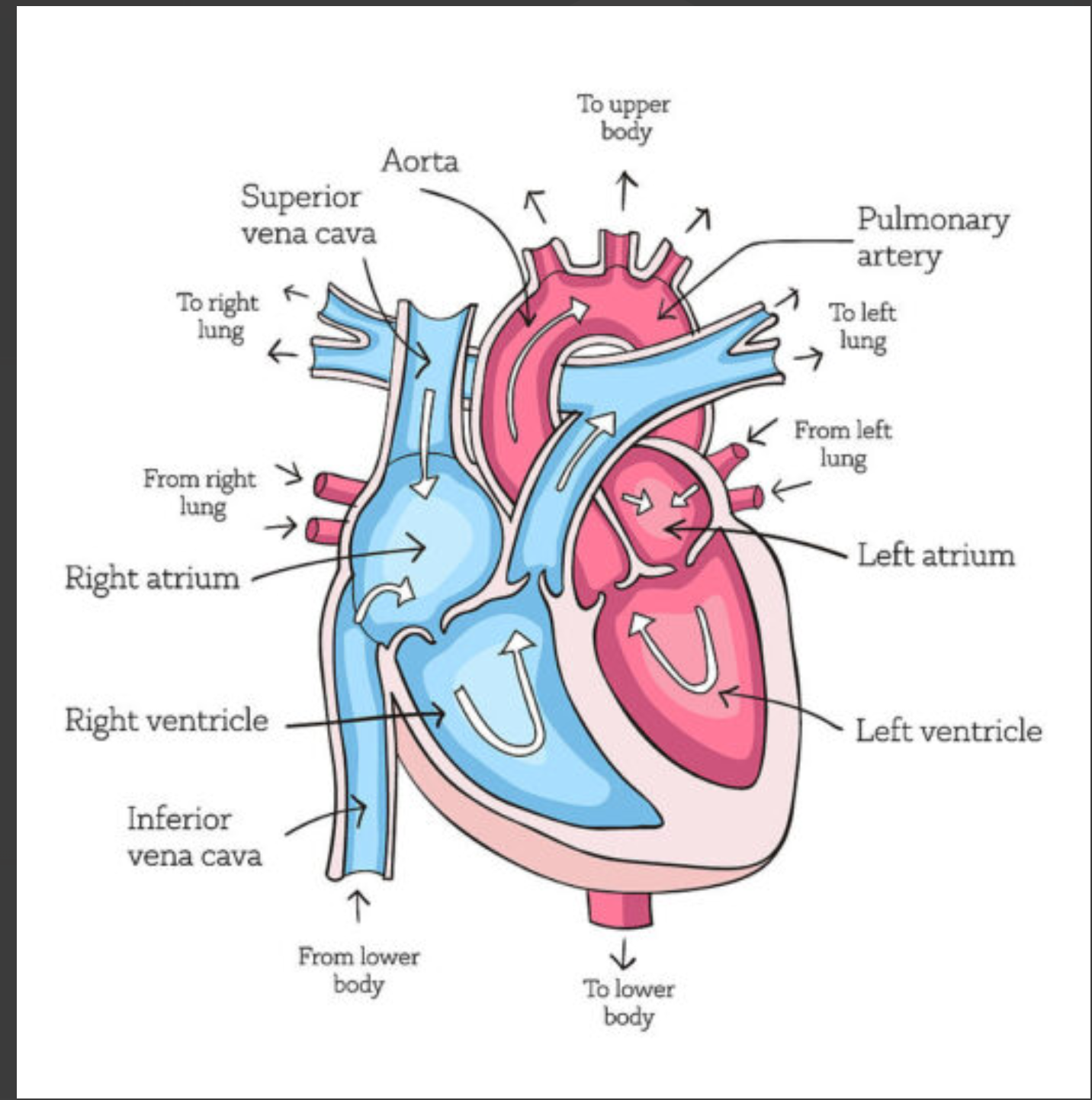
What are the 4 sets of specialised tissue in the heart?
Sinoatrial Node
Atrioventricular Node
Bundle of His
Pirkunji Fibres
Which body system controls heart rate?
The Central Nervous System,
Which nervous system will speed up the heart rate
Symapthetic nervous system = speed up
aka accelerator nerve
Which nervous system will slow down the heart rate?
The parasympathetic nervous system = slow
aka vagus nerve
How does the nervous system trigger a change in the heart rate?
By targeting/stimulating the sinoatrial node
What hormone targets the SAN?
Adrenaline, can cause vasocnostriction
What is vasoconstriction?
When the muscles in blood vessels contract, narrowing the lumen, increasing blood pressure, restricting blood flow to specific areas.
The point:
How does the symapthetic/accelarator nerve speed up the heart rate?
By releasing noradrenaline at the SAN
Explain how an electrical impulse will travel through the heart to make it beat:
1 - the sinoatrial node starts the sequenceby generating an electrical impulse. The impulse depolarizes the left and right atrium, stimulating it to contract
2 - the impulse travels to the atrioventricular node, it pauses to allow ventricular filling
3 - impulse travels down bundel of his, causing septal depolarisation
4 - the impulse is carried through the purkinji fibres, depolarising the left and right ventricles , causing asimultaneous contraction
How does the parasympathetic/vagus nerve slow down the heart rate?
By releasing acetylcholine at the SAN
During inspiration vs expiration, what happens to the diaphragm?
Inspiration, diphragm flat/contract
Expiration, diaphragm up/relax
When reading an electrocardiogram what does the following tell you?
P wave
QRS wave
T wave
P - measures atrial depolarisation
QRS - measures ventricular contraction
T - measures ventricular repolarisation (relax)
What would an enlarged P wave tell you?
You have an enlarged atrium
What would an enlarged Q wave tell you?
You have a heart attack
What would an enlarged T wave tell you
Too much potassium in blood stream
What would a flat T wave tell you
oxygen is being restricted towards heart, cardiovascular disease
What does an ecg measure?
The electrical impulse in the heart, which is then turned into a diagram and can tell you about how the heart is contracting and if there are any specific issues
What controls breathing rate and depth of ventilation?
The brain
Which nerve stimulates the diaphragm?
Phrenic nerve
Which nerve stimulates the external intercostal muscles?
Intercostyal nerve
What is the respiratory centre?
The medulla oblangata
The Pons
What is the definition of cardiac output? and what is the average cardiac output?
The total amount of blood pumped out by both ventricles in a minute
average - 5.25l at rest
7-8x more exercising
What two things determine/influence the cardiac output?
Heart beat and stroke volume
wHAT IS STROKE VOLUME?
Volumne of blood pumped out of one ventricle in one heartbeat
What different factors could affect stroke volume?
heart beat
the sympathetic nervous system - can increase contraction force
exercise (regular exercise can make permanent changes)
venuous return
Hypertension (high blood pressure)
Atheroscelerosis (fat buiild up in artery walls
What is the frank starling law?
The more blood filled into the ventricle, the greater force it will contract
so the more the muscle stretches the harder it will eject the blood out, inceasing stroke volume
What is the autonomic nervous system?
a component of the peripheral nervous system that regulates involuntary bodily functions
If the diameter of a blood vessel increases his is called___ and this ___ the blood pressure
1 - vasodilation
2 - decreases blood pressure
If the diameter of a blood vessel decreases this is called___ and this ___ the blood pressure
1 - vasoconsriction
2 - increases blood pressure
What is blood pressure
pressure of blood against the blood vessel walls
What are the three layers within a blood vessel?
Tunica intima
tunica media - smooth muscle (contraction, expansion layer)
tunica externa - contains sympathetic neurons, controllinng tunica media
What is a precapillary sphincter and shunt?
two flaps that baso can close so that blood doesnt enter the capillaries or oxygenate the tissue at the sitte.
It does this ecause it could not be necessary at a specific time another organ could need it more
so the blood is diverted through a metarteriole, centrechanel-thorough fare channel (shunt is that diversion)
What is a baroreceptor?
monitor blood pressure changes
What is a chemoreceptor?
detect chanes in chemical balances, eg co2