Chapter 11 - Endocrine System Diagram | Quizlet
 Call Kai
 Learn
Learn Practice Test
 Spaced Repetition
 Match
Match Flashcards
 Knowt Play
1/49

There's no tags or description
Looks like no tags are added yet.
Name | Mastery | Learn | Test | Matching | Spaced | Call with Kai |
|---|
No analytics yet
Send a link to your students to track their progress
50 Terms
What is the functions of the endocrine system?
controls homeostasis, maintains water balance, controls uterine contractions, controls milk production, regulates ion (Ca2+, Na+, K+), regulates metabolism and growth, regulates heart rate and blood pressure, monitors blood glucose levels, reproductive functions
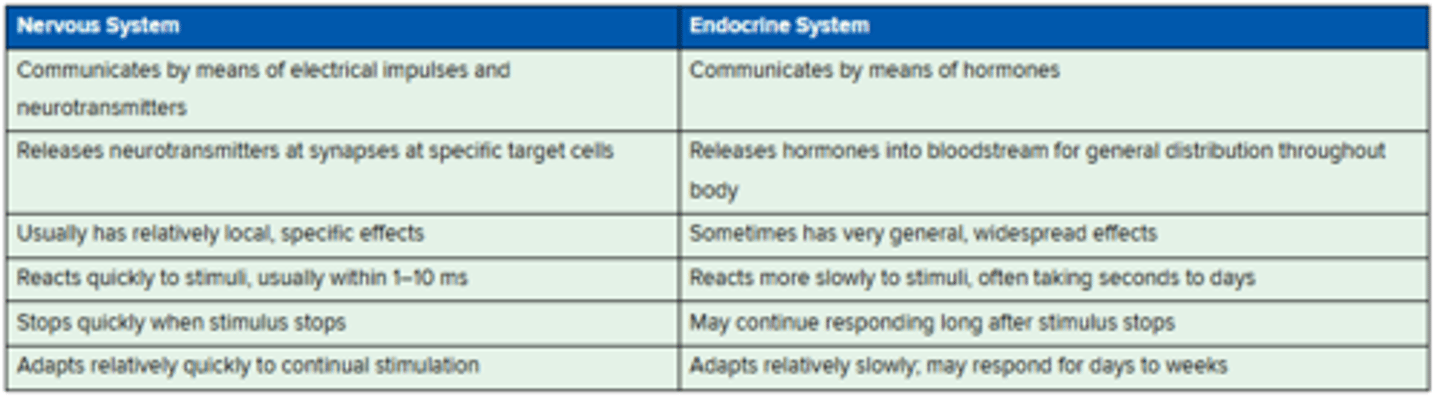
Nervous system vs endocrine system
Nervous System
- Communicates by means of electrical impulses and neurotransmitters
- Releases neurotransmitters at synapses at specific target cells
- Usually has relatively local, specific effects
- Reacts quickly to stimuli, usually within 1-10 ms
- Stops quickly when stimulus stops
- Adapts relatively quickly to continual stimulation
Endocrine System
- Communicates by means of hormones
- Releases hormones into bloodstream for general distribution throughout body
- Sometimes has very general, widespread effects
- Reacts more slowly to stimuli, often taking seconds to days
- May continue responding long after stimulus stops
- Adapts relatively slowly, may respond for days to weeks
hormone
chemical messengers
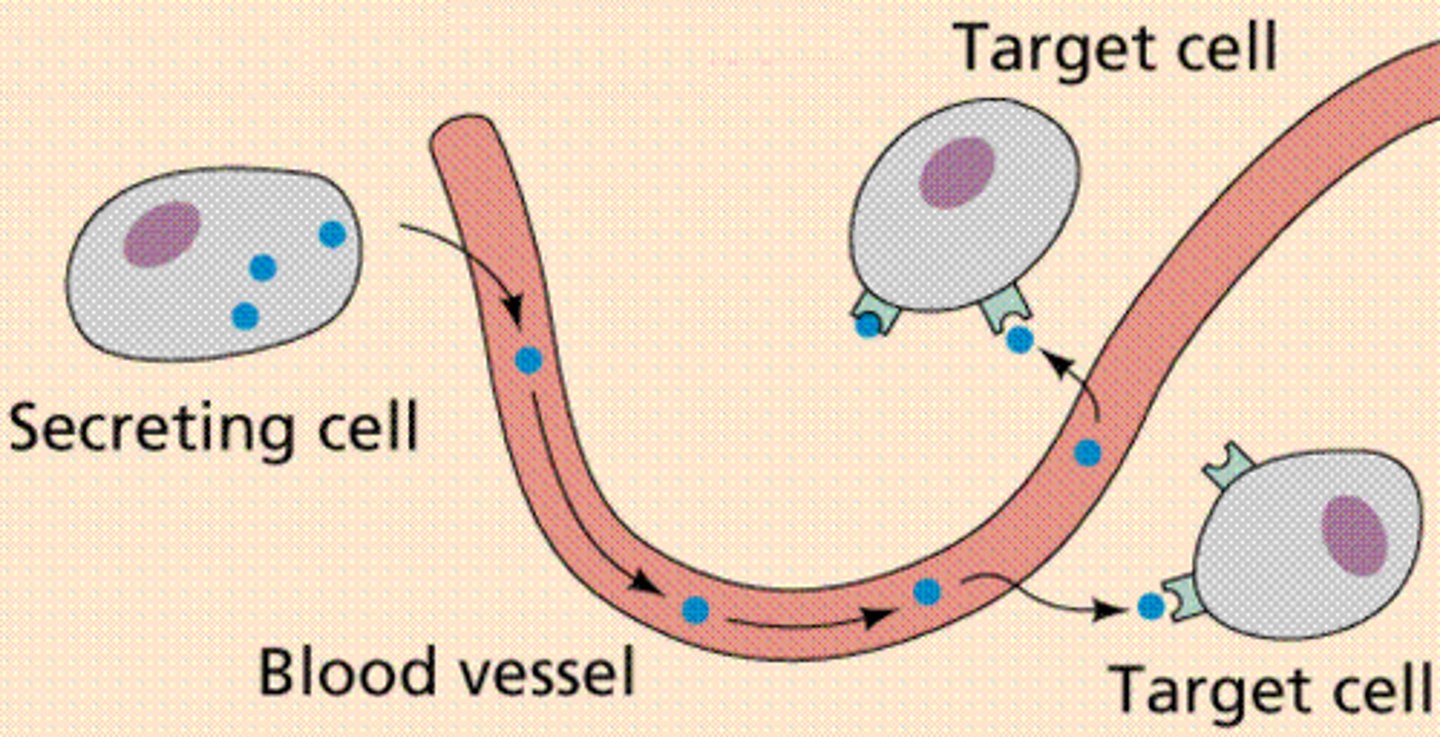
target tissue
group of cells that responds to specific hormones
How does the endocrine system transport its secretions?
into blood stream
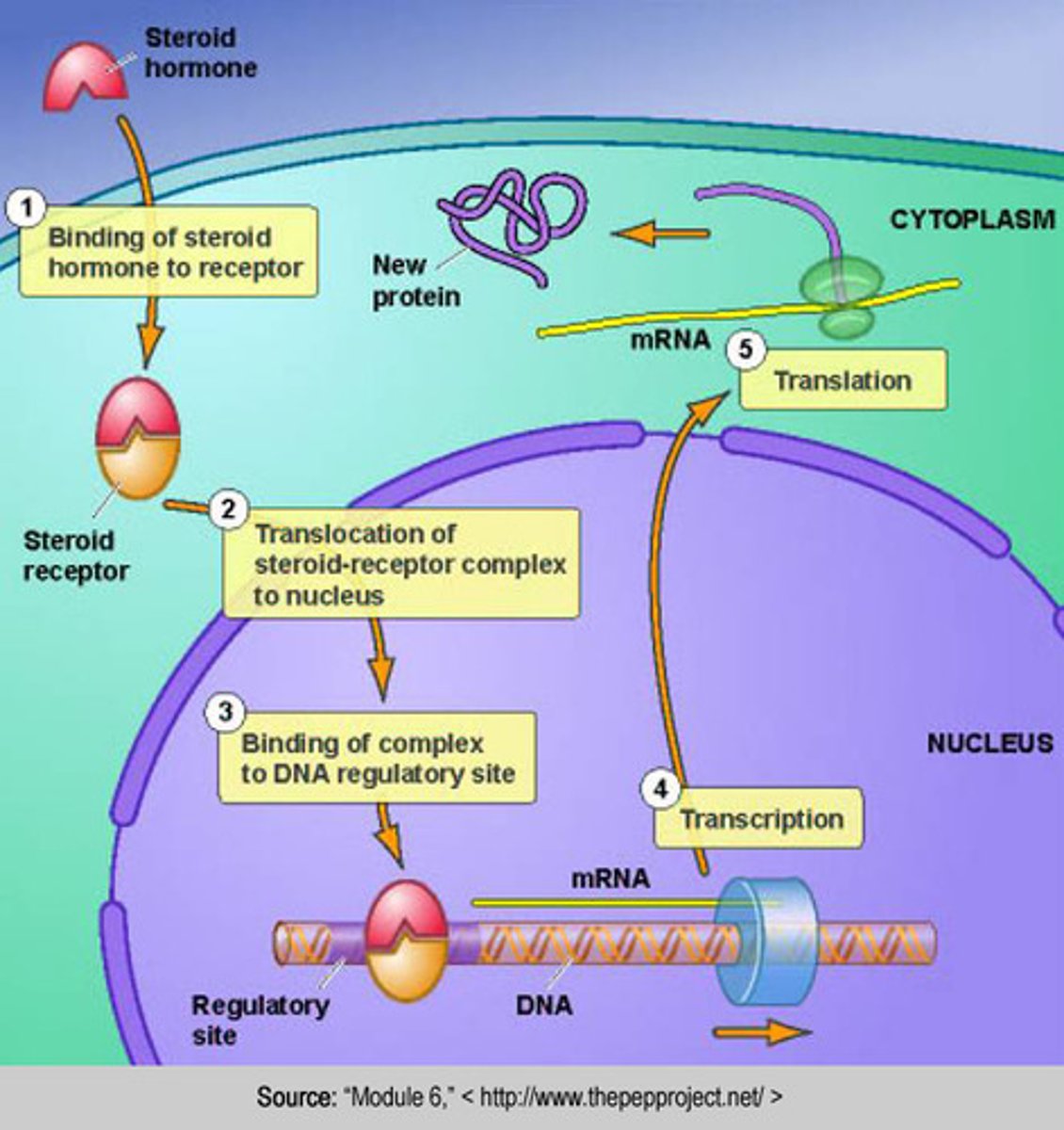
Steroid hormones
Synthesized from cholesterol (ex. Testosterone and estrogen)
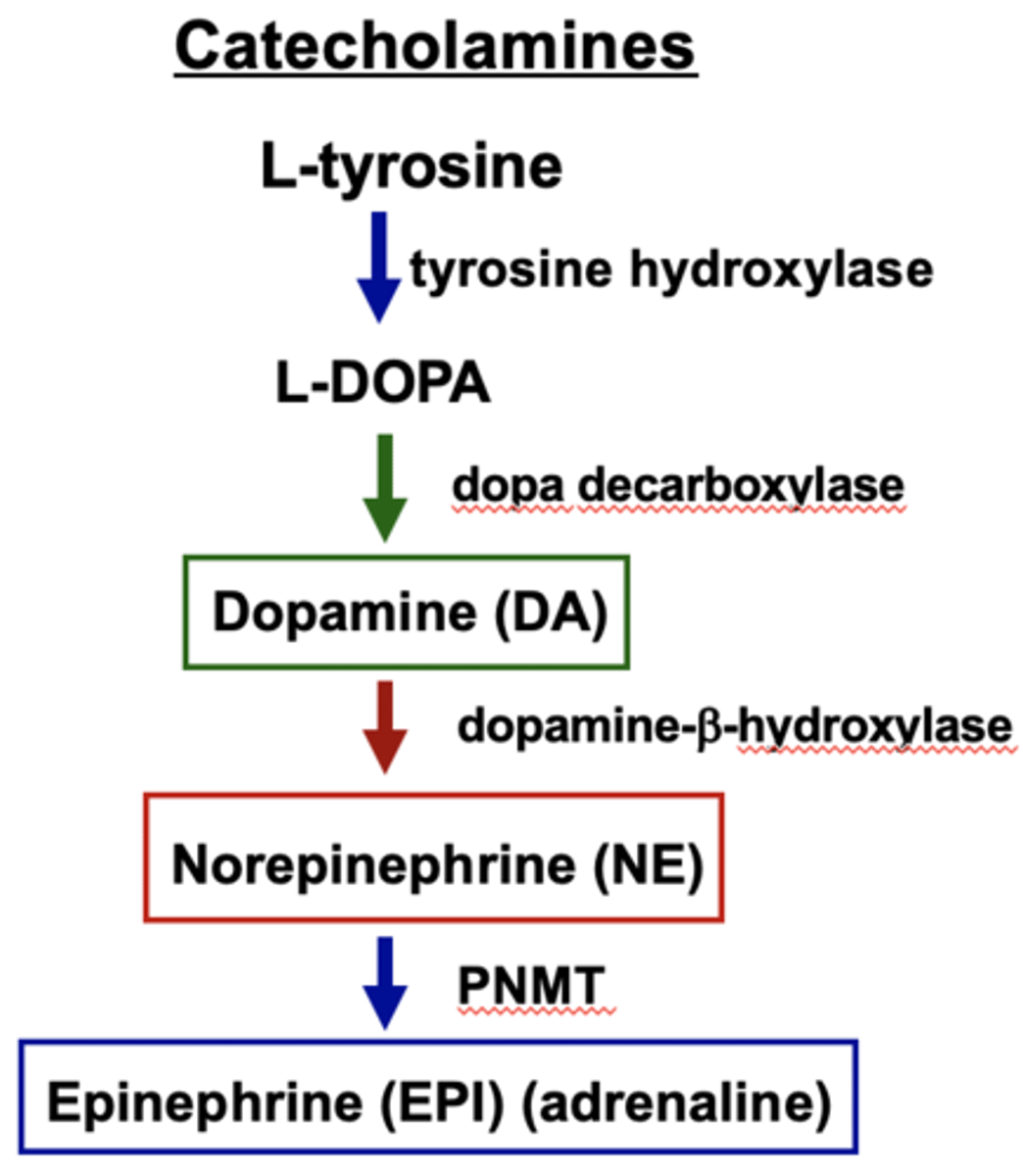
Monoamines
Small molecules synthesized from the amino acids tyrosine and tryptophan (ex. Thyroxine and epinephrine)
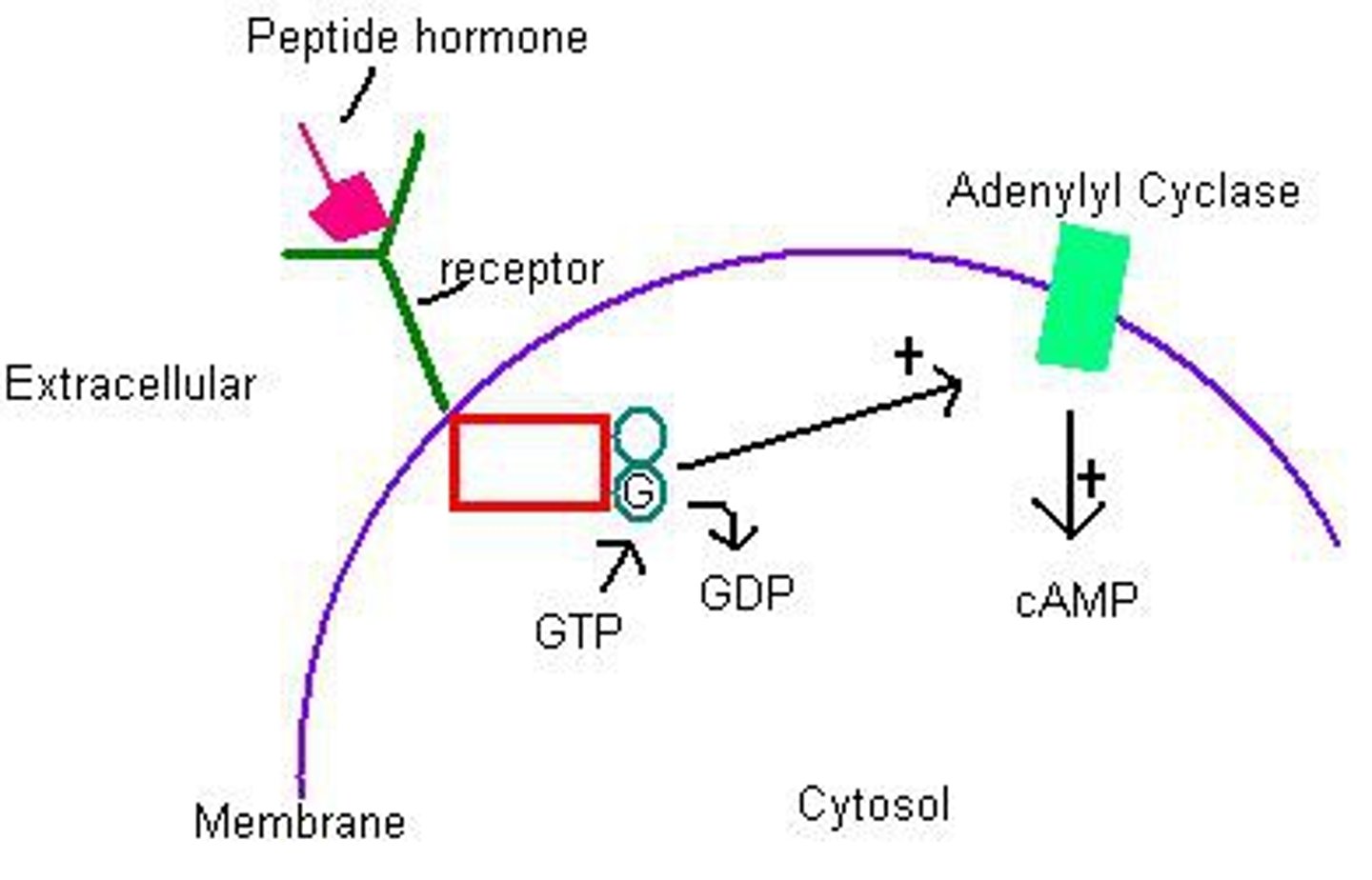
Peptide hormones
Chains of amino acids (ex. Oxytocin and insulin)
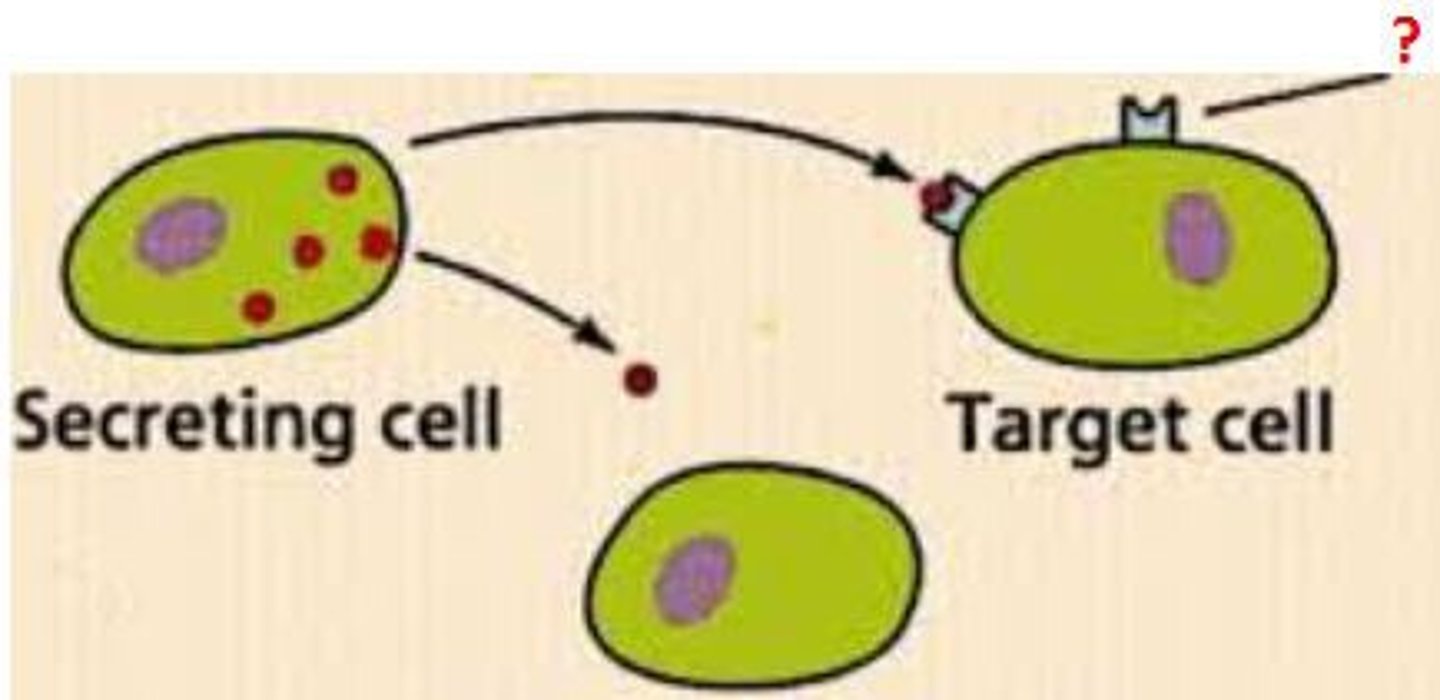
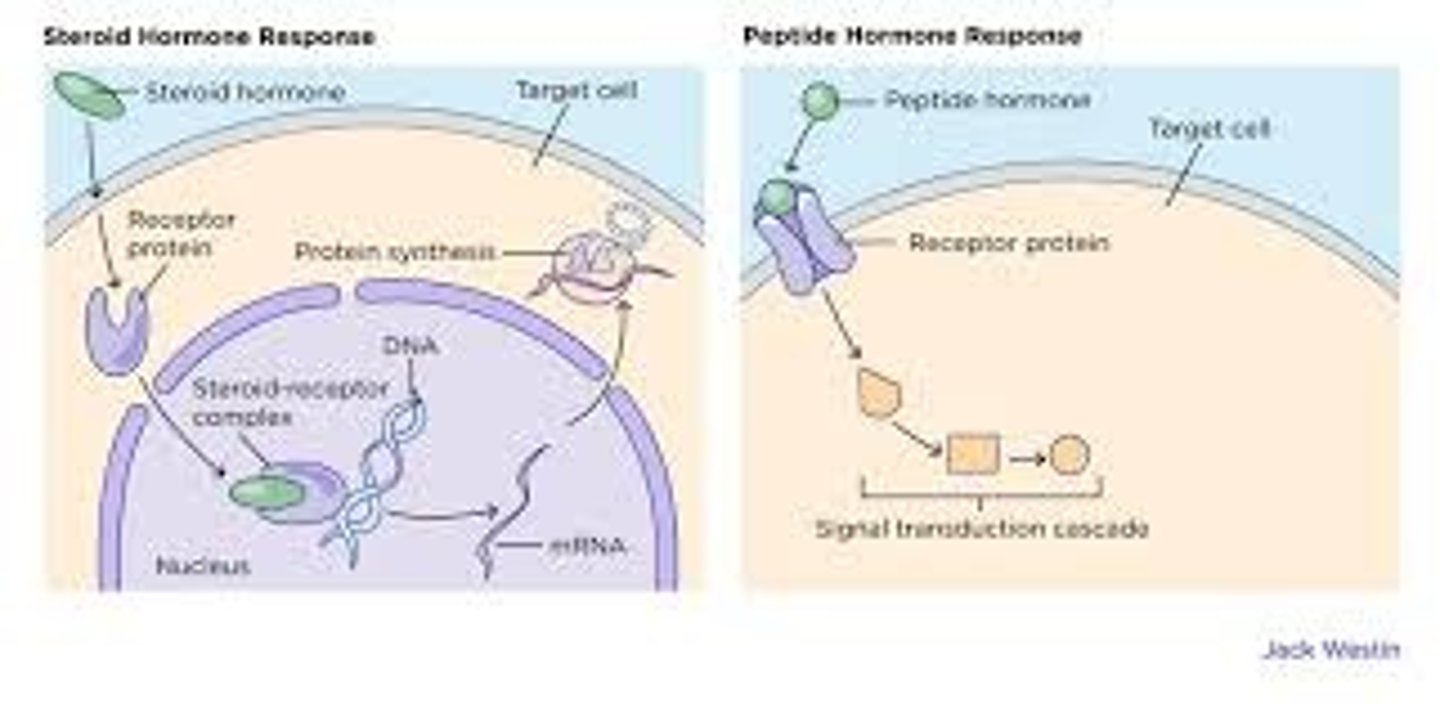
receptor sites and specificitiy
- Peptide hormones and monoamines are hydrophilic (water soluble) and cannot pass through the membrane, so they must bind to receptors at the cell surface (ex. Binding of glucagon to liver cells)
- Steroid hormones are hydrophobic (lipid-soluble) and cannot pass through readily diffuse through the membrane. Most pass directly into the cell's nucleus and bind to a receptors associated with DNA
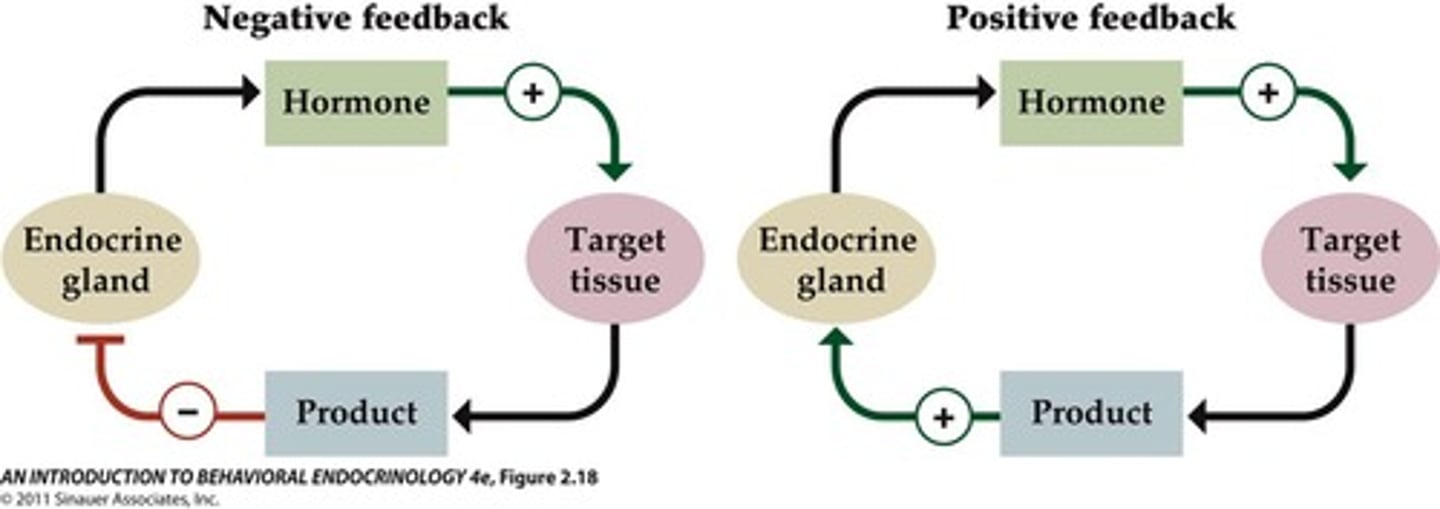
different ways hormones are regulated
Negative and positive feedback loops
- body senses change - endocrine gland responds by hormone secretion - target cells respond to bring variable back to original state
different ways hormones can affect cell activity
- alter gene expression
- alter protein production
- alter membrane permeability
- increase or decrease cell division
- alter membrane activity
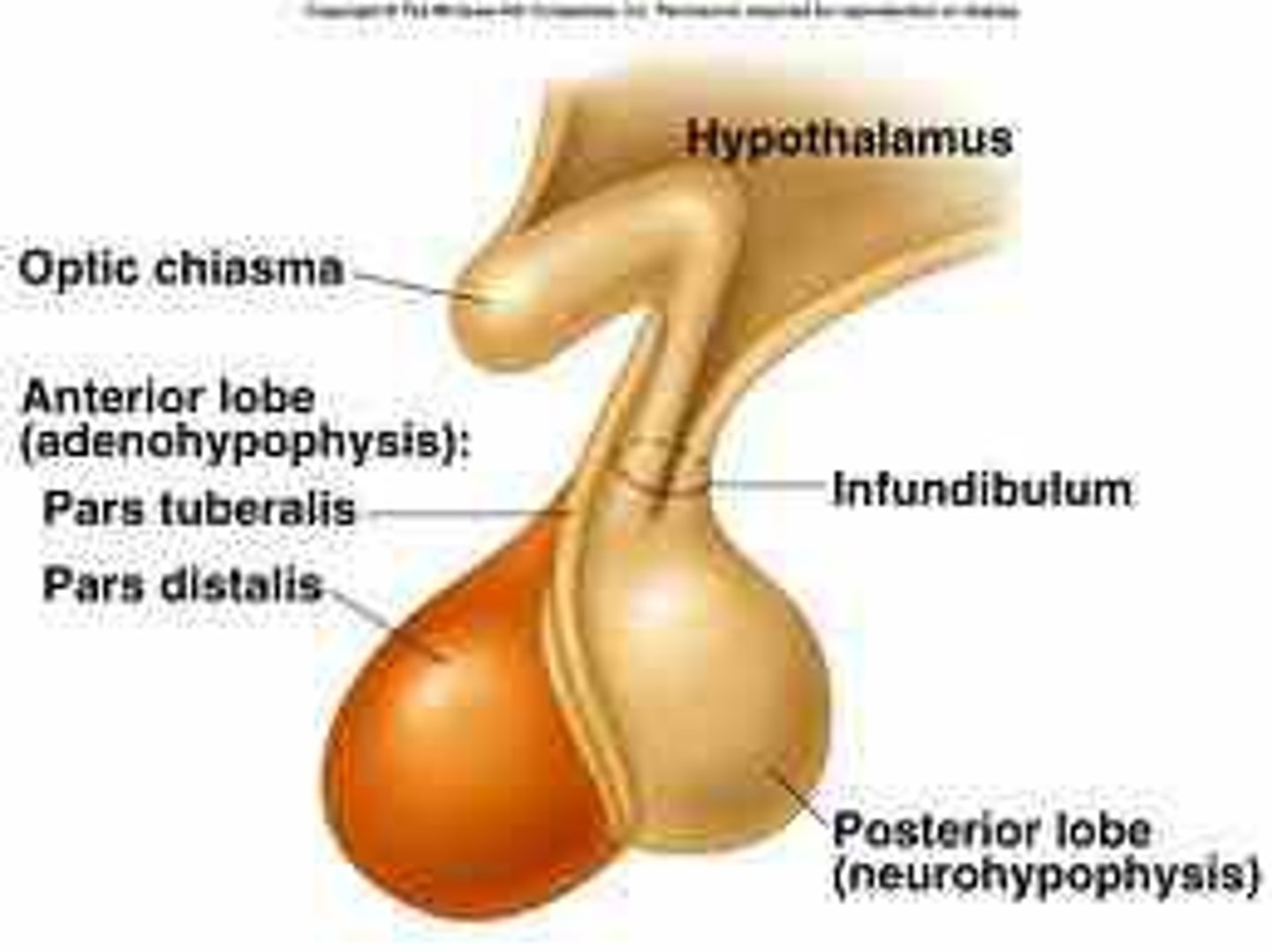
What is the size, location, control mechanisms, and divisions of the pituitary gland?
- pituitary gland controls more bodily functions than any other gland
- size of kidney bean
- under hypothalamus
- controlled by hypothalamus
- divided into anterior and posterior
TERM
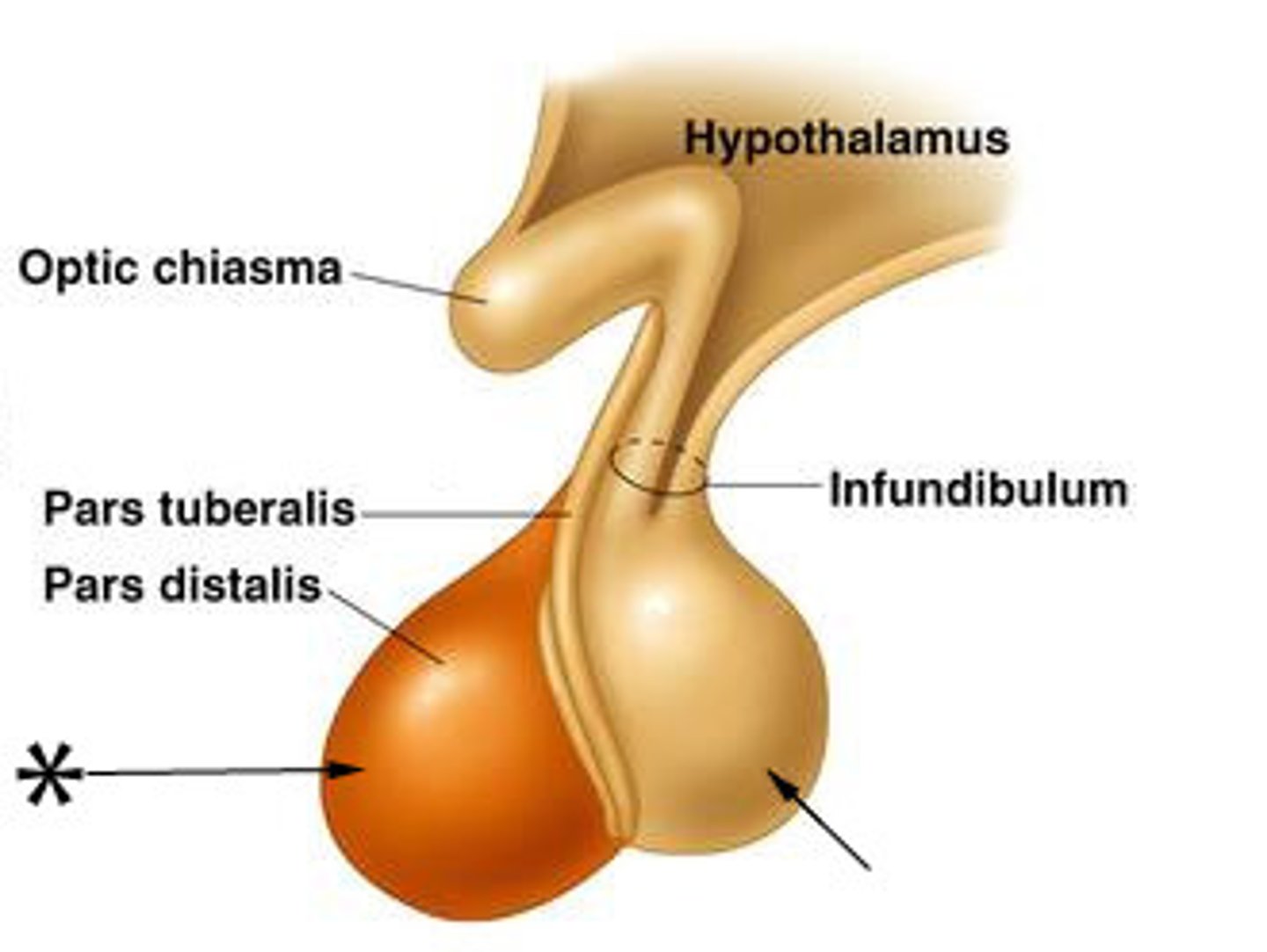
Anterior pituitary gland (hormones secreted)
DEFINITION
Lutenizing Hormone (LH), Follicle-stimulating Hormone (FSH), Thyroid-Stimulating Hormone (TSH), Growth Hormone (GH), Prolactin (PRL)
What are the functions and target tissue of Lutenizing-stimulating Hormone (female)
Stimulates ovulation and progesterone, TT is ovaries
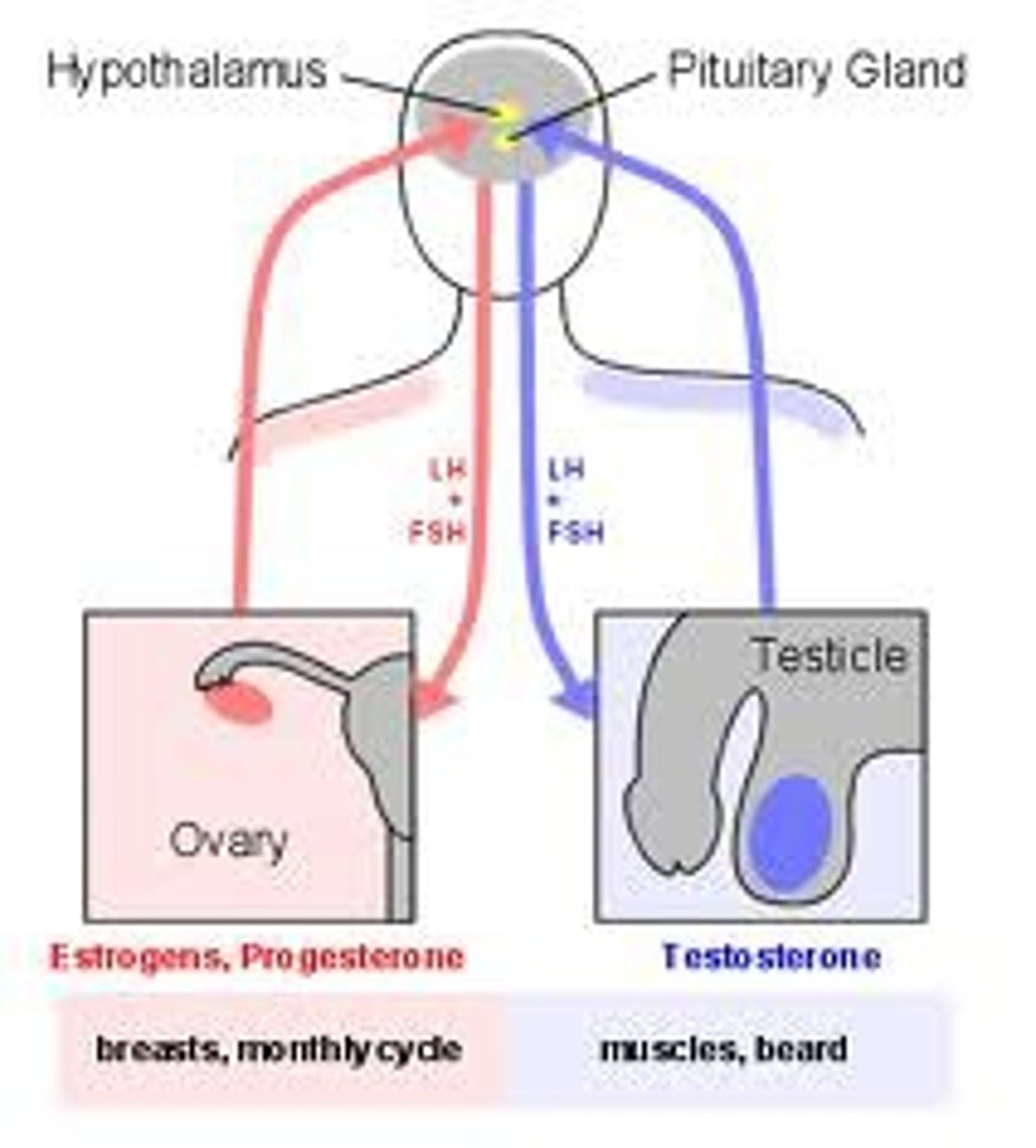
What are the functions and target tissue of Lutenizing-stimulating Hormone (male)
Stimulates testosterone production, TT is testes
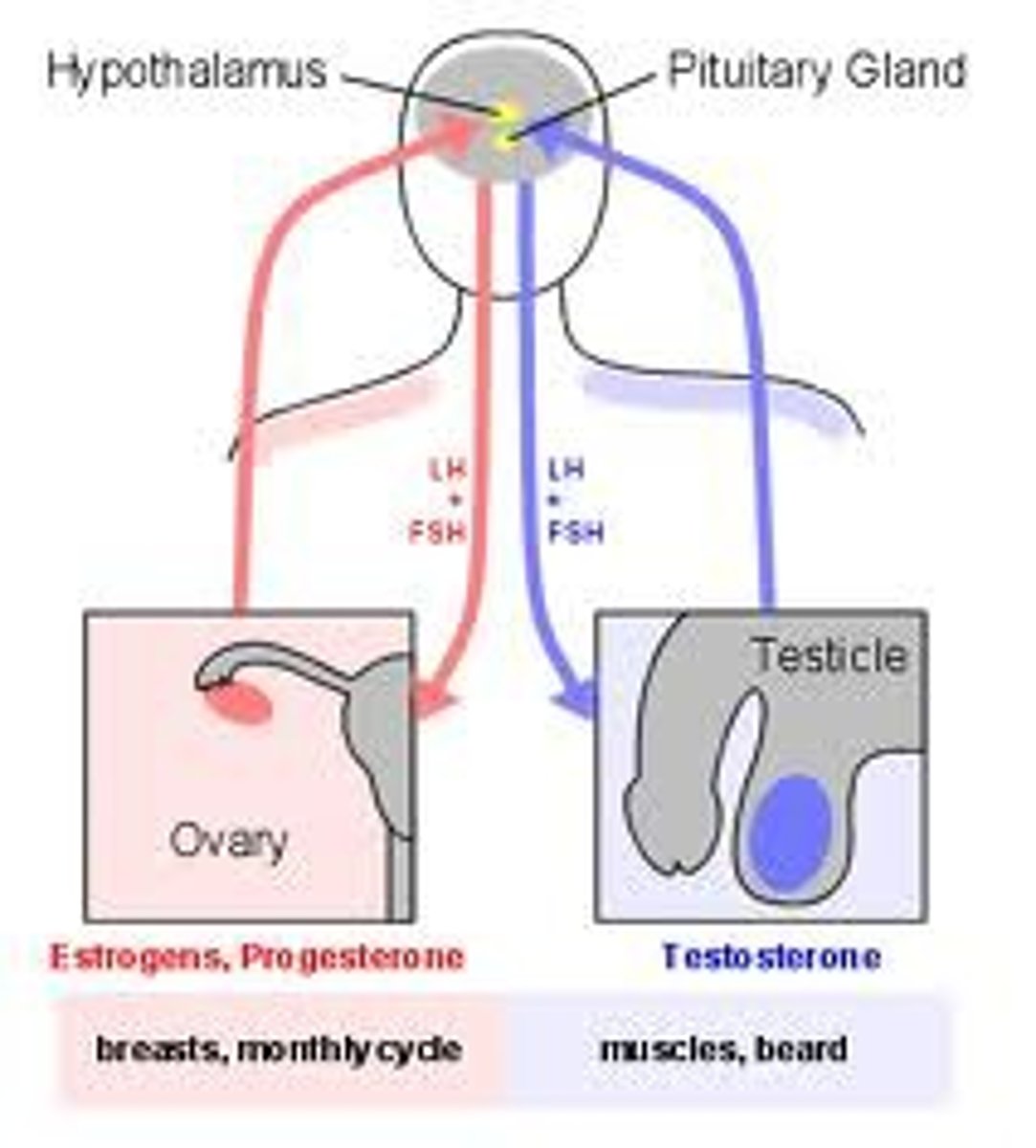
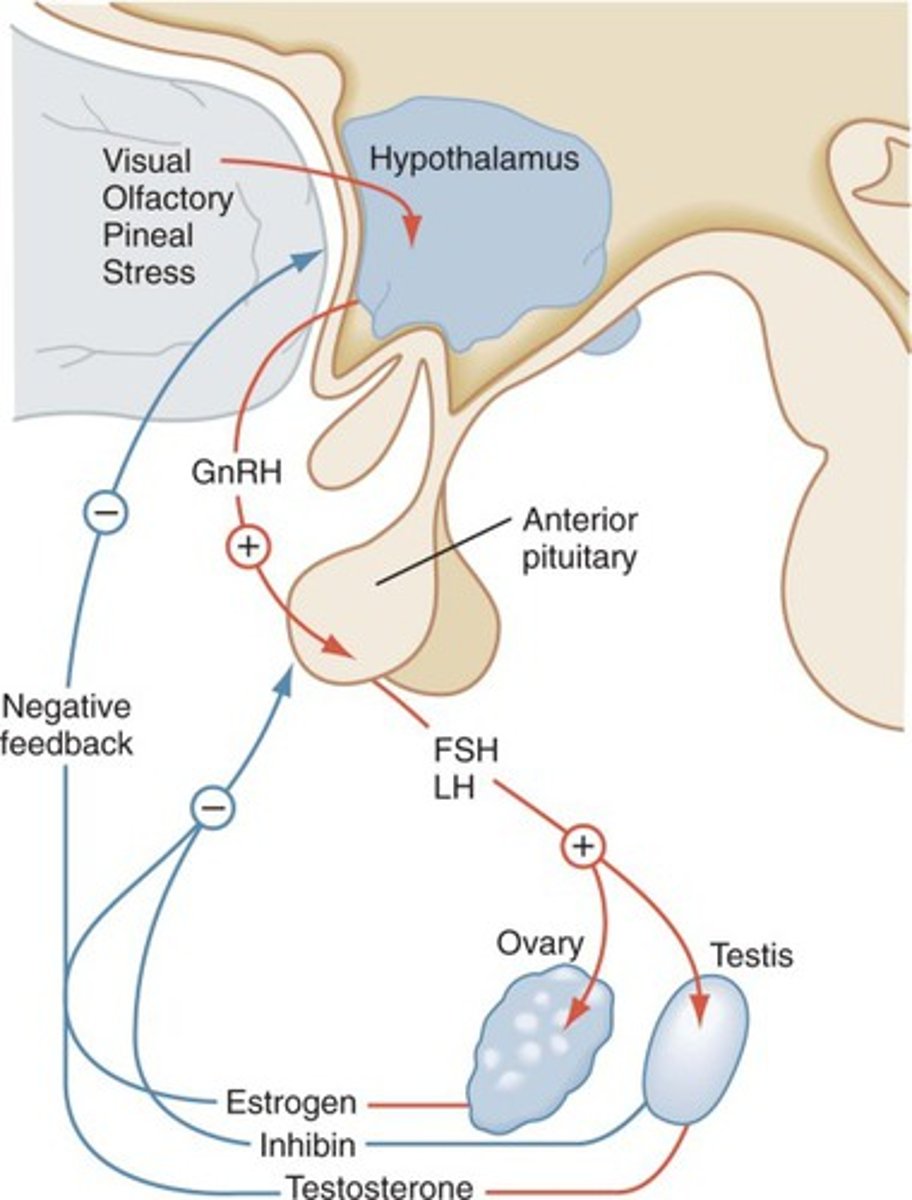
What are the functions and target tissue of Follicle-stimulating Hormone (female)
Stimulates follicle maturation and secretion of estrogen, and plays a role in menstrual cycle, TT is ovarian follicles
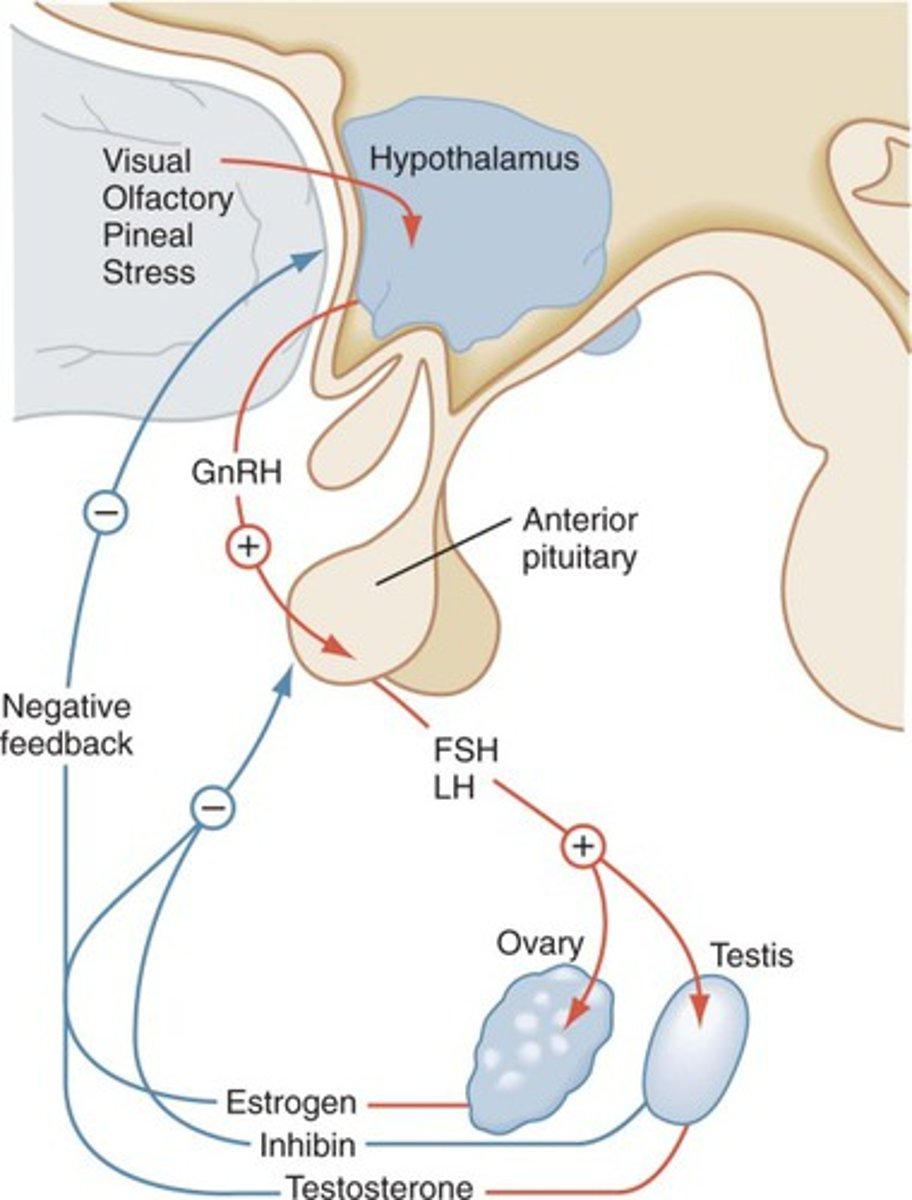
What are the functions and target tissue of Follicle-stimulating Hormone (male)
Stimulates production of sperm, TT is seminiferous tubules
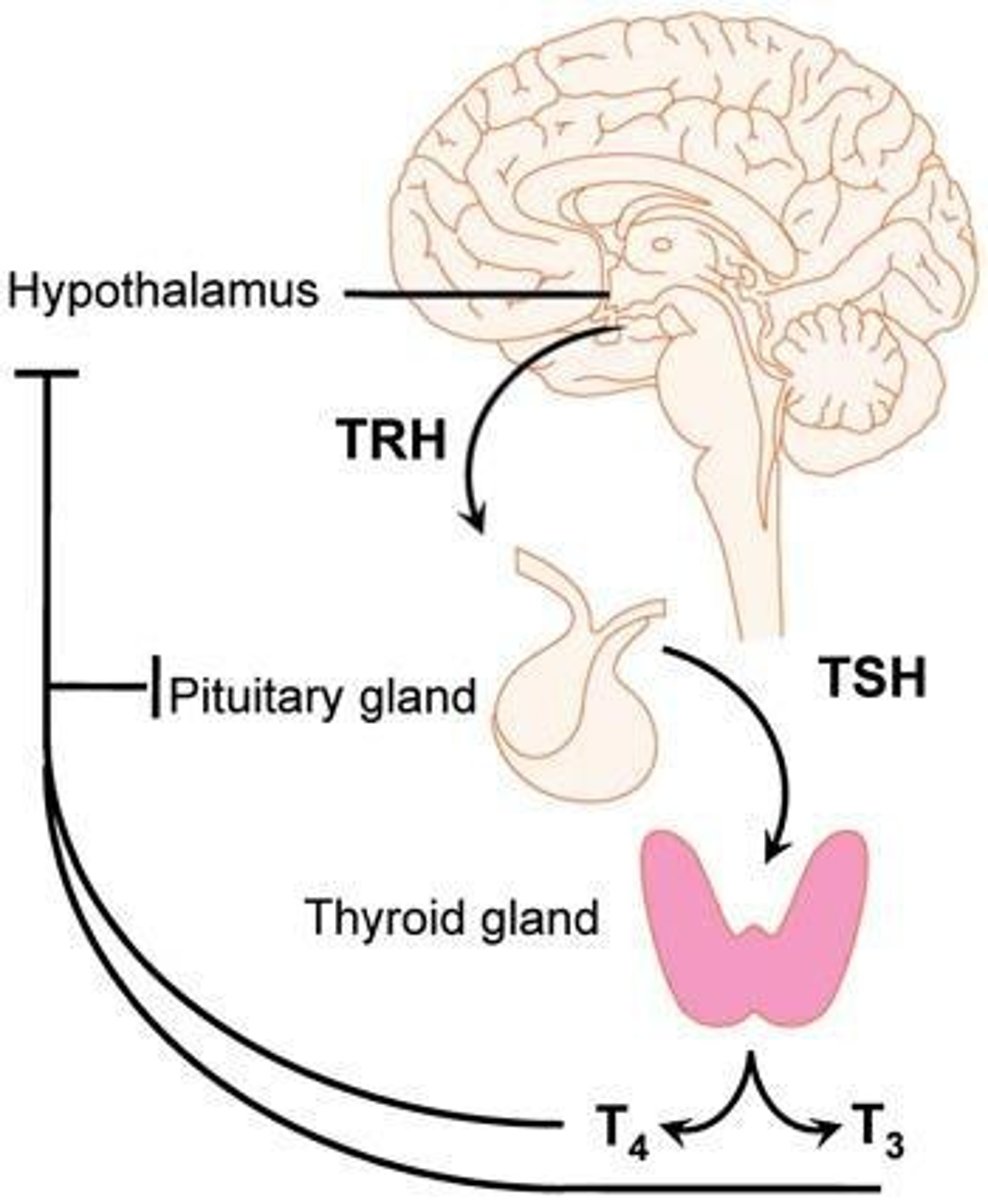
What are the functions and target tissue of Thyroid-Stimulating Hormone (TSH)
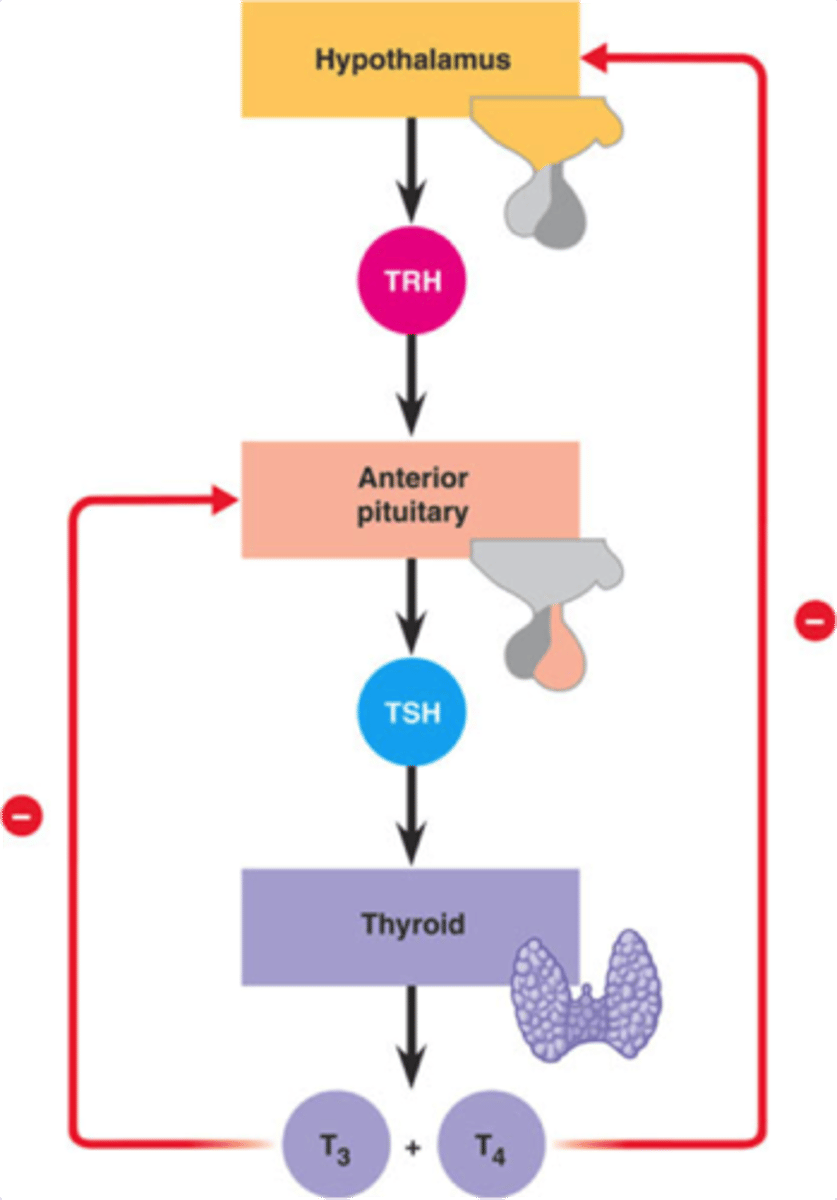
Stimulates the thyroid gland to secrete thyroid hormones T3 and T4 (needed for metabolism), TT is thyroid gland
- Too much TSH = enlargement of thyroid gland
- Too little TSH = shrinking of thyroid gland
What are the functions and target tissue of Growth Hormone
Stimulates growth of bones, muscles, and organs, TT is most body cells, especially bones and muscles.
- too much GH = gigantism
- too little GH = pituitary dwarfism
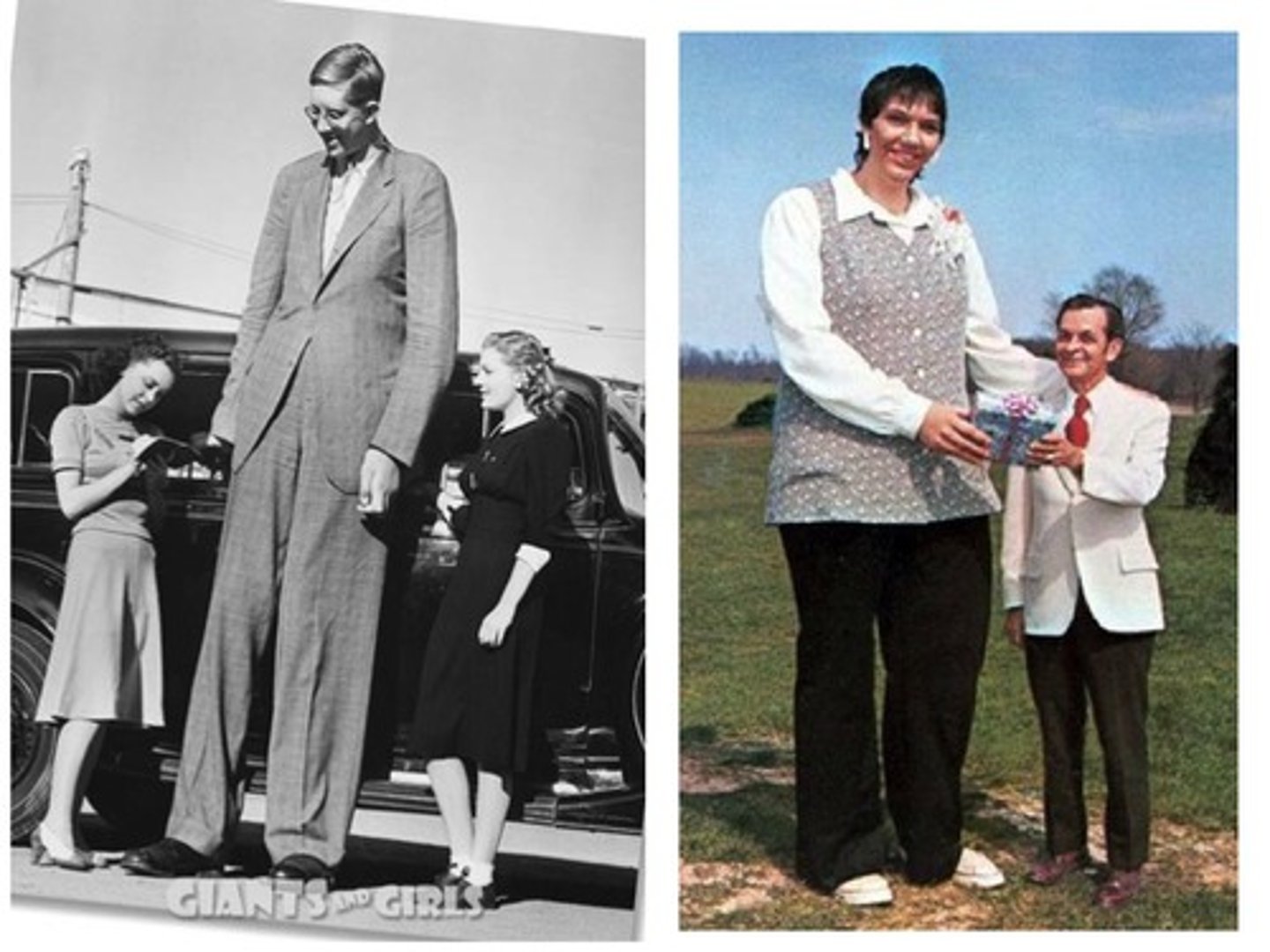
What are the functions and target tissue of Prolactin
stimulates milk production, TT is mammary glands
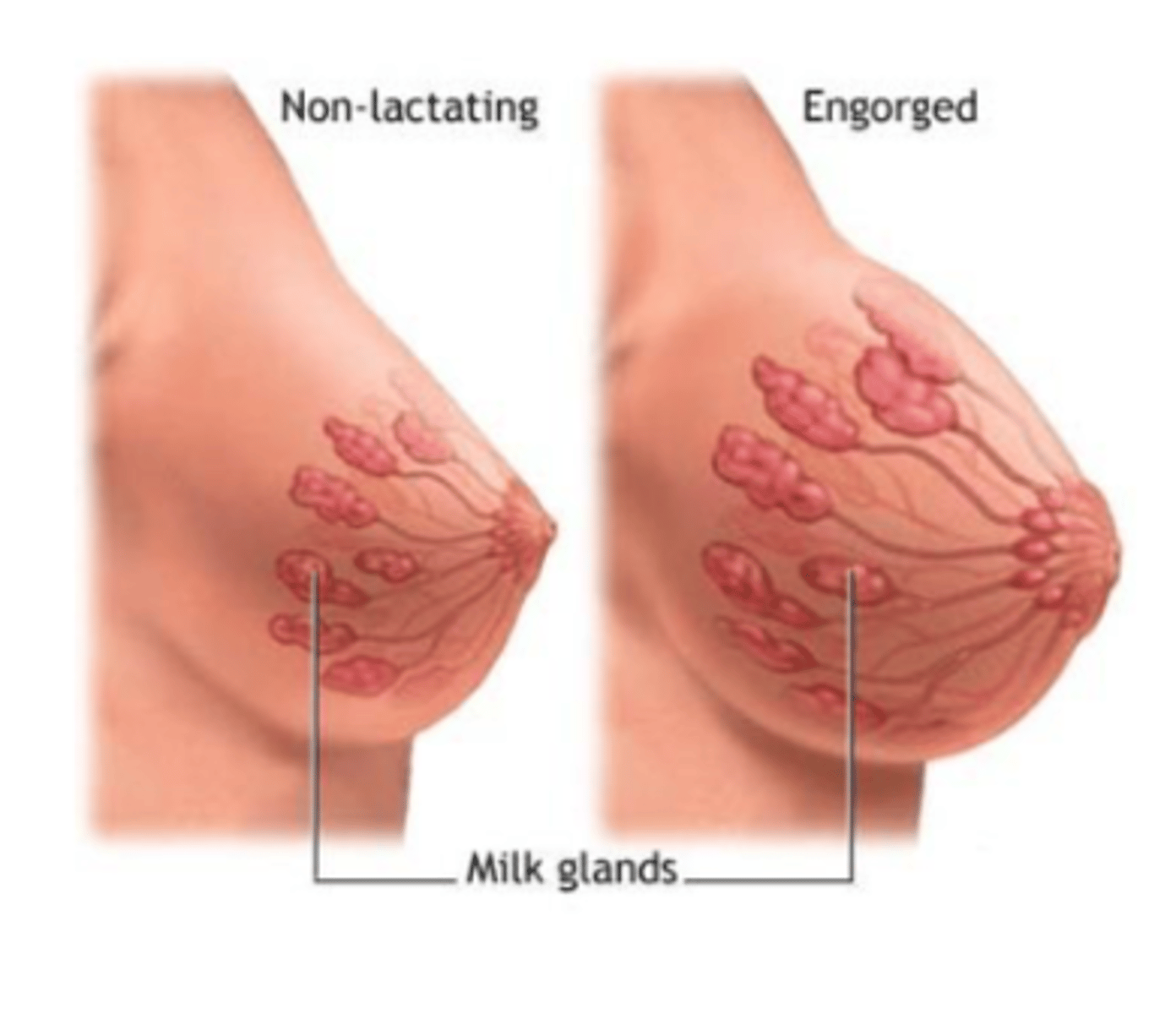
TERM
Posterior pituitary gland (hormones secreted)
DEFINITION
Oxytocin and Antidiuretic Hormone (ADH)
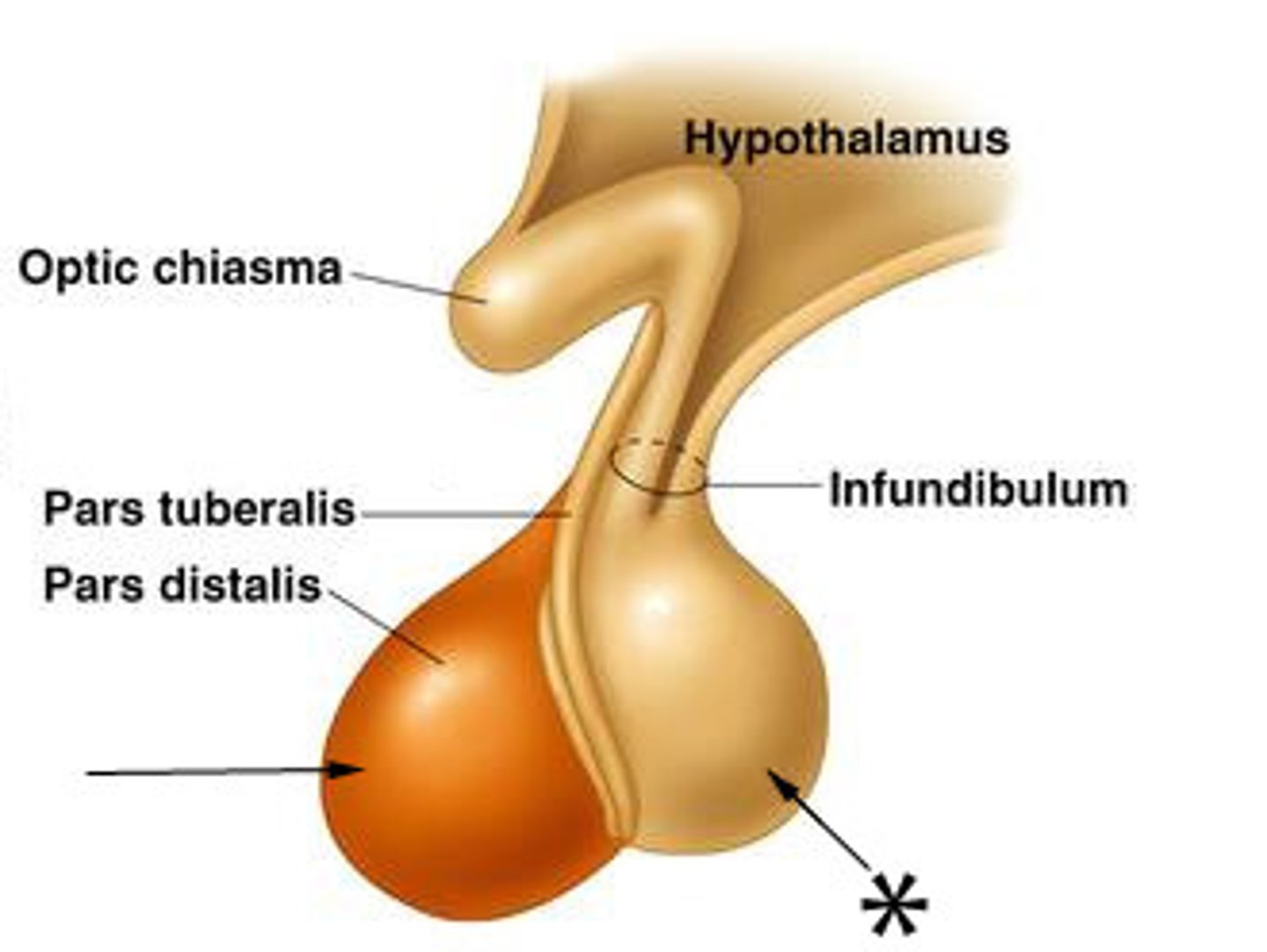
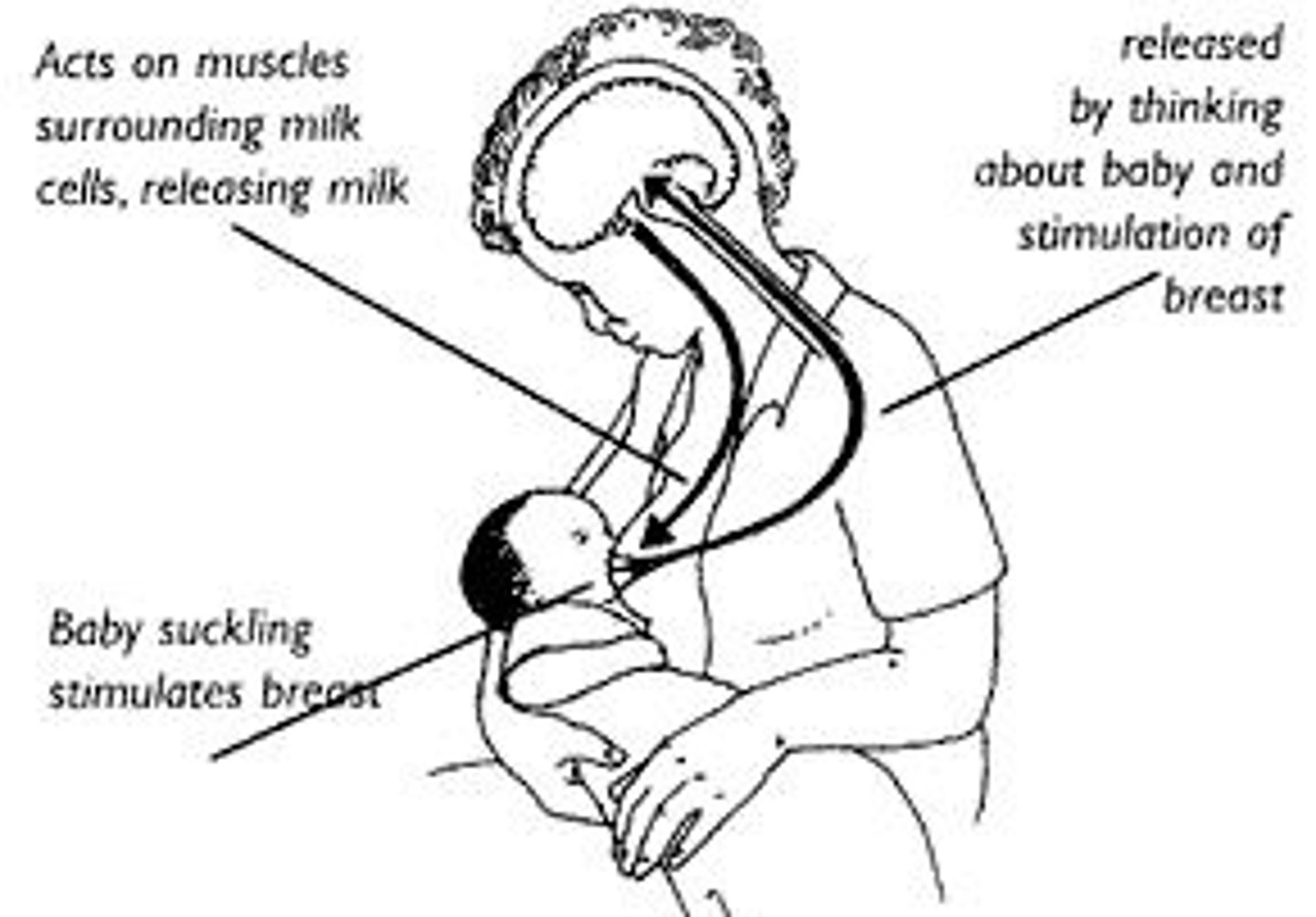
What are the functions and target tissue of Oxytocin
Involved in uterine contractions during childbirth and lactation (drug form is Pitocin), TT is uterus and mammary glands.
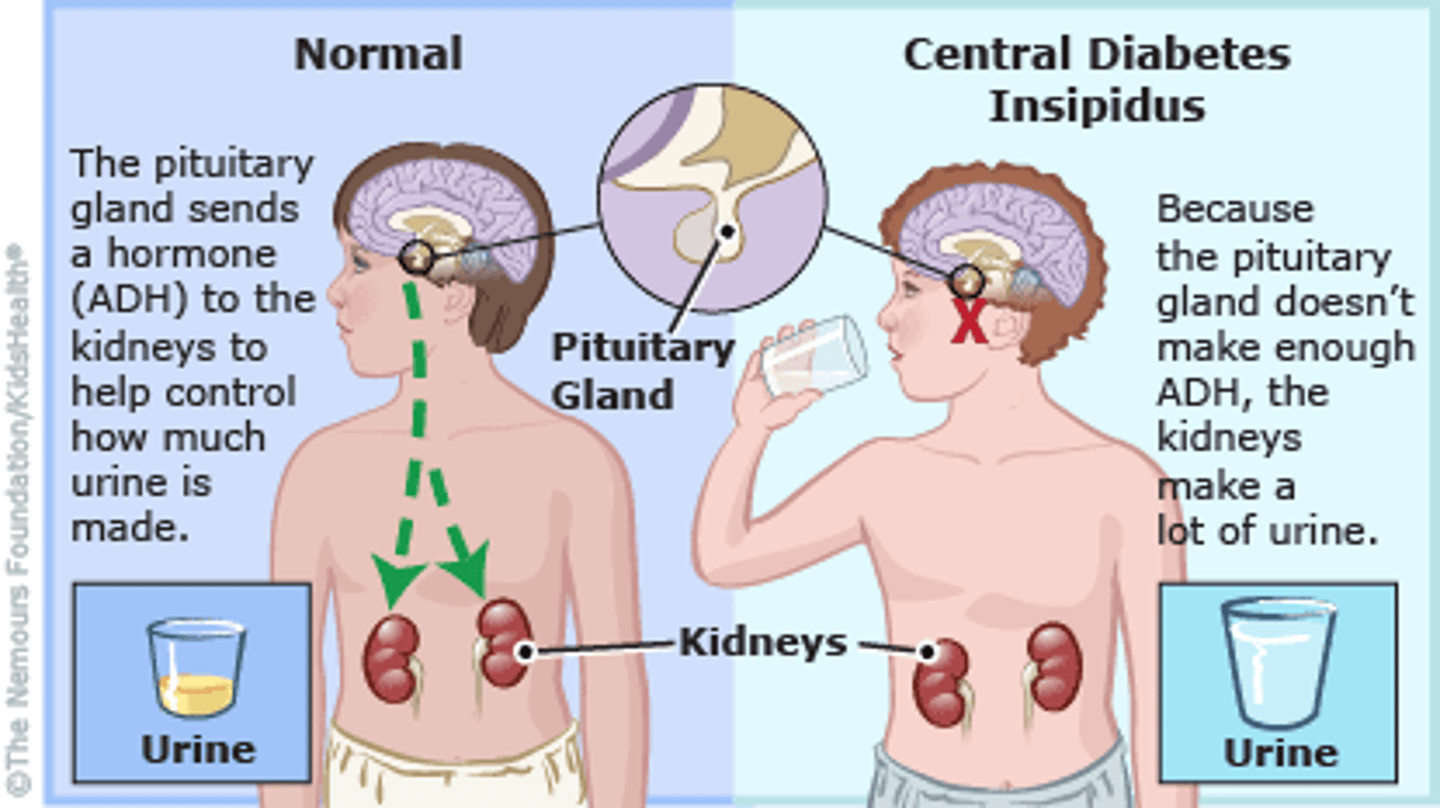
What are the functions and target tissue of Antidiuretic Hormone (ADH)
Promotes water conservation (reabsorption) by kidneys, TT is kidneys
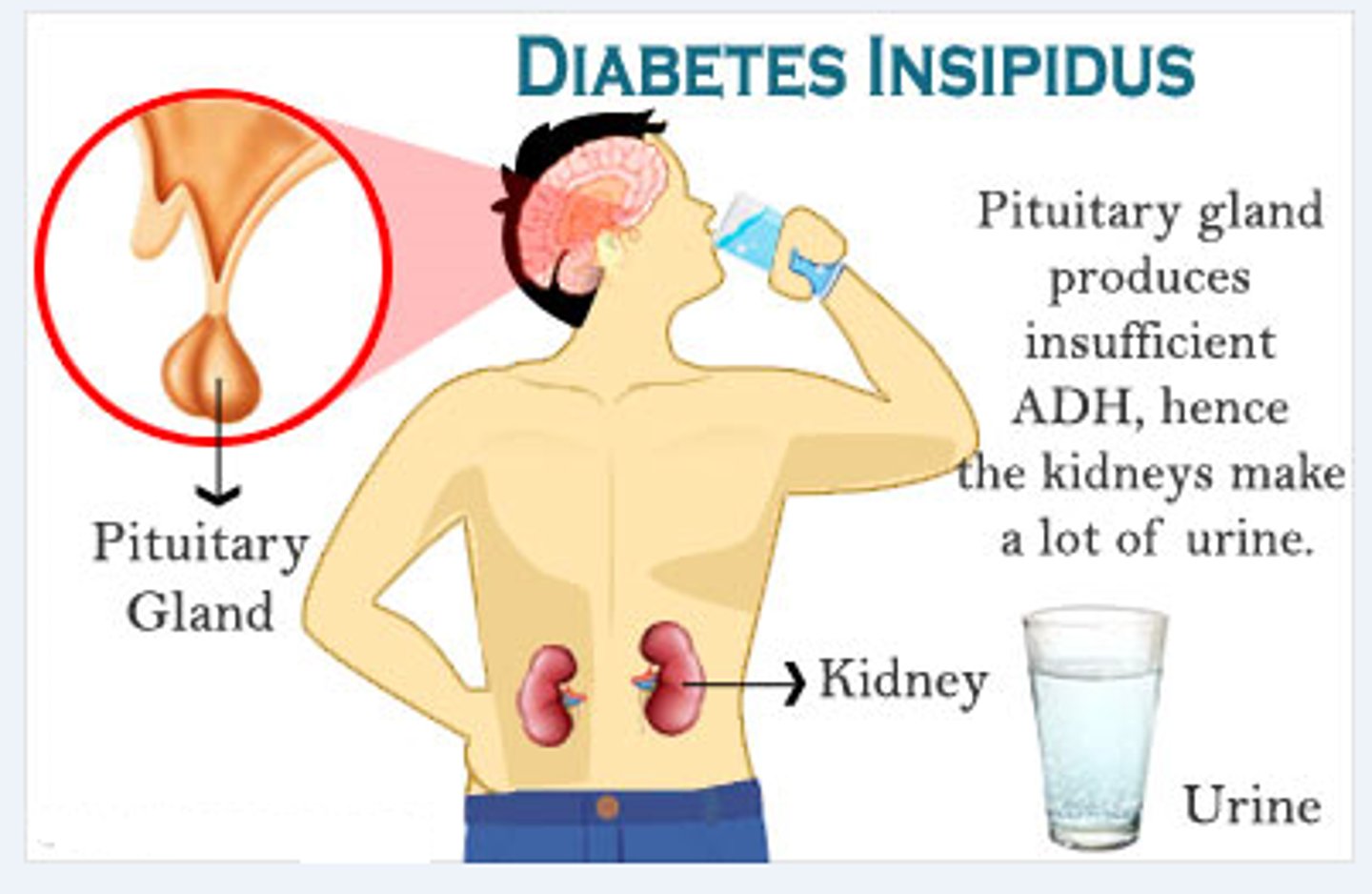
- Diabetes Insipidus = too little ADH, large volumes of diluted urine, dehydration, thirst, and fatigue
TERM
Pineal gland (function and hormones secreted)
DEFINITION
Melatonin
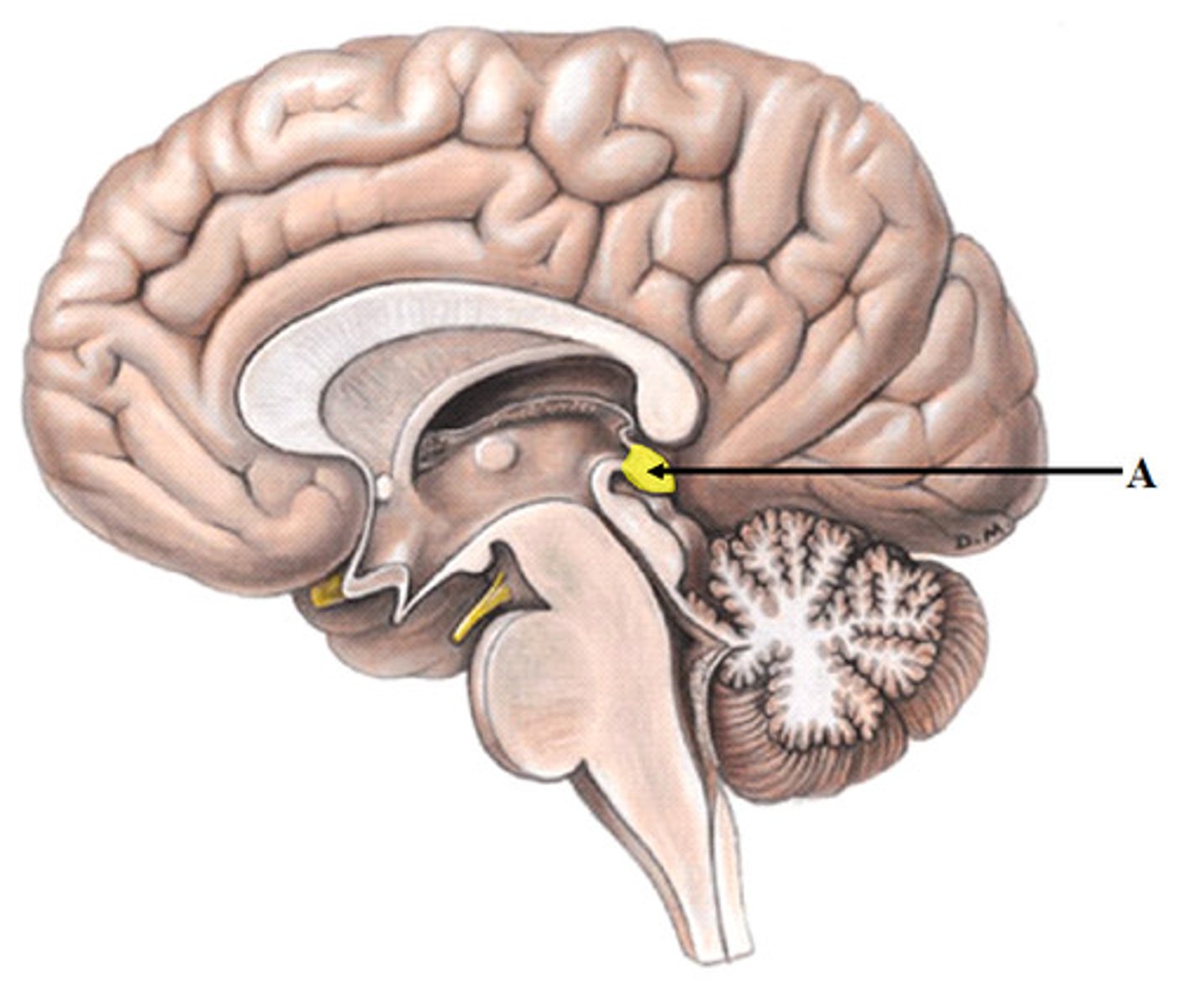
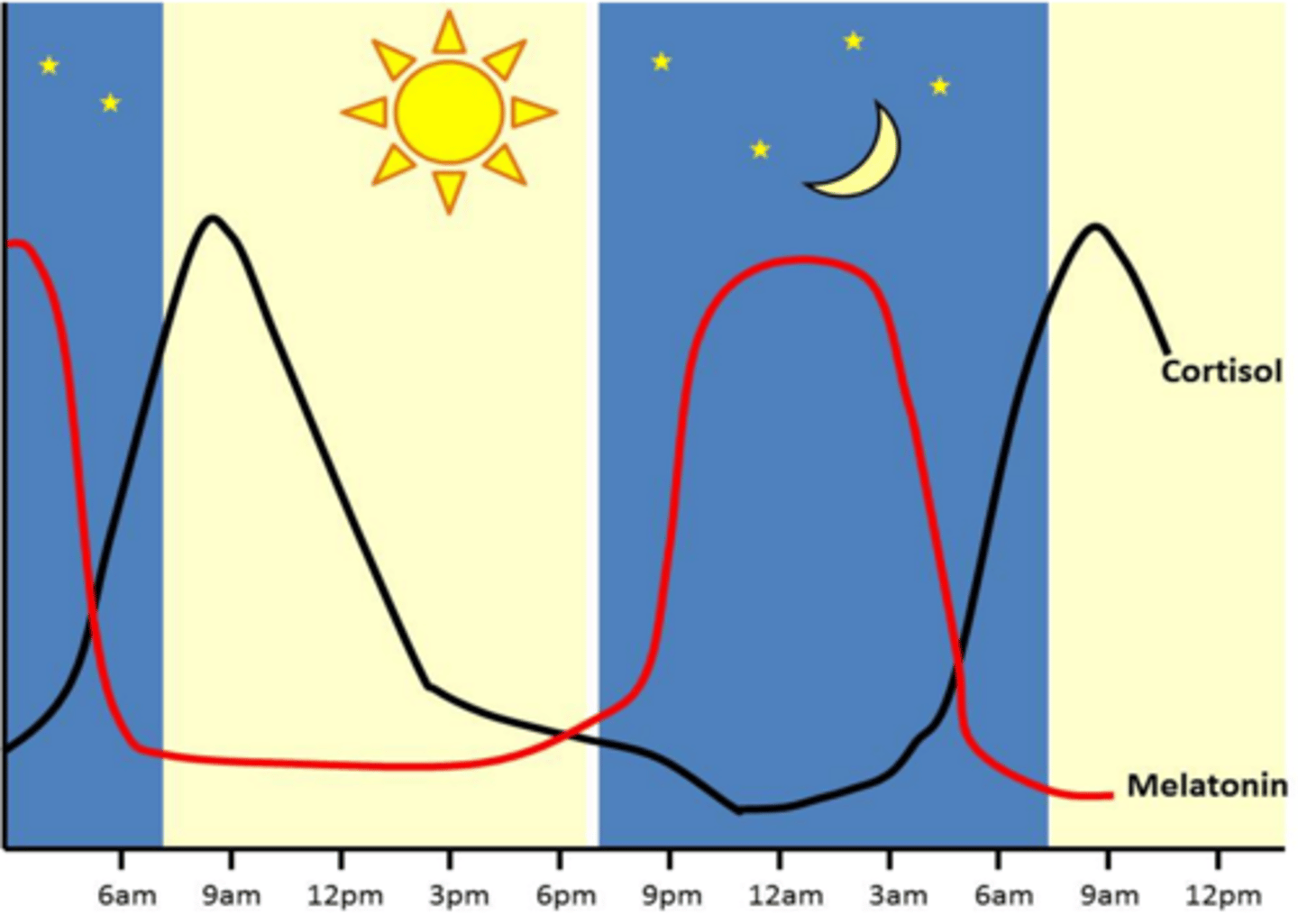
What are the functions and target tissue of Melatonin
Sleep-wake cycle (biological clock), onset of puberty, affected by light, TT is brain and body cells
TERM
Thyroid gland (hormones secreted)
DEFINITION
Thyroid hormones (T3/T4) and Calcitonin
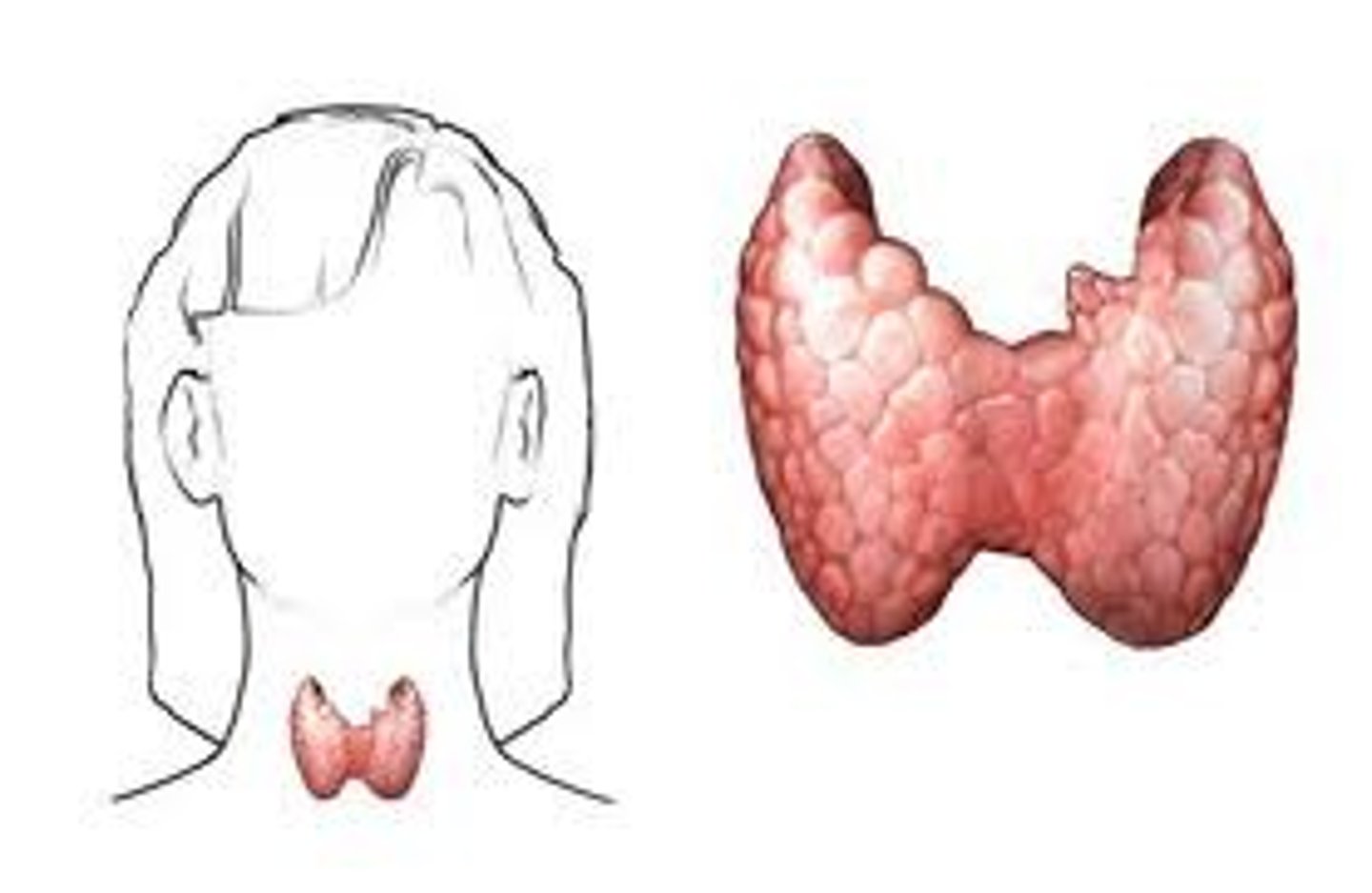
What are the functions and target tissue of T3/T4 (thyroid hormones)
Increases metabolic rates, TT is most body cells
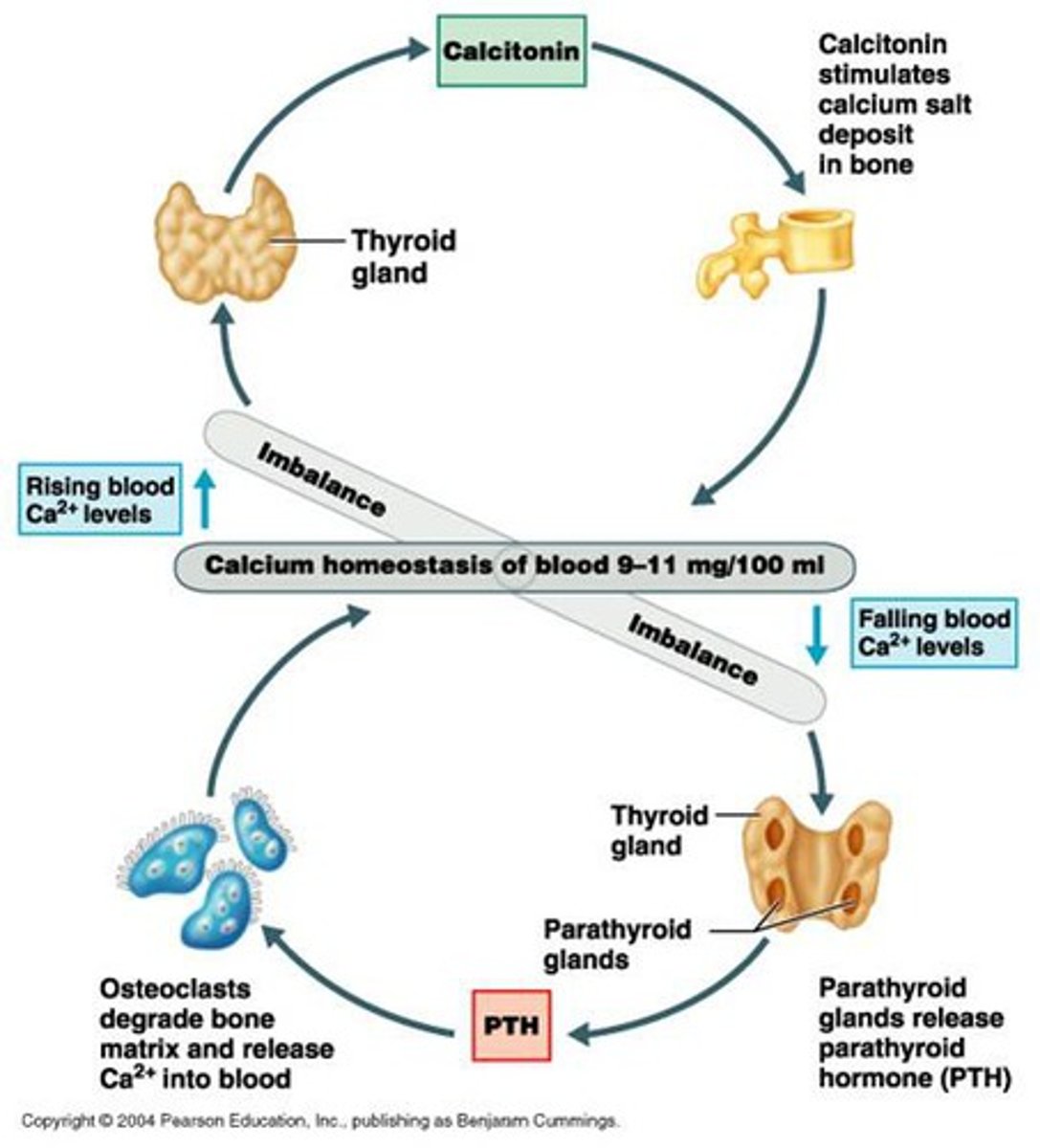
What are the functions and target tissue of Calcitonin
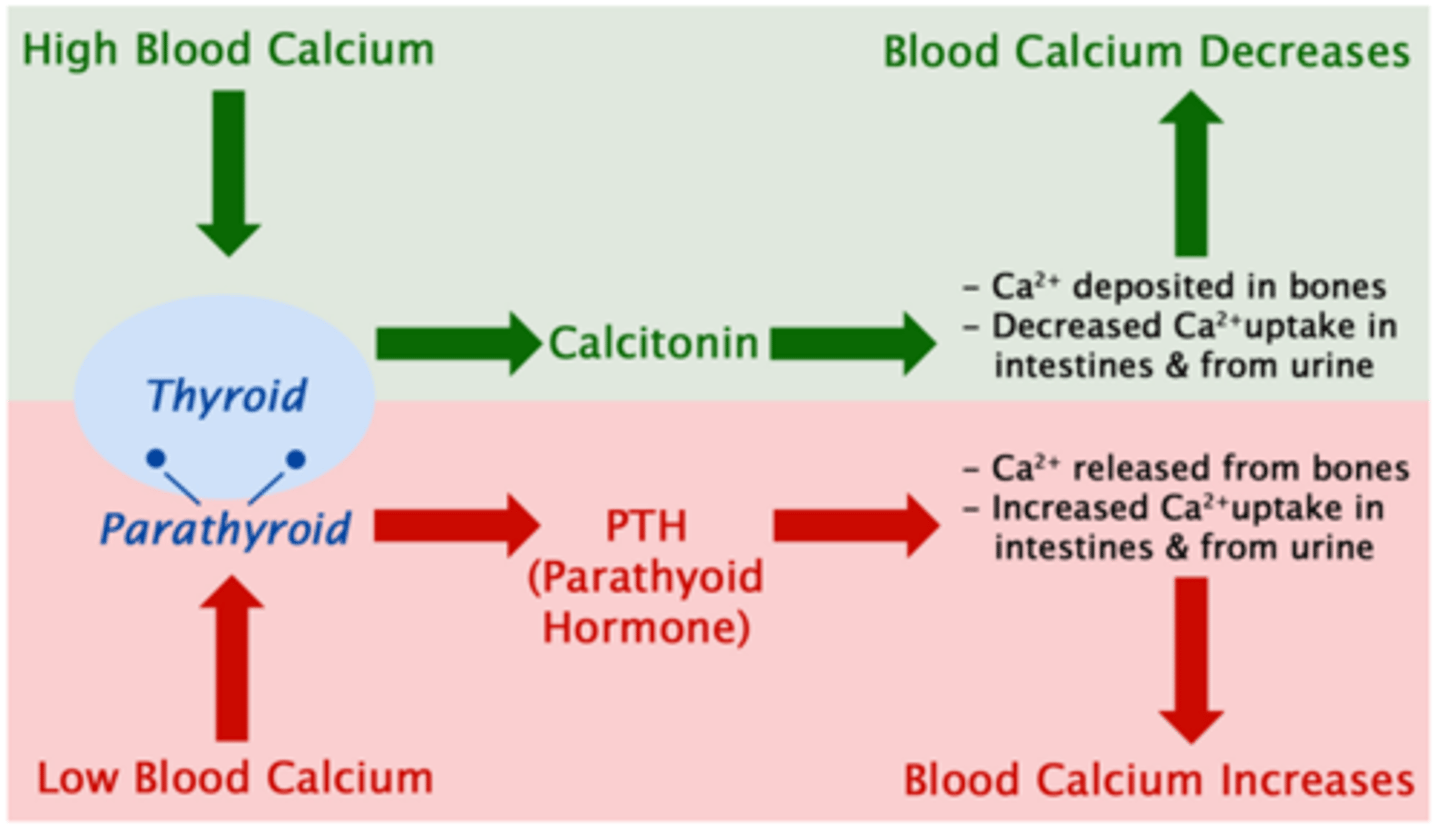
Increases rate of calcium deposition in bones by lowering blood calcium levels, stimulates bone deposition by osteoblasts, TT is bones and kidneys
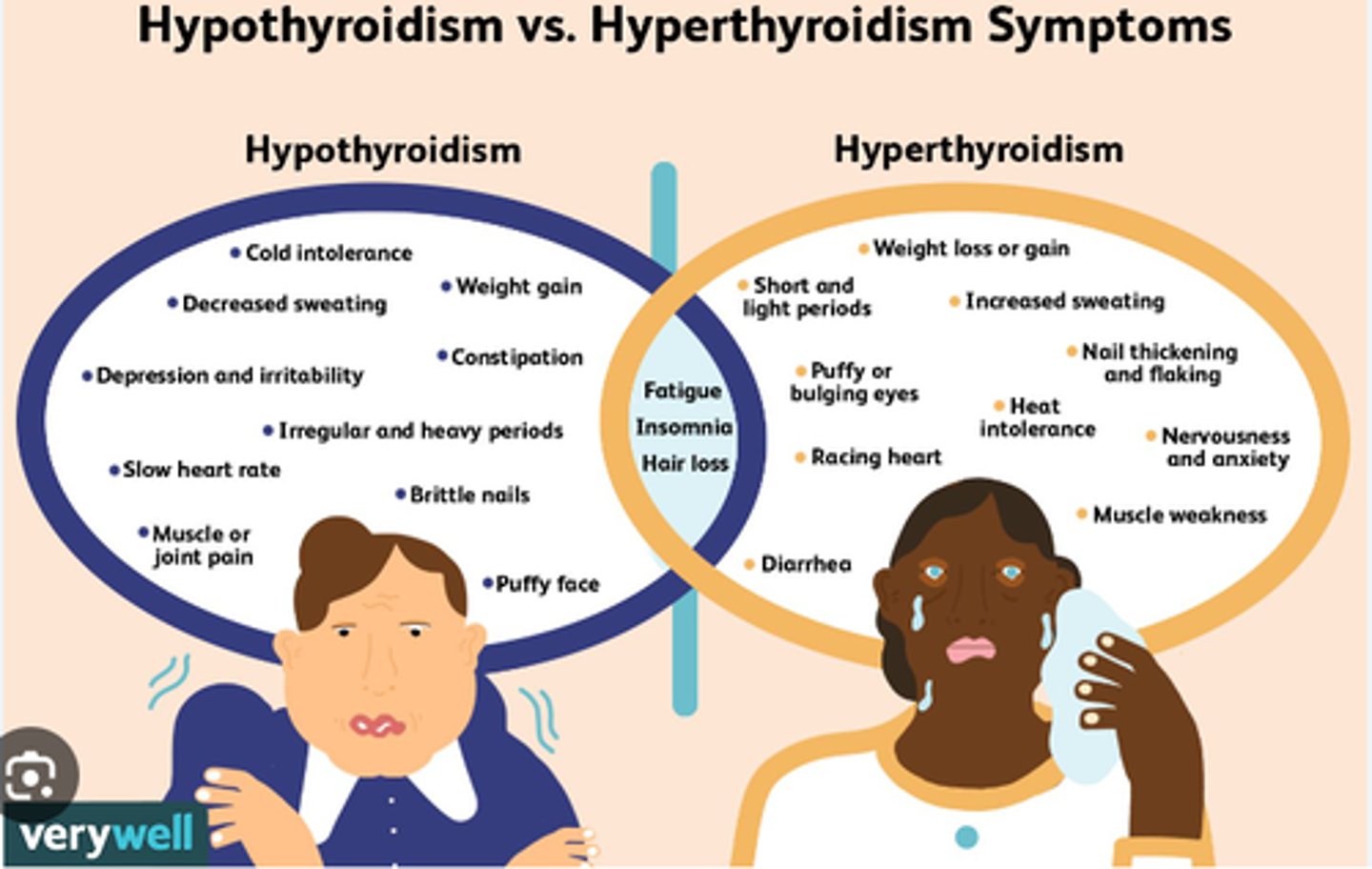
Hypothyroidism vs hyperthyroidism
Hypo: decreased metabolism, weight gain but reduced appetite, low temp and pulse, dry and cold skin
Hyper: increased metabolism, weight loss by increased appetite, high temp and pulse, warm and flushed skin
TERM
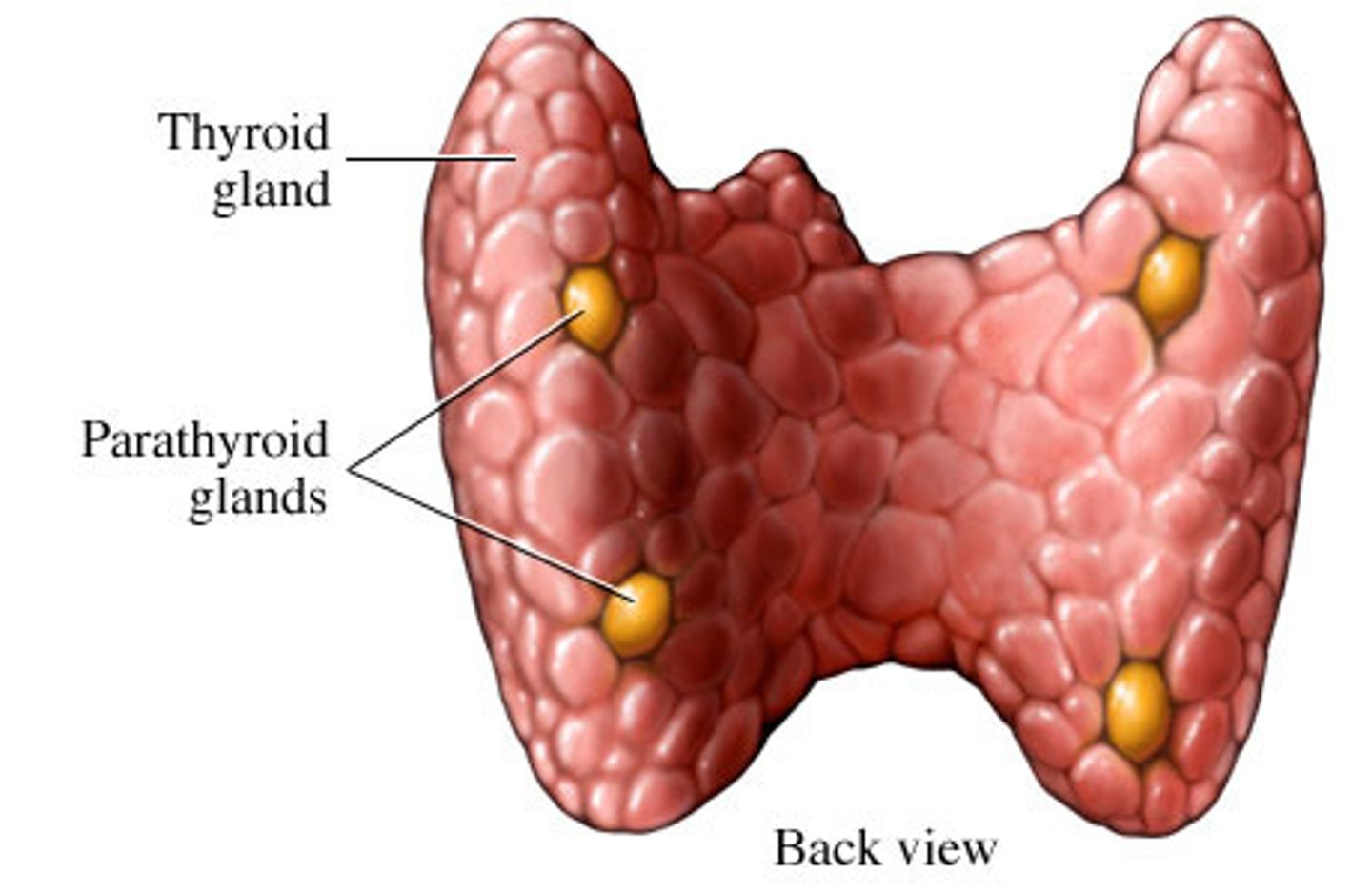
Parathyroid gland (hormones secreted)
DEFINITION
Parathyroid Hormone (PTH)
What are the functions and target tissue of Parathyroid Hormone
Releases calcium from bone and increases blood calcium levels (calcium regulation), TT is bones, kidneys, and intestines
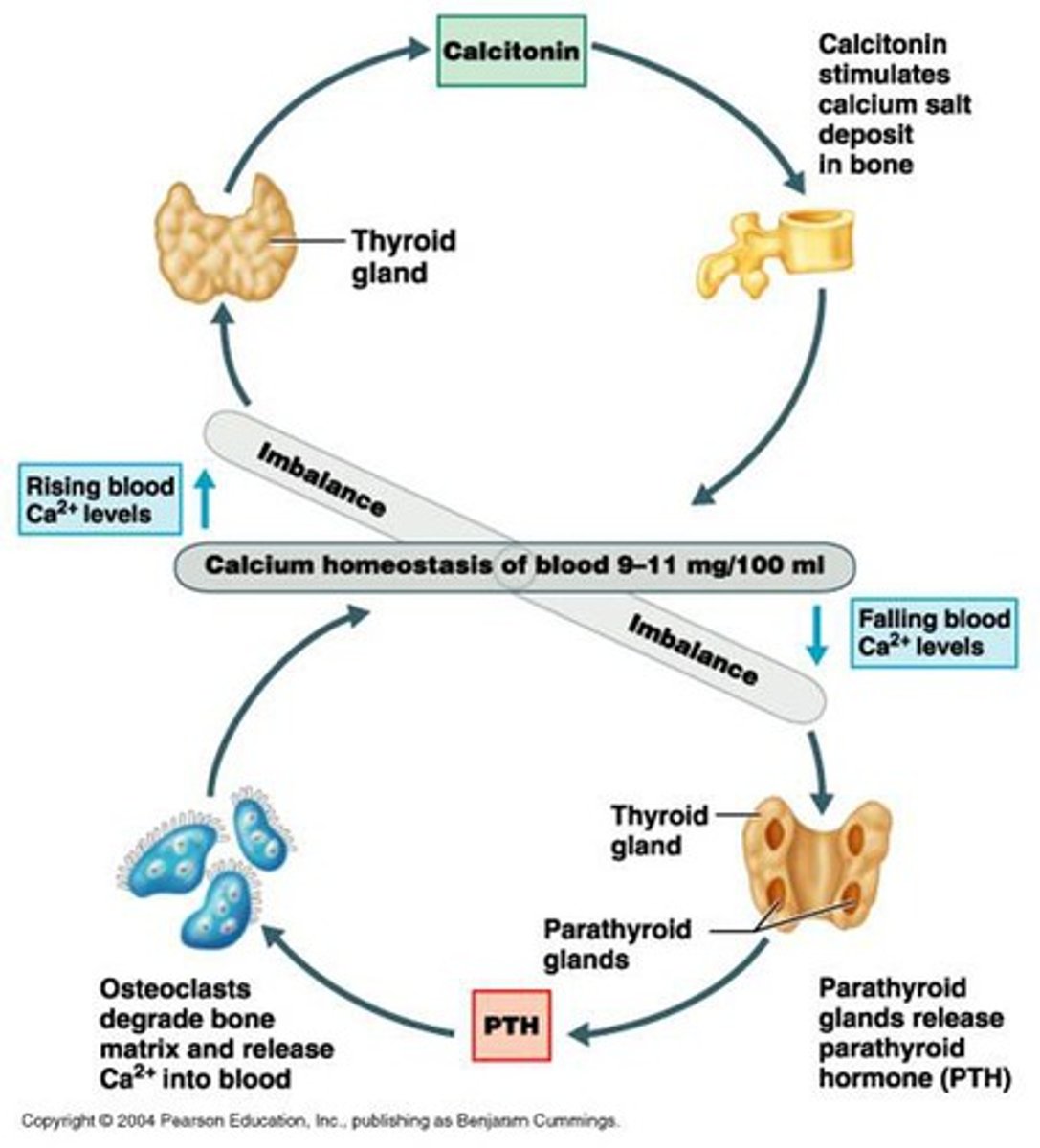
Calcitonin vs parathyroid hormone
Calcitonin from the thyroid lowers blood calcium while the parathyroid hormone from the parathyroid glands raises blood calcium
TERM
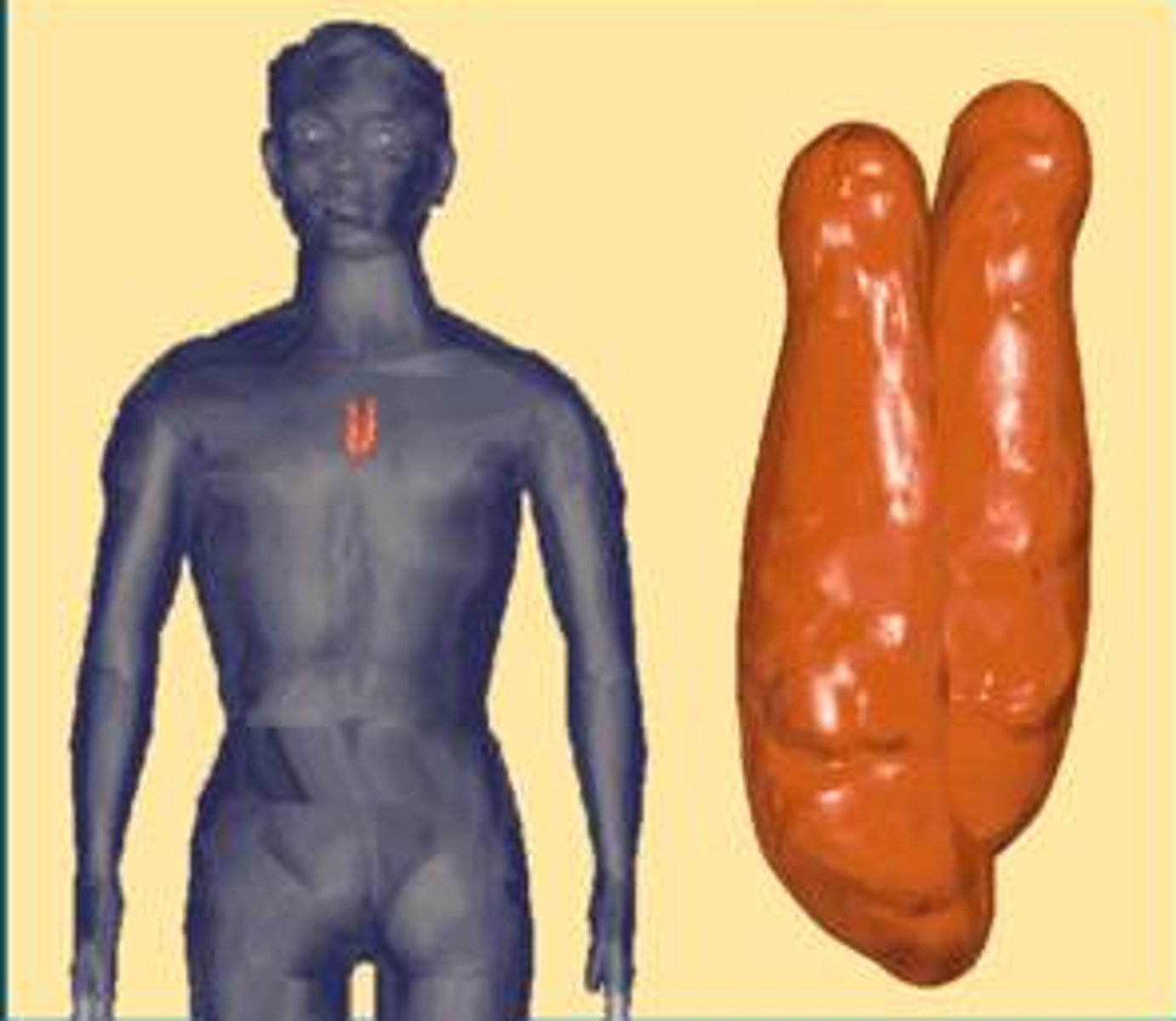
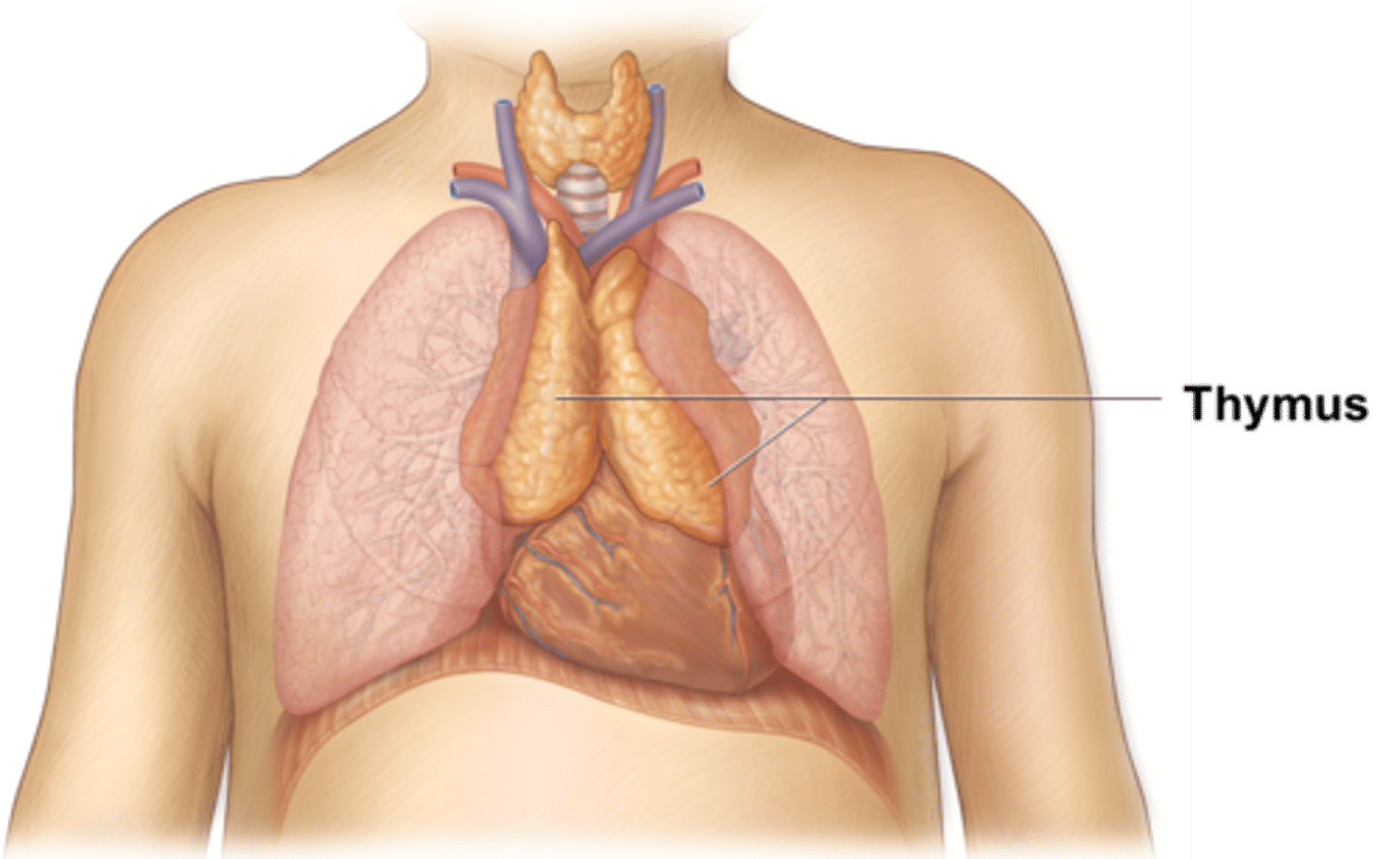
Thymus gland (function and hormones secreted)
DEFINITION
Shrinks with age and is involved in T cell maturation.
Thymosin
What are the functions and target tissue of Thymosin
Site of maturation of white blood cells (T cells), TT is T-lymphocytes (T cells) in the immune system
TERM
Pancreas (hormones secreted)
DEFINITION
Insulin and Glucagon
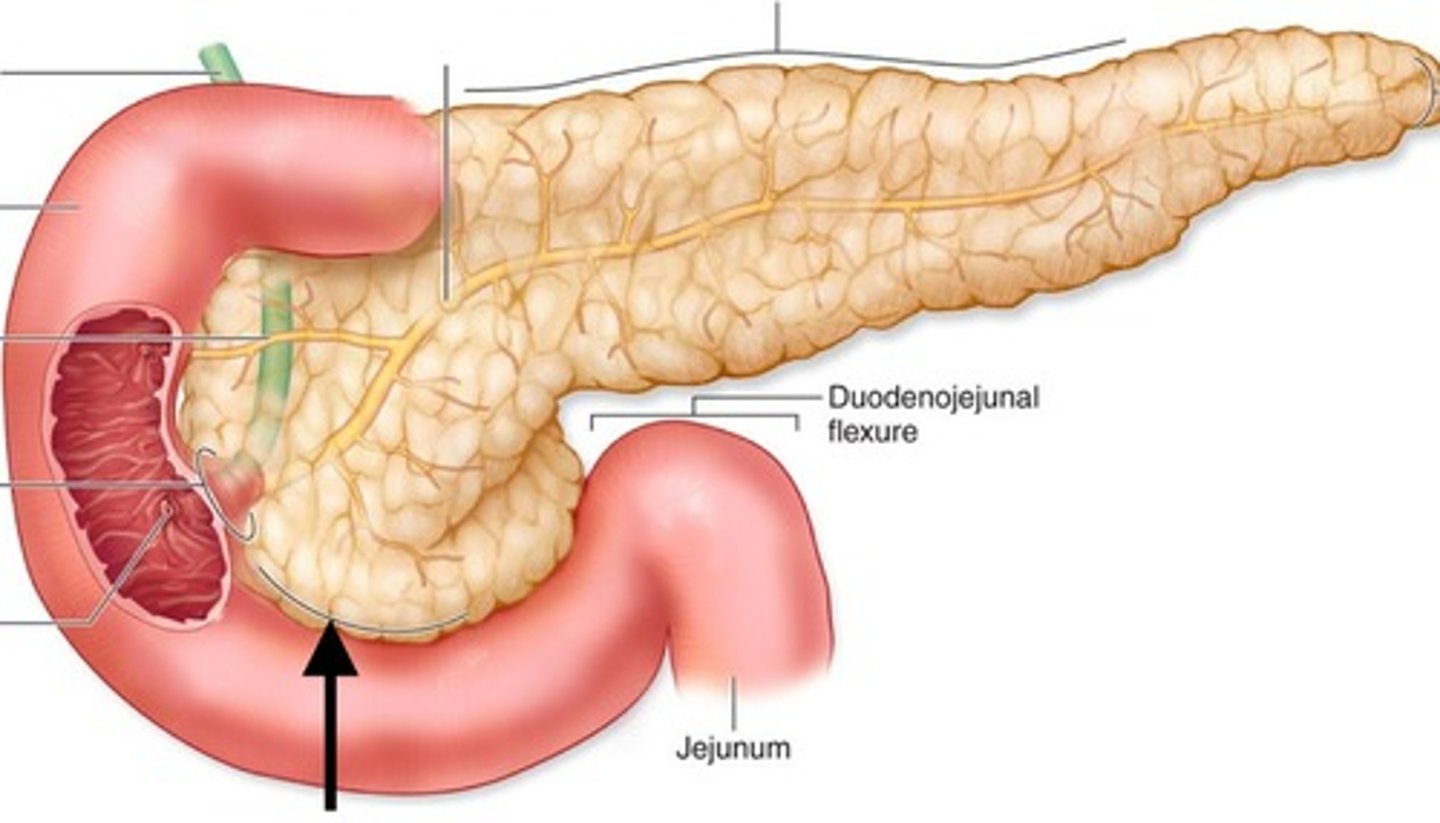
What are the functions and target tissue of Insulin
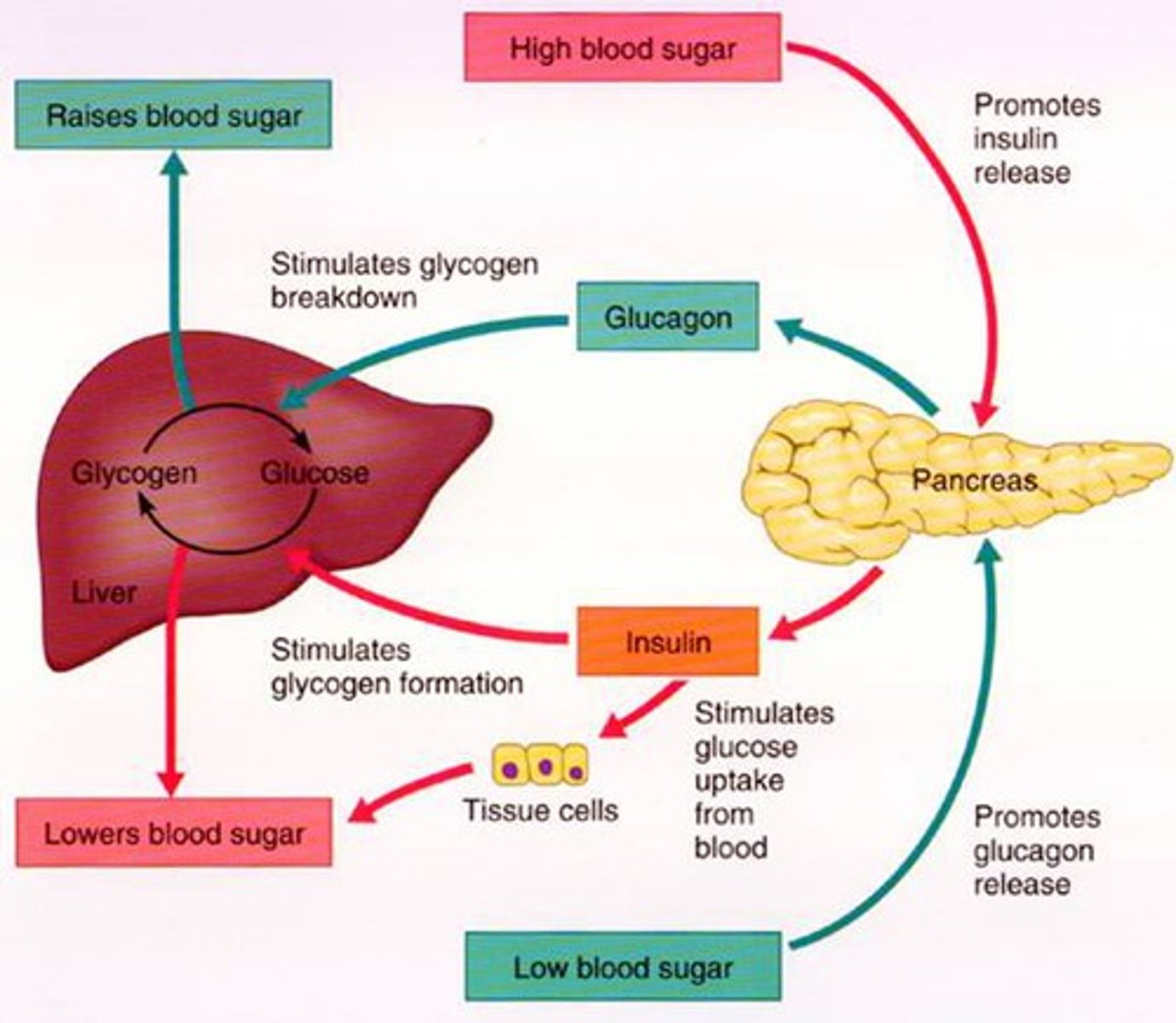
regulates blood glucose levels (lowers blood glucose by promoting uptake by liver, muscles, and fat when blood glucose levels are high, and the extra glucose is stored as glycogen), TT is liver, muscle, and fat cells
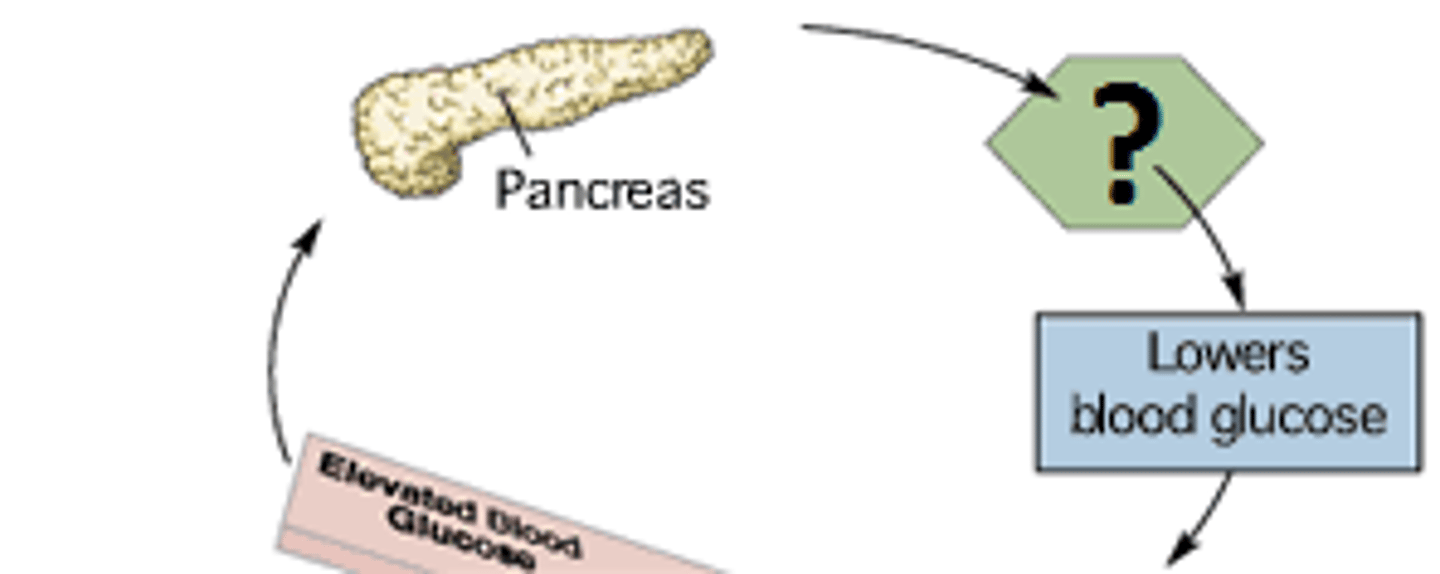
What are the functions and target tissue of Glucagon
Regulates blood glucose levels (raises blood glucose), secreted when blood glucose levels are low, and allows glycogen to be broken down into glucose, TT is liver and fat cells
TERM
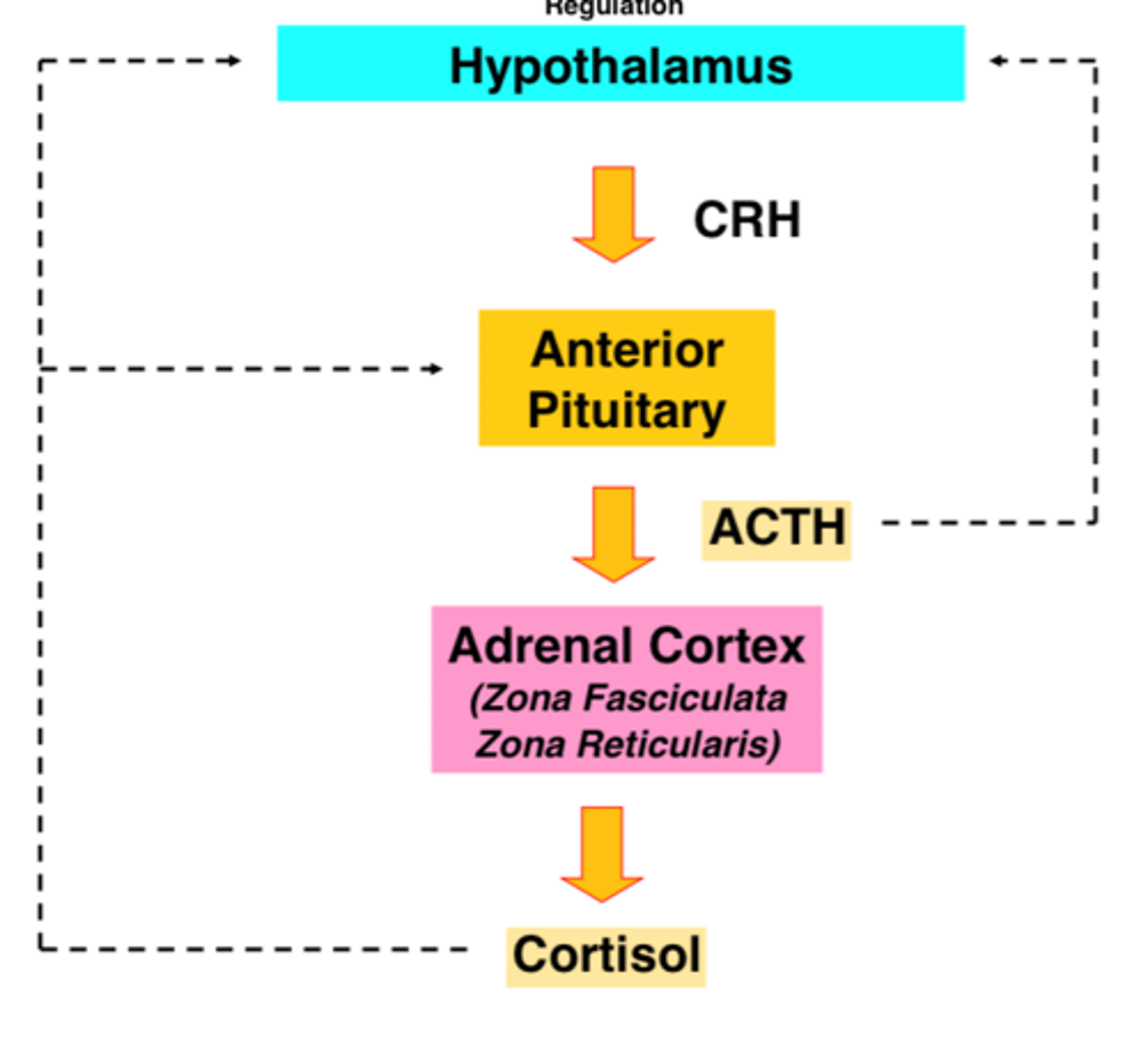
Adrenal cortex (adrenal gland) (hormones secreted)
DEFINITION
Corticosteroids (cortisol) and Androgens
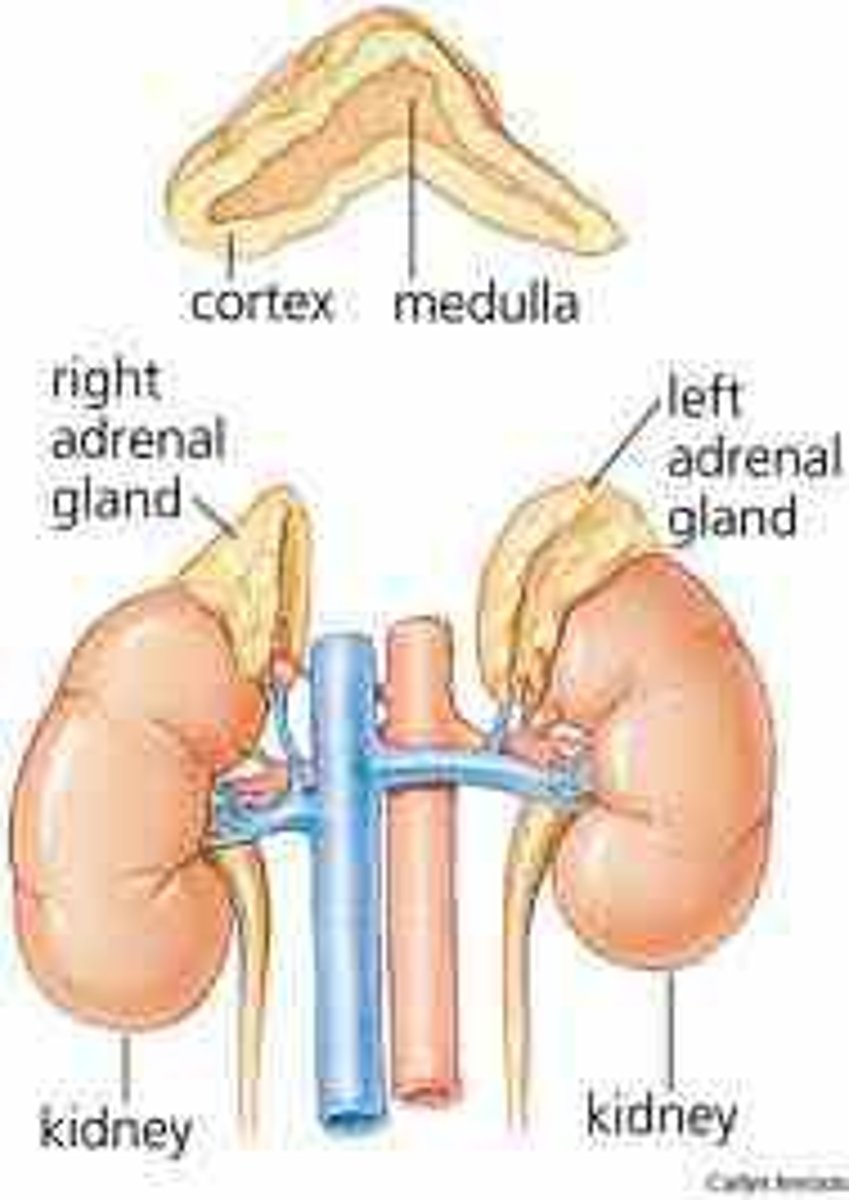
What are the functions and target tissue of Cortisol
Increases blood glucose, suppresses immune system, long-term stress = increased cortisol, TT is most body cells
TERM
Adrenal medulla (adrenal gland) (hormones secreted)
DEFINITION
Epinephrine/Norepinephrine
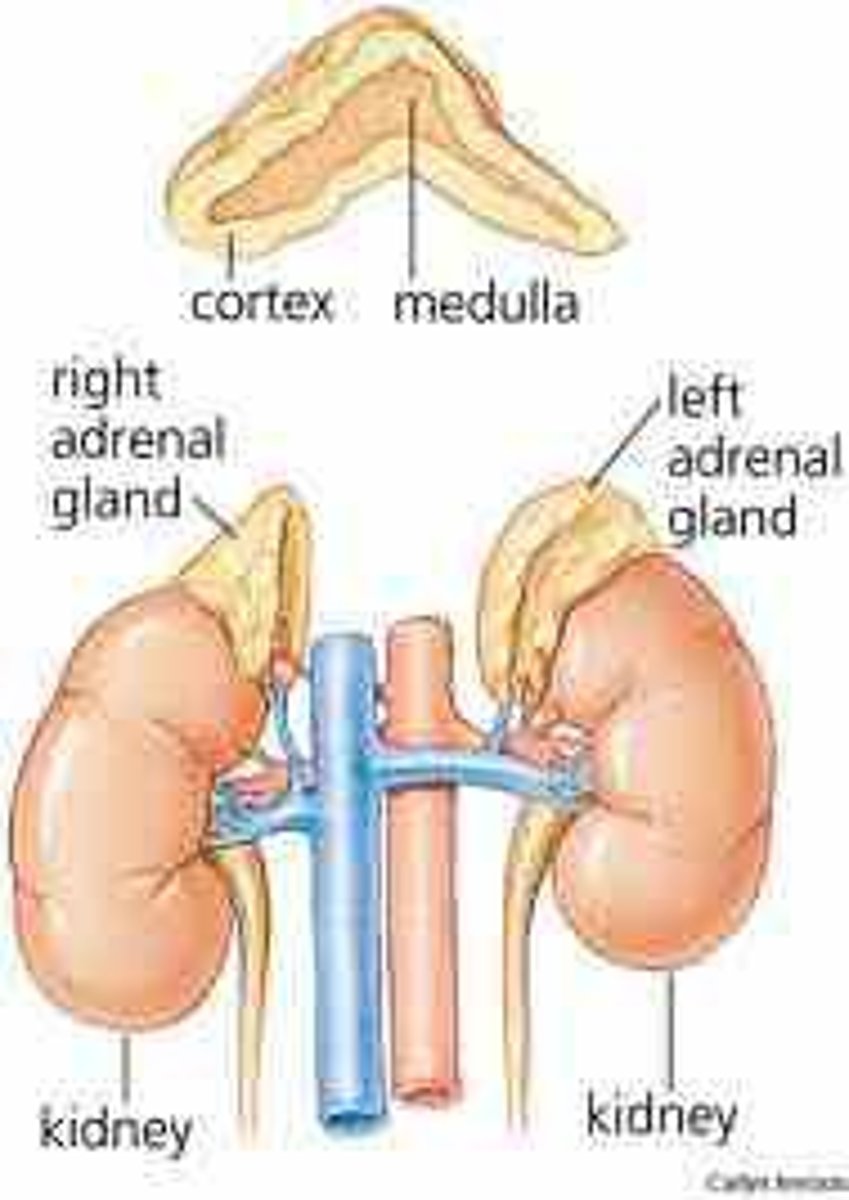
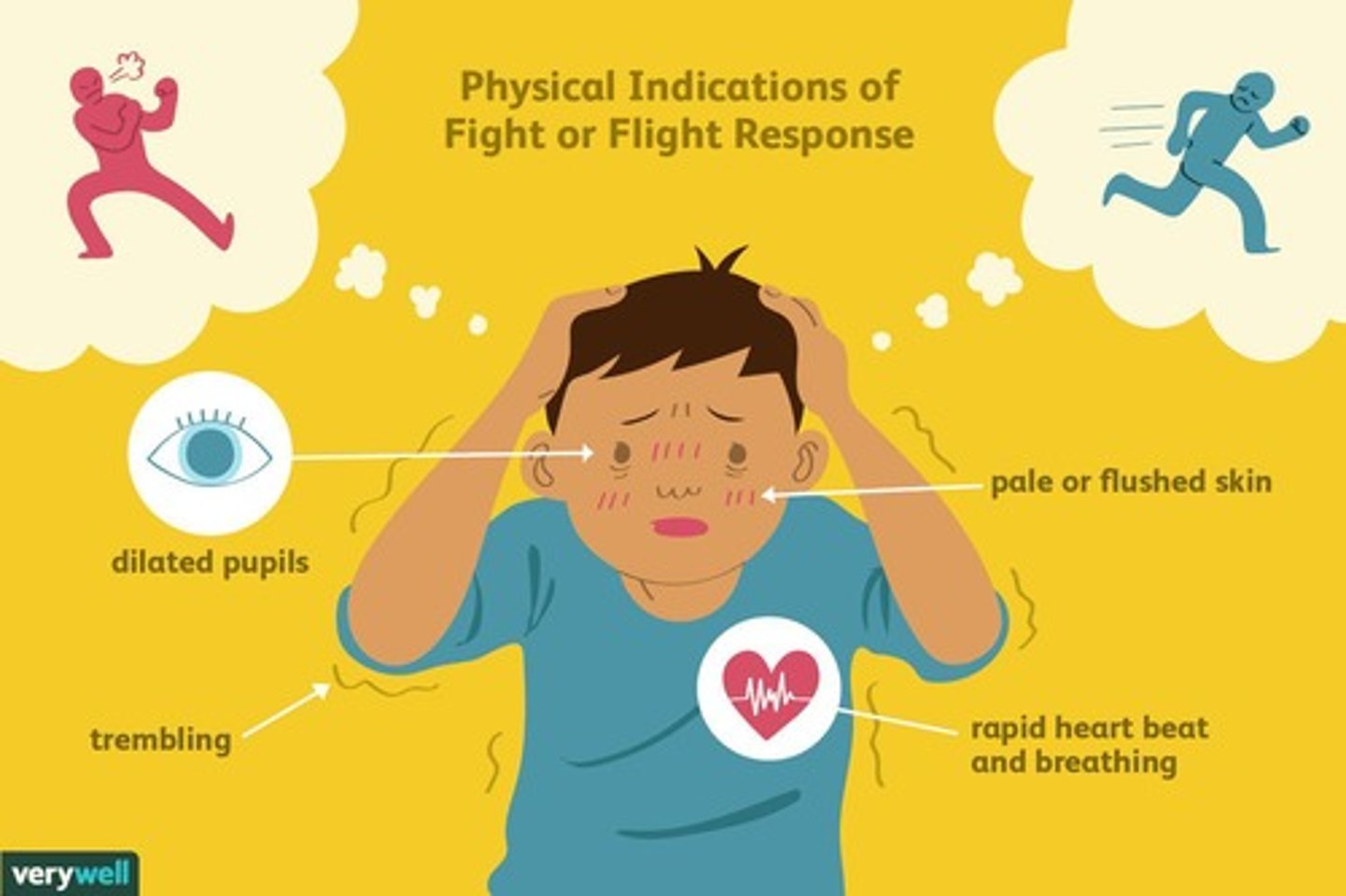
What are the functions and target tissue of Epinephrine
Released as part of fight or flight response (sympathetic nervous system), TT is Heart, lungs, blood vessels, liver, and muscles
TERM
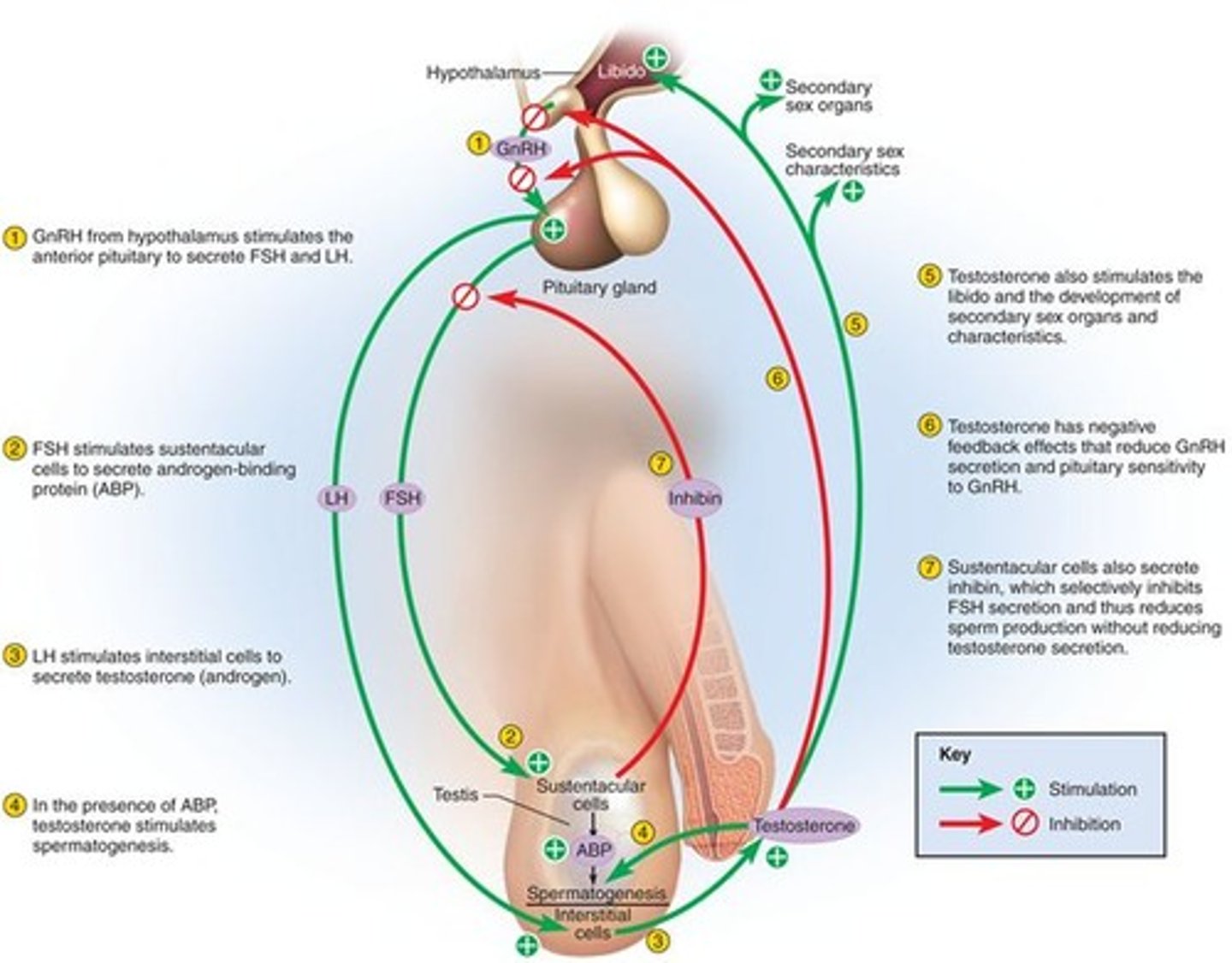
Testes (hormones secreted)
DEFINITION
Testosterone
What are the functions and target tissue of Testosterone
Aids in sperm production, maintenance of reproductive organ development, and puberty (secondary sexual characteristics), TT is male reproductive organs, muscles, bones, and many body cells
TERM
Ovaries (hormones secreted)
DEFINITION
Estrogen and Progesterone
What are the functions and target tissue of Progesterone
Uterine and mammary gland development, menstrual cycle and pregnancy, and puberty (secondary sexual characteristics), TT is uterus, breasts, and other reproductive tissues
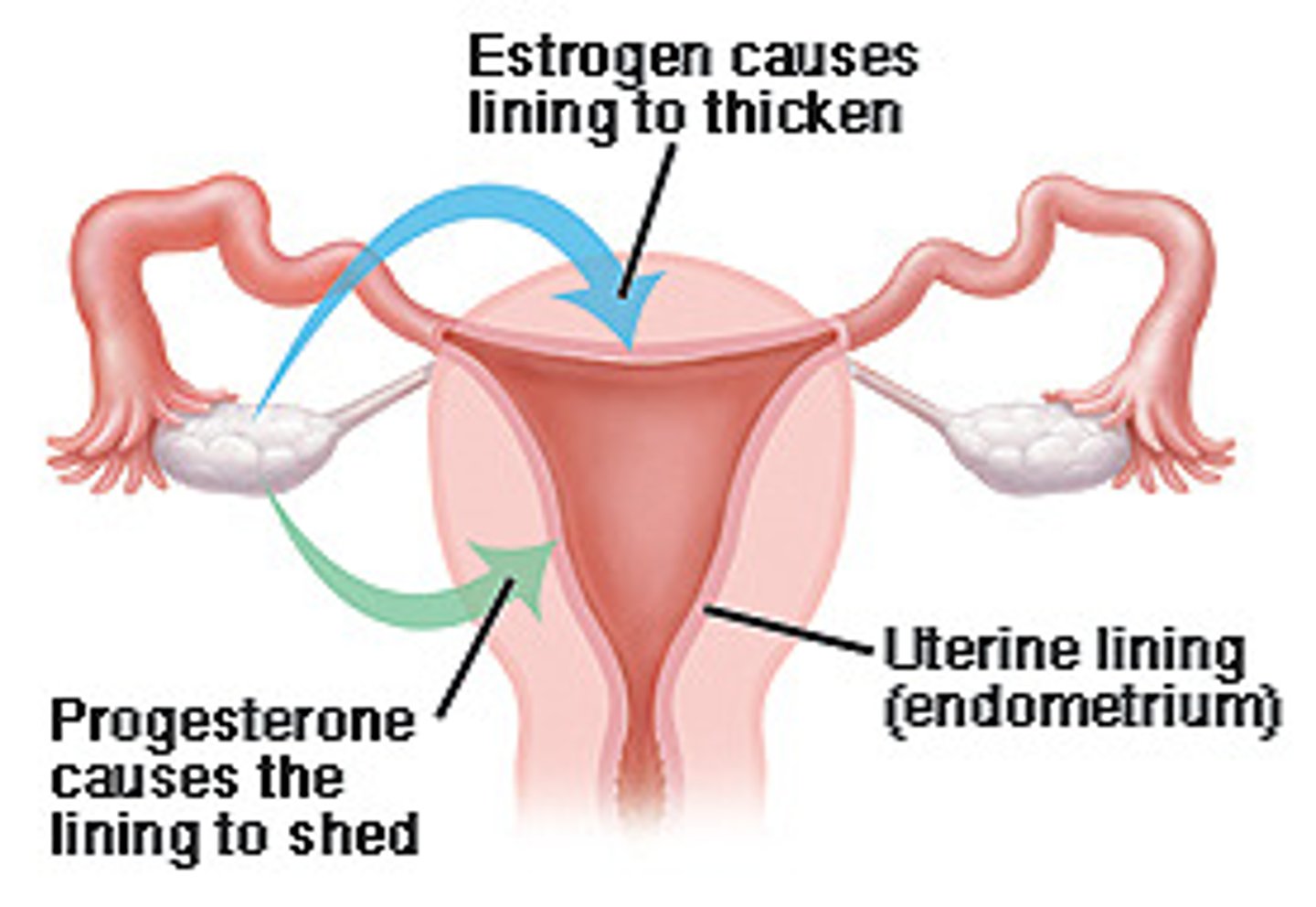
What are the functions and target tissue of Estrogen
Uterine and mammary gland development, menstrual cycle, and pregnancy, puberty (secondary sexual characteristics), TT is uterus, breasts, ovaries, and many body cells
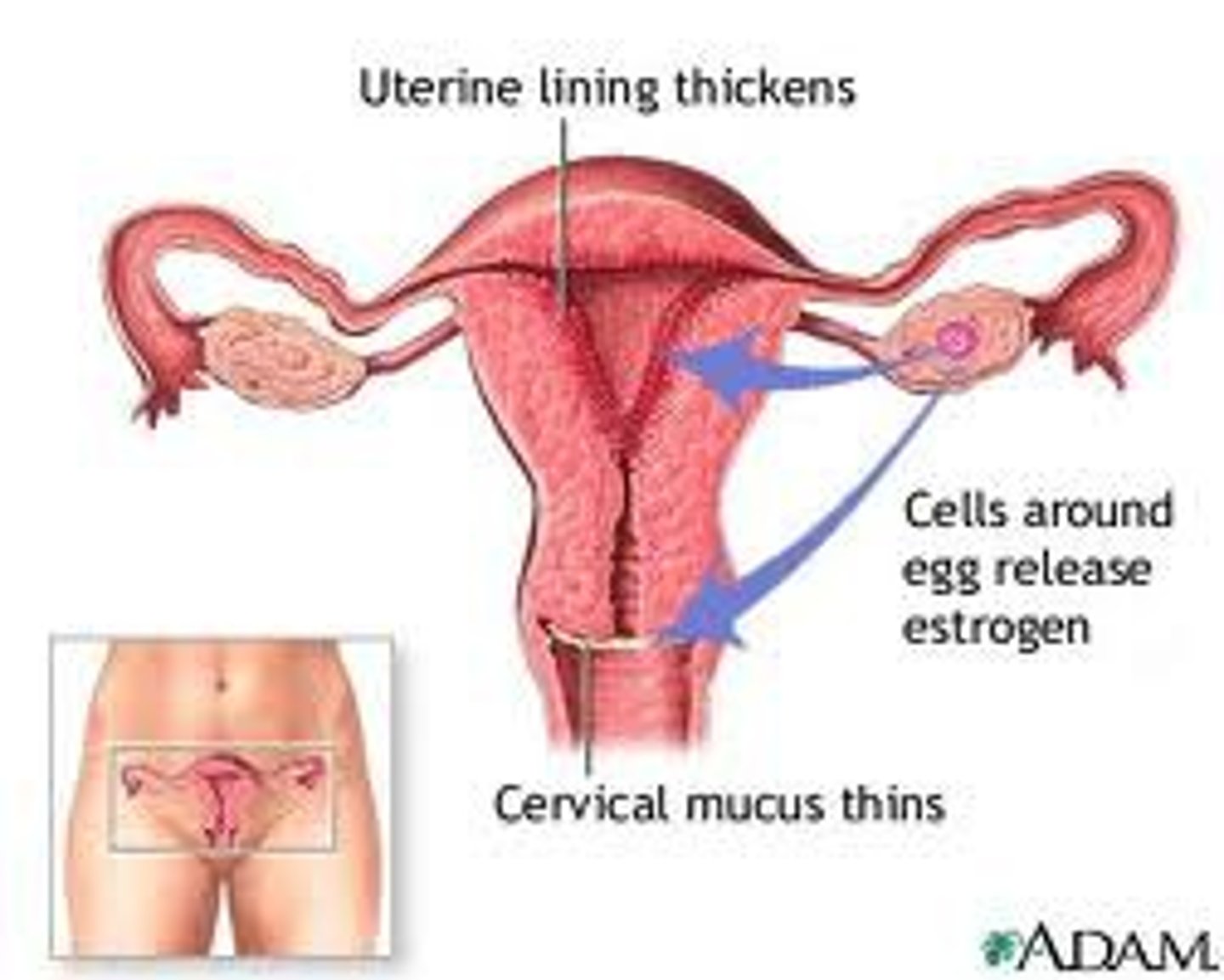
symptoms and causes of dwarfism
Dwarfism is caused mainly by a genetic mutation (most commonly achondroplasia) or by growth hormone deficiency.
Symptoms include short stature, shorter arms and legs, normal-sized torso or proportionally small body, large head with prominent forehead, and sometimes bowed legs or spinal curvature.
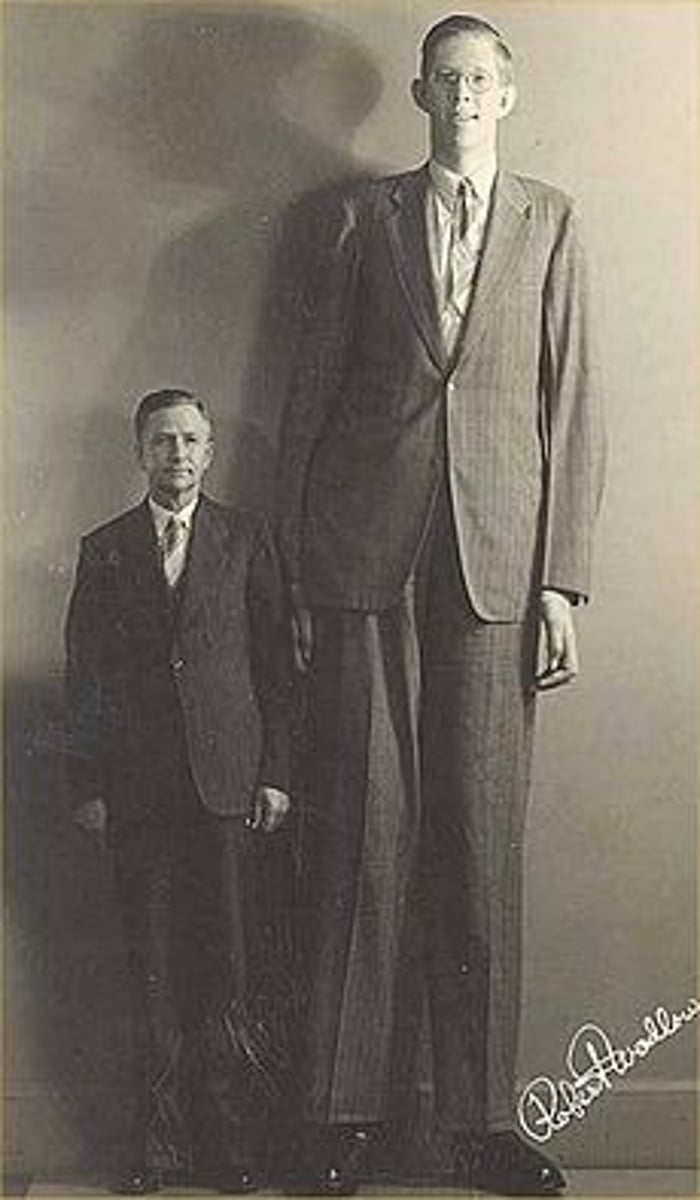
symptoms and causes of gigantism
Gigantism is caused by excess growth hormone in childhood, usually from a pituitary gland tumor.
Symptoms include extremely rapid growth in height, enlarged hands and feet, thick facial features, joint pain, headaches, vision problems, and delayed puberty.
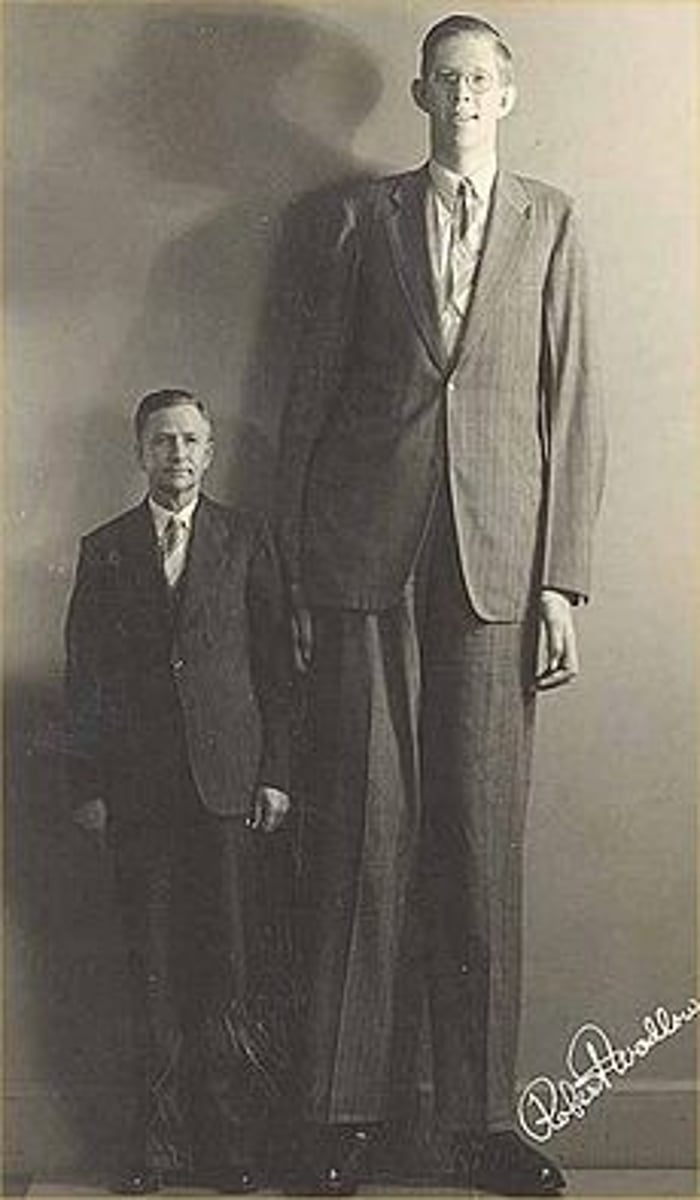
symptoms and causes of diabetes insipidus
Diabetes insipidus is caused by low ADH levels or the kidneys not responding to ADH, often due to pituitary damage, brain injury, surgery, or kidney problems.
Symptoms include extreme thirst, excessive urination, dehydration, diluted urine, and needing to drink water constantly (especially at night).
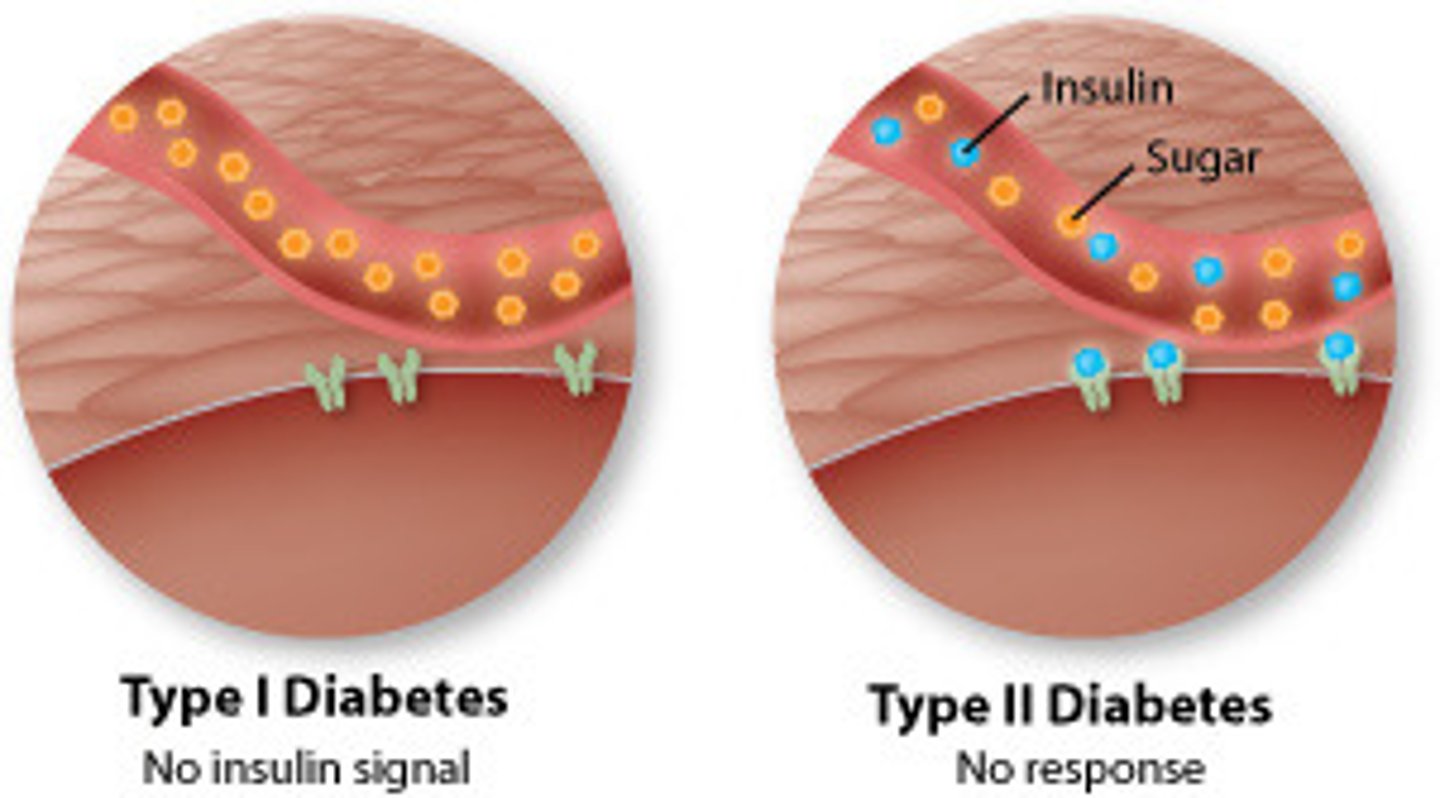
Symptoms and Causes of Diabetes Mellitus
Diabetes mellitus is caused by problems with insulin—either the body doesn't make enough (Type 1) or cells don't respond to it properly (Type 2).
Symptoms include frequent urination, excessive thirst, increased hunger, fatigue, blurred vision, slow wound healing, and unexplained weight changes.