Class 18: Organizational Culture
 Call Kai
 Learn
Learn Practice Test
 Spaced Repetition
 Match
Match Flashcards
 Knowt Play
1/14

There's no tags or description
Looks like no tags are added yet.
Name | Mastery | Learn | Test | Matching | Spaced | Call with Kai |
|---|
No analytics yet
Send a link to your students to track their progress
15 Terms
Culture
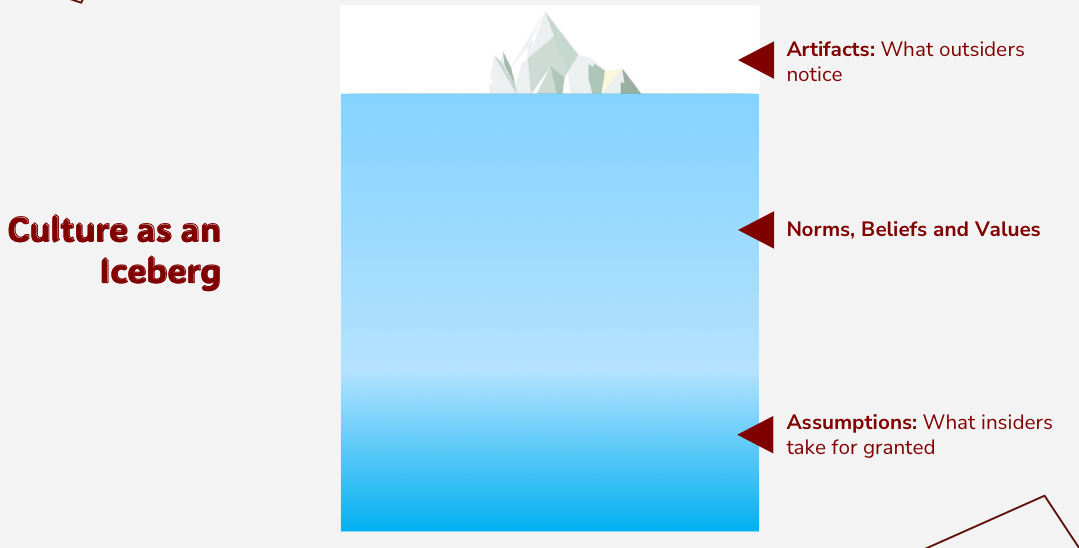
The way we do things around here
a way of life of a group of people
Cognitive order
A set of beliefs and assumptions about how the world works
Normative order
A set of beliefs and assumptions about what the correct behavior is in a given circumstance
Beliefs
Are justifications that we would articulate when asked to explain something
Assumptions
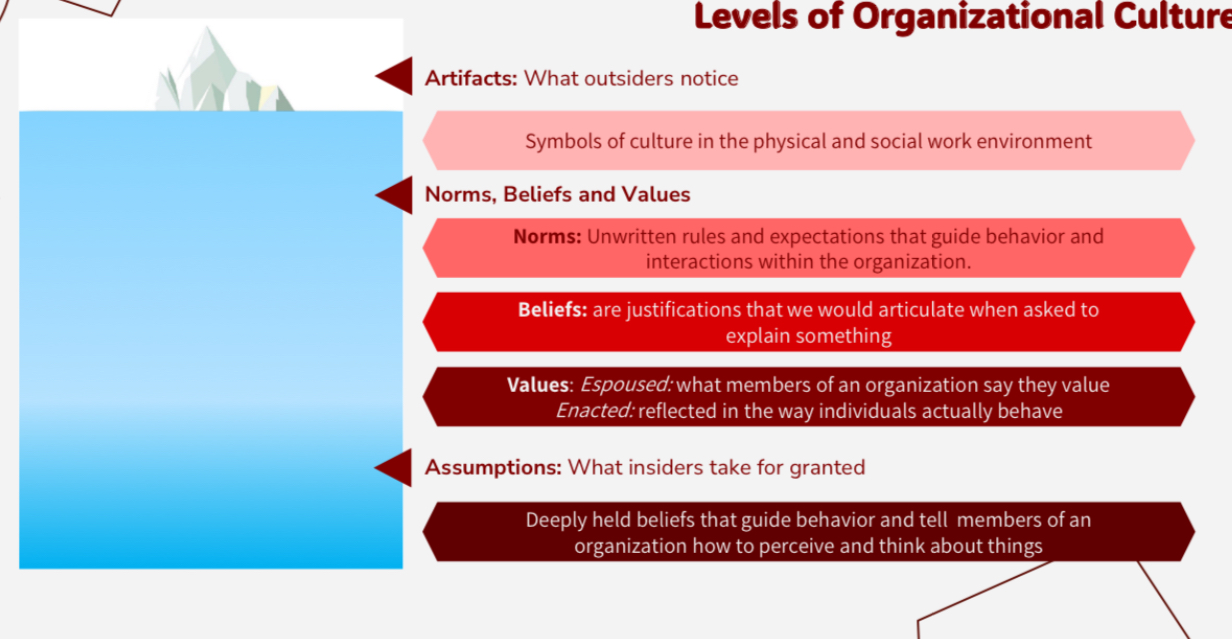
What insiders take for granted. Are things that we would not articulate when asked to explain, because we take them for granted and think that others do, too. Deeply held beliefs that guide behavior and tell members of an organization how to organize and think about things
Levels of Organizational Culture
Artifacts
Norms
Beliefs
Values
Assumptions
Artifacts
What outsiders notice. Symbols of culture in the physical and social work environment
Norms
Unwritten rules and expectations that guide behavior and interactions within the organization
Values
Espoused: what members of an organization say they value
Enacted: reflected in the way individuals actually behave
Types of artifacts
The artifacts of culture show up in different practices: The stories we tell each their
Stories maintain the beliefs
About the boss
About getting fired
About relocating, promotions
About getting hired
About status considerations
The ceremonies and rites we reenact
The symbols we display
The actions we reward and punish
What is culture good for?
coordination
Motivation
Control
Coordination
Employees understand what they are expected to do
Motivation
Employee have string identification with organization
Control
Employees are constrained by norms and reward/punishment mechanisms (formal and informal)
Functions of culture
provides sense of identity
Generates commitment
Enhances sense-making for members by reinforcing norms (Allows people to make sense of what’s going on)
Acts as a means of social control