7- AROMATICS
 Call Kai
 Learn
Learn Practice Test
 Spaced Repetition
 Match
Match Flashcards
 Knowt Play
1/42

There's no tags or description
Looks like no tags are added yet.
Name | Mastery | Learn | Test | Matching | Spaced | Call with Kai |
|---|
No analytics yet
Send a link to your students to track their progress
43 Terms
c. Inherent stability due to resonance
Property that explains why aromatics behave differently from alkenes despite looking similar
a. Inherent reactivity due to halogenation
b. Inherent instability due to conjugation
c. Inherent stability due to resonance
d. Inherent polarity due to electronegativity
c. Electron-rich (weakly nucleophilic)
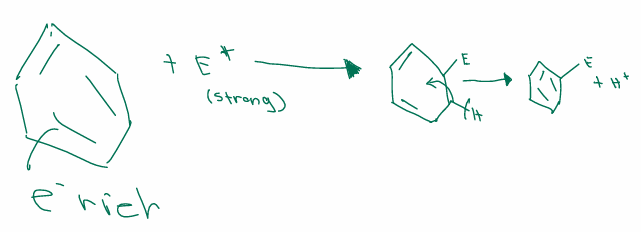
Electronic character of aromatic compounds
a. Electron-poor (strongly electrophilic)
b. Electron-neutral
c. Electron-rich (weakly nucleophilic)
d. Electron-rich (strongly nucleophilic)
d. Electrophilic Aromatic Substitution
Common mechanism for all standard reactions of aromatics
a. Electrophilic Addition
b. Nucleophilic Substitution
c. Free Radical Substitution
d. Electrophilic Aromatic Substitution
1) Halogenation
2) Nitration
3) Sulfonation
4) Friedel-Crafts alkylation
5) Friedel-Crafts acylation
Common mechanism of Aromatic Compounds (5)
c. Halogenation
Aromatic reaction involving addition of X₂ using FeX₃ as catalyst
a. Nitration
b. Sulfonation
c. Halogenation
d. Friedel-Crafts alkylation
d. FeX₃ (Lewis’ acid catalyst)
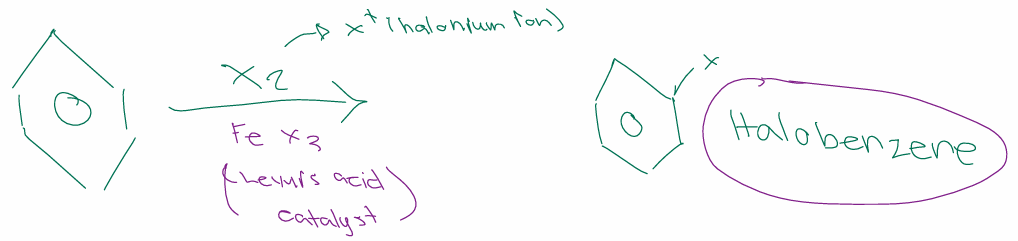
Catalyst used in the Halogenation of benzene
a. Pd/Pt/Ni
b. H₂SO₄
c. AlCl₃
d. FeX₃
c. Lewis acid catalyst
Classification of FeX₃ used as catalyst in Halogenation of benzene
a. Brønsted acid catalyst
b. Free radical catalyst
c. Lewis acid catalyst
d. Nucleophilic catalyst
c. X⁺ (halomium ion)
Electrophile generated during Halogenation of benzene using FeX₃
a. X⁻ (halide ion)
b. X· (halogen radical)
c. X⁺ (halomium ion)
d. HX (hydrogen halide)
b. Halobenzene
Product formed when benzene undergoes Halogenation
a. Nitrobenzene
b. Halobenzene
c. Benzene sulfonic acid
d. Toluene
c. HNO₃ + H₂SO₄
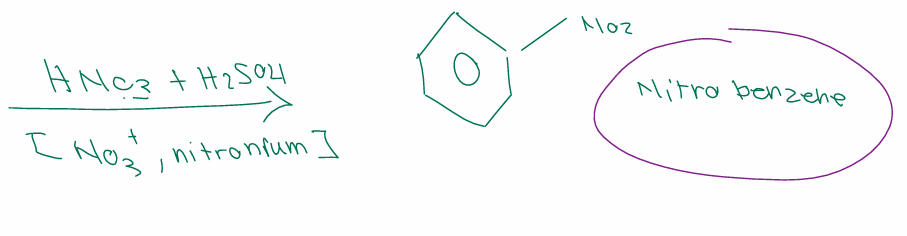
Reagents used in the Nitration of benzene
a. Fuming H₂SO₄ / conc. H₂SO₄
b. FeX₃ and X₂
c. HNO₃ + H₂SO₄
d. SO₃ + H₂SO₄
d. NO₂⁺ (nitronium ion)
Electrophile generated during Nitration of benzene
a. NO₂⁻ (nitrite ion)
b. NO₃⁺ (nitrate ion)
c. NH₄⁺ (ammonium ion)
d. NO₂⁺ (nitronium ion)
c. Nitrobenzene
Product formed when benzene undergoes Nitration
a. Halobenzene
b. Benzene sulfonic acid
c. Nitrobenzene
d. Aniline
d. Friedel-Crafts Alkylation
Aromatic reaction involving addition of an alkyl group using RX and AlCl₃
a. Friedel-Crafts Acylation
b. Nitration
c. Sulfonation
d. Friedel-Crafts Alkylation
c. RX, AlCl₃
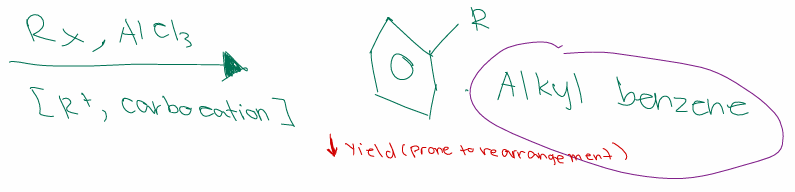
Reagents used in Friedel-Crafts Alkylation of benzene
a. HNO₃ + H₂SO₄
b. Fuming H₂SO₄ / conc. H₂SO₄
c. RX, AlCl₃
d. X₂, FeX₃
d. R⁺ (carbocation)
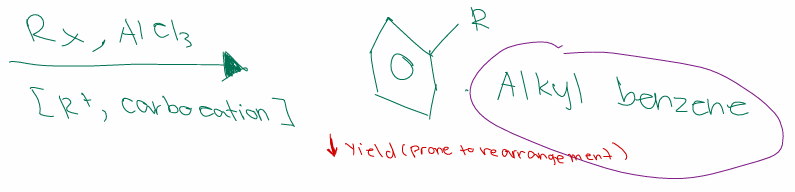
Electrophile generated during Friedel-Crafts Alkylation of benzene
a. X⁺ (halomium ion)
b. NO₂⁺ (nitronium ion)
c. HSO₄⁺ (sulfonium ion)
d. R⁺ (carbocation)
d. Alkyl benzene
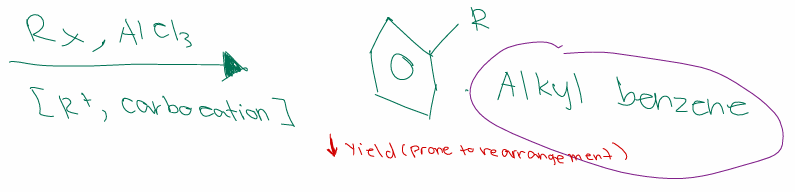
Product formed when benzene undergoes Friedel-Crafts Alkylation
a. Nitrobenzene
b. Halobenzene
c. Aromatic ketone
d. Alkyl benzene
b. Low yield due to prone to rearrangement
Disadvantage of Friedel-Crafts Alkylation that affects its product yield
a. Requires expensive Lewis acid catalyst
b. Low yield due to prone to rearrangement
c. Produces unstable carbocation intermediate only
d. Reversible reaction under mild conditions
c. Friedel-Crafts Acylation
Aromatic reaction involving addition of an acyl group using R-C=O-X and AlCl₃
a. Friedel-Crafts Alkylation
b. Halogenation
c. Friedel-Crafts Acylation
d. Nitration
a. R-C=O-X, AlCl₃
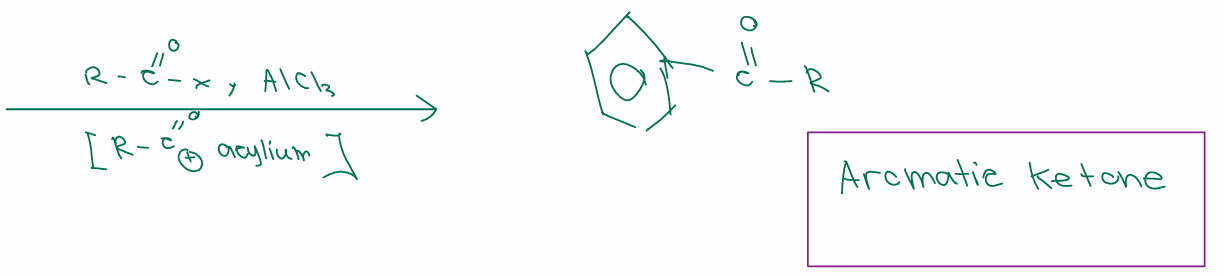
Reagents used in Friedel-Crafts Acylation of benzene
a. R-C=O-X, AlCl₃
b. X₂, FeX₃
c. HNO₃ + H₂SO₄
d. RX, AlCl₃
c. R-C=O⁺ (acylium ion)
Electrophile generated during Friedel-Crafts Acylation of benzene
a. R⁺ (carbocation)
b. NO₂⁺ (nitronium ion)
c. R-C=O⁺ (acylium ion)
d. X⁺ (halomium ion)
a. Aromatic ketone
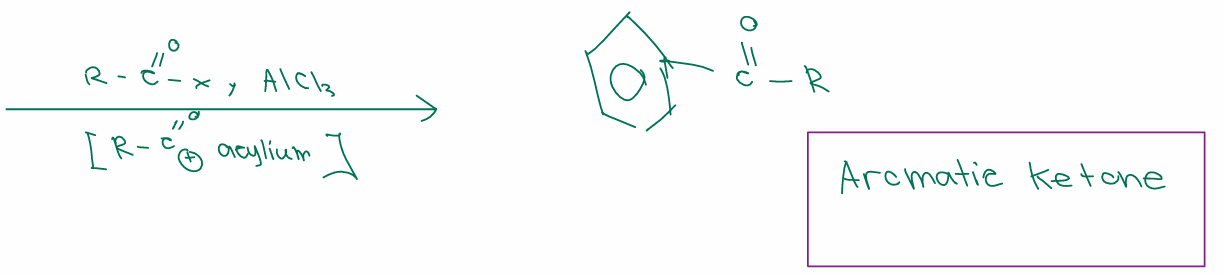
Product formed when benzene undergoes Friedel-Crafts Acylation
a. Aromatic ketone
b. Benzene sulfonic acid
c. Halobenzene
d. Alkyl benzene
c. Benzene
Aromatic compound known as a solvent and is toxic
a. Toluene
b. Naphthalene
c. Benzene
d. Aniline
d. Naphthalene
Aromatic compound known as a solvent and used in moth balls
a. Benzene
b. Toluene
c. Hydroquinone
d. Naphthalene
b. Toluene
Aromatic compound known as a solvent and abused as glue sniffing
a. Aniline
b. Toluene
c. Benzene
d. Naphthalene
a. Methylbenzene
Toluene aka
a. Methylbenzene
b. Ethylbenzene
c. Aminobenzene
d. Methylphenol
c. Aniline
Aromatic compound used for dyes and some antibiotics
a. Phenol
b. Cresol
c. Aniline
d. Hydroquinone
c. Aminobenzene
Aniline aka
a. Methylbenzene
b. Ethylbenzene
c. Aminobenzene
d. Methylphenol
d. Phenol
Aromatic compound used as antiseptic and standard of other antiseptics
a. Cresol
b. Salicylic acid
c. Hydroquinone
d. Phenol
b. Carbolic Acid
Phenol aka
a. Cresol
b. Carbolic Acid
c. Carbonic Acid
d. Benzoic Acid
c. Phenol coefficient
Term used to describe the standard measurement of antiseptic potency for which Phenol/Carbolic acid serves as the reference
a. Phenol index
b. Antiseptic ratio
c. Phenol coefficient
d. Carbolic index
b. Cresol
Aromatic compound used as antiseptic and disinfectant
a. Hydroquinone
b. Cresol
c. Phenol
d. Benzaldehyde
d. Methylphenol
Cresol aka
a. Methylbenzene
b. Ethylbenzene
c. Aminobenzene
d. Methylphenol
d. Hydroquinone
Aromatic compound used as astringent in many skin products
a. Cresol
b. Salicylic acid
c. Benzaldehyde
d. Hydroquinone
c. Salicylic acid
Aromatic compound known as keratolytic
a. Benzoic acid
b. Hydroquinone
c. Salicylic acid
d. Phenol
b. Aspirin
Aromatic compound known as anti-inflammatory and antithrombotic
a. Benzoic acid
b. Aspirin
c. Cresol
d. Benzaldehyde
b. Aspirin
Aromatic compound paired with salicylic acid
a. Benzoic acid
b. Aspirin
c. Cresol
d. Benzaldehyde
c. Benzoic acid/benzoates
Aromatic compounds used as preservatives
a. Benzaldehyde/benzyl alcohol
b. Cresol/methylphenols
c. Benzoic acid/benzoates
d. Salicylic acid/aspirin
c. Benzaldehyde
Aromatic compound known as "Oil of bitter almonds"
a. Eugenol
b. Vanillin
c. Benzaldehyde
d. Cinnamaldehyde
d. Cyanogenic glycosides
Benzaldehyde is part of the aglycone of which type of glycosides
a. Anthraquinone glycosides
b. Cardiac glycosides
c. Saponin glycosides
d. Cyanogenic glycosides
b. Shikimic acid pathway
Metabolic pathway from which natural aromatic products such as flavonoids, tannins, volatile oils, and glycosides are derived
a. Acetate-Malonate pathway
b. Shikimic acid pathway
c. Mevalonic acid pathway
d. Polyketide pathway
c. Flavonoids and tannins
Natural products stemming from the Shikimic acid pathway that are classified as antioxidant polyphenols
a. Volatile oils and glycosides
b. Cyanogenic glycosides and tannins
c. Flavonoids and tannins
d. Anthraquinones and arbutin
c. Volatile oils
Natural products stemming from the Shikimic acid pathway that include cinnamaldehyde, eugenol, and thymol
a. Antioxidant polyphenols
b. Glycosides
c. Volatile oils
d. Flavonoids
d. Glycosides
Natural products stemming from the Shikimic acid pathway that include anthraquinones, arbutin, salicin, and vanillin
a. Volatile oils
b. Antioxidant polyphenols
c. Flavonoids
d. Glycosides