Hemodynamics Final - Multiple choice
 Call Kai
 Learn
Learn Practice Test
 Spaced Repetition
 Match
Match Flashcards
 Knowt Play
1/108

There's no tags or description
Looks like no tags are added yet.
Name | Mastery | Learn | Test | Matching | Spaced | Call with Kai |
|---|
No analytics yet
Send a link to your students to track their progress
109 Terms
90 degrees
What angle does not show a shift in frquency?
Color gain
When this is too high, color is seen outside the vessel.
color priority
What pays more attention to grayscale or color doppler imaging when altered?
velocity scale
range of velocities seen on spectral display
Positive
Echoes moving towards the transducer are a ______ doppler shift.
Negative
Reflectors moving away from the transducer are a _______ doppler shift.
cm/s
Doppler shifts are received frequencies but converted to ___ by the ultrasound.
True
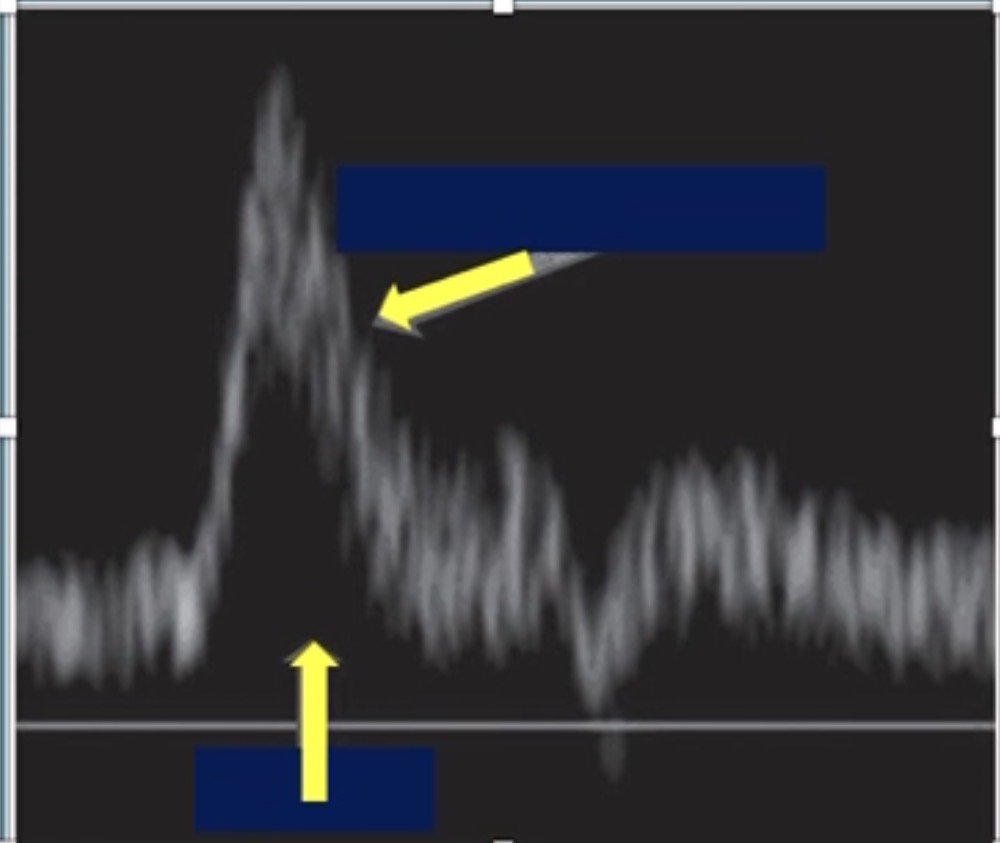
True or false? The top arrow is pointing to the spectral envelope and the bottom arrow is pointing to the spectral window.
True
True or false? It is normal to see some physiologic spectral broadening in smaller vessels (hepatic artery) versus larger peripheral arteries (carotid)
True
True or false? Steering will change the color box changes the angle of sound waves in relation to blood flow.
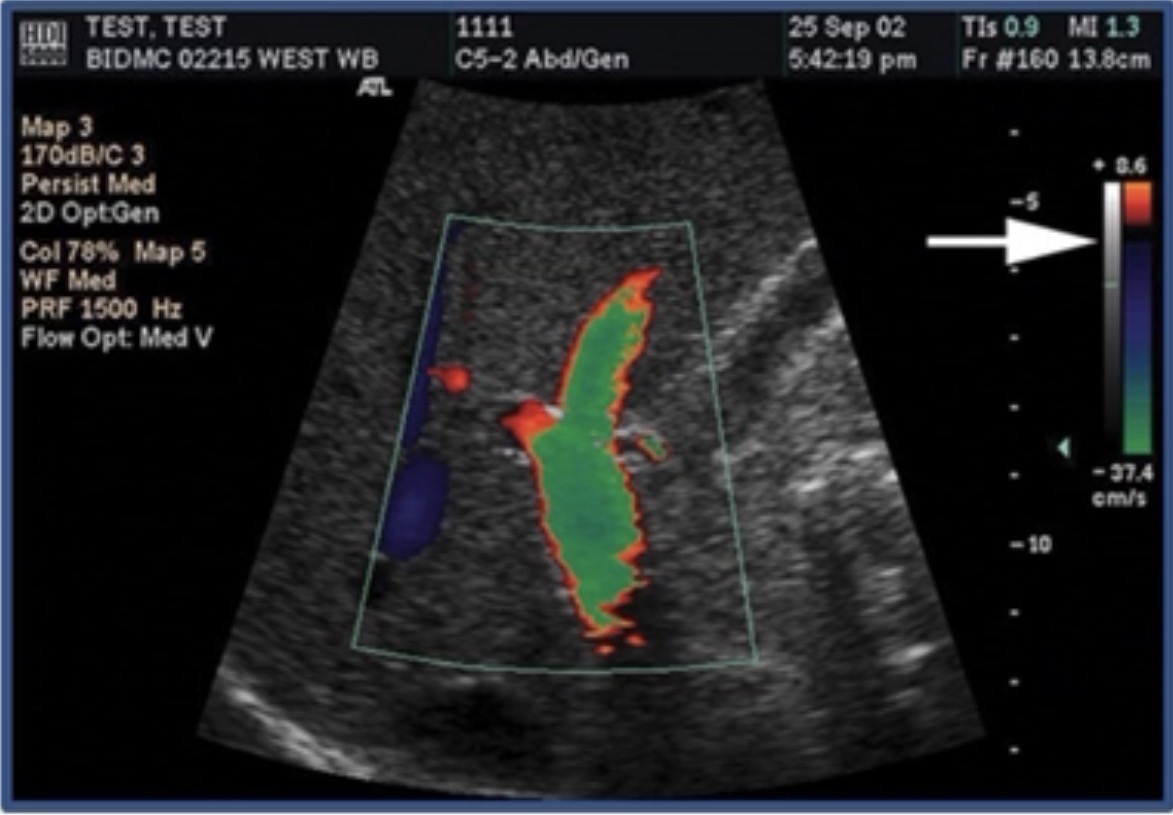
False
True or false? You could change the color scale to fix this image
Poiseuille Law
Defines the pressure/flow relationships in the vascular system
viscosity
creates energy “losses” in the vascular system (conversion of friction to heat)
kinetic energy
work in motion is describing:
velocity
rate of movement with respect to time is describing:
Low resistance
Antegrade flow throughout the cardiac cycle is describing:
turbulent flow
mixing between layers of blood flow with irregular motions of fluid is describing:
Bernoulli principle
When a fluid flow without a change in velocity from one point to another, the total energy content remains constant, providing no frictional losses.
potential energy
Stored energy is considered:
compliance
arteries will stretch with increased pressure describing:
Vasa vasorum
Comprise tiny arteries and veins that supply the walls of the blood vessels.
distal to where you are
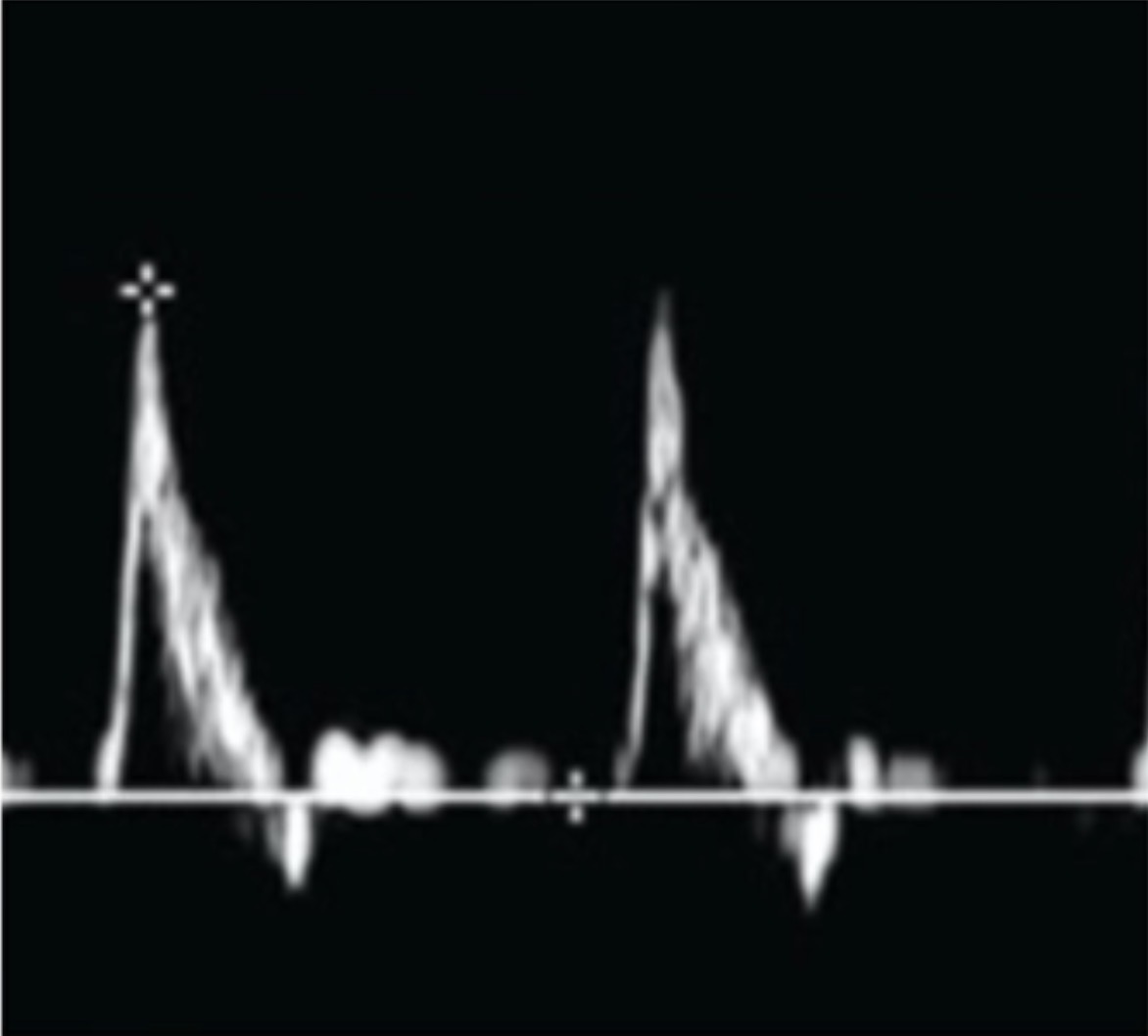
If you saw this waveform in the common carotid artery, where would you expect to see the stenosis?
there is a color bruit
What is incorrect about this image?
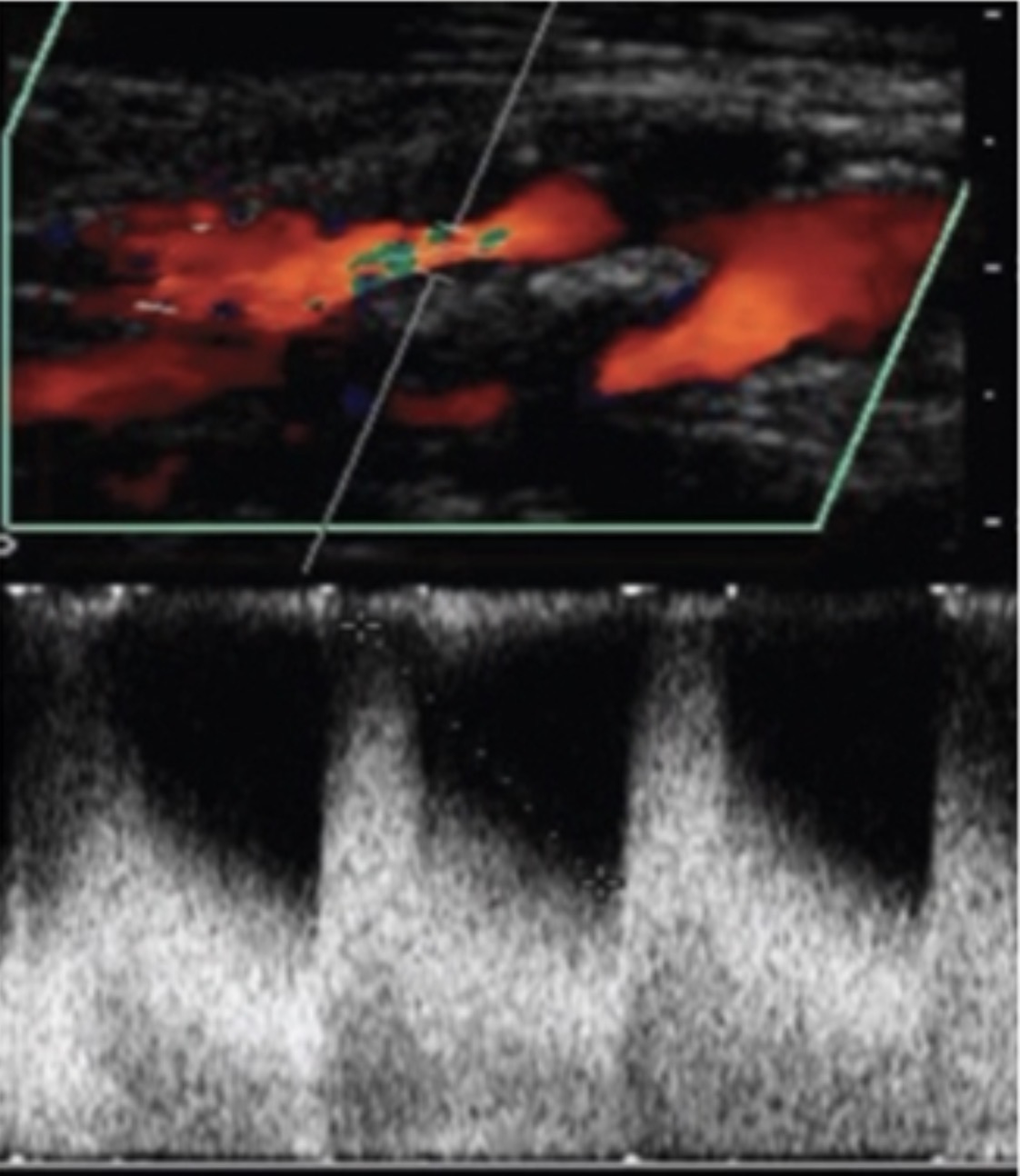
upstream from where you are
Looking at these normal and abnormal waveforms in the same arteries in different legs. Looking at the image on the right with the blue arrow, where is the stenosis?
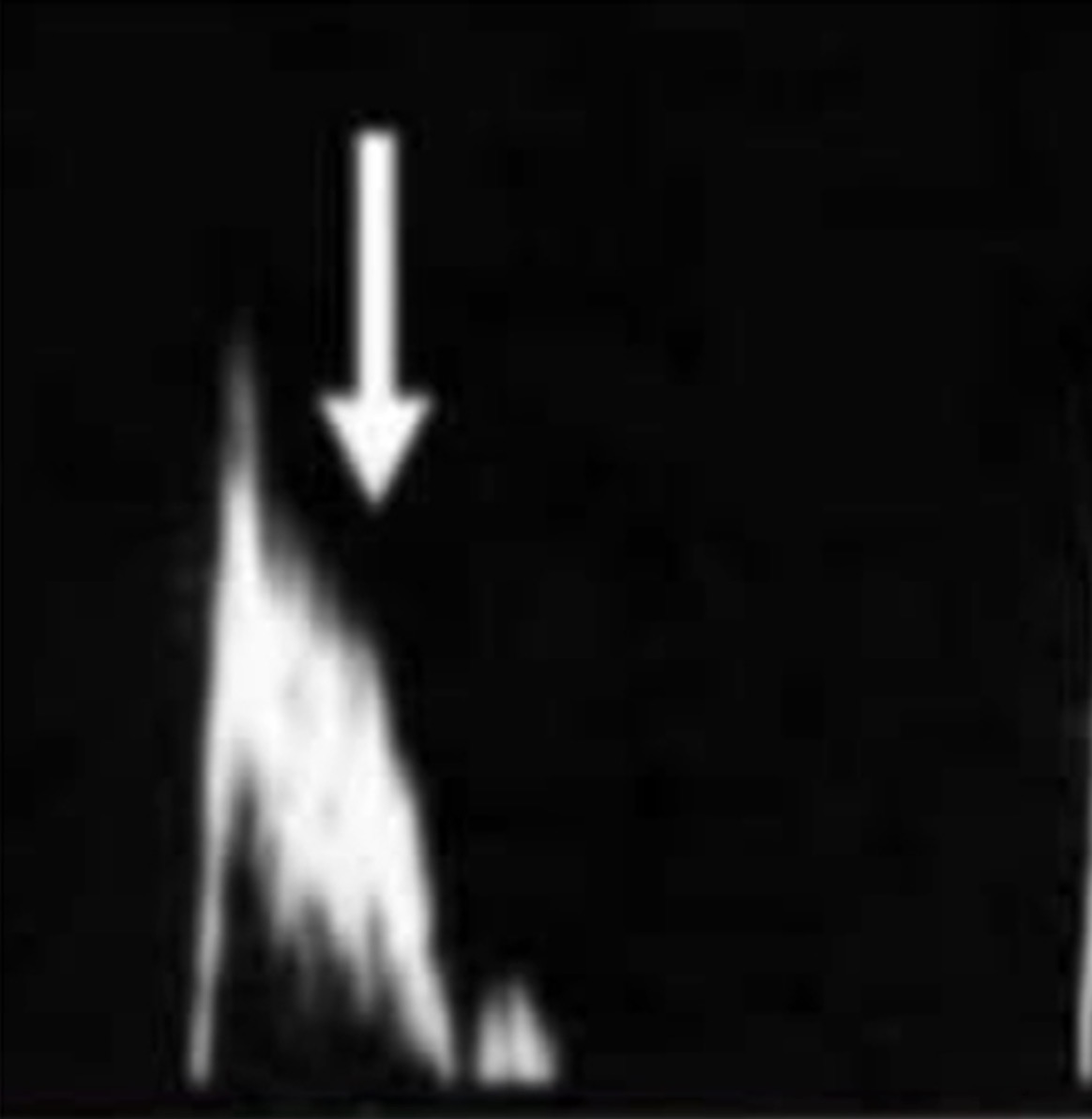
Before
Looking at this waveform, are you before at or after a stenosis?
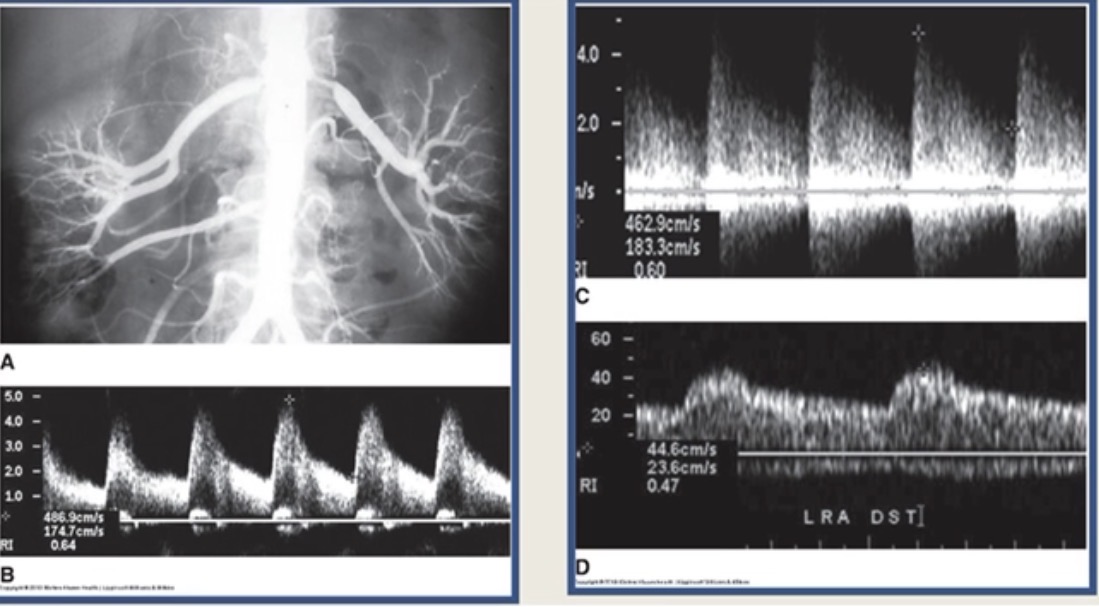
Post stenotic turbulence
What image is C denoting?
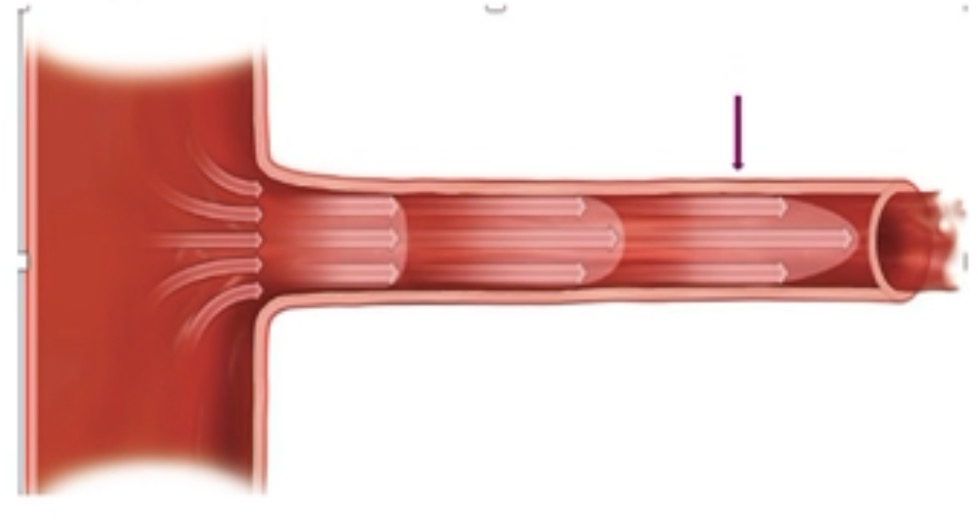
Parabolic flow
what flow is demonstrated here at the arrow?
A
What image is higher resistance?
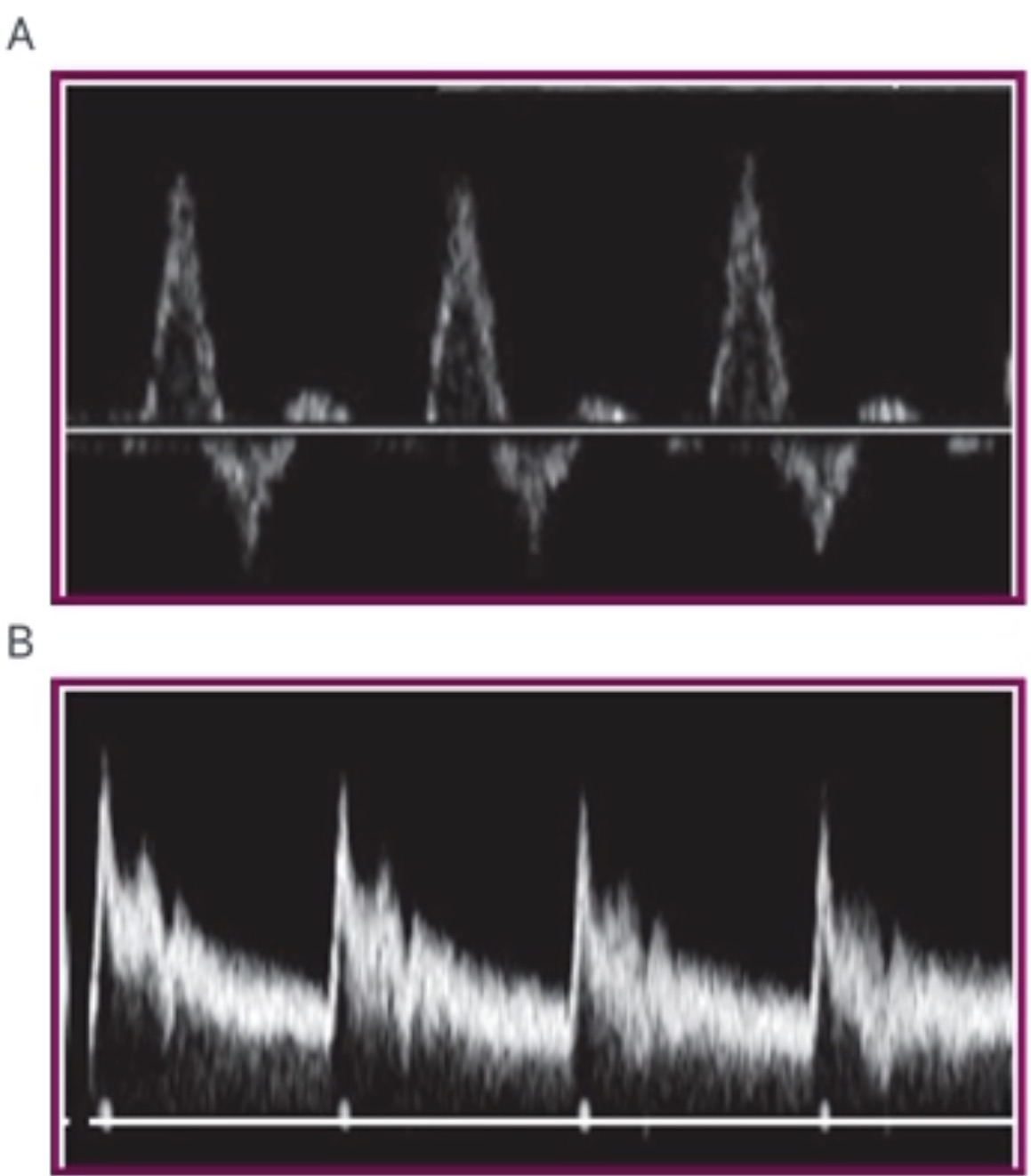
2
Based on Bernoulli’s principle where would velocity be the highest
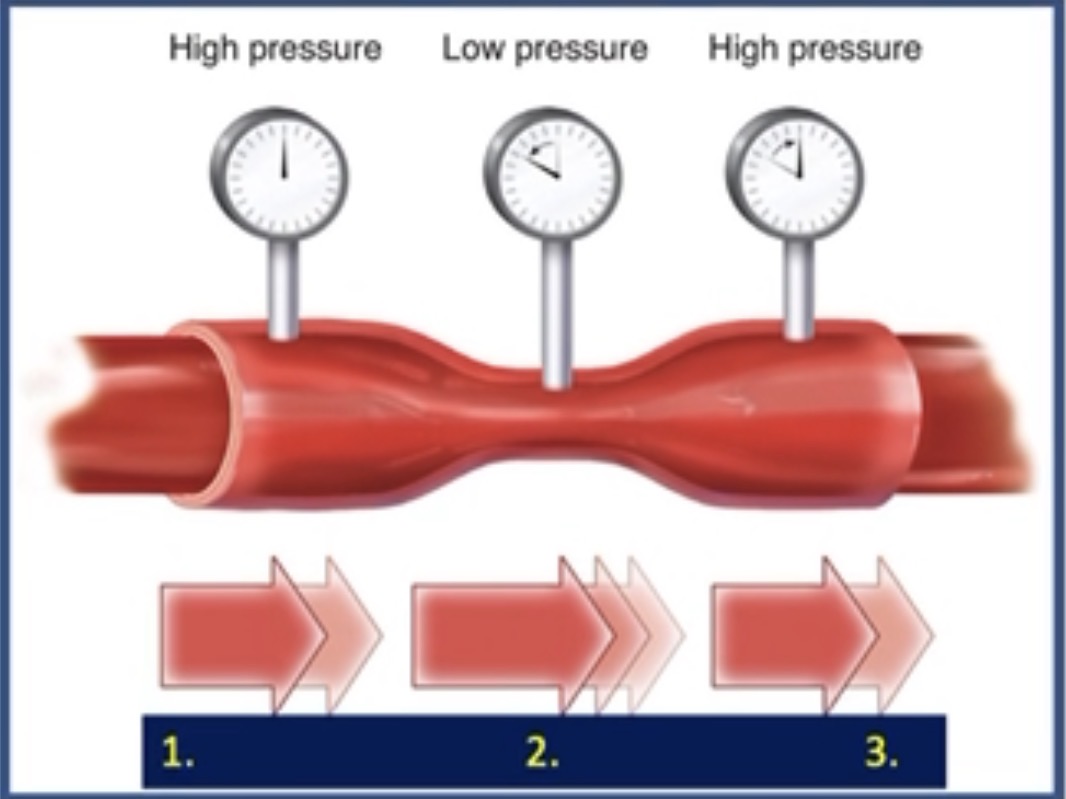
high, low
Blood moves from a ______ energy pressure to a ____ energy pressure.
False
True or false? With plaque build up, arteries will still be able to stretch with increased pressure.
True
True or false? High resistance waveforms do not have a lot of diastolic flow.
True
True or false? In a specific vessel, as the area decreases (stenosis), the velocity mist increase to maintain volume flow to vascular bed it’s going to?
False
True or false? Arteries that supply skeletal muscles at rest are usually display low resistance waveforms.
False
True or false? Exercise produces vasoconstriction, which decreases resistance.
False
True or false? Elastic recoil of arteries happens during systole.
True
True or false? atherosclerotic changes typically occur at branch points and bifurcations.
Continuous waveform
If there is clot in a vein, what would the waveform look like before to the clot? Example: there is clot in iliac and you are scanning CFV so what would the waveform in CFV look like?
respiration variation
A venous waveform with a proximal clot will demonstrate all except:
2/3
Venous system holds up to ____ of blood in the body
ischemia and ulceration
Decreased oxygen transfer at the capillary level from increased venous pressure can result in:
Expiration
Doe the flow increase into abdominal cavity from the legs during inspiration and expiration?
collapse during inspiration
Doe the IVC collapse or expand during inspiration or expiration?
Decreased
During inspiration, do you have increased or decreased thoracic pressure (thoracic cavity)?
Decrease
Will venous pressure increase or decrease with exercise?
Increase
When standing, will venous pressure increase or decrease at the ankles?
High
____ transmural pressure will lead to a distended vein.
Low
The arrow is demonstrating what type of transmural pressure?
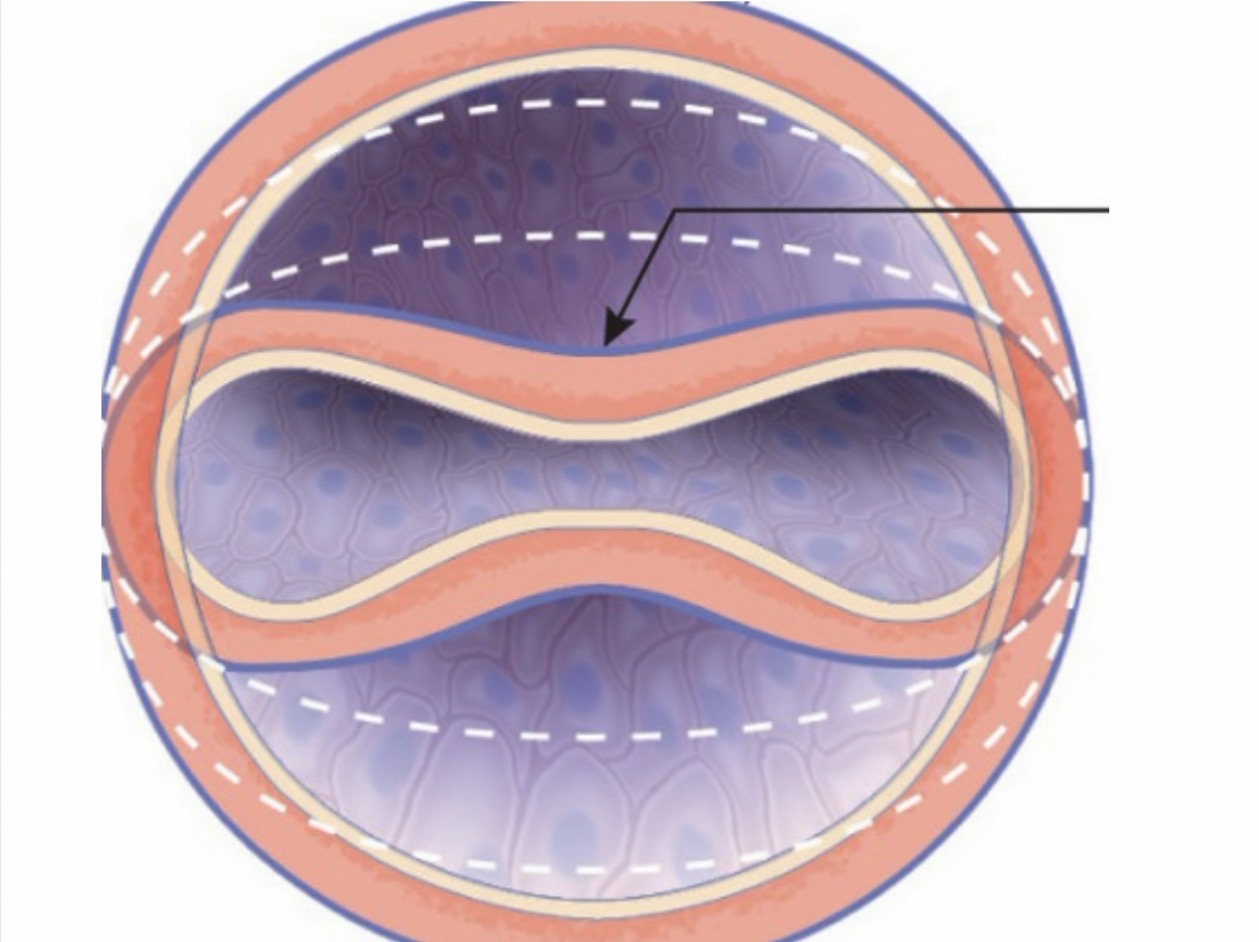
Higher
Will transmural pressure be higher or lower when standing
True
True or false? Venous thrombosis increases venous pressure
False
True or false? Primary varicose veins are formed due to DVT.
Soleal
These muscles are considered the “little heart” that controls forward movement of blood in the legs.
3-4
Distended veins can be _____ times larger in cross-sectional area than corresponding artery
central
Which type of veins have higher resistance regarding veins?
Intracapillary pressure
What force moves fluid out of the capillary?
Interstitial and capillary osmotic pressure
Which force favors the reabsorption of fluid into the capillary?
Starling forces
govern the movement of fluid across the capillary bed
Incompetent valves in CFV or GSV
What is the primary cause of varicose vein that develop in absence of DVT?
Retrograde flow occurs in superficial veins due valve incompetence
What happens when the calf muscles propel blood upward in individuals with varicose veins?
Arterial
Is this a venous or arterial ulcer?
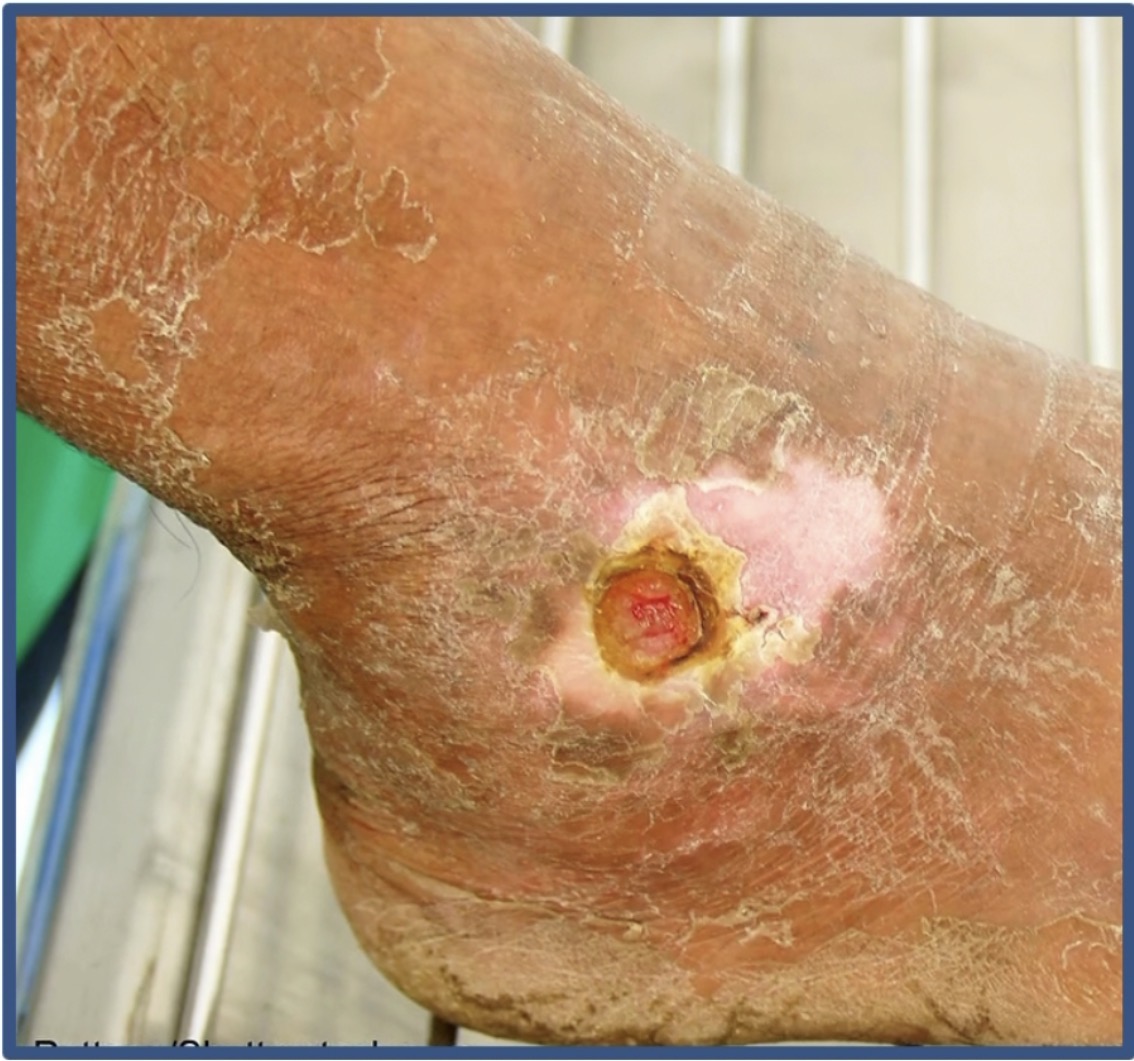
on toes and medial
Which of the following is not describing an arterial ulcer?
False
True or false? bidirectional is a term for resistance
False
True or false? the CFA is considered low resistance
Too little doppler gain
Will not demonstrate spectral broadening
Spectral broadening
filling in of clear window under systolic peak
Staccato
A very high resistive pattern with a short “spike” of velocity acceleration and deceleration with low amplitude diastolic flow
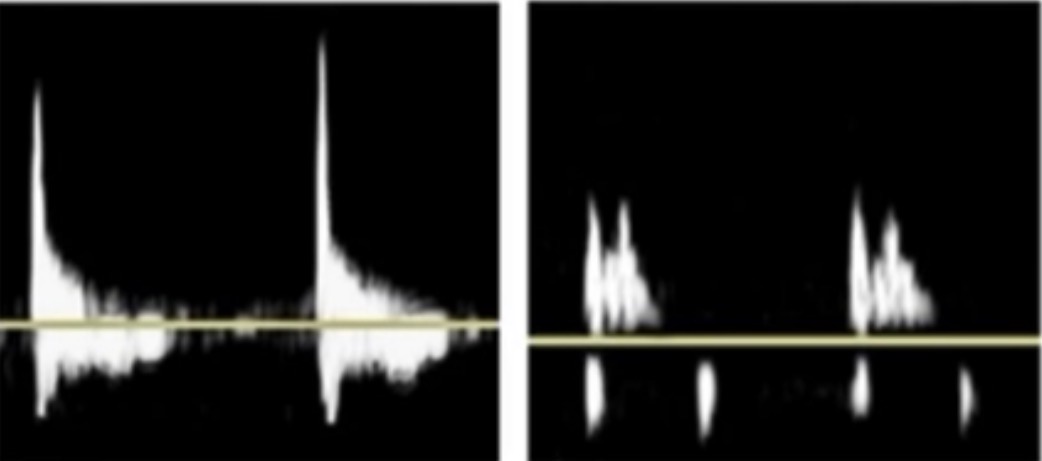
beginning to systole to mid systole (peak)
In an artery upstroke refers to:
Monophasic
This waveform is considered:
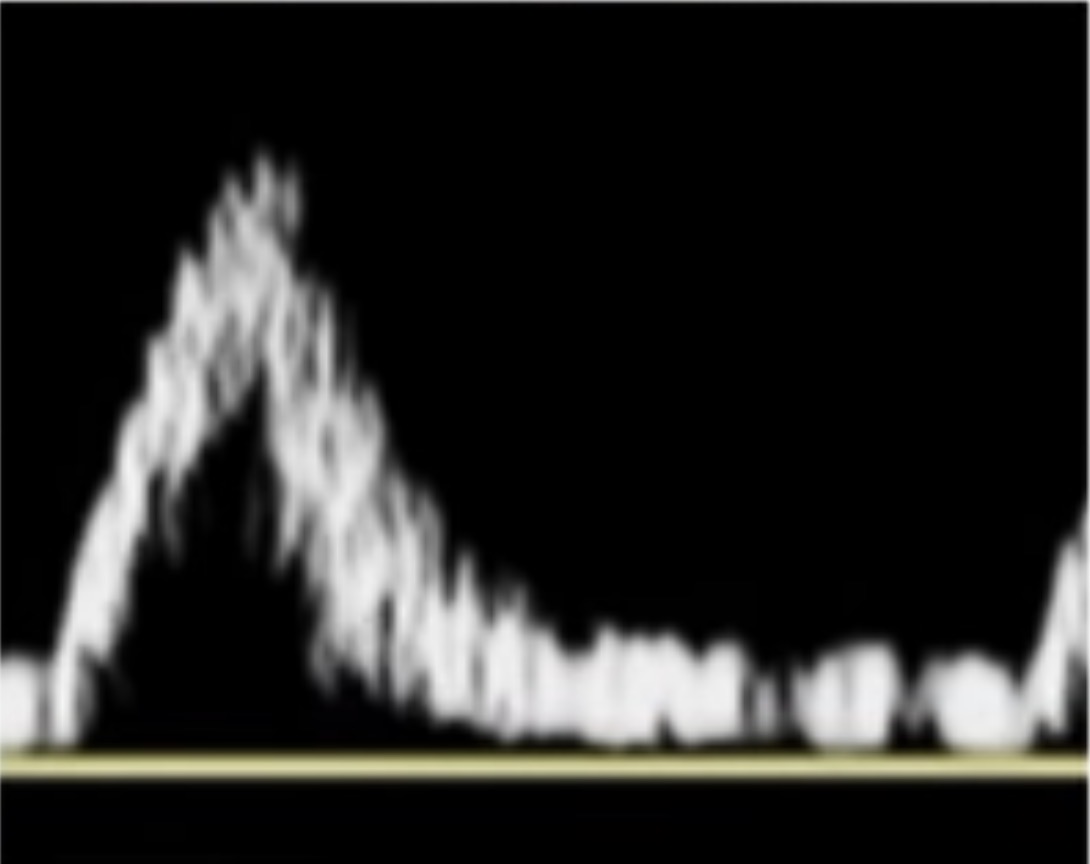
Bidirectional
What is the best descriptor of this waveform?
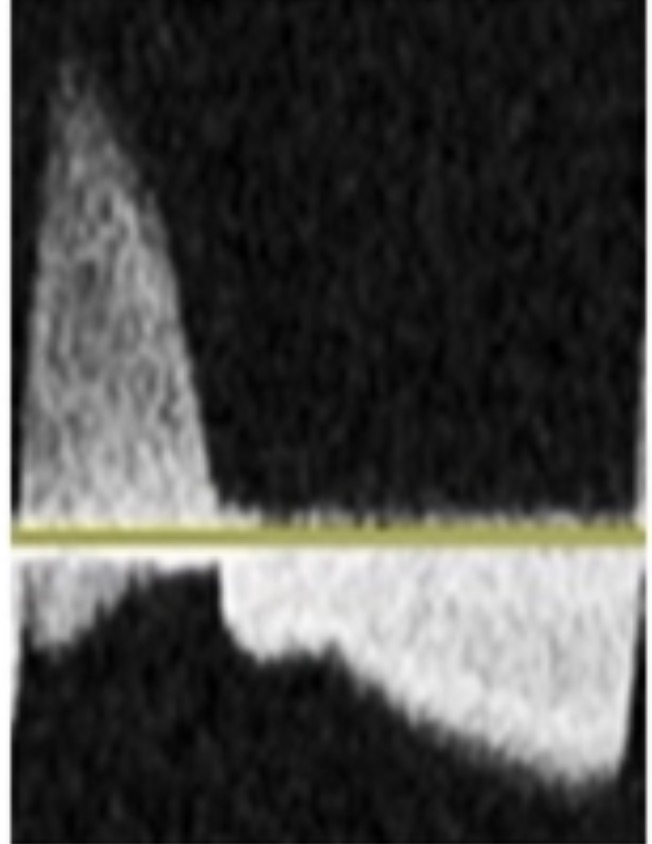
Antegrade, multiphasic
This image of the CFA going towards the leg is described as:
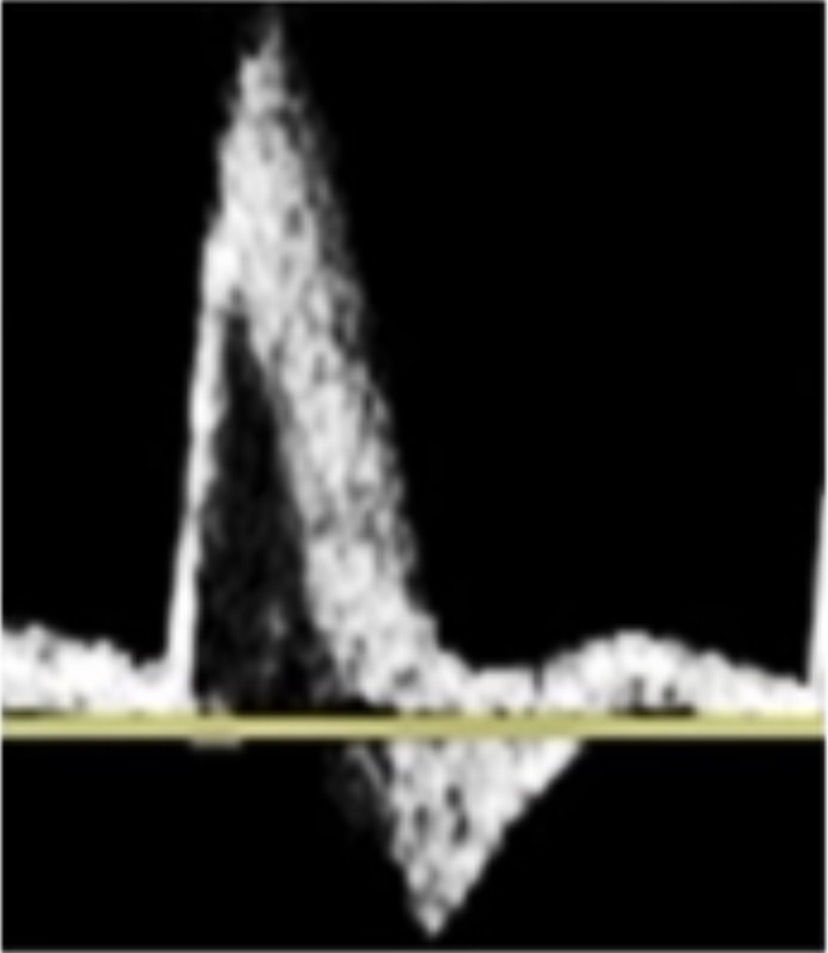
retrograde
Blood flows in opposite direction for the artery being evaluated
True
True or false? monophasic is not a descriptor for arterial flow direction
ICA or Vertebral
Forward flow throughout cardiac cycle and relatively high diastolic velocities are noted in:
antegrade flow
Blood flows in normal direction for the artery being evaluated.
lower resistance
with exercise or rise in body temp, will peripheral arteries become higher and lower resistance?
higher resistance
When fasting will your SMA have higher or lower resistance waveform?
Acceleration time
the time it tales an artery to reach peak systole from start of systole
False
True or false? Flow profile with antegrade flow throughout the cardiac cycle is describing a high resistance waveform
Multiphaic
Biphasic and triphasic waveforms are now termed:
Iliacs, innominate, subclavian
Inflow arteries
False
True or false? Axillary artery is considered an inflow artery
CFA, Profunda, superficial femoral, pop
Outflow arteries
Tibials, peroneals, ulnar, radial
run-off arteries
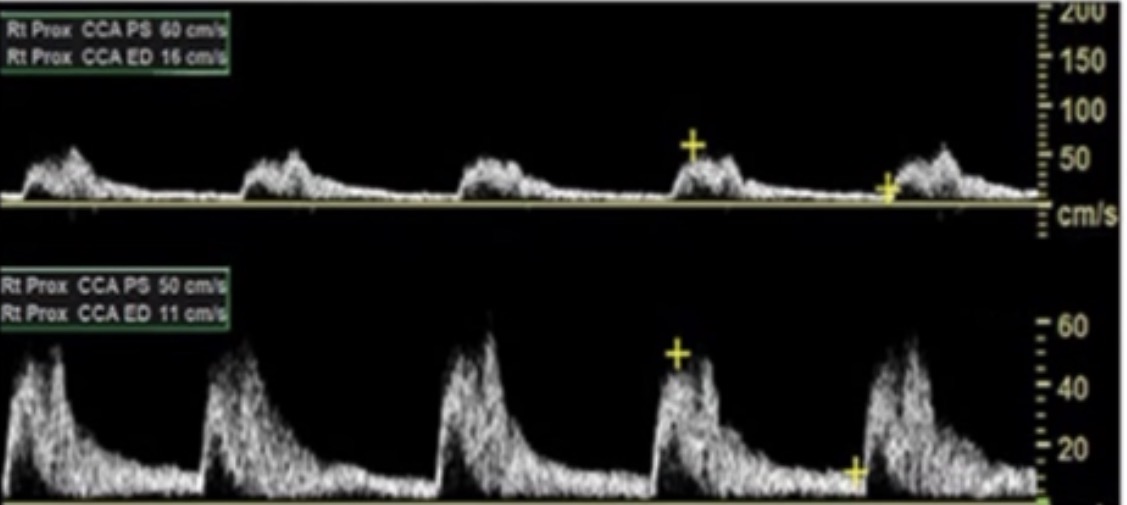
high, dampened
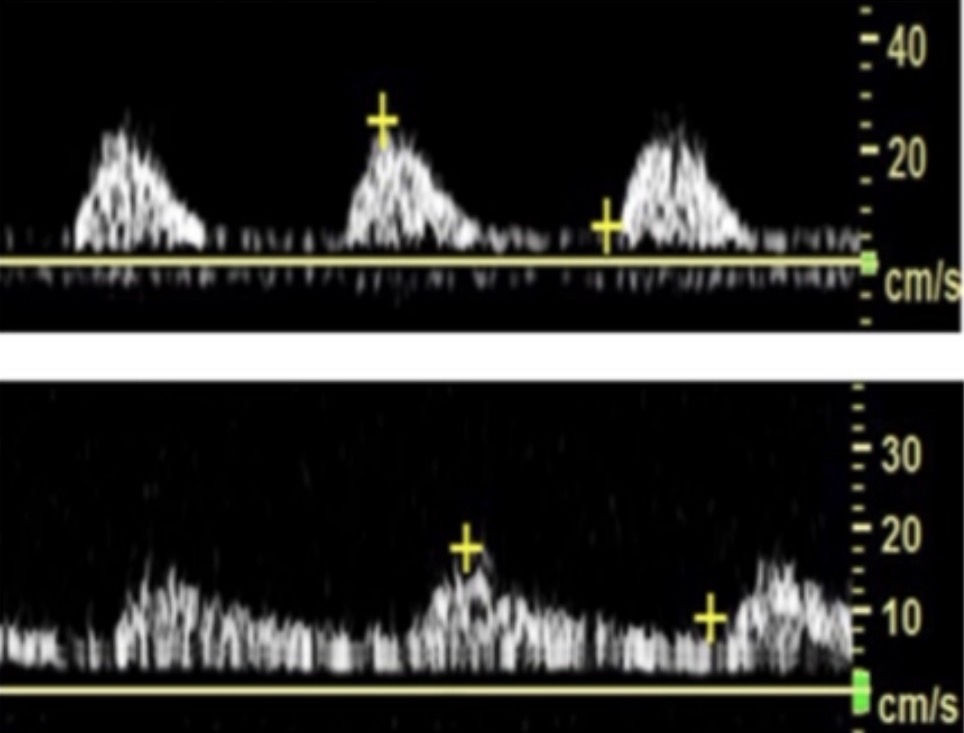
In the first image, the spectral scale is too _______, making the waveform look ______
.75
If the systolic is 100cm/sec and the diastolic is 25cm/s, what is the resistive index?
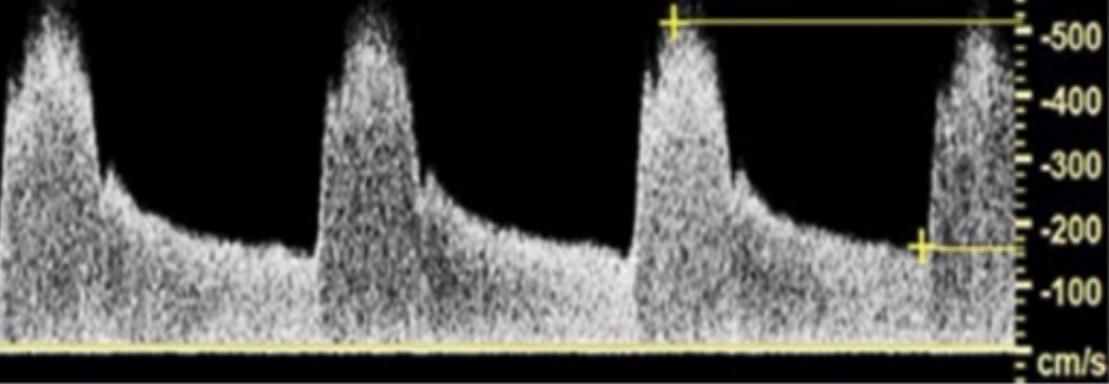
reduced
This augmentation is considered _____.
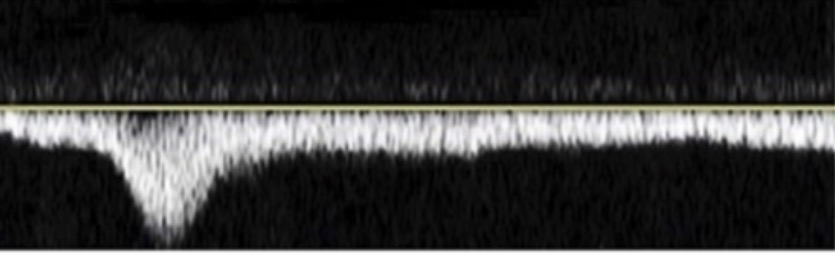
nonspotaneous
When flow is not actively observed in a vein and only noted with valsalva or muscle contraction:
respirophasic
best way to describe the venous flow pattern of this waveform?
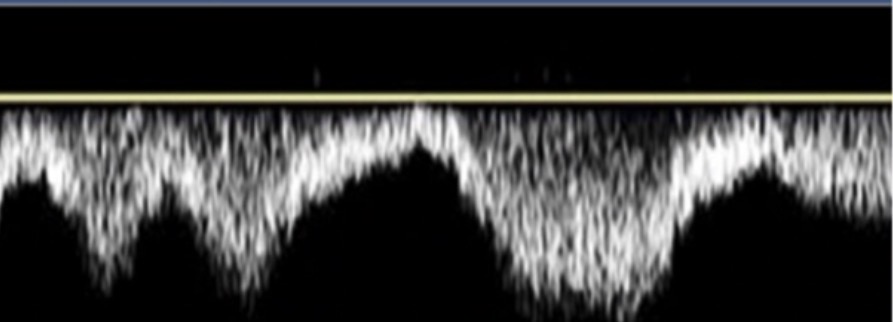
regurgitant/pulsatile
What is the best way to describe this waveform?
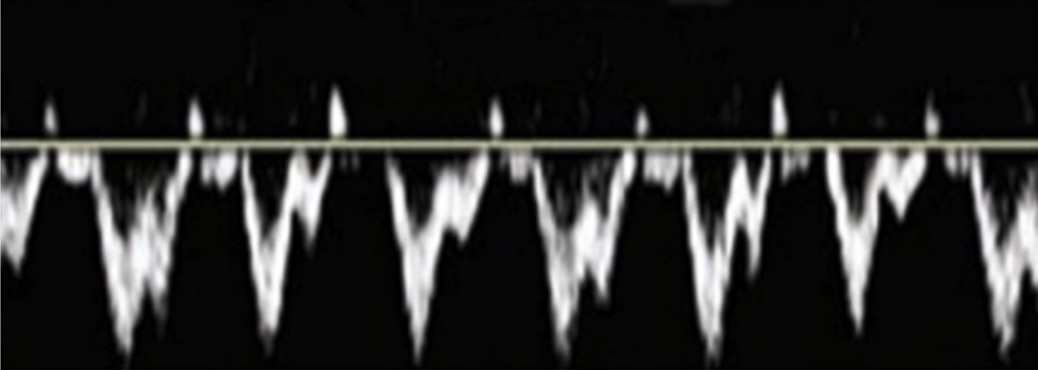
antegrade
How would you describe this waveform?
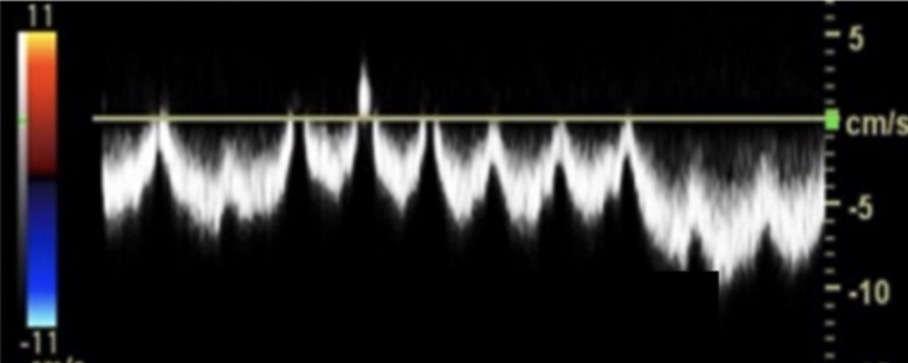
reflux
What is 2 referring to?
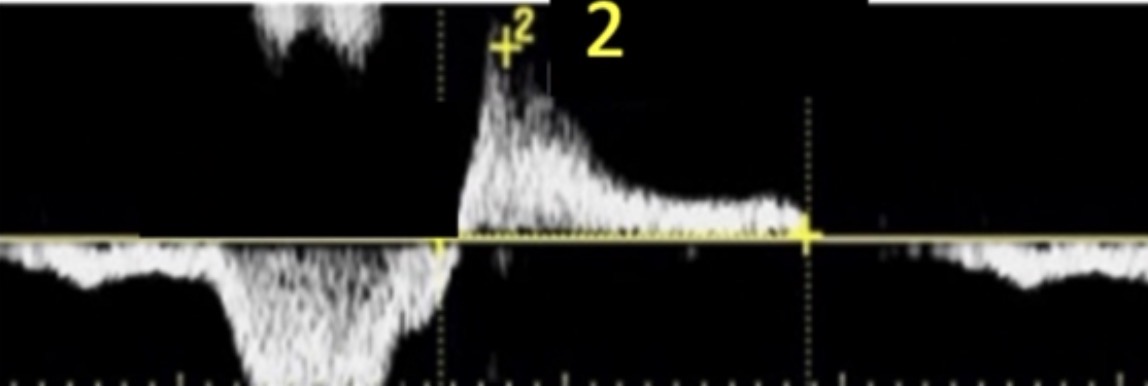
regurgitant
Increased right atrial pressure creating a flow pattern similar to antegrade and retrograde components.
continuous/monophasic
A steady and unwavering waveform identifies a more central obstruction intrinsic to veins. No respiration variation.
Pulsatile
An abnormal finding in lower extremity veins seen with elevated central pressure, regurgitation, pulmonary hypertension, etc.
false
True or false? resistance is a term is given as a major descriptor
spontaneous
flow is considered ____ when it is observed actively moving in a vein without any external maneuvers
Augmentation
Changes in venous flow velocity in response to physical maneuvers describes:
Top
which of the following is a peripheral vein?
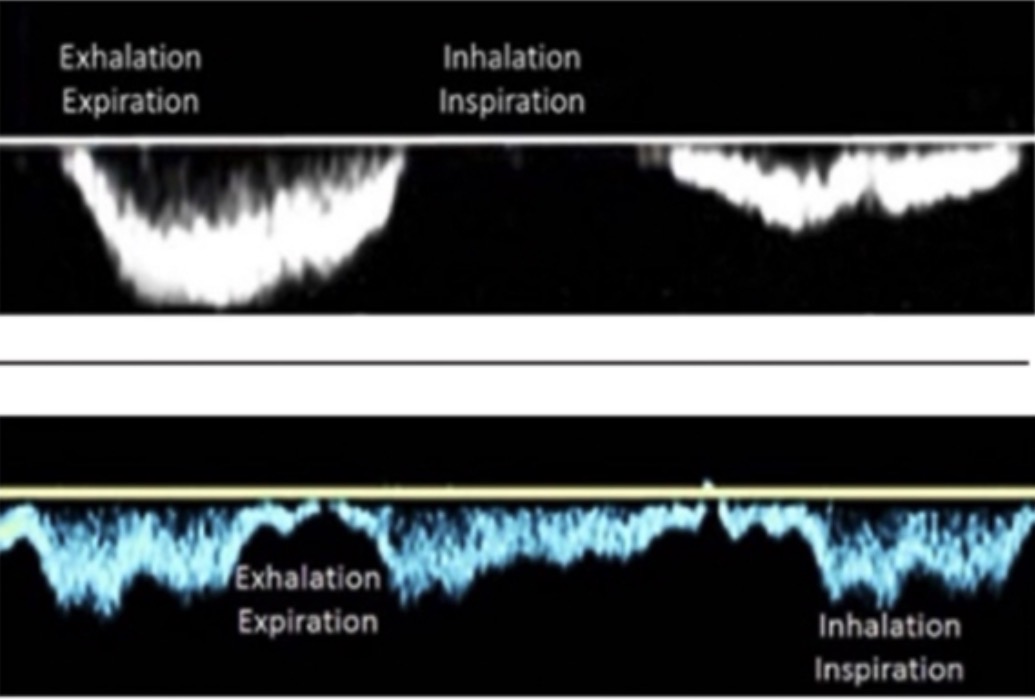
>70%
What percentage stenosis would we call this in the ICA?
dampened and monophasic
This waveform is seen in distal peripheral artery in lower leg. Its best described as: