(2) Social identity theory
 Call Kai
 Learn
Learn Practice Test
 Spaced Repetition
 Match
Match Flashcards
 Knowt Play
1/31

There's no tags or description
Looks like no tags are added yet.
Name | Mastery | Learn | Test | Matching | Spaced | Call with Kai |
|---|
No analytics yet
Send a link to your students to track their progress
32 Terms
What is Social Cognition in the historical context of social psychology?
• Limited cognitive resources, using of fast, efficient strategies to process and store information • Developed largely from attribution theories • Criticised for ignoring wider social context
What defines the Social Identity approach historically?
Emphasised wider social context
Highlighted motivation in group contexts
Critical of personality theories of prejudice
What motivated Henri Tajfel’s work?
• Wanted to understand how genocide could occur •Focused on minimal conditions for discrimination
• Sought the starting point of discrimination •
What is Social Identity Theory (Tajfel & Turner, 1979)?
• Explains how group memberships shape self-concept • Accounts for intergroup behaviour and bias
What are the two components of identity in SIT?
• Personal identity: individual traits and interpersonal relationships
• Social identity: group memberships and intergroup relations
What determines the emotional significance of groups?
• Emotional value placed on the group • Importance of belonging varies across groups
How does group identification affect self-esteem?
• People are motivated to feel good about their groups • Social identity contributes to self-esteem and self-worth
How do ingroups and outgroups develop?
• Desire for positive group evaluation • Leads to ingroup favouritism • Results in intergroup bias
What is the Minimal Group Paradigm (Tajfel et al., 1971)?
• Experimental method to study discrimination • Groups formed using trivial criteria • Tests how categorisation alone leads to bias
just merely being in different groups leads to bias
How were groups formed in the Minimal Group Paradigm study?
• Participants chose preferred pictures • Assigned to groups anonymously • No personal information shared
What did the Minimal Group Paradigm study find?
• Participants favoured ingroup in resource allocation • Bias occurred without competition or interaction • No prior group history required
What does the Minimal Group Paradigm show about discrimination?
• Discrimination can arise from simple categorisation • Group history and conflict are not necessary
How does SIT explain ingroup bias in minimal groups?
• Motivation to see ingroup positively • Differentiation even with minimal differences • Enhances self-esteem through resource allocation
What is the self-esteem hypothesis in SIT?
• Explains relationship between discrimination and self-esteem
What are the two parts of the self-esteem hypothesis?
• Intergroup discrimination increases self-esteem
• Low initial self-esteem increases intergroup discrimination
What was the design and finding of Oakes & Turner (1980)?
• One group completed resource allocation task • Control group read a newspaper • Discriminators showed higher self-esteem than those who did not allocate anything
What evidence supports part 2 of the self-esteem hypothesis?
• Crocker & Schwartz (1985): low self-esteem → more discrimination • Abrams (1982): found opposite results
What are key limitations of SIT laboratory research?
• Artificial, controlled settings • Limited real-world validity • Measures struggle to separate ingroup favouritism from outgroup derogation
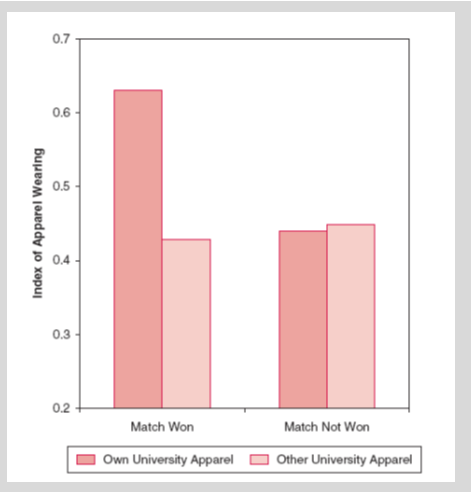
What is Basking in Reflected Glory (BIRGing)?
• Gaining self-esteem from group success • Increased public association with successful groups
What evidence supports BIRGing?
• Cialdini, Borden & Thorne (1976) • College students wore more insignia after football wins
What is Cutting Off Reflected Failure (CORFing)?
• Reducing identification with failing groups • Protects self-esteem • Usually temporary
What is Self-Categorisation Theory?
Focuses on shift from personal to social identity - extension of SIT
What happens when group membership becomes salient?
• Self defined less personally • Increased identification as group member
this is the under pinning of self categorization theory
What is depersonalisation?
• Seeing oneself as interchangeable with group members • Acting according to group norms
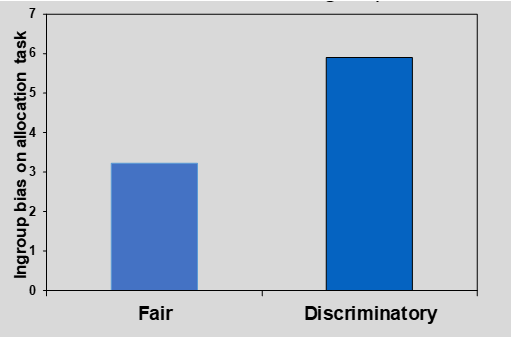
What was the design of Jetten et al. (1997)?
• Participants assigned to minimal groups • Told ingroup members were fair or discriminatory
Found: Participants adopted group norms • Group norm manipulation influenced resource allocation
What does Jetten et al. (1997) show about group behaviour?
• Group norms can override personal values • Norm change alone can alter behaviour
What are threats to social identity?
• Situations that undermine positive group identity • Trigger strategies to restore self-esteem
What is a threat to group esteem?
• Described by Branscombe et al. (1999) • Arises when outgroups derogate ingroup
What is a threat to group distinctiveness?
• Occurs when ingroup is too similar to an outgroup • Leads to attempts to re-establish uniqueness
overcome this: • Increased ingroup favouritism • Greater resource allocation to ingroup
What moderates responses to identity threat?
• Level of identification with the group
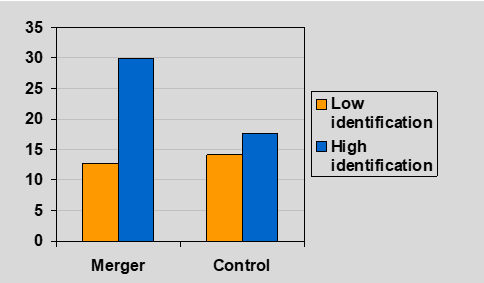
What was the design of Crisp, Stone & Hall (2006)?
• Measured ingroup identification • Told UoB and AU would merge - threatens the group
What were the findings of Crisp, Stone & Hall (2006)?
• Highly identified participants showed more ingroup bias • Attempted to re-establish distinctiveness, by doing the same group allocation task and assigning more resoruces