Clinical quiz 2
 Call Kai
 Learn
Learn Practice Test
 Spaced Repetition
 Match
Match Flashcards
 Knowt Play
1/18

Earn XP
Description and Tags
OCTH 216 content weeks 4-12
Name | Mastery | Learn | Test | Matching | Spaced | Call with Kai |
|---|
No analytics yet
Send a link to your students to track their progress
19 Terms
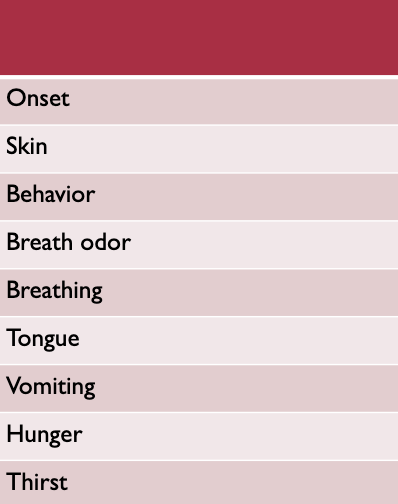
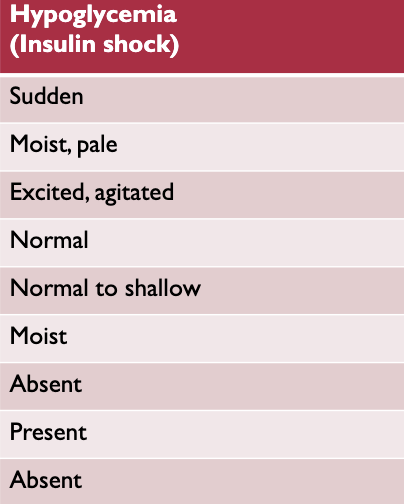
Symptoms of hypoglycemia?
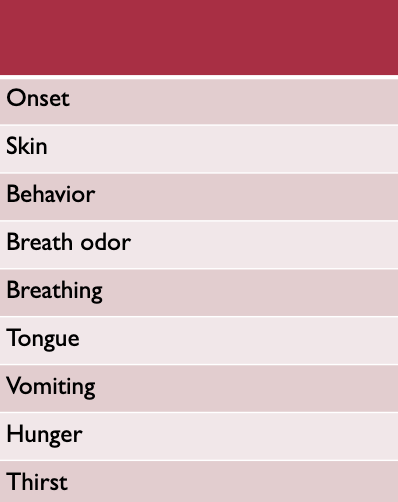
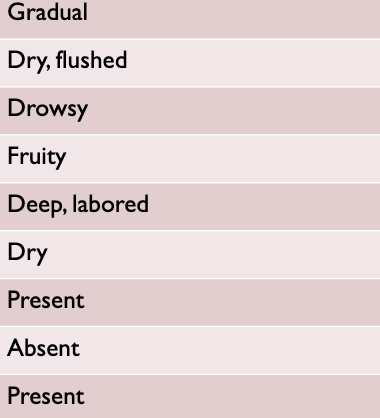
Symptoms of hyperglycemia?
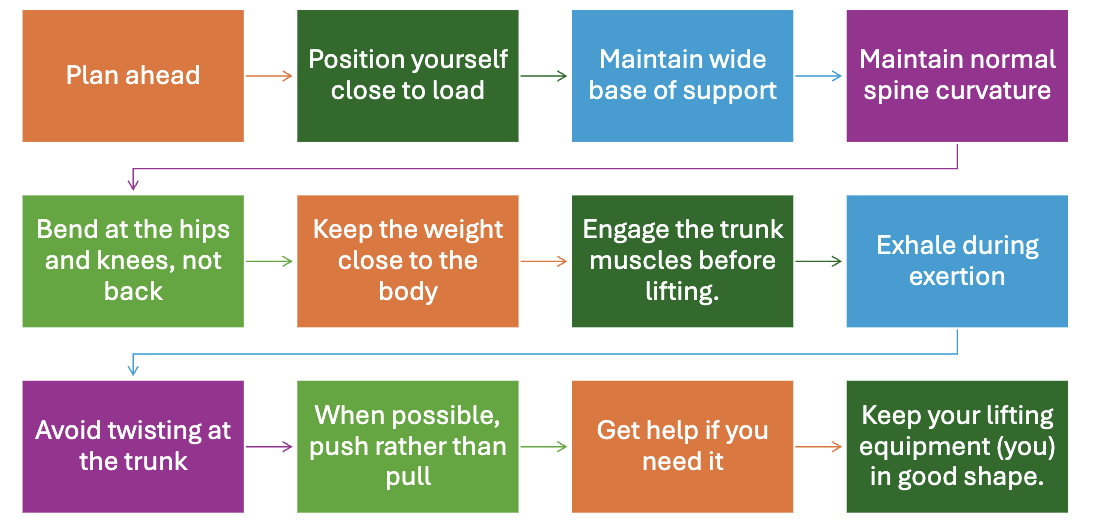
Guidelines for good body mechanics
Relative positions when lifting off of chair?
Head is forward
Neck is extended
Upper trunk is extended
Lower trunk is flexed
Knees are forward
Ankles are behind knees
Head goes away from chair
What are posterior total hip (arthroplasty) precautions?
1) No hip flexion of the postsurgical hip beyond 90 degrees (or 70 degrees for more conservative.
2) No internal rotation of the post surgical hip beyond neutral (0 degrees)
3) No adduction of the postsurgical hip beyond neutral (0 degrees)
Beach ball belly
When supine, place pillow between legs and against outside of operated leg
When side lying, sleep on operated leg OR keep leg abducted with pillow and operated leg supported to prevent rotation
What are anterior total hip precautions?
1. Avoid hip extension
2. Avoid external rotation
3. Avoid abduction beyond neutral
Lit review suggests rate of dislocation after anterolateral THA is low and not improved by adhering to hip precautions
What are traditional sternal precautions?
• No lifting more than 5-10 lbs
• No pushing of pulling through the arms
• No reaching behind the back
• Restriction to using arms when moving from supine to sit, standing up
• May include hugging a cushion to chest or “splinting” when coughing.
-No lifting, pulling, pushing more than 5 lbs
-Don’t push on arms when getting in and out of bed or up from chair
-No elbows above shoulders
-No twisting trunk or deep bending
-Hug a pillow (like a splint) to the chest when coughing or sneezing
-No driving for 4 weeks or until cleared by MD
What are modified sternal precautions?
Move in the tube
• The “in the tube” position limits the lever arm created by the arm and hand, which should decrease stress on the sternum
• Still need to hold cushion or cross arms when coughing as coughing adds a lot of stress
• BUT, recommendations is to look a individual risk factors and taper restrictions as the patient recovers.
What are lumbar spine surgery precautions?
• Often movement may be restricted for 6-8 weeks.
• Avoid activities that flex or rotate the lumbar spine
• Avoid lifting objects weighing more than 5 lbs.
• Hip flexion is allowed
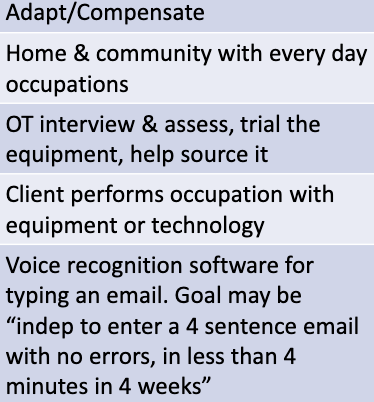
Adaptive equipment
Used to compensate for physical or other limitations, to promote safety, prevent injury, promote independence.
Assistive technology
Technologies that assist people with limitation to perform tasks. An “able-bodied” person may be able to do task without it. Expected to be used over longer period of time .
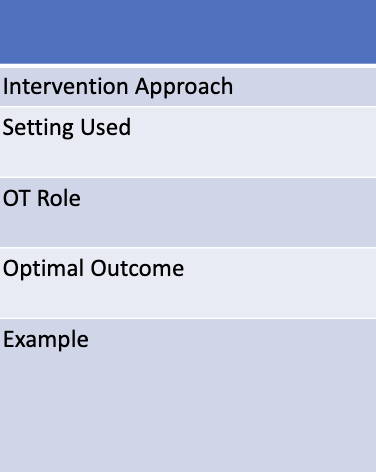
Therapeutic technology
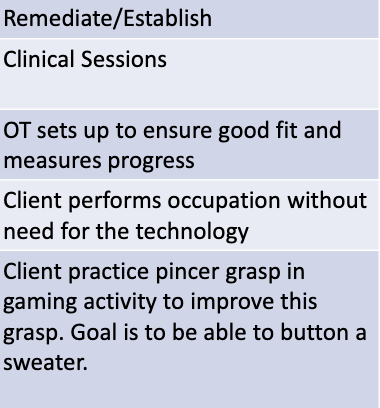
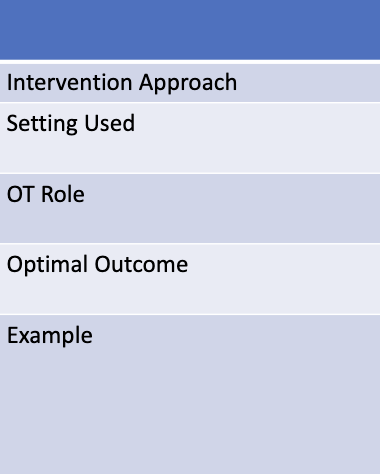
Occupation enabling technology (OET)
Durable medical equipment
• Durable (can withstand repeated use)
• Used for a medical reason
• Typically only useful to someone who is sick or injured
• Used in your home
• Expected to last at least 3 years
What are LE orthotics used for?
Used for creating increased stability at a joint, to allow limited mobility at a joint, and to support weight bearing surfaces of the foot
Bracing devices used to manage orthopedic & neurologic effects on the otherwise intact extremities
Can be static or dynamic (with articulating portions)
What is the role of an OT in orthosis?
Consider the functional aspects of the LE orthosis for everyday occupations such as dressing, toileting, bathing, etc.
Client education regarding the donning and doffing of the LE orthotic device
Assist the client (or caregiver) in time management aspects of donning/ doffing the LE orthosis
NOT gait training
What is a TLSO brace?
Thoracic lumbar sacral orthosis
Stabilizes the spine for various reason
Spinal precautions in place: no bending, twisting, lifting objects, no upright (sitting up, standing, HOB up with brace off), no lifting above arms. Depends on surgeon
Ordered by orthopedic surgeon and made by orthotist
OT can’t issue or discharge
OT may train in bed mobility, transfers, donning/ doffing
What is a c-collar?
Cervical collar to stabilize c spine
Ordered by orthopedic surgeon/ physician
OT can’t issue or discharge
Typical cervical precautions: no twisting, turning, no bending at neck, no lifting, no lifting arms above shoulders, no pushing/ pulling
OT involved in training in occupations while maintaining precautions
Should adaptive devices be used in hemiplegia dressing?
NO