Reactions EXAM 3

0.0(0)
Studied by 0 people
call kaiCall Kai
learnLearn
examPractice Test
spaced repetitionSpaced Repetition
heart puzzleMatch
flashcardsFlashcards
GameKnowt Play
Card Sorting

1/60

encourage image

There's no tags or description

Looks like no tags are added yet.

Last updated 9:27 PM on 4/19/26
Name
Mastery
Learn
Test
Matching
Spaced
Call with Kai

No analytics yet

Send a link to your students to track their progress

61 Terms
1
New cards
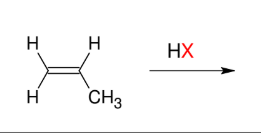
<p>Addition of HX (Mark)</p>

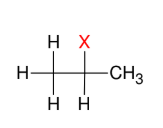
Addition of HX (Mark)

  • Add H and X

  • Adds a halide

to more subst.

carbon.

Note: Look for hydride/methyl shift
<ul><li><p>Add <span style="color: yellow;"><strong>H and X</strong></span></p></li><li><p>Adds a <u>halide</u></p></li></ul><p><u>to more subst.</u></p><p><u>carbon.</u></p><p>Note: Look for hydride/methyl shift</p><p></p><p></p>
2
New cards
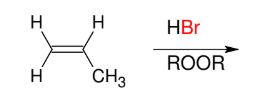
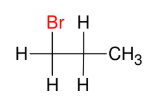
<p>Addition of HBr (Anti-M)</p>

Addition of HBr (Anti-M)

  • Adds H and Br

  • Br on less subst. carbon

  • Can only use Br as halide

<ul><li><p>Adds <span style="color: yellow;"><strong>H and Br</strong></span></p></li><li><p><u>Br on less subst. carbon</u></p></li><li><p>Can <u>only use Br</u> as halide</p></li></ul><p></p>
3
New cards
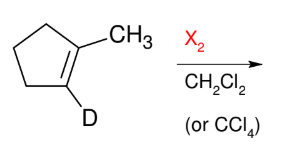
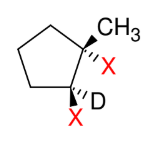
<p>Dihalide Addition</p>

Dihalide Addition

  • Add X and X

  • Anti and co-planar

  • Bottom reagent can be ROOR (peroxide)

  • Trans

<ul><li><p>Add<span style="color: yellow;"> <strong>X and X</strong></span></p></li><li><p><strong><u>Anti</u></strong> and co-planar</p></li><li><p>Bottom reagent can be ROOR (peroxide)</p></li><li><p><u>Trans</u></p></li></ul><p></p>
4
New cards
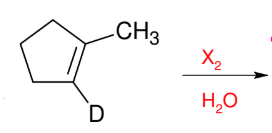
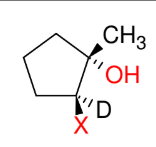
<p>Halohydrin Reaction (Mark w/ OH)</p>

Halohydrin Reaction (Mark w/ OH)

  • Add X and OH

  • Anti and co-planar

  • OH on more subst.

  • KNOW MECHANISM

<ul><li><p>Add <span style="color: yellow;"><strong>X and OH</strong></span></p></li><li><p><u>Anti</u> and co-planar</p></li><li><p><u>OH on more subst.</u></p></li><li><p>KNOW MECHANISM</p></li></ul><p></p>
5
New cards
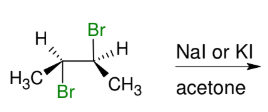
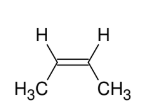
<p>Forming alkene from vicinal dihalide</p>

Forming alkene from vicinal dihalide

  • Wedges with wedges

and dashes with dashes

  • E2 Like!

  • Take away Br and forms DB

<ul><li><p>Wedges with wedges</p></li></ul><p>and dashes with dashes</p><ul><li><p>E2 Like!</p></li><li><p><u>Take away Br and forms DB</u></p></li></ul><p></p>
6
New cards
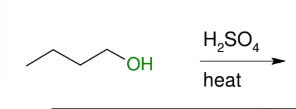
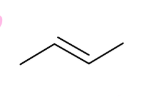
<p>Dehydration to alkene (non-terminal)</p>

Dehydration to alkene (non-terminal)

  • E1 like and it cannot give terminal alkene

  • forms DB

<ul><li><p>E1 like and it <strong><u>cannot give terminal alkene</u></strong></p></li><li><p><strong><u>forms DB</u></strong></p></li></ul><p></p>
7
New cards
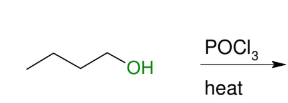
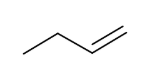
term image
  • Dehydrates to form terminal alkene

  • forms DB

<ul><li><p>Dehydrates to <strong><u>form terminal alkene</u></strong></p></li><li><p><strong><u>forms DB</u></strong></p></li></ul><p></p>
8
New cards
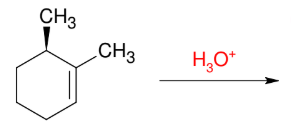
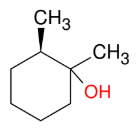
<p>Additon of Oh (Mark and direct)</p>

Additon of Oh (Mark and direct)

  • Racemic mixture

  • add OH only (Mark)

<ul><li><p>Racemic mixture</p></li><li><p><span style="color: yellow;"><strong>add OH</strong></span> only (Mark)</p></li></ul><p></p>
9
New cards
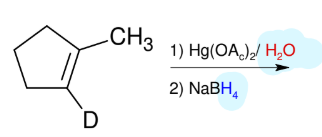
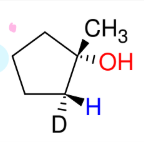
<p>Oxymercuration/demercuration (OH mark w/o h2so4) </p>

Oxymercuration/demercuration (OH mark w/o h2so4)

  • add H and OH (mark)

  • Anti

  • trans

<ul><li><p>add <span style="color: yellow;"><strong>H and OH</strong></span> (mark)</p></li><li><p>Anti</p></li><li><p>trans</p></li></ul><p></p>
10
New cards

Oxymercuration/demercuration (OH mark w/ h2so4)

1.) H3O+ / H+ / H2SO4

2.) H2O

or

H2SO4 (dilute)

  • add H and OH (mark)

  • Anti

  • If conc. H2SO4 —→ E1 rxn

<p>1.) H<sub>3</sub>O<sup>+</sup> / H<sup>+</sup> / H<sub>2</sub>SO<sub>4</sub></p><p>2.) H<sub>2</sub>O</p><p>or </p><p>H<sub>2</sub>SO<sub>4</sub> (dilute)</p><ul><li><p>add <span style="color: yellow;"><strong>H and OH</strong></span> (mark)</p></li><li><p>Anti</p></li><li><p>If conc. H2SO4 —→ E1 rxn</p></li></ul><p></p>
11
New cards
<p>Oxymercuration/demercuration (forming ethers Mark)</p>

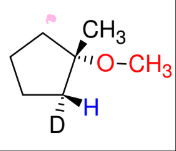
Oxymercuration/demercuration (forming ethers Mark)

  • add H and -OCH3 (mark)

  • Anti

  • SPECIAL: Adds alcohol

    instead to form ethers!
<ul><li><p>add <span style="color: yellow;"><strong>H and -OCH<sub>3</sub></strong></span> (mark)</p></li><li><p>Anti</p></li><li><p>SPECIAL: <u>Adds alcohol</u></p><p>instead to <u>form ethers</u>!</p></li></ul><p></p>
12
New cards
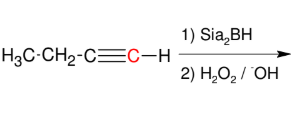
<p>Hydroboration Oxidation</p>

Hydroboration Oxidation

  • Add H and OH

  • Anti-M

  • syn

<ul><li><p>Add <span style="color: yellow;"><strong>H and OH</strong></span></p></li><li><p>Anti-M</p></li><li><p>syn</p></li></ul><p></p>
13
New cards
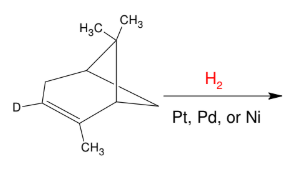
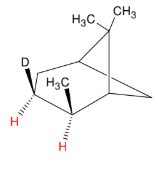
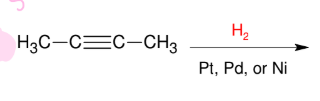
<p>Catalytic Hydrogenation</p>

Catalytic Hydrogenation

  • Add H and H

  • syn

  • Pay attention to steric factors

<ul><li><p>Add <span style="color: yellow;"><strong>H and H</strong></span></p></li><li><p>syn</p></li><li><p>Pay attention to steric factors</p></li></ul><p></p>
14
New cards
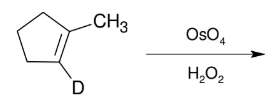
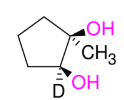
<p>Glycol Synthesis from Alkene Oxidation (OsO4)</p>

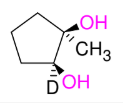
Glycol Synthesis from Alkene Oxidation (OsO4)

  • Adding OH and OH

  • syn

  • can use NMO instead of H2O2

  • treatment w/ HIO4 does ring opening “ozonolysis”
<ul><li><p>Adding <span style="color: yellow;"><strong>OH and OH</strong></span></p></li><li><p>syn</p></li><li><p>can use NMO instead of H<sub>2</sub>O<sub>2</sub></p></li><li><p><strong>treatment w/ HIO<sub>4</sub> does ring opening “ozonolysis”</strong></p></li></ul><p></p>
15
New cards
<p>Glycol Synthesis from Alkene Oxidation (KMnO4 cold)</p>

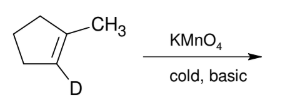
Glycol Synthesis from Alkene Oxidation (KMnO4 cold)

  • Adding OH and OH

  • syn

  • treatment w/ HIO4 does ring opening “ozonolysis”
<ul><li><p>Adding <span style="color: yellow;"><strong>OH and OH</strong></span></p></li><li><p>syn</p></li><li><p><strong>treatment w/ HIO<sub>4</sub> does ring opening “ozonolysis”</strong></p></li></ul><p></p>
16
New cards
<p>Glycol Synthesis from Alkene Oxidation (RCO<sub>3</sub>H or MCPBA)</p>

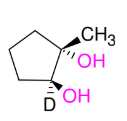
Glycol Synthesis from Alkene Oxidation (RCO3H or MCPBA)

  • Adding OH and OH

  • anti

  • KNOW MECHANISM

  • Can also use 1.) MCPBA, CH2Cl2 2.) H3O+
<ul><li><p>Adding <span style="color: yellow;"><strong>OH and OH</strong></span></p></li><li><p>anti</p></li><li><p>KNOW MECHANISM</p></li><li><p>Can also use <strong>1.) MCPBA, CH<sub>2</sub>Cl<sub>2   </sub>2.) H<sub>3</sub>O<sup>+</sup></strong></p></li></ul><p></p>
17
New cards
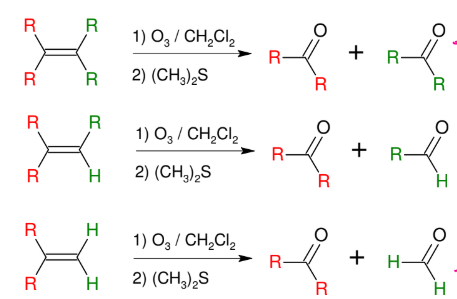
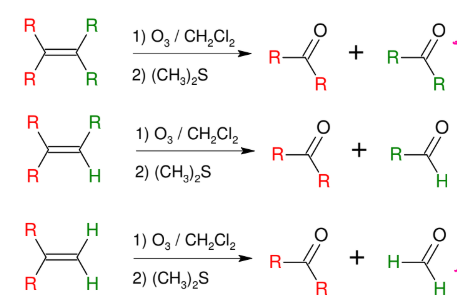
<p>Ozonolysis</p>

Ozonolysis

  • Cleaves the DB to turn C=C into C=O

  • creates aldehyde or ketone or isolate molecule

  • USE O3 / DMS or (CH3)2S

<ul><li><p><u>Cleaves the DB to turn C=C into C=O </u></p></li><li><p><u>creates aldehyde or ketone or isolate molecule</u></p></li><li><p>USE <strong>O<sub>3</sub> / DMS or (CH<sub>3</sub>)<sub>2</sub>S</strong></p></li></ul><p></p>
18
New cards
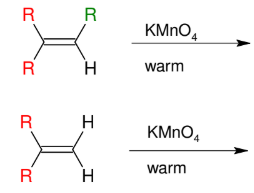
<p>Warm KMnO<sub>4</sub> Cleavage</p>

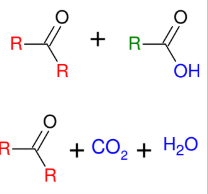
Warm KMnO4 Cleavage

  • Cleaves the DB to turn C=C into C=O

  • creates carboxylic acid or ketone

  • *further oxidizes to form

    carboxylic acids

    *cannot isolate the

    formaldehyde
<ul><li><p><u>Cleaves the DB to turn C=C into C=O </u></p></li><li><p><u>creates carboxylic acid or ketone</u></p></li><li><p>*further oxidizes to form</p><p>carboxylic acids</p><p>*cannot isolate the</p><p>formaldehyde</p></li></ul><p></p>
19
New cards
<p>Carbene / Carbenoid addition (formation of cyclopropane)</p>

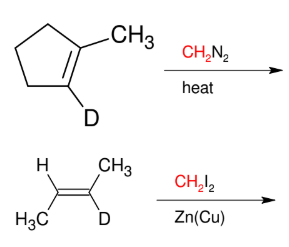
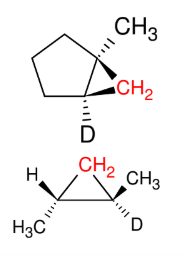
Carbene / Carbenoid addition (formation of cyclopropane)

  • add CH2 only

  • syn

<ul><li><p><span style="color: yellow;"><strong>add CH<sub>2</sub></strong></span><sub> </sub>only</p></li><li><p>syn</p></li></ul><p></p>
20
New cards
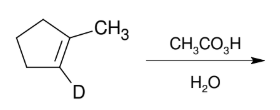
<p>Oxidation of Alkenes: oxirane synthesis</p>

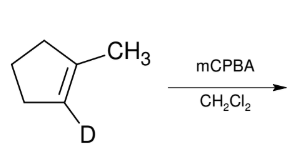
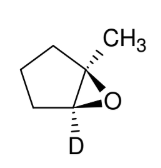
Oxidation of Alkenes: oxirane synthesis

  • adds O to form epoxide

  • syn

  • mCPBA with nonpolar

    solvent can isolate

    oxirane

  • treatment with H3O+ forms OH and OH anti
<ul><li><p><span style="color: yellow;"><strong>adds O </strong></span><span style="color: rgb(254, 254, 254);">to form epoxide</span></p></li><li><p>syn</p></li><li><p>mCPBA with nonpolar</p><p>solvent can isolate</p><p><u>oxirane</u></p></li><li><p>treatment with H<sub>3</sub>O<sup>+</sup> forms OH and OH anti</p></li></ul><p></p>
21
New cards
<p>Opening of Epoxides</p>

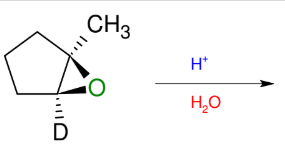
Opening of Epoxides

  • Adds OH and OH to epoxide

  • Can simply use H3O+ instead

  • *acidic conditions opens

    from more substituted

    side.

  • KNOW MECHANISM

<ul><li><p><span style="color: yellow;"><strong>Adds OH and OH</strong></span> to epoxide</p></li><li><p>Can simply use H<sub>3</sub>O<sup>+</sup> instead</p></li><li><p>*acidic conditions opens</p><p>from more substituted</p><p>side.</p></li><li><p>KNOW MECHANISM</p><p></p></li></ul><p></p>
22
New cards
<p>Formation of Di<strong><u>bromo</u></strong>carbenes and Di<strong><u>chloro</u></strong>carbenes</p>

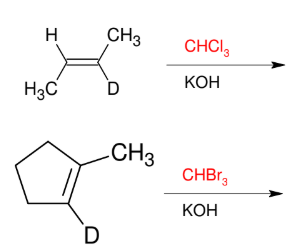
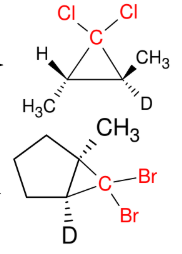
Formation of Dibromocarbenes and Dichlorocarbenes

  • Add CX2

  • Syn

  • *please look up the

    mechanism so you can

    see how the carbene

    is formed
<ul><li><p><span style="color: yellow;"><strong>Add CX<sub>2</sub></strong></span></p></li><li><p>Syn</p></li><li><p>*please look up the</p><p>mechanism so you can</p><p>see how the carbene</p><p>is formed</p></li></ul><p></p>
23
New cards
<p>Formation of the acetylide anion</p>

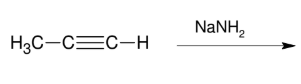
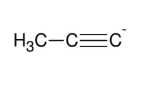
Formation of the acetylide anion

*forms the nucleophile that is handy when connecting carbons!

  • Can use NaH as well

<p>*<span style="color: yellow;"><strong>forms the nucleophile</strong></span> that is handy when connecting carbons!</p><ul><li><p>Can use NaH as well</p></li></ul><p></p>
24
New cards
<p>Using acetylide anion to form <strong><u>internal alkyne</u></strong></p>

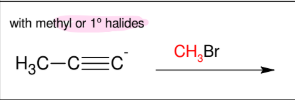
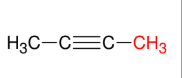
Using acetylide anion to form internal alkyne

  • Forms internal alkyne R-≡-R

  • Can introduce a long chain (i.e. CH3CH2CH2Br)

  • SN2

  • 1° halides

<ul><li><p><span style="color: yellow;"><strong>Forms internal alkyne R-≡-R</strong></span></p></li><li><p>Can <span style="color: yellow;"><strong>introduce a long chain (i.e. CH<sub>3</sub>CH<sub>2</sub>CH<sub>2</sub>Br) </strong></span></p></li><li><p>SN2</p></li><li><p><strong>1° halides</strong></p></li></ul><p></p>
25
New cards
<p></p>

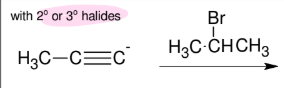
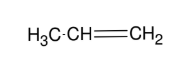
  • E2 rxn

  • w/ 2° or 3° halides

  • forms DB

<ul><li><p>E2 rxn</p></li><li><p>w/ <strong>2° or 3° halides</strong></p></li><li><p>forms DB</p></li></ul><p></p>
26
New cards
<p>Uses of the <strong><u>acetylide anion</u></strong> with <strong><u>carbonyl groups</u></strong> (ketones, aldehydes, and formaldehydes)</p>

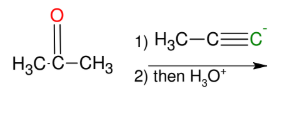
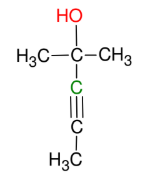
Uses of the acetylide anion with carbonyl groups (ketones, aldehydes, and formaldehydes)

  • adds OH group and R to carbonyl carbon

  • *acetylide anion attacks

    partially positive carbon

    *DO NOT FORGET

    then H3O+
<ul><li><p>adds <span style="color: yellow;"><strong>OH group and R to carbonyl carbon</strong></span></p></li><li><p>*acetylide anion attacks</p><p>partially positive carbon</p><p>*DO NOT FORGET</p><p>then H3O+</p></li></ul><p></p>
27
New cards
<p>Synthesis of <u>terminal </u>Alkynes</p>

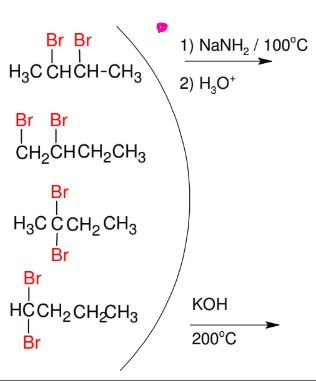
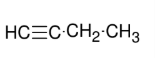
Synthesis of terminal Alkynes

*Need either geminal or

vicinal dihalides

*Look up mechanism

*NaNH2 FAVORS

terminal alkyne formation
<p>*Need either <u>geminal or</u></p><p><u>vicinal dihalides</u></p><p>*Look up mechanism</p><p>*NaNH2 FAVORS</p><p><span style="color: yellow;"><strong>terminal alkyne formation</strong></span></p>
28
New cards
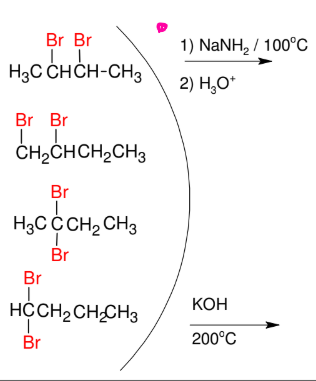
<p>Synthesis of <u>internal </u>Alkynes</p>

Synthesis of internal Alkynes

*Need either geminal or

vicinal dihalides

*Look up mechanism

*KOH FAVORS

internal alkyne formation
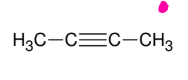
<p>*Need either <u>geminal or</u></p><p><u>vicinal dihalides</u></p><p>*Look up mechanism</p><p>*KOH FAVORS</p><p><span style="color: yellow;"><strong>internal alkyne formation</strong></span></p>
29
New cards
<p>Halogenation of alkynes (Br<sub>2</sub> and alkyne)</p>

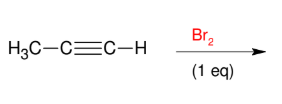
Halogenation of alkynes (Br2 and alkyne)

  • Adds Br and Br to alkyne to make alkene

  • Stereochemistry cannot be controlled

<ul><li><p>Adds <span style="color: yellow;"><strong>Br and Br</strong></span> to alkyne to <span style="color: yellow;">make alkene</span></p></li><li><p>Stereochemistry cannot be controlled</p></li></ul><p></p>
30
New cards
<p>Halogenation of alkynes (<u>HBr and alkyne - Mark</u>)</p>

Halogenation of alkynes (HBr and alkyne - Mark)

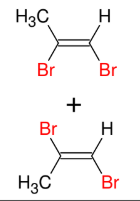
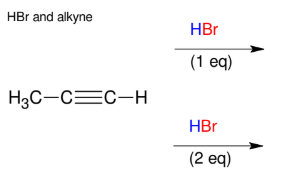
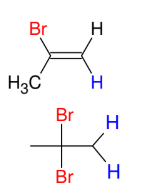
  • Adds Br and H to alkyne

  • 1 eq makes alkene, 2 eq makes alkane

  • Mark

  • Syn

<ul><li><p>Adds <span style="color: yellow;"><strong>Br and H</strong></span> to alkyne</p></li><li><p><u>1 eq makes alkene, 2 eq makes alkane</u></p></li><li><p>Mark</p></li><li><p>Syn</p></li></ul><p></p>
31
New cards
<p>Halogenation of alkynes (<u>HBr and alkyne - Anti M</u>)</p>

Halogenation of alkynes (HBr and alkyne - Anti M)

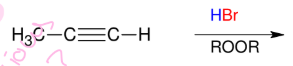
  • Adds Br and H to alkyne

  • Anti M

  • Syn

  • ROOR = peroxide

<ul><li><p>Adds <span style="color: yellow;"><strong>Br and H</strong></span> to alkyne</p></li><li><p>Anti M</p></li><li><p>Syn</p></li><li><p>ROOR = peroxide</p></li></ul><p></p>
32
New cards
<p>Catalytic reduction of alkyne with reactive catalyst</p>

Catalytic reduction of alkyne with reactive catalyst

*Takes it all the way back

to alkane

*generally bad yield
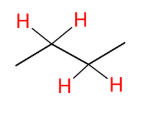
<p>*<span style="color: yellow;"><strong>Takes it all the way back</strong></span></p><p><span style="color: yellow;"><strong>to alkane</strong></span></p><p>*generally bad yield</p>
33
New cards
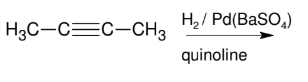
<p>Alkyne to Alkene: TRIPLE to DOUBLE BOND (cis alkene formation)</p>

Alkyne to Alkene: TRIPLE to DOUBLE BOND (cis alkene formation)

  • Adds H and H to form cis alkene

  • Syn (cis alkene formation)

  • Dont worry about other reagents - just mention H2 / Lindlar
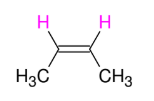
<ul><li><p>Adds <span style="color: yellow;"><strong>H and H</strong></span> to form <span style="color: yellow;"><strong>cis alkene</strong></span></p></li><li><p><u>Syn (cis alkene formation)</u></p></li><li><p>Dont worry about other reagents - just mention <strong>H<sub>2</sub> / Lindlar</strong></p></li></ul><p></p>
34
New cards
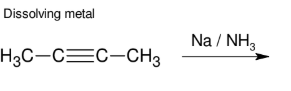
<p>Alkyne to Alkene: TRIPLE to DOUBLE BOND (trans alkene formation)</p>

Alkyne to Alkene: TRIPLE to DOUBLE BOND (trans alkene formation)

  • Adds H and H to form trans alkene

  • Anti (trans alkene formation)

<ul><li><p>Adds <span style="color: yellow;"><strong>H and H</strong></span> to form <span style="color: yellow;"><strong>trans alkene</strong></span></p></li><li><p><u>Anti (trans alkene formation)</u></p></li></ul><p></p>
35
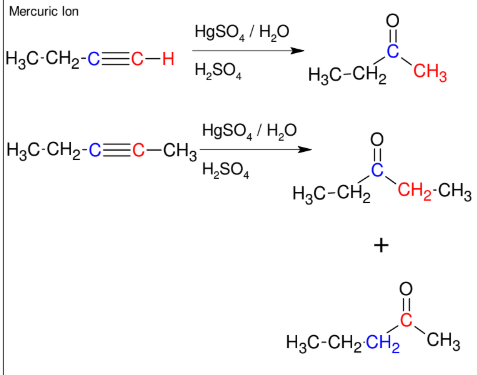
New cards
<p>Addition of H-OH to alkynes (forming ketone)</p>

Addition of H-OH to alkynes (forming ketone)

  • Adds H-OH to form ketone

  • Mark

  • *If not terminal, you will

    get a mixture.
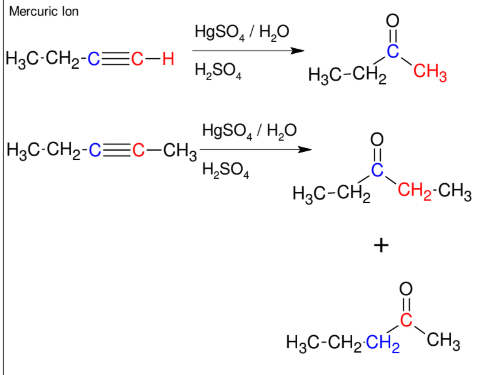
<ul><li><p><span style="color: yellow;"><strong>Adds H-OH</strong></span> to form <span style="color: yellow;"><strong><u>ketone</u></strong></span></p></li><li><p>Mark</p></li><li><p>*If not terminal, you will</p><p>get a mixture.</p></li></ul><p></p>
36
New cards
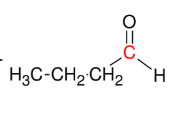
<p>Addition of H-OH to alkynes (forming aldehyde)</p>

Addition of H-OH to alkynes (forming aldehyde)

  • Adds H-OH to form aldehyde

  • Anti M

<ul><li><p><span style="color: yellow;"><strong>Adds H-OH</strong></span> to form <span style="color: yellow;"><strong><u>aldehyde</u></strong></span></p></li><li><p>Anti M</p></li></ul><p></p>
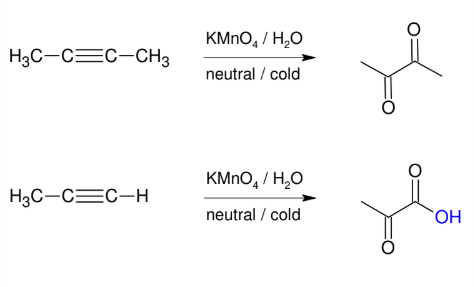
37
New cards
<p>Oxidation of alkynes (mild conditions)</p>

Oxidation of alkynes (mild conditions)

  • Adds O and O to make two carbonyls (ketones usually)

  • *Forms vicinal

    carbonyls

    *further oxidizes terminal

    alkynes to form

    carboxylic acid.
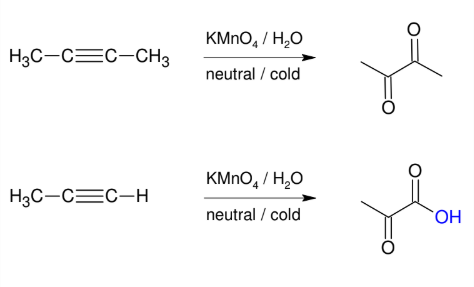
<ul><li><p>Adds <span style="color: yellow;"><strong>O and O</strong></span> to make <span style="color: yellow;"><strong>two carbonyls</strong></span> (ketones usually)</p></li><li><p>*Forms vicinal</p><p>carbonyls</p><p><strong>*further oxidizes terminal</strong></p><p><strong>alkynes to </strong><span style="color: yellow;"><strong>form</strong></span></p><p><span style="color: yellow;"><strong>carboxylic acid</strong></span><strong>.</strong></p></li></ul><p></p>
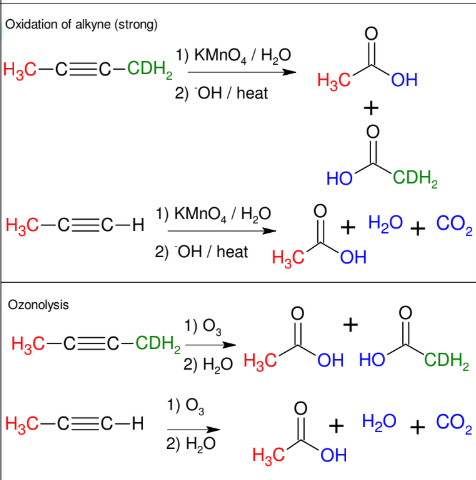
38
New cards
<p>Cleavage of Alkynes</p>

Cleavage of Alkynes

  • C≡C gets split into two COOH groups

  • forms H2O and CO2 if terminal

  • Can proceed via oxidation of alkyne (strong) or ozonolysis
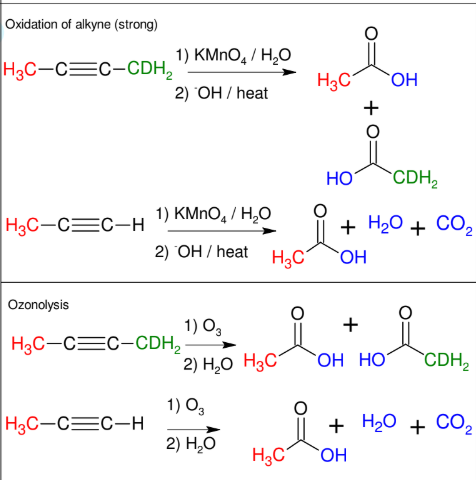
<ul><li><p><span style="color: yellow;">C<strong>≡C gets split into two COOH groups</strong></span></p></li><li><p><span style="color: yellow;"><strong>forms H2O and CO2 if terminal</strong></span></p></li><li><p>Can proceed via oxidation of alkyne (strong) or ozonolysis</p></li></ul><p></p>
39
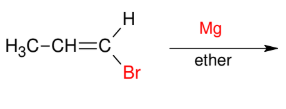
New cards
<p>The Grignard Reagent</p>

The Grignard Reagent

  • Add Mg to make R-MGBr

  • adds to 1°, 2°, or 3° allyl, vinyl, or aryl carbons
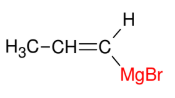
<ul><li><p>Add <span style="color: yellow;"><strong>Mg to make R-MGBr</strong></span></p></li><li><p>adds to 1°, 2°, or 3° allyl, vinyl, or aryl carbons</p></li></ul><p></p>
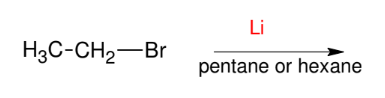
40
New cards
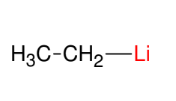
<p>The Organolithium Reagent</p>

The Organolithium Reagent

  • Replace X with Li

  • Acts like grignard but stronger

<ul><li><p><span style="color: yellow;"><strong>Replace X with Li</strong></span></p></li><li><p>Acts like grignard but <u>stronger</u></p></li></ul><p></p>
41
New cards
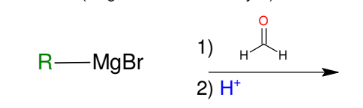
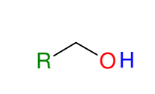
<p>Formation of alcohols from Grignard (forming 1° alcohols)</p>

Formation of alcohols from Grignard (forming 1° alcohols)

  • Adds R group to formaldehyde

  • Acid workup step to make OH group

  • *Know this mechanism!

<ul><li><p><span style="color: yellow;"><strong>Adds R group</strong></span> to formaldehyde</p></li><li><p>Acid workup step to <span style="color: yellow;"><strong>make OH group</strong></span></p></li><li><p>*Know this mechanism!</p></li></ul><p></p>
42
New cards
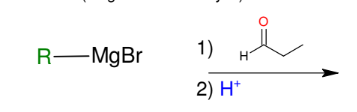
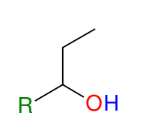
<p>Formation of alcohols from Grignard (forming 2° alcohols)</p>

Formation of alcohols from Grignard (forming 2° alcohols)

  • Adds R group to aldehyde

  • Acid workup step to make OH group

  • *Know this mechanism!

<ul><li><p><span style="color: yellow;"><strong>Adds R group</strong></span> to aldehyde</p></li><li><p>Acid workup step to <span style="color: yellow;"><strong>make OH group</strong></span></p></li><li><p>*Know this mechanism!</p></li></ul><p></p>
43
New cards
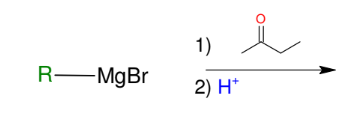
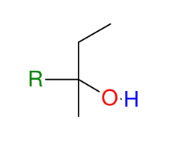
<p>Formation of alcohols from Grignard (forming 3° alcohols)</p>

Formation of alcohols from Grignard (forming 3° alcohols)

  • Adds R group to ketone

  • Acid workup step to make OH group

  • *Know this mechanism!

<ul><li><p><span style="color: yellow;"><strong>Adds R group</strong></span> to ketone</p></li><li><p>Acid workup step to <span style="color: yellow;"><strong>make OH group</strong></span></p></li><li><p>*Know this mechanism!</p></li></ul><p></p>
44
New cards
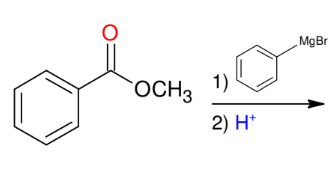
<p>Grignard and esters or acid halides</p>

Grignard and esters or acid halides

  • Know from OCHEM LAB (synthesis of triphenylmethanol) !

  • adding phenyl groups

  • *Reaction goes until

    completion

    *Know this mechanism !
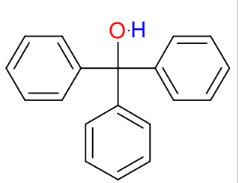
<ul><li><p>Know from OCHEM LAB (synthesis of <strong><u>triphenylmethanol</u></strong>) !</p></li><li><p>adding <span style="color: yellow;"><strong>phenyl groups</strong></span></p></li><li><p>*Reaction goes until</p><p>completion</p><p>*Know this mechanism !</p></li></ul><p></p>
45
New cards
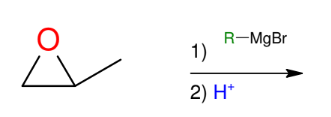
<p>Grignard and Epoxides (opening of epoxides)</p>

Grignard and Epoxides (opening of epoxides)

*SN2 like (attacks least

substituted side)

*Know this mechanism!
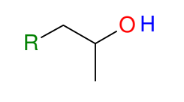
<p>*SN2 like <strong><u>(attacks least</u></strong></p><p><strong><u>substituted side)</u></strong></p><p>*Know this mechanism!</p>
46
New cards
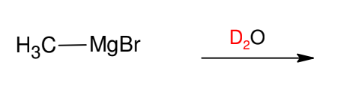
<p>Attaching Deuterium to Carbons</p>

Attaching Deuterium to Carbons

*This is just good to

know.
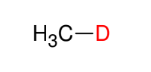
<p>*This is just good to</p><p>know.</p>
47
New cards
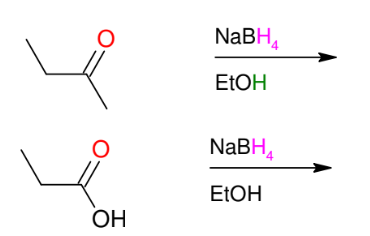
<p>Hydride reduction of carbonyls (mild conditions - NaBH4 as reagent)</p>

Hydride reduction of carbonyls (mild conditions - NaBH4 as reagent)

*reduces ONLY

aldehydes and

ketones

*use alcohols as a

solvent.

*KNOW MECHANISM
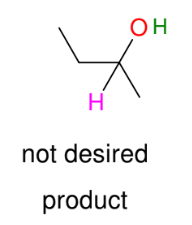
<p>*reduces <span style="color: yellow;"><strong>ONLY</strong></span></p><p><span style="color: yellow;"><strong>aldehydes and</strong></span></p><p><span style="color: yellow;"><strong>ketones</strong></span></p><p>*use <u>alcohols</u> as a</p><p>solvent.</p><p>*KNOW MECHANISM</p><p></p>
48
New cards
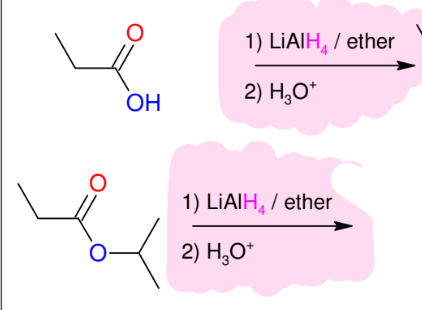
<p>Hydride reduction of carbonyls (strong conditions - LiAlH4 as reagent)</p>

Hydride reduction of carbonyls (strong conditions - LiAlH4 as reagent)

*reduces aldehydes,

ketones, esters, acid

halides, carboxyllic

acids (ALL Carbonyls)

*Use ethers solvents

*Acid 2nd step

*KNOW MECHANISM
<p>*reduces <span style="color: yellow;"><strong>aldehydes,</strong></span></p><p><span style="color: yellow;"><strong>ketones, esters, acid</strong></span></p><p><span style="color: yellow;"><strong>halides, carboxyllic</strong></span></p><p><span style="color: yellow;"><strong>acids (ALL Carbonyls)</strong></span></p><p>*Use <u>ethers</u> solvents</p><p>*Acid 2nd step</p><p>*KNOW MECHANISM</p>
49
New cards
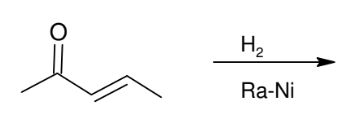
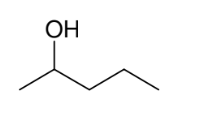
<p>Raney Nickel</p>

Raney Nickel

  • Reduces both carbonyl and alkene

<ul><li><p>Reduces both carbonyl and alkene</p></li></ul><p></p>
50
New cards
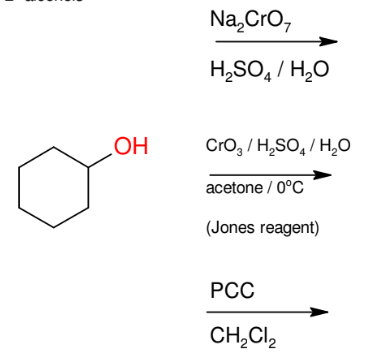
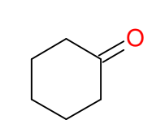
<p>Oxidation of alcohols 2° alcohols into ketones</p>

Oxidation of alcohols 2° alcohols into ketones

  • Makes ketone from 2° alcohols

<ul><li><p>Makes <span style="color: yellow;"><strong>ketone</strong></span> from 2° alcohols</p></li></ul><p></p>
51
New cards
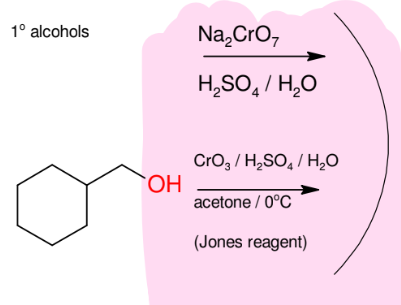
<p>Oxidation of alcohols 1° alcohols into carboxylic acid group</p>

Oxidation of alcohols 1° alcohols into carboxylic acid group

  • Makes carboxylic acid from 1° alcohols
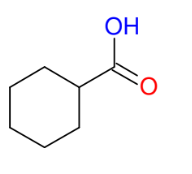
<ul><li><p>Makes <span style="color: yellow;"><strong>carboxylic acid</strong></span> from 1° alcohols</p></li></ul><p></p>
52
New cards
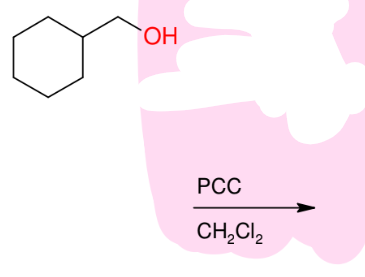
<p>Oxidation of alcohols 1° alcohols into aldehyde/formaldehyde group</p>

Oxidation of alcohols 1° alcohols into aldehyde/formaldehyde group

  • Makes aldehyde from 1° alcohols

  • *PCC is the only one

    that can isolate

    the formaldehyde.
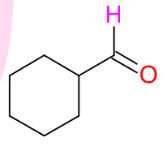
<ul><li><p>Makes <span style="color: yellow;"><strong>aldehyde</strong></span> from 1° alcohols</p></li><li><p>*PCC is the only one</p><p>that can isolate</p><p>the formaldehyde.</p></li></ul><p></p>
53
New cards
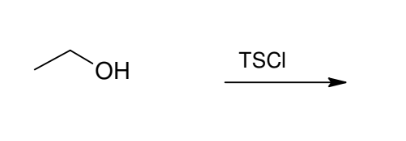
<p>Formation of the Tosylate Ester</p>

Formation of the Tosylate Ester

  • OH group replaced by OTos

*RETENTION from

where alcohol was

originally (SN2 purposes)
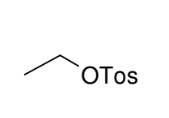
<ul><li><p>OH group replaced by <span style="color: yellow;"><strong>OTos</strong></span></p></li></ul><p>*RETENTION from</p><p>where alcohol was</p><p>originally (SN2 purposes)</p>
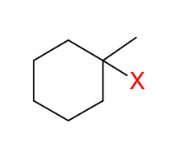
54
New cards
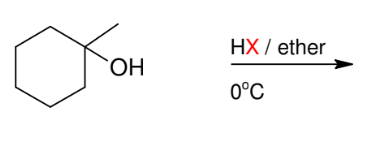
<p>Formation of alkyl halide from 3° alcohols</p>

Formation of alkyl halide from 3° alcohols

  • OH group replaced by X

  • For 3° only

<ul><li><p>OH group replaced by<span style="color: yellow;"><strong> X</strong></span></p></li><li><p><span style="color: yellow;"><strong>For 3</strong></span><span style="color: yellow;"><strong>° only</strong></span></p></li></ul><p></p>
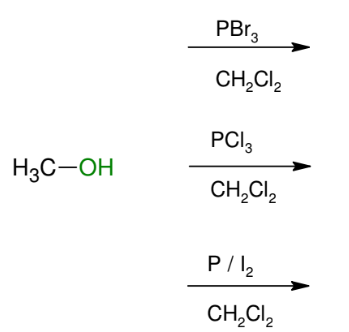
55
New cards
<p>Formation of 1°/2° alkyl halides from 1°/2° alcohols</p>

Formation of 1°/2° alkyl halides from 1°/2° alcohols

  • OH group replaced by X

  • For 2° and 1° only

*Basically an SN2

reaction. (Inversion

from original alcohol)

*Can also use SOCl2

for Cl, but it undergoes

a special mechanism!
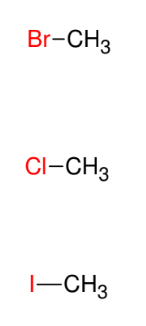
<ul><li><p>OH group replaced by<span style="color: yellow;"><strong> X</strong></span></p></li><li><p><span style="color: yellow;"><strong>For 2° and 1</strong></span><span><strong>°</strong></span><span style="color: yellow;"><strong> only</strong></span></p></li></ul><p>*Basically an SN2</p><p>reaction. (Inversion</p><p>from original alcohol)</p><p>*Can also use SOCl2</p><p>for Cl, but it undergoes</p><p>a special mechanism!</p>
56
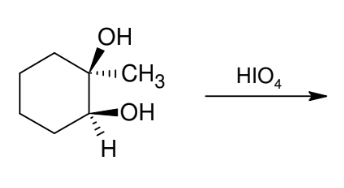
New cards
<p>Unique cleavage with HIO4 of <u>syn vicinal diols</u></p>

Unique cleavage with HIO4 of syn vicinal diols

*Vicinal diols MUST

be syn
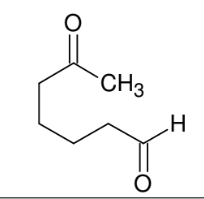
<p>*Vicinal diols MUST</p><p>be syn</p>
57
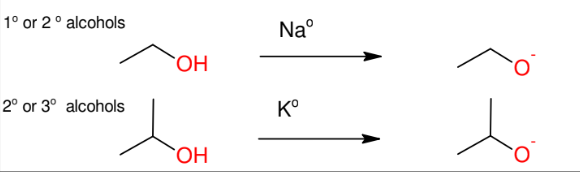
New cards
<p>Formation of Alkoxide Anion</p>

Formation of Alkoxide Anion

  • Will be used for williamson ether synthesis
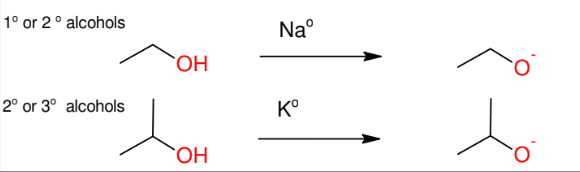
<ul><li><p>Will be used for williamson ether synthesis</p></li></ul><p></p>
58
New cards
<p>Williamson ether synthesis</p>

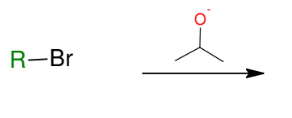
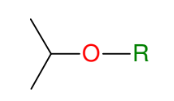
Williamson ether synthesis

  • Using alkoxide anion, create ether

<ul><li><p>Using alkoxide anion, create <span style="color: yellow;"><strong>ether</strong></span></p></li></ul><p></p>
59
New cards
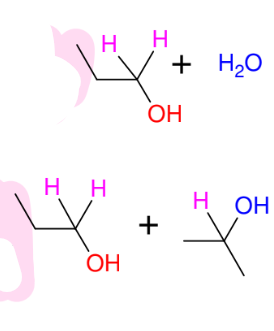
<p>Ethers from intermolecular dehydration</p>

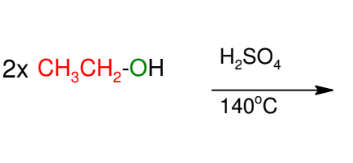
Ethers from intermolecular dehydration

  • Another method of forming ether

  • *MUST be identical

    alcohols or else you

    will get a mixture!!!
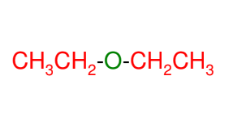
<ul><li><p>Another method of forming <span style="color: yellow;"><strong>ether</strong></span></p></li><li><p>*<u>MUST be identical</u></p><p><u>alcohols</u> or else you</p><p>will get a mixture!!!</p></li></ul><p></p>
60
New cards
<p>Pinacol - Pinacolone Rearrangement</p>

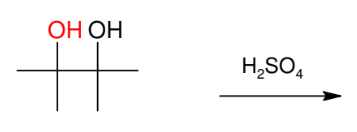
Pinacol - Pinacolone Rearrangement

*Need vicinal diols

*Know mechanism

(methyl shift!)
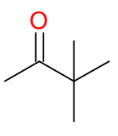
<p>*Need vicinal diols</p><p>*Know mechanism</p><p>(methyl shift!)</p>
61
New cards
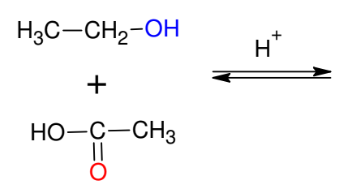
<p>Fischer Estherification </p>

Fischer Estherification

*CAN USE ACID

HALIDE (i.e. CH3COCl) instead of

carboxyllic acid!!!
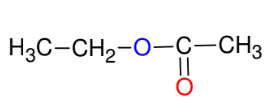
<p>*CAN USE ACID</p><p>HALIDE (i.e. CH<sub>3</sub>COCl) instead of</p><p>carboxyllic acid!!!</p>