CP13: isolate and individual species from a mixed cutlure of bacteria using streak plating
 Call Kai
 Learn
Learn Practice Test
 Spaced Repetition
 Match
Match Flashcards
 Knowt Play
1/8

There's no tags or description
Looks like no tags are added yet.
Name | Mastery | Learn | Test | Matching | Spaced | Call with Kai |
|---|
No analytics yet
Send a link to your students to track their progress
9 Terms
use of aseptic technique example
● Wipe down surfaces with antibacterial cleaner both before and after experiment.
● Use a Bunsen burner in the work space so that convection currents draw microbes away from the culture.
● Flame the inocculating loop and allow TO COOL before using to transfer bacteria.
● Flame the neck of any bottles before use to prevent any bacteria entering the vessel (air moves out so unwanted organisms don’t move in).
● Keep all vessels containing bacteria open for the minimum amount of time.
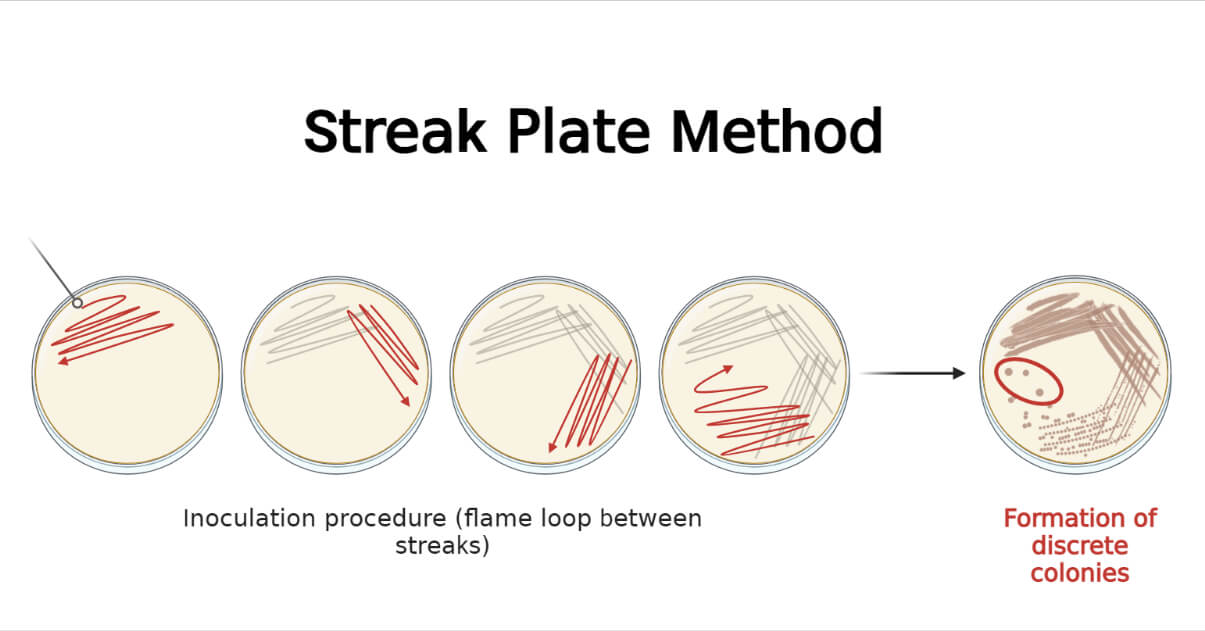
how to streak plate
streaks must overlap
method
flame inoculating loop to sterilise (until it glows red) and allow to cool
flame neck of mixed culture tube to sterilise
dip inoculating loop into mixed culture
flame neck of mixed culture tube agai and replace lid
open the petri dish lid as little as possible - streak plate
flame inoculating loop again
tape the lid of petrish dish (not fully to prevent anaerobic growth) and leave to incubate eg. for 48 hours
after incubation take a sample of a red colony using and inoculating loop and repeat the process of a fresh nutrient agar plate
take a sample of a yellow colony and do the same on a fresh nutrient agar plate
tape the lids of petri dishes (not fully to prevent anaerobic growth) and leave to incubate
why do you not fully petri dishes
to prevent anoxic/anaerobic conditions so that harmful pathogens don’t grow
incubate at temperature below body temp at 25C
to prevent growth of human pathogens
why do you incubate petri dishes upside down
to prevent water condensation on the lid from dripping onto the agar surface and colonies mixing
risks
flammable disinfectant
biohazard - contamination infection
naked flame - fire hazard/burns
how to minimise risk
keep away from naked flame
aseptic technqiue, washing hands
topics it links into
plate → broth
antibiotics → spread plates → zone of inhibitions
gram positive and negative bacteria