2 relationships and attraction
 Call Kai
 Learn
Learn Practice Test
 Spaced Repetition
 Match
Match Flashcards
 Knowt Play
1/27

There's no tags or description
Looks like no tags are added yet.
Name | Mastery | Learn | Test | Matching | Spaced | Call with Kai |
|---|
No analytics yet
Send a link to your students to track their progress
28 Terms
Attachment theory
In infancy, people develop models of close relationships they carry throughout their lives
Secure attachment
Reliable caregiver
good, dependable bond
Avoidant attachment
Unavailable caregiver
independent and apathetic reactions
Anxious/ambivalent attachment
Undependable, unpredictable caregiver
suspicion, low exploration, distress
Social exchange theory
People make decisions about their relationships by weighing benefits and costs
Success depends on
Satisfaction
Presence of attractive alternatives
Equity theory
We are motivated by fairness in relationships
Not just “winning” the C/B ratio
Exchange relationships
Focus on equity and reciprocity
No responsibility for other’s well being
Relatively short term
Communal relationships
Feelings of closeness, oneness, shared identity
Highly responsive to other’s needs
Relatively long term
Attraction — Proximity
The more we see and interact with people, the more likely we are able to start a relationship with them
Functional distance
Closeness between places in terms of interaction opportunities
Friendship formation in apartments
Mere exposure effect
Tendency for a novel stimulus to be liked more/rated more positively after repeated exposure to it
Close proximity from young age → genetic relatedness mechanisms → incest aversion
Halo effect
Belief that physically attractive people possess wide range of positive characteristics
Important features: facial symmetry, averageness, health, fertility
Halo effect in reverse: we perceive likable people as more attractive
Contrast effects
Exposure to very attractive people can lead us to see others (even ourselves) as less attractive
Matching hypothesis
Tendency to choose partners who match self in attractiveness and other qualities
Why is similarity important?
Less conflict happens when others have similar viewpoints (balance theory)
Validation of our own characteristics and beliefs (self-verification)
Belief that similarity will lead to more equal interaction and trust (reciprocity, equity)
Complementarity hypothesis
No widespread evidence for this (opposites attract)
Sex differences
Men prefer features signifying fertility
Women prefer features indicating maturity, prestige, and dominance
Passionate love
A state of intense longing for someone
Intense physiological arousal
Psychological interest
Care for their needs
When good: fulfillment and ecstasy
When bad: sadness and despair
Compassionate love
Affection felt for those with whom lives are deeply connected but not necessarily experiencing passion or arousal
Strong commitment
Deep affectionate attachment
Shared values
Passion
Strong and intense feelings, longing to be with, infatuation, physiological arousal
Intimacy
Emotional closeness, bonding, sharing
Commitment
Decision to love and maintain a long term relationship with someone
Triangular theory of love
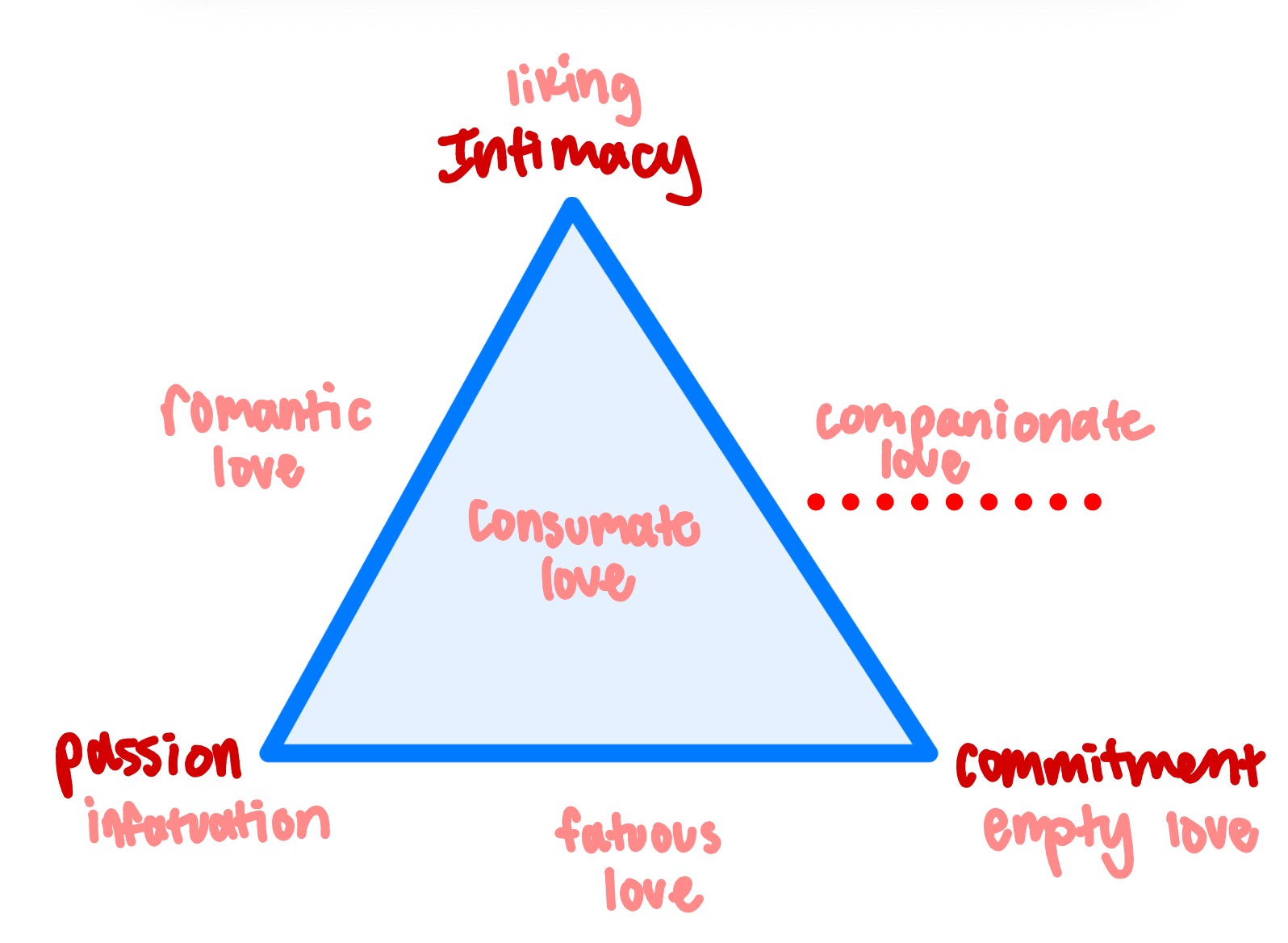
Commitment
Associated with long-term relationships
Encourages sacrifice and forgiveness
Investment model (commitment)
Builds on social exchange theory
More commitment with:
Satisfaction
Few high-quality alternative partners
Investment (time, effort, caring, shared experience)
What’s bad for relationships — Complementarity hypothesis
Perceived dissimilarity in long term relationships is bad for relationship quality and can predict breakup
Problematic attribution styles
Partner does something good, EXTERNAL attribution
Partner does something bad, INTERNAL attribution
Four horsemen of the apocalypse
Criticism
Defensiveness
Stonewalling
Contempt (worst, thinking your partner is a bad person and behaving so)
Keys to success
“Why did your marriage last” study
Friendship, commitment, similarity, positive affect
Engagement, positive responsiveness, playfulness, idealization
Romantic love can last long term