Biochem test 3
0.0(0)
Studied by 1 person Call Kai
 Learn
Learn Practice Test
 Spaced Repetition
 Match
Match Flashcards
 Knowt Play
Card Sorting
1/74

Earn XP
Description and Tags
Last updated 12:11 PM on 11/22/22
Name | Mastery | Learn | Test | Matching | Spaced | Call with Kai |
|---|
No analytics yet
Send a link to your students to track their progress
75 Terms
1
New cards
Describe the structure 18:1delta9cis
18 refers to the amount o carbons in the molecule
1 refers to there only being 1 double bond present
delta 9 refers to the double bond being on the 9th carbon
cis tells us that the direction of the bend
1 refers to there only being 1 double bond present
delta 9 refers to the double bond being on the 9th carbon
cis tells us that the direction of the bend
2
New cards
How would you rank the melting points of lipids based on their structures and explain the rankings using non-covalent interactions
I would first rank saturated lipids to have the highest melting point bc they have more carbons making them the largest with the most surface area.
- Larger molecules have stronger induced dipoles and the harder it is to brea them apart
- Larger molecules have stronger induced dipoles and the harder it is to brea them apart
3
New cards
Explain why lipids clump together in water using the principles of thermodynamics
Lipids clump together in water because it increases the entropy of the water. This does decrease the entropy of the lipids but together the overall system's entropy is increased.
4
New cards
What is a micelle?
fatty acids found in micelle tend to have a conical shape - the polar head group is the "fat" part of the cone and the hydrocarbon tail is the point(of the cone)
5
New cards
What is a vesicle?
Membrane lipids found in vesicles have 2 fatty acid "tails" and this gives them a cylindrical shape
6
New cards
Predict whether lipids will form micelles, bilayers, or neither and justify the prediction based on the structure and properties of the lipids
Would you expect soap molecules to form a micelle or a vesicle?
Remember soap is used to dissolve nonpolar substances like butter in water.
Would you expect soap molecules to form a micelle or a vesicle?
Remember soap is used to dissolve nonpolar substances like butter in water.
Soap molecules would be a micelle bc the center of a micelle is nonpolar which can trap the nonpolar substance in it while interacting with the water with its polar outside
- Vesicles have polar centers and polar exteriors so they would non work for soap.
- Vesicles have polar centers and polar exteriors so they would non work for soap.
7
New cards
which membrane would have more fluid characteristics- the one with more saturated fatty acids or the one with more unsaturated fatty acids?
Unsaturated fatty acids will have more fluid like characteristics bc the double bond is going to present the acid from getting close enough to form induced dipole forces (london dispersion) with another unsaturaed fatty acid
8
New cards
what is unique about cholesterol?
At low temps, cholesterol helps to prevent packing of the tails and keeps the membrane from freezing solid.
At high temps, cholesterol's rigid structure continues to interact with nearby lipids, keeping the membrane from melting completely
At high temps, cholesterol's rigid structure continues to interact with nearby lipids, keeping the membrane from melting completely
9
New cards
· Predict whether lipids will be used for storage or structure and justify the prediction based on the structure and properties of the lipids
10
New cards
· Interpret kinetic data and graphs and use the data to draw conclusions.
11
New cards
· Explain the principles and importance of membrane transport, including symport, and use that knowledge to interpret other types of transport.
12
New cards
Review Amino Acids
Do It
13
New cards
What is Kd?
dissociation constant for the substrate on the enzyme
14
New cards
What is Ki?
dissociation constant for the inhibitor to the enzyme
15
New cards
What is an occluded state?
one door closes before the next door opens
16
New cards
Figure out how to read eadie hofstie plot
17
New cards
What structure is this and what type of glycosidic bond does it have?
maltose (alpha 1,4 glycosidic bond)(made up of 2 glucose molecules)
18
New cards
lactose (beta 1,4 glycosidic bond)
- Galactose and Glucose
- Galactose and Glucose
What structure is this and what type of glycosidic bond does it have?
19
New cards
Sucrose (alpha 1,2 glycosidic bond)
- Glucose and Fructose
- Glucose and Fructose
What structure is this and what type of glycosidic bond does it have?
20
New cards
amylose (alpha 1,4 glycosidic bond)
- Glucose and glucose
- Glucose and glucose
What structure is this and what type of glycosidic bond does it have?
21
New cards
cellulose
What structure is this and what type of glycosidic bond does it have?
22
New cards
put numbers 8-15 from carbs structure activity in here
23
New cards
·Use the structures and properties of cellulose and amylose to propose properties and uses for other polysaccharides.
24
New cards
· Explain why carbohydrates are useful signaling molecules and use the examples from the Inner Life of the Cell to illustrate your answer. Apply this knowledge to other cell signaling pathways that include glycosylated proteins.
25
New cards
Desrcribe biochemical standard state
Temp ; 25C (298K)
Pressure: 1atm
Reactant COncentration: 1M
pH 7
Pressure: 1atm
Reactant COncentration: 1M
pH 7
26
New cards
What is Keq
-the equilibrium constant
-[products]/[reactants]
-[products]/[reactants]
27
New cards
What is Q?
reaction quotient
28
New cards
reaction quotient
-measures concentrations of reactants and products at any point in time during a reaction
-looks identical to the equation for Keq
-if the rates of the forward reaction and baward reaction are equal than Q will equal Keq
-looks identical to the equation for Keq
-if the rates of the forward reaction and baward reaction are equal than Q will equal Keq
29
New cards
What is R
gas constant (8.31)
30
New cards
What is delta G when a reaction is in equalibrium?
delta G is 0
31
New cards
What is equilibrium?
condition in the course of a reversible chemical reaction in which no net change in the amounts of reactants and products occurs.
32
New cards
What are the units for delta G?
J/mol
33
New cards
What are the units for E(reduction potential)?
V
34
New cards
what is n in the delta G reaction?
number of electrons transfered
35
New cards
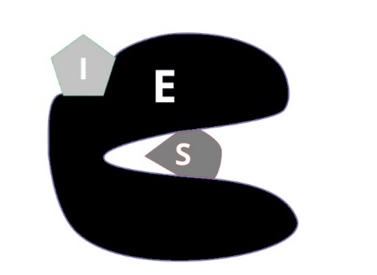
competitive inhibition
inhibitor that resembles the normal substrate competes with the substrate for the active siteVmax stays the sameKm increases
36
New cards
Why does Vmax stay the same in the presence of a competitive inhibitor?
At high substrate concentrations, the inhibitor doesn't compete well.
37
New cards
Why does Km increase in the presence of a competitive inhibitor?
the apparent Km (Km') for the substrate is increased since a higher concentration of substrate is required to overcome inhibitory effects of the competitor.
38
New cards
uncompetitive inhibition
the inhibitor binds only to the enzyme-substrate complextemporarily locks substrate in enzyme preventing its release (increasing affinity b/w enzyme and substrate so it lowers Km)Lower Km and vmax
39
New cards
Why do both Km and Vmax lower when an uncompetitive inhibitor is present?
Uncompetitive inhibitors can only bind to the ES complex. Therefore, these inhibitors decrease Km because of increased binding efficiency and decrease Vmax because they interfere with substrate binding and hamper catalysis in the ES complex.
40
New cards
mixed inhibition
inhibitor binds to allosteric site in either enzyme or enzyme-substrate complex
vmax decreases
If inhibitor binds to enzyme, it increases Km (lowers affinity)
If inhibitor binds to enzyme-substrate complex, it lowers Km (increases affinity)
So overall the Km stays the same
vmax decreases
If inhibitor binds to enzyme, it increases Km (lowers affinity)
If inhibitor binds to enzyme-substrate complex, it lowers Km (increases affinity)
So overall the Km stays the same
41
New cards
A noncompetitive has ----- affinity for both free enzyme and the ES complex?
equal
42
New cards
How do you know when an inhibitor is competitive or not competitive?
If it looks like the substrate than its competitiveIf it doesn't look like the substrate than its not competitive
43
New cards
How can you identify the substrate, enzyme, and the active site on a wierd picture like #1 on the enzyme catalysis skill excercise?
Where you have the most interactios to a spot. The spot is the substrate. The others are the active site and the lines is the enzyme
44
New cards
Why does the Km decrease in the presence of an uncompetitive inhibitor?
Km decreases with increased presence of ES complex. Uncompetitive inhibitors bind only to the ES compexes, locking them in place and preventing them from seperating. This means that there are more ES complexes present in the presence of an uncompetitive inhibitor at any given time, then if there was no inhibitor*Drawing with substrate in enzyme and inhibitor blocking substrate to leave like jail bars
45
New cards
M-M and Lineweaver-Burke plot for competitive inhibition
46
New cards
Lineweaver-Burke plot for mixed inhibition
47
New cards
Lineweaver-Burke plot for uncompetitive inhibition
48
New cards
what is delta G knot'?
delta G at standard conditions
- It is measured at eq. concentration of reactants and products
- It is measured at eq. concentration of reactants and products
49
New cards
What is delta G
Delta G is the free energy change associated with something.
- Not measured at eq. concentrationsof eactants and products
- Not measured at eq. concentrationsof eactants and products
50
New cards
What is the relationship between K and Q?
Q>K is a reverse reaction
Q
Q
51
New cards
What is glycolysis?
the breakdown of glucose by enzymes, releasing energy and pyruvic acid.
52
New cards
What is gluconeogenesis?
synthesis of glucose
53
New cards
Phosphylation
addition of a phosphate group
54
New cards
dephosphorylation
removal of a phosphate group
55
New cards
Tautomerism or isomerism
Compounds with the same chemical formula that differ in the arrangement of their atoms.
56
New cards
Decarboxylation
the removal of CO2.
57
New cards
kinase
an enzyme that catalyzes the transfer of a phosphate group from ATP to a specified molecule.
58
New cards
What are isozymes or isoforms?
Enzymes that are not the same but catalyze the same reaction
59
New cards
What is Km?
Substrate concentration at 1/2 Vmax
60
New cards
Where does pyruvate produced by glycolysis go?
pyruvate dehydrogenase to form acetyl coA
or it makes lactate in the muscles
or it makes lactate in the muscles
61
New cards
· Explain the mechanism of complementary regulation of glycolysis and gluconeogenesis by fructose-2,6-bisphosphate
PFK-1 turns ATP into ADP which results in FPBase-1 in glycolysis and in gluconeogenesis FPBase-1 continues the reverse reaction without PFK-1. They are coordinated becasue PFK-1 is an irreversible reaction but FPBase-1 can bypass this reaction in gluconeogenesis with the help of the "new" enzyeme PFK-1.
62
New cards
· Explain why regulation occurs at the irreversible (far-from-equilibrium) steps of glycolysis and gluconeogenesis
Regulation occurs at irreversible steps to ensure whichever product is needed is produced. If glycolysis and gluconeogenesis were completley reversible reactions than no real product would be produced.
63
New cards
Predict the effects of cellular concentrations of glucose, glucose-6-phosphate, ATP, ADP, and AMP on glycogen metabolism
64
New cards
Insulin Function
lowers blood glucose levels
65
New cards
Identify near-equilibrium and far-from-equilibrium reactions in glycolysis and explain, using thermodynamics, why far-from-equilibrium reactions do not run in reverse
Far from equilibrium reactions do not run in reverse because their products are quickly becoming reactants for the next step of glycolysis
66
New cards
Alpha is
both up or both down
67
New cards
Beta is
one up and one down
68
New cards
Symport
A membrane transport process that carries two substances in the same direction across the membrane.
69
New cards
Antiport
A membrane transport process that carries one substance in one direction and another in the opposite direction.
70
New cards
Competitive Inhibition
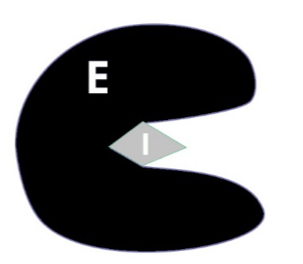
71
New cards
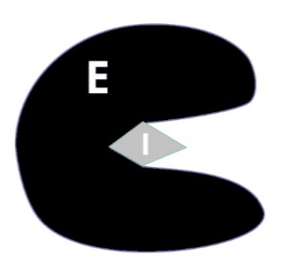
What type of inhibition is this
Competitive inhibition
72
New cards
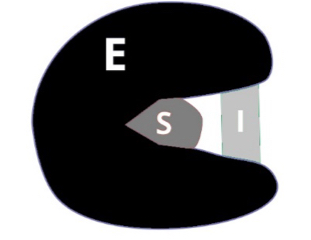
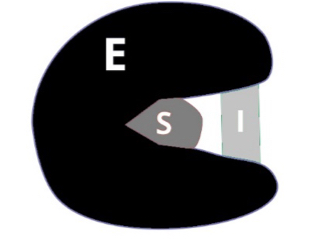
What type of inhibition is this?
Uncompetitive inhibition
73
New cards
Uncompetitive inhibition
74
New cards
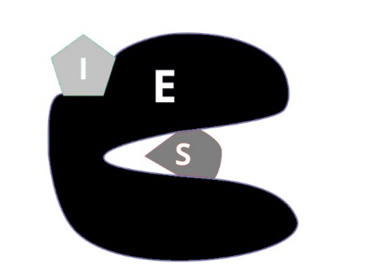
What type of inhibition is this?
Mixed Inhibition
75
New cards
Mixed Inhibition