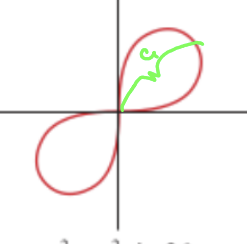
The Calculus III Final Exam Study Guide
 Call Kai
 Learn
Learn Practice Test
 Spaced Repetition
 Match
Match Flashcards
 Knowt Play
1/99

Earn XP
Description and Tags
I'm confident this is the flashcards to study (05/05/26)
Name | Mastery | Learn | Test | Matching | Spaced | Call with Kai |
|---|
No analytics yet
Send a link to your students to track their progress
100 Terms
How to find the equation of the tangent line to the curve?
Find the slope at the given value
Determine points at x and y at given value
Use point-slope formula
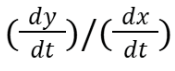
How to find the parametric slope?
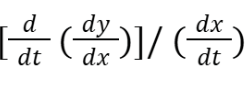
How to find the second derivative of the parametric curve?
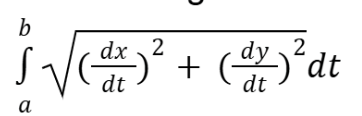
How do you find parametric arc length when given x and y?
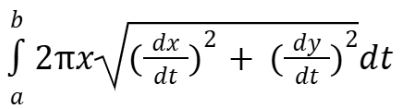
How do you find surface area around the x-axis for a parametric curve?
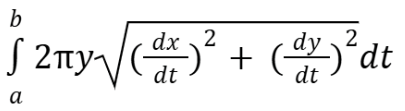
How do you find surface area around the y-axis for a parametric curve?
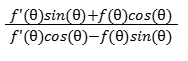
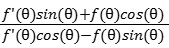
What is the slope formula for a polar curve r = f(θ)?
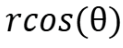
How to find the x-coordinate from polar coordinates?
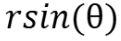
How to find the y-coordinate from polar coordinates?
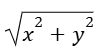
Converting cartesian to polar: How to find r?
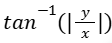
Converting cartesian to polar: How to find theta?
How to find slope of polar curve
How to find area bounded by shape

How to find area bounded by petals; to find area of one petal?
To find limits, set the equation to 0, first instance is the second limit
First limit is 0
Apply area formula
Multiply by 2
How to determine limits for area between two shapes?
set the two equations to each other
Answer is first limit
Second limit is 2pi - the first limit
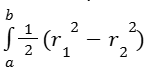
Formula for area between two shapes
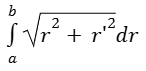
How to find length of curve when you’re given r in terms of theta
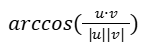
How to find cosine angle between vector v and u
Projection of v onto u

Component of projection of v onto u

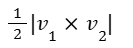
Area of triangle formed by vectors
Area of parallelogram formed by vectors
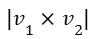
Unit vector perpendicular to the shape

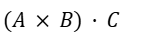
Volume of parallelepiped
Process to find distance between a Point S (not on the line) to a line through P
Find P by plugging t in
Form vector PS
Determine direction vector
Plug into formula
Formula to find distance between a Point S (not on the line) to a line through P

Process to find distance from a Point S to a plane through Point P
Create point P (set all but 1 component to 0)
Create vector PS
Determine normal vector
Apply formula
Formula to find distance from Point S to a plane through Point P

How to find the point where the line meets the plane
Plug each value of x, y, z into the line equation
Solve for t
Solve for each component
What is the speed vector?
magnitude of velocity
What is the direction vector?
velocity/speed or v/|v|
How to find the parametric equation for the line tangent to the curve.
Find the position by plugging given value of t into r(t)
Find the direction vector by plugging given value of to into r’(t)
Form the equation

How to solve a differential equation with initial condition?
Integrate the differential equation and add a +c vector
Plug the value of the intial condition and solve for c
Plug c back into the integrated equation
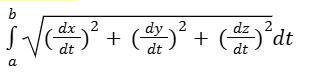
Arc length in three dimensions
Unit tangent vector

Curvature

Vector N given T

Line equation: given two points
Form a direction vector with PS
Use P to create the equation
Line equation: 1 point and parallel to another line
Direction vector based on the other line
Use the point to create line
Line equation: 1 point, perpendicular to two vectors
Direction vector is cross product between two vectors
Use given point to create line
Line equation: 1 point, perpendicular to plane
Direction vector is the normal vector
Use given point
Plane equation: 3 points
Create two distinct vectors
Cross product two vectors to get normal vector
Use any of the three points to create equation
Plane: 1 point, parallel to line
Create another point on the line equation
Create vector with given point and created point
Normal vector is cross product of vector direction and created vector
Create equation with given point
What does the nth-Term Test for Divergence conclude if limₙ→∞ aₙ ≠ 0?
The series diverges.
What does the nth-Term Test for Divergence conclude if limₙ→∞ aₙ does not exist?
The series diverges.
What does the nth-Term Test for Divergence conclude if limₙ→∞ aₙ = 0?
Inconclusive.
What does the Geometric Series Test conclude if |r| < 1?
The series converges.
What does the Geometric Series Test conclude if |r| ≥ 1?
The series diverges.
What does the p-Series Test conclude if p > 1?
The series converges.
What does the p-Series Test conclude if p ≤ 1?
The series diverges.
What does the Integral Test conclude if ∫ from N to ∞ of f(x) dx converges?
The series converges.
What does the Integral Test conclude if ∫ from N to ∞ of f(x) dx diverges?
The series diverges.
What does the Direct Comparison Test conclude if 0 ≤ aₙ ≤ bₙ and ∑ bₙ converges?
∑ aₙ converges.
What does the Direct Comparison Test conclude if 0 ≤ bₙ ≤ aₙ and ∑ bₙ diverges?
∑ aₙ diverges.
What does the Limit Comparison Test conclude if limₙ→∞ (aₙ/bₙ) = c with 0 < c < ∞?
∑ aₙ and ∑ bₙ either both converge or both diverge.
What does the Limit Comparison Test conclude if limₙ→∞ (aₙ/bₙ) = 0 and ∑ bₙ converges?
∑ aₙ converges.
What does the Limit Comparison Test conclude if limₙ→∞ (aₙ/bₙ) = ∞ and ∑ bₙ diverges?
∑ aₙ diverges.
What does the Absolute Convergence Test conclude if ∑ |aₙ| converges?
∑ aₙ converges absolutely, so it converges.
What does the Absolute Convergence Test conclude if ∑ |aₙ| diverges?
The series is not absolutely convergent; it may be conditionally convergent or diverge.
What does the Ratio Test conclude if ρ < 1?
The series converges absolutely.
What does the Ratio Test conclude if ρ > 1 or ρ = ∞?
The series diverges.
What does the Ratio Test conclude if ρ = 1?
Inconclusive.
What does the Root Test conclude if ρ < 1?
The series converges absolutely.
What does the Root Test conclude if ρ > 1 or ρ = ∞?
The series diverges.
What does the Root Test conclude if ρ = 1?
Inconclusive.
What does the Alternating Series Test conclude if all AST conditions are satisfied?
The series converges.
What does the Alternating Series Test conclude if uₙ does not approach 0?
The series diverges.
What does the Alternating Series Test conclude if the terms are not eventually decreasing?
Inconclusive.
What does conditional convergence mean?
The series converges, but ∑ |aₙ| diverges.
What does absolute convergence mean?
∑ |aₙ| converges, so ∑ aₙ converges.
What does the Ratio Test on a power series conclude for |x − a| < R?
The power series converges absolutely.
What does the Ratio Test on a power series conclude for |x − a| > R?
The power series diverges.
What does the Ratio Test on a power series conclude at x = a − R or x = a + R?
Inconclusive; test endpoints separately.
What does the Root Test on a power series conclude for |x − a| < R?
The power series converges absolutely.
What does the Root Test on a power series conclude for |x − a| > R?
The power series diverges.
What does the Root Test on a power series conclude at the endpoints?
Inconclusive; test endpoints separately.
x²+y²=4
Cylinder; opening on z-axis
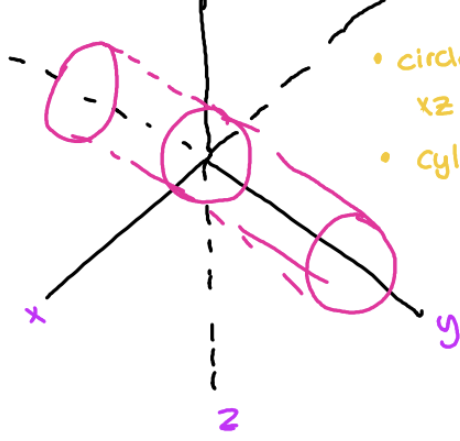
9x²+y²=9
Cylinder; opening on z-axis; intercepts
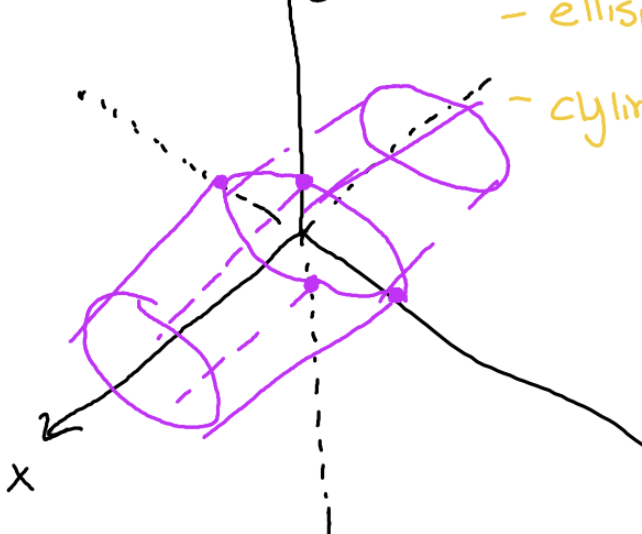
x²+y²+z² = 1
ellipsoid
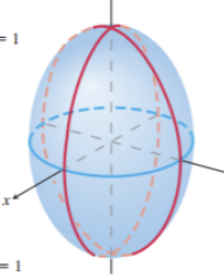
x²+y²=z
elliptical paraboloid; opening on z-axis
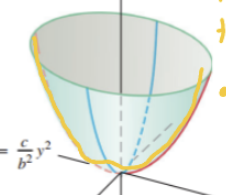
x²+y²=z²
elliptical cone; opening on z-axi
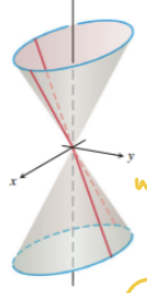
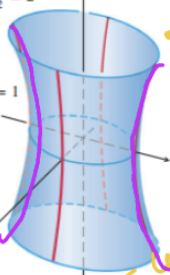
x²+y²-z²=1
hyperboloid of one sheet; opening on z-axis
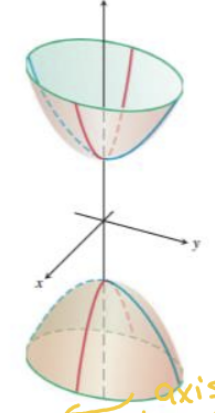
x²-y²-z²=1
hyperboloid of two sheet; opening on x-axis
How to calculate the magnitude (length) of a vector <x1, x2…>
sqr
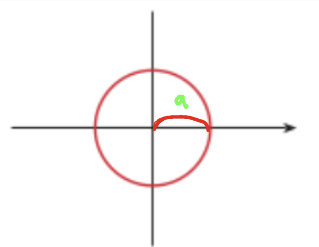
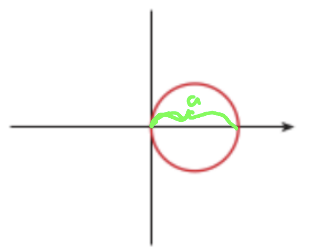
r = a
circle centered with radius a
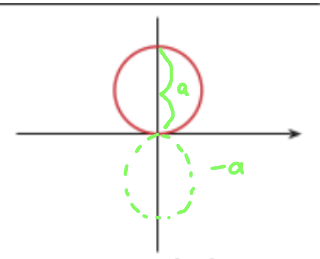
r = a sin θ
circle symmetric to y-axis
r = a cos θ
circle symmetric to x-axis
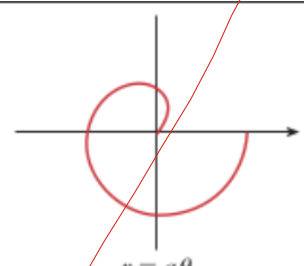
r = a θ
spiral
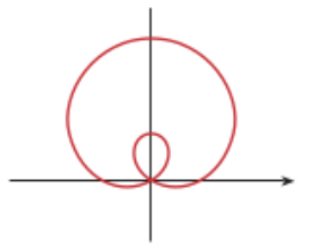
a ± bsin(θ) ; a < b
limacon with inner loop, symmetric to y-axis
a ± bsin(θ) ; a = b
cardioid; symmetric to y-axis
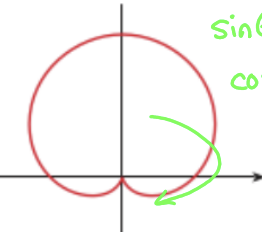
a ± bsin(θ) ; a > b
dimpled limacon; symmetric to y-axis
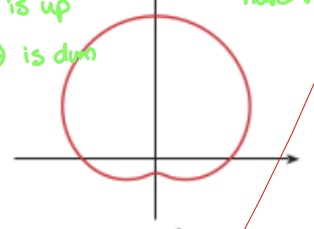
a ± bsin(θ) ; a >= 2b
convex limacon; symmetric to y-axis
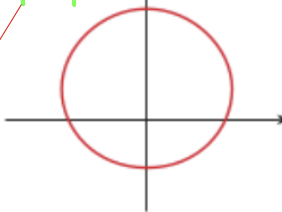
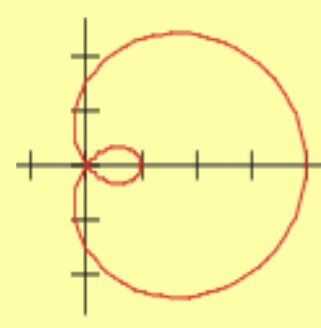
a ± bcos(θ) ; a < b
limacon with inner loop; symmetric to x-axis
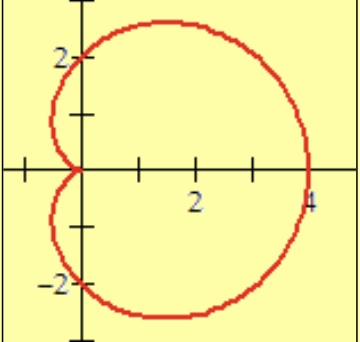
a ± bcos(θ) ; a = b
cardioid; symmetric to x-axis
a ± bcos(θ) ; a > b
dimpled limacon; symmetric to x-axis
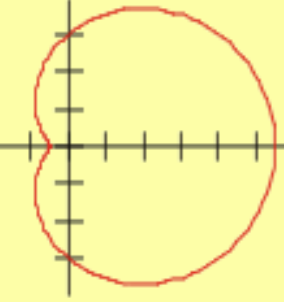
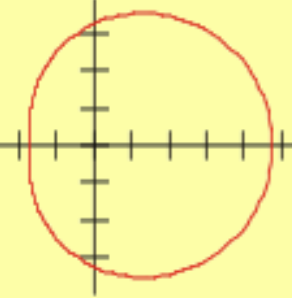
a ± bcos(θ) ; a >= b
convex limacon; symmetric to x-axis
r = a sin(nθ); n is odd
n leaves rose
r = a sin(nθ); n is even
2n leaves rose
r² = a² sin(2θ)
lemniscate, symmetric on y-axis
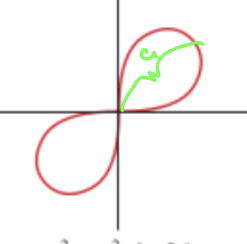
r² = a² cos(2θ)
lemniscate, symmetric on x-axis