Deep Vein Thrombosis and Thoracic Outlet Syndrome: Diagnosis, Treatment, and Key Concepts
 Call Kai
 Learn
Learn Practice Test
 Spaced Repetition
 Match
Match Flashcards
 Knowt Play
1/20

There's no tags or description
Looks like no tags are added yet.
Name | Mastery | Learn | Test | Matching | Spaced | Call with Kai |
|---|
No analytics yet
Send a link to your students to track their progress
21 Terms
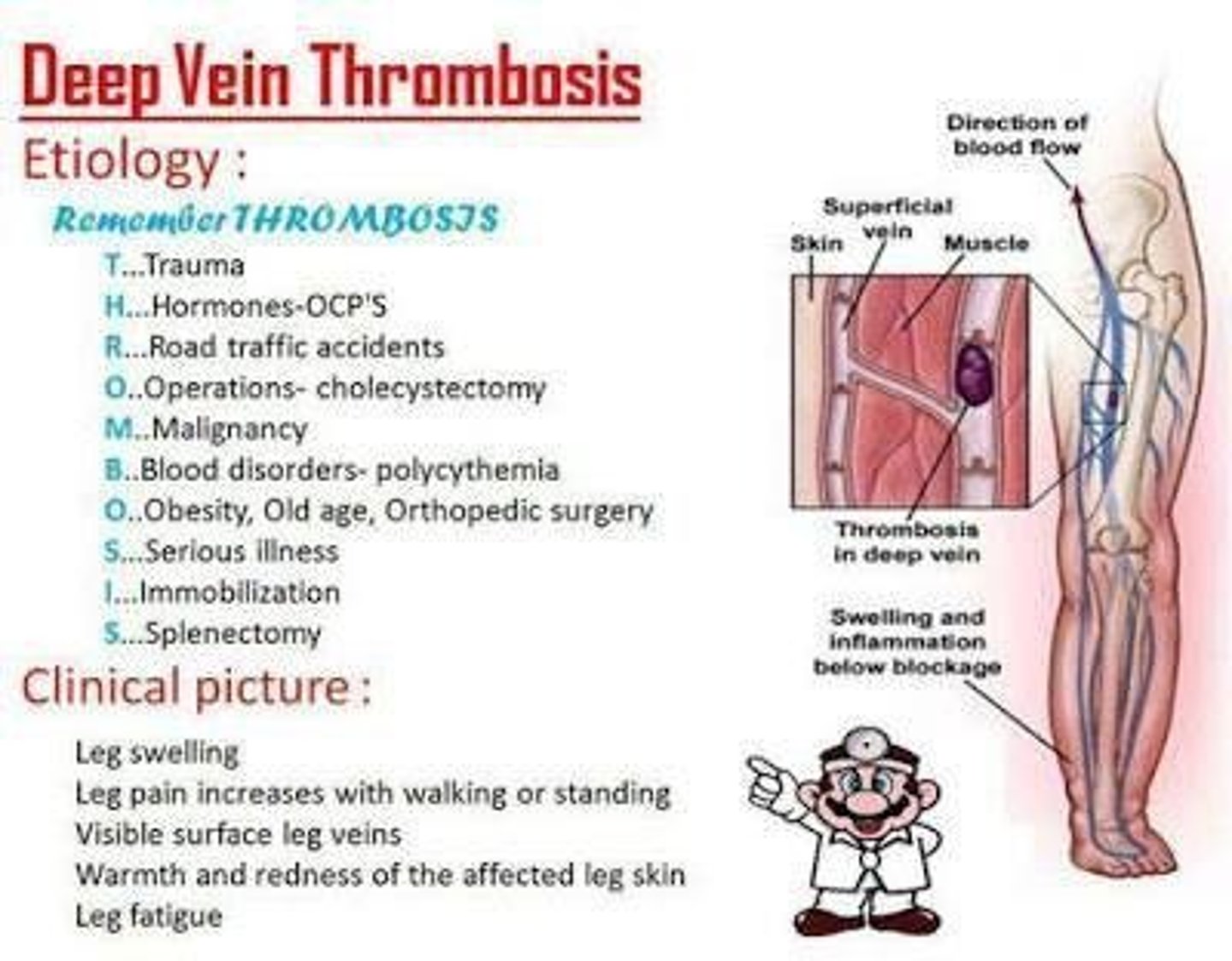
What is Deep Vein Thrombosis (DVT)?
A blood clot in a large vein, most commonly in the lower leg.
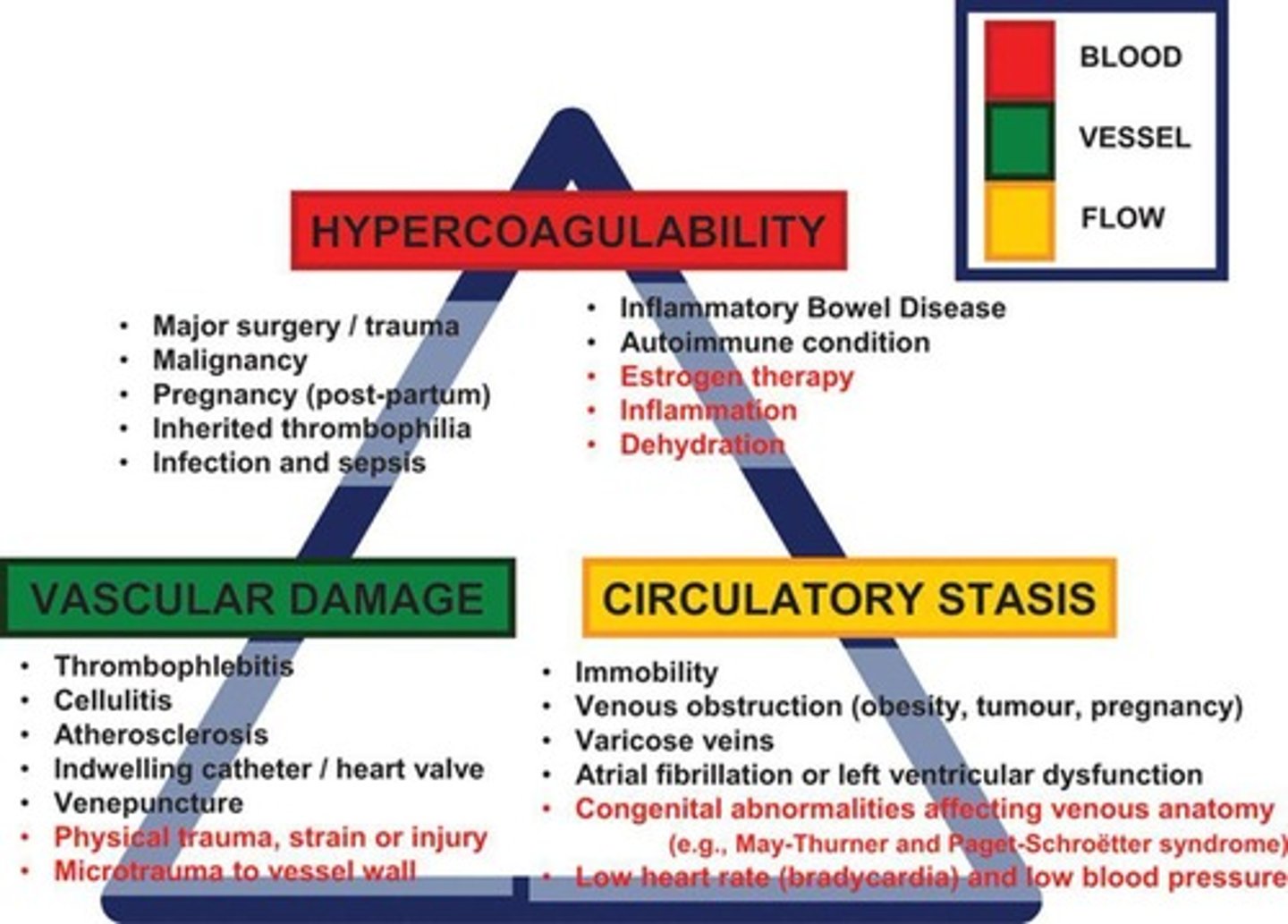
What are the components of Virchow's Triad?
Blood (Red), Vessel (Green), Flow (Yellow).
What is the Wells Clinical Prediction Rule used for?
To assess the risk of DVT based on symptoms and history.
What are common symptoms of DVT?
Limb pain, swelling, and symptoms worsening with activity.
What is the primary diagnostic tool for DVT?
Doppler ultrasound; CT venogram may also be considered.
What is the typical treatment duration for DVT with anticoagulants?
3 or more months.
What was the traditional treatment for DVT?
Heparin to Warfarin.
What percentage of DVTs can lead to Pulmonary Embolism (PE)?
Up to 10%.
What are the symptoms of Pulmonary Embolism?
Acute shortness of breath, chest pain, tachypnea, and tachycardia.
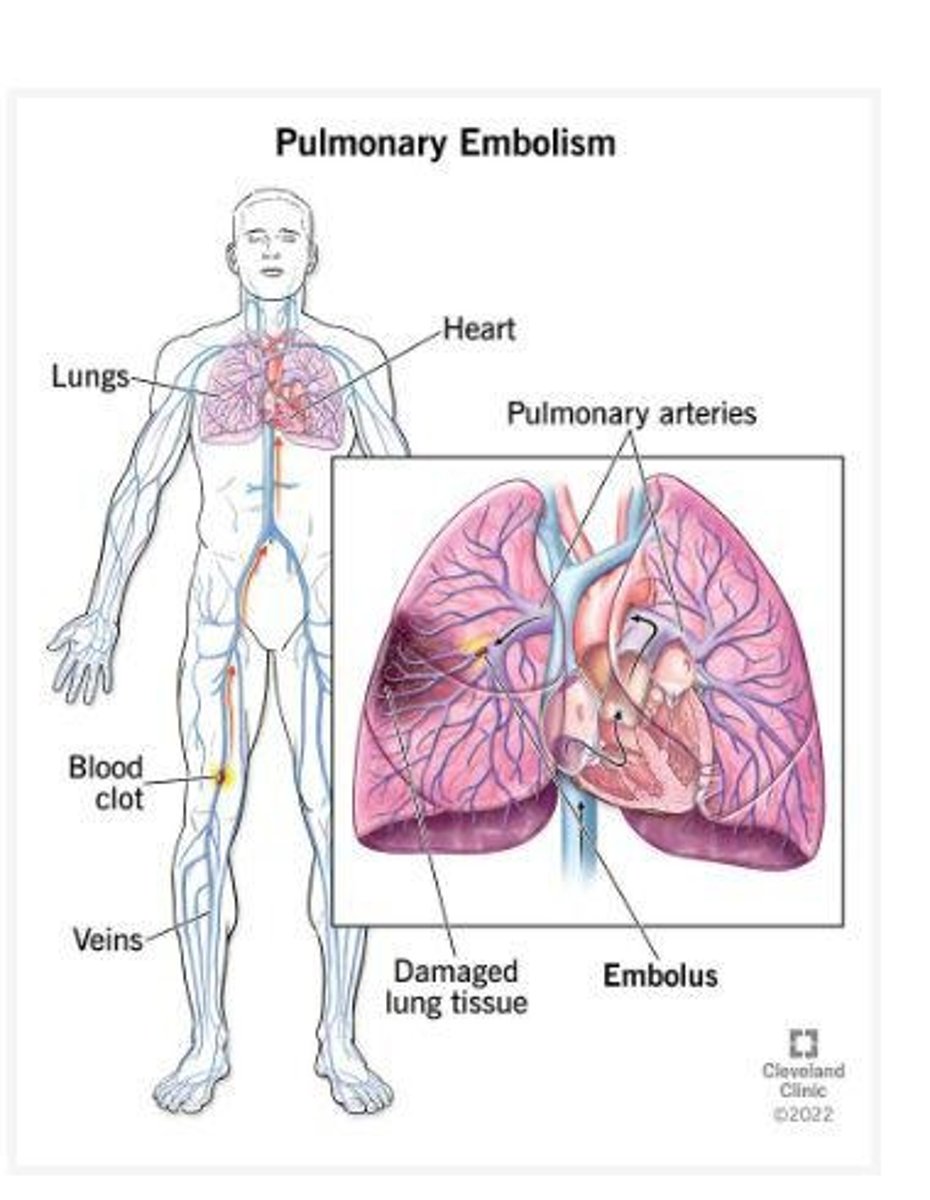
What is the diagnosis method for Pulmonary Embolism?
CT scan.
What is Thoracic Outlet Syndrome (TOS)?
A condition caused by compression of nerves or blood vessels in the thoracic outlet.
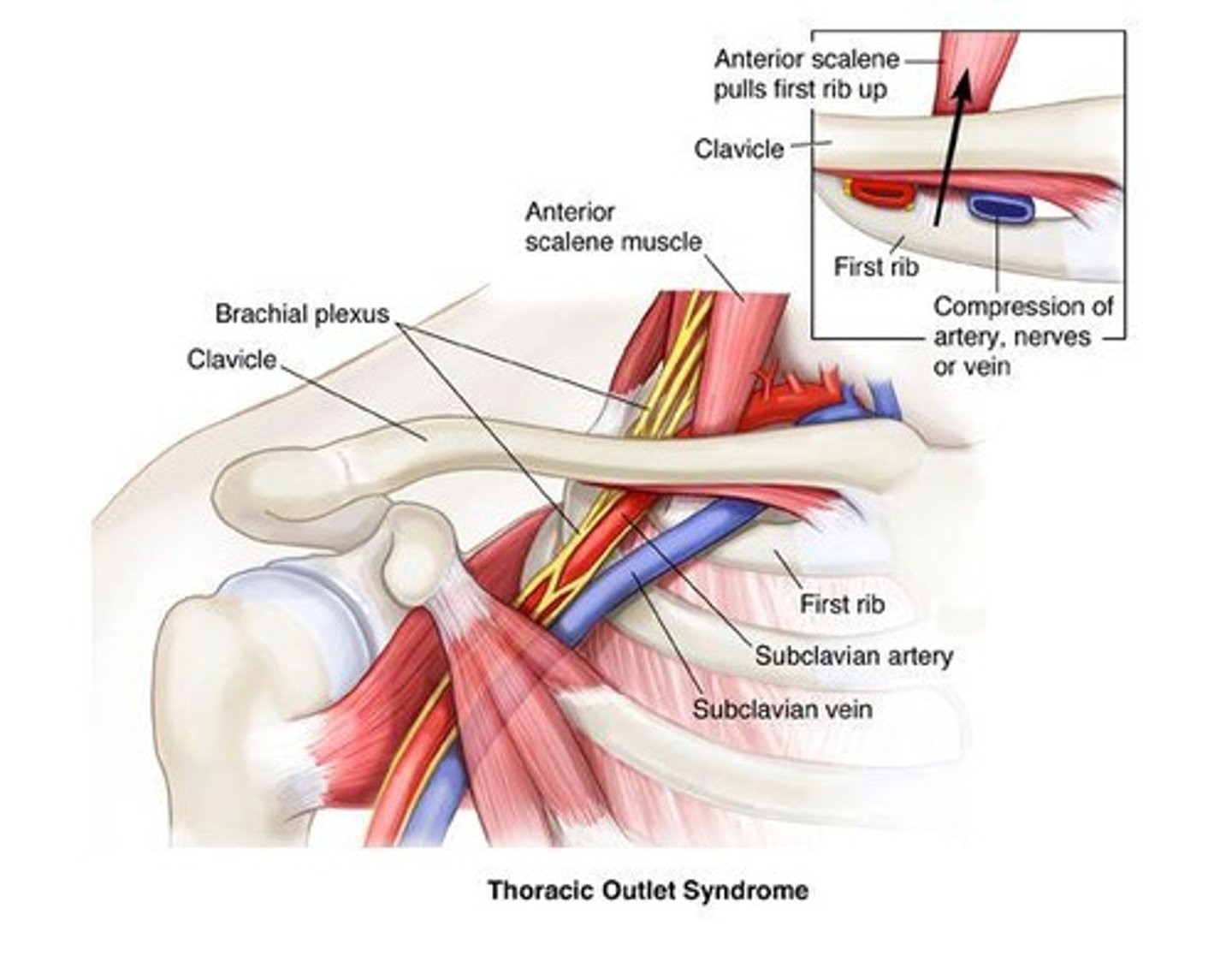
What are the three types of Thoracic Outlet Syndrome?
Neurogenic TOS, Venous TOS, and Arterial TOS.
What is Paget-Schroetter Syndrome?
Effort thrombosis in the subclavian/axillary veins, often requiring surgical treatment.
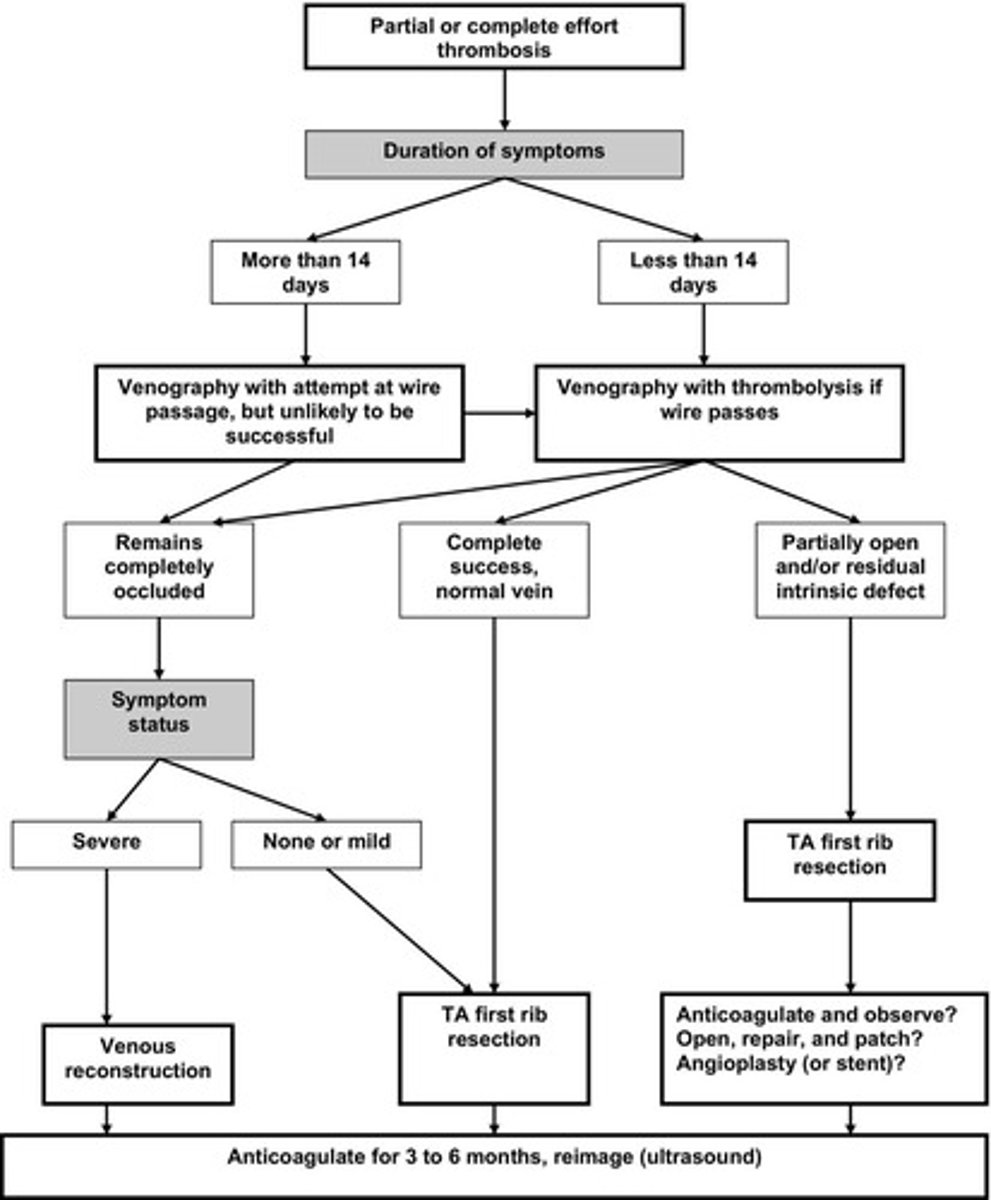
What is the most common location for upper extremity DVT?
Subclavian vein (about 60% of cases).
What is May-Thurner syndrome?
Narrowing of the left iliac vein due to compression by the right iliac artery, increasing risk for lower extremity DVT.
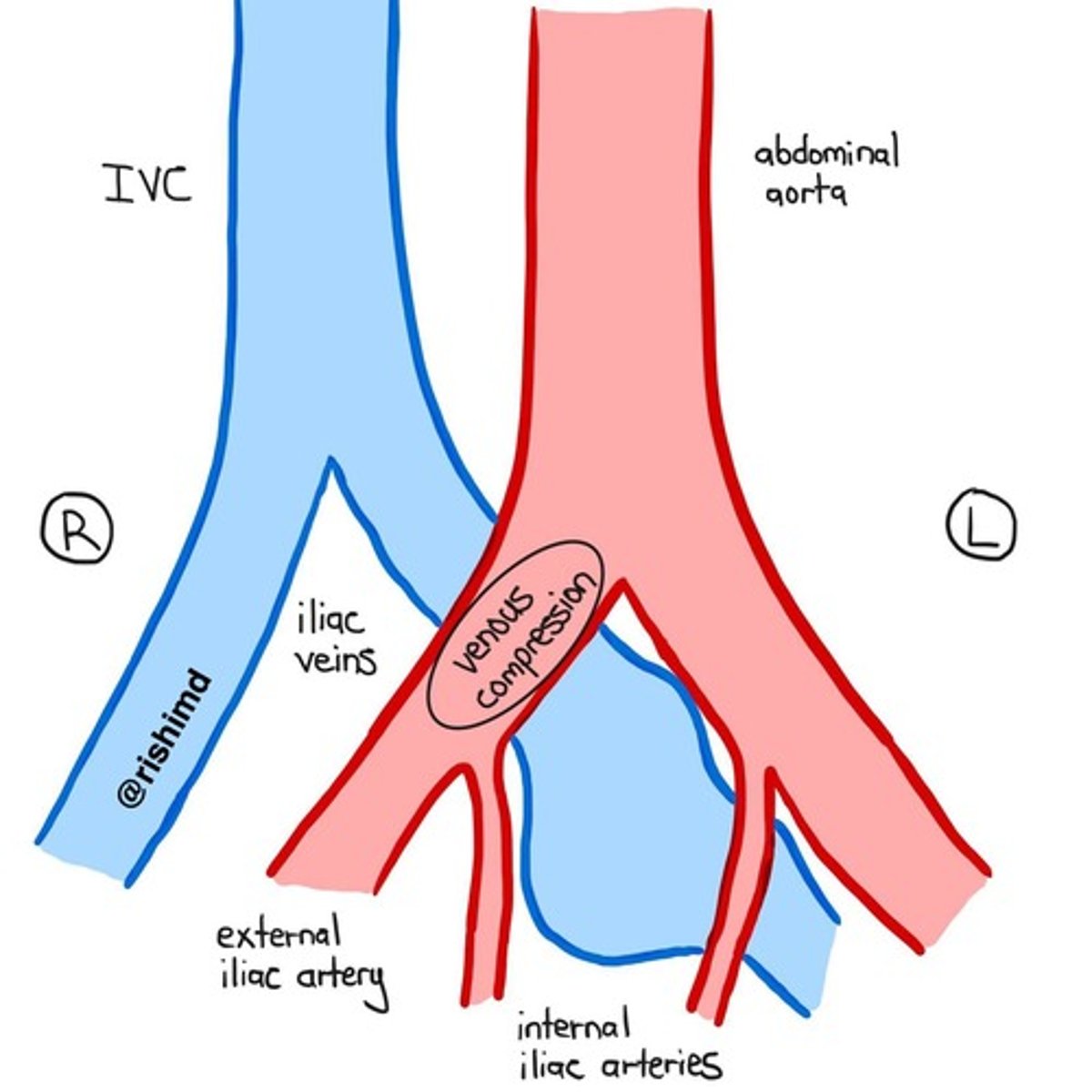
What is the treatment for May-Thurner syndrome?
Acute treatment for clots, followed by angioplasty with stenting and possibly IVC filter.
What is the role of shared decision-making in anticoagulant therapy?
To involve patients in the decision regarding their treatment options.
What is a common treatment approach for DVT?
Outpatient treatment with anticoagulants that prevent clot worsening.
What is the significance of measuring limb girth in DVT diagnosis?
To assess for differences in swelling between limbs.
What kind of medications may be used for Thoracic Outlet Syndrome?
Muscle relaxants or pain relievers.
What diagnostic tests are used for Thoracic Outlet Syndrome?
Nerve conduction study and CTA chest with arm positions.