Lab 9 Arthropoda II - ID practice
 Call Kai
 Learn
Learn Practice Test
 Spaced Repetition
 Match
Match Flashcards
 Knowt Play
1/36

There's no tags or description
Looks like no tags are added yet.
Name | Mastery | Learn | Test | Matching | Spaced | Call with Kai |
|---|
No analytics yet
Send a link to your students to track their progress
37 Terms
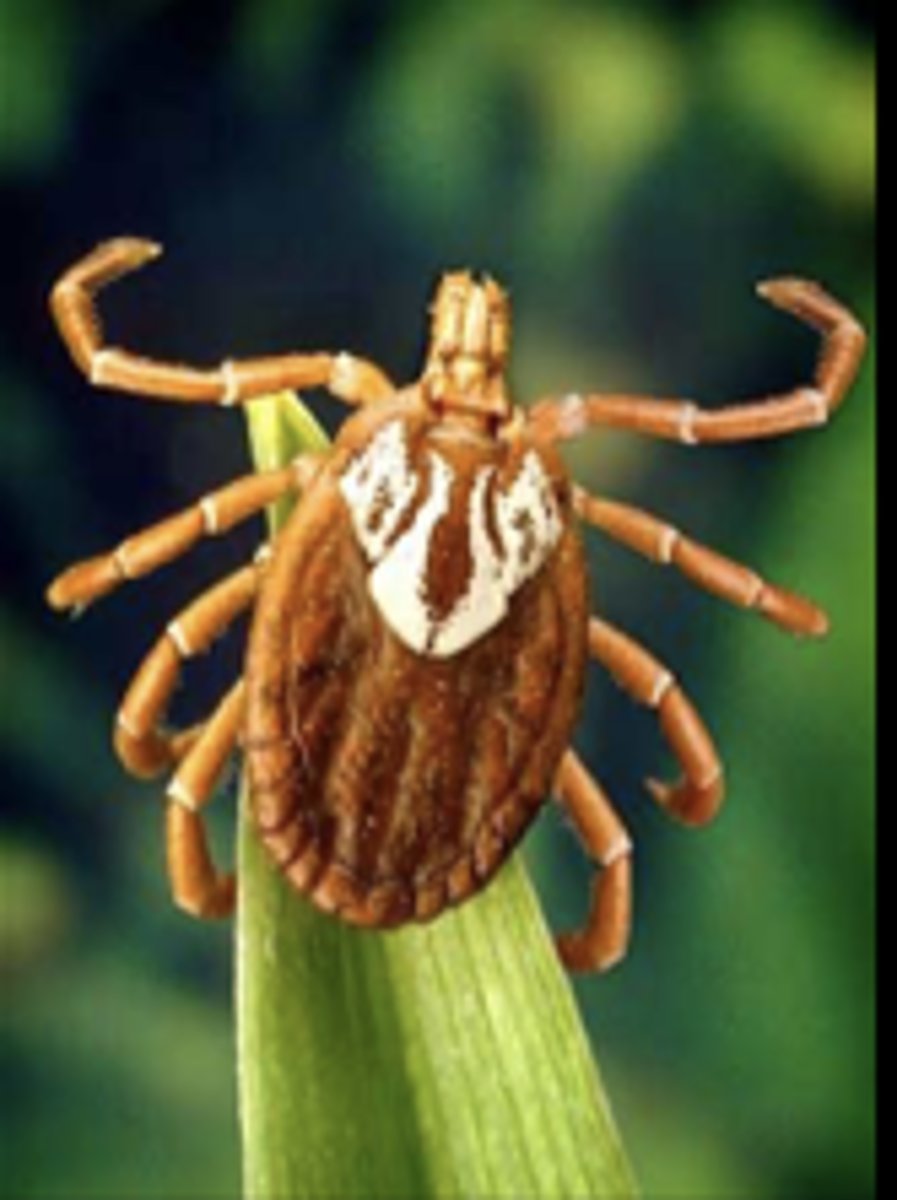
What class does this organism belong to?
Class Arachnida
tick
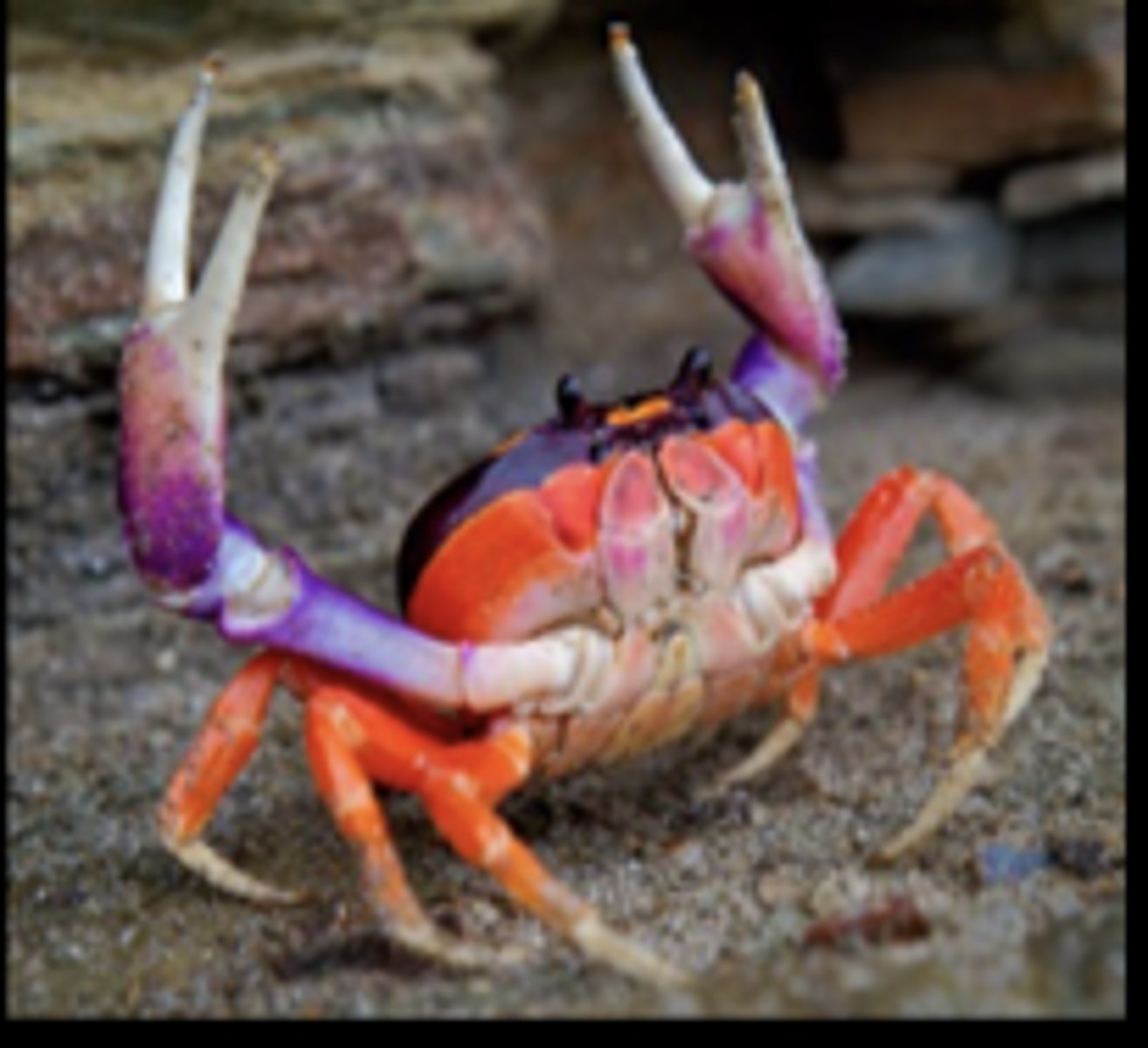
What class does this organism belong to?
Class Malacostraca
crab
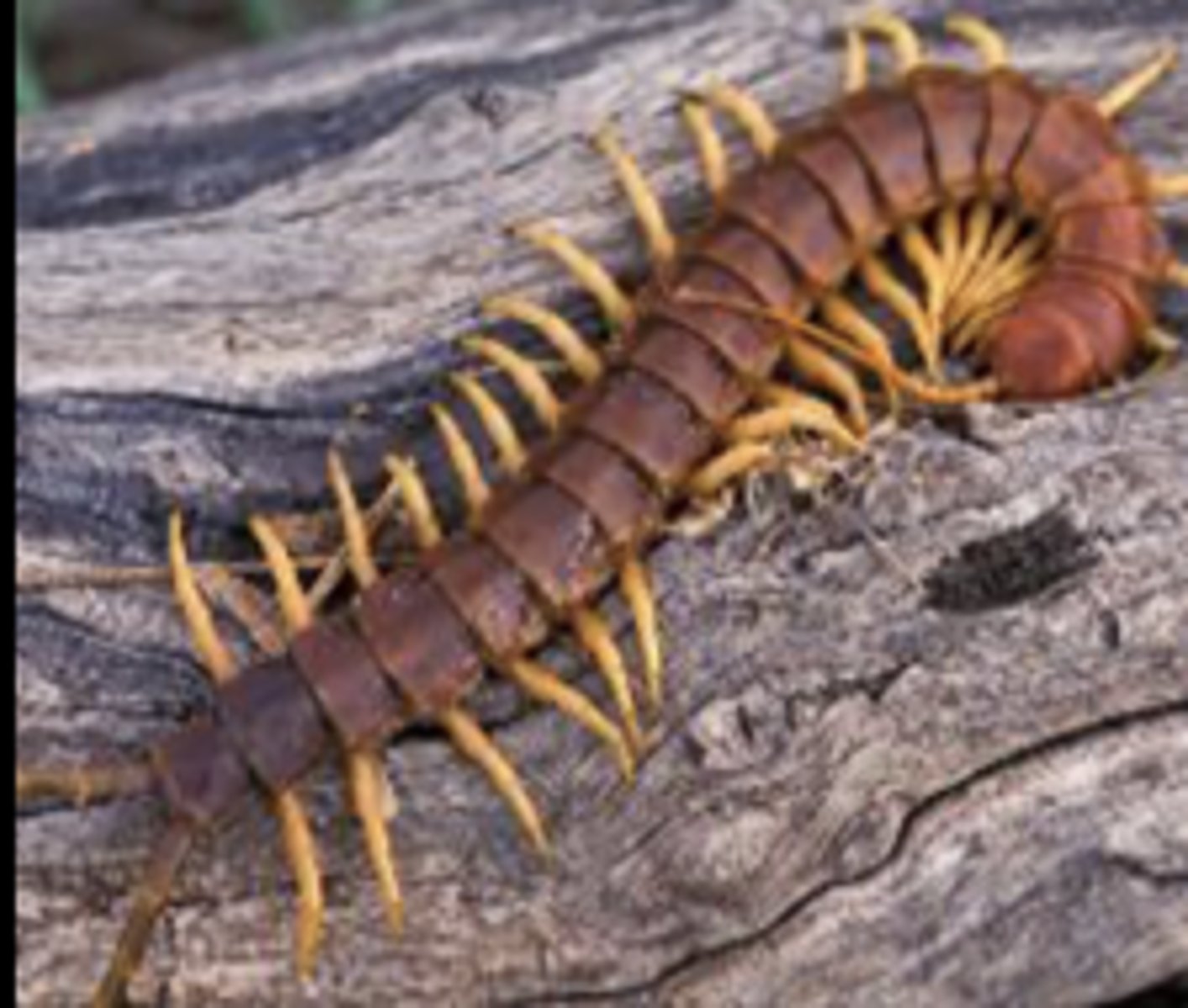
What class does this organism belong to?
Class Chilopoda
centipede
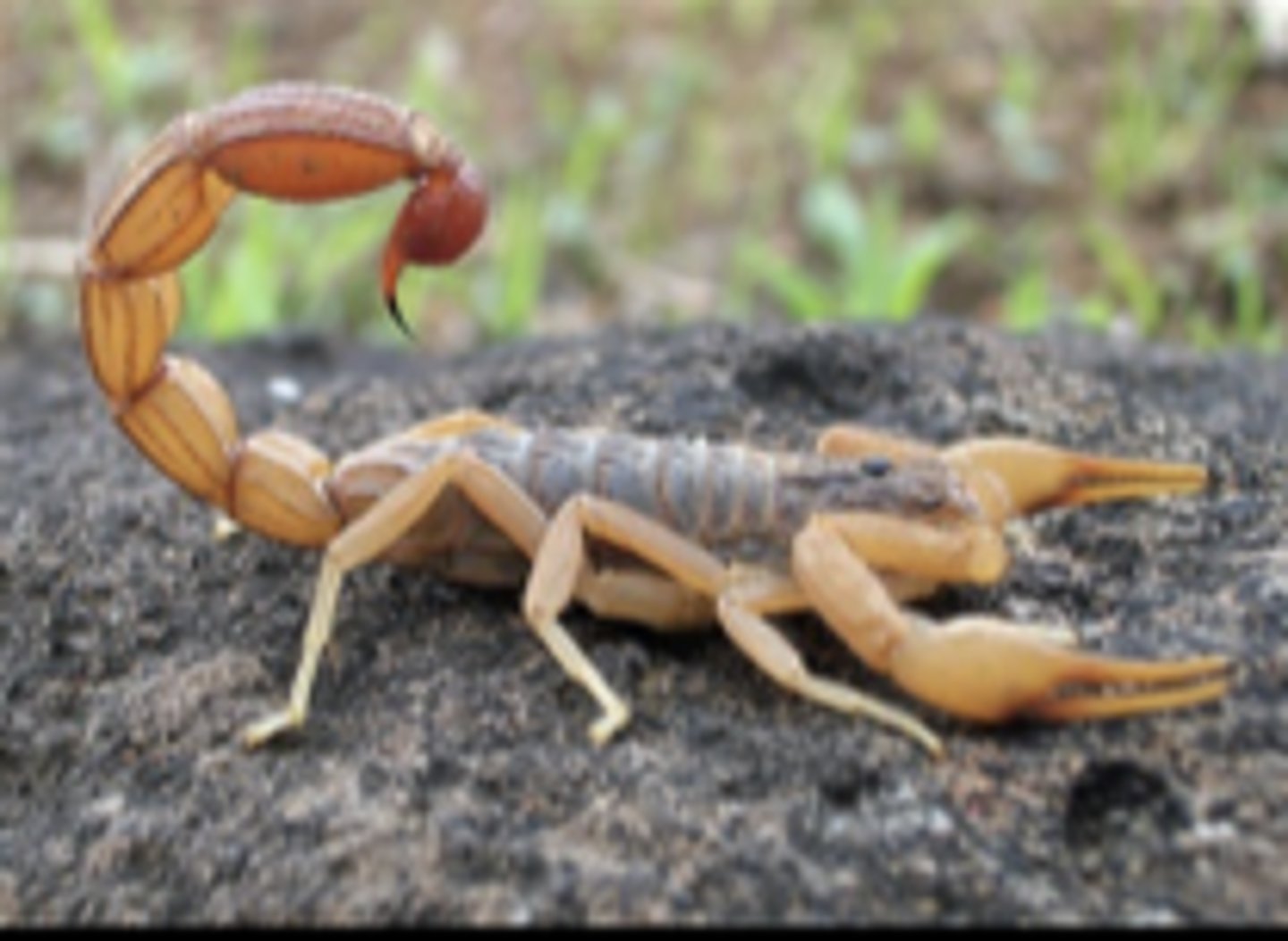
What class does this organism belong to?
Class Arachnida
scorpion
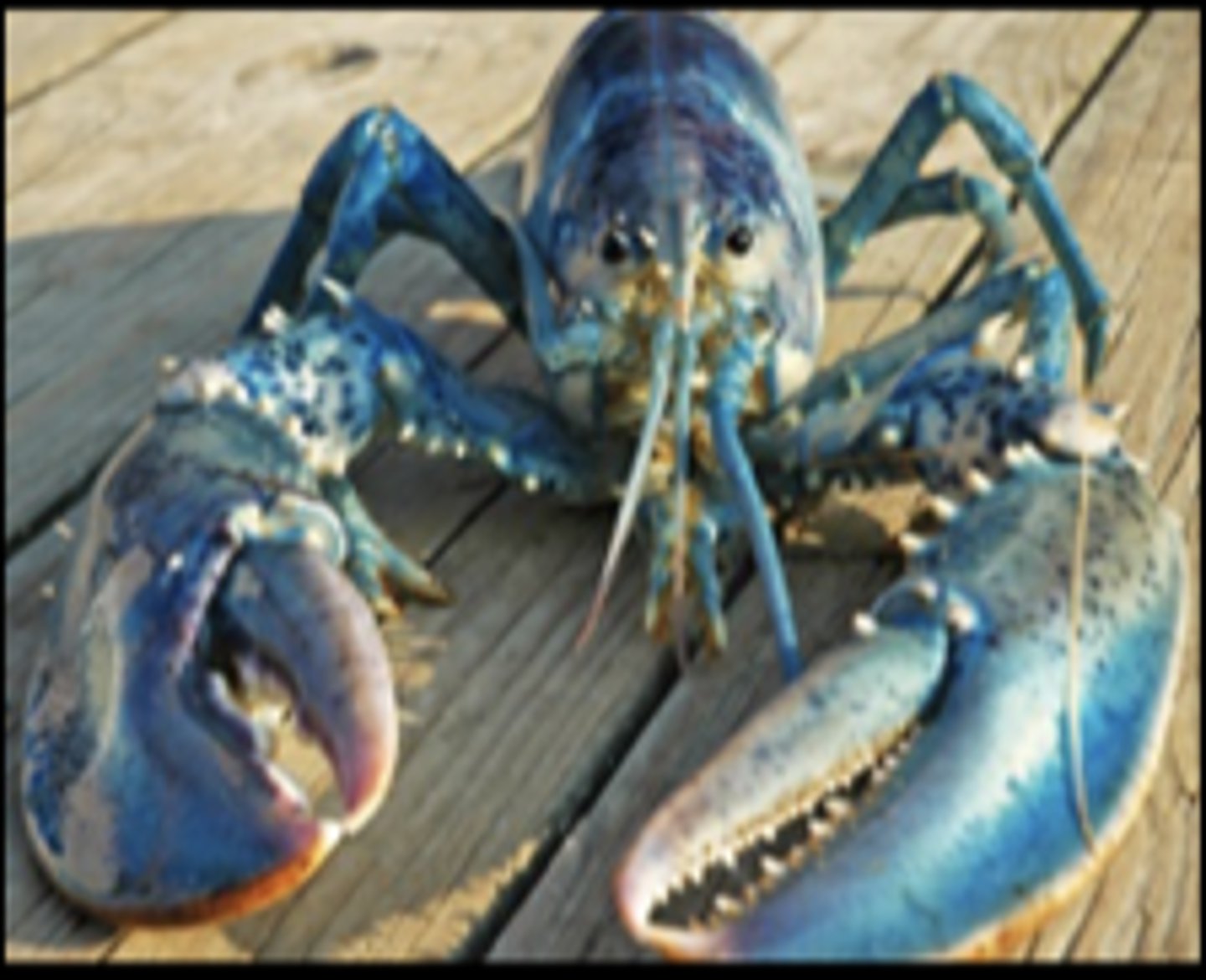
What class does this organism belong to?
Class Malacostraca
lobster
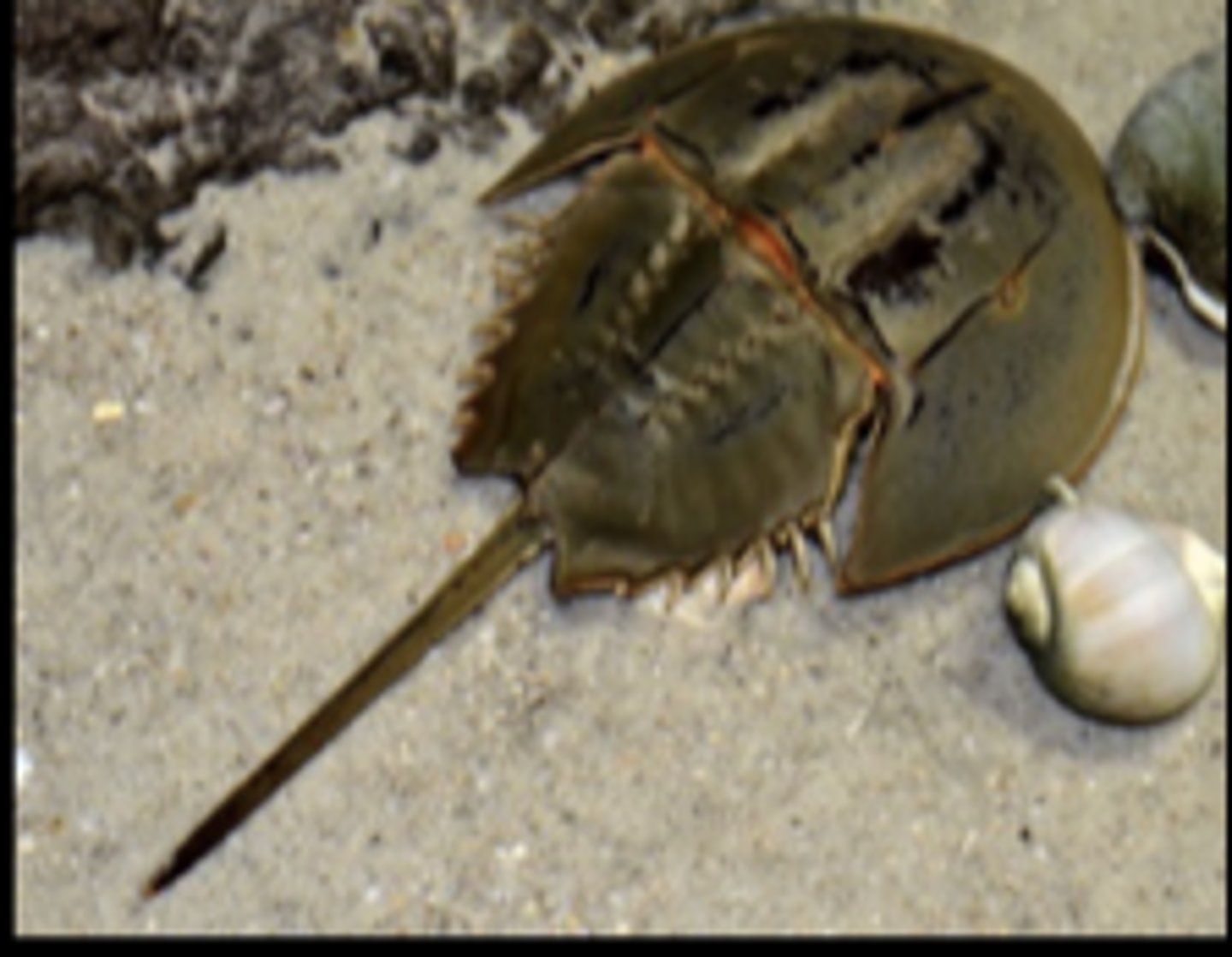
What class does this organism belong to?
Class Merostomata
horseshoe crab
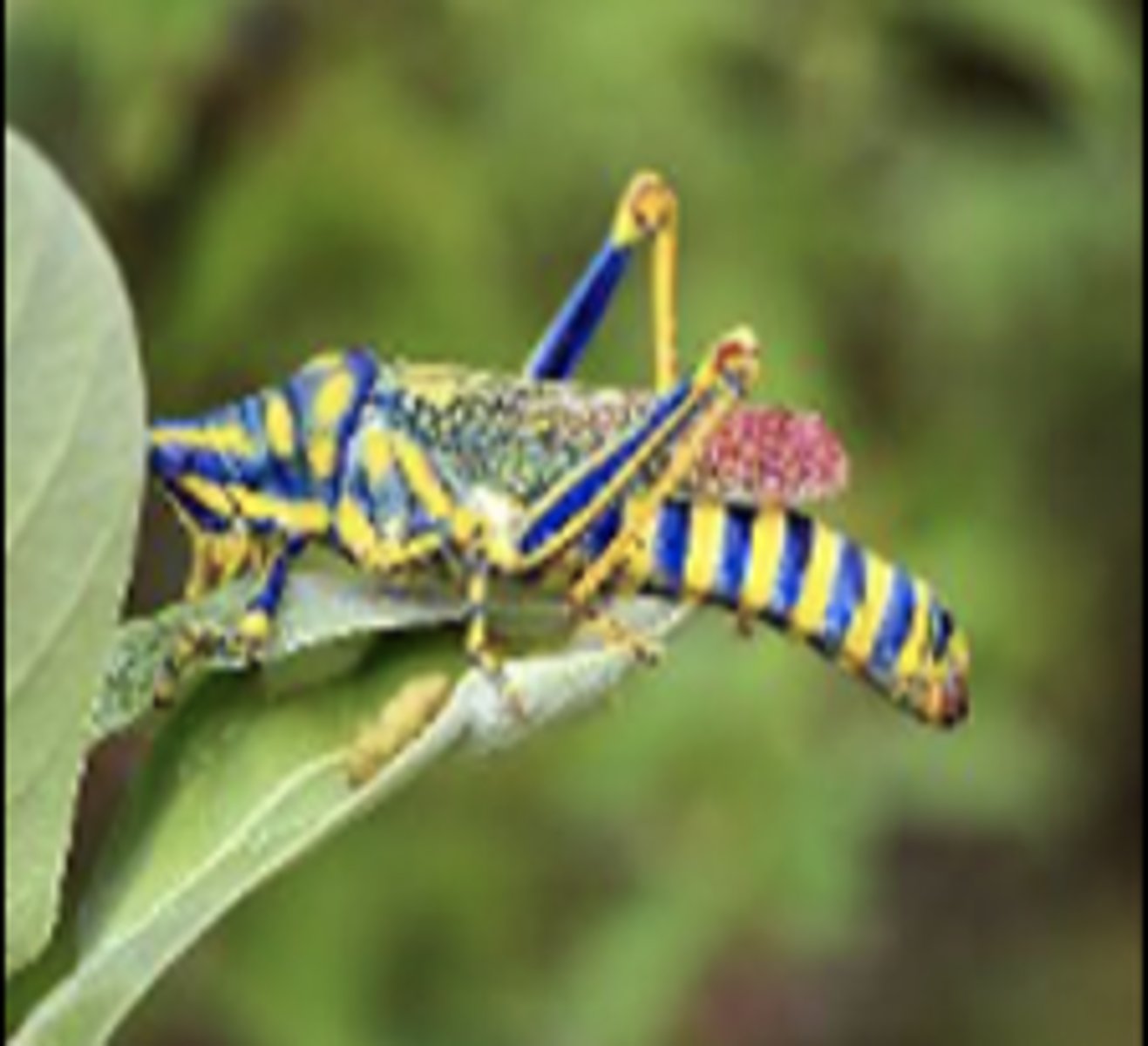
What class does this organism belong to?
Class Insecta
grasshopper
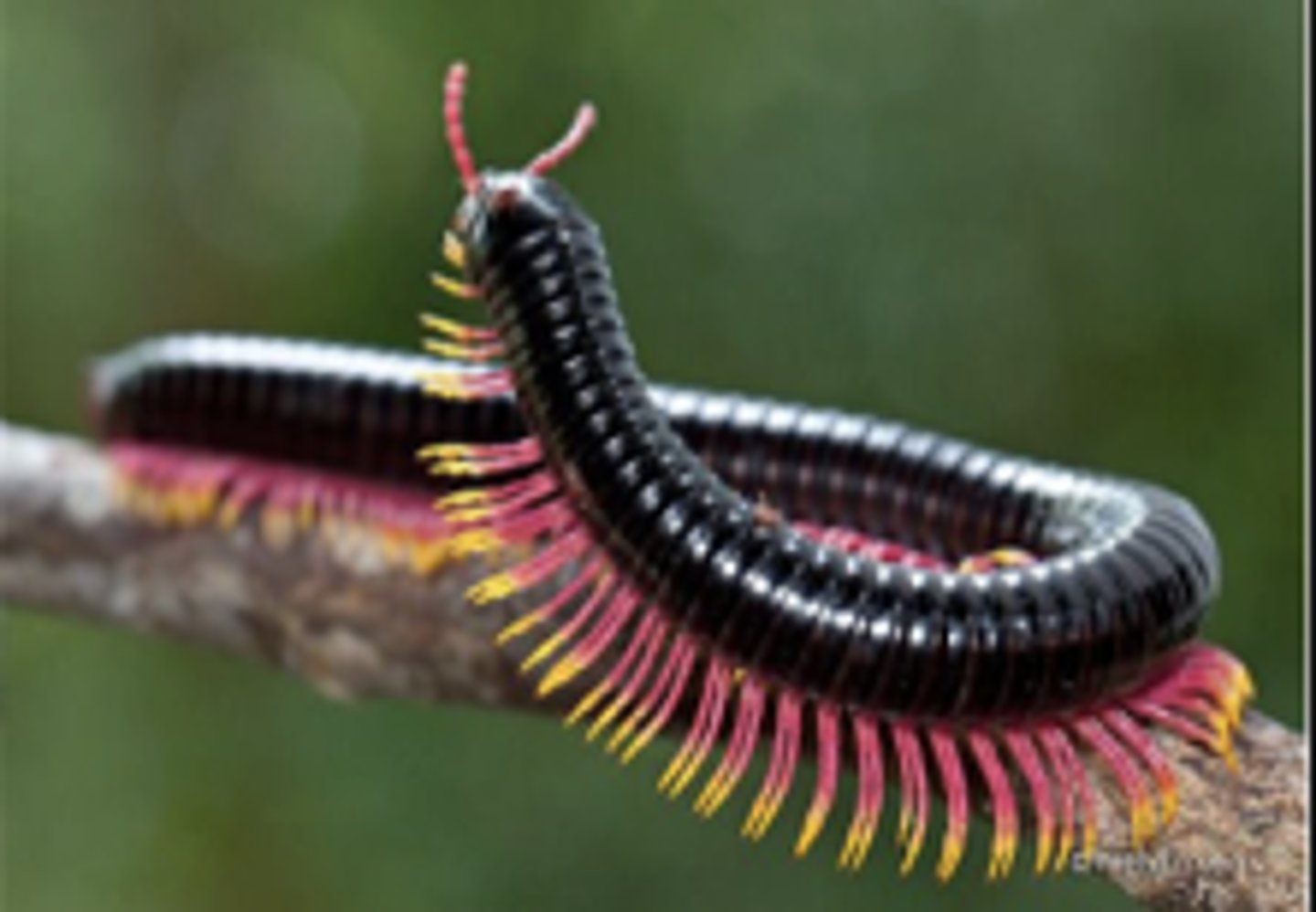
What class does this organism belong to?
Class Diplopoda
millipede
What class does the crayfish belong to?
Class Malacostraca
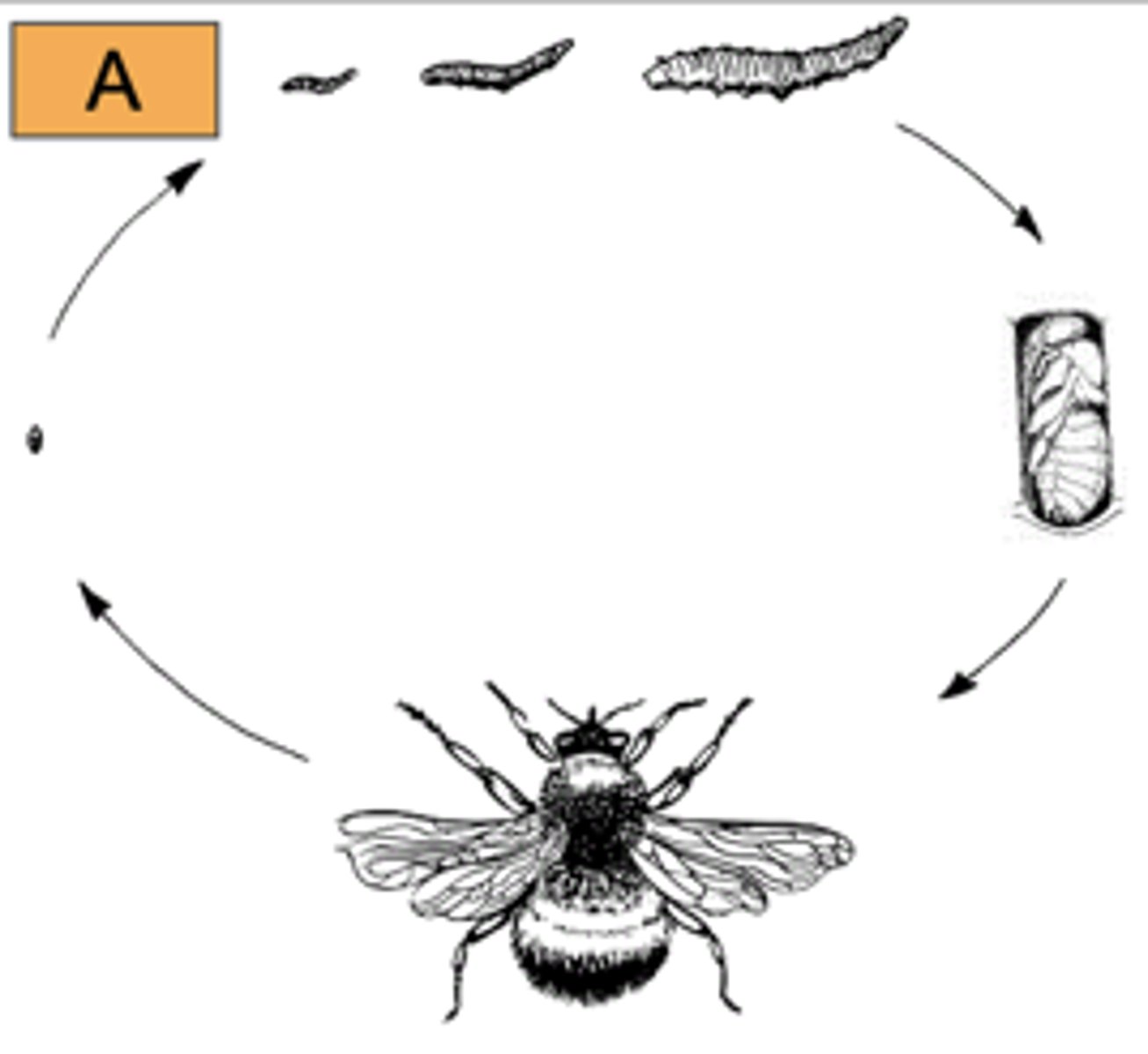
What type of metamorphosis is this picture showing?
Holometabolous
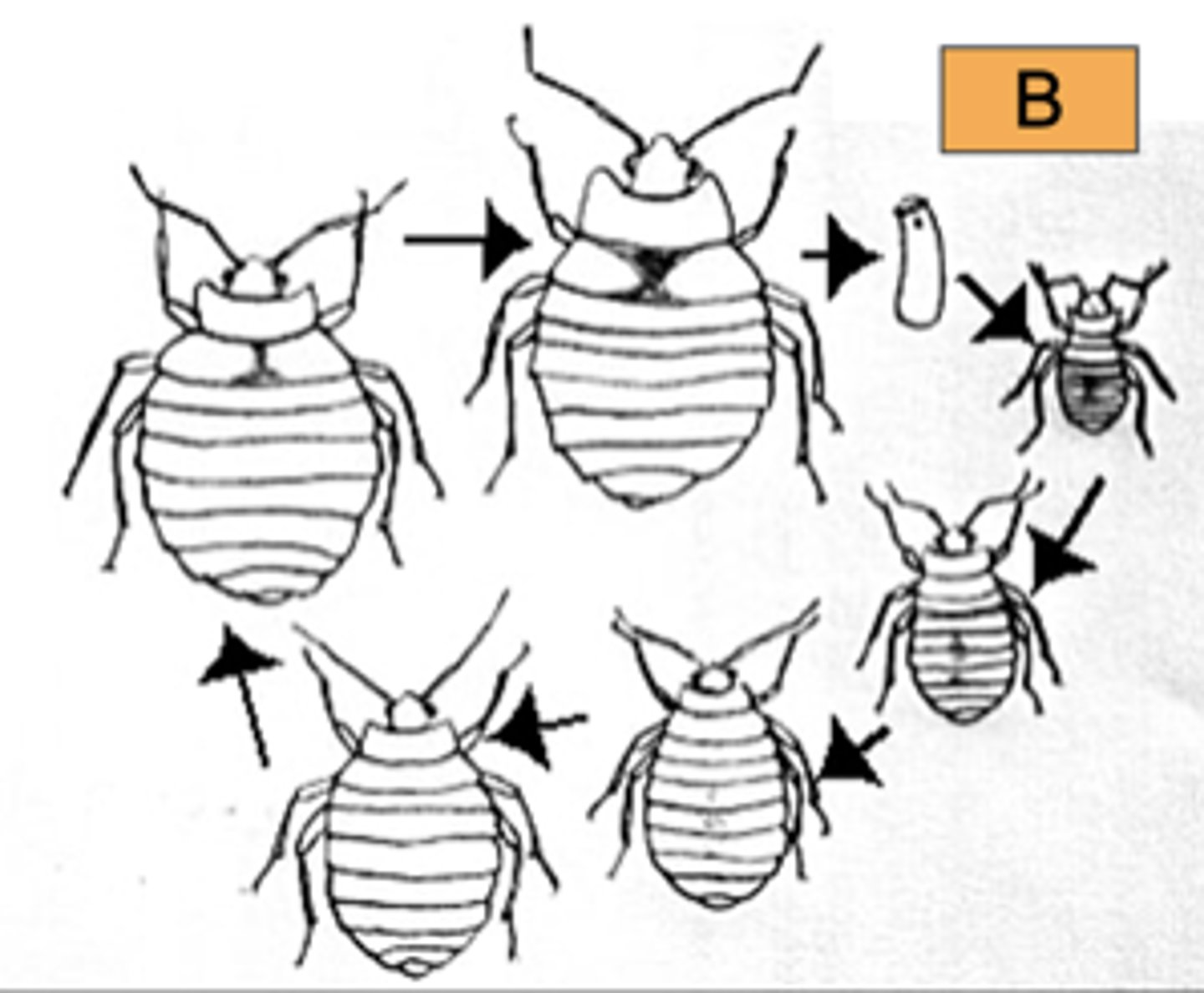
What type of metamorphosis is this picture showing?
Hemimetabolous
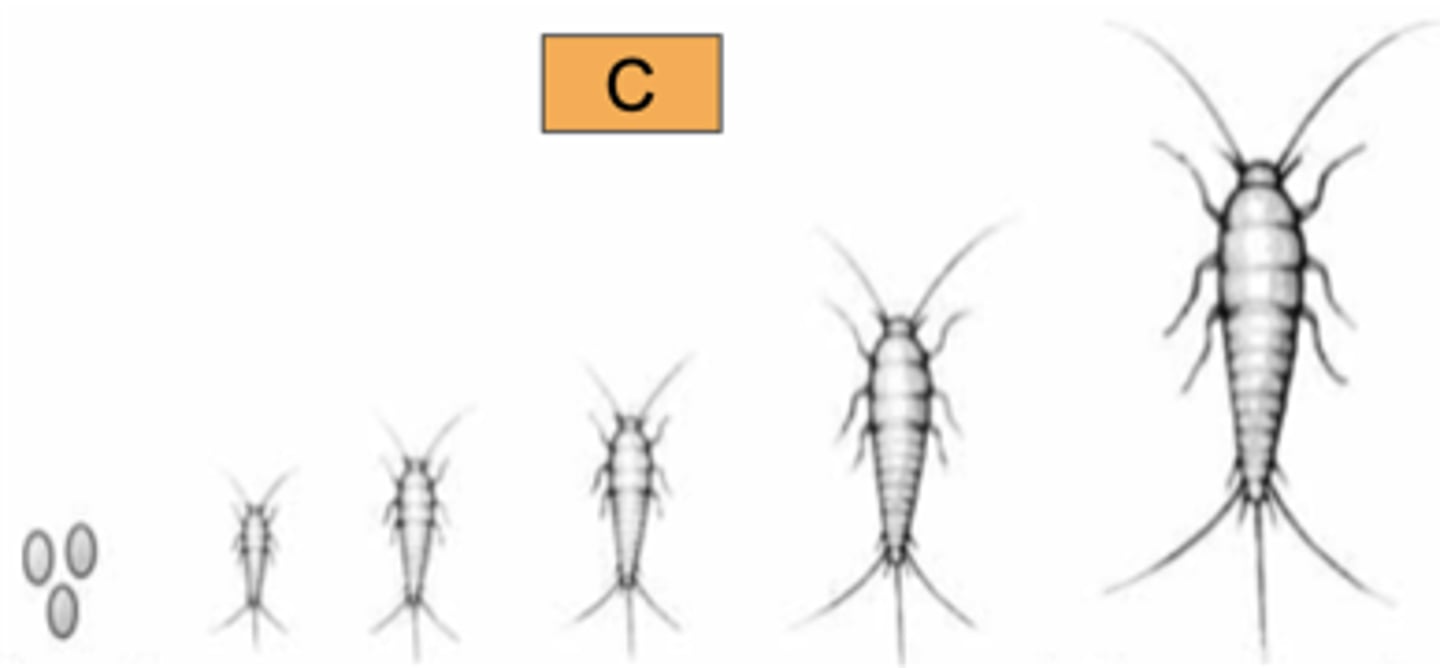
What type of metamorphosis is this picture showing?
Ametabolous
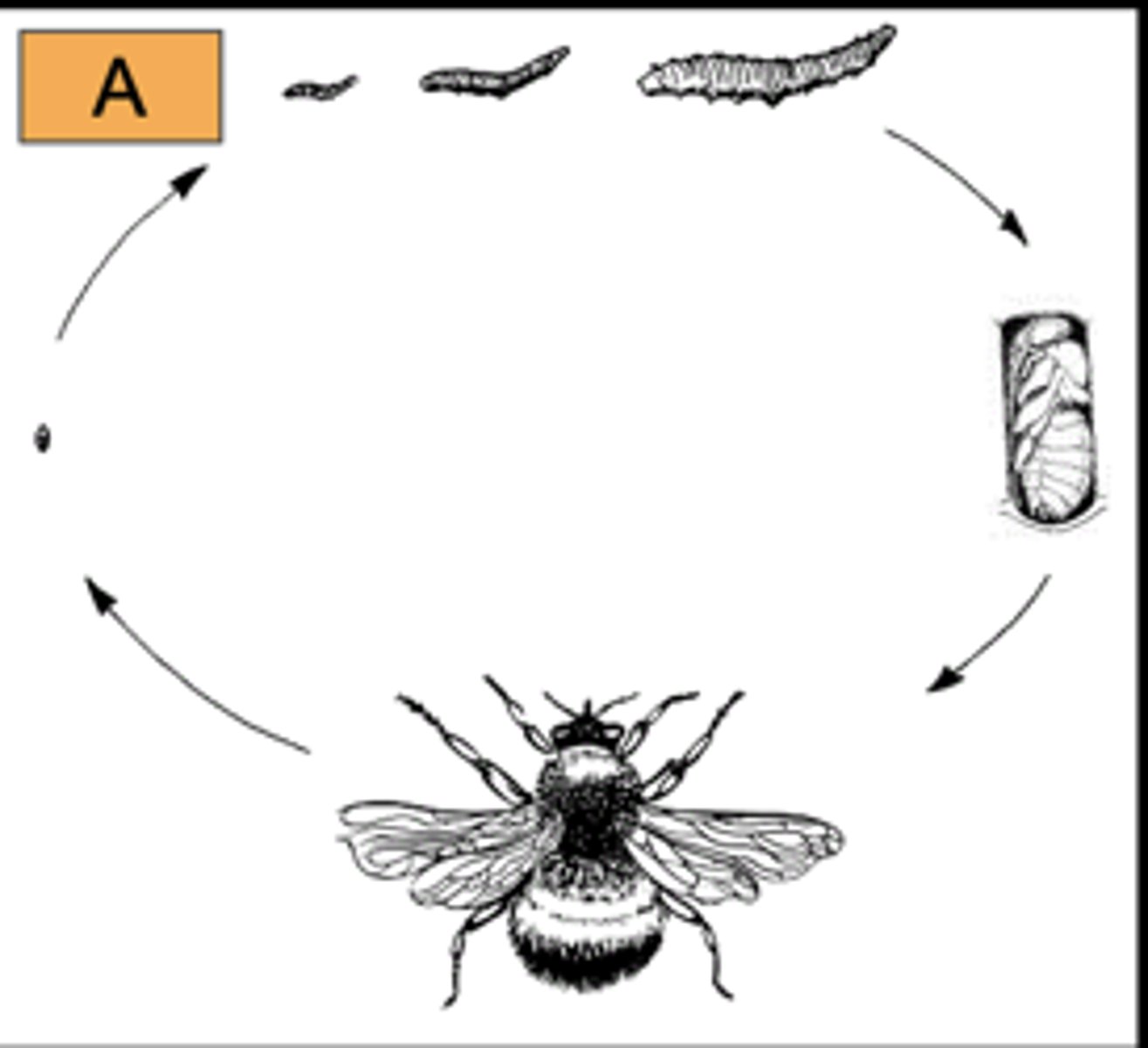
Identify the order or subclass of the specimen shown in the picture.
Order Hymenoptera
Bees
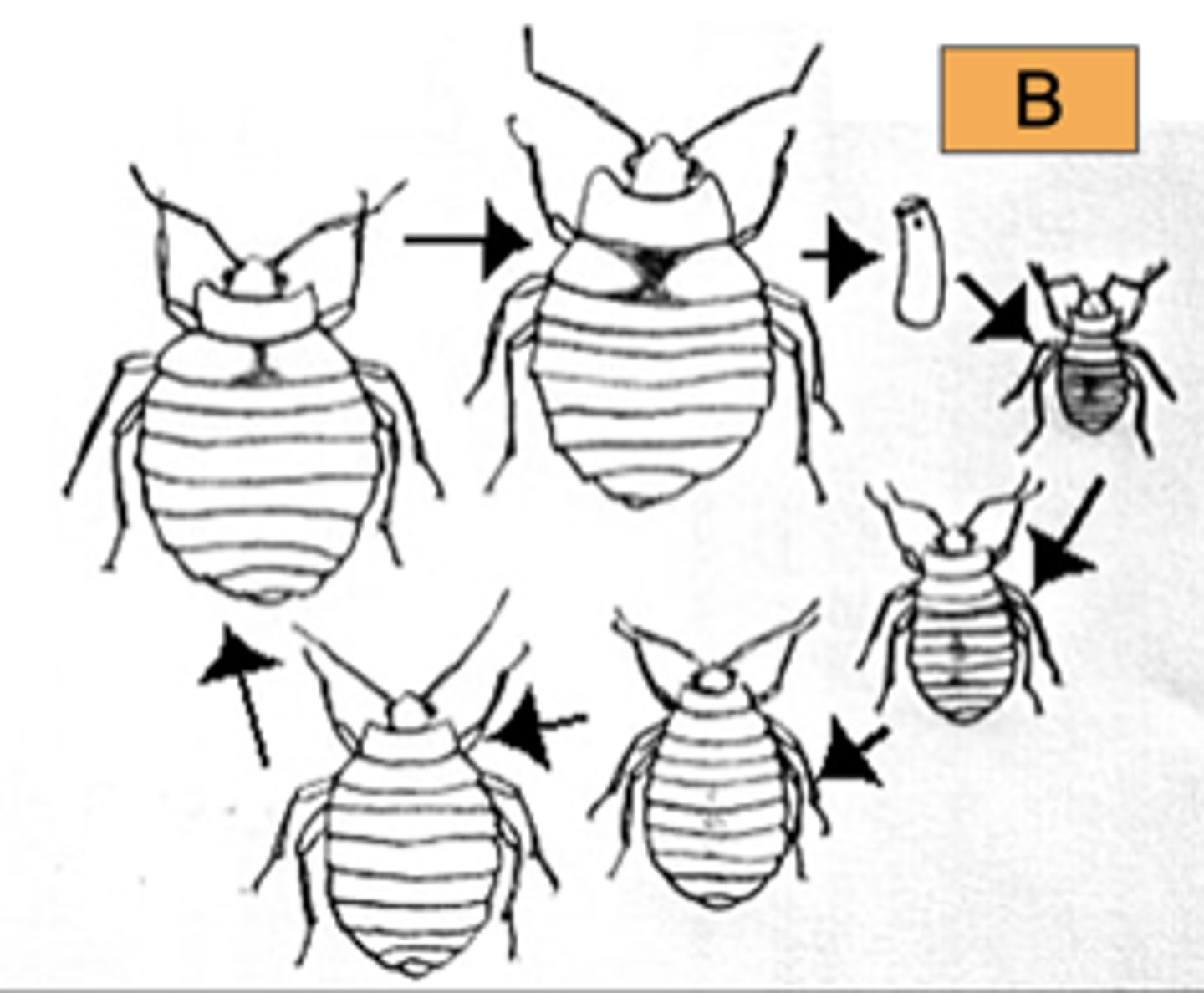
Identify the order or subclass of the specimen shown in the picture.
Order Hemiptera
True bugs
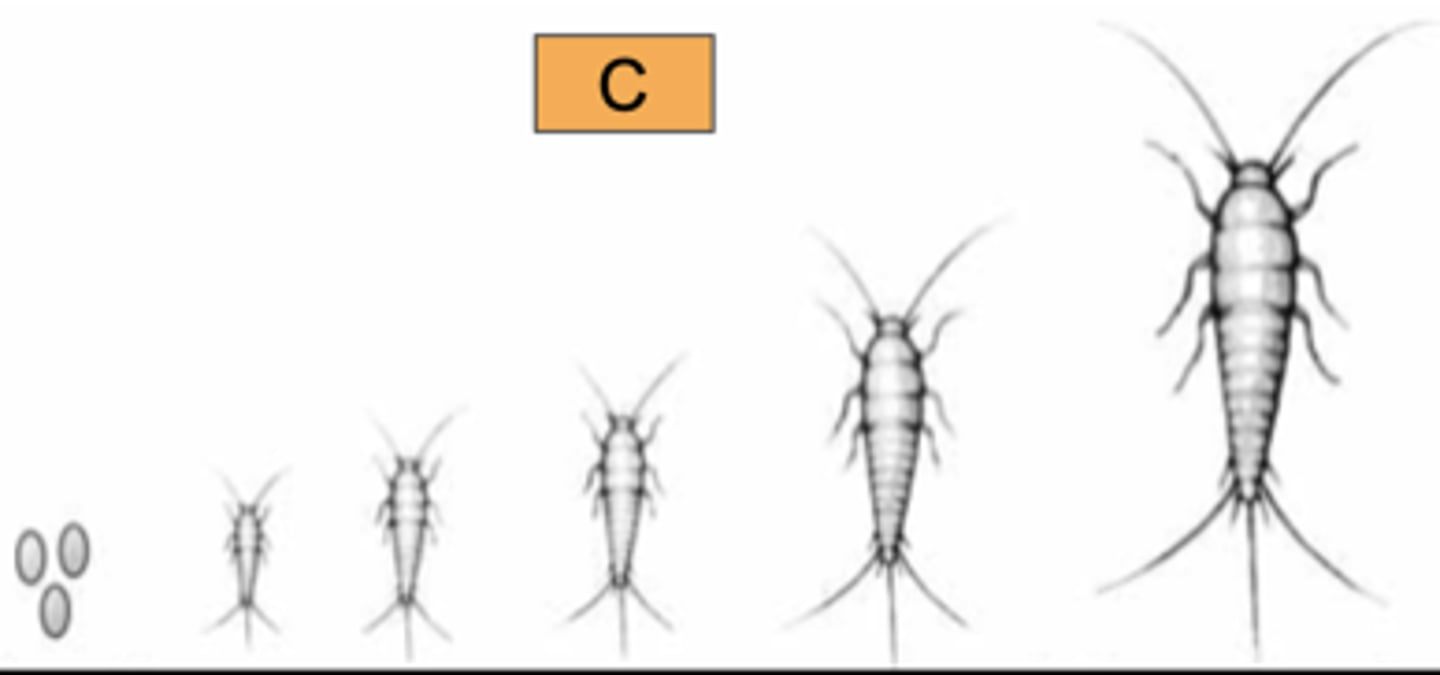
Identify the order or subclass of the specimen shown in the picture.
Order Zygentoma
Silverfish
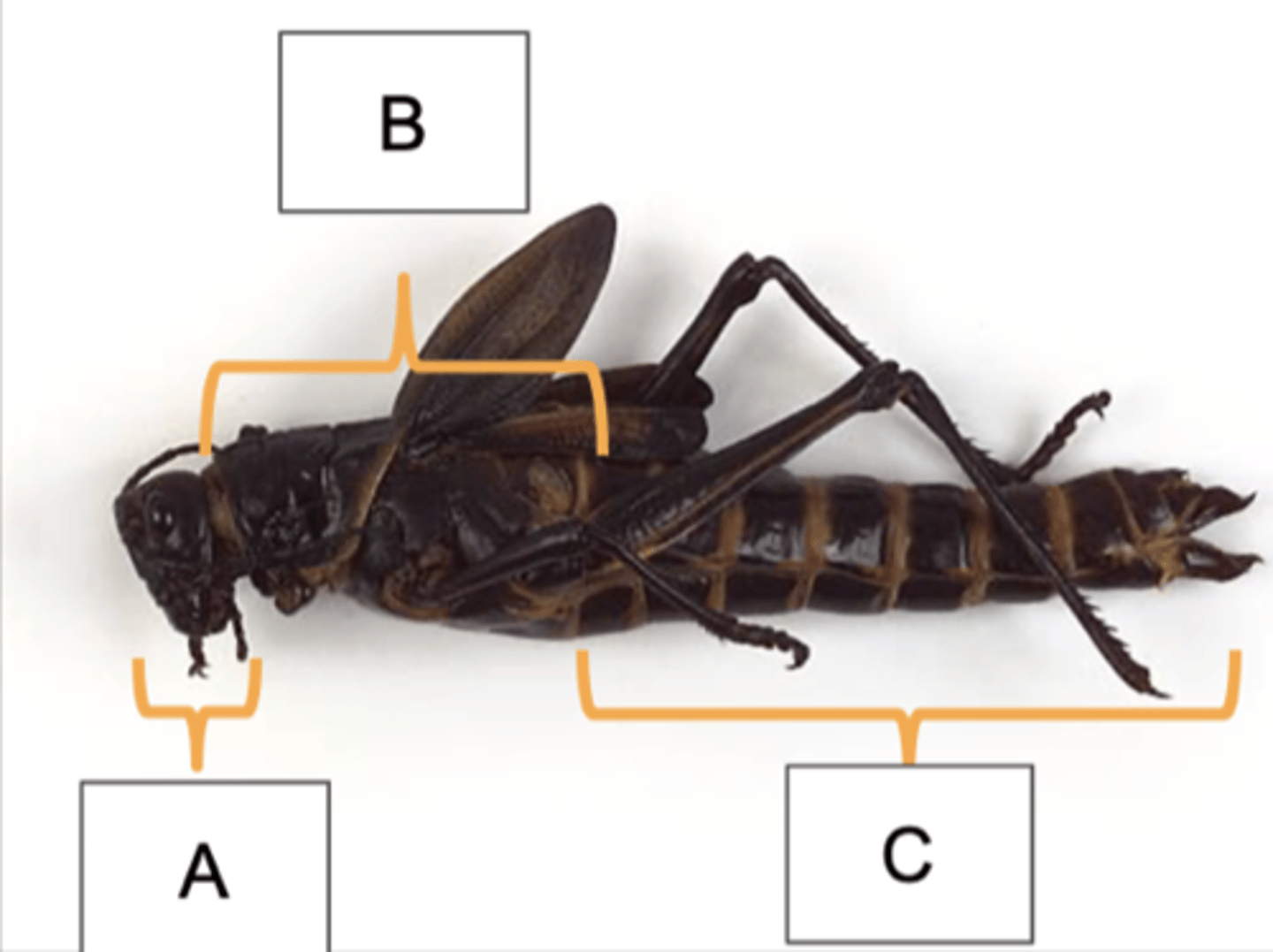
Identify the: subphylum, class, division, and order of this organism
Subphylum: Hexapoda
Class: Insecta
Division: Neoptera
Order: Orthoptera
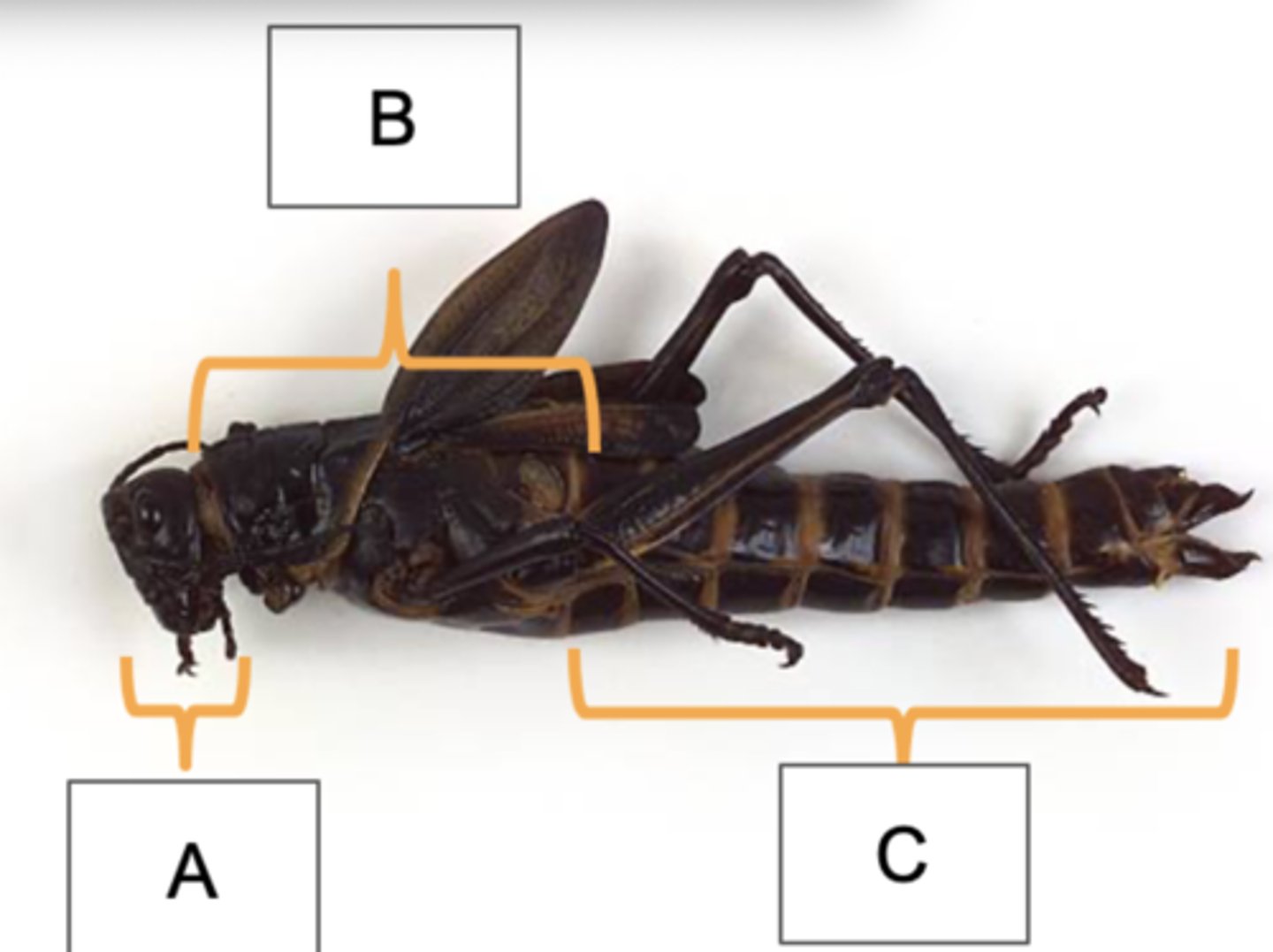
Is the specimen in the slide a male or female?
female
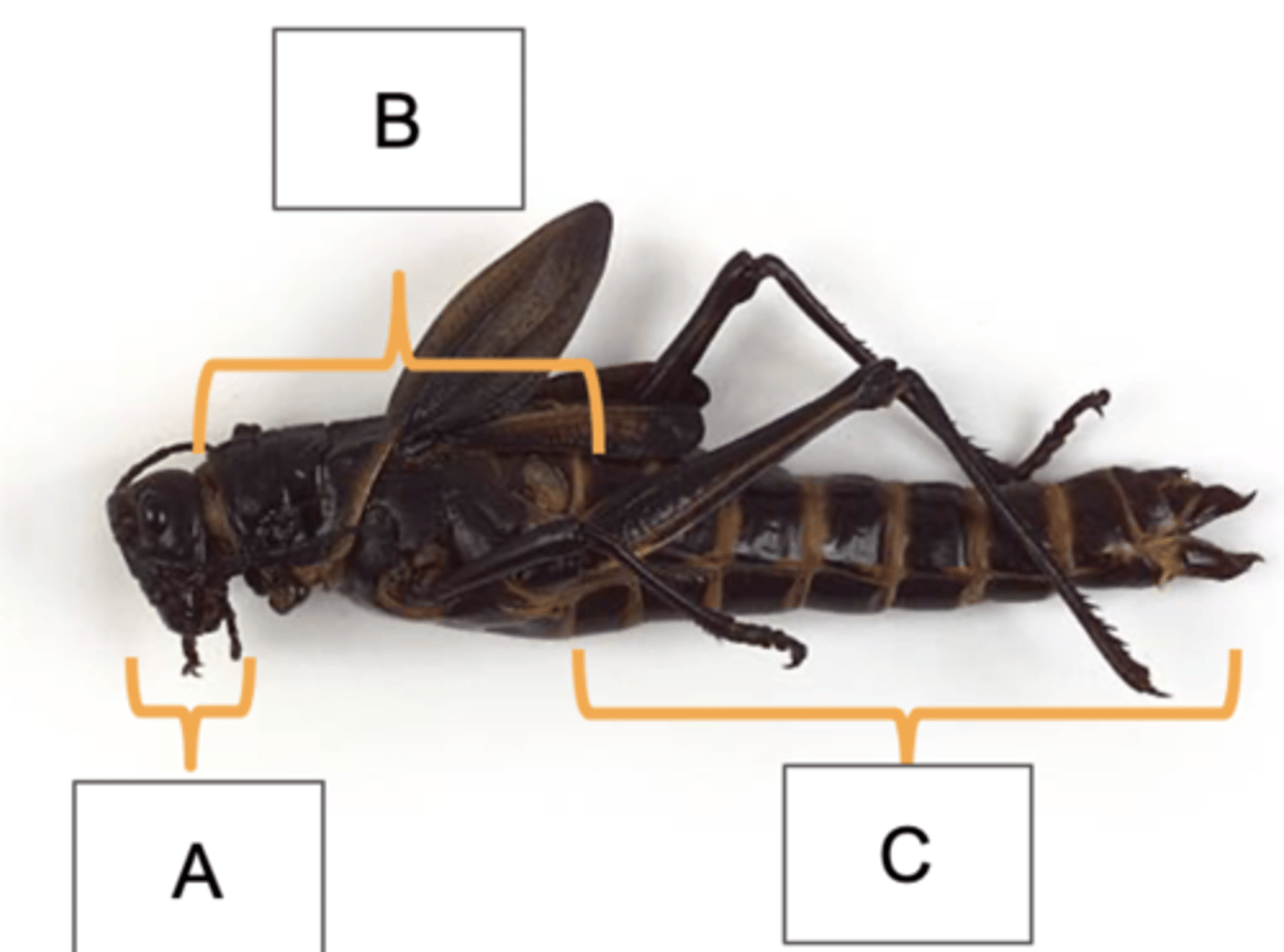
What is the name of the structure that helped you identify the sex of this specimen?
ovipositor
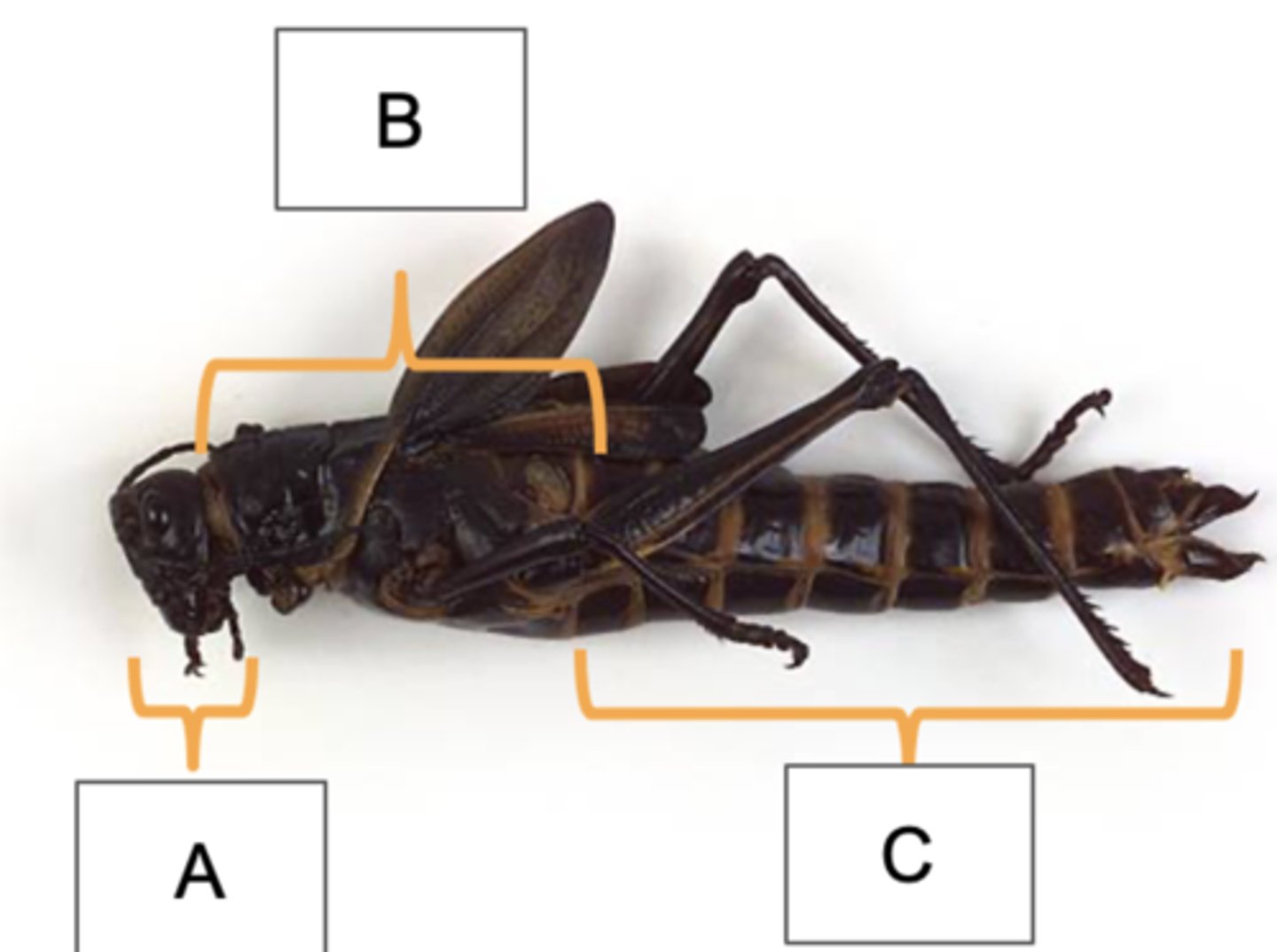
Which tagmata is labeled A?
Cephalon
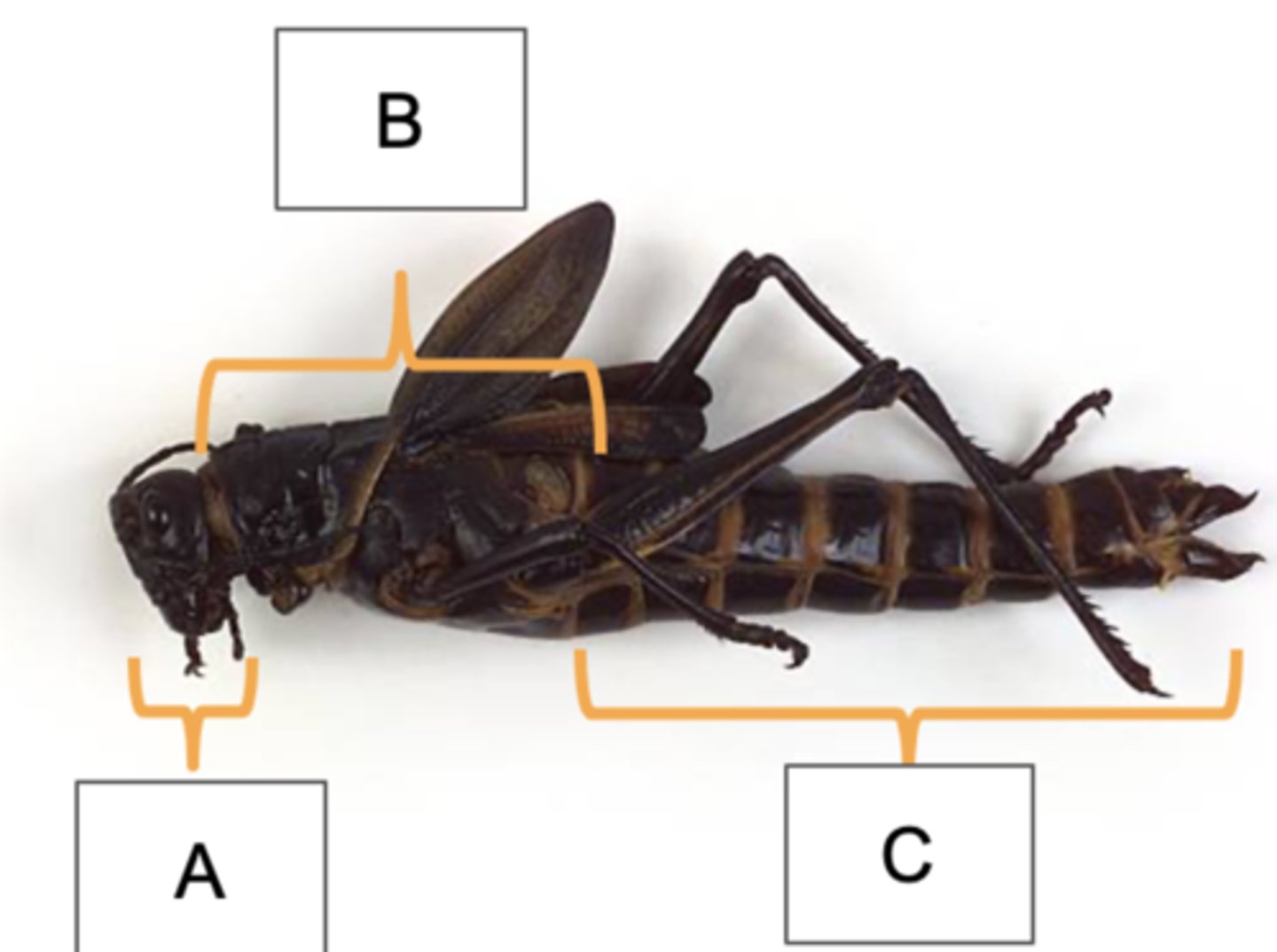
Which tagmata is labeled B?
Thorax
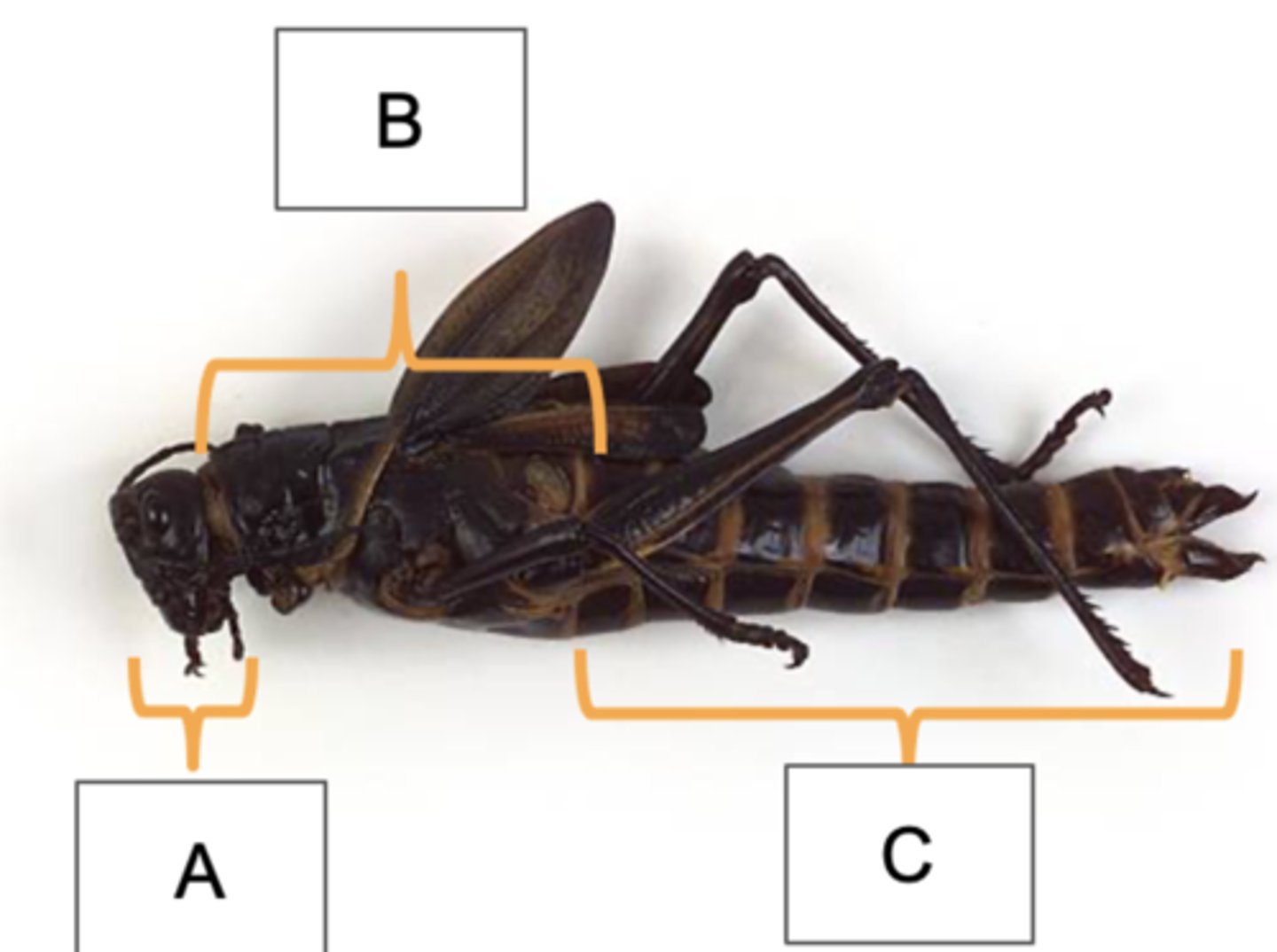
Which tagmata is labeled C?
Abdomen
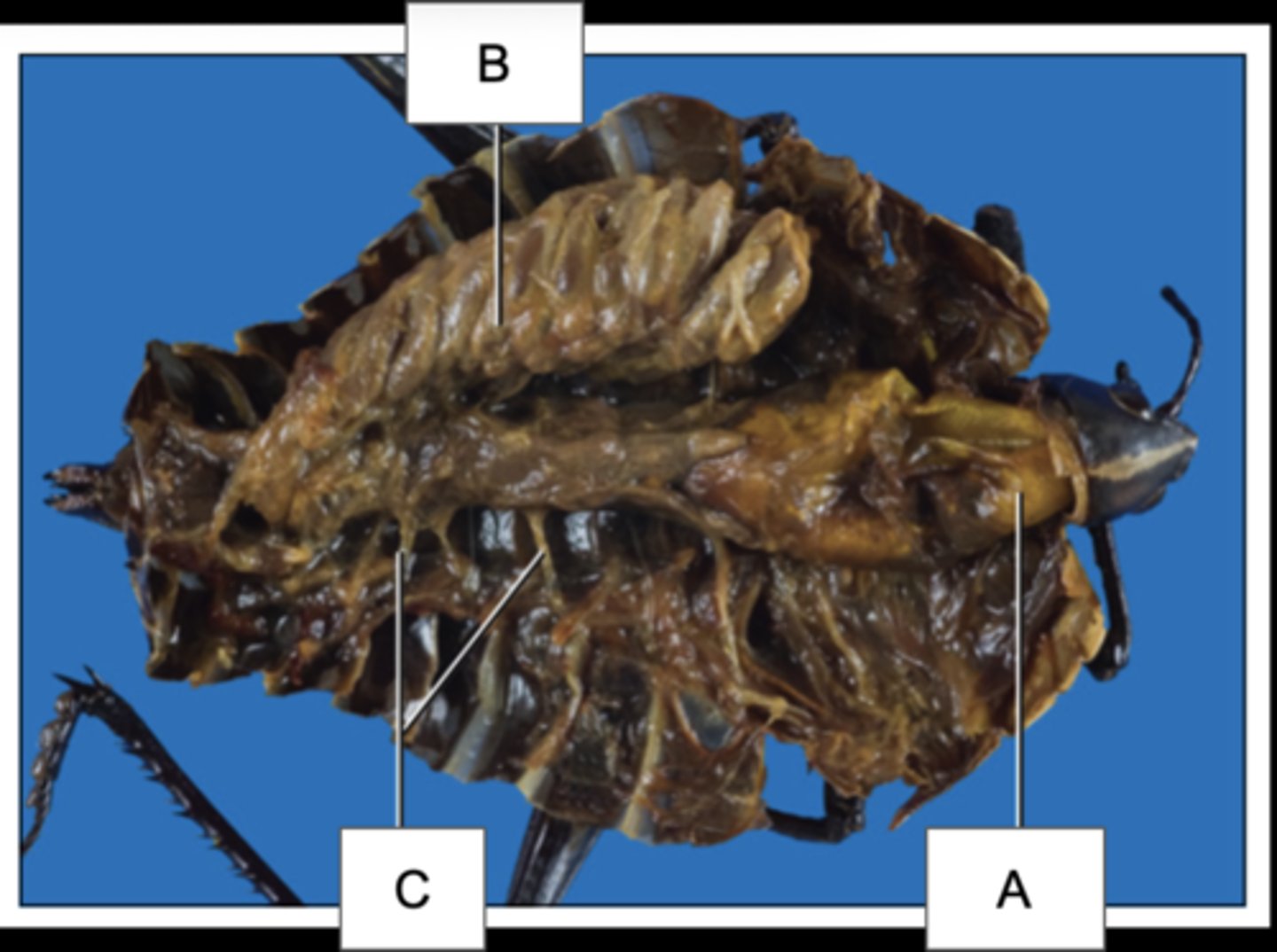
Which structure is labeled A?
Crop
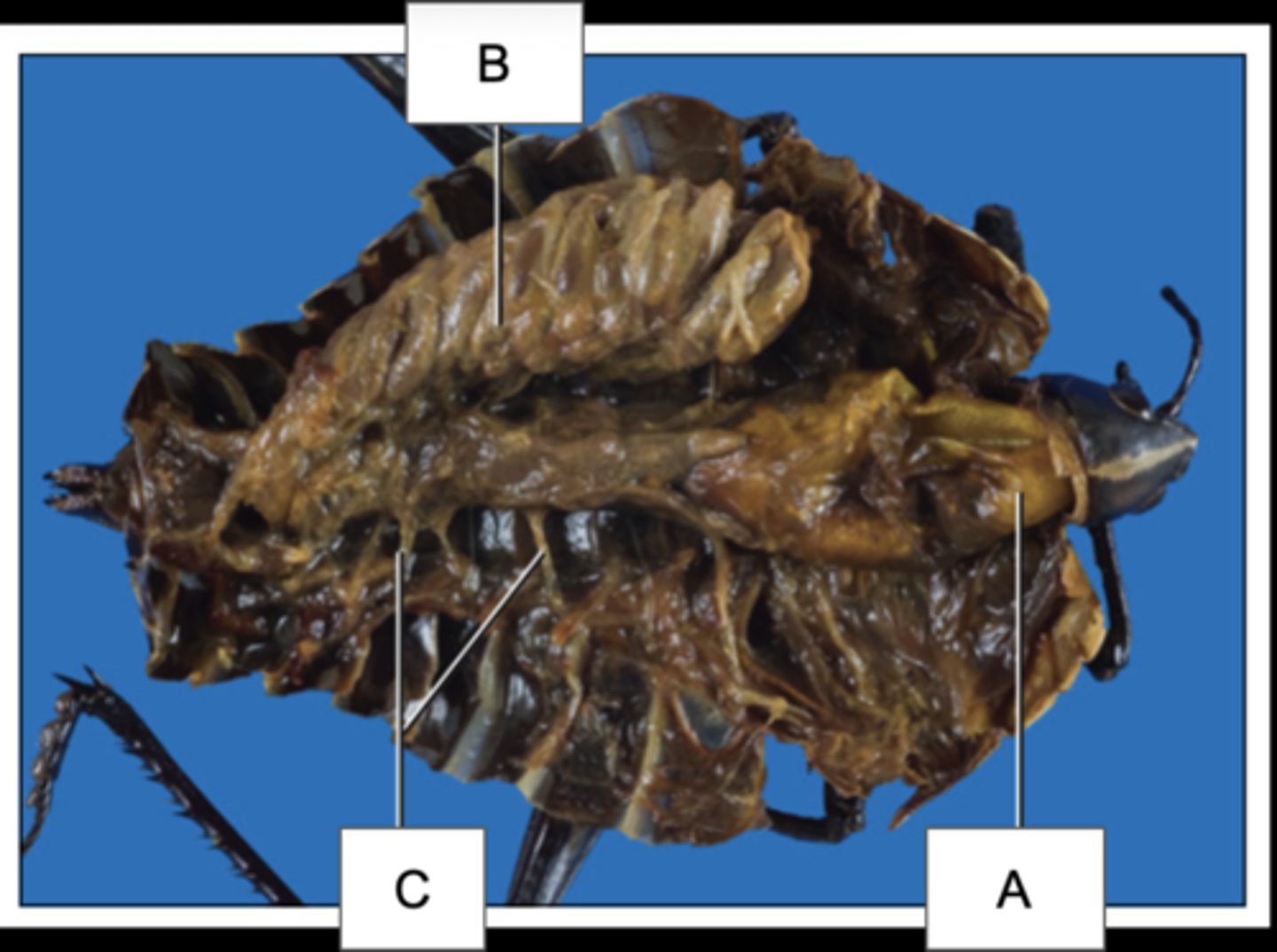
Which structure is labeled B?
Ovaries
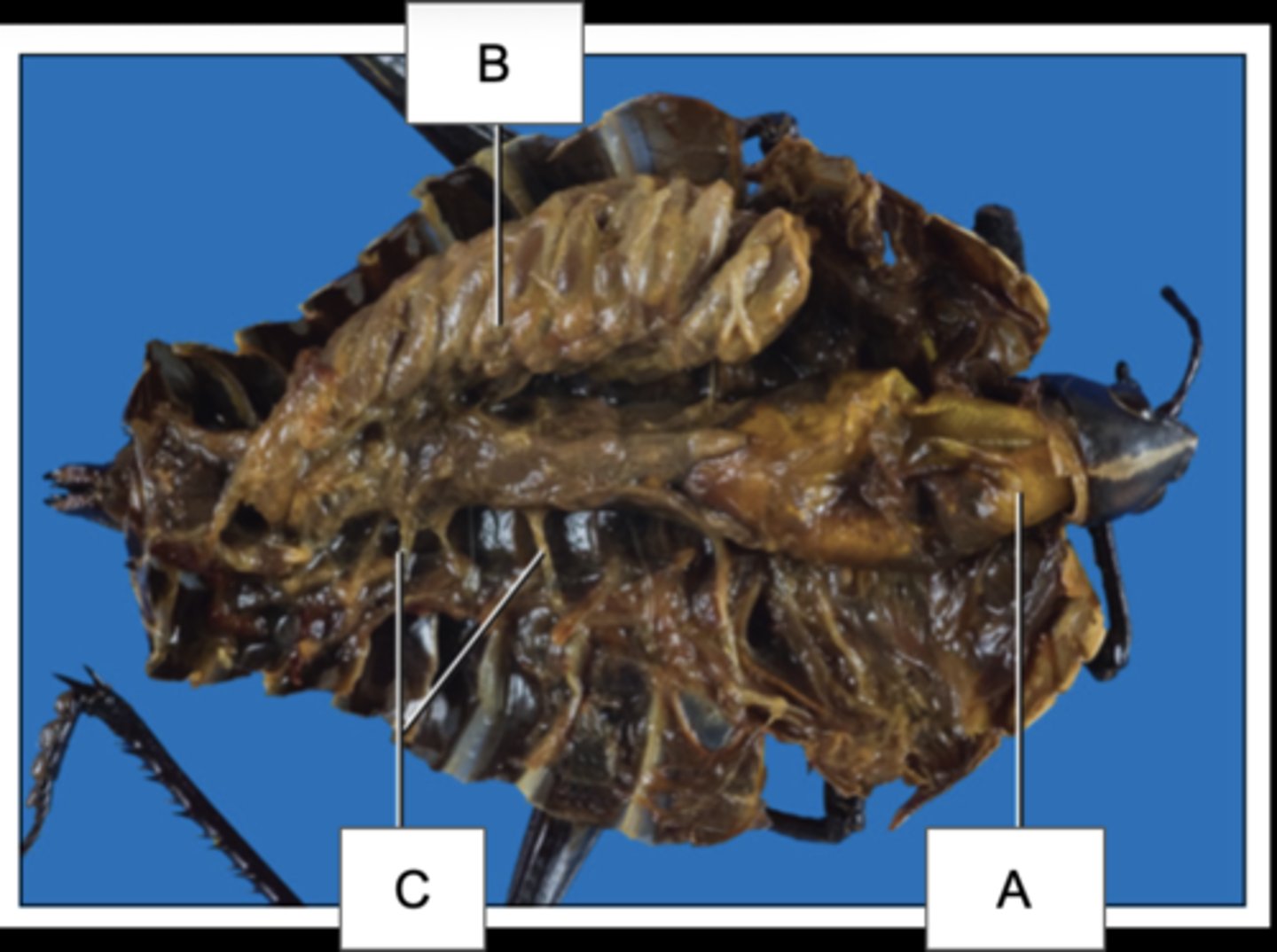
Which structure is labeled C?
Tracheae
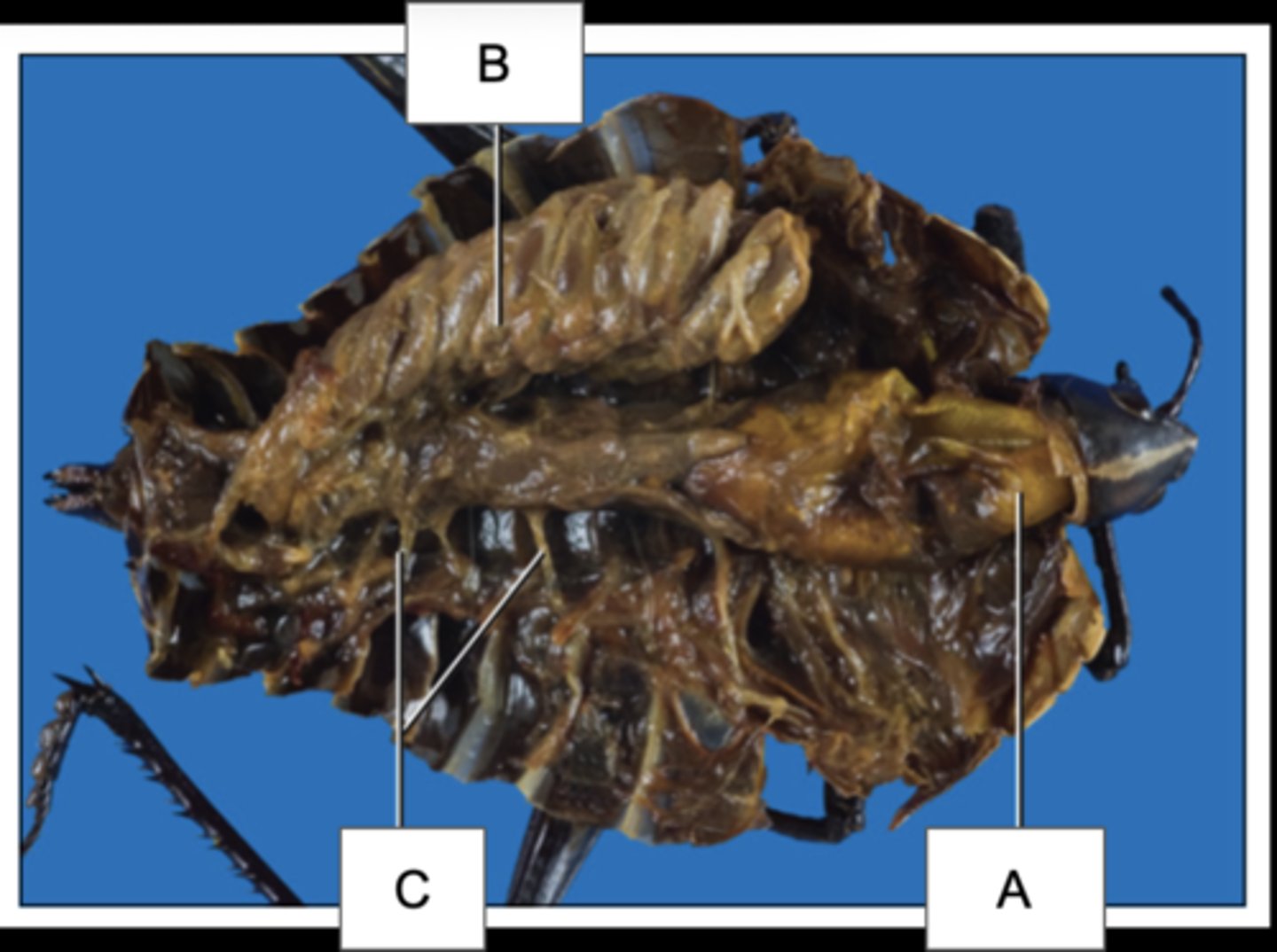
To what system does the structure indicated by line C belong?
respiratory system
Name the reasons why insects are so diverse, aside from the evolution of flight.
1) Different life cycles allow them to occupy different habitats
2) Evolution for flight (dispersal)
3) Short generation times (mutations accumulate faster)
4) Appendage specialization
5) Adaptive radiation
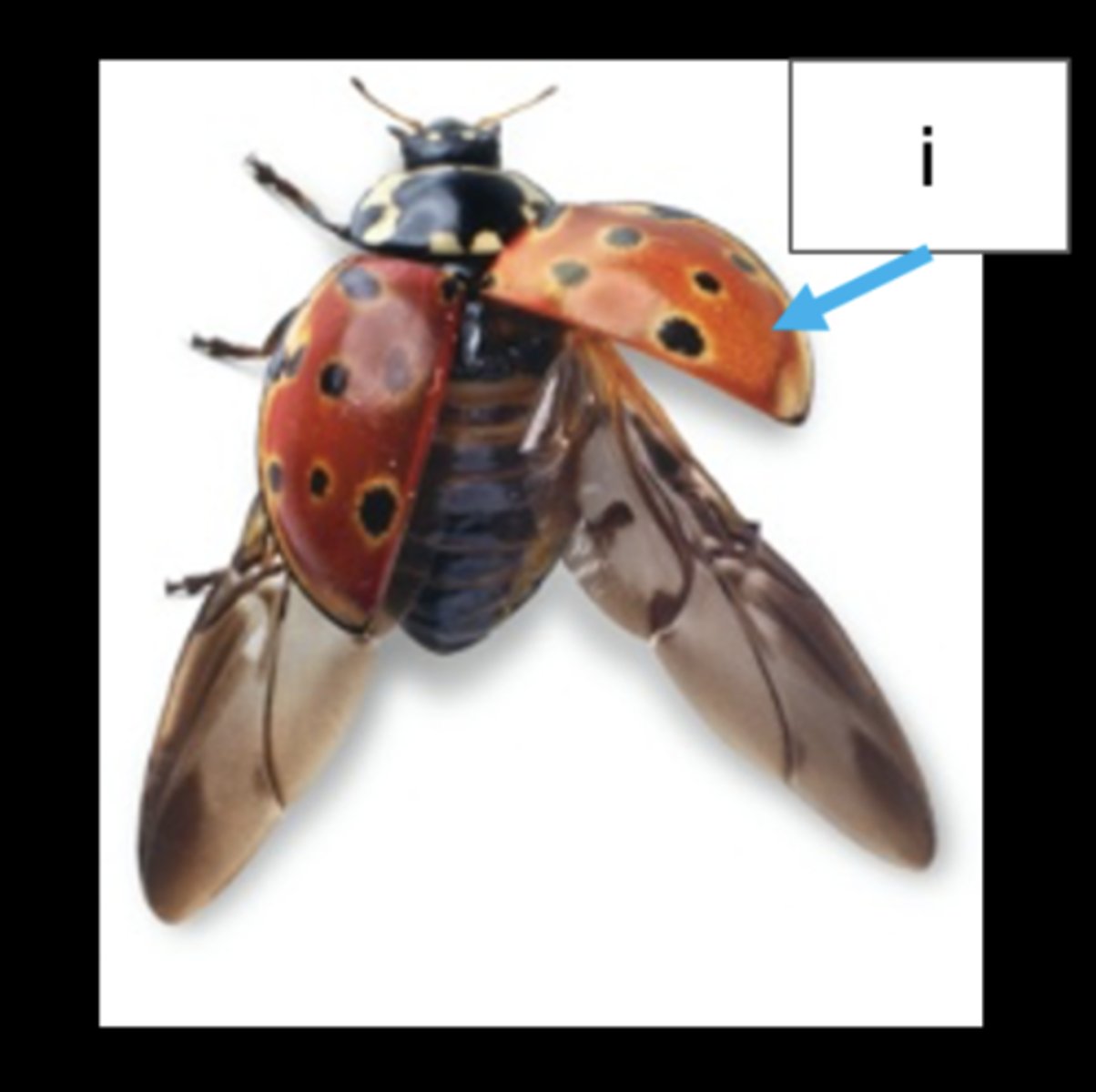
Identify the: subphylum, class, division, and order of this organism
Subphylum: Hexapoda
Class: Insecta
Division: Neoptera
Order: Coleoptera
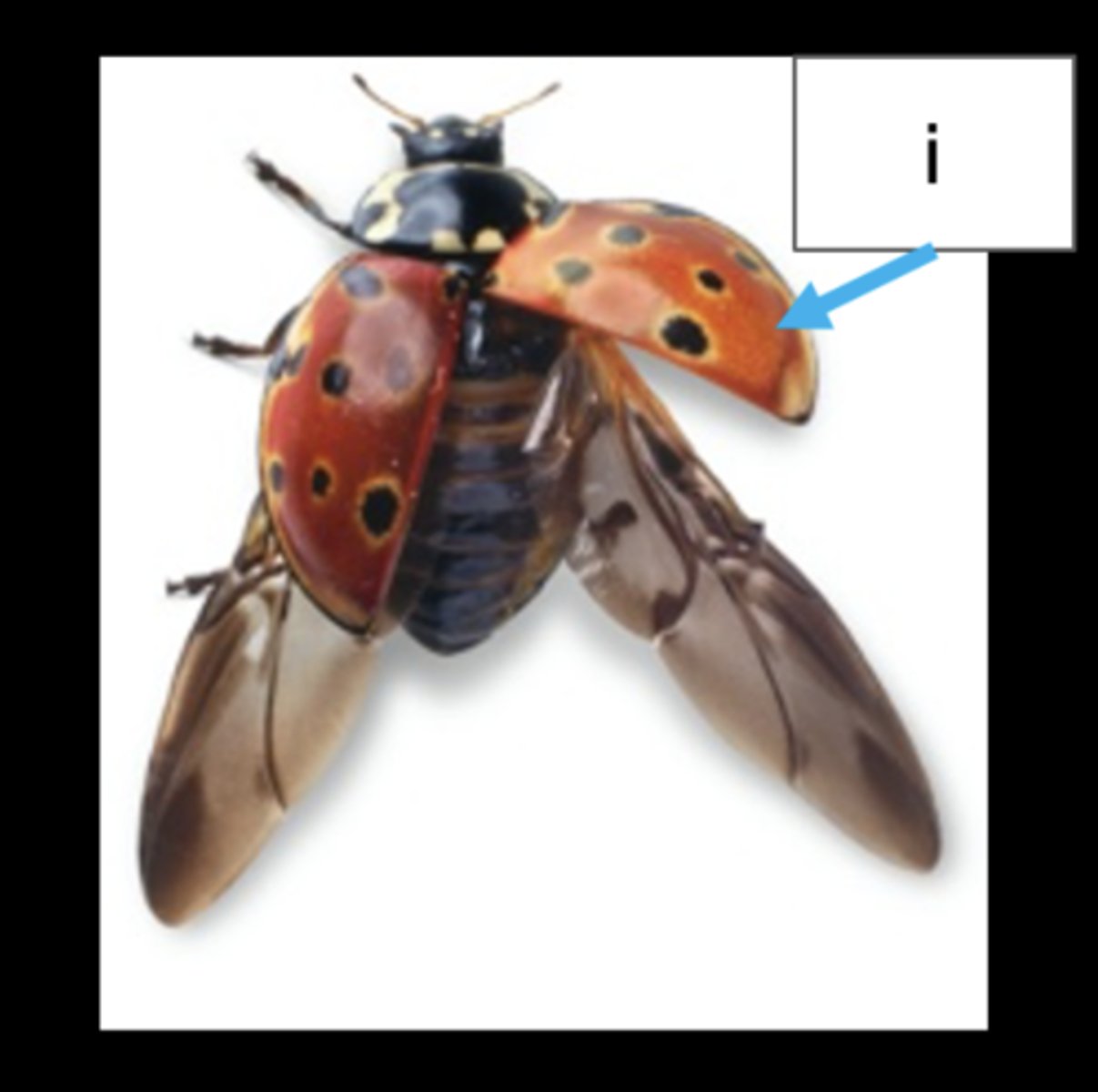
What is the specific function of structure in pointer I?
protect the wings
elytra
Name the adaptions insects have to a terrestrial environment other than wings.
1. Stronger appendages and support systems
2. Waxy cuticles
3. Internal fertilization
4. Specialized respiratory, excretory, and digestive systems
5. Wings
Which of the following respiratory structures IS NOT found in Arthropoda?
A. Gills
B. Trachea
C. Lungs
D. Book lungs
E. Spiracles
c
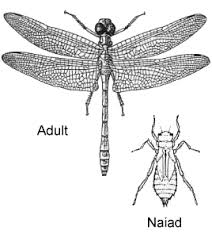
List the subphylum, class, division, and order of this organism
Subphylum: Hexapoda
Class: Insecta
Division: Paleoptera
Order: Odonata
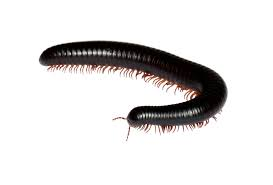
Name the subphylum for this organism
Subphylum Myriapoda
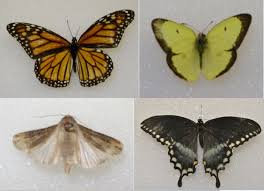
Name the order of these organisms
Order Lepidoptera
Butterflies and moths
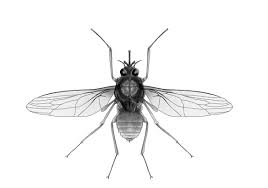
Name the order of this organism
Order Diptera
Fly
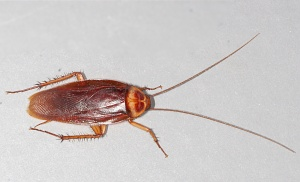
Name the order of this organism
Order Blattodea
Cockroach
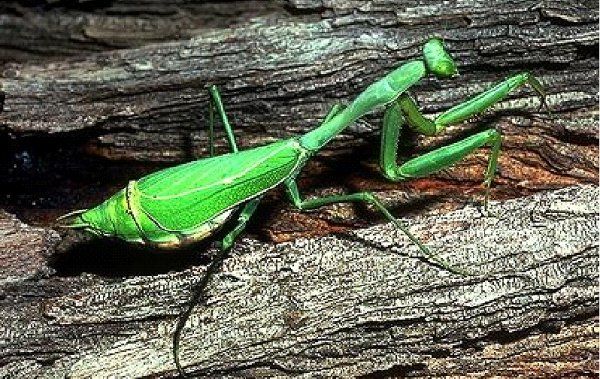
Name the order of this organism
Order Mantodea
Praying mantis
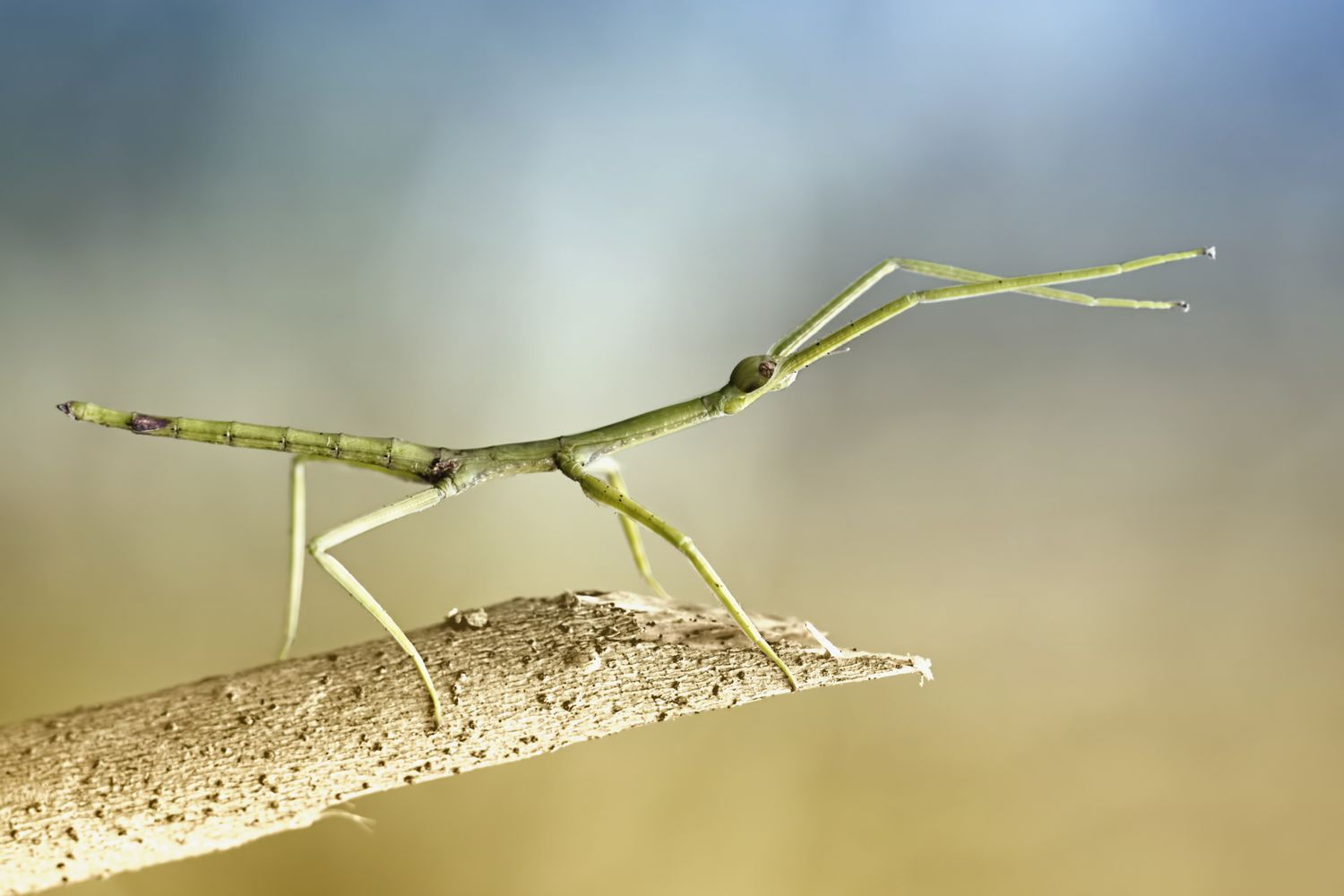
Name the order of this organism
Order Phasmida
Stickbug