Digestive system: Physio
 Call Kai
 Learn
Learn Practice Test
 Spaced Repetition
 Match
Match Flashcards
 Knowt Play
1/90

There's no tags or description
Looks like no tags are added yet.
Name | Mastery | Learn | Test | Matching | Spaced | Call with Kai | Chat |
|---|
No analytics yet
Send a link to your students to track their progress
91 Terms
Digestion
Breaking down food from macromolecules to monomers.
Absorption
Nutrients (monomers) move from food into blood stream.
Excretion
Eliminating undigested food.
Secretion
Cells produce and release necessary substances to help digest & move food along.
Peristalsis
Wave like muscular contractions that move food through all of the organs.
Bolus
chewed food in mouth, esophagus & stomach.
Chyme
Paste of partially digested food leaves stomach & enters small intestine.
Fecal Matter
Chyme enters large intestine where water & vitamins are absorbed, resulting in feces.
(Digestion Pathway) Mouth
chewing
(Digestion Pathway) Esophagus
Peristalsis contraction
(Digestion Pathway) Stomach (2)
churning
Acid environment
Small Intestine
Length maximizes absorption.
Large Intestine (2)
Final absorption
Primarily water absorption
Last step of Digestion Pathway
Excretion / Elimination / Toilet
Oral Cavity photo
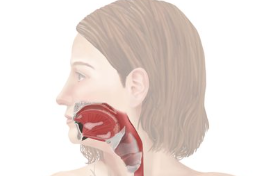
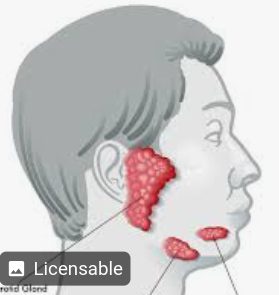
Salivary Glands Photo
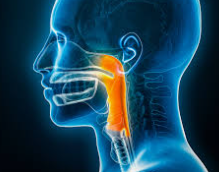
Pharynx / Throat Photo
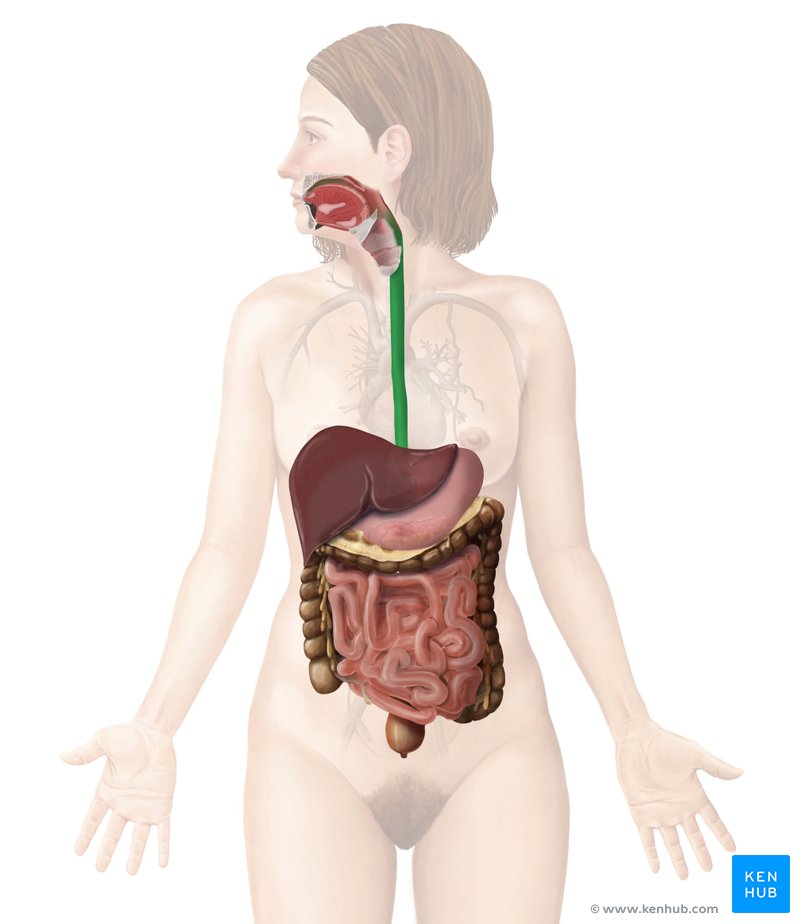
Esophagus Photo
Stomach Photo
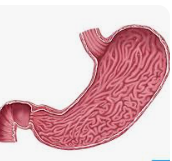
Pancreas Photo
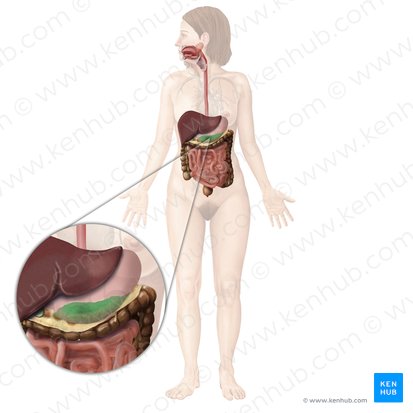
Small Intestine Photo
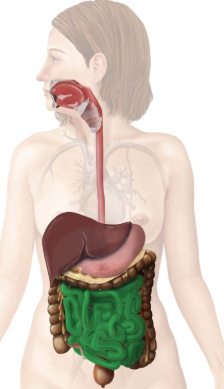
Liver Photo
Gallbladder Photo
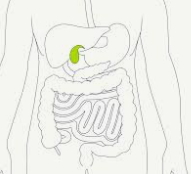
Large Intestine Photo
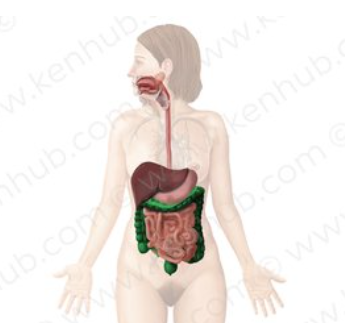
Rectum Photo
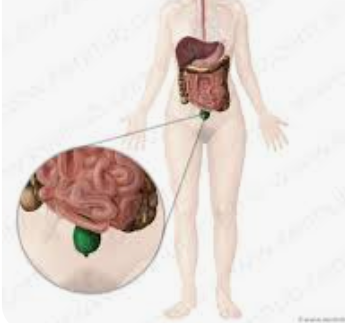
Appendix Photo
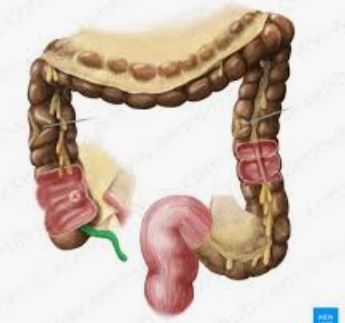
Simple columnar Tissue
Stomach, small & large intestine.
Stratified Squamous Tissue
Mouth, esophagus
Smooth Muscle Tissue
Stomach, intestines
Stratified Squamous & Smooth Muscle have __ Specialized Cells
NO
Simple Columnar Function
Aids in secretion of substances and absorption of nutrients.
Stratified Squamous Function
Protect against abrasion from food.
Smooth Muscle Function
Involuntarily contracts & moves food along digestive tract.
Mouth Process (2)
Mechanical digestion (chewing)
Chem. digestion (saliva)
Mouth Funct. (2)
Ingests (eats) food.
Chews food to make bolus & swallows, beginning carb digestion.
Mouth Important Facts (2)
Contains salivary glands,
soft / hard palate, tongue, teeth.
Esophagus Process
Peristalsis
Esophagus Function
Carries food to stomach.
Esophagus important fact
Esophageal sphinder @ bottom should be closed unless swallowing food.
Stomach Process (2)
Mech. digestion (churning)
Chem dig. (enzymes)
Stomach Function (2)
Expands to hold food & begins protein digestion.
Turns bolus into chyme.
Stomach Important Facts (2)
Contains gastric pits which release secretions.
Contain rugae (folds) to help expand.
Small Intestine Processes (2)
Chem dig. (enzymes)
Absorption of nutrients
Small Intestine Function (2)
Chemically breaks down ALL food using enzymes & bile.
Absorbs ALL nutrients into bloodstream.
Small Intestine Important Facts (2)
3 sections: duodenum, jejunum, ileum (DJ ileum)
Contains intestinal villi for increasing surface area for absorption.
Large Intestine Process (2)
Absorption
Secretion
Large Intestine Functions (2)
Absorbs water & vitamins
Stores / processes fecal matter for removal.
Large Intestine Important Facts (4)
Sections:
Cecum
Colon: ascending, transverse, descending, sigmoid.
Rectum
Anus
Food does ____ move through Accessory Structures
NOT
Salivary Glands Function
Make saliva which contains amylase enzyme to digest carbs.
Salivary Glands Fact
3 diff. glands: In cheeks, under tongue, & under jaw.
Liver Function (3)
makes bile
Can also secrete bile
Processes nutrients
Liver Fact
Many other processes
Gallbladder Function (2)
Stores & concentrates bile
Secretes bile
Gallbladder Fact
Appears green due to bile.
Pancreas Function
Makes enzymes for digestion & buffer to release into small intestine.
Pancreas Fact
Makes hormones to control blood sugar.
Salivary Glands, Gallbladder, Liver, Pancreas are all
Accessory Structures
Mouth & Stomach are BOTH
Mechanical digestion.
Bolus goes in ______ while chyme goes in ______
esophagus
stomach to small intestine.
Small intestine has BOTH (2)
Absorption
Chemical Digestion
Large Intestine is BOTH (2)
Absorption & Excretion
What makes Amylase (2)
Salivary glands
Pancreas
Stomach Lining has (3)
Goblet Cells: Secrete mucus
Chief cells: pepsin
Parietal Cells: HCI
Enzymes (2)
Proteins that speed up chemical reactions & are responsible for digestion
Require specific pH & temp to work properly.
Where does Amylase go (2)
Mouth
Small Intestine
Amylase breaks ____ into ____
carbs
simple sugar
Pepsin is made by ____(____) & secreted by _____
Stomach (Chief Cells)
Stomach
Both Pepsin and Trypsin
Both break down proteins into amino acids.
____ makes Trypsin, Amylase, Lipase & Bicarbonate/Buffer
Pancreas
Bile is made by _____& secreted by ______
Liver
Gallbladder
HCI is made by ___(___) & secreted by ____
Stomach (Parietal Cells)
Stomach
Mucus is made by ___(___) & secreted by _____
Stomach (goblet cells)
Stomach
Pepsin, HCI & Mucus are all created by & go to
Stomach
Where Amylase, Trypsin, Lipase, Bile, Bicarbonate go
Go to Small Intestine
Lipase breaks
Lipids into fatty acids
Bile emulsifies
fat (breaks into small droplets)
HCI kills
kills bacteria, activates enzymes
Mucus _____ cells from ____
protects
acid
Bicarbonate / Buffer neutralize
acidic chyme.
Small Intestine villi ____ surface area for absorption.
increases
Intestinal Lining have cells with
microvilli & also blood vessels
Constipation & Diarrhea Organ Affected
Organ Affected = Large Intestine
Peptic Ulcers Organ Affected
Stomach Organ Affected
Celiac Disease Organ Affected
Organ Affected = Small Intestine
Pancreatic Insufficiency Organ Affected
Organ Affected = Pancreas
Constipation Process Affected (3)
INCREASED H2O absorption
DECREASED Excretion
Build up of waste
Diarrhea Process Affected (3)
DECREASED H2O absorption
DECREASED Excretion
Dehydration
Peptic Ulcers Process Affected
DECREASED Secretion due to stomach lining injury.
Celiac Disease Process Affected (3)
DECREASED Absorption
Reduced surface area
Malnutrition
Pancreatic Insufficiency Process Affected (3)
DECREASED enzyme secretion
DECREASED absorption
Malnutrition