DAT orgo - Carboxylic Acids and Acid Derivatives
 Call Kai
 Learn
Learn Practice Test
 Spaced Repetition
 Match
Match Flashcards
 Knowt Play
1/26

There's no tags or description
Looks like no tags are added yet.
Name | Mastery | Learn | Test | Matching | Spaced | Call with Kai |
|---|
No analytics yet
Send a link to your students to track their progress
27 Terms
relative reactivity carboxylic acid derivatives
ACid chlorides < anhydrides < carboxylic acids(or esters) < amide < Carboxylates
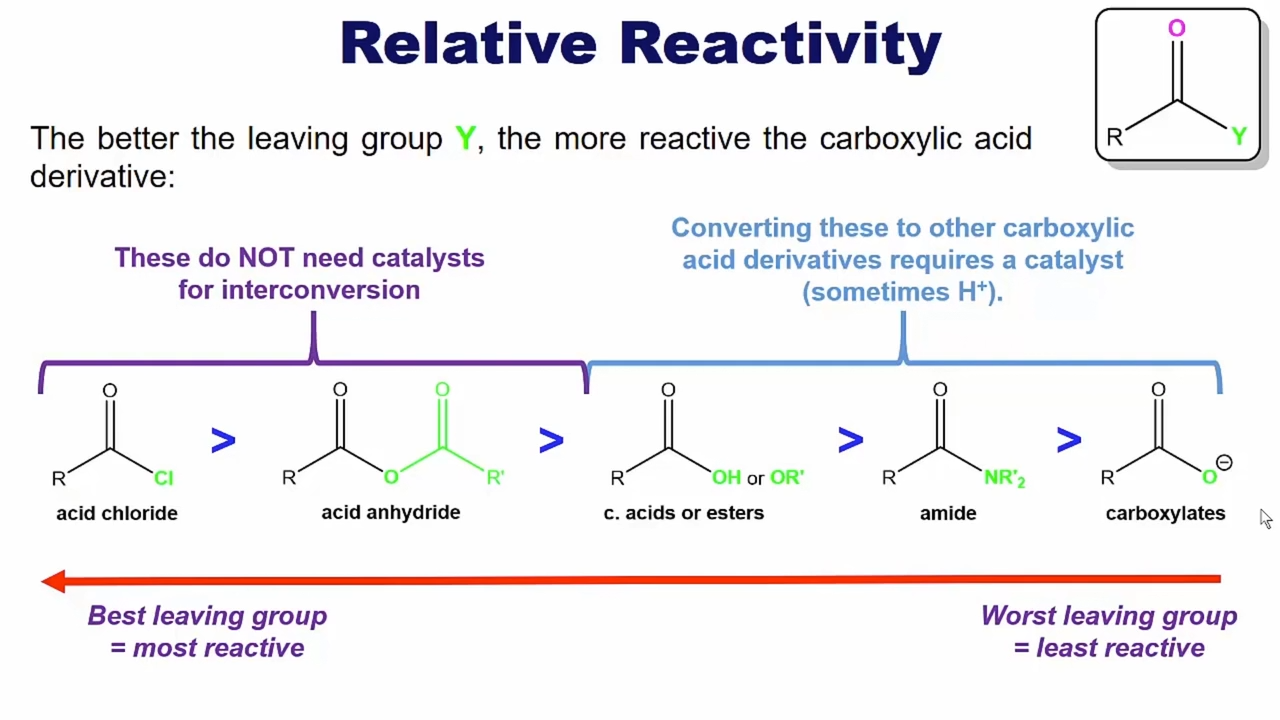
What carbonyl leaving groups do not need catalysts
anhydrides and acid chlorides
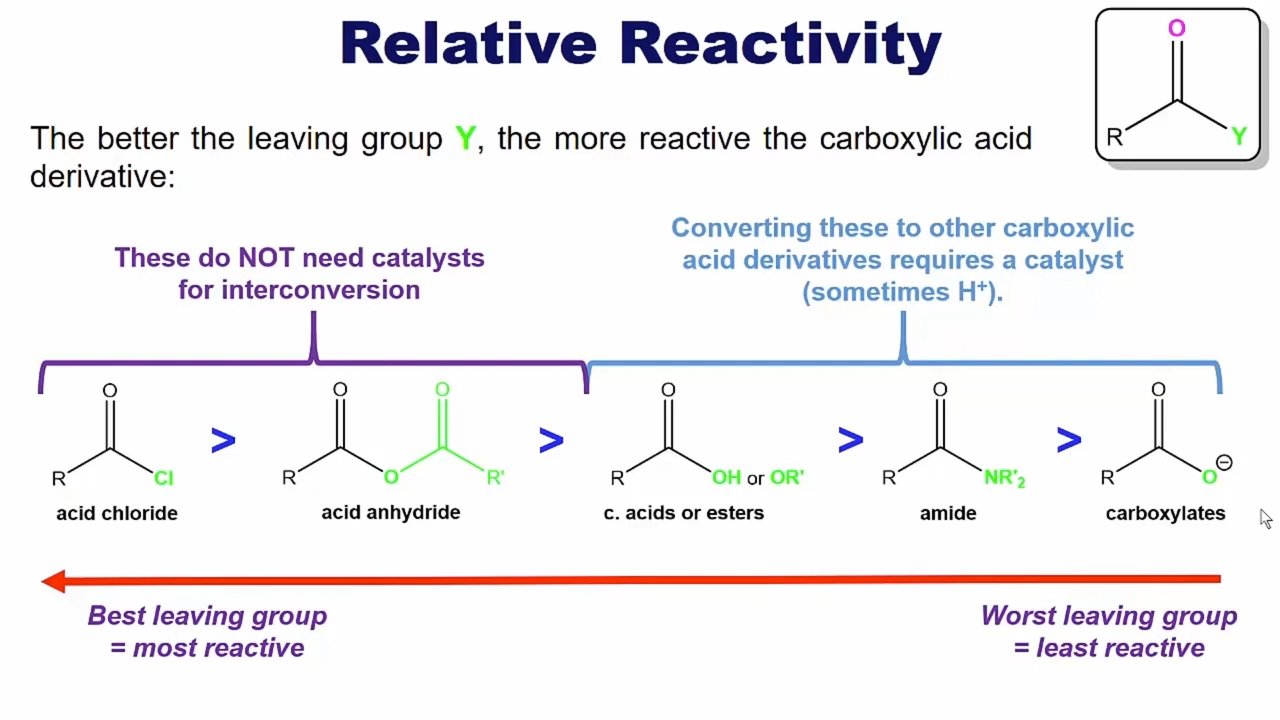
What carbonyl leaving groups need catalysts
carboxilic acids, esters, amides, and esters
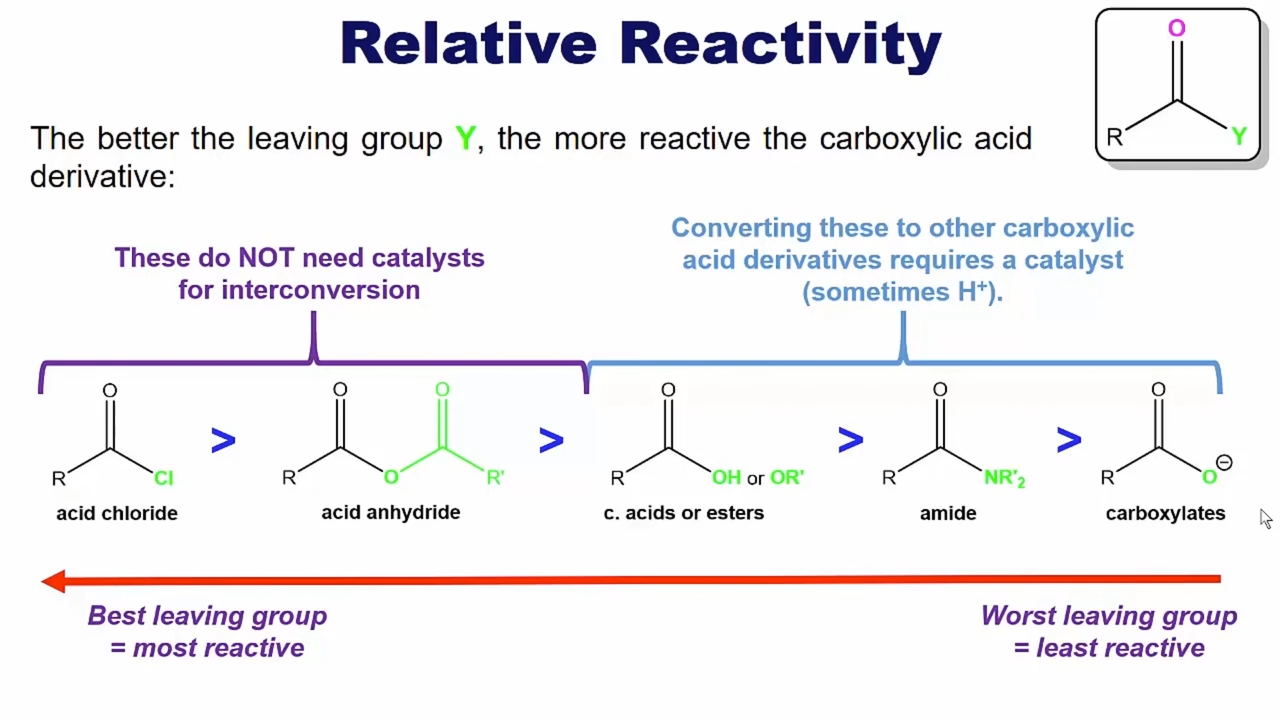
Nucleophilic acyl addition

Thionyl chloride
SoCl2
What determines boiling point in alcohols
the size of the R group
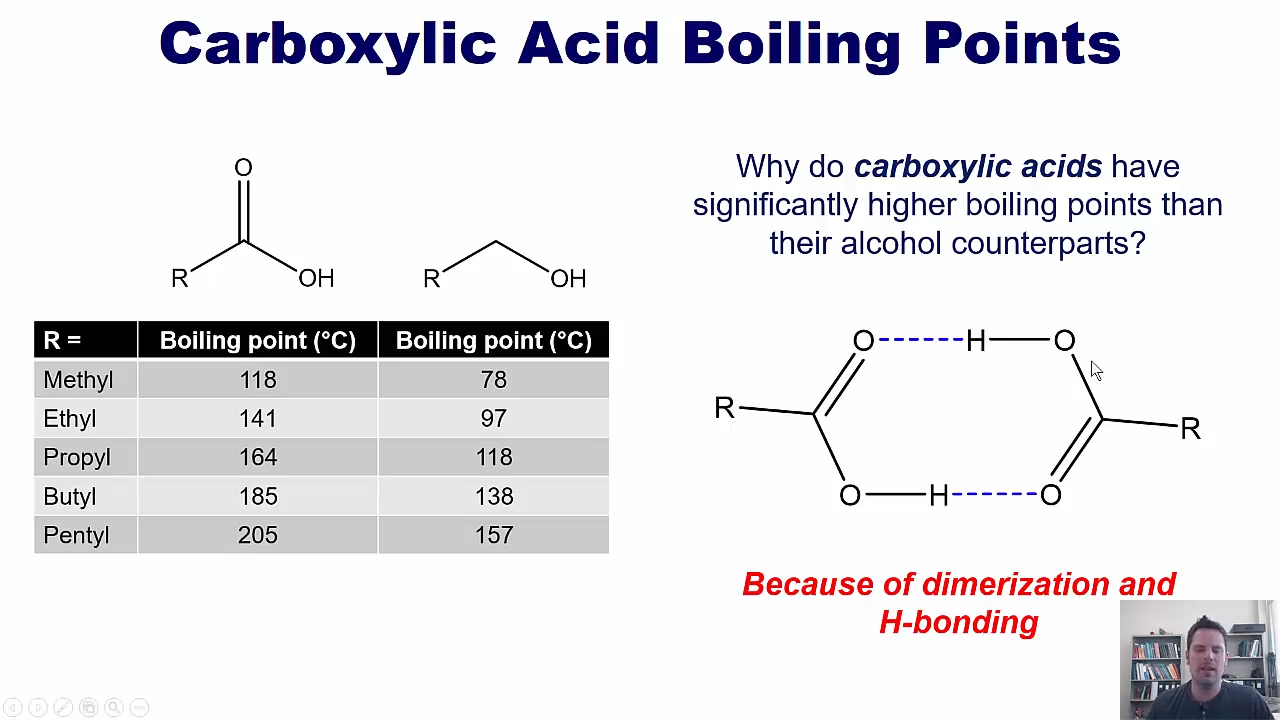
what makes carboxylic acids have higher boiling points than their alcohol counterparts
dimerization an H bonding
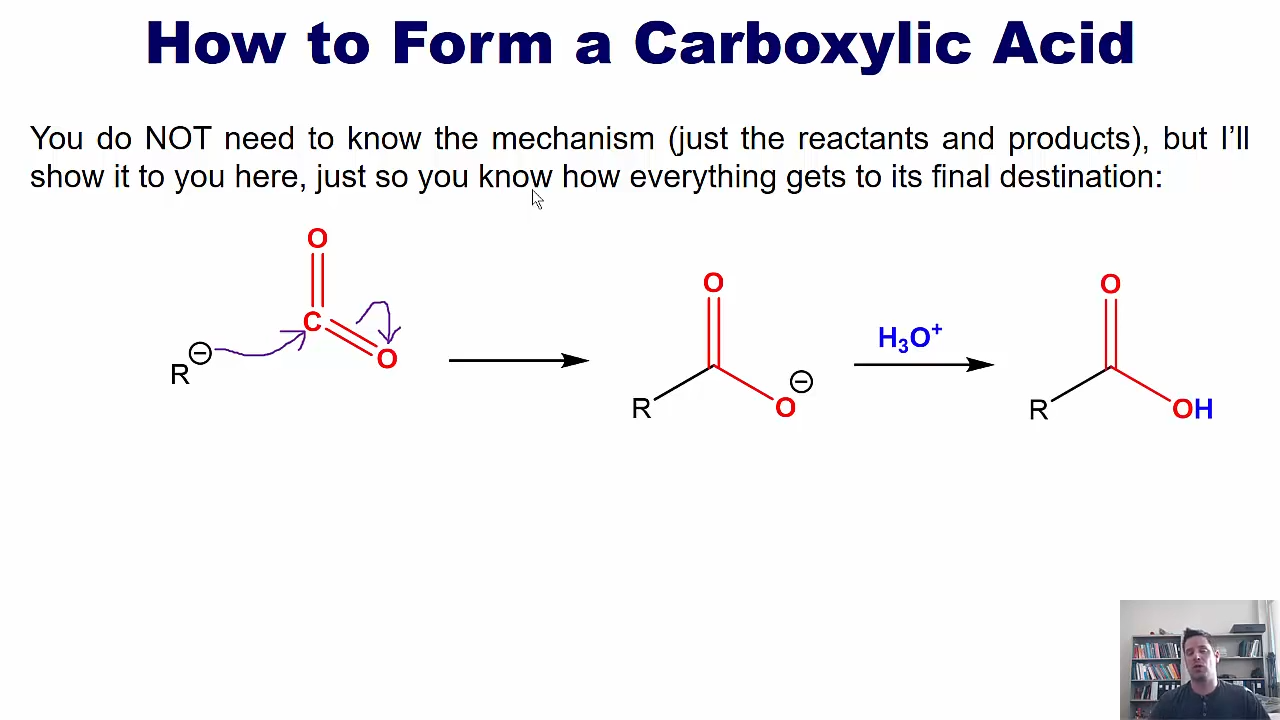
How to form a carboxylic acid
use a grignard and a carboxylic acid
followed by a quench
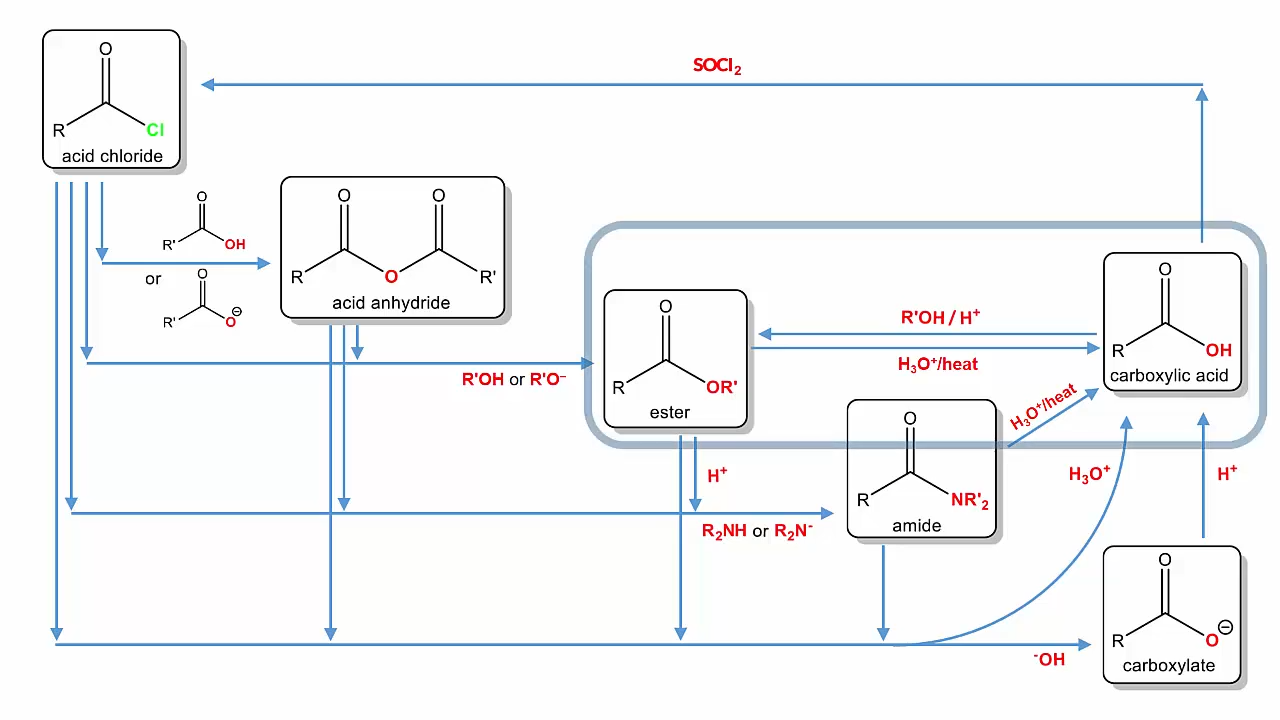
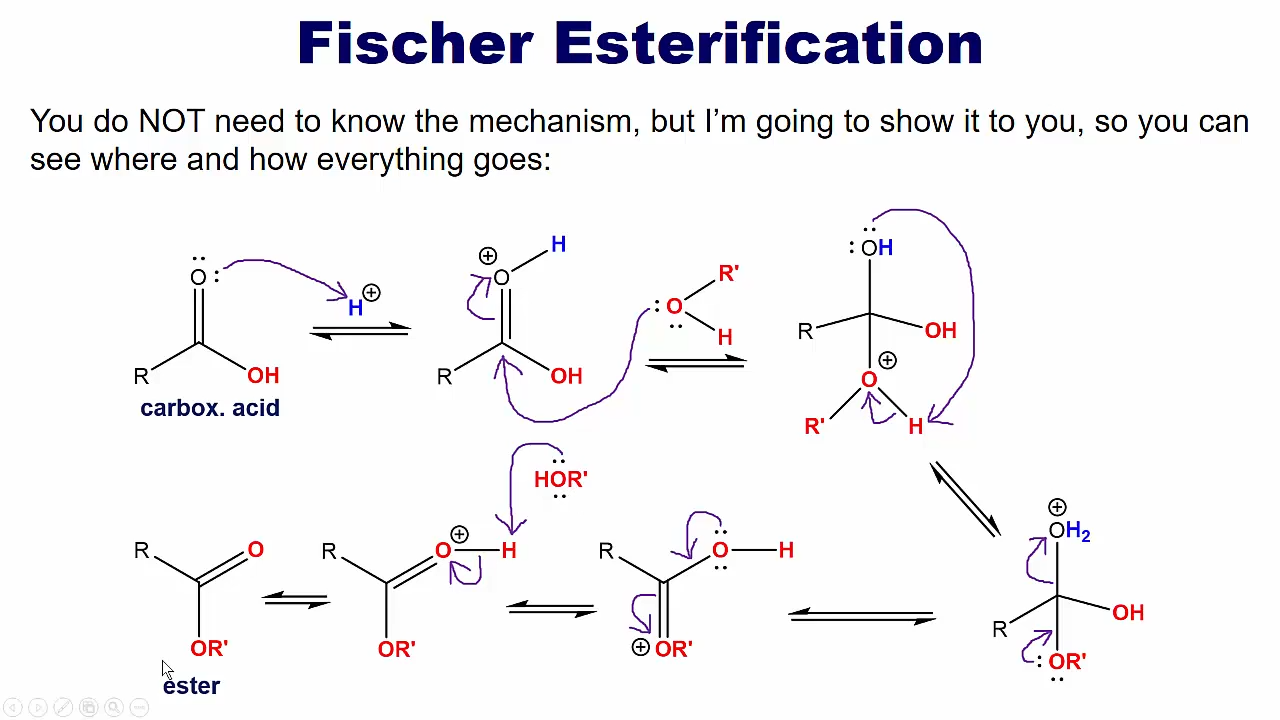
Fischer esterification
carboxylic acid into Ester
+ H+ and HOR
Saponification in acidic conditions
Taking an ester and converting it into a carboxylic acid
+ H+ and water
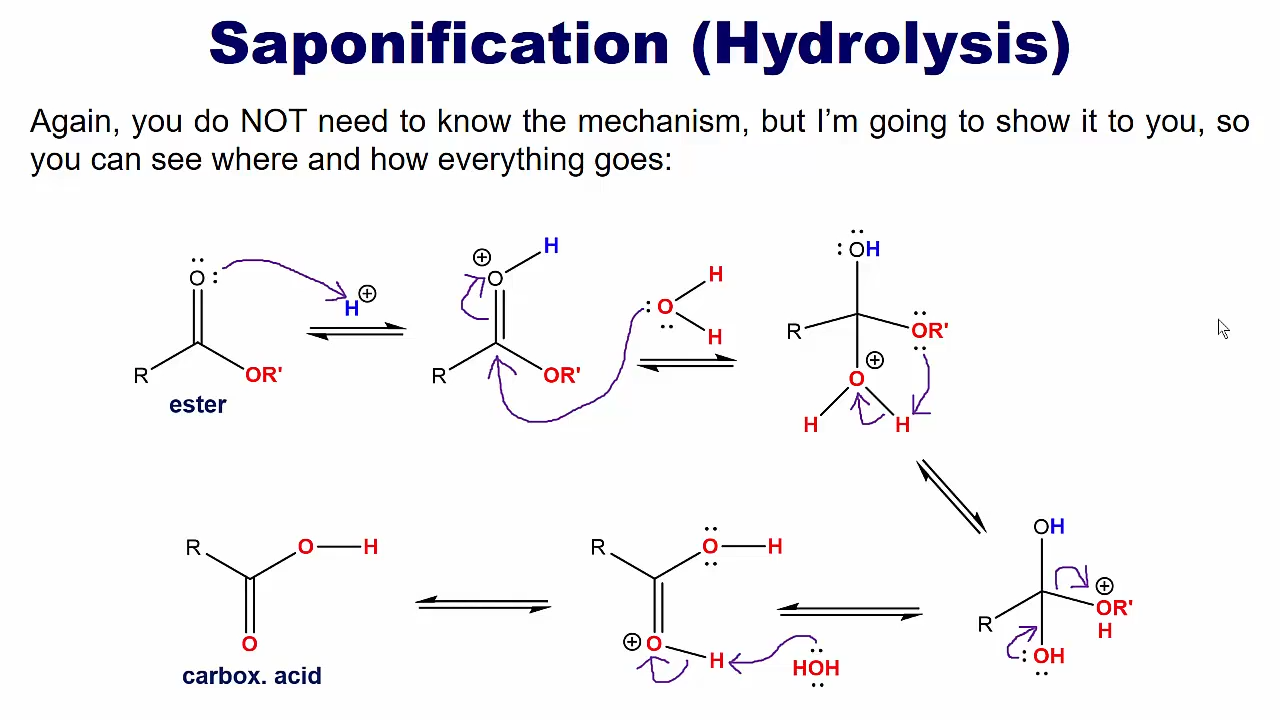
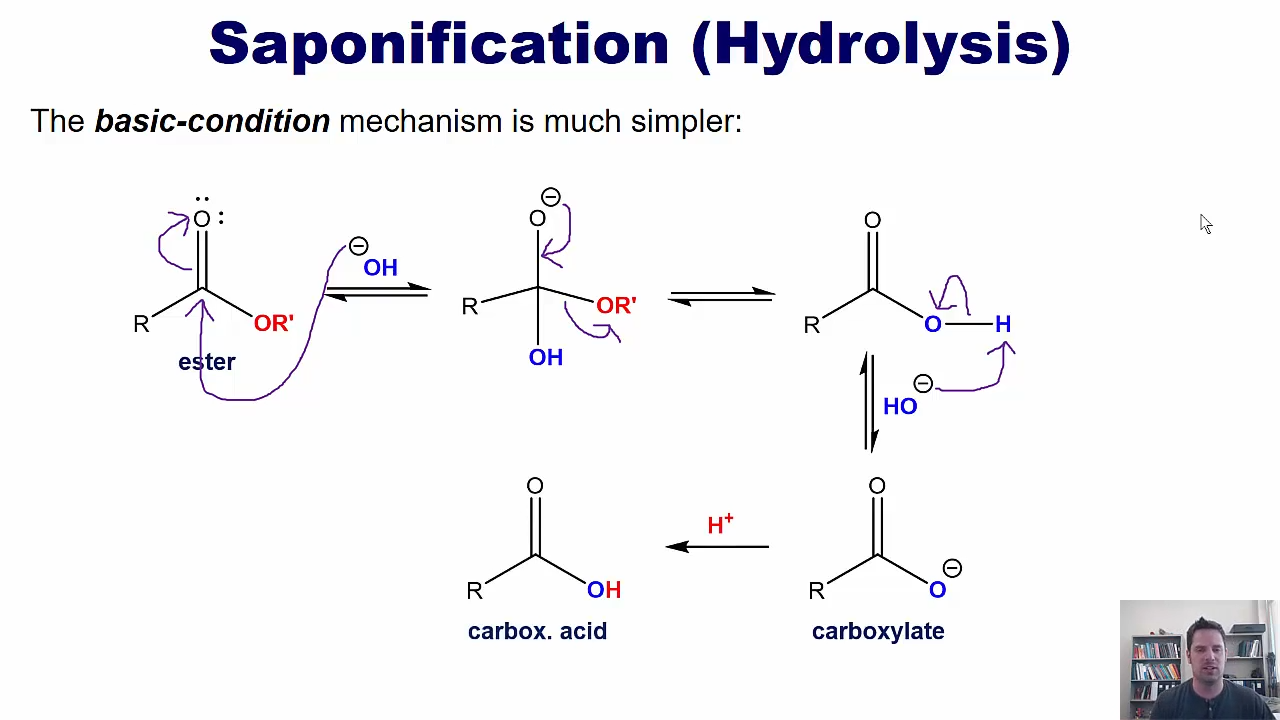
Saponification in basic conditions
made in soaps!
What does adding NABH4 do
It reduces aldehydes and ketones down into primary and secondary alcohols, respectivley
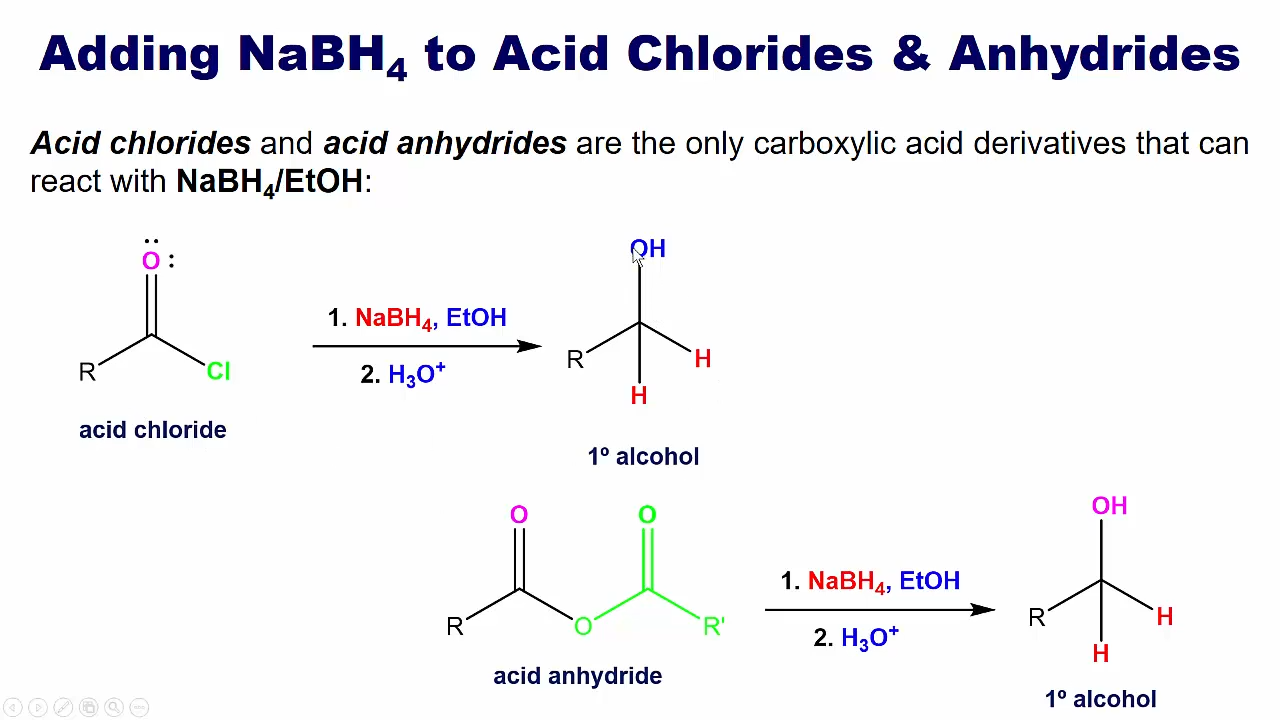
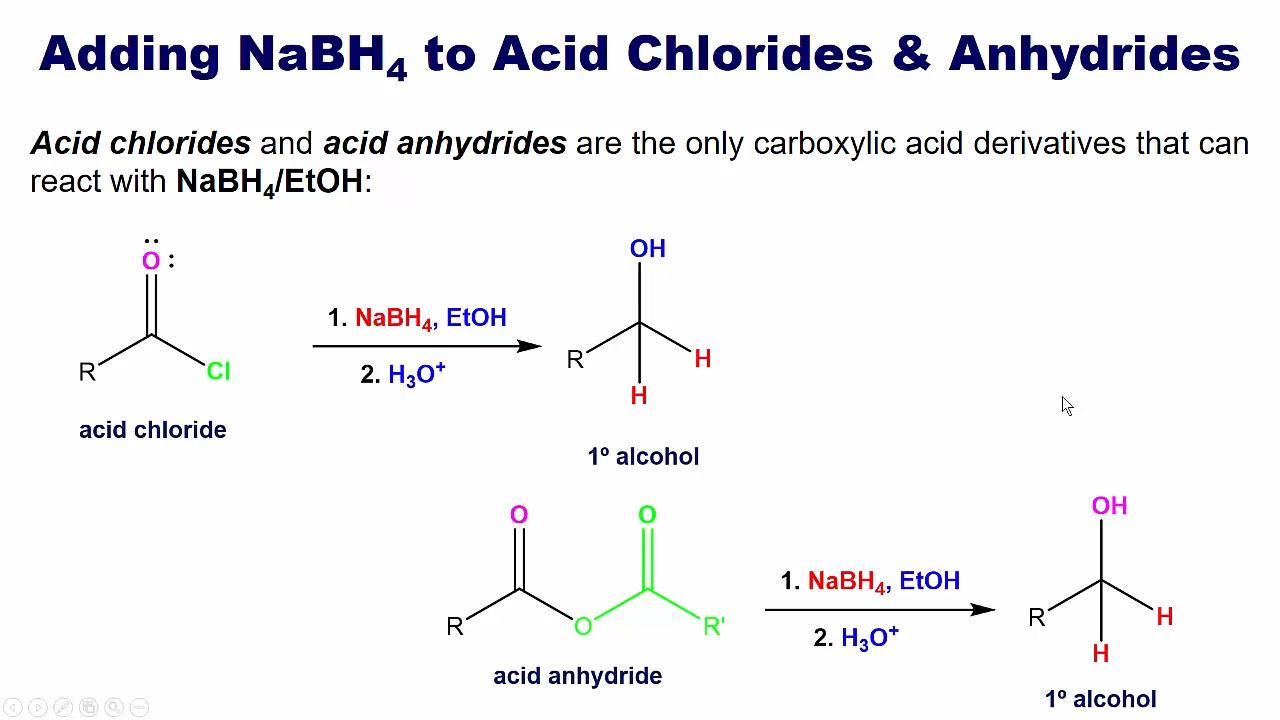
Besides ketones and aldehydes, what else can NaBh4 react with
Anhydrides and acid chlorides
What can LiAlH react with
all carboxylic acid derviartives
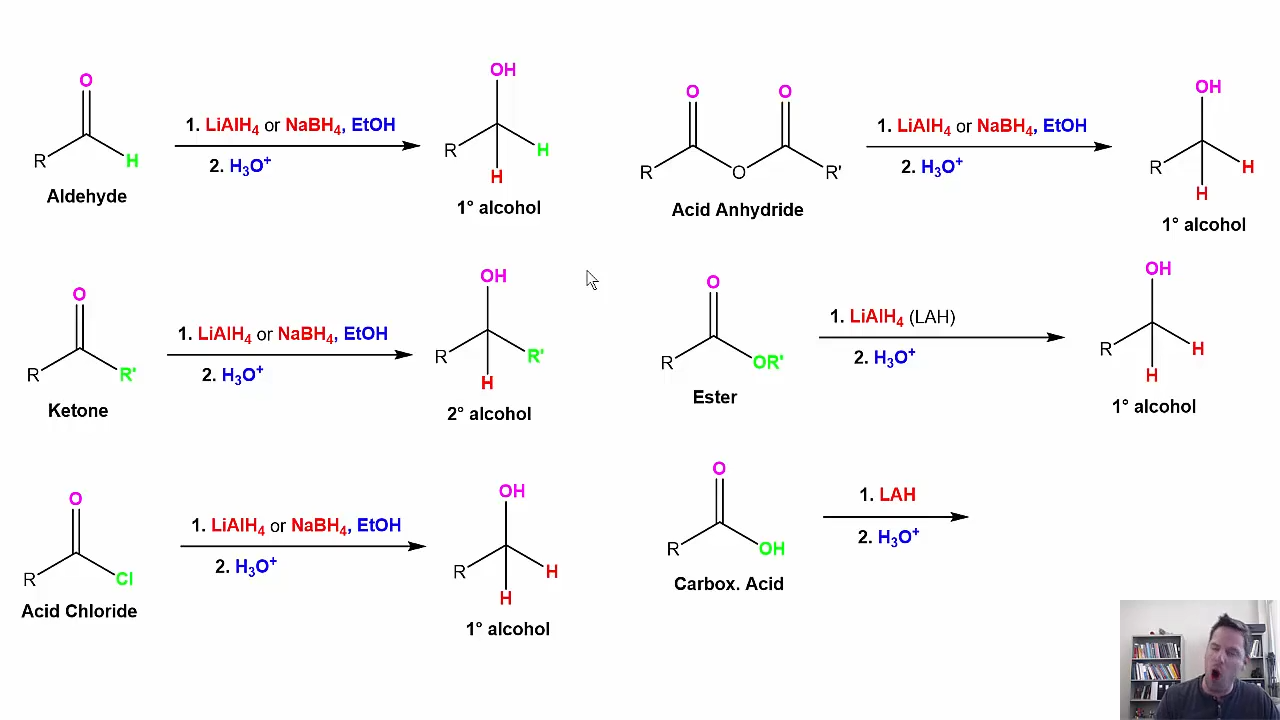
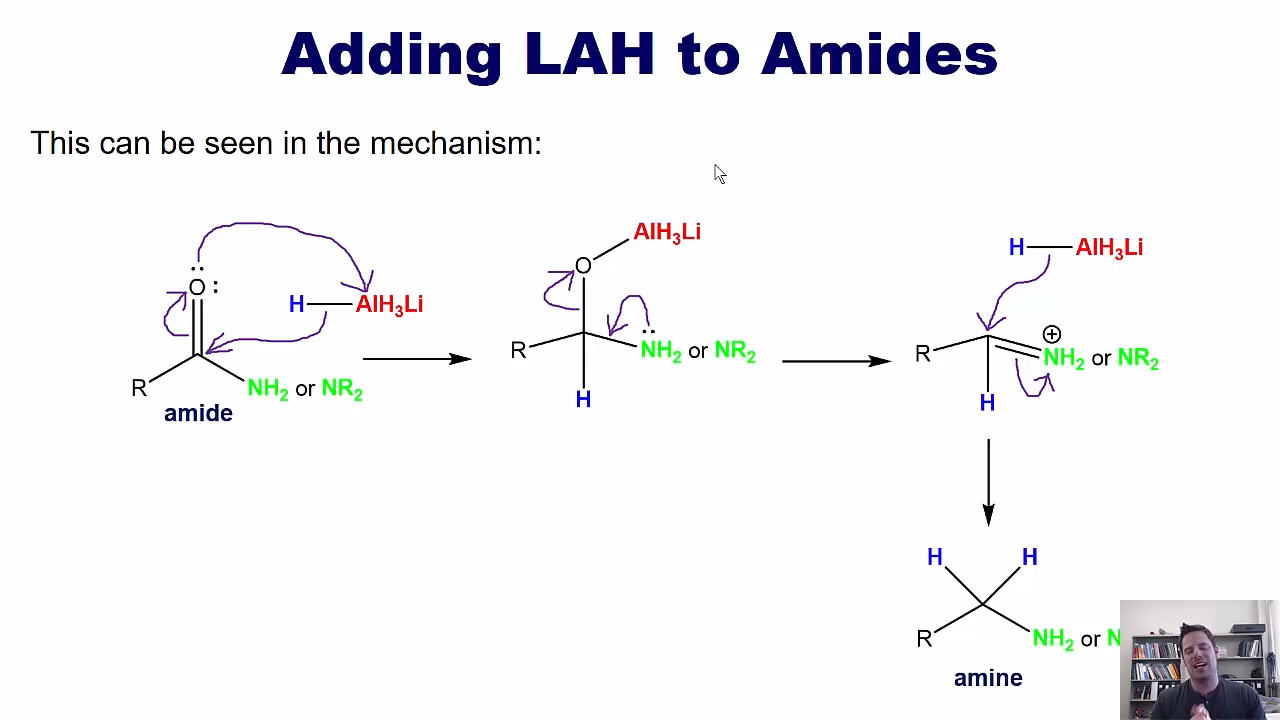
What happens when your react LiAlH3 with an amide
The reaction anctually forms a primary amide
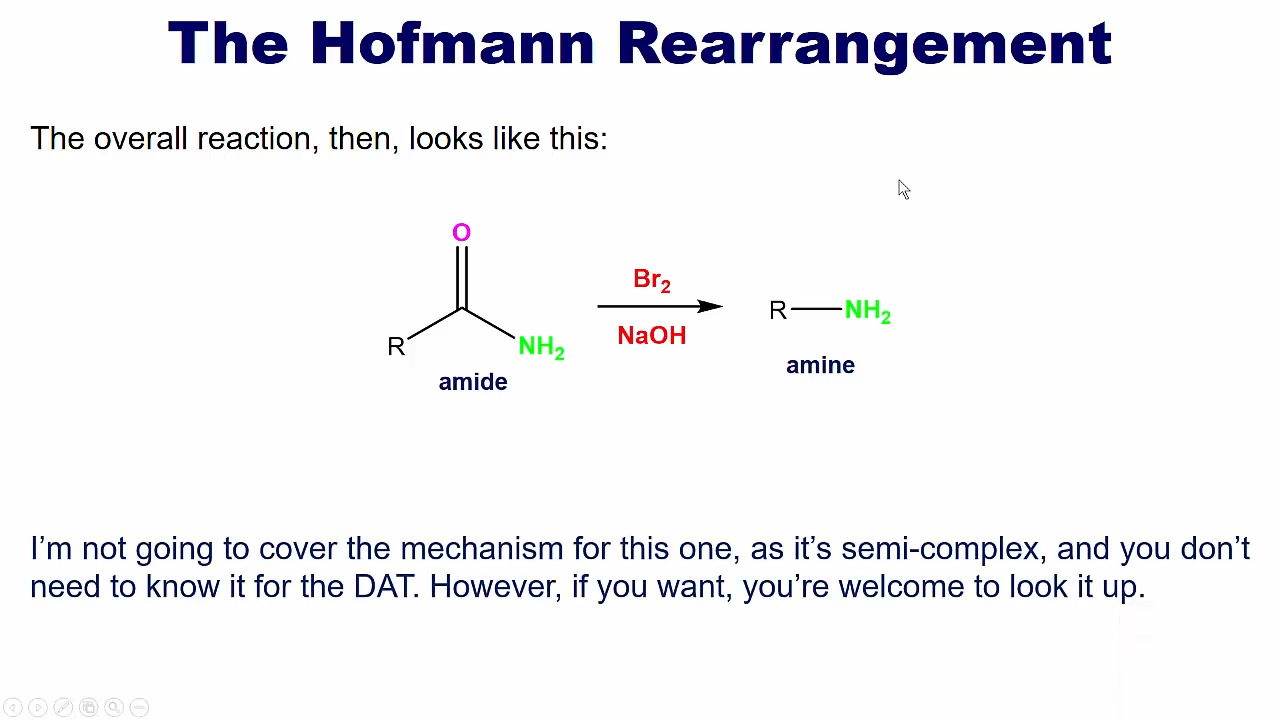
Hoffman reaction
it reduces an amide to an amine, but it removes the C=O carbon
Br2 and NaOH
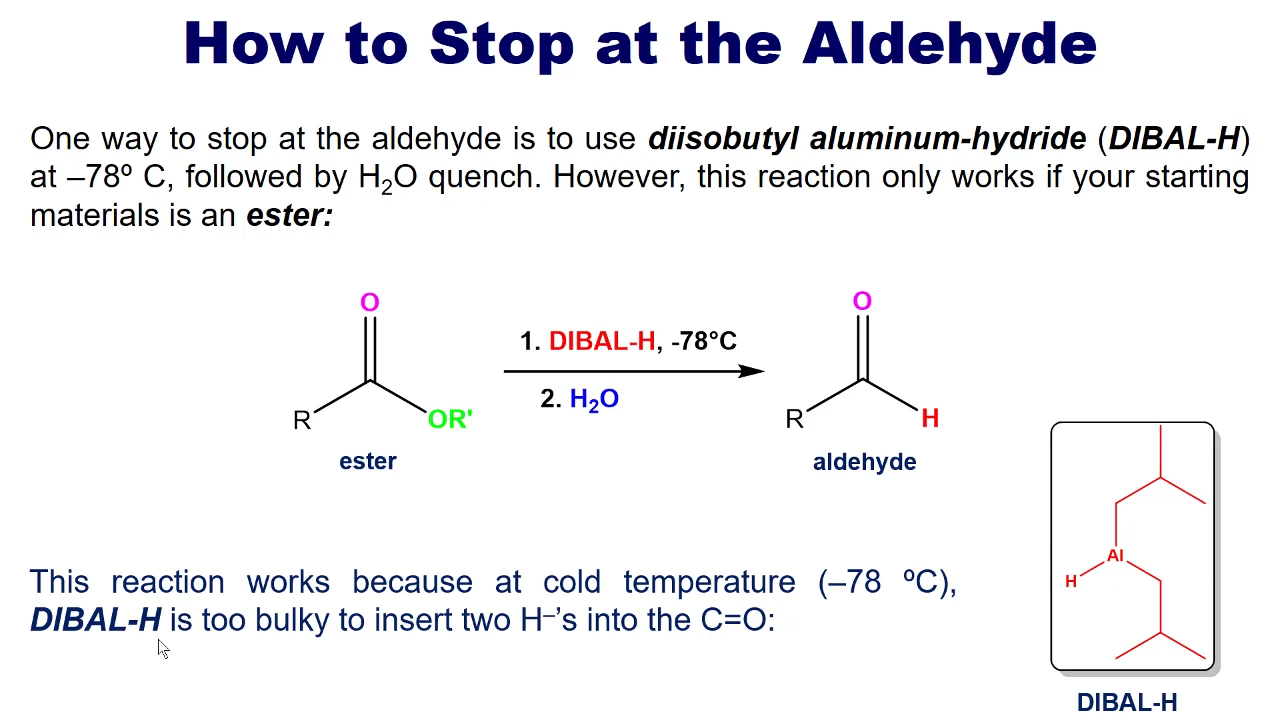
How to do a hydride reduction on an ester that stops at an aldehyde as opposed to a alcohol
DIBAL H at -78 degrees celcius followed by a quench
DIE BALL
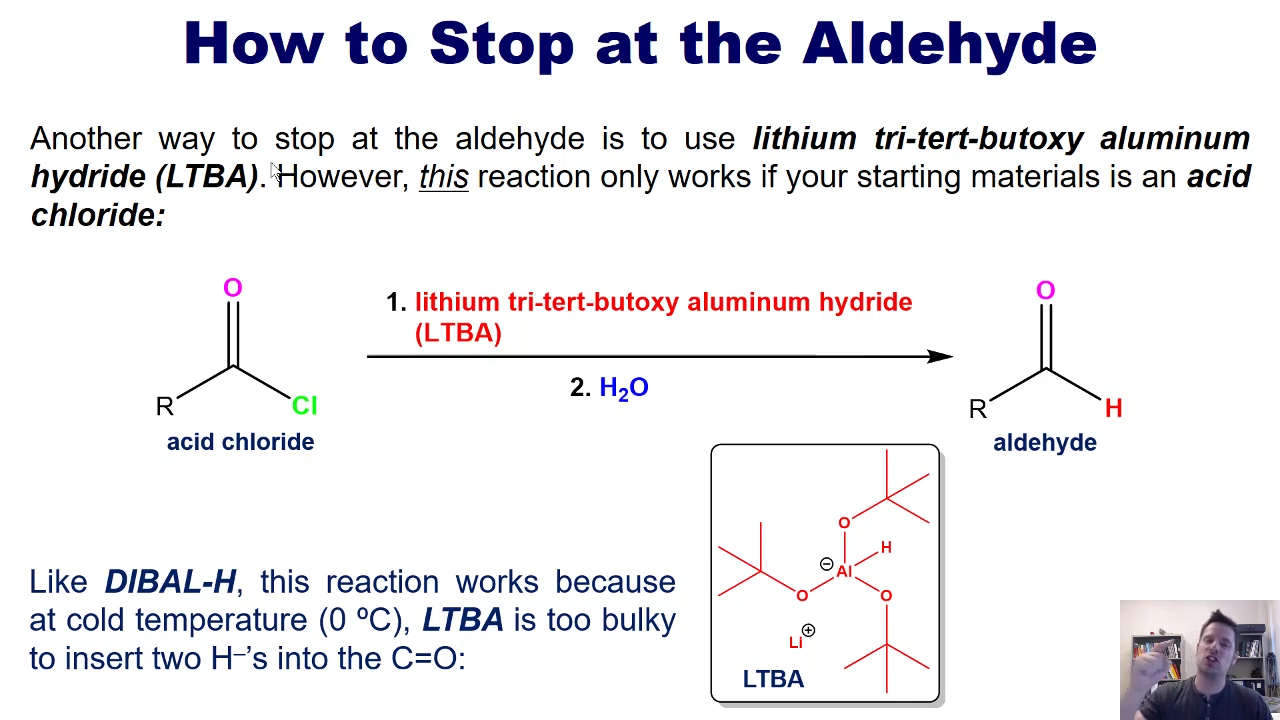
How to do a hydride reduction on an acid chloride that stops at an aldehyde as opposed to a alcohol
Add LTBA, followed by a quench
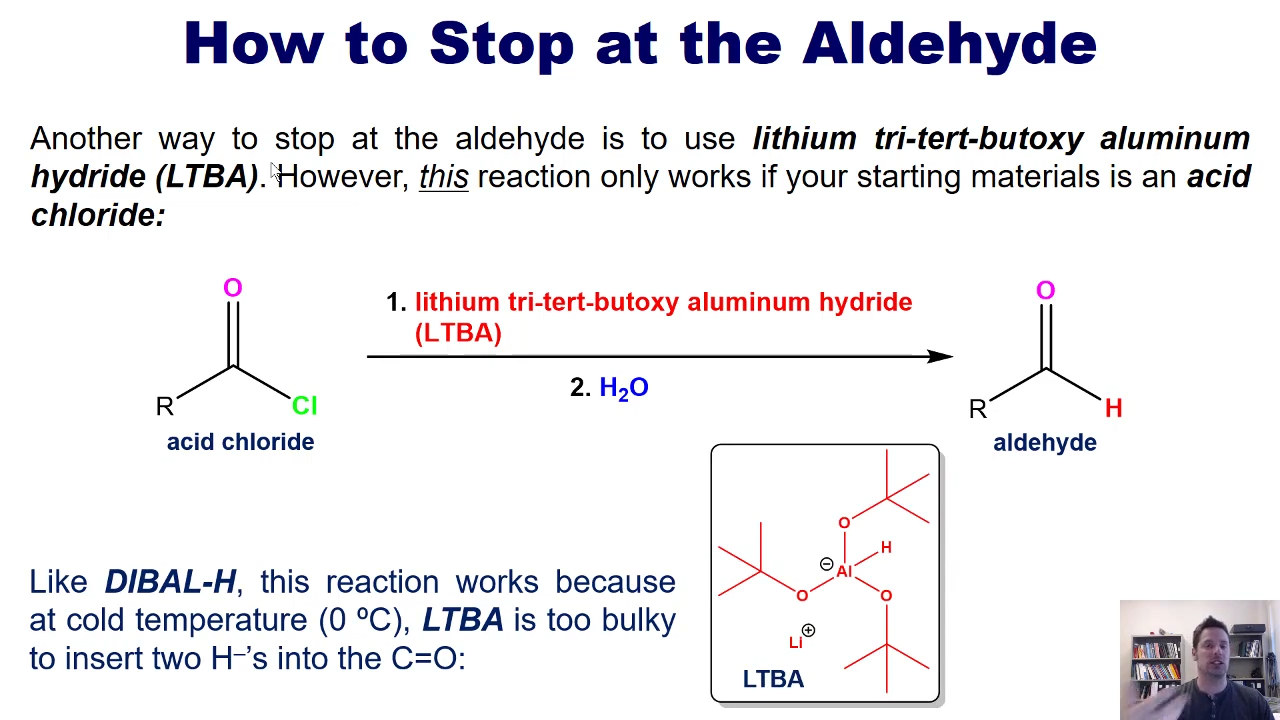
Why does DIBAL, and LTBA only reduce esters and acid chlorides down to aldehyde, respectivley
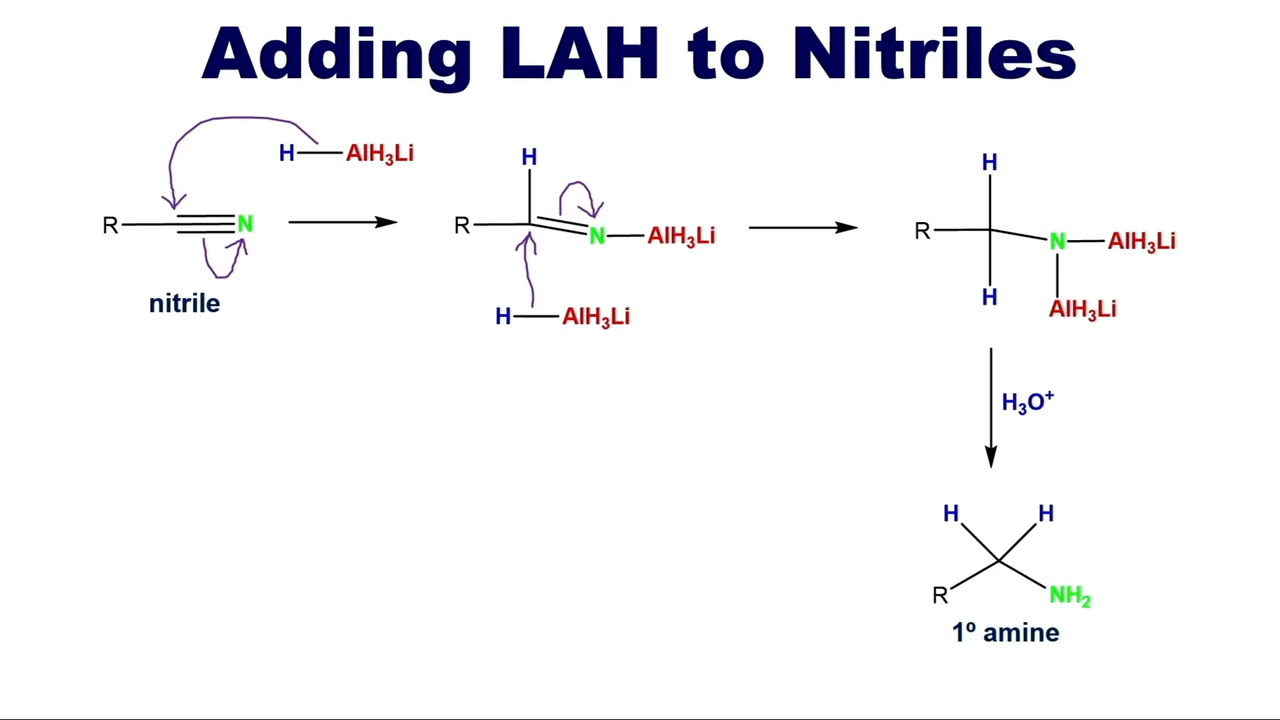
Adding LiAH3 to nitriles
it forms a primary amine, LAH and N go until it cant
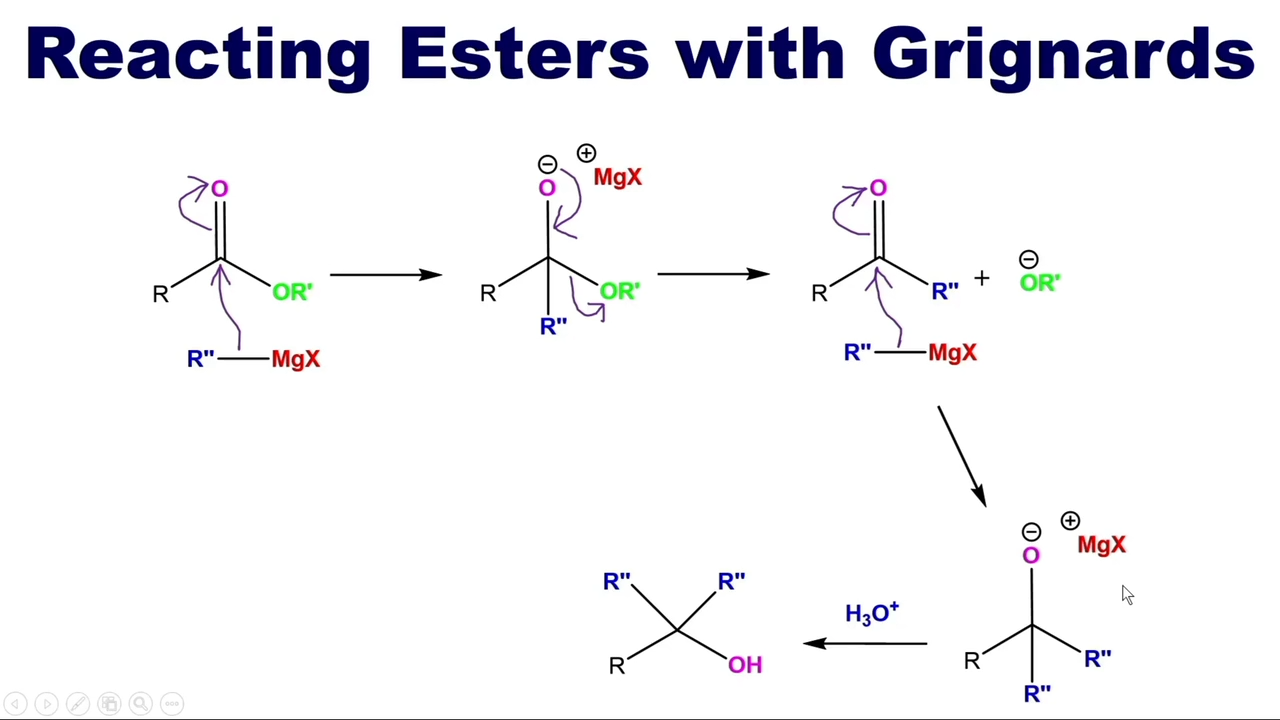
Reacting esters with grignards
Esters plus grignards results in a tertiary alcohol, as grignards do not stop
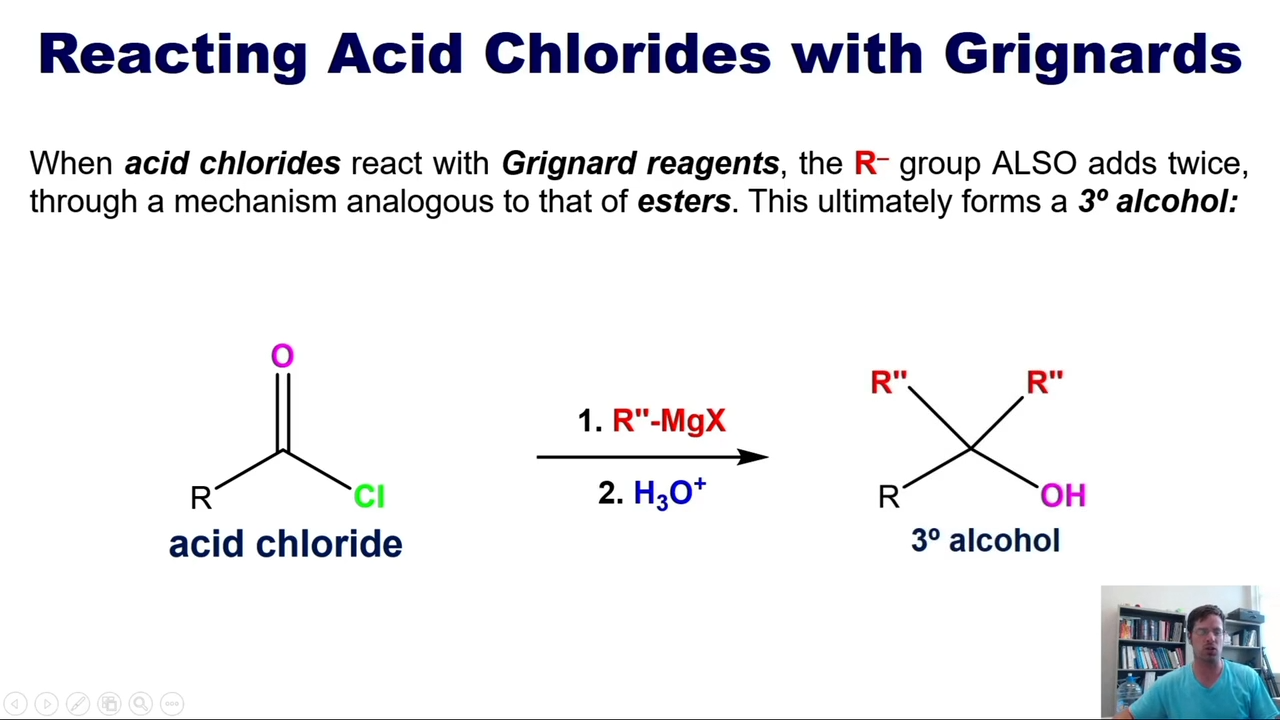
Reacting acid chlorides with grignards
Much like with esters, it also results in a tertiary alcohol
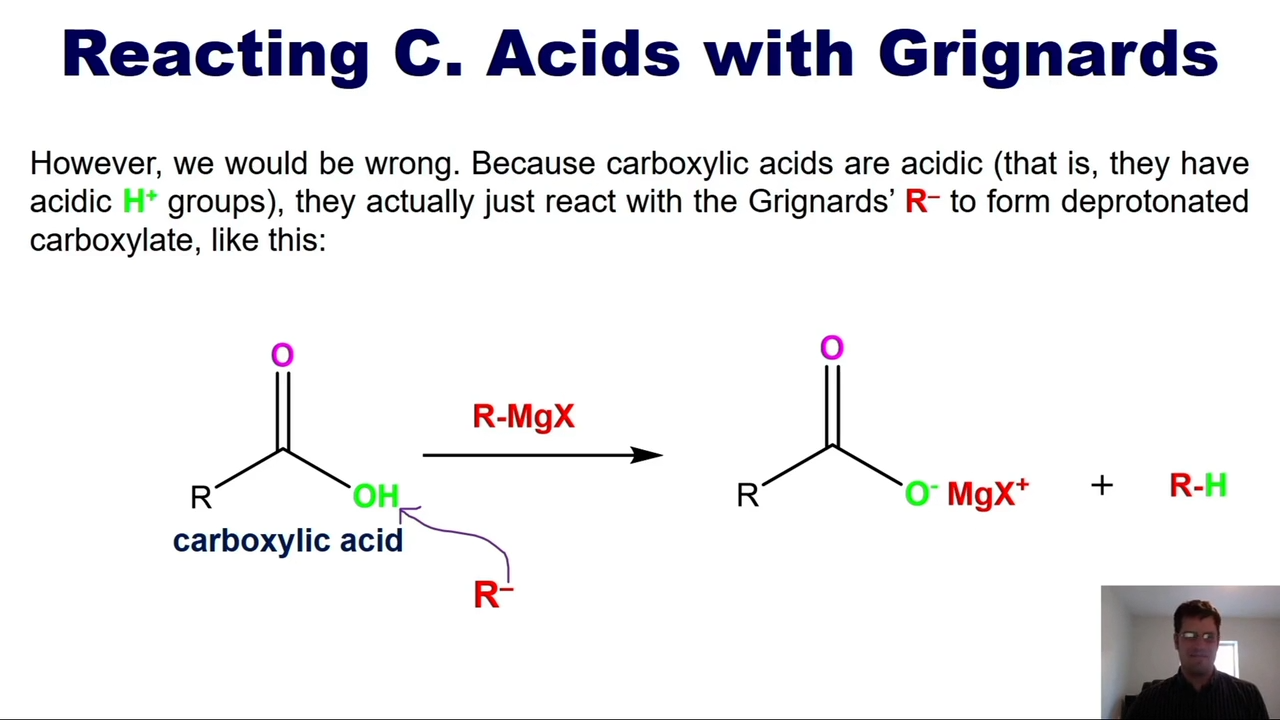
Reacting Carboxilic acids with gringnards
Due to the fact that carboxylic acids are acidic, they would react with the R on the grignard to form the deprotenated carboxylate and the R attached to an H
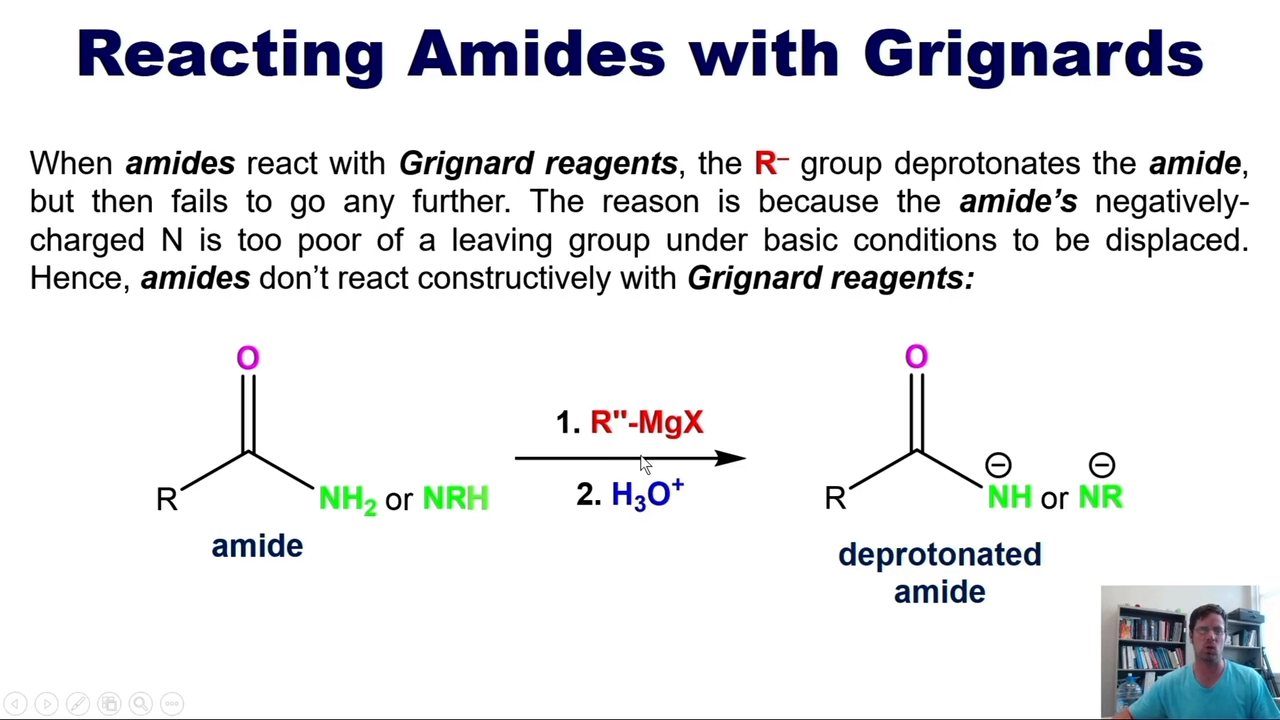
Reacting amides with grignard reagents
The Amide is deprotenated once, but nothing else happens
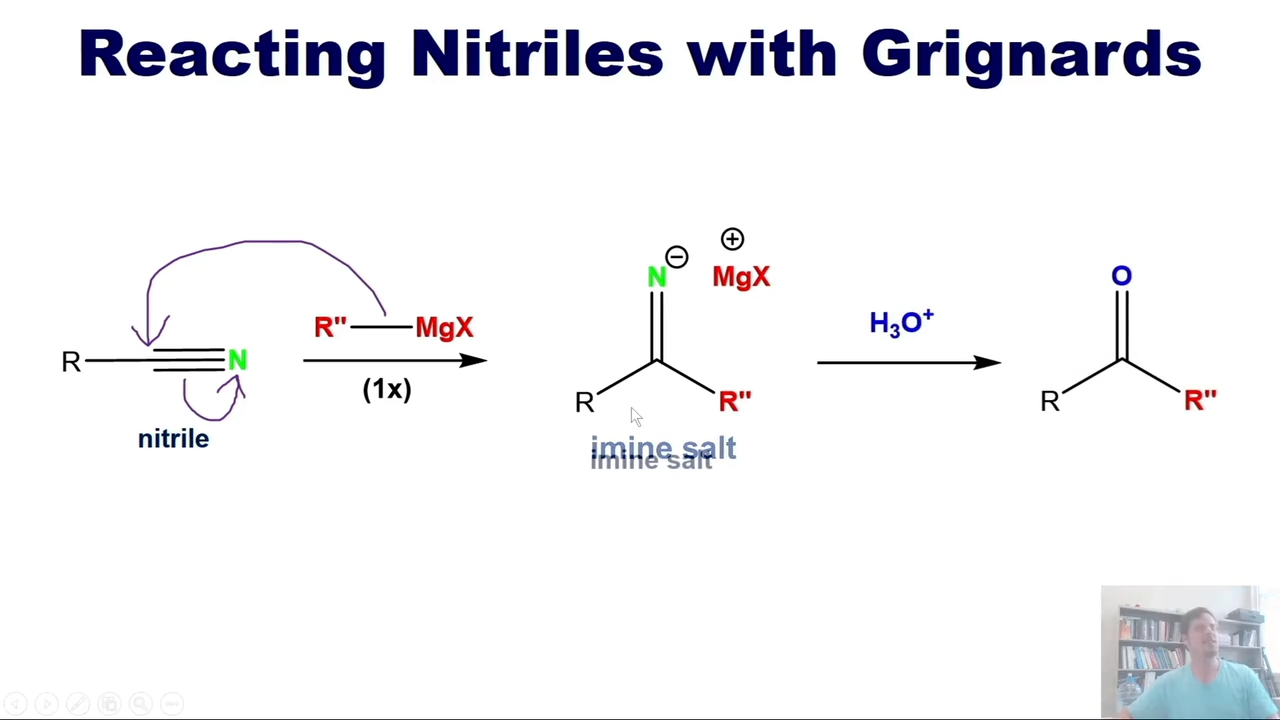
Reacting nitriles with grignards
It forms aa ketone, as initial formation is an immine salt, which then grabs onto H3O to form a ketone
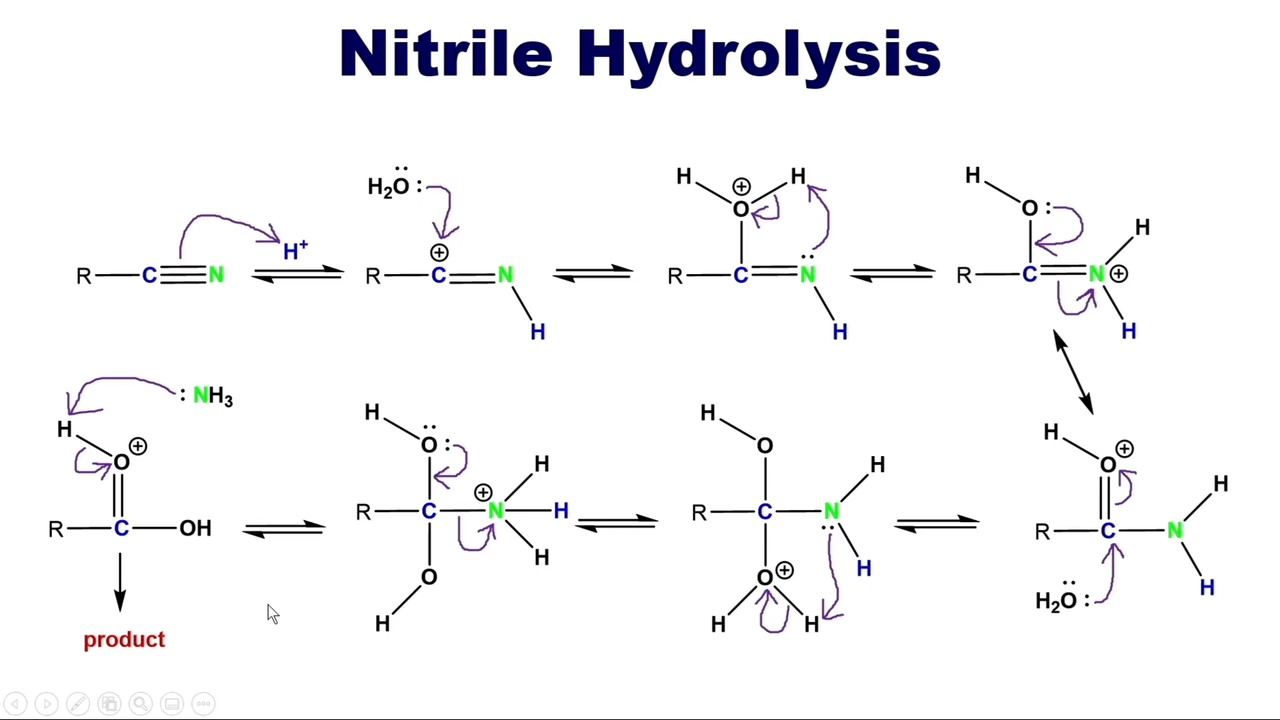
Nitrile hydrolysis
H3o+ and heat
Nitrogen keeps tgrabbing hydrogens until it cant