Clab 450: Cell Pathology and Inflammation
 Call Kai
 Learn
Learn Practice Test
 Spaced Repetition
 Match
Match Flashcards
 Knowt Play
1/59

There's no tags or description
Looks like no tags are added yet.
Name | Mastery | Learn | Test | Matching | Spaced | Call with Kai |
|---|
No analytics yet
Send a link to your students to track their progress
60 Terms
What is a cell?
The basic functional unit of the body, consisting of smaller functional units called organelles.
What are the essential components of a typical cell?
Nucleus, cytoplasm, mitochondria, ribosomes, endoplasmic reticulum, Golgi apparatus, lysosomes, cytoskeleton, and plasma membrane.
What is homeostasis?
The equilibrium maintained between a cell and its surrounding environment, allowing for stable internal conditions.
What is reversible cell injury?
A type of cell injury that can be reversed if the damaging stimulus is removed.
What are the cytoplasmic changes in reversible cell injury?
Cellular swelling, invagination of cell membrane, and swollen mitochondria.
What is the difference between reversible and irreversible cell injury?
Reversible injury can recover upon removal of the stressor, while irreversible injury leads to cell death.
What are the most important causes of cell injury?
Hypoxia, anoxia, microbes, inflammation, immune reactions, and genetic/metabolic disorders.
What is atrophy?
A decrease in the size of a cell, tissue, organ, or entire body, which can be physiologic or pathologic.
What is hypertrophy?
An increase in the size of cells, often seen in response to increased workload, such as in cardiac hypertrophy.
What is hyperplasia?
An increase in the number of cells in a tissue or organ, often due to hormonal stimulation or chronic irritation.
What is metaplasia?
The reversible replacement of one differentiated cell type with another, often in response to chronic irritation.
What is dysplasia?
An abnormal development or growth of cells, tissues, or organs, often a precursor to cancer.
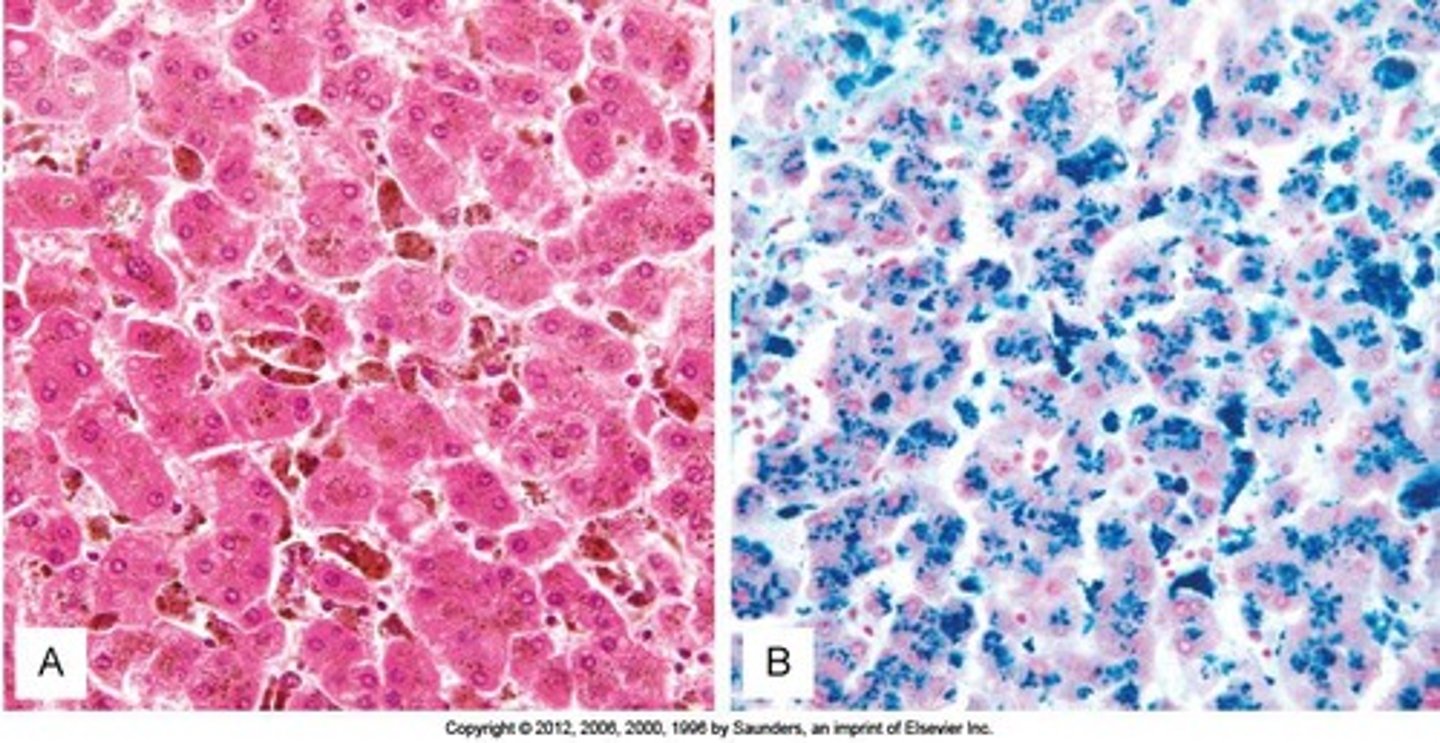
What are intracellular accumulations?
The buildup of substances within cells, which can be exogenous (from outside the body) or endogenous (from within).
What is fatty liver?
A condition characterized by the accumulation of fat in liver cells, often due to alcohol abuse or metabolic disorders.
What is brain death?
A complete and irreversible loss of brain function, including the brainstem, indicating that the individual has died.
What is necrosis?
Localized death of cells or tissues in a living organism, often due to injury or disease.
What is apoptosis?
Programmed cell death that occurs in single cells as a normal part of growth and development.
What are the types of necrosis?
Coagulative, liquefactive, caseous, and enzymatic fat necrosis.
What is coagulative necrosis?
The most common form of necrosis, often resulting from ischemia or infarction.
What is liquefactive necrosis?
A type of necrosis where tissue becomes liquid, commonly seen in brain injuries.
What is caseous necrosis?
A form of necrosis associated with tuberculosis, characterized by cheese-like (caseous) appearance.
What is enzymatic fat necrosis?
Necrosis that occurs in the pancreas due to the release of digestive enzymes.
What is dystrophic calcification?
The deposition of calcium salts in damaged tissues, often seen in areas of necrosis.
What is metastatic calcification?
The deposition of calcium salts in normal tissues due to elevated serum calcium levels.
What is the function of mitochondria?
To generate energy in the form of ATP through cellular respiration.
What is the role of ribosomes?
Involved in protein synthesis, translating messenger RNA into polypeptides.
What is the function of the Golgi apparatus?
To modify, sort, and package proteins and lipids for secretion or use within the cell.
What are lysosomes?
Membrane-bound organelles that contain digestive enzymes for breaking down waste materials and cellular debris.
What is the cytoskeleton?
A network of filaments and tubules that provides structural support, shape, and movement to the cell.
What is inflammation?
A biological response to harmful stimuli, characterized by redness, heat, swelling, pain, and loss of function.
What are the main components of acute inflammation?
The main components include blood vessels, leukocytes, and plasma proteins.
What are the vascular changes in acute inflammation?
Vascular changes include transient constriction of arterioles, followed by vasodilation, increased permeability, and edema.
What is margination?
The process by which leukocytes move to the periphery of blood vessels in response to inflammation.
What is diapedesis?
The movement of leukocytes through the endothelial cells of blood vessels into the surrounding tissue.
What is emigration?
The process by which leukocytes exit the bloodstream and migrate to sites of inflammation.
What is exudation?
The escape of fluid, proteins, and cells from the bloodstream into the tissue during inflammation.
What is chemotaxis?
The movement of leukocytes towards the site of inflammation in response to chemical signals.
What is phagocytosis?
The process by which cells, such as macrophages and neutrophils, engulf and digest pathogens and debris.
What are microbicidal substances?
Substances produced by leukocytes that kill or inhibit the growth of microorganisms.
List two cell-derived mediators of inflammation.
Histamine and cytokines.
List three plasma-derived mediators of inflammation.
Complement proteins, clotting factors, and kinins.
What is the function of the complement system in inflammation?
To enhance phagocytosis, promote inflammation, and directly lyse pathogens.
What is the role of arachidonic acid metabolites in inflammation?
They mediate various inflammatory responses, including vasodilation, chemotaxis, and pain.
What are cytokines?
Signaling proteins released by cells that mediate and regulate immunity, inflammation, and hematopoiesis.
What are the possible outcomes of acute inflammation?
Resolution, chronic inflammation, or tissue damage and fibrosis.
What are the three pathogenetic pathways leading to chronic inflammation?
Persistent infection, prolonged exposure to toxic agents, and autoimmune diseases.
What are the principal cells of acute inflammation?
Polymorphonuclear neutrophils and macrophages.
What is a granuloma?
A localized collection of macrophages that transform into epithelioid cells, often surrounded by lymphocytes.
What are the typical complications of granulomatous inflammation?
Tissue destruction, fibrosis, and impaired organ function.
Define serous inflammation.
A type of inflammation characterized by the production of a clear, yellowish fluid (serous exudate).
Define fibrinous inflammation.
Inflammation characterized by the presence of fibrin in the exudate, often leading to scar formation.
Define purulent inflammation.
Inflammation characterized by the production of pus, which contains dead leukocytes, bacteria, and tissue debris.
What is an abscess?
A localized collection of pus within a tissue, often surrounded by inflamed tissue.
What is an ulcer?
A localized loss of tissue, often due to inflammation or infection, resulting in a sore.
What is a keloid?
An overgrowth of scar tissue that forms at the site of a healed skin injury.
What are the local symptoms of inflammation?
Redness, heat, swelling, pain, and loss of function.
What are systemic symptoms of inflammation?
Fever, malaise, and leukocytosis.
What is the pathogenesis of fever?
Fever is caused by the release of pyrogens that affect the hypothalamus, raising the body's temperature set point.
What are the determinants of wound healing?
Site and size of the wound, mechanical factors, infection, circulatory status, nutritional factors, and age.
What are complications of wound healing?
Deficient scar formation, dehiscence, excess scar formation, keloids, and contractures.