SIFT Study Guide
 Call Kai
 Learn
Learn Practice Test
 Spaced Repetition
 Match
Match Flashcards
 Knowt Play
1/216

There's no tags or description
Looks like no tags are added yet.
Name | Mastery | Learn | Test | Matching | Spaced | Call with Kai |
|---|
No analytics yet
Send a link to your students to track their progress
217 Terms
Newton's First Law (Law of Inertia)
An object in motion (or at rest) will tend to stay in motion (or at rest) until it is acted upon by an outside force.
Interia
The tendency of an object to resist a change in velocity whether the object is in motion or motionless
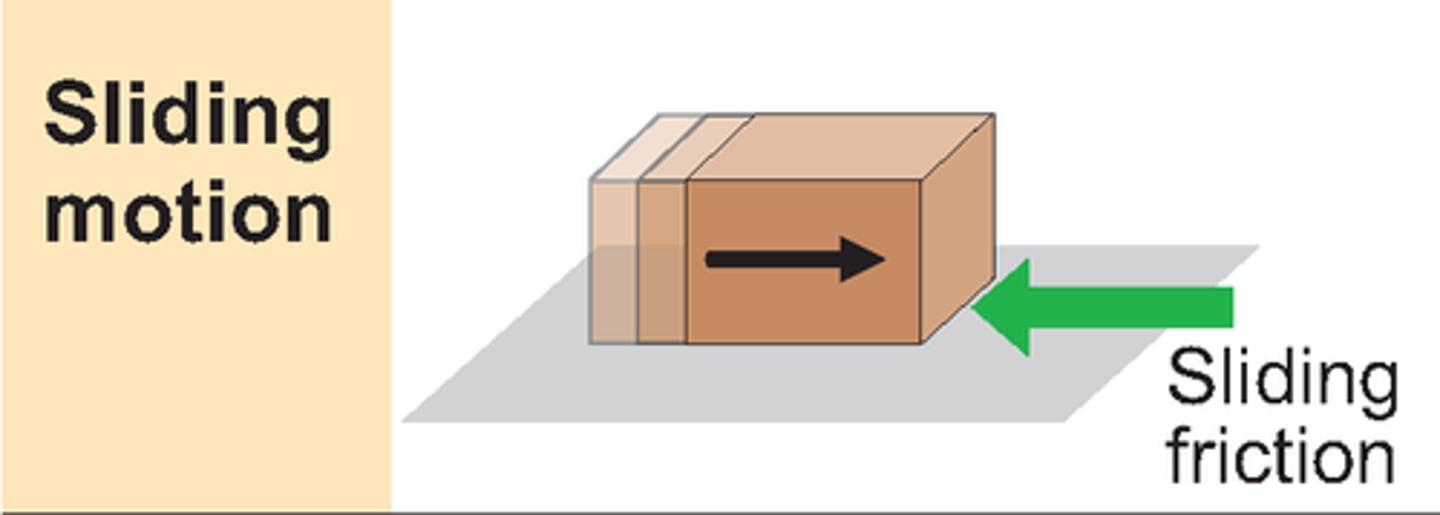
kinetic friction
when the surface of one object slides along the surface of another object, static friction overcome. size of the friction force increases with an object's weight.
fluid friction
a friction force that opposes the motion of an object through a fluid (liquid or gas)
rolling friction
friction that occurs when an object rolls over a surface
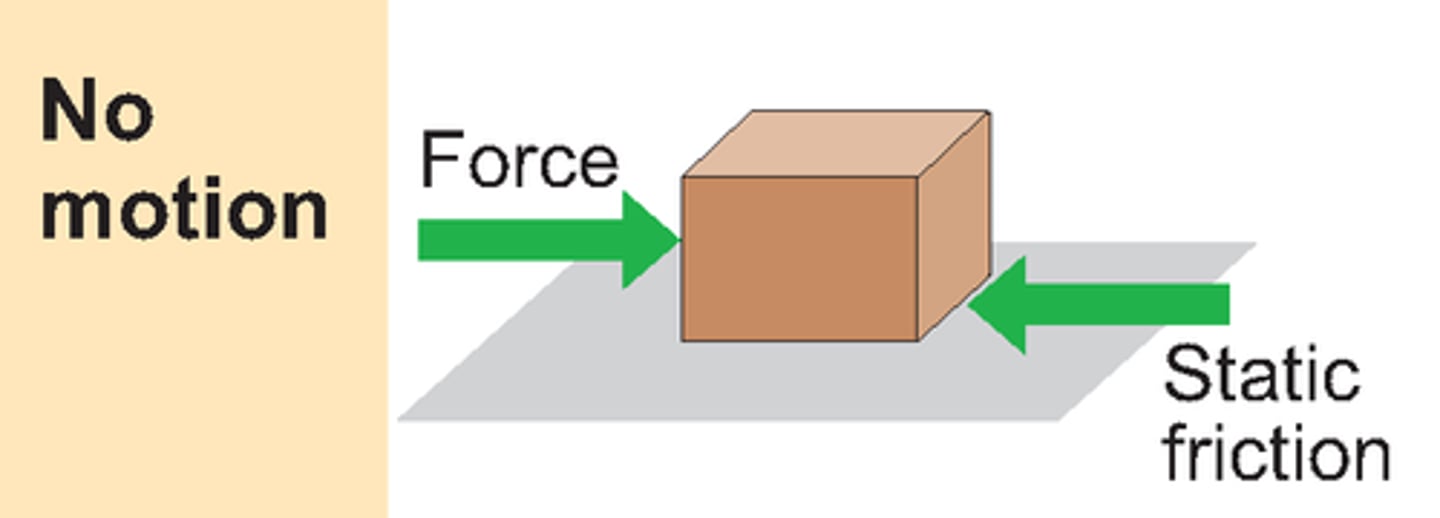
static friction
a friction force that acts on objects that are not moving by an external force, always equal to the force applied to the object.
Newton's Second Law
F=ma
Force equals mass times acceleration
Newton's Third Law
For every action force there is an equal and opposite reaction force
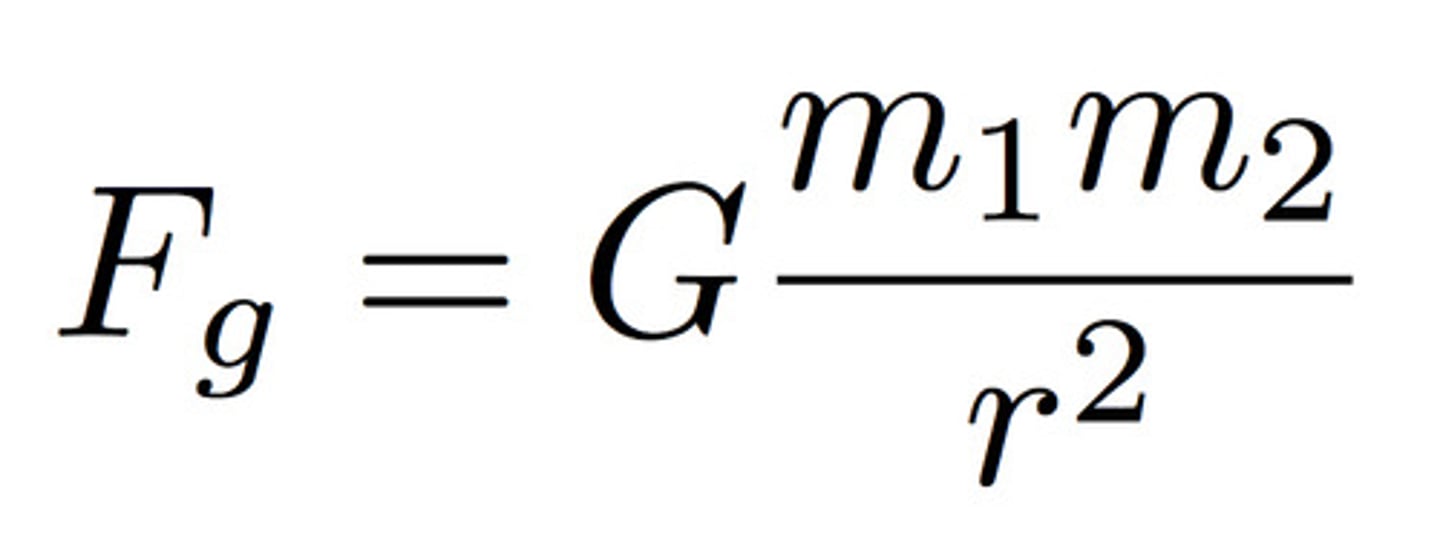
Newton's Law of Universal Gravitation
a particle attracts every other particle in the universe with a force which is directly proportional to the product of their masses and inversely proportional to the square of the distance between their centers.
Newton's Law of Universal Gravitation Equation
Bernoulli's Principle
as the velocity of a fluid increases, the pressure exerted by the fluid decreases (hydrodynamics)
weight
force of gravity pushing the aircraft down
lift
force required to raise the aircraft
thrust
force applied to move aircraft forward
drag
force that slows the aircraft down in prep for landing
Empty Weight Center of Gravity (EWCG)
predetermined calculation of an aircraft's weight and balance
Manufacturer's Empty Weight (MEW)
Total weight of the aircraft as it was built.
Operating Empty Weight (OEW)
MEW plus the weight of the crew, fluids, unusable fuel, and the equipment required for flight.
All-Up Weight (AUW) or Aircraft Gross Weight (AGW)
Total aircraft weight at any given moment during a flight
decreases as fuel and fluids are consumed during the operation
Maximum Landing Weight (MLW)
Aircraft's weight limit for landing
Maximum Zero Fuel Weight (MZFW)
Permissible weight of an aircraft with its contents and includes unusable fuel. excludes the weight of usable fuel on board
Maximum Takeoff Weight (MTOW)
aircraft's weight limit for takeoff
Maximum Ramp Weight (MRW)
The weight limit for an aircraft to taxi or be towed on the ground.
Flight Envelope
Encompasses the limits of speed, altitude, and angle of attack required by any aircraft to maintain a stable flight.
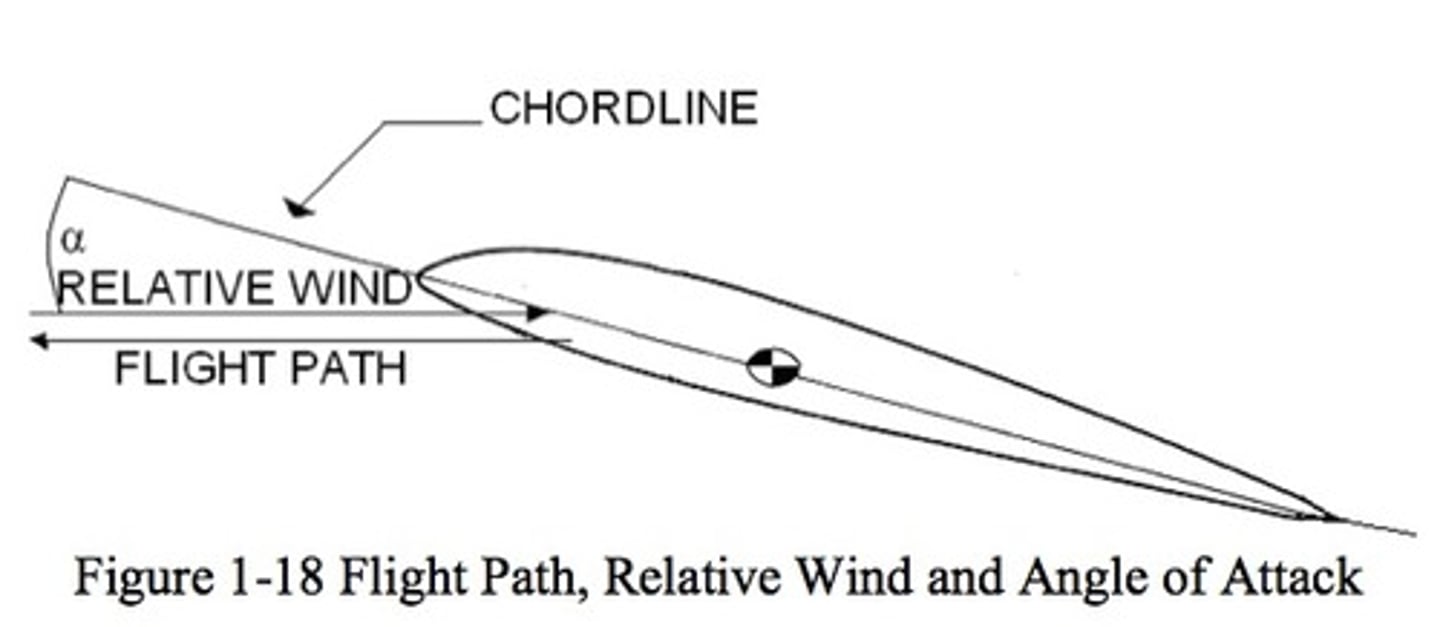
Angle of Attack (AOA)
The angle between the direction of airflow against the wing and the chord
Downwash
the downward movement of air behind a wing in flight
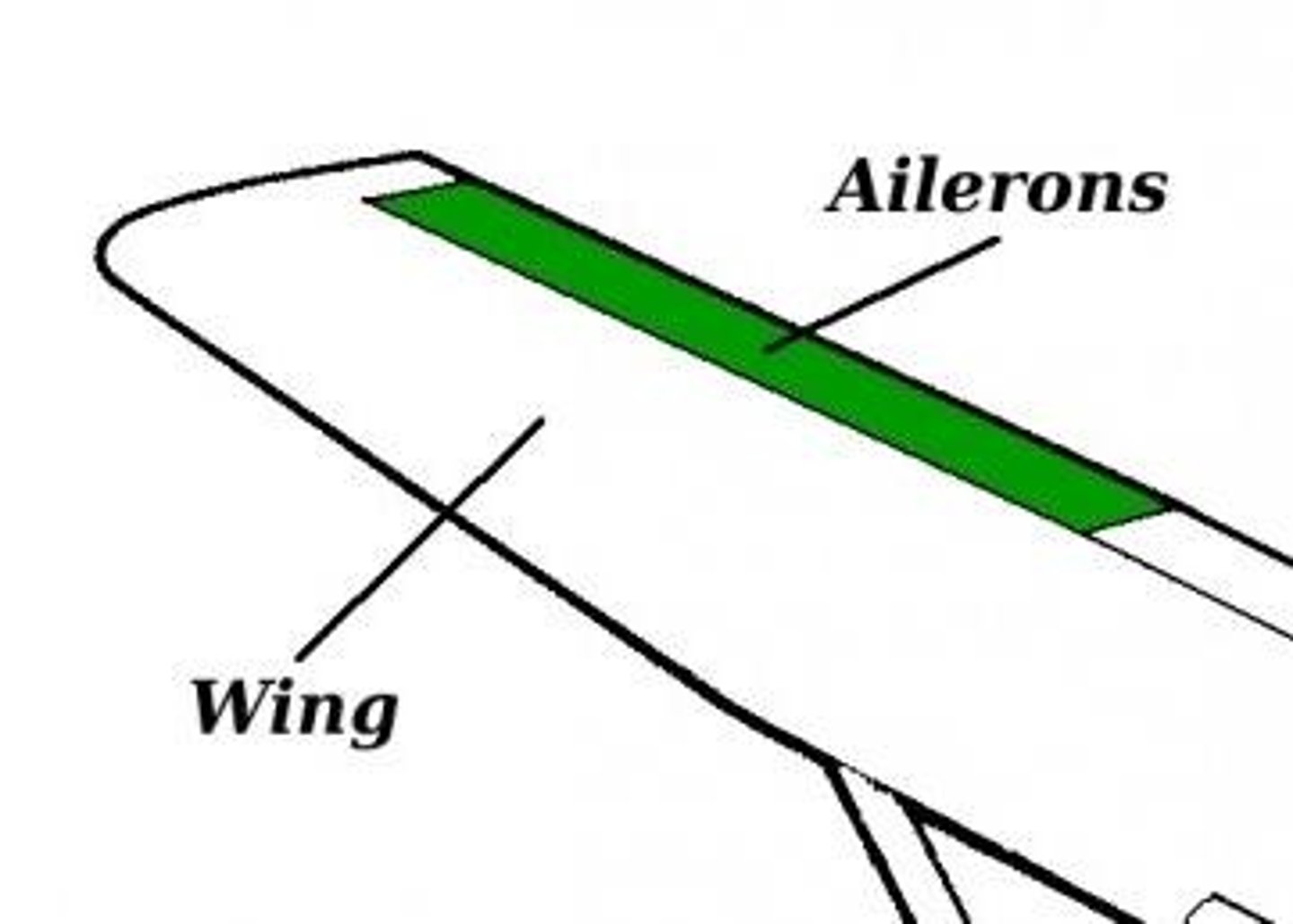
Ailerons
Located on the trailing edge of the wing to provide roll control
Flaps
Control surfaces attached to the trailing edge of the wing extending outward from the fuselage to the midpoint of each wing. can increase the lifting efficiency of the wing and decrease stall speed.
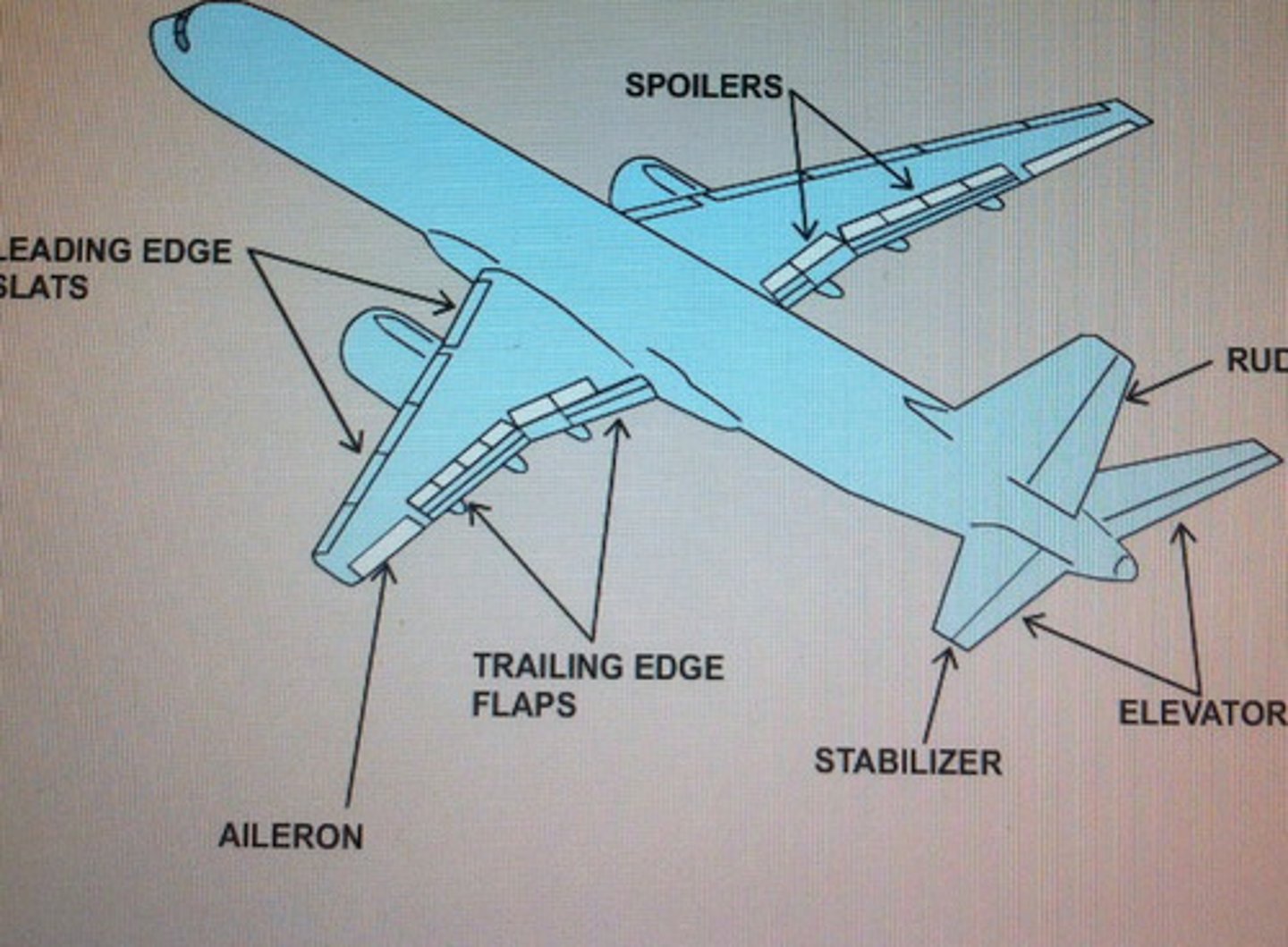
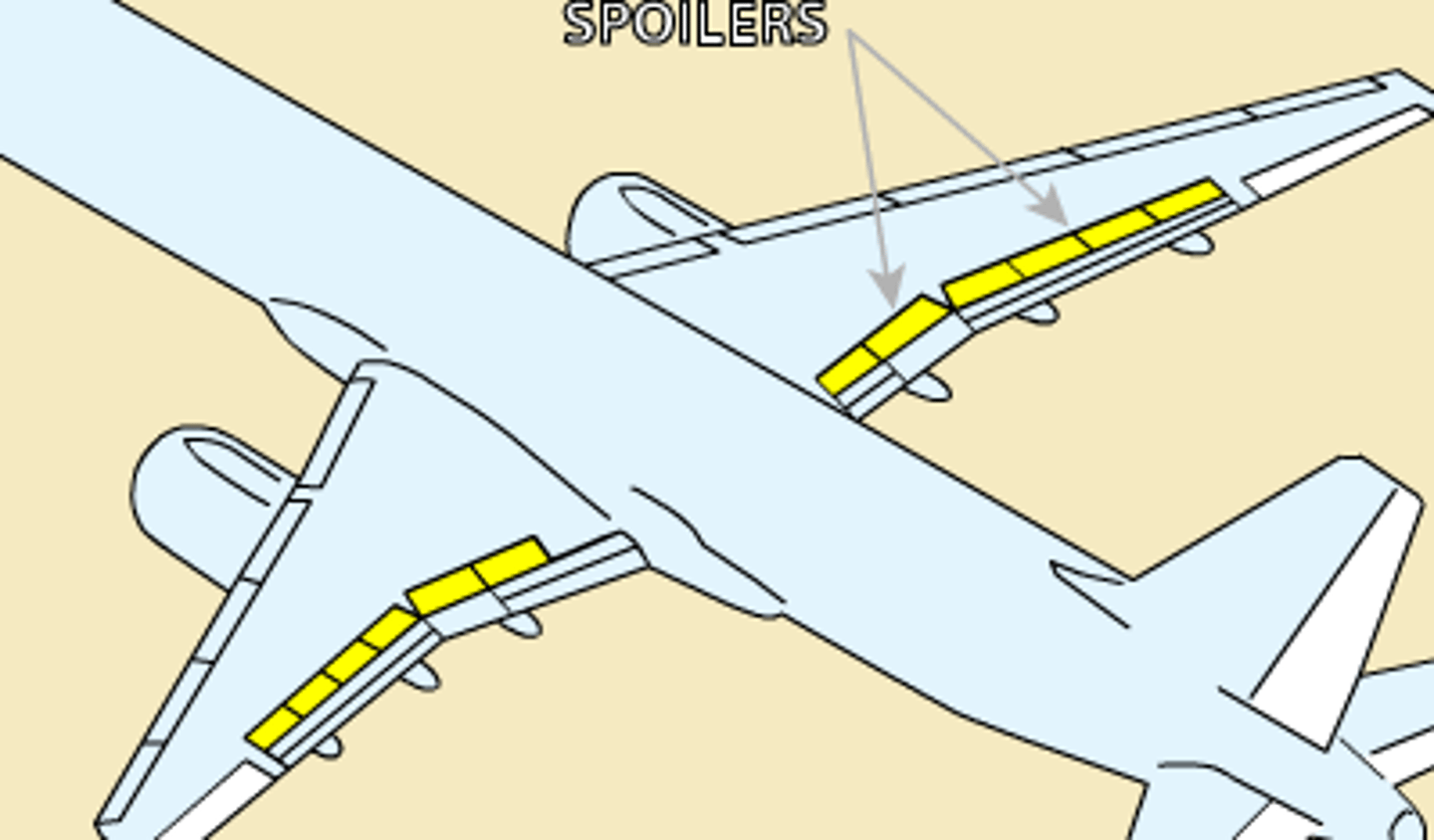
Spoilers
devices located on the wings that disrupt the airflow over the wing causing loss of lift, reduce airspeed, and aid in landing
Parasite Drag
low air pressure in tires, skin friction, or anything that increases turbulence on the aircraft
Profile Drag
produced mainly by the shape of the aircraft
Induced Drag
When at the back of the wing air flowing rapidly across the top meets air flowing more slowly underneath creating a vortex. increases when lift, airspeed, and AOA increase
Longitudinal Axis (roll)
runs lengthwise from the nose to the tail of the aircraft
Lateral Axis (Pitch)
Runs wingtip to wingtip
Vertical Axis (yaw)
Runs perpendicular to the wings at the center of the aircraft
trim
desired position of an aircraft
adjusting the ailerons...
controls the roll of the aircraft
adjusting the elevators...
controls the pitch of the aircraft
adjusting the rudder...
controls the yaw of the aircraft
atomospheric pressure
14.7 pounds per square inch (psi)
Humidity and low air density
reduce an aircraft's capability for power, thrust, and lift
pressure altimeter
automatically calibrated for 29.92 inches of mercury (Hg)
All aircraft perform more efficiently in ____ temps because air is denser than when the air is warm.
colder temps
Mast/Shaft
long cylindrical component that extends vertically from the main rotor transmission up to the main rotor hub. responsible for the rotational drive force that turns the main rotor hub.
components of the main rotor head
blade grips, rotor blades, the pitch horn (yoke), stabilizer bar and weight (flybar), and the teeter hinge (trunnion)
blade grips
connect rotor blades to the rotor system and allow the rotor blades to feather (change AOA)
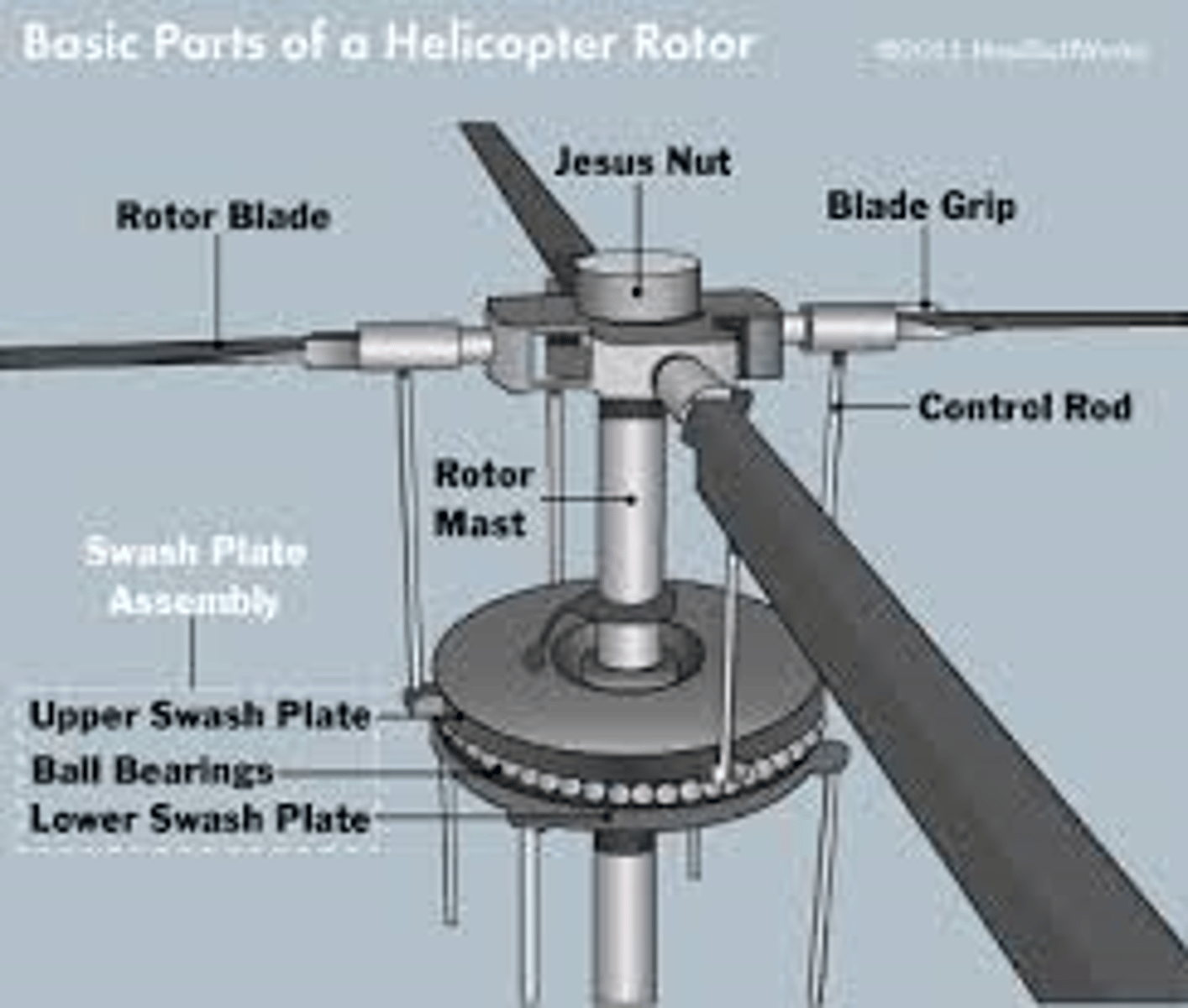
rotor blade
A rotating wing on a helicopter that provides lift.
pitch horn/ yoke
extends perpendicular to the main rotor blades. connects directly to the blade grips and stabilizer bar and receives control inputs from the pilot and translate it into force moving the blade grips
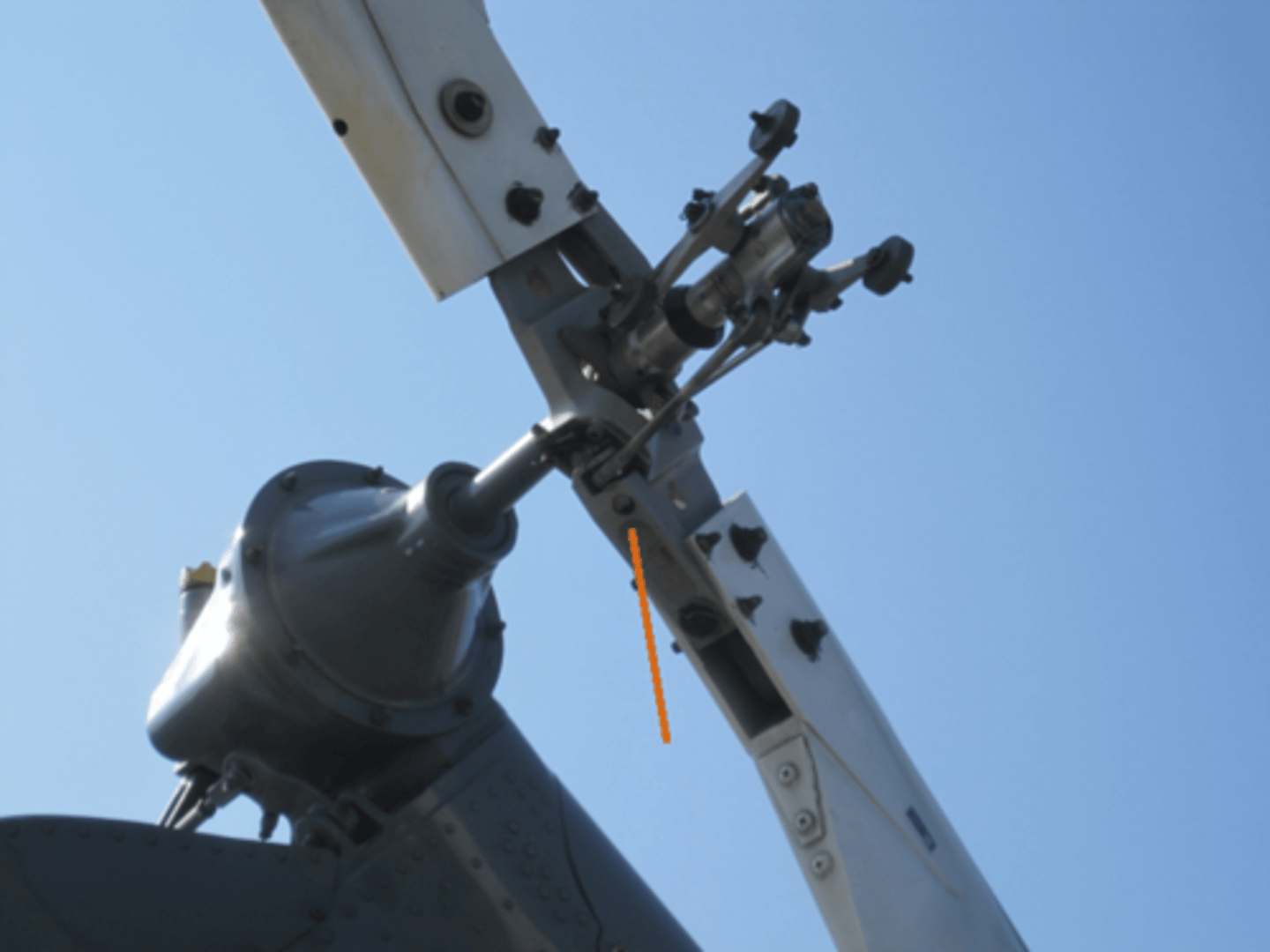
stabilizer bar and weight/ flybar
help to maintain a constant plane of rotation for the rotor blades. connects to the swashplate via mechanical linkages that combine with the fly bar to dampen any over control by the pilot and weather extreme gusts
teeter hinge/ trunnion
connects the mast to the , main rotor hub. allows the rotor hub and blades to flap up and down depending on control input and aerodynamic forces. when one blade rises, the teeter hinge allows the opposite blade to fall in its plane of rotation
components of main rotor transmission
below the mast and the main rotor hub's components. consists of swashplate, scissors link, pitch links, tail boom.
Swashplate
mounted to the transmission and allows directional control. consists of an inner non rotating and an outer rotating that form concentric rings which rest on a type of bearing that allows it to tilt and move up and down. the mast runs through the center and as it turns, driving the main rotor system, a scissors link connected to the mast in turn drives the outer rotating one. the inner one lifts and tilts controlling the outer one, which changes the pitch of the blades
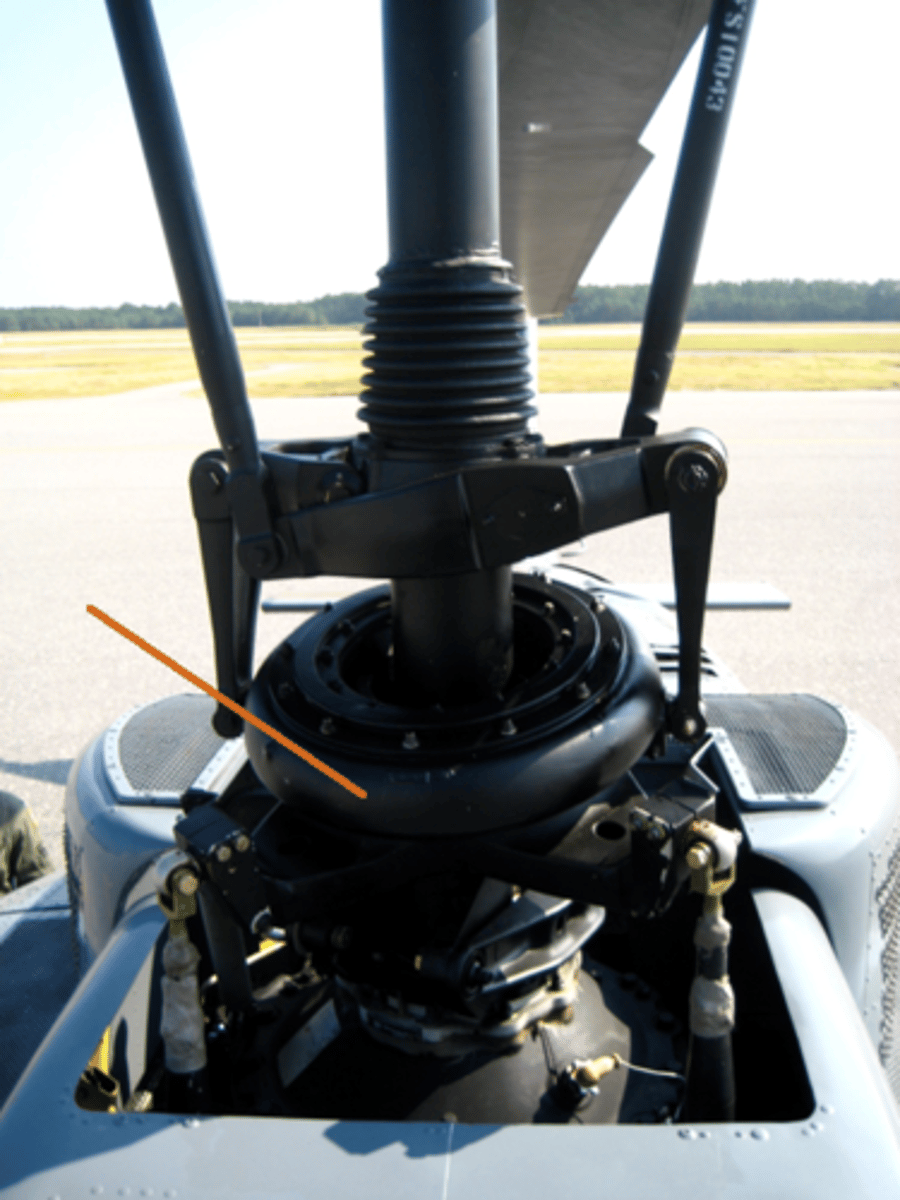
scissors link
connected to the mast in turn drives the outer rotating swashplate
Pitch Links / Push Pull Tubes
Connect to both the rotating swashplate and the stabilizer bar, or directly to the pitch horn. are the mechanical linkage that translates pilot input to control the blades' pitch.
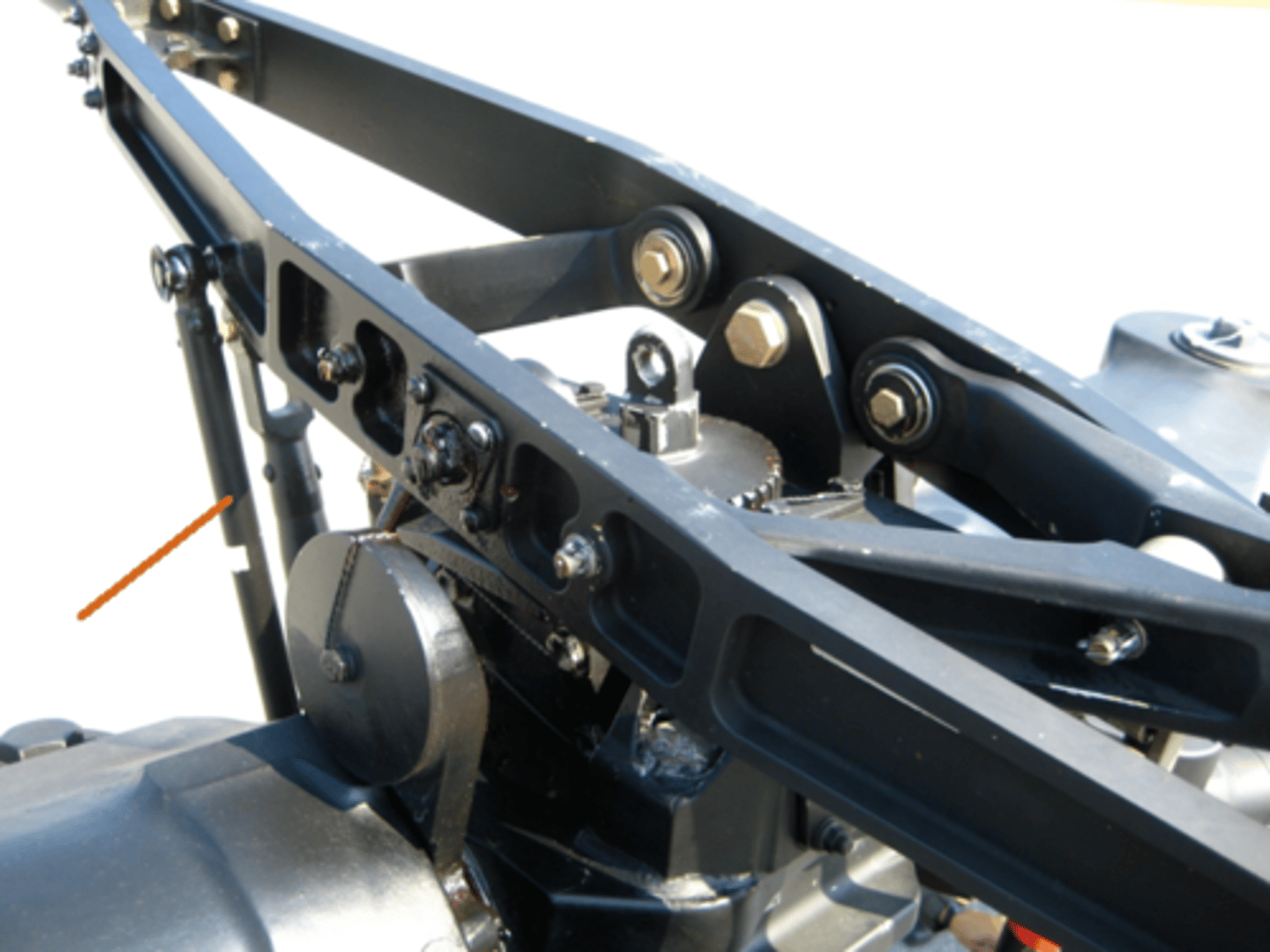
tail boom
structural component of the helicopter that supports the tail rotor and in some cases the directional fins
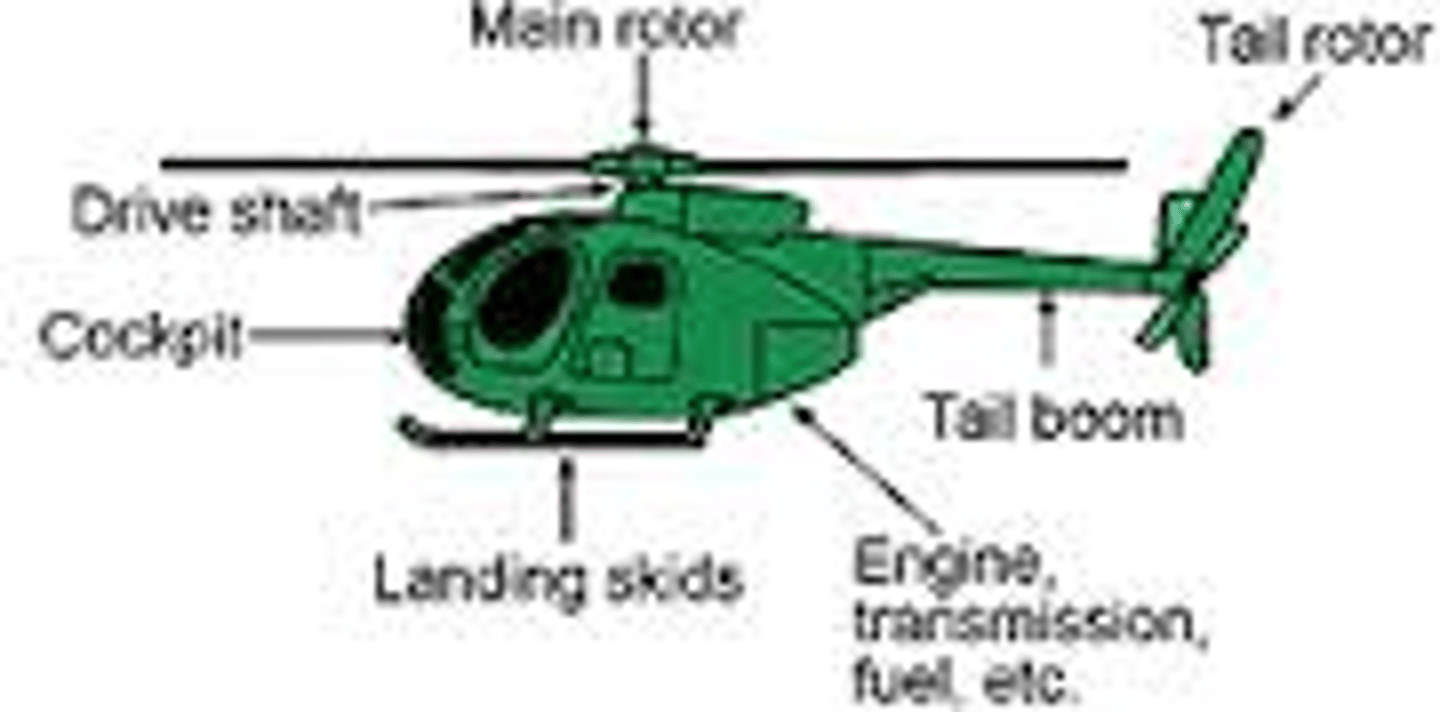
In a ____, a ducted fan is used in place of a traditional tail rotor to cancel out torque effect or the counter-rotating force applied to the airframe as a main rotor system turns
NOTAR
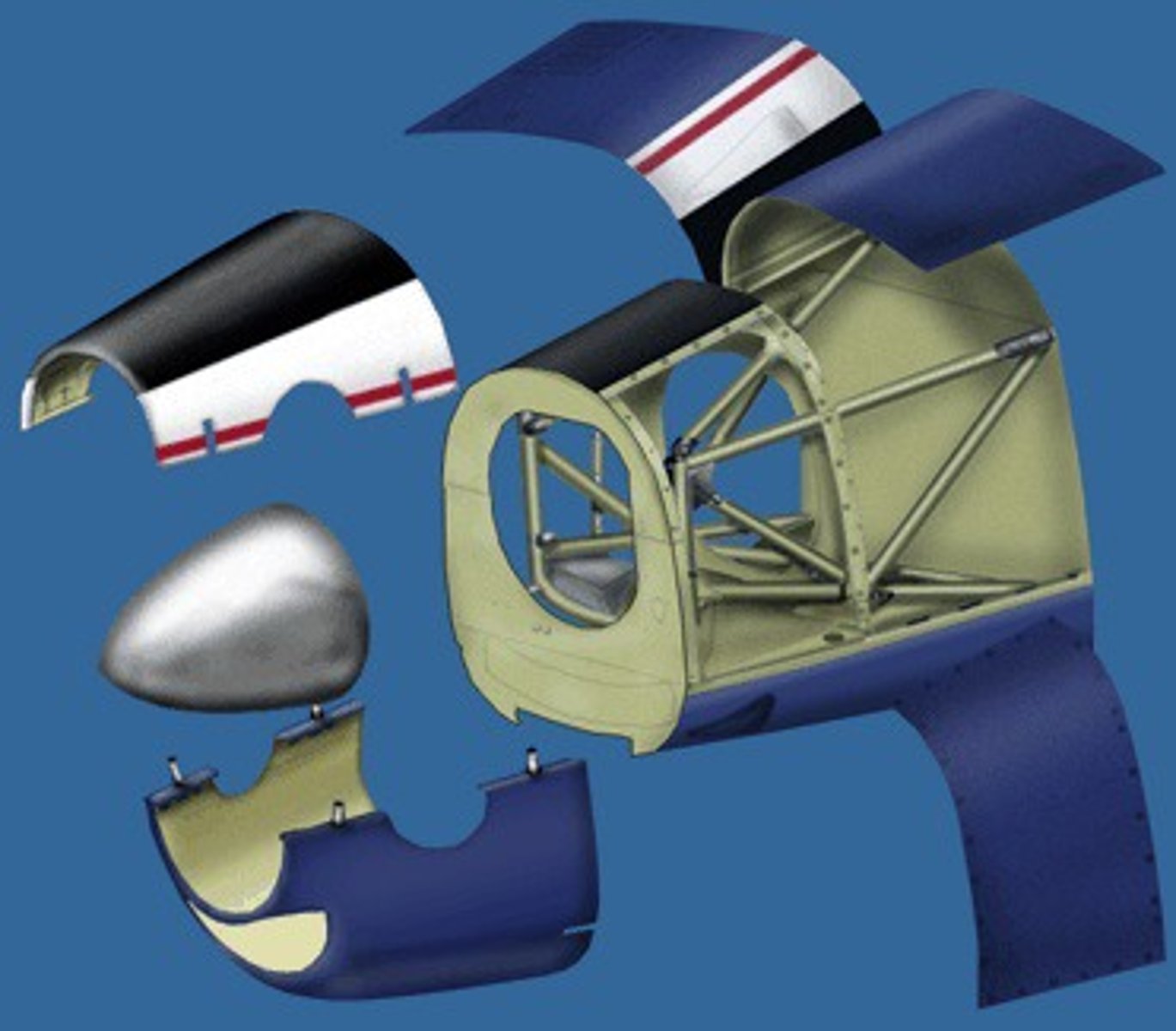
Cowlings
Removable pieces of an aircraft's outer skin that protect important areas of the aircraft from aerodynamic and environmental forces
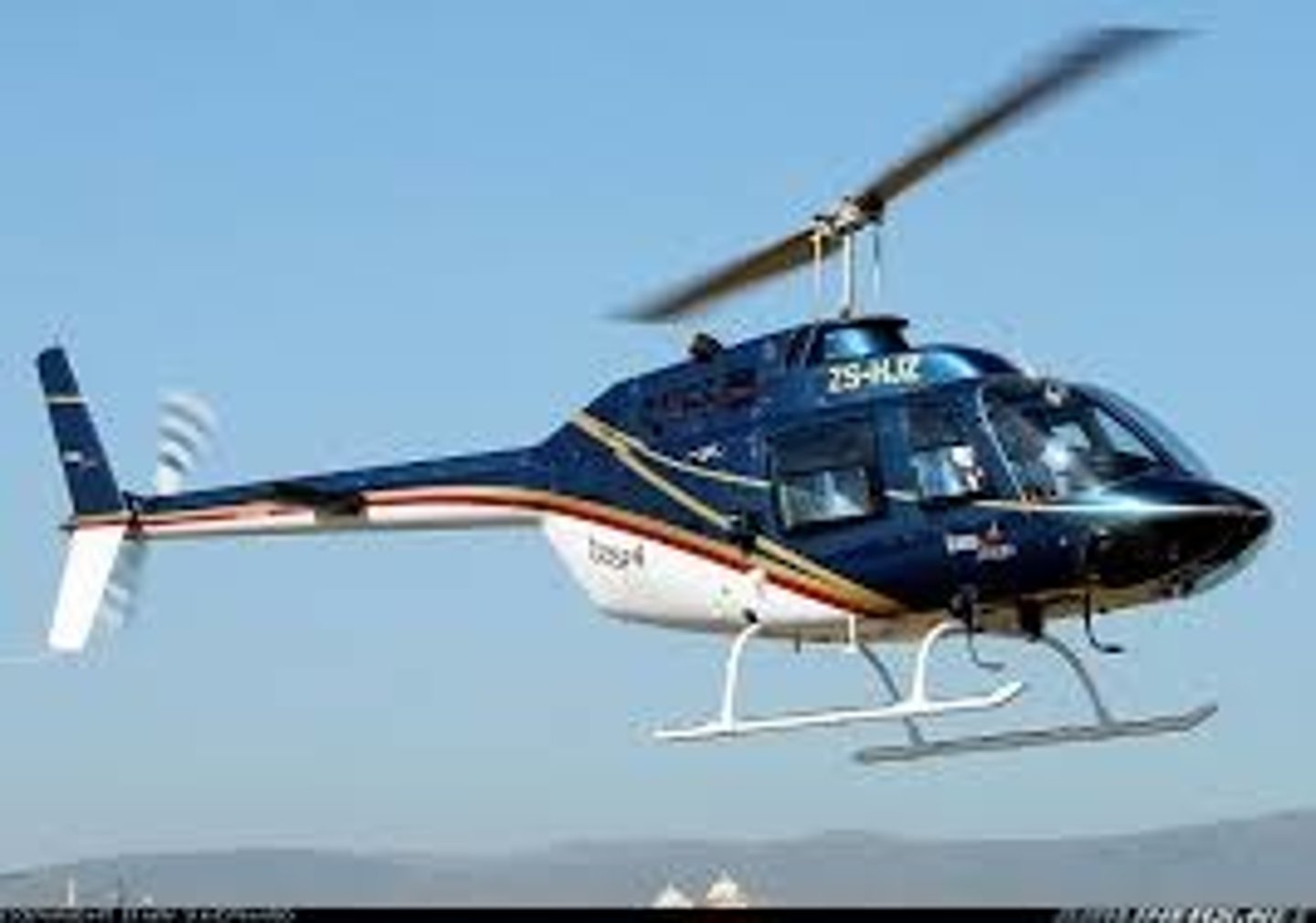
Skids
type of landing gear on a rotary wing aircraft that allows it to land safely without damaging the undercarriage. most often made of tubular steel and run parallel to the carriage.
Hovering flight
balance of the four aerodynamic forces-- weight, lift, thrust, and drag
rotary wing creates lift via rotational movement of its ____.
airfoils
Magnus effect
as the rotor blades turn, the slow moving high pressure air below the blades pushes up against the fast moving low pressure air above the blades
Induced Flow (Downwash)
column of air passing through the rotor blades
Translating tendency (drift)
tendency of a rotary wing to drift laterally due to tail rotor thrust.
The ______ is used to counteract torque and creates horizontal thrust necessary to counteract that rotational pull of the airframe, which results in the helicopter drifting laterally
tail rotor of an aircraft
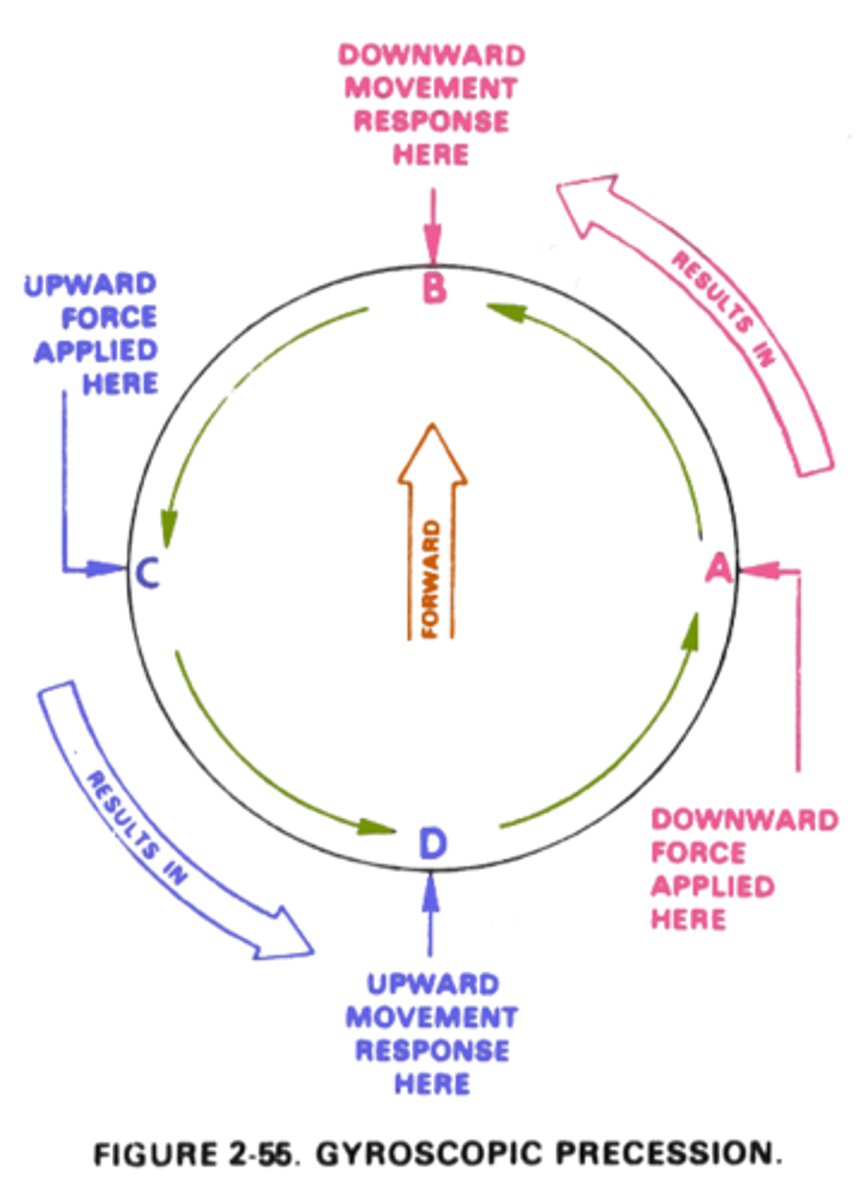
Gyroscopic Precession
when a force is applied to a rotating rotor, the force will be felt 90 degrees later in the plane of rotation.
Transverse Flow Effect
when a helicopter begins to accelerate, the induced flow created by the lifting action of the rotor blades drops to nearly zero in the front half of the rotor system and increases in the rear half of the rotor system. This drop in induced flow causes the AOA in the front half of the rotor system to increase, causing the blades to flap up. In contrast, as the induced flow increases in the rear haf of the rotor system, the AOA decreases causing the blades to flap down. Due to gyroscopic precession, the flapping blades is not felt until 90 degrees later which causes the aircraft to roll laterally
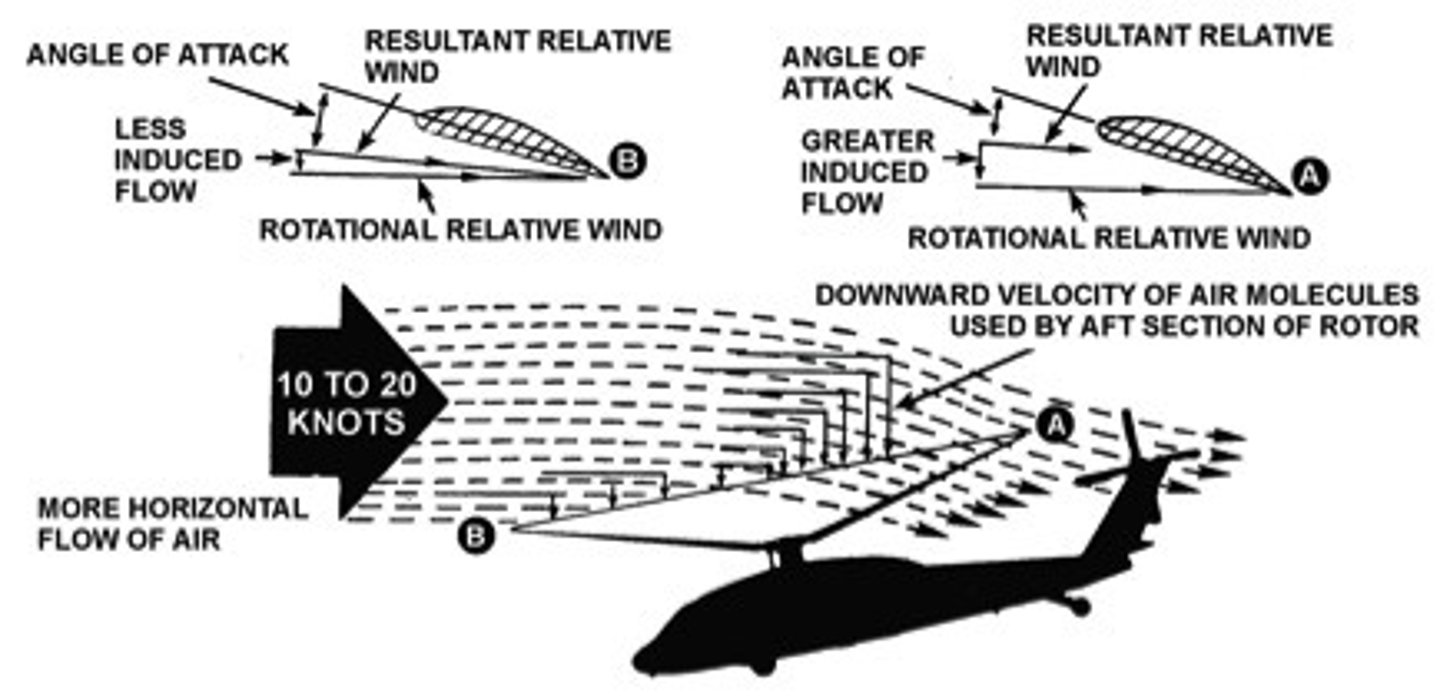
to achieve Effective Translational Lift (ETL)...
efficiency of the main rotor system must be increased. As the forward half of the rotor system becomes more efficient, the blades flap up creating more lift and causing the nose to pitch up and, due to gyroscopic precession, roll laterally
Both ____ and ____ can be counted bu using the cyclic pitch control which can tip the aircraft's plane of rotation
transverse flow effect and translational lift
Dissymmetry of Lift
The unequal lift across the rotor disc that occurs in forward flight due to the difference in airflow over the advancing and retreating blades. As a rotary wing aircraft moves forward through the air, relative wind is created which is the motion of air across the airfoil. More lift created and inclined to roll left
Autorotation
rotor blades are driven by relative wind rather than the powerplant.
In engine failure, the pilot can adjust his or her flight controls to allow the induced flow of air through the rotor system to reverse the aircrafts direction. As gravity pulls the aircraft back to the ground, this induced flow can travel vertically through the rotor system and continue to drive the blades in their plane of rotation, allowing the pilot to maintain full control.
Four primary controls of rotary wing aircraft
cyclic control system, collective control, directional control, throttle control
Cyclic Control System
mounted on the flight deck floor and centered between the pilots legs, is utilized to adjust the aircrafts pitch and roll axes. cyclic controls allow the pilot to manipulate the lift vector up to 360 degrees around the aircraft, allowing it to hover in one location
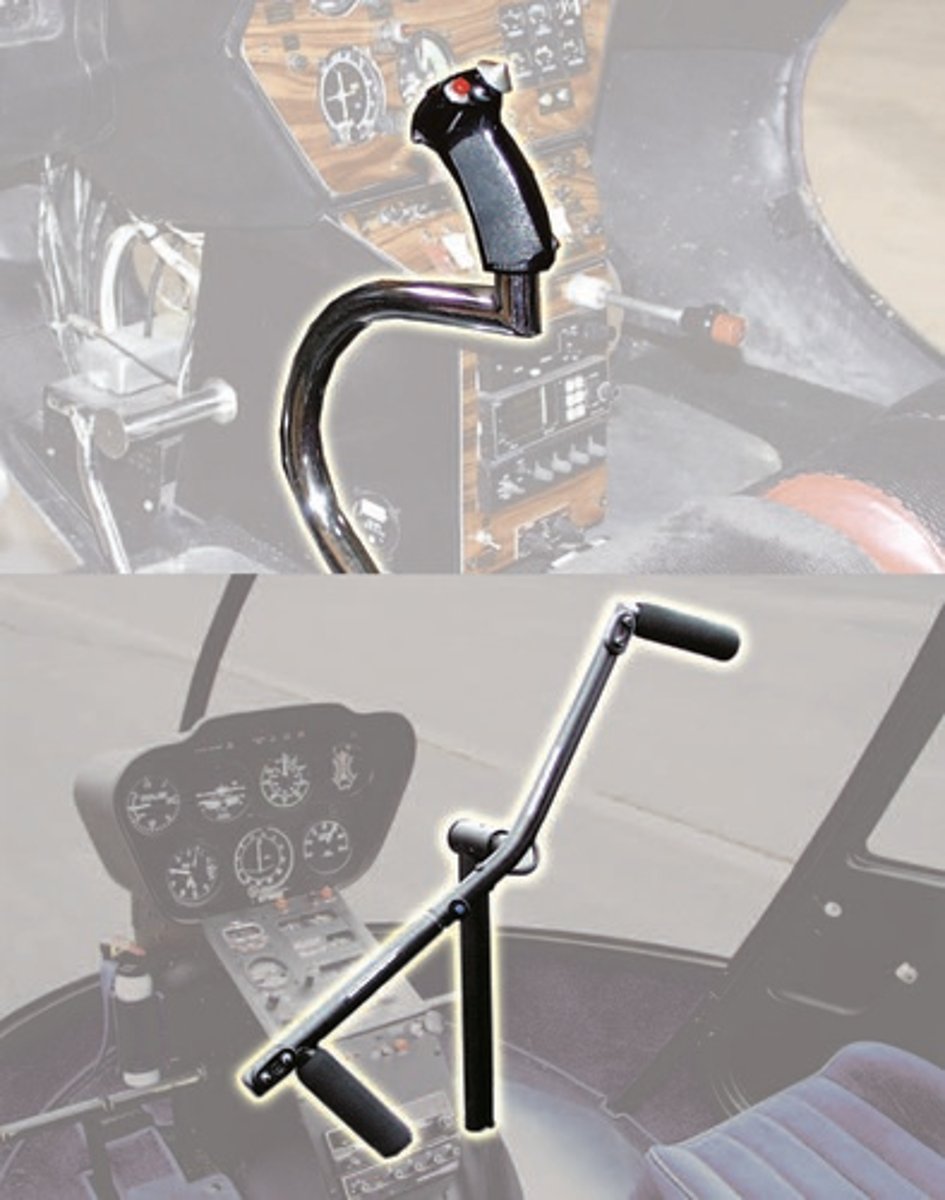
collective control
located to the left of the pilots seat is used to simultaneously change the pitch of the rotor blades. When raised, the pitch angle of blades increases along with AOA creating more lift. Allows the pilot to perform a level climb. Is pulled up to go up and pushed down to go down
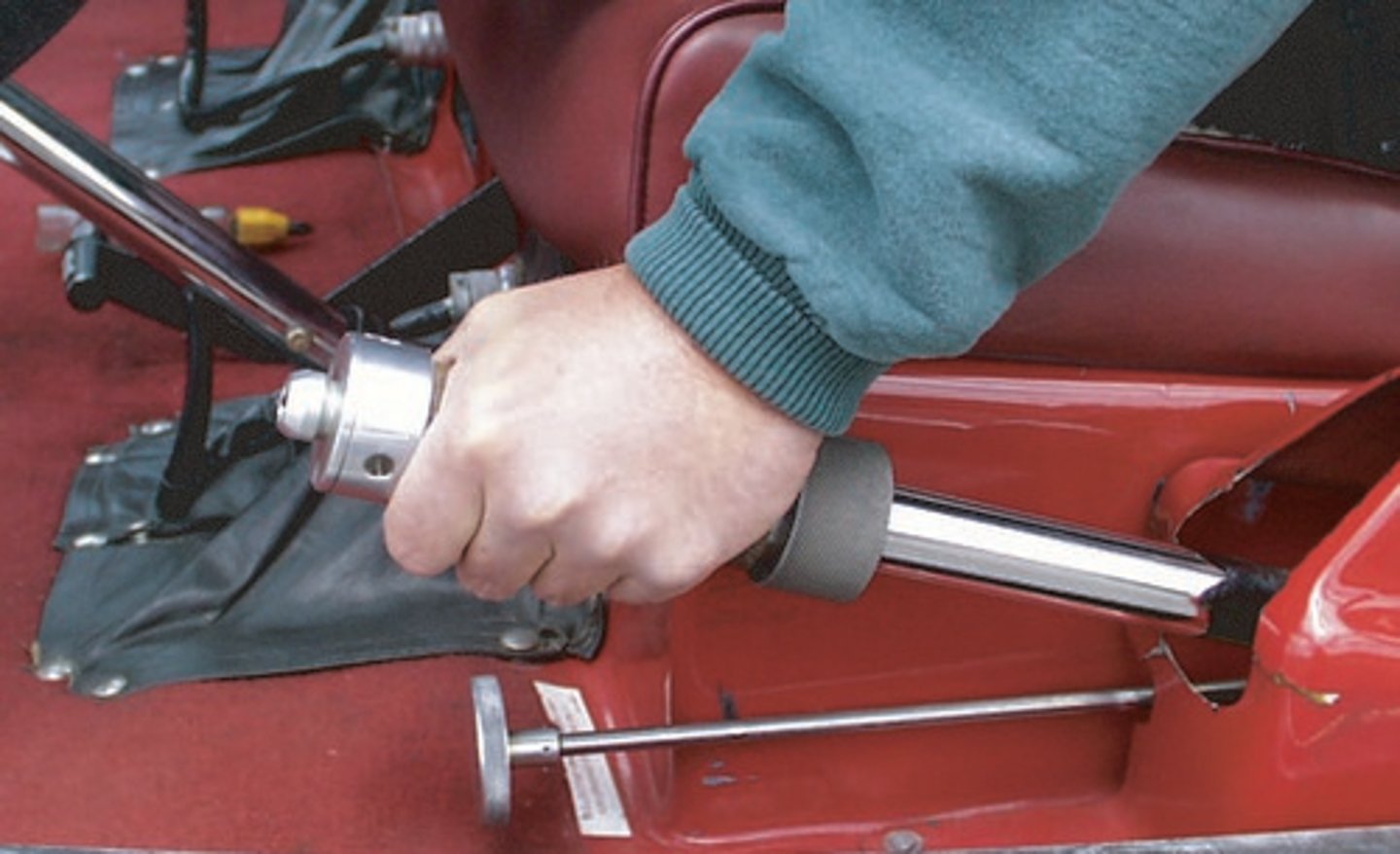
The yaw control of the aircraft is adjusted by the use of the ____ or _____ .
tail rotor pedals or directional controls
directional controls
tail rotor pedals change the pitch of the tail rotor blades, causing a larger or smaller horizontal lifting vector
Throttle Control
modern rotary wing aircraft have computers that manage the throttle once switched to a flight setting. Can be located anywhere but the majority are found on the collective control in the form of an attached twisting grip, very similar to a collar.
four fundamentals of flight
straight and level, turns, climbs, and descents
Straight and level flight
Main maneuver, Wing tips even with horizon, Constant heading and altitude is maintained. weight, lift, thrust, and drag in balance. does not require moving the controls when aircraft is not set to autopilot
turns
ailerons banked towards the direction of the turn. the degree of the bank angle determines how much input and adjustment a pilot must make to restore the airplane or helicopter to level flight. The lift force acts as the same angle as the angle of bank to tilt the aircraft away from the vertical
Steps to perform a turn
1. pilots first move the stick/cyclic to the left for left turns and right for right turns.
2. enough power of pitching up is also added to counteract the loss of lift.
3. the controls are neutralized to stop any increase in the bank angle and to maintain the desired bank angle
4. after the turn is accomplished, the ailerons are leveled to resume flight
typically ___ and ___ decrease in turns. The ____ are used to hold altitude and the ____ is used to increase speed.
altitude and airspeed. elevators and throttle
As airspeed and altitude decrease, a stall and loss of lift on the wings may result, the pilot must lower the ____ by one of several means to apply power
AOA
Shallow Turn
bank of less than 20 degrees
Medium Turn
bank roughly 20-45 degrees
Steep Turns
any bank greater than 45 degrees, must input opposite pressure on the controls to return the aircraft to level flight
Climb
when an aircraft flight path changes from a lower to a higher level of altitude. must increase lift to overcome aircraft's weight.
Normal Climb
cruise climb; performed within aircraft manufacturer's standards. aircraft increases airspeed but may not be operating at its optimum performance.
Best Rate of Climb
gaining the most altitude in a given amount of time using the most power available
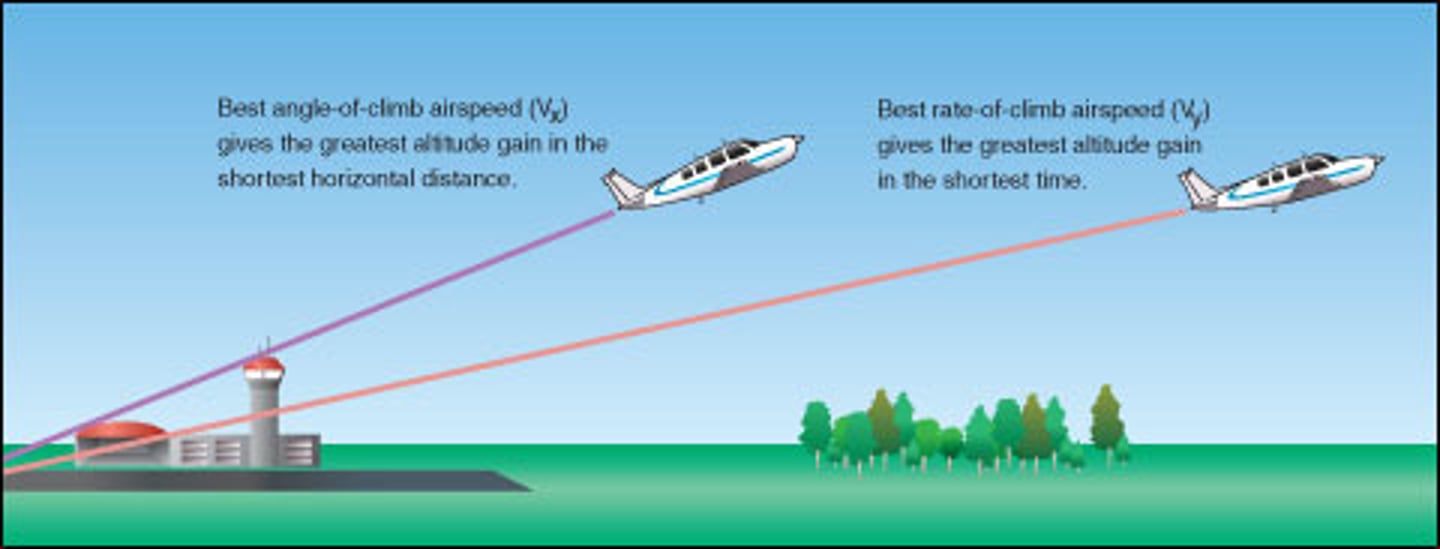
Best angle of climb
gaining the most altitude over a given distance, used especially at airports
descent
when lift is decreased, induced drag is minimized and the aircraft has a tendency to gain airspeed and thrust. Engine power levels must be reduced to maintain airspeed and avoid an excess speed situation
Partial Power Descent
descent at 500 fpm
Descent at Minimum Safe Airspeed (MSA)
Nose-high controlled descent used to clear obstacles on short approach to a short runway. angle is steeper than during partial power descent
Emergency Descent
when aircraft rapidly loses altitude
glide
descent with little to no engine power, gravity naturally takes over
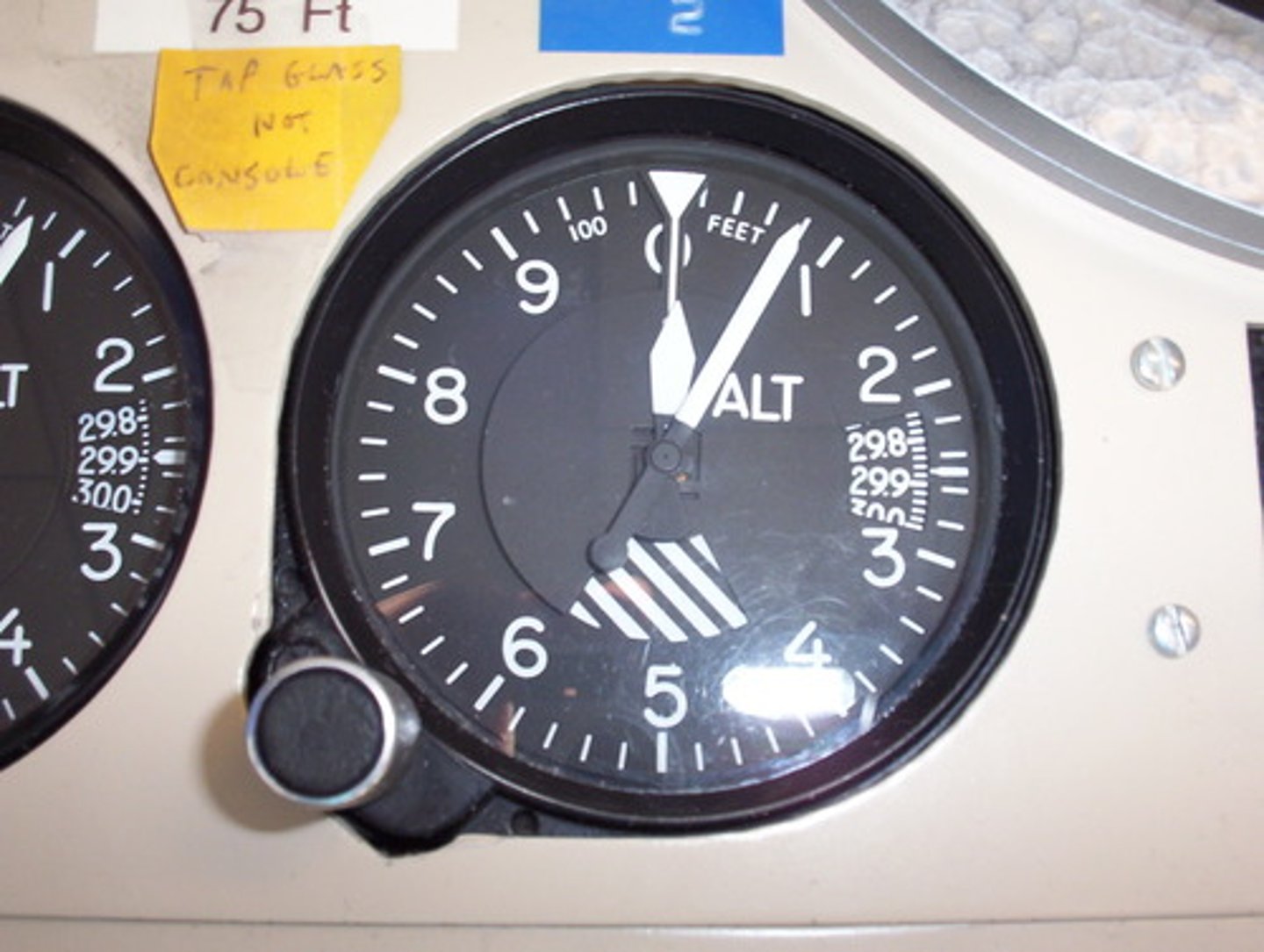
altimeter
instrument displaying the altitude of a helicopter, computes it by measuring the atmospheric pressure at the aircraft's current altitude and comparing this to a present value. (Air pressure decreases 1 inch of mercury for each 1,000 ft of altitude. three types (three pointer, counter drum, and encoding)
Three Pointer Altimeter
longest hand displays altitude in tens of thousands of feed. medium hand displays hundreds of feet. Box displays set ground atmospheric pressure
Counter Drum Altimeter
Digitally displays the altitude without needing manual figuring.
Also displays set ground atmospheric pressure
Encoding Altimeter
converts the altitude into a digital code, which is then relayed to ground control radar via a transponder
Indicated Altitude
Altitude read directly from the altimeter.
True Altitude
Actual height above mean sea level (MSL)