CHEM mistakes log
 Call Kai
 Learn
Learn Practice Test
 Spaced Repetition
 Match
Match Flashcards
 Knowt Play
1/45

There's no tags or description
Looks like no tags are added yet.
Name | Mastery | Learn | Test | Matching | Spaced | Call with Kai | Chat |
|---|
No analytics yet
Send a link to your students to track their progress
46 Terms

desribe the test tube tube reaction practical ( generic ) for ammonium ____, ____sulfate , _____ carbonate and
( can score 6/6 by stating 3 reactions + stating that the final one then must be___ )
STAGE 1 ( tests) :
add NaOH , warm the test tube , then hold damp red litmus paper at mouth of test tubes
add dilute HCL
add BaCl2 ( acidifes from HCl added previously )
STAGE 2 ( observations ) :
the test tube where the litmus paper turns from red to blue, is where ammonium ions present
effervessence will be given off at one of the test tubes ( CO2) → this means that carbonate ions are present here → test with limewater → colourless to cloudy
a white precipitate will be formed in one of the test tubes → means that sulfate ions are present
the final test tube will therefore be ____
STAGE 3 ( list all equations: ) :
NH4+ + OH- → NH3 + H2O
CO32- + 2H+ → CO2 + H2O
SO42- + Ba2+ → BaSO4
Explain why electronegativity of halogens decreases as you go down
more shielding
weaker attraction between nucleus and bonding pair of electrons
what are similarities and differences between the reactions concentrated sulfuric acid with chlorine and bromine
similarity: one from form hydrogen halides / undergo acid-base reaction / misty white fumes are observed / form sodium sulfate / form sodium hydrogensulfate / exothermic / effervescence
Difference: one from bromide undergoes a redox reaction / bromide ions are oxidised / bromide ions reduce sulfur in sulfuric acid / red-brown-orange fumes are observed with bromide / Br2 produced with bromide / (choking gas) SO2 produced with bromide / different hydrogen halides
q5 halogens
when iodide ions are oxidised using concentrated sulfuric acid, sulfur dioxide, a yellow solid and a foul-smelling gas are all formed. Give an equation to show the reaction between iodide ions and concentrated sulfuric acid to form the yellow solid. Identify the foul-smelling gas. Equation ___________________________________________________________ Identity of foul-smelling gas _
‘ solid’ - so must show S as product
if ‘chocking gas’ → SO2 product
if ‘ foul smelling gas’ → H2S product
equation: 6 I– + 6 H+ + H2SO4 → S + 3 I2 + 4 H2O Allow 6HI Allow 6I− + 8H+ + SO42− Foul smelling gas – H2S / hydrogen sulphide
a student does an additional experiment to show that solution D contains a mixture of halide ions. One of the halide ions is chloride. Method: Step 1 Add an excess of AgNO3(aq) to 10.0 cm3 of solution D. Step 2 Filter, wash, dry and weigh the precipitate. Step 3 Add an excess of dilute ammonia to the dry precipitate. Step 4 Filter, wash, dry and weigh the solid that remains. Explain how the masses recorded during this experiment can be used to show that solution D contains a mixture of halide ions.
the mass is step 4 will be less than mass in step 2
because the AgCl will dissolve in dilute ammonia
give an equation for the reaction of chlorine with water to form a solution containing two acids. Explain, with reference to electrons, why this is a redox reaction.
chlorine/Cl/Cl2 gains electron(s) (to form Cl−) and loses electron(s) (to form ClO−)
explain why the third ionization energy of beryllium is much higher than the second ionization energy of beryllium
the electron is removed from the 1s subshell rather than 2s subshell
the 1s subshell is closer to nucleus / lower in energy
the electrostatic forces of attraction between nucleus and OUTER electron is stronger so more energy required
suggest why the solution is kept until no more solid needs to be added ( titration)
to ensure the solution is saturated ( maximum possible amount dissolved)
ignore concentrated, ‘ so it is all reacted ‘
suggest why it is important to remove the undissolved strontium hydroxide before the titration.
the titre volume would be larger
/ more acid ( HCl ) required
/ because the solid will react with the acid
suggest a reason for stoppering the flask?
to prevent reaction with carbon dioxide (in the air)
Allow so flask can inverted/shaken (to ensure homogeneous mixture)
OR To prevent evaporation (of water/from solution)
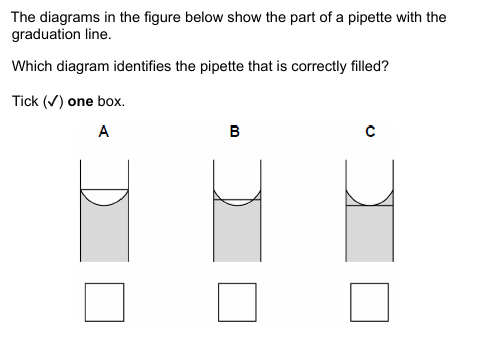
c
Describe the structure and bonding in magnesium
a giant lattice of cations/ Mg 2+ ions
strong electrostatic forces of attraction between cations/ Mg2+ ions and negatively charged delocalized electrons
observations seen when magnesium oxide reacts with steam?
bright white light
white ash/powder
give the medical use of magnesium hydroxide
laxatives / to neutralise excess stomach acid / indigestion releif
explain why the melting point of magniesium is higher than sodium
Mg2+ ions have a higher charge than Na+ / higher charge density
so stronger electrostatic forces of attraction
State what is observed when dilute aqueous sodium hydroxide is added to
separate solutions of magnesium chloride and barium chloride.
Observation with magnesium chloride _____________________________
___________________________________________________________
Observation with barium chloride _
name the S block metal with the highest first ionisation energy
says METAL
berylium → not lithoum as Be has simialr shieliding but also has higher nuclear charge
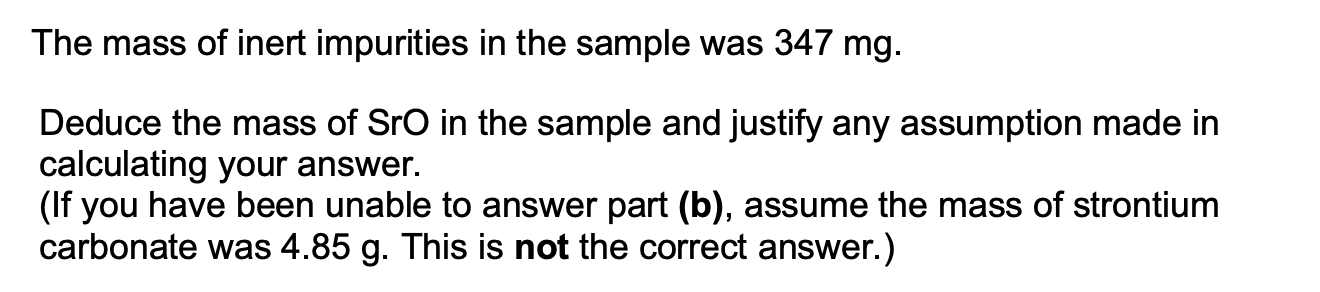
State the ASSUMPTION
all the SrCO3 reacted, as it was heated to constant mass
give an equation for the reaction between phosphorous and an excess of oxygen
P4 + 5O2 → P4O10
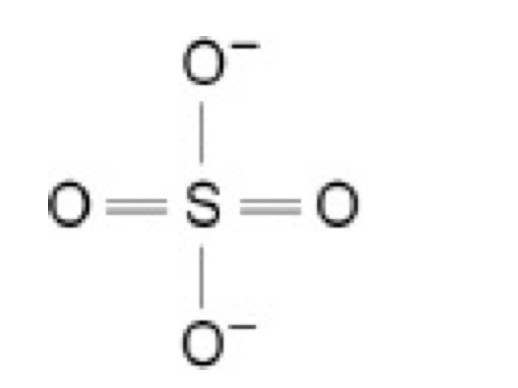
draw the dispalyed formula of the anion formed when sulfur trioxide reacts with water
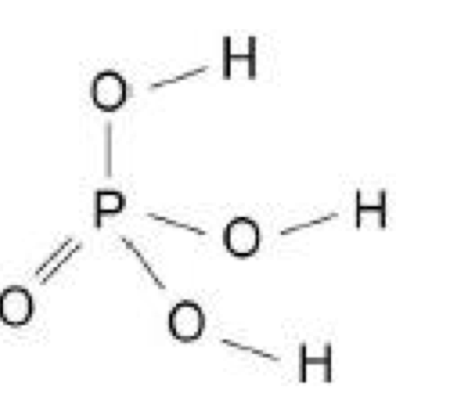
draw the dispalyed formula of the molecule formed when phosphorus reacts with water

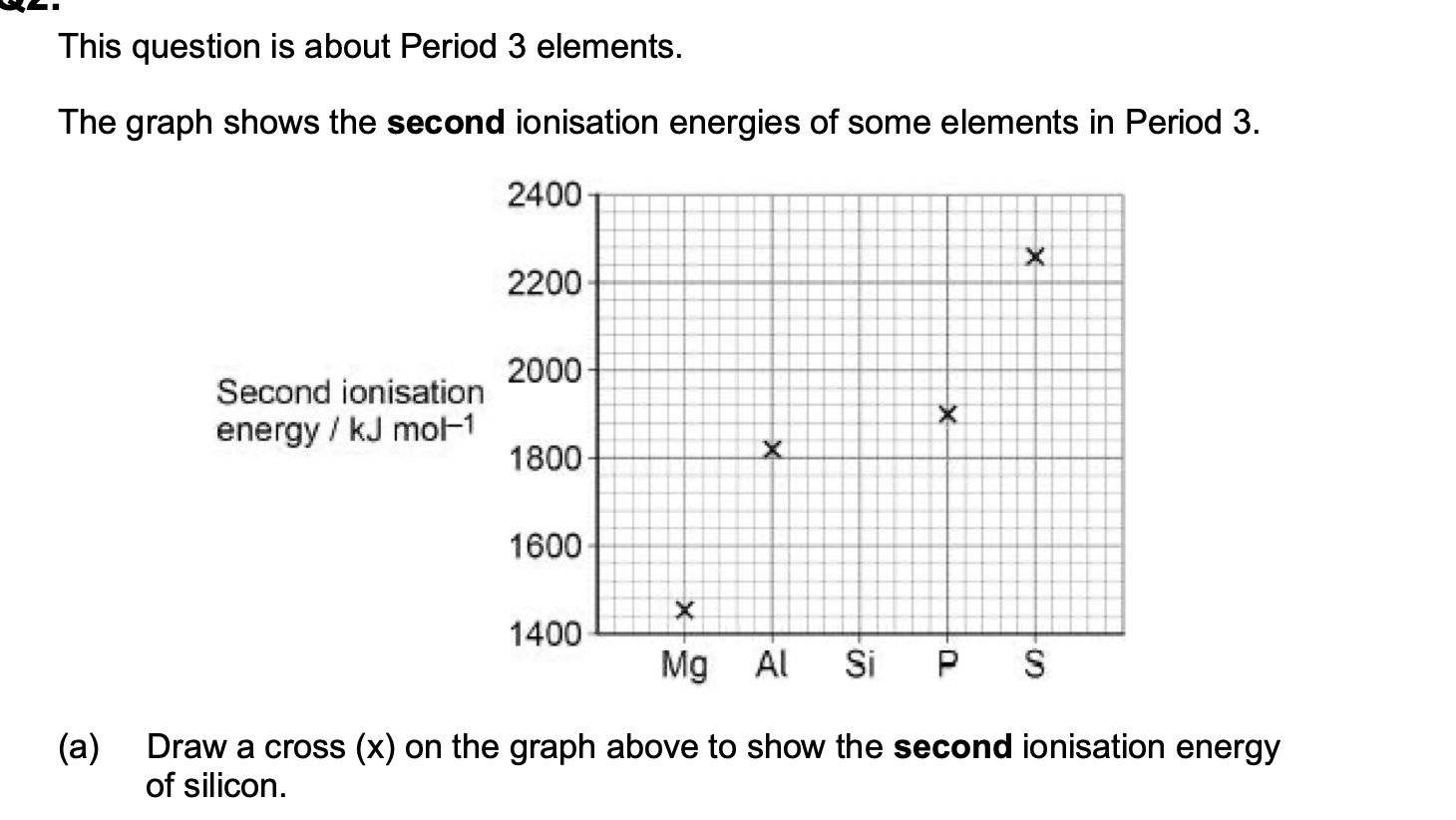
dip below Al,
WHY?
cus the trend is now ‘ shifted’ left 1 , so the same dip between Mg and Al now happens between Al and Si
which element is period 3 has highest second ionisation energy?
Na → removing from the 2p subshell which is much closer to the nucleus → stronger attravtive forces
which period 3 element from Na toCl has highest electronegtaivty
chlorine
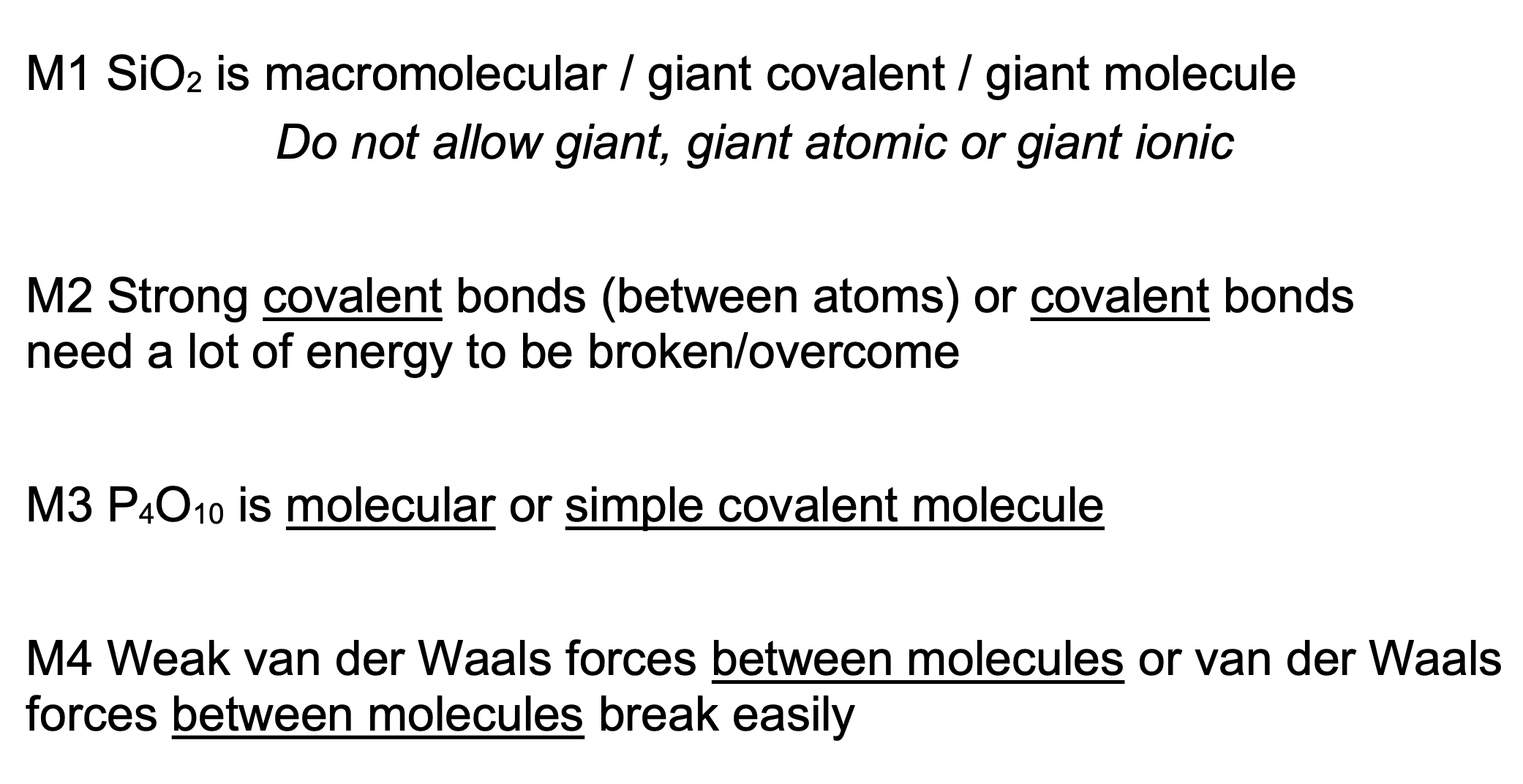
Explain the increase in melting point from sodium oxide to magnesium
oxide.
Greater/increased charge/charge density on magnesium ion/Mg2+ (specific
mention of ion(s) can be scored from M2)
Allow magnesium ion is smaller (than sodium ion);
Ignore atomic radius
If mention of molecules, intermolecular forces,
metallic bonding then CE=0
1
Stronger attraction for anions/oxide ion / stronger attraction between
oppositely charged ions/ stronger attraction between Mg2+ and O2– /
stronger ionic bonding
A sample of the highest oxide of phosphorus was prepared in a laboratory.
Describe a method for determining the melting point of the sample.
State how the result obtained could be used to evaluate its purity.
Put sample in a melting point apparatus / capillary tube in oil bath
Heat slowly and record the melting point/range
Pure sample melts sharply at data book value; impurities lower and broaden melting point range
Describe a test you could carry out in a test tube to distinguish between
sodium oxide and the product of the reaction in part (a) in general, just distinguisng an alkaline oxide from acdic oxide
React both oxides with water ( other wise no marks )
use glass rod to add a drop of soltuion to litmus paper ]
acididc → remain red
alkaline → red to blue
explain why the metling point of sulfur is greater than phosphorus ( P4 )
S8 is bigger
so stronger VDW forces
explain why sodium oxide from an alkaline solution when it reacts with water?
sodium oxide contains O2- ions
these ions react with water to form OH- ions
(iv) Write two equations to show the amphoteric nature of the oxide of aluminium oxide
DONT FORGET MINUS ON THE IONS FOR BASE REACTION!!!!!!!!!!!!!!!!!!!!!!
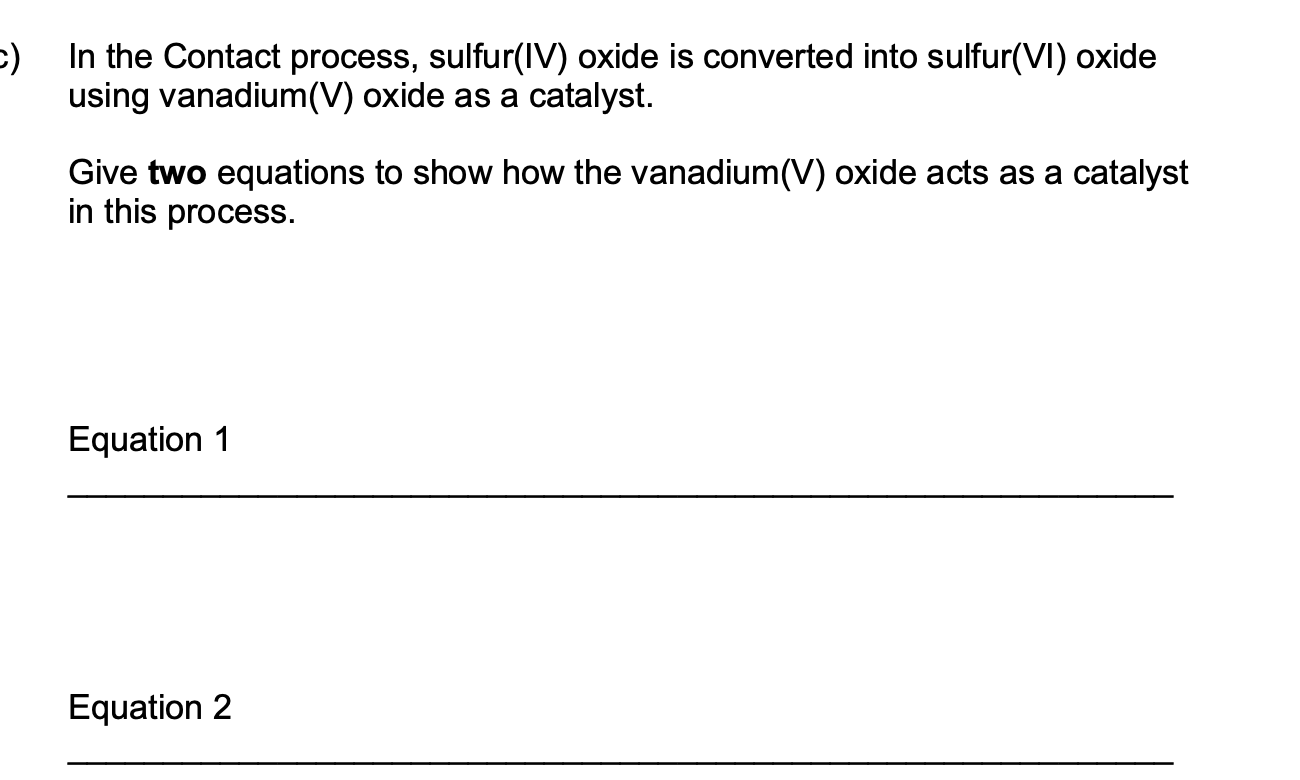
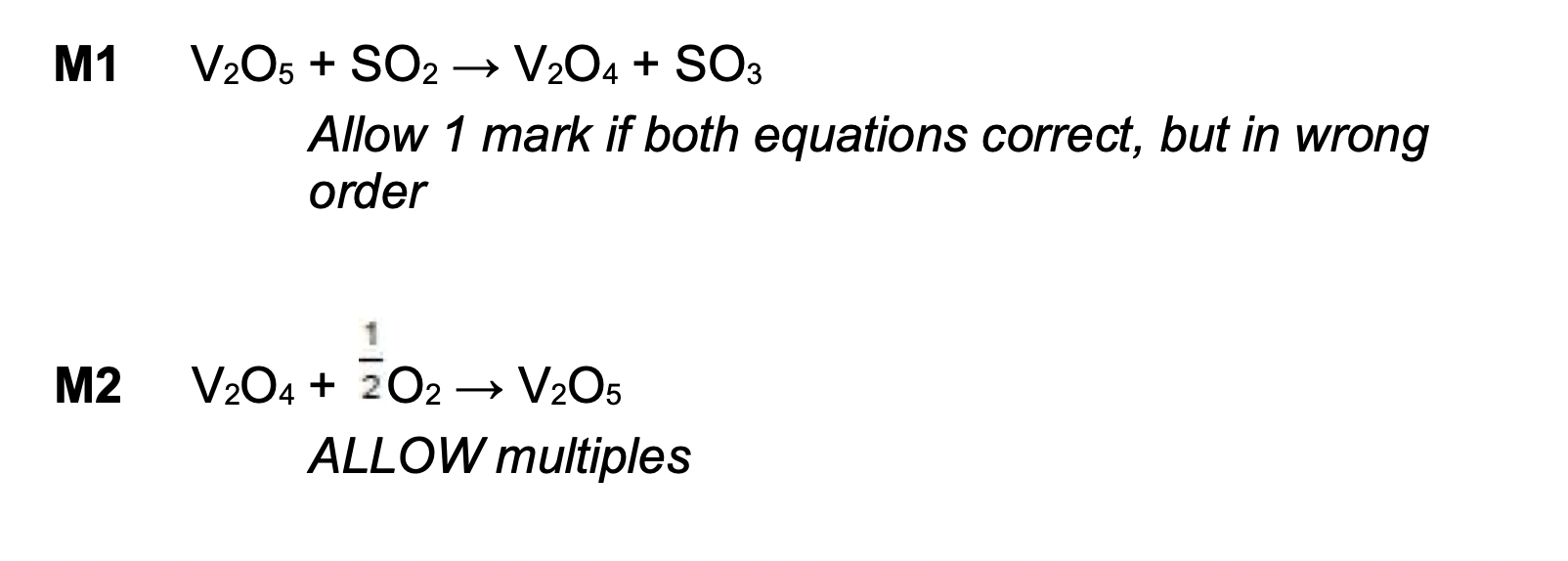
how to make up a standard solution
1. Weighing the Solid (Weighing by Difference)
Don't just say "weigh the solid." AQA strictly looks for the weighing-by-difference method to ensure no mass is lost:
Place a weighing boat on the digital balance, tare it, and add the correct mass of solid. Record this mass.
Tip the solid into a clean beaker.
Reweigh the empty weighing boat and record this mass.
Subtract the mass of the empty boat from the mass of the full boat to get the exact mass of solid transferred.
2. Dissolving the Solid
Add a relatively small volume of distilled water (e.g., about 50 cm3) to the beaker.
Stir the mixture thoroughly with a glass rod until all the solid has completely dissolved.
3. Transferring to the Volumetric Flask
Pour the solution from the beaker into the volumetric flask using a funnel.
The "Rinsings" Step (Crucial for Marks): Rinse the beaker, the glass stirring rod, and the funnel multiple times with distilled water from a wash bottle. Pour all of these washings directly into the volumetric flask. This ensures every single particle of the solute is transferred.
4. Making up to the Mark
Add distilled water to the flask until the level is just below the graduation mark.
Use a dropping pipette to add the final few drops of distilled water very slowly.
Stop when the bottom of the meniscus is perfectly aligned with the graduation mark at eye level (to avoid parallax error).
5. Mixing
Place the stopper securely onto the volumetric flask.
Invert the flask repeatedly (about 10–15 times) to ensure the solution is completely uniform and thoroughly mixed. If you skip this, the concentration will not be consistent throughout.
⚠ Common Exam Questions & Pitfalls
Why use a volumetric flask instead of a measuring cylinder? A volumetric flask has a much lower apparatus uncertainty and measures a specific volume very accurately.
What happens if you fill past the graduation mark? The solution becomes too dilute, the concentration will be unknown, and you must discard it and start the entire process over again.
Why heat shouldn't be used to dissolve the solid? Volumetric flasks are calibrated at exactly 20∘C. Heating can cause the glass to expand, changing the precise volume of the flask.
Before the first titration, the 25 cm3 pipette is rinsed with a small volume of
the 0.100 mol dm–3 barium hydroxide solution.
State why it is good practice to rinse the pipette in this way.
So that the titration is done with known concentration of Ba(OH)2
state the rolde of sodium hydroxide in this reaction ( elimination of haloalkanes )
base
‘explain why 2 bromopentane is the major product of this reaction ( electrohilic addition)
2-bromopentane is formed via secondary carbocation
a scondaery carbocation is more stable that primary carbocarion
(MUST REFRENCE CARBOCATIONS ) , due to positive inductive effect of two alkyl groups as opposed to one
state the different conditions needed between nucleophilic substituion and elimination
highER temperature
ethanolic vs aquous
explain why the ionisation energy of sulfur is lower than phosphorus
electron in 3p sub shell in S are paired
Paired e− repel (so less energy needed to remove)

percentage uncertainty: ( Absolute Uncertainty / Titre Volume ) ×100
so we should make titre volume bigger, to make uncertatinty smaller


must refer to LIQUID / MOLTEN for M5
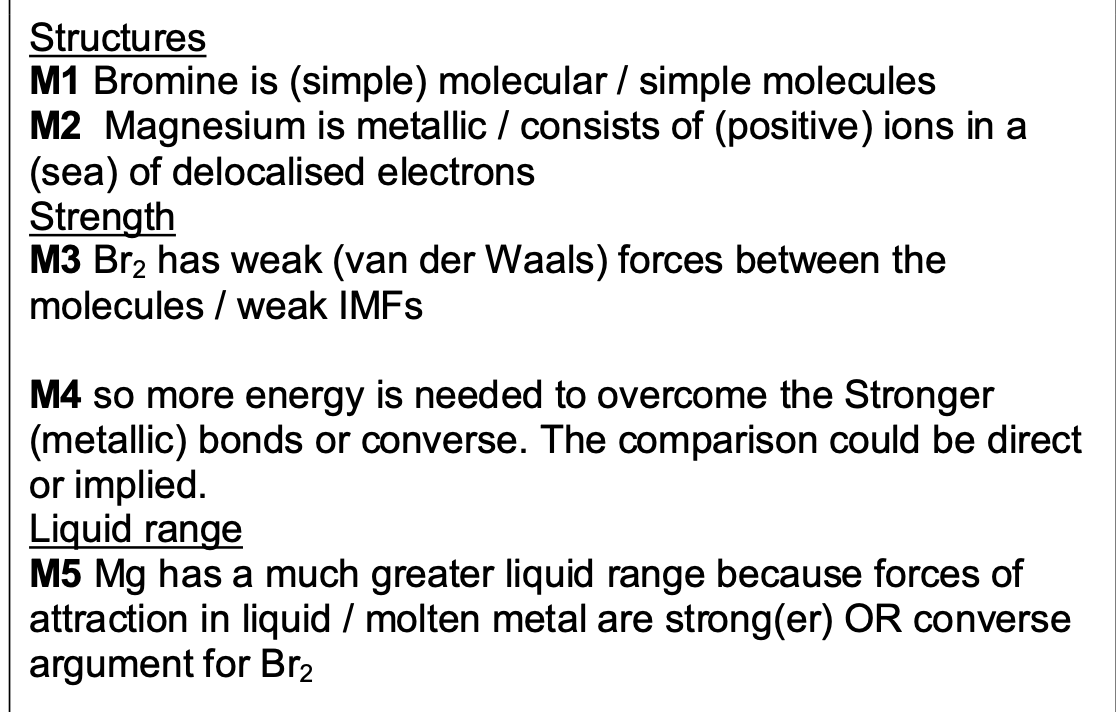
explain why a think layer of metal is used inside catalytic converters
to reduce the amount of metal needed
to provide a large surface area to volume ratio
how do you test for unsaturated fatty acids?
bromine water
orange to colourless ( decolourised )


