BIOC L9 - starvation metabolism
 Call Kai
 Learn
Learn Practice Test
 Spaced Repetition
 Match
Match Flashcards
 Knowt Play
1/20

There's no tags or description
Looks like no tags are added yet.
Name | Mastery | Learn | Test | Matching | Spaced | Call with Kai |
|---|
No analytics yet
Send a link to your students to track their progress
21 Terms
Why do we use glycogen stores first in high intensity exercise?
FAs are slower and more difficult to transport to mitochondria as not water soluble
What are the preferred fuels for the brain?
no fuel stores, prefers glucose and ketone bodies in starvation, no exported fuels
What are the preferred fuels for skeletal muscle at rest?
glycogen stores, prefers FAs, no exports
What are the preferred fuels for skeletal muscle during exercise?
no stores, prefers glucose, FAs and branch chain amino acids, exports lactate and alanine
What are the preferred fuels for cardiac muscle during exercise?
no fuel stores, prefers FAs, no exported fuels
What are the preferred fuels for adipose tissue?
stored TAGs, prefers FAs, exports FAs and glycerol
What are the preferred fuels for the liver?
glycogen stores, prefers amino acids, glucose and FAs, exports glucose, ketone bodies and TAGS (VLDL)
What are the preferred fuels for red blood cells?
no stored fuels, prefer glucose, export lactate
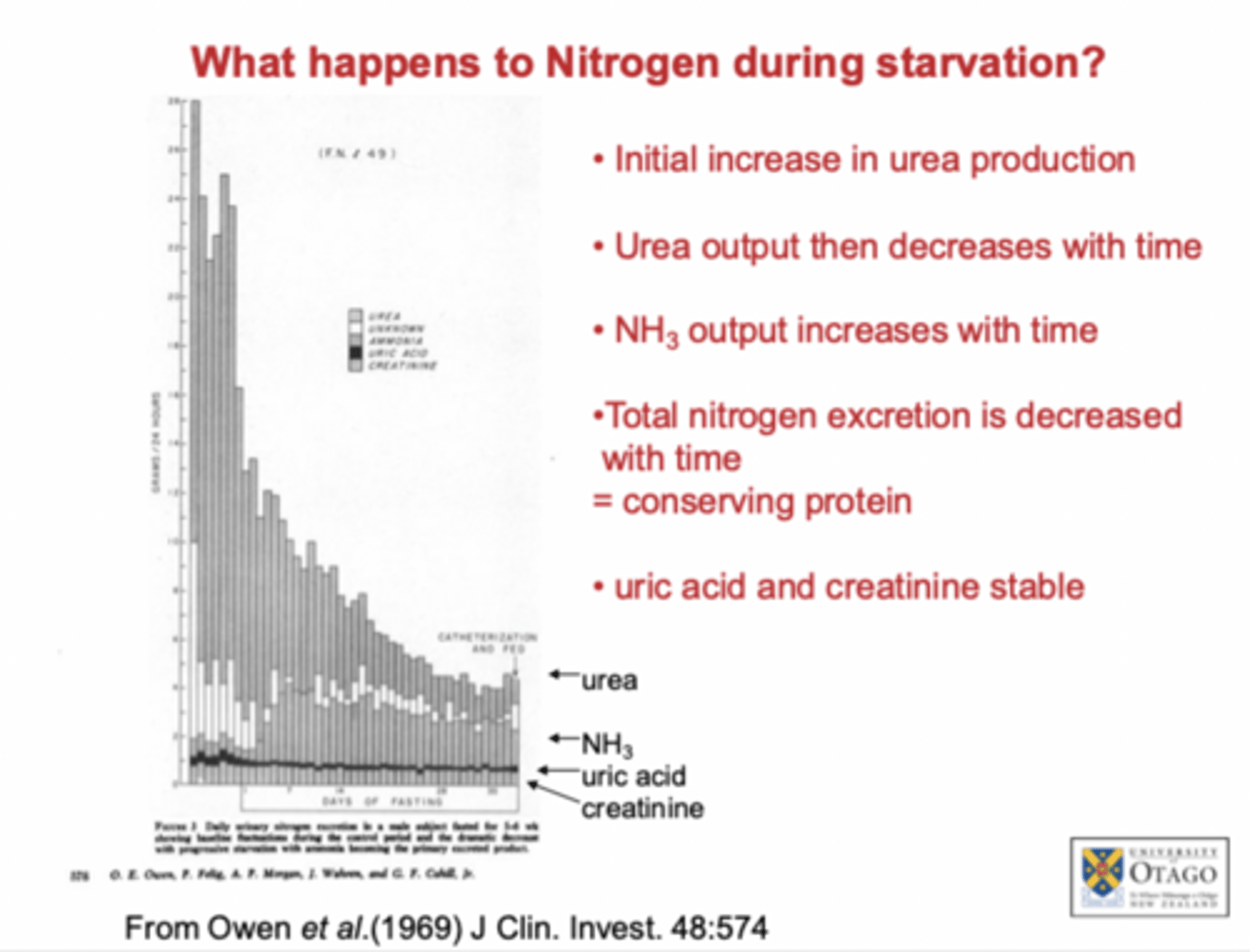
What happens to total N excretion and nitrogen excretion products in starvation?
total N excretion decreases overall, urea initially increases due to muscle breakdown but then decreases to conserve protein, ammonia increases over time and uric acid and creatinine remain stable
How is protein metabolised in starvation initially?
initially broken down for amino acids increasing glutamate and acetylcoa levels driving NAG sythesis and increasing CPS activity so urea production increases
How is protein metabolised later on in starvation?
body switches to reliance on FAs and KBs to conserve protein so glutamate and ammonia decreases as well as CPS activity and urea output
How is protein metabolised in extreme starvation?
kidneys minimise energy expenditure of N excretion by excretining it as ammonium
How do the kidneys play a role in preventing ketoacidosis and reduce energy expenditure of N excretion?
kidneys increase glutamine metabolism which increases production of NH4+ and spares ATP and bicarbonate (usually used in the formation of carbamoyl phosphate for urea), the spared bicarbonate and excreted H+ ions reduce acidosis from ketones
What is an added benefit of the kidneys increasing glutamine metabolism?
produces aKG which is a substrate for gluconeogenesis
What does glucagon signaling do in starvation?
promotes lipolysis, and regulates FA oxidation in the liver
How does glucagon signaling promote lipolysis?
activates adipose triglyceride lipase (ATGL) and hormone sensitive lipase (HSL) to release FFAs and glycerol which exit the cell via separate transports, FFAs bind to albumin in blood for transport to tissues which need it for B-oxidation
How does glucagon regulate FA oxidation in the liver?
promots shuffling of FAs into mitchondira for B-oxidation increasing acetlyCoA and driving ketone production
Who is ketogenesis accelerated for and why?
newborns and infants: small fuel intake and reduced capacity for fuel storage and gluconeogenesis, pregnant and lactating women: increased glucose requirement, diabetics: poor glucose utilisation
What are blood ketone concentrations in fed, fasted, newborn, starved, t1d/ketacidosis states?
<0.1mmol/L, 0.3mmol/L, 2-3mmol/L, 10mmol/L, >30mmol/L
What are ketogenic diets?
restricted in carbohydrates prioritising use of body fat and ketones, reduces insulin secretion and appetite from protein satiety
What are the marketing points for ketogenic diets?
weight loss, suitable for drug resistant epilepsy as reduces glutamate and GABA levels