Psychopathology and Major Psychological Disorders Overview
 Call Kai
 Learn
Learn Practice Test
 Spaced Repetition
 Match
Match Flashcards
 Knowt Play
1/103

There's no tags or description
Looks like no tags are added yet.
Name | Mastery | Learn | Test | Matching | Spaced | Call with Kai |
|---|
No analytics yet
Send a link to your students to track their progress
104 Terms
What is psychopathology?
The study of mental disorders.
Define mental disorder.
A persistent disturbance or dysfunction in behavior, thoughts, or emotions that causes significant distress or impairment.
What is the medical model in psychology?
The conceptualization of abnormal psychological experiences as illnesses similar to physical illnesses.
What are signs in the context of mental disorders?
Objectively observed indicators of a disorder.
What are symptoms in the context of mental disorders?
Subjectively reported behaviors, thoughts, and emotions.
What are the three general medical classification terms related to mental disorders?
Disorder, Disease, Diagnosis.
What is the DSM?
The Diagnostic and Statistical Manual of Mental Disorders, a classification system for mental disorders.
When was the first DSM published?
In 1952.
What significant updates were made in DSM-III?
It provided detailed lists of symptoms and diagnostic criteria for over 200 disorders.
What is comorbidity?
The co-occurrence of two or more disorders in a single individual.
What cultural factors influence mental disorders?
Cultural context influences how mental disorders are experienced, described, assessed, and treated.
What is the biopsychosocial perspective?
A model suggesting that mental disorders result from interactions among biological, psychological, and social factors.
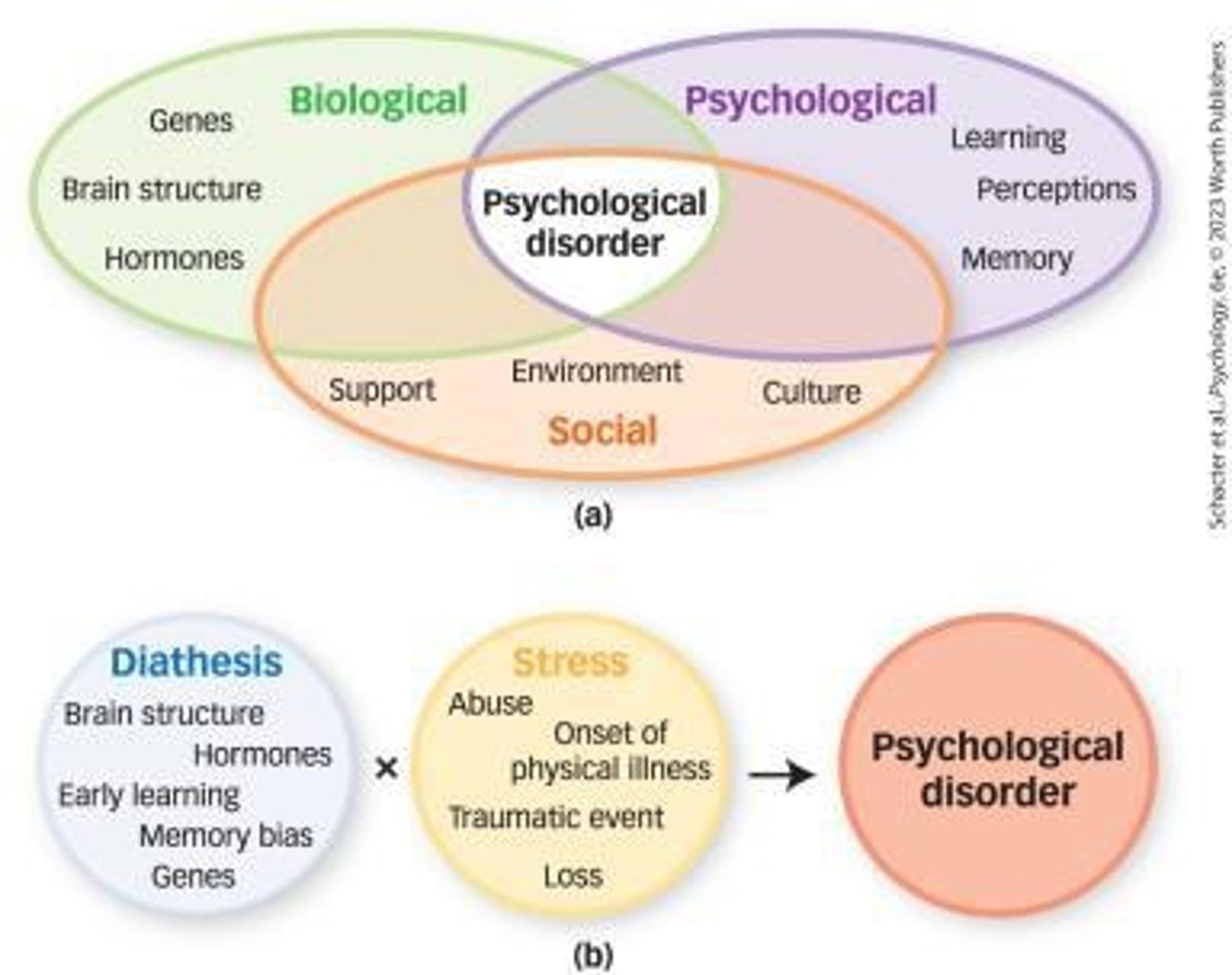
What does the diathesis-stress model propose?
It suggests that a person may be predisposed to a mental disorder that remains unexpressed until triggered by stress.
What is the significance of the DSM-5?
It includes updated diagnostic criteria and a new disorder called Prolonged Grief Disorder.
What is the role of cultural syndromes in mental health?
Cultural syndromes are patterns of symptoms or behaviors recognized within specific cultural contexts.
What is the impact of oversimplifying mental disorders?
It can lead to attributing disorders to single, internal causes, neglecting the complexity of their origins.
What is the purpose of the WHO World Mental Health Surveys?
To assess the presence of mental disorders in various countries worldwide.
What is the significance of the DSM-5-TR?
It is a text revision that updates the DSM-5 with new information and diagnostic codes.
How does culture affect the treatment of mental disorders?
Cultural beliefs and practices can influence the methods and effectiveness of treatment.
What does the term 'extreme traits' refer to in personality disorders?
Characteristics that are significantly different from the norm and can lead to dysfunction.
What is the relationship between biological and environmental causes of mental disorders?
Both biological and environmental factors can contribute to the development of mental disorders.
What is the importance of defining symptoms in mental health?
Defining symptoms helps in diagnosing and distinguishing between different mental disorders.
What is the role of the DSM in mental health?
It provides a common language for professionals to discuss and diagnose mental disorders.
What does the term 'self-harm behaviors' refer to?
Intentionally injuring oneself as a way to cope with emotional distress.
What is the historical significance of the theory of physiognomy?
It was a belief that mental disorders could be diagnosed from facial features, now considered superstition.
What is the Research Domain Criteria Project (RDoC)?
A new initiative to guide classification and understanding of mental disorders by revealing the basic processes that give rise to them.
What are the domains/constructs in RDoC?
Negative Valence Systems, Positive Valence Systems, Arousal/Regulatory Systems, Cognitive Systems, and Sensorimotor Systems.
What is the long-term goal of RDoC?
To better understand the abnormalities that cause different mental disorders and classify them based on underlying causes rather than observed symptoms.
What is an anxiety disorder?
A class of mental disorders in which anxiety is the predominant feature.
What are the consequences of psychiatric labels?
They can lead to negative stereotypes, stigma, lower self-esteem, and may prevent individuals from seeking help.
What types of anxiety disorders does DSM-5-TR recognize?
Phobic disorders, Panic disorder, and Generalized anxiety disorder (GAD).
What characterizes phobic disorders?
Marked, persistent, and excessive fear and avoidance of specific objects, activities, or situations.
What is preparedness theory in relation to phobias?
It explains why certain fears, such as fear of snakes or spiders, are more common due to evolutionary predispositions.
What is panic disorder?
Characterized by the sudden occurrence of multiple psychological and physiological symptoms contributing to feelings of terror.
What is Generalized Anxiety Disorder (GAD)?
Chronic excessive worry accompanied by symptoms such as restlessness, fatigue, concentration problems, irritability, muscle tension, and sleep disturbance.
What is agoraphobia?
A specific phobia involving fear of public places or fear that something terrible will happen.
What characterizes Obsessive-Compulsive Disorder (OCD)?
Repetitive, intrusive thoughts (obsessions) and ritualistic behaviors (compulsions) designed to fend off thoughts that interfere with functioning.
What is Posttraumatic Stress Disorder (PTSD)?
A mental disorder characterized by chronic physiological arousal, avoidance of reminders of the trauma, and recurrent, unwanted thoughts or images of the traumatic event.
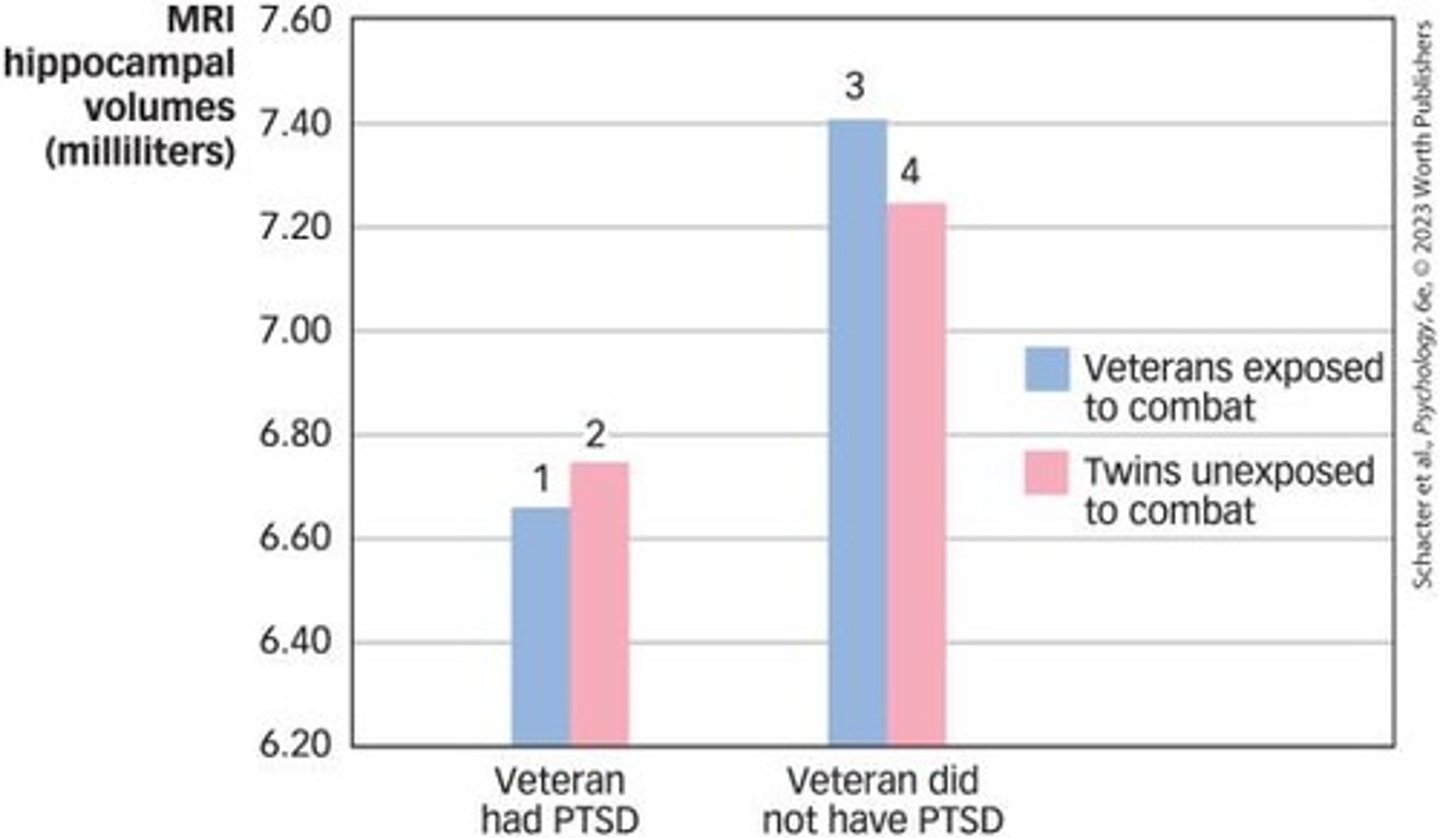
What are some neural correlates identified in PTSD?
Heightened amygdala activity, decreased medial prefrontal cortex activity, and smaller hippocampus.
What is major depressive disorder?
Characterized by a severely depressed mood that can lead to life-threatening actions.
What is the hereditary component of GAD?
GAD is twice as prevalent among women and has a hereditary component.
What factors contribute to the development of anxiety disorders?
Biological and psychological factors, including neurotransmitter imbalances and hypersensitivity to physiological signs of anxiety.
What is the impact of socioeconomic status (SES) on anxiety disorders?
Anxiety disorders occur more often in people from lower SES groups, especially in unpredictable environments.
How does labeling affect individuals with mental disorders?
Labeling can create a negative self-view and contribute to lower self-esteem and self-efficacy.
What is the importance of applying labels to disorders rather than individuals?
It helps to reduce stigma and negative self-perception associated with mental disorders.
What is the prevalence of OCD in the population?
Roughly 2% of the population suffers from OCD.
What role does avoidance play in PTSD?
Individuals with PTSD often avoid reminders of the traumatic event, which can hinder recovery.
What is the relationship between anxiety and depression?
People with anxiety disorders often experience comorbid depression.
What are some symptoms of GAD?
Restlessness, fatigue, concentration problems, irritability, muscle tension, and sleep disturbance.
What is the significance of brain imaging in PTSD research?
It has identified important neural correlates that help understand the biological underpinnings of PTSD.
What is the impact of classically conditioned phobias?
Phobias can develop through classical conditioning, leading to persistent fear responses.
What are the implications of a smaller hippocampus in PTSD?
It may indicate a preexisting condition that contributes to the development of PTSD.
What are common symptoms of mood disorders?
Feelings of worthlessness, lack of pleasure, lethargy, sleep and appetite disturbances.
What is persistent depressive disorder?
A mood disorder characterized by a moderately depressed mood lasting at least 2 years, with cognitive and bodily problems.
What is double depression?
A condition where major depressive disorder and persistent depressive disorder co-occur.
What is seasonal affective disorder (SAD)?
A type of depression that occurs in a seasonal pattern, often due to reduced light levels in colder seasons.
What neurotransmitters are associated with depression?
Norepinephrine and serotonin; depression may involve their depletion.
What is the diathesis-stress model in relation to depression?
A model suggesting that major stressful life events can trigger depression in genetically predisposed individuals.
What are the two main forms of depression?
Unipolar depression and bipolar depression.
What characterizes bipolar disorder?
Cycles of abnormal, persistent high mood (mania) and low mood (depression).
What are positive symptoms of schizophrenia?
Hallucinations and delusions.
What are negative symptoms of schizophrenia?
Deficits or disruptions of normal emotions and behaviors, such as emotional withdrawal and poverty of speech.
What is catatonic schizophrenia?
A form of schizophrenia where the individual may assume unusual postures and fail to move for hours.
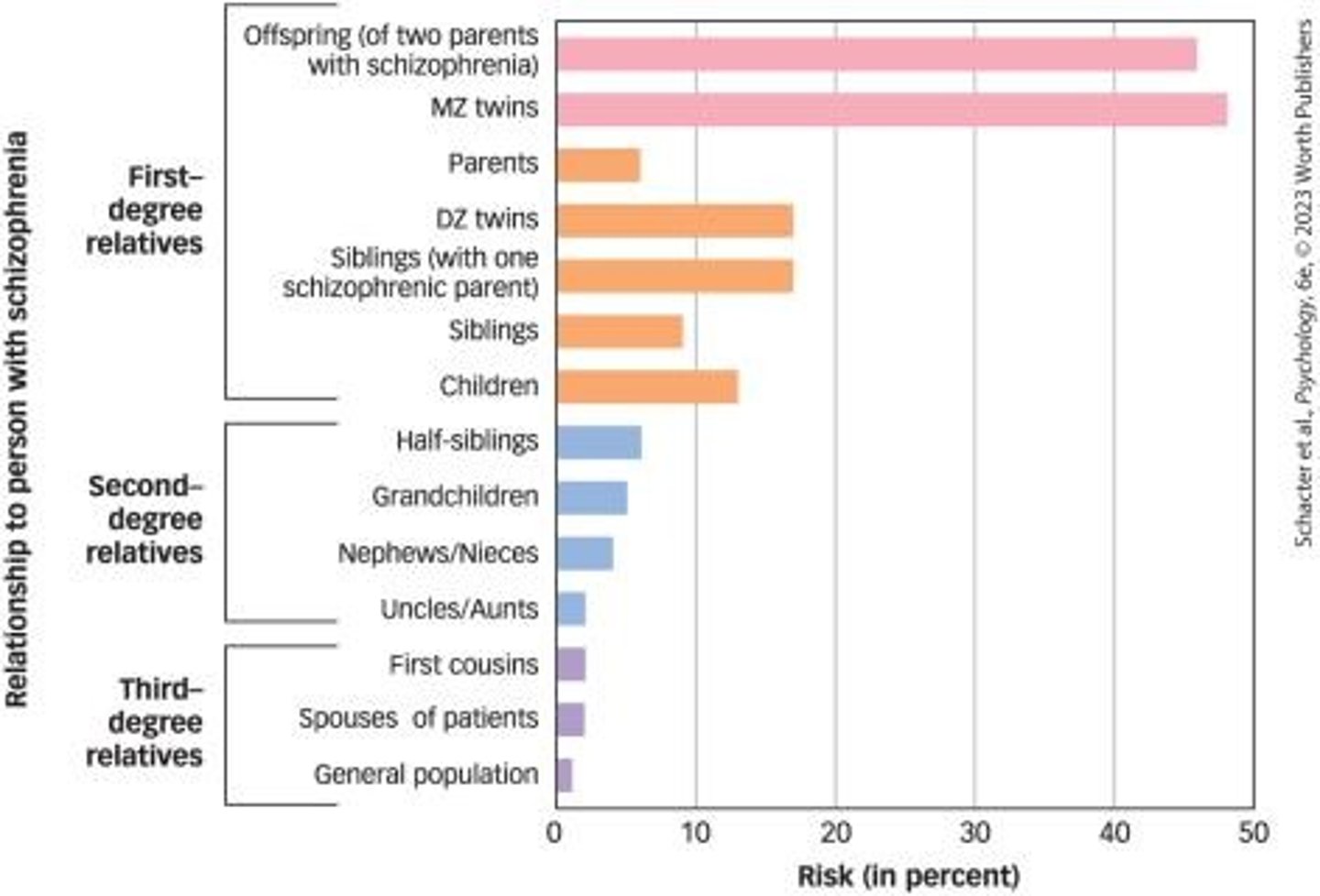
What is the concordance rate for schizophrenia in identical twins?
40% to 70%.
What environmental factors can affect the development of schizophrenia?
Prenatal and perinatal environments, as well as stressful life experiences.
What is the dopamine hypothesis in schizophrenia?
The theory that schizophrenia involves an excess of dopamine activity.
What role do genetic factors play in bipolar disorder?
Bipolar disorder has one of the highest rates of heritability.
What is the relationship between expressed emotions and schizophrenia relapse?
People with family members high in expressed emotion are more likely to relapse.
What cognitive symptoms are associated with schizophrenia?
Deficits in cognitive abilities, including executive functioning, attention, and working memory.
What is the lifetime risk of developing depression?
Approximately 1 in 9 people in Canada and the United States meet the criteria for depression at some point.
What is the significance of the biochemical model of depression?
It suggests that depression may involve neurotransmitter depletion, but is considered incomplete.
What are dysfunctional attitudes in the context of depression?
Negative thought patterns that contribute to the development and persistence of depression.
What is the impact of stressful life experiences on bipolar disorder?
They often precede manic and depressive episodes.
What is the importance of treatment willingness in depression?
Depression is linked to factors such as gender, socioeconomic status, hormones, and willingness to seek treatment.
What is the relationship between family support and recovery from schizophrenia?
Supportive families can positively affect recovery, while disturbed families may hinder it.
What are the symptoms of major depressive disorder?
Severe mood disturbances, feelings of worthlessness, and lack of pleasure.
What is the prevalence of depression in families with recurrent depression?
Higher rates of depression, suicide attempts, and divorce are noted.
What is the role of negative schema in depression according to Aaron Beck?
It involves biases in the interpretation of information, attention, and memory.
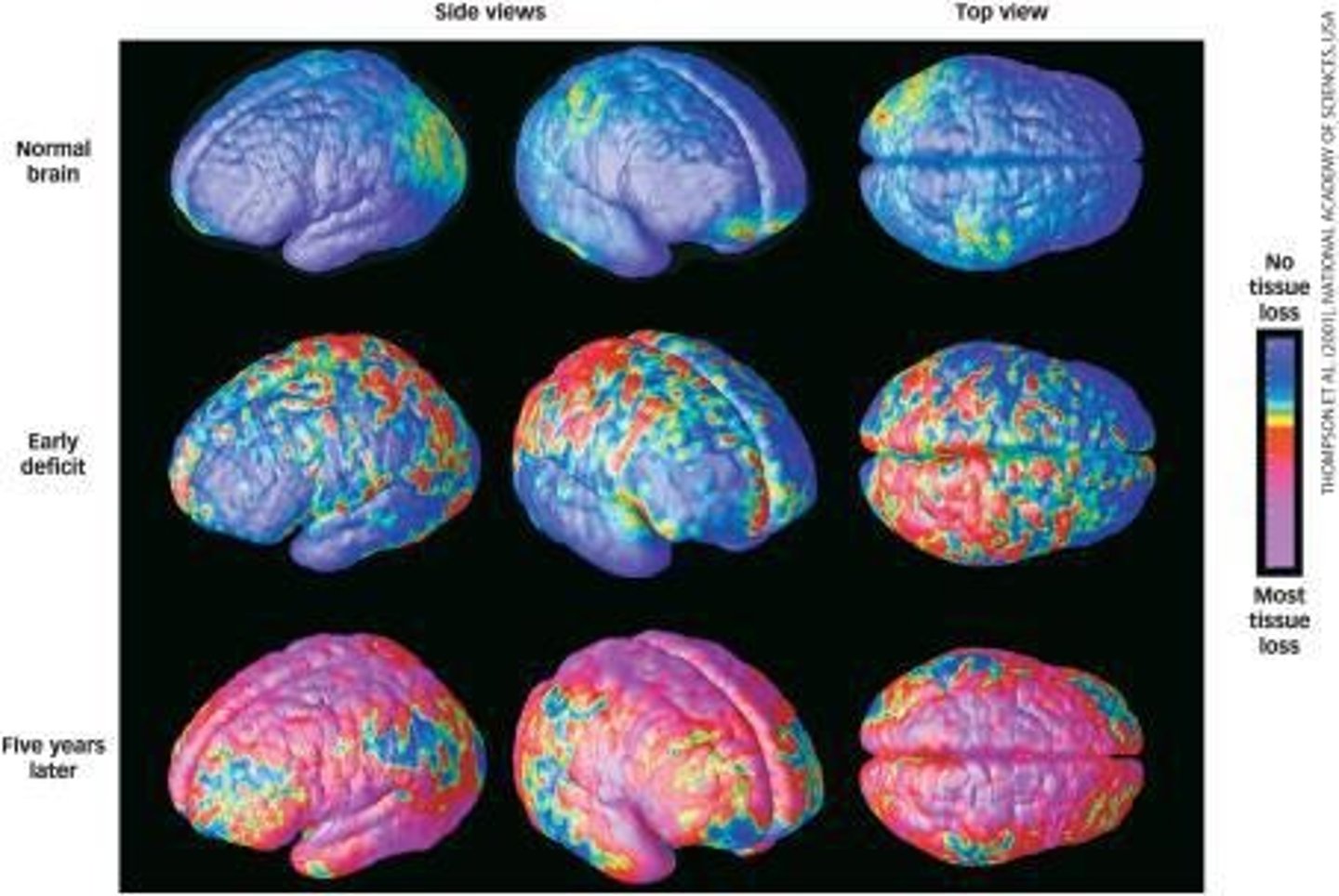
What is the significance of brain tissue loss in adolescent schizophrenia?
It may affect the development and recovery of the disorder.
What family environment may affect the development and recovery of schizophrenia?
A disturbed family environment characterized by extreme conflict, lack of communication, or chaotic relationships.
What model does the finding about family environment and schizophrenia support?
The diathesis-stress model.
What is the common outcome for disorders that begin in childhood or adolescence?
They may persist into adulthood or never develop after this developmental period.
Who is Elyn Saks and what is her significance in the context of schizophrenia?
Elyn Saks is a faculty member at USC who was diagnosed with schizophrenia and credits her success to medication, therapy, and personal techniques.
What are some techniques Elyn Saks developed to manage her schizophrenia?
Journaling, controlling sensory input, and management of symptoms at work.
What is Autism Spectrum Disorder (ASD)?
A condition beginning in early childhood characterized by persistent communication deficits and restricted, repetitive patterns of behaviors, interests, or activities.
What is the estimated prevalence of Autism Spectrum Disorder in children?
Approximately 230 per 10,000 (1 in 44) children.
What are the three different presentations of Attention-Deficit/Hyperactivity Disorder (ADHD)?
Predominantly inattentive symptoms, predominantly hyperactive/impulsive symptoms, and combined presentation.
What is the main characteristic of Conduct Disorder?
A persistent pattern of deviant behavior involving aggression towards people or animals, destruction of property, deceitfulness, or serious rule violations.
What are the three clusters of personality disorders listed in DSM-5-TR?
Odd/eccentric, dramatic/erratic, and anxious/inhibited.
What defines Antisocial Personality Disorder (APD)?
A pervasive pattern of disregard for and violation of the rights of others, beginning in childhood or early adolescence.
What is the occurrence rate of Antisocial Personality Disorder in the general population?
3.6%, occurring in men three times more than in women.
What is the difference between suicidal behavior and nonsuicidal self-injury?
Suicidal behavior is intentional self-inflicted death, while nonsuicidal self-injury is deliberate destruction of body tissue without intent to die.
What is the second most common cause of death for people aged 15 to 34 in Canada?
Suicide.
What is the trend of nonsuicidal self-injury (NSSI) across different ages?
Absent in childhood, increases in adolescence, and decreases across adulthood.
What are some motives for suicide?
Escape from an intolerable state of mind or an impossible situation.
What is the significance of early detection and treatment for Autism Spectrum Disorder?
It can lead to positive outcomes for those diagnosed with ASD.
What is the role of genetic and neurobiological influences in understanding nonsuicidal self-injury?
Understanding is limited, and effective medication is still being researched.
What is the relationship between ADHD and biological influences?
ADHD is unlikely to emerge from a single cause or dysfunction; it has a strong biological influence.
What is the importance of strengths-based approaches in mental health?
They can help dispel the pessimism often associated with mental illness.
What is the DSM-5-TR's current classification of Autism Spectrum Disorder?
It subsumes multiple disorders that were previously considered separate.