Psych Quiz 4: Personality, Disorders, and Treatments
 Call Kai
 Learn
Learn Practice Test
 Spaced Repetition
 Match
Match Flashcards
 Knowt Play
1/36

Earn XP
Description and Tags
PSY-0001 Tufts (textbook definitions)
Name | Mastery | Learn | Test | Matching | Spaced | Call with Kai |
|---|
No analytics yet
Send a link to your students to track their progress
37 Terms
psychodynamic
movement of psychological energy within a person; freud’s psychodynamic theory
id
the part of the psyche that contains innate instincts and drives, often seeking immediate gratification.
libido
psychic energy associated with sexual drives and desires
ego
mediates the id (instincts) and societal demand to produce socially acceptable behavior
superego
the voice of conscience; morality & similar to parental authority. guides moral behavior
defense mechanisms
unconscious strategies that deny/distort reality to protect one from conflict/anxiety
repression
an idea/memory/emotion is blocked from consciousness due to trauma
projection
attributing one’s own unacceptable feelings to someone else; projecting feelings about being gay to be homophobic
displacement
wrongfully directing personal feelings toward others who have no involvement
regression
reverting to a previous phase of psychological development as a response to anxiety
denial
refusal to admit a situation has/is occured/ing
psychosexual stages
sexual energy matures as a child grows older
oral stage
babies experience the world through the mouth
adults seek oral gratification through smoking, eating, or nail-biting
anal stage
toilet training & control of bodily wastes
adults can be “anal”; overbearing OR the opposite, disorganized
phallic (oedipal) stage/oedipus complex
wishing to be with a different-sex parent and get rid of the same-sex parent
think of oedipus rex
latency stage
nonsexual & focused on conflict w/ parents, the world, and self
genital stage
puberty → adult sexuality; personality shaped by ego preparation/strength to balance id and superego
collective unconcious
the stories, myths, and figures told across cultures are interrelated
archetypes
the universal memories/stories shared across time
ex: images, tales, legends, religious faith
validity
a test must measure what it is supposed to measure
reliability
a test should yield consistent results across circumstances & time
myers-briggs type indicator (MBTI)
classic personality test; very unreliable
minnesota multiphasic personality inventory (MMPI)
hundreds of true/false statements for clinical assessment of anxiety, obsessiveness, conduct problems, social discomfort, paranoia, etc.
objective tests (inventories)
standardized questionnaires that evaluate multiple aspects of personality
made to identify traits & mood awareness
factor analysis
identifying clusters of personality scores that are highly correlated and fall under certain traits
big 5 (OCEAN)
openness: being open to new experiences
conscientiousness: being responsible and reliable
extraversion: being outgoing & sociable, enjoying being the center of attention
agreeableness: being good-natured, cooperative, and forgiving
neuroticism: extent of anxiety & feeling negatively (guilt/resentment)
temperament
dispositions to responding to the environment
reactivity, soothability, and positive/negative emotionality
heritability
how the variability of a trait can be attributed to genetic differences
social cognitive learning theory
people acquire central traits from learning history and resulting expectations
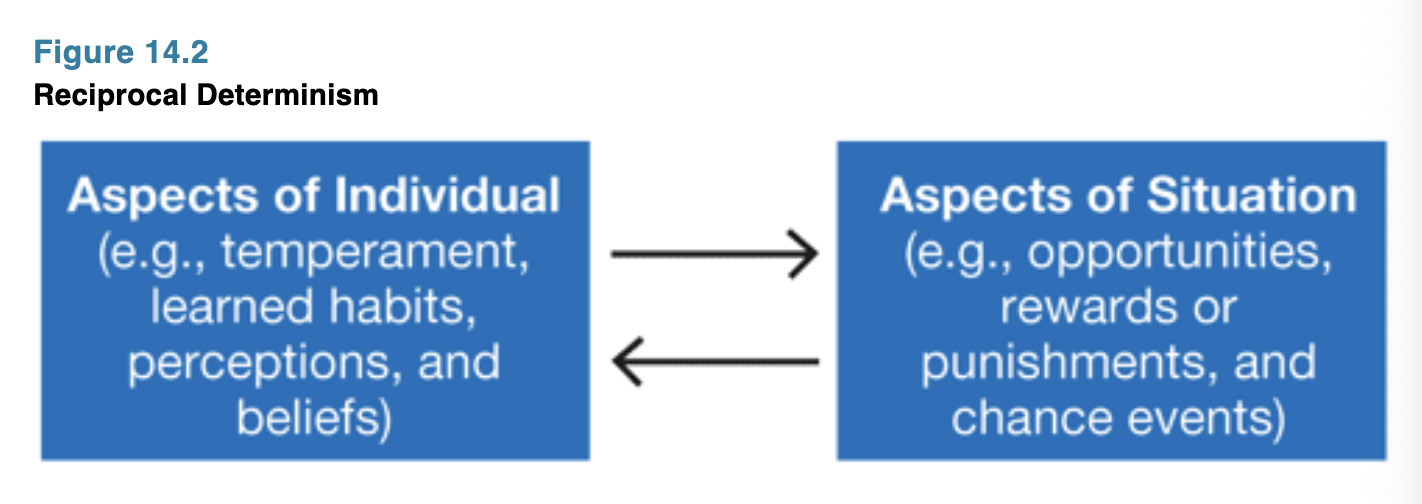
reciprocal determinism
temperament, habits, and beliefs influence social response, friends, and situations––situations influence beliefs and habits, rewarding some and extinguishing others
nonshared environment
the unique chance experiences that lead people who share genes to form different temperaments
individualist vs. collectivist culture
individualist; independence takes precedence over the needs of the group
collectivist: group harmony takes precedence over individual’s wishes
humanist psychology
the emphasis of human growth, achivement, and fulfillment
self-actualization
reaching a life that is meaningful, challenging, and satisfying
unconditional positive regard
love and support for the people we are without strings attatched
existentialism
inevitable challenges are the search for the meaning of life & taking responsibility for our actions
life narrative approach to personality
the story of each person and their development overtime explains ourselves and makes meaning of past experiences