Psychopathology chapter 11 - Disruptive, Impulse-Control, and Conduct Disorders
 Call Kai
 Learn
Learn Practice Test
 Spaced Repetition
 Match
Match Flashcards
 Knowt Play
1/17

There's no tags or description
Looks like no tags are added yet.
Name | Mastery | Learn | Test | Matching | Spaced | Call with Kai |
|---|
No analytics yet
Send a link to your students to track their progress
18 Terms
conduct disorder
a childhood and adolescent mental health disorder marked by a persistent pattern of violating rules and the rights of others
childhood-onset conduct disorder
a subtype of conduct disorder where at least one significant symptoms appears before age 10
adolescent-onset conduct disorder
a subtype of conduct disorder where no symptoms appear before age 10, and the problematic behaviors begin during the teen years.
oppositional defiant disorder (ODD)
a childhood behavioral disorder marked by a pattern of angry, irritable old and defiant, argumentative behavior, especially towards authority figures
antisocial personality disorder (ASPD)
a chronic mental health disorder characterized by a long-term pattern of disregard for the rights of others and social norms. its considered the adult continuation of severe conduct problems from childhood.
intermittent explosive disorder
disruptive impulse-control disorder characterized by recurrent, sudden episodes of aggressive outbursts that are disproportionate to the situation.
affect lability
a clinical symptom characterized by rapid, exaggerated, and involuntary shifts in mood or emotional expression, such as sudden crying, laughter, or anger
psychopathy
a personality construct characterized by a pattern of lack of empathy, shallow emotions, and persistent antisocial behavior.
How do you distinguish between ODD, DMDD, Conduct, ASPD, and IED? What are the
defining features of each which set them apart from the others? (e.g., Duration, Type of
behavior? How consistent is the mood throughout the day?)
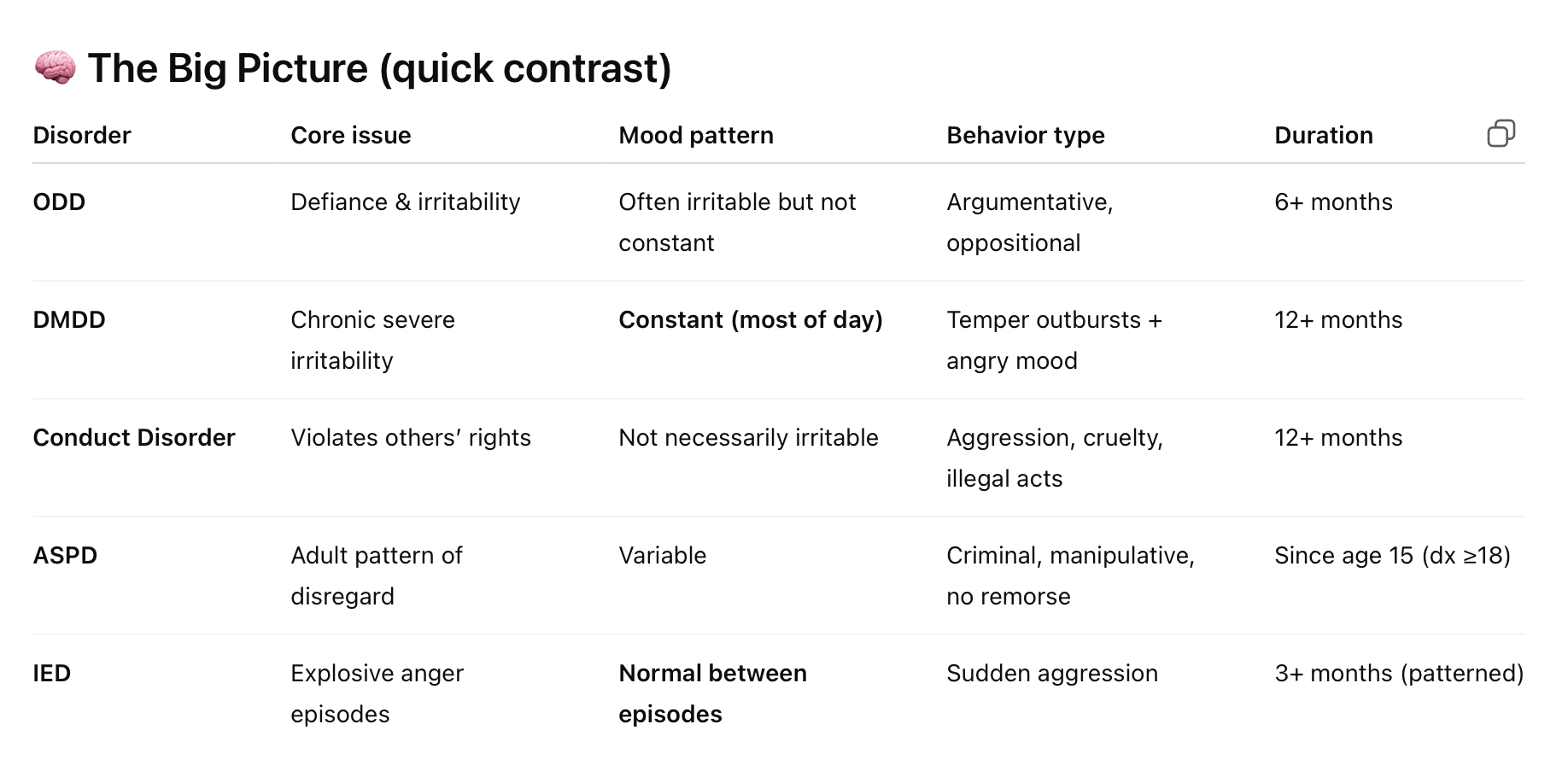
What are the main contributors to ODD and conduct disorder?
biology, parenting styles, environmental stress
conduct disorder later in life?
can be ASPD
Which specifier for conduct disorder is associated with symptoms persisting into adulthood?
child onset much more likely than adolescent onset
Is being a “sociopath” or “psychopath” the same as being diagnosed with personality
disorder?
no
What are the main treatments for ODD and conduct disorder? Which medication is most often
prescribed for conduct disorder? Why?
Treatment for ODD and Conduct Disorder (CD) is mostly behavioral and family-based, with meds used only when needed (especially in CD).
meds most used are actually stimulants, often helps functioning
What are the main contributors to IED? What are the main treatments?
IED is best understood as a mix of biological vulnerability + poor emotion regulation + environmental learning. CBT, SSRIs
How might the stress response system be different between ODD/CD and IED?
IED involving acute, explosive reactions to minor stressors, while ODD/CD often involves more chronic, proactive, or defensive behavioral patterns.
Parent Management Training – what theory is this based on?
Parent Management Training (PMT) is primarily based on behavioral learning theory, specifically operant conditioning and applied behavior analysis (ABA).
Are “Troubled Teen” treatments effective and recommended?
no fck dat