Histology, function, health, virus, dermatitis
 Call Kai
 Learn
Learn Practice Test
 Spaced Repetition
 Match
Match Flashcards
 Knowt Play
1/69

There's no tags or description
Looks like no tags are added yet.
Name | Mastery | Learn | Test | Matching | Spaced | Call with Kai |
|---|
No analytics yet
Send a link to your students to track their progress
70 Terms
epidermis, dermis, and hypodermis/ subcutis
layers of skin
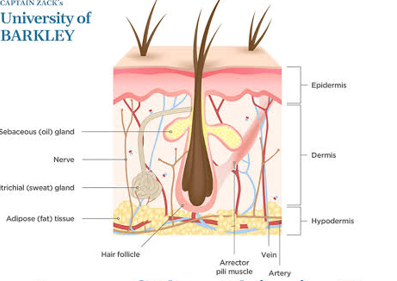
hairshaft, pili-arector mm, sebaceous/ oil gland, hair follicle, nerve fiber, vein, nerve, artery, sweat/sudoriferous gland, sensory nerve ending for touch (epidermis, dermis, hypodermis)
specific skin structures
➢ stratum basale – cuboidal cells which replenishes lost epidermal surface cells
➢ stratum spinosum – thickest in hairless regions wherein keratinization and desquamation take place
➢ stratum granulosum – granules of keratin present
➢ stratum lucidum – clear due to accumulation of keratin fibers in cytoplasm; not present in all species; when present are in areas which wear and tear
➢ stratum corneum – layers of dead, highly keratinized flattened cells
BSGLC
layers of epidermis:
stratum basale
cuboidal cells which replenishes lost epidermal surface cells
stratum spinosum
thickest in hairless regions wherein keratinization and desquamation take place
stratum granulosum
granules of keratin present
stratum lucidum
clear due to accumulation of keratin fibers in cytoplasm; not present in all species; when present are in areas which wear and tear
stratum corneum
layers of dead, highly keratinized flattened cells
Meissner’s (tactile/touch)
Pacinian (pressure)
Krause (cold)
Ruffini’s (heat)
MPKR
sensory nerve endings
Meissner’s
sensory nerve endings
(tactile/touch)
Pacinian
sensory nerve endings
(pressure)
Krause
sensory nerve endings
(cold)
Ruffini’s
sensory nerve endings
(heat)
anagen
catagen
telogen
ACT
hair cycle
anagen – growing phase
catagen – transitory phase between growing and resting phases
telogen – resting phase of hair cycle
______ – growing phase
_______ – transitory phase between growing and resting phases
_______ – resting phase of hair cycle
barrier – by limiting water and nutrient loss
temperature regulation – through sweating
sensory perception – through nerve endings responsible for sensation of touch, pressure, heat, cold, and pain stimuli
blood pressure control - through vasoconstriction or vasodilation of arterioles on it
secretion of sebum and excretion of sweat
flexibility – by the aid of connective tissues
synthesis - vitamin D/ calciferol synthesis under influence of sunlight
storage of nutrients
immune function – by the aid of skin substances with natural antibacterial & antifungal properties
pigmentation – melanin secretion by melanocytes for skin protection against ultraviolet radiation
BTSBS FSSIP
Functions of Skin
barrier
Functions of Skin
by limiting water and nutrient loss
temperature regulation
Functions of Skin
– through sweating
sensory perception
Functions of Skin
through nerve endings responsible for sensation of touch, pressure, heat, cold, and pain stimuli
blood pressure control
Functions of Skin
through vasoconstriction or vasodilation of arterioles on it
flexibility
Functions of Skin
by the aid of connective tissues
synthesis
Functions of Skin
vitamin D/ calciferol synthesis under influence of sunlight
immune function
Functions of Skin
by the aid of skin substances with natural antibacterial & antifungal properties
pigmentation
Functions of Skin
melanin secretion by melanocytes for skin protection against ultraviolet radiation
exogenous
endogenous
Factors Affecting the Condition/ Health of Skin
physical
chemical
nutritional
infectious
actinic
allergic
exogenous types
actinic
chemical changes due to radiation
age
heredity
congenital
metabolic
hormonal
immunologic
emotional
internal diseases
AHCMH IEI
endogenous types
poxviruses
herpesviruses
rickettsial organisms
Dermatophilus congolensis (ruminants)
Bacteria
mycotic/ fungal organisms
Microorganisms That Causes Skin Diseases
– orf/ contagious ecthyma, human/ chickenpox (variola), swinepox
poxviruses
herpes simplex virus, (causes lesions on skin around the mouth)
herpesviruses
R. rickettsii (RMSF), R. akari (rickettsialpox)
rickettsial organisms
causes dermatophilosis and streptotrichosis
Dermatophilus congolensis (ruminants)
Bacteria
dermatophytes: Microsporum, Trichophyton and Epidermophyton; subcutaneous: Sporothrix, Madurella
mycotic/ fungal organisms
insect bites (lice and fleas)
acarid bites (ticks and mites)
burrowing activities of mites
migrating stages of parasites
General Causes of Parasitic Dermatitis
acute or chronic inflammation
Major Effects of Skin Parasites
activation of inflammatory cells:
acute phase: neutrophils and eosinophils
chronic phase: plasma cells, macrophages and proliferating fibroblasts
activation of inflammatory cells:
acute phase: ______ and _______
chronic phase: _____ cells, ______ and proliferating ______
stylostome
sucking tubes of chiggers
protozoan – Globidia sp. (Besnoitia)
simuliasis – Simulium (blackflies)
hypodermyiasis – Hypoderma bovis and H. lineatum (larva)
gasterophilomyiasis – Gasterophilus (larva in mouthparts of horse)
trombiculiasis – Trombicula mites (chiggers: larva mites)
gamasoidiasis – Dermanyssus gallinae, Ornithonyssus sylviarum and O. bursa
acariasis
trematodiasis
nematodiasis
PSHGT GATN
Parasites That Causes Dermatitis
Globidia sp. (Besnoitia)
Parasites That Causes Dermatitis
protozoan
Simulium (blackflies)
Parasites That Causes Dermatitis
simuliasis
Hypoderma bovis and H. lineatum (larva)
Parasites That Causes Dermatitis
hypodermyiasis
Gasterophilus (larva in mouthparts of horse)
Parasites That Causes Dermatitis
gasterophilomyiasis
Gasterophilus
(larva in mouthparts of horse)
Trombicula mites (chiggers: larva mites)
Parasites That Causes Dermatitis
trombiculiasis
Dermanyssus gallinae, Ornithonyssus sylviarum and O. bursa
Parasites That Causes Dermatitis
gamasoidiasis
Sarcoptes
Demodex
Cnemidocoptes
Psoroptes
Chorioptes
Notoedres
Cheyletiella
Argas persicus
Laminosioptes cysticola
SDCPC NCAL
acariasis
Sarcoptes
sarcoptic mange
Demodex
(demodectic mange)
Cnemidocoptes
(scaly leg
Psoroptes (psoroptic mange
suck lymph and tissue fluids)
Chorioptes
chorioptic mange
Notoedres
(notoedric mange)
Cheyletiella
walking dandruff mite
Laminosioptes cysticola
subcutaneous mite of poultry
schistosome metacercariae
Collyriclum faba
trematodiasis
schistosome metacercariae
causing cercarial dermatitis
Collyriclum faba
causing subcutaneous cyst in fowl
habronemiasis (summer sores);
strongyloidiasis: Strongyloides stercoralis and Rhabditis strongyloides (causes papular and pustular dermatitis);
microfilariasis – Onchocerca, Parafilaria, Dirofilaria (in tropics and warmer regions; there is dermatitis and skin ulceration);
elaeophoriasis – Elaephora schneideri (microfilaria also causes dermatitis )
creeping eruptions in human – Ancylostoma spp.
nematodiasis
habronemiasis
summer sores
Strongyloides stercoralis and Rhabditis strongyloides
strongyloidiasis(causes papular and pustular dermatitis)
– Onchocerca, Parafilaria, Dirofilaria
microfilariasis (in tropics and warmer regions; there is dermatitis and skin ulceration)
Elaephora schneideri
elaeophoriasis
microfilaria
also causes dermatitis
Ancylostoma spp.
creeping eruptions in human
benign
malignant
Neoplastic Disorders of Skin
benign
marked by disorganization especially of the granular layers of the epidermis, swollen and eosinophilic cytoplasm, and sometimes contain viral particles of poxvirus
malignant
hyperchromatism (with darker color of cells), increased mitotic activity, enlargement of cell nuclei, and can lead to carcinoma
malignant
melanoma, malignant melanoma, papilloma, squamous cell carcinoma