Cell Communication and Signaling
 Call Kai
 Learn
Learn Practice Test
 Spaced Repetition
 Match
Match Flashcards
 Knowt Play
1/99

There's no tags or description
Looks like no tags are added yet.
Name | Mastery | Learn | Test | Matching | Spaced | Call with Kai |
|---|
No analytics yet
Send a link to your students to track their progress
100 Terms
How do cells communicate
Through a large variety of extracellular signals
Cells must __ signals that they receive from other cells to help __ their responses
interpret, coordinate
What does cellular communication involve, regarding signals
Involved converting signals from one form to another
What is process of converting signals from one form to another called
Signal transduction
What occurs in signal transduction
elicits a SPECIFIC cellular response which causes changes in gene expression, protein expression, morphological changes, etc.
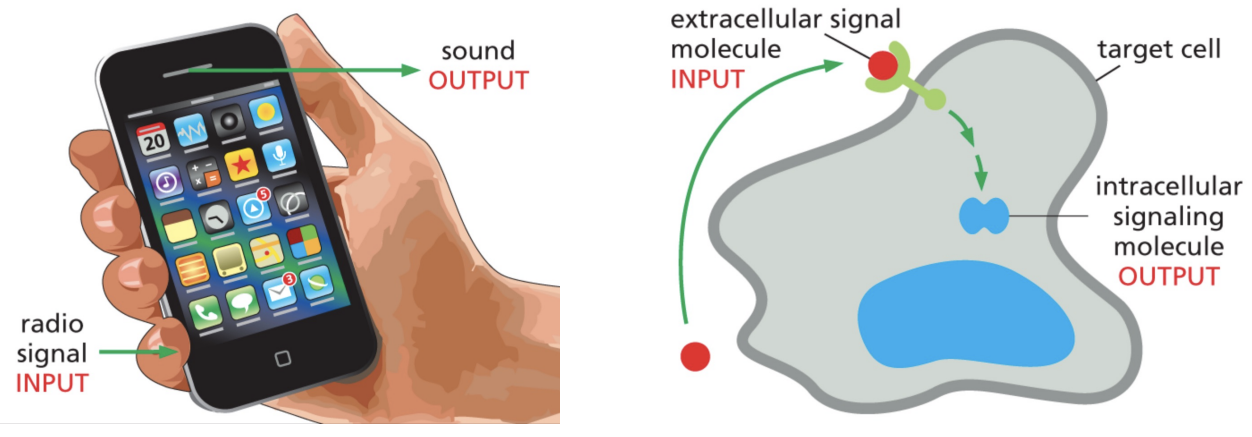
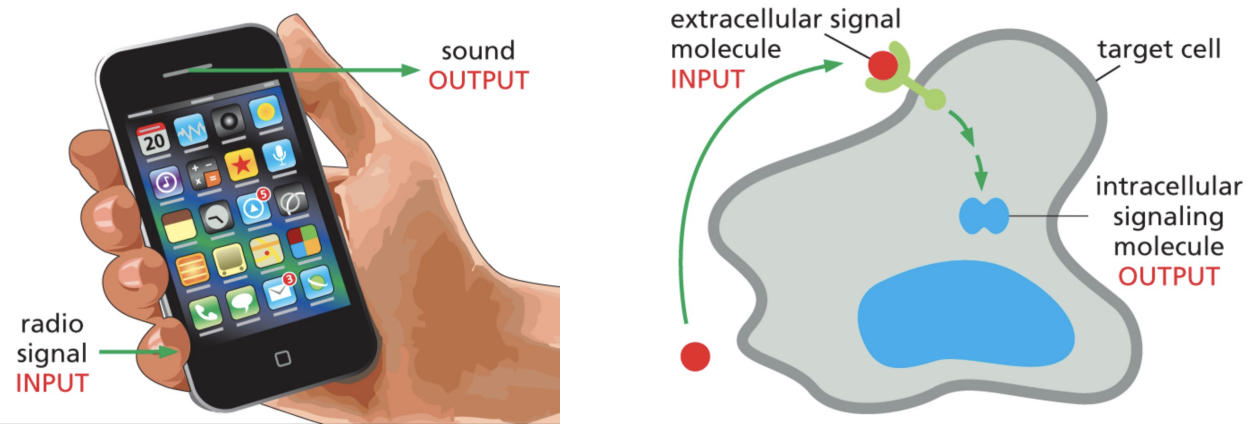
How does typical communication between cells occur
the signaling cell produces a signal molecule that’s detected by target cell, which have receptor proteins that recognize + response to the signal molecule.
How does signal transduction begin
When receptor protein on target cell receives an incoming extracellular signal and converts it to an intracellular signal.
What do extracellular signal molecules do
stimulate a target cell by binding to its receptor proteins, including intracellular and cell-surface receptors
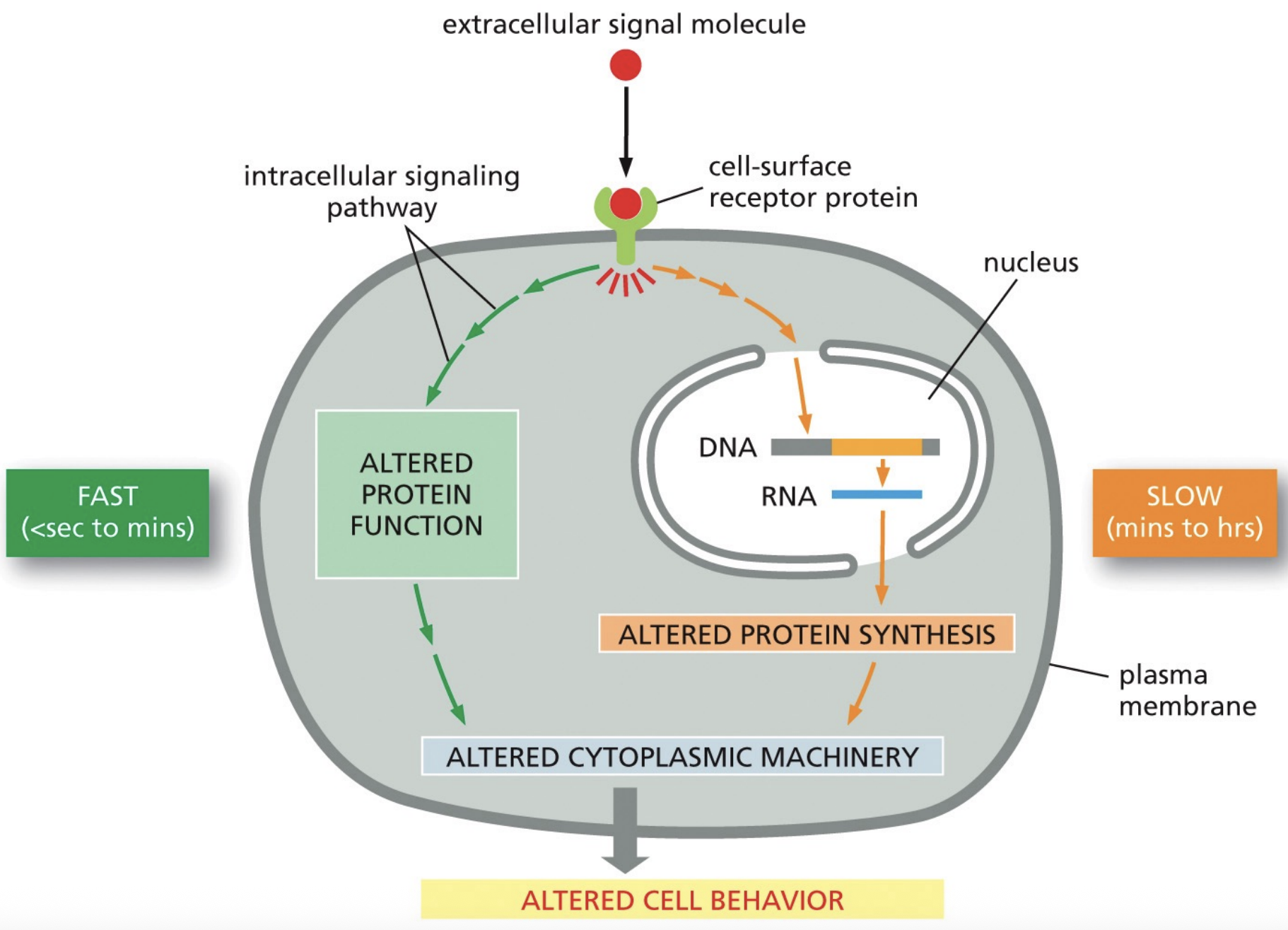
In what ways can extracellular signals act?
slowly or rapidly
What are 4 types of cell communication
endocrine (estrogen, insulin), paracrine (egf, bmp, wnt), neuronal (acetylcholine, GABA), contact-dependent (delta-notch)
Endocrine signaling
The most “public” style of communication, broadcasts a signal (hormones) throughout whole body through secretion into bloodstream (or plant’s sap)
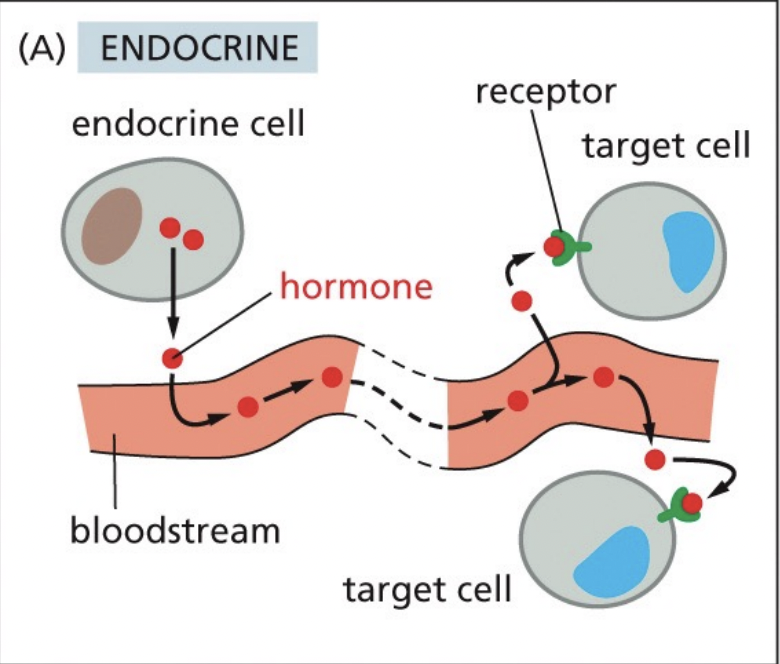
What cells produce hormones
endocrine cells
Example of endocrine signaling + where they’re produced
Adrenaline: hormone produced by adrenal gland
Insulin: peptide hormone, produced by the b cells of the pancreas
What does the pituitary gland do
endocrine gland that produces multiple hormones regultating many different organs
What does excess growth hormone lead to
Acromegalia
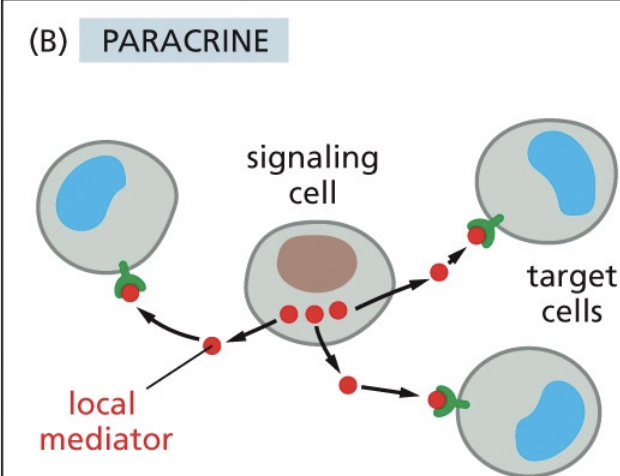
What’s paracrine signaling
Its a local mediator and signal molecules regulating the inflammatory response work in this manner
What’s autocrine signaling
Cells secrete factors that they express receptors for and stimulate their own growth/survival (ex: cancer cells)
How are short range signals released
By neighboring cells that function locally
Whats EGF
epidermal growth factor: a protein that stimulates cell proliferation
Whats BMP
bone morphogenic protein, a protein that promotes differentiation
Whats WNT
Wingless and INt-1, a protein that stimulates cell proliferation
What’s neuronal signaling
Neuronal signals are transmitted electrically along a nerve cell axon. When this electrical signal reaches the nerve terminal, it causes the release of neurotransmitters onto adjacent arget cells (the process by which neurons communicate using electrical/chemical signals to transmit info thru nervous system)
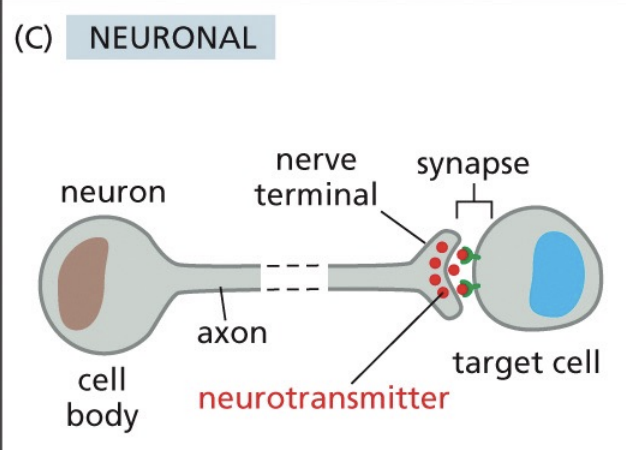
Example of neuronal signaling
Acetylcholine (excitatory neurotransmitter at nerve-muscle synapses and CNS) and GABA (inhibitory neurotransmitter in CNS)
How is signal transmitted and what occurs after
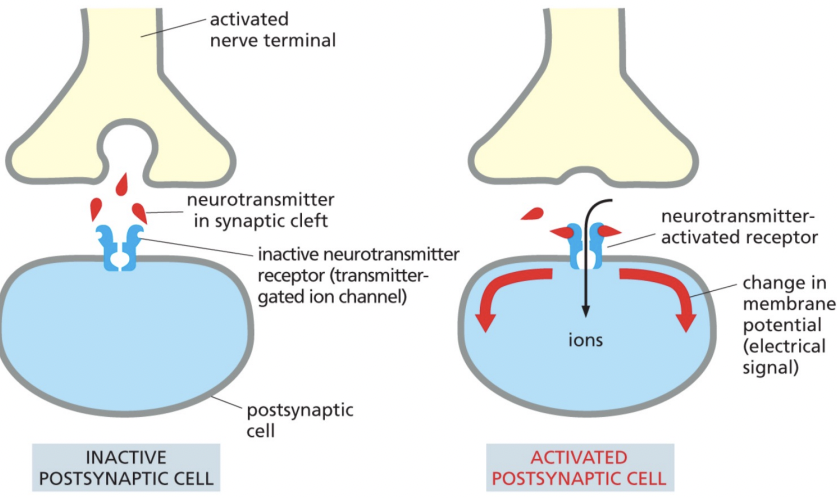
Neurotransmitters are transmitted along axons to remote target cells. When action potentials reach the axon terminal, electrical signals are converted into chemical signals in the form of neurotransmitters. The neurotransmitters then diffuses across synaptic gap to reach membrane of target cells
What’s juxtacrine signaling/contact-dependent signaling
Cells make direct physical contact through signal molecules lodged in the plasma membrane of the signaling cell and receptor proteins embedded in the plasma membrane of the target cell (transmembrane protein signaling between two neighboring cells)
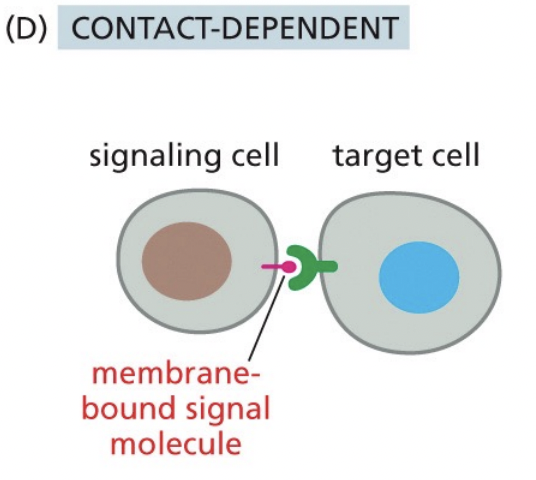
Example of juxtacrine signaling
in embryonic development, contact-dependent signaling allows adjacent cells to become more specialized to form different cell types
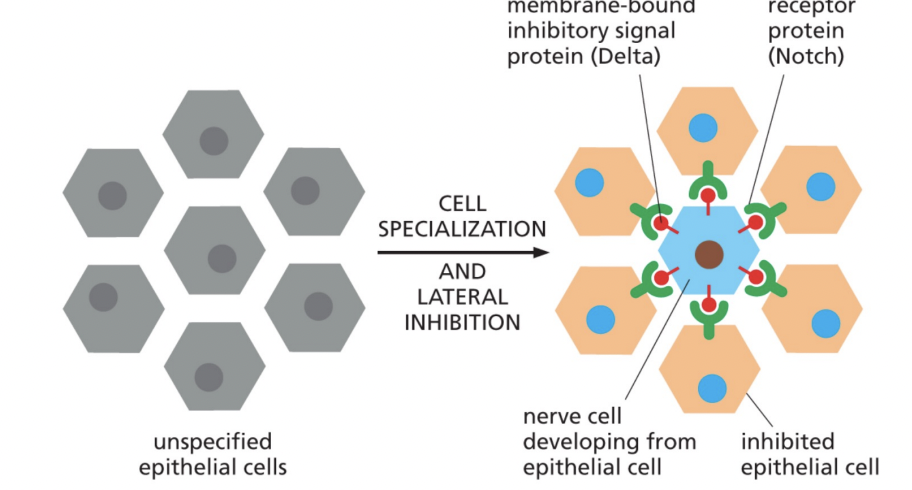
What is the notch receptor
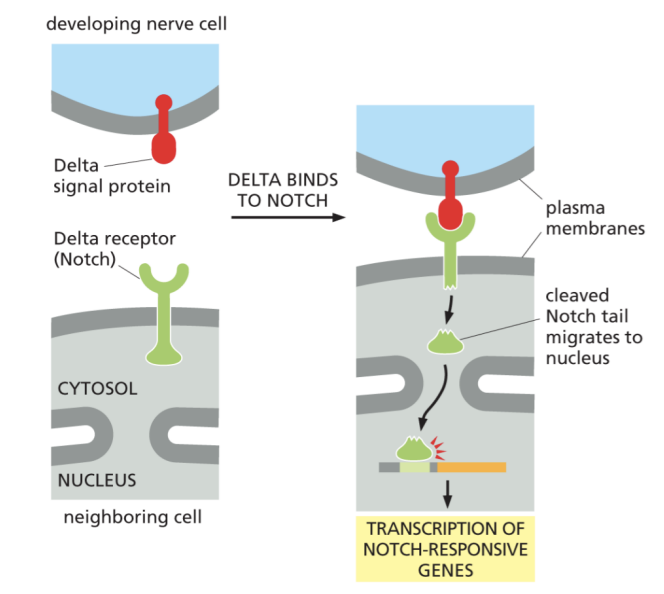
a transcription factor (delta receptor)
What is delta and what does it do
membrane-bound signal protein; inhibits neighboring cells from becoming specialized in the same way as the signaling cell
What happens when delta binds to its receptor, notch
The receptor is cleaved. The released part of the cytosolic tail of notch migrates to the nucleus, where it activates Notch-response genes, such as genes that inhibit neuronal differentiation in fruit flies
How many signals are cells of multi-cellular organisms exposed to
hundreds
What determines whether or not cells response to the hundreds of signals they r exposed to
if the cells possess a receptor protein for that specific signal
Is the message the extracellular signal molecule
No, the message depends on how the target cell receives/interprets the signal
Example of same signal, different responses
Acetylcholine: induces different repsonses depending on cell type and receptor
In heart-pacemaker cell, causes decreased rate of firing
In salivary gland cell, causes secretion
In skeletal muscle cell, causes contraction
2 large categories of extracellular signals
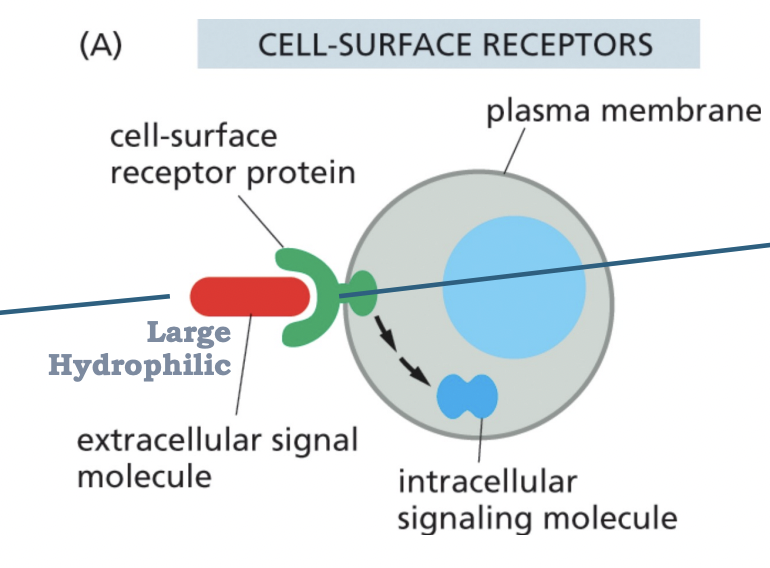
(1) too large/too hydrophilic to cross membrane, (2) small enough and hydrophobic enough to diffuse across plasma membrane
What do large and/or hydrophilic molecules rely on to relay message across membrane
membrane receptors
What do small and/or hydrophobic molecules rely on to relay message across membrane
diffusion across plasma membrane or binding to intracellular enzymes/intracellular receptor proteins
Examples of cell-surface receptors and their signals
(a) growth factors (EGF) → EGFR or ErbBi
(b) peptide hormones (insulin) → insulin receptor (IR)© neurotransmitter (acetylcholine) → nicotinic acetylcholine receptor
Examples of intracellular receptors and their signals
(a) steroid hormones (Estrogen or cortisol) → estrogen-cytoplasmic receptor and cortisol-cytoplasimc receptor
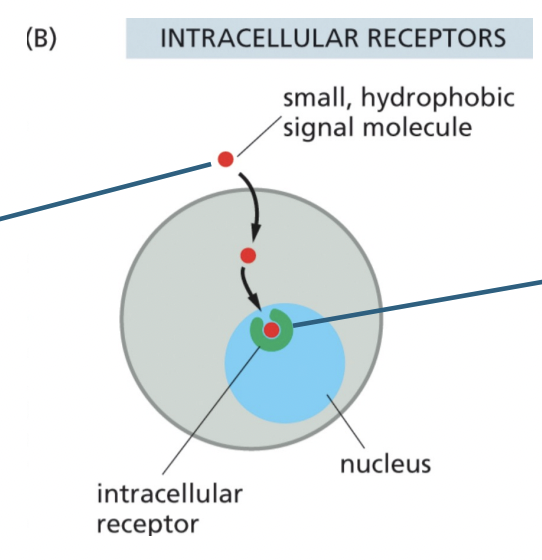
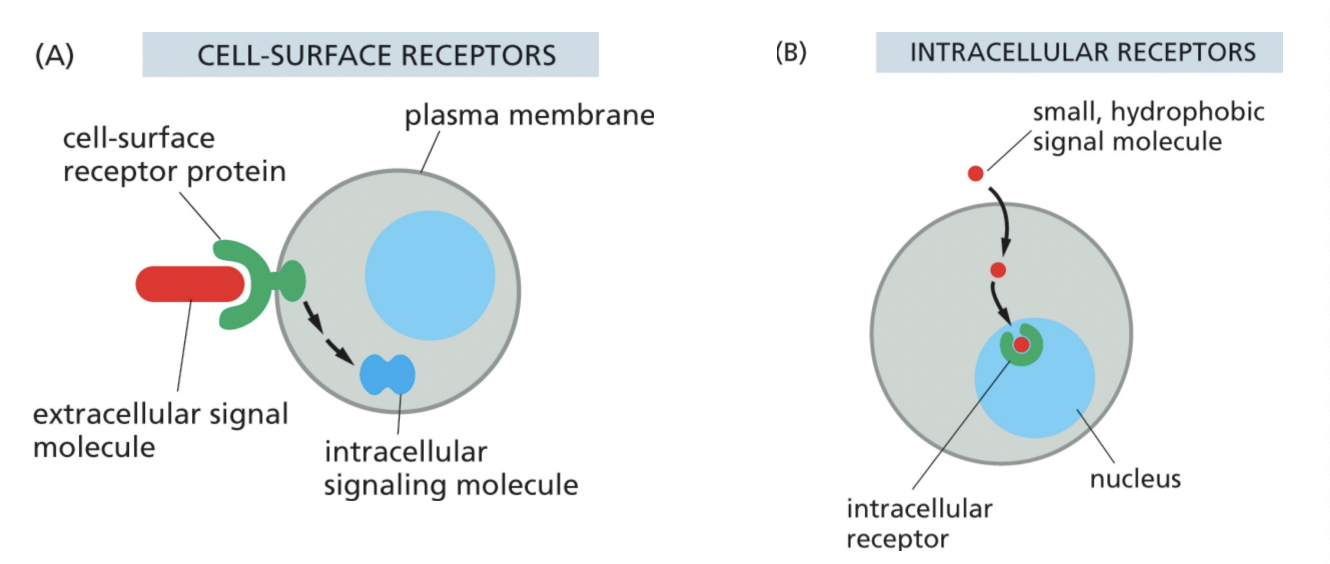
What are two options that extracellular signal molecules bind to
cell-surface receptor or intracellular receptor
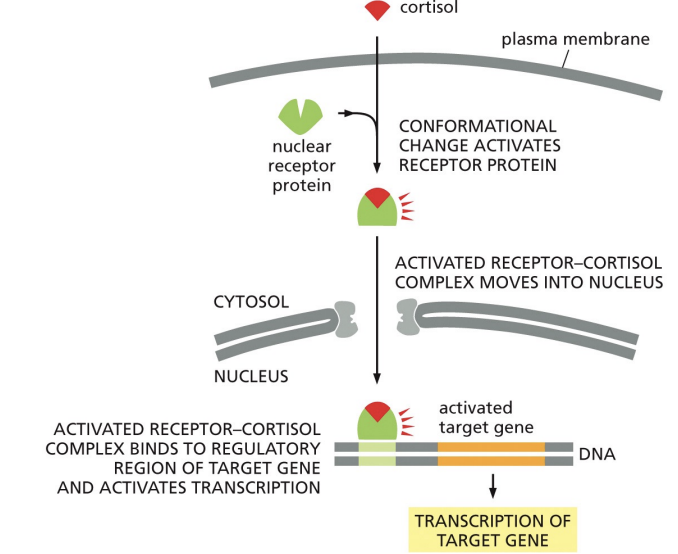
What is cortisol receptor + process of cortisol binding
receptor located inside cell that is translocated to the nucleus → cortisol binds to nucleaer receptor protein after conformation change that activates it, the activated complex moves into nucleus and binds to regulatory region of target gene and activates transcription
Whats combinatorial signaling
Process where multiple signaling pathways interact to produce a more complex or finely-tuned cellular response
Questions regarding combinatorial signaling
(1) Cell in our bodies can be exposed to many pos and neg signals: how does the cell coordinate appropriate resposnes and what happens if they dont
(2) Some signals function in a concentration-dependent manner: how do concentration differences elicit different responses
(3) responses to signals require the appropriate receptors that are expressed in a highly cell-type specific manner: how does cell know to express correct receptors?
How do extracelular signals activate intracellular signaling to change the behavior of the cell
1/2) The receptor protein performs the 1st signal transduction step: It binds the extracellular signal (primary messenger).
3) The receptor generates new intracellular signals (secondary messengers), in which the message is passed “downstream” from one molecule to another.
4) Until an enzyme/protein/regulator is kicked into action.
5) The final outcome is called the response of the cell.
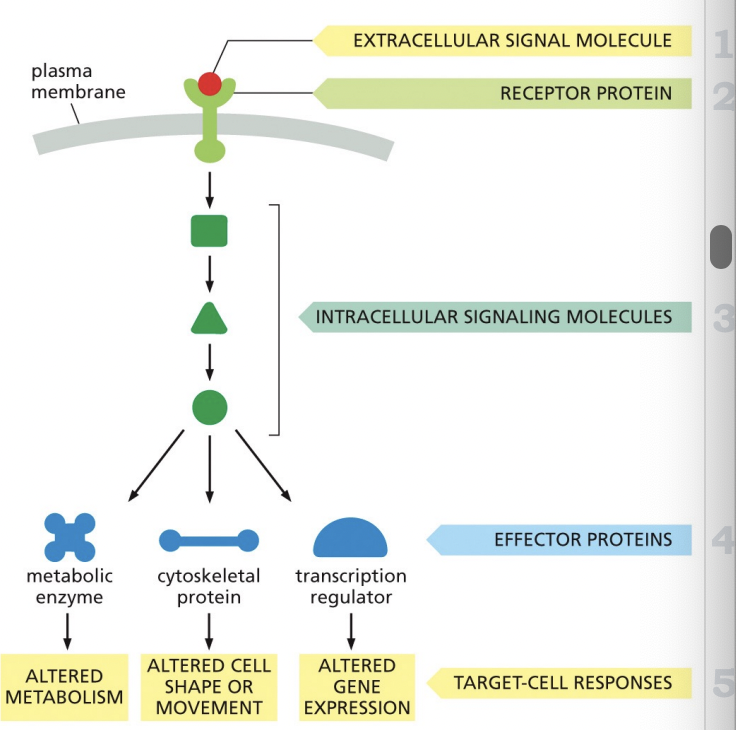
What crucial functions can intracellular signaling pathways perform
1) Relay the signal onward.
2) Amplify the signal received, make it stronger so that only a few intracellular signaling molecules can evoke a large intracellular response.
3) Receive signals from multiple intracellular signaling pathways and integrate them.
4) Distribute the signal to more than one signaling pathway or effector protein.
5) Engage in feedback, modulating the response of the signal.
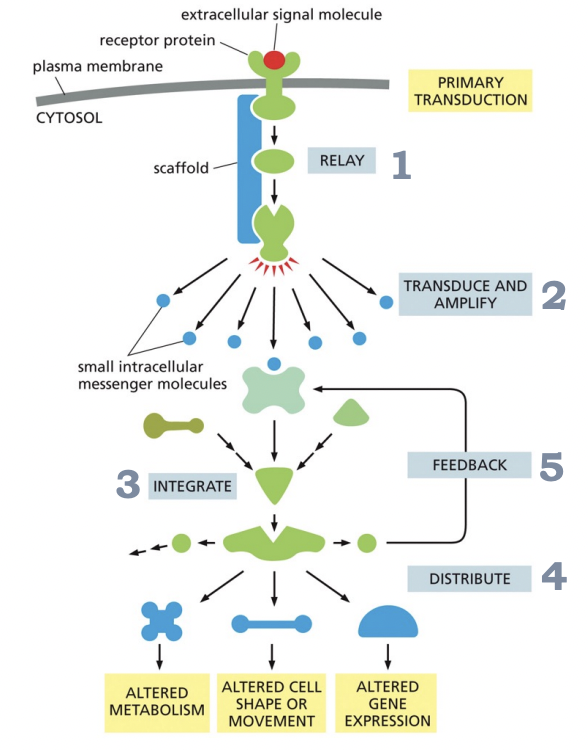
How is signal transduction performed by phosphorylation/dephosphorylation
Serine threonine kinases (p-Ser and p-Thr) and tyrosine kinases (p-Tyr): Signal entrance causes dephosphorylation of ATP through protein kinase which phosphorylates protein, then when the phosphate is dephosphorylated, the protein turns off
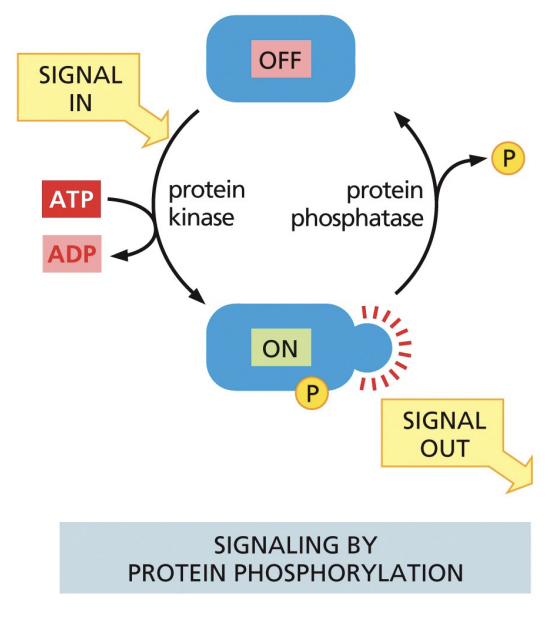
How can signal transduction be done through GTP hydrolysis and exchange
Signal entrance causes GTP binding to protein which turns protein on. The signal leaves, and GTP hydrolysis occurs so GDP binds to protein and it’s turned off
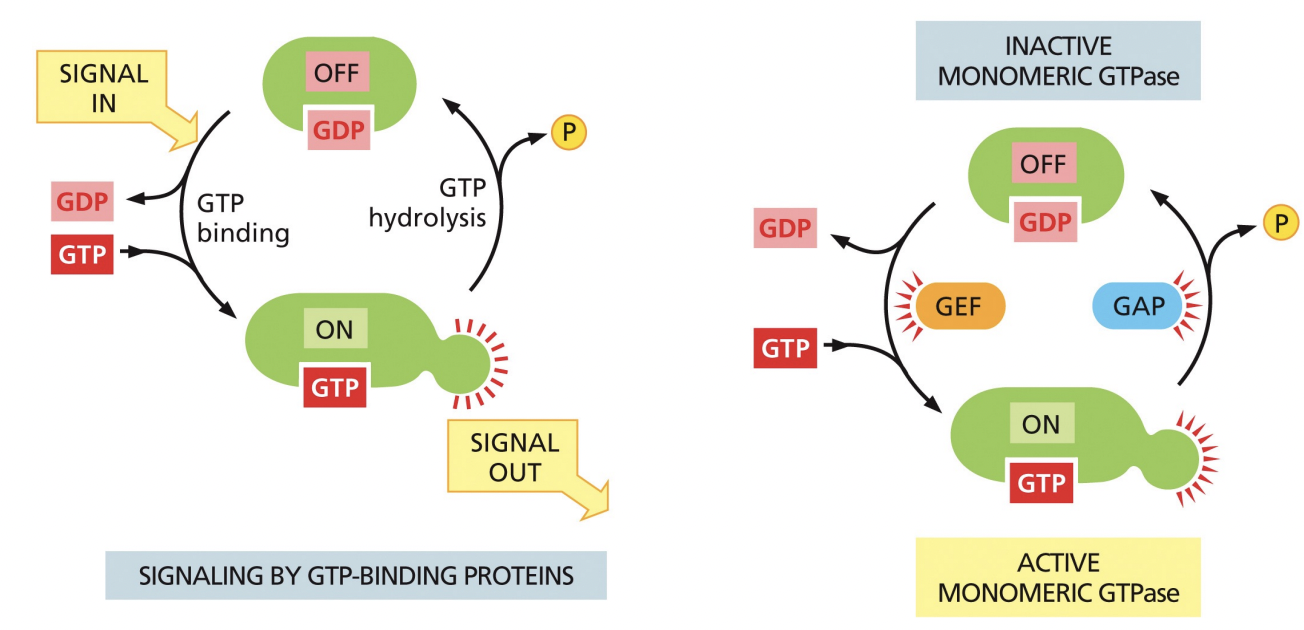
What’s GEF
guanine nucleotide exchange factor
What’s GAP
GTPase activating protein
Inactive versus active monomeric GTPase and how that process works
GEF and GTP binding turn on monomeric GTPase, and then GAP dephosphorylates it, which leads to GDP binding and an inactive monomeric GTPase
What do kinases do
phosphorylation of one protein activates phosphorylation of the next
How do GTP-binding proteins work
activation depends onw hether or not GTP or GDP is bound
What do molecular switch allow signals to do
they can switch between inactive and active states; so once activated, these proteins can turn on other proteins in the singaling pathway and they persist until another switch turns them off
3 main classes of cell surface receptors
ion channel-coupled, g protein-coupled, enzyme-coupled receptors
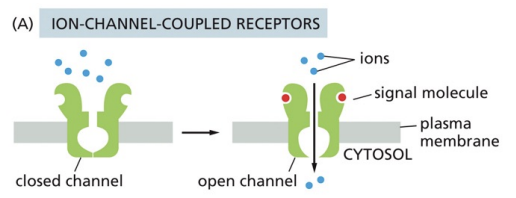
How do ion-channel-coupled receptors work
closed channel and then when signal molecules bind, channel opens and ions can enter cytosol
Barbiturates and benzodiazepines (valium and ambien), their normal signal, receptor action, and effect
normal signal: GABA
receptor action: stimulate GABA-activated ion-channel-coupled receptors
effect: relief of anxiety; sedation
Nicotine, their normal signal, receptor action, and effect
normal signal: acetylcholine
receptor action: stimulates acetylcholine-activated ion-channel-coupled receptors
effect: constriction of blood vessels; elevation of blood pressure
Morphine/heroin: their normal signal, receptor action, and effect
normal signal: endorphins/enkephalins
receptor action: stimulates G-protein-coupled opiate receptors
effect: analgesia (relief of pain); euphoria
Curare: their normal signal, receptor action, and effect
normal signal: acetylcholine
receptor action: blocks acetylcholine-activated ion-channel-coupled receptors
effect: blockage of neuromuscular transmission, resulting in paralysis
Strychnine: their normal signal, receptor action, and effect
normal signal: glycine
receptor action: blocks glysine-activated ion-channel-coupled receptors
effect: blockage of inhibitory synapses in the spinal cord and brain, resulting in seizures/muscle spasm
Capsaicin: their normal signal, receptor action, and effect
normal signal: heat
receptor action: stimulates temperature-sensitive ion-channel-coupled receptors
effect: painful, burning sensation; prolonged exposure can paradoxically lead to pain relief
Menthol: their normal signal, receptor action, and effect
normal signal: cold
receptor action: stimulates temperature-sensitive ion-channel-coupled receptors
effect: in moderate amounts, a cool sensation; at higher doses, can cause burning pain
What do G-protein coupled receptors do
Activates membrane-bound, trimeric GTPbinding proteins (G proteins), which then activate either an enzyme or an ion channel in the plasma membrane.
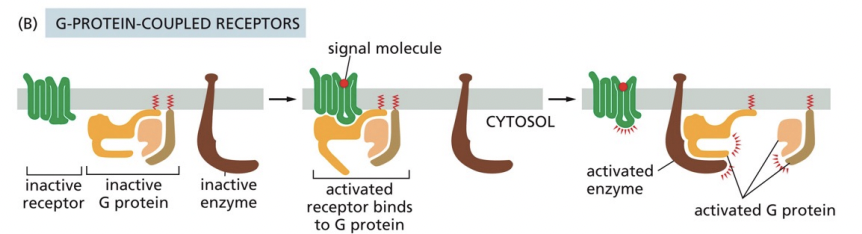
What are GPCRs composed on
a single polypeptide chain that is a seven-pass transmembrane receptor protein.
What happens when GPCR is bound to a signal molecules
the receptor protein undergoes a conformational change that enables it to activate a G protein on the cytosolic side.
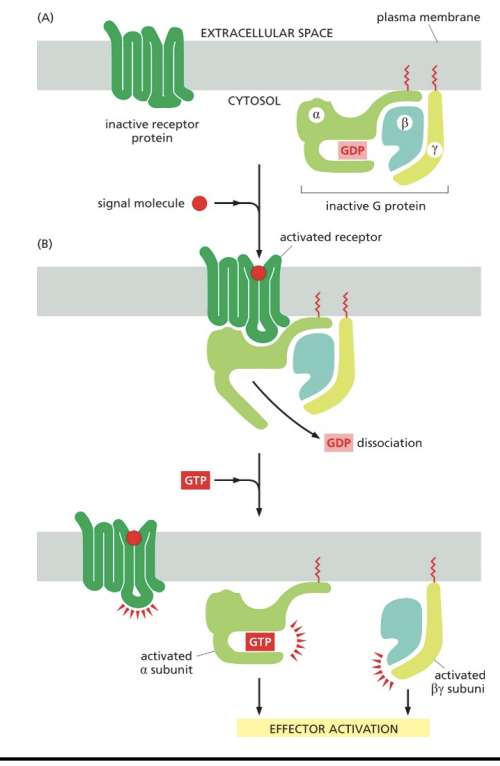
What do different G proteins do
each is specific for a set of receptors and target enzymes or ion channels.
What are each G protein composed of
α, β, and γ subunits
What are G protein subunits tethered to
plasma membrane by short lipid tails
What occurs to a subunit of G protein in the unstimulated state
the α subunit has GDP bound, and the G protein is inactive
What hapens to a subunit when an extracellular ligand binds to the receptor
the receptor activates the G protein by causing the α subunit to release GDP and exchange it for GTP
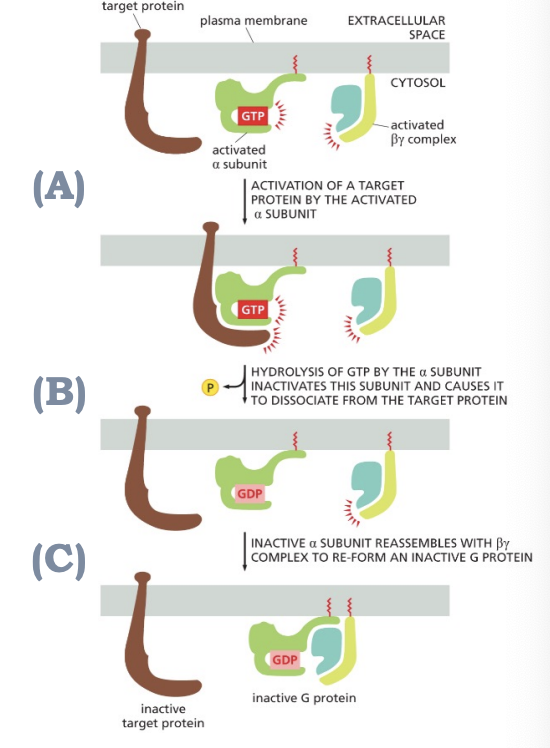
What is the role of a subunit in G protein
α subunit has intrinsic GTPase activity, and ultimately, will hydrolyze the GTP back to
GDP returning the G protein back to its inactive state (activation → hydrolysis → inactive)
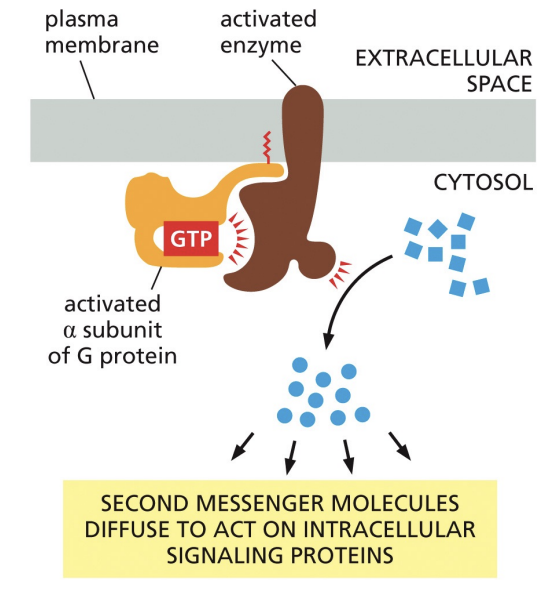
How can GCPRs activate membrane bound enzymes
Enzymes activated by G proteins increase the concentrations of small intracellular signaling molecules, which diffuse to act on intracellular signaling proteins
How does Adneylyl cyclase do
produces cyclic AMP by removing 2 phosphate groups from ATP and forming a cyclic structure
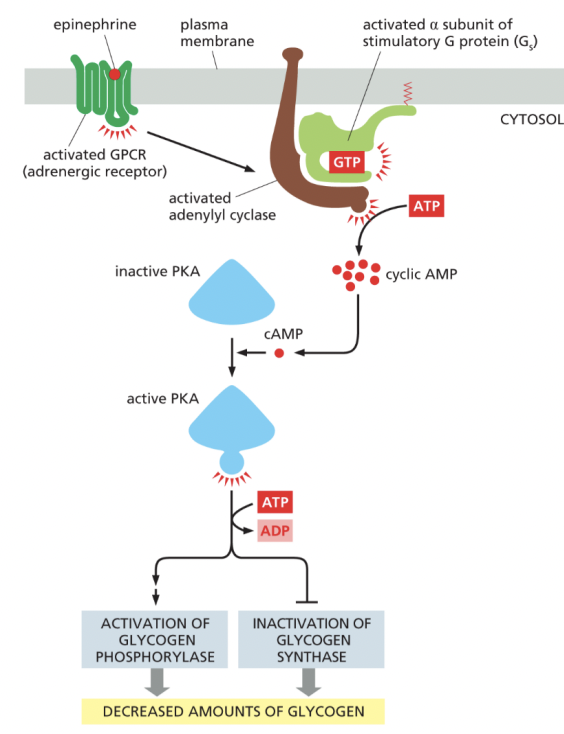
What is cyclic AMP (cAMP)
secondary messenger
Whats PKS and what does activated PKA do
protein kinase A, activated PKA regulates function of glycogen phosphorylase
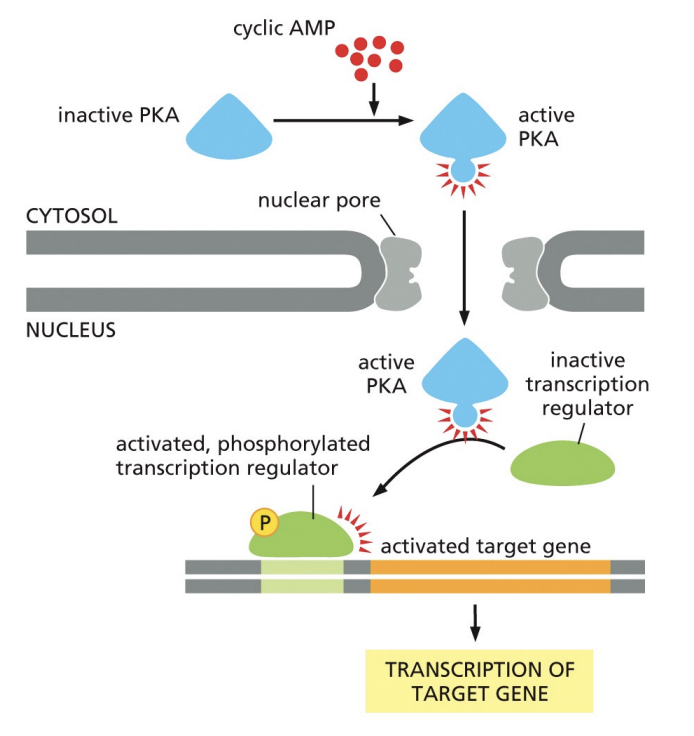
How does process of GPCR → adenylate cyclase → cAMP work
cyclic AMP activates PKA which enter nucleus through nuclear pore. PKA then phosphorylates/activates transcription regulator which leads to transcription of target gene
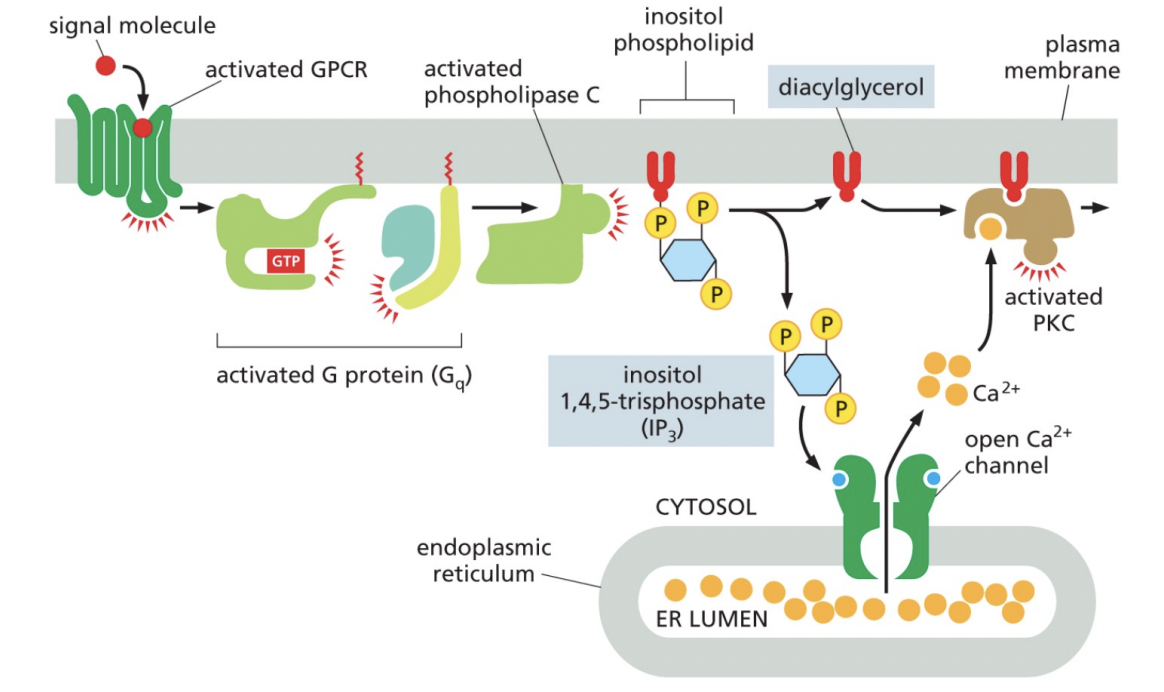
How does process of GPCRs → Phospholipase C → IP3 and DAG work
A signal molecule binds to a GPCR, activating it and leading to an activated G protein, which in turn activates phospholipase C.
Then, inositol phospholipid was converted into diacylglycerol and inositol 1,4,5-triphosphate.
Inositol 1, 4, 5-triphosphate binds to the Ca2+ channel on the ER, which leads to the release of Ca2+, which binds to PKC and diacylglycerol to activate PKC A
What are enzyme-coupled receptors
they are transmembrane proteins that display their ligand-binding domains on the outer surface of the plasma membrane.
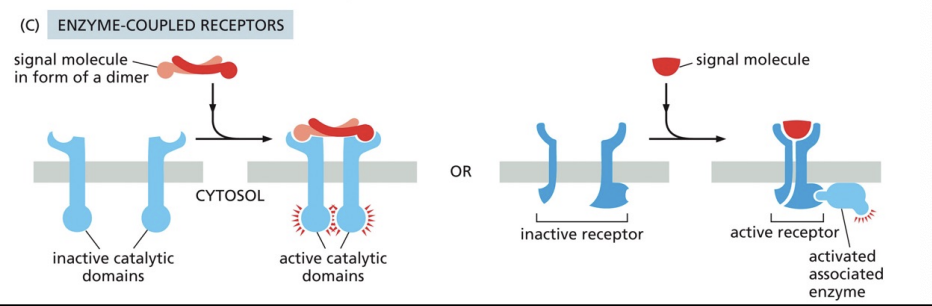
How does cytoplasmic domain of enzyme-coupled receptor act
Either as enzyme itself or forms a complex with another protein that acts as an enzyme
What do enzyme-coupled receptors respond to + what do they do
respond to extracellular signal proteins (growth factors); they regulate cell growth, proliferation, differentiation, and survival (typically slow response)
Example of enzyme-coupled receptor function
they mediate and direct rapid reconfiguration of cytoskeleton and control cell shape/movement
What are RTKs
A large class of enzyme-coupled receptors called enzyme-linked receptor tyrosine kinases
What do RTKs contain
a cytoplasmic domain that phosphorylated specific tyrosines on selected intracellular proteins
What does binding of signal molecule to extracellular domain of RTK do
Causes two receptors to associate into a dimer
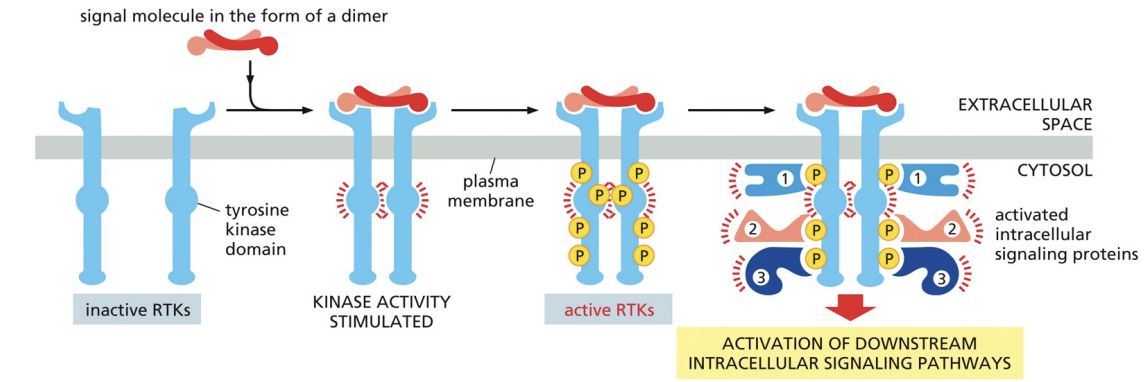
What does dimerization do
Activates RTK kinase activity, enabling them to phosphorylate their tyrosines. Each phosphorylated tyrosine serves as a specific binding site for a different intracellular signaling protein, which relays the signal to the cytosolic region
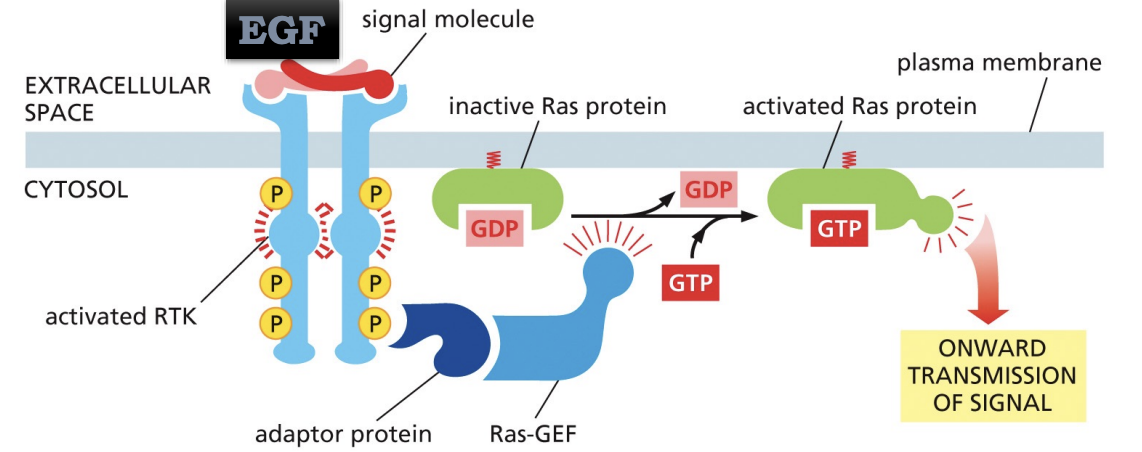
What is Ras
Rat sarcoma: a small GTP-binding protein that is bound by a lipid tail to the cytoplasmic face of the plasma membrane. It’s a member of a large family of monomeric GTPases
What are monomeric GTPases
Resemble the a subunit of a G protein and acts as a molecular switch
What does adaptor protein do
docks on specific phosphotyrosine on the activated RTK and recruits Ras-GED stimulating Ras to exchange its bound GDP for GTP, which leads to onward transmission of the signal
What do 30% of human cancers contain
activating mutations in Ras genes
What does active Ras do
promotes activation of phosphorylation cascade
What’s a phosphorylation cascade
series of serine/threonine protein kinases
What does Ras active, and what does that thing do
MAPK signaling molecule (mitogen activated protein kinase), which phosphorylates various downstream signaling pathways that control cell proliferation
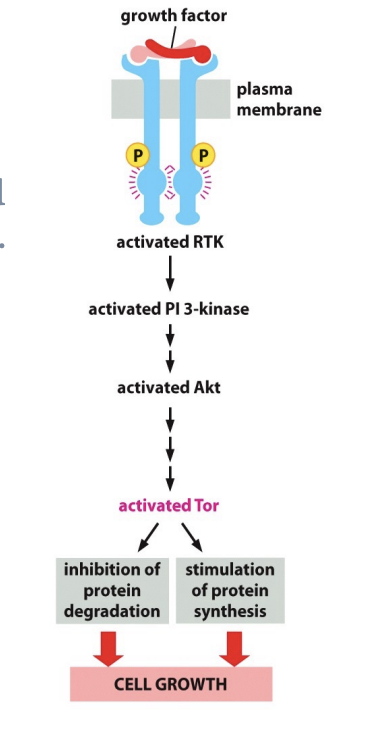
How does process from IFG → PI 3-kinase → Akt work
IGF acts through RTKs, which in turn activates the phosphoinositide 3-kinase (Pi 3-kinase) which then phosphorylates membrane-associated inositol phospholipid, which recruits a protein kinase (Akt) that’s activated by protein kinase 1 and 2
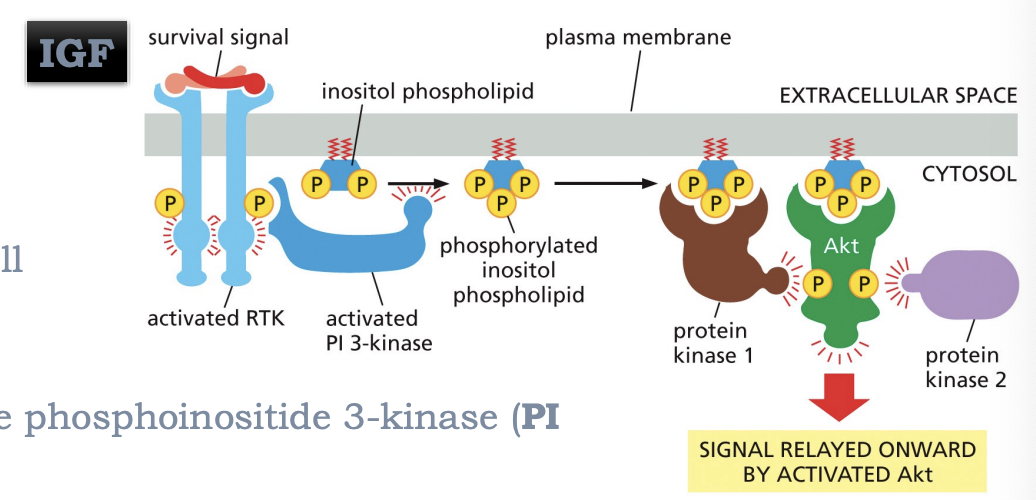
What is IGF
Insulin-like growth factor, is important for cell survival and proliferation and acts through RTKs
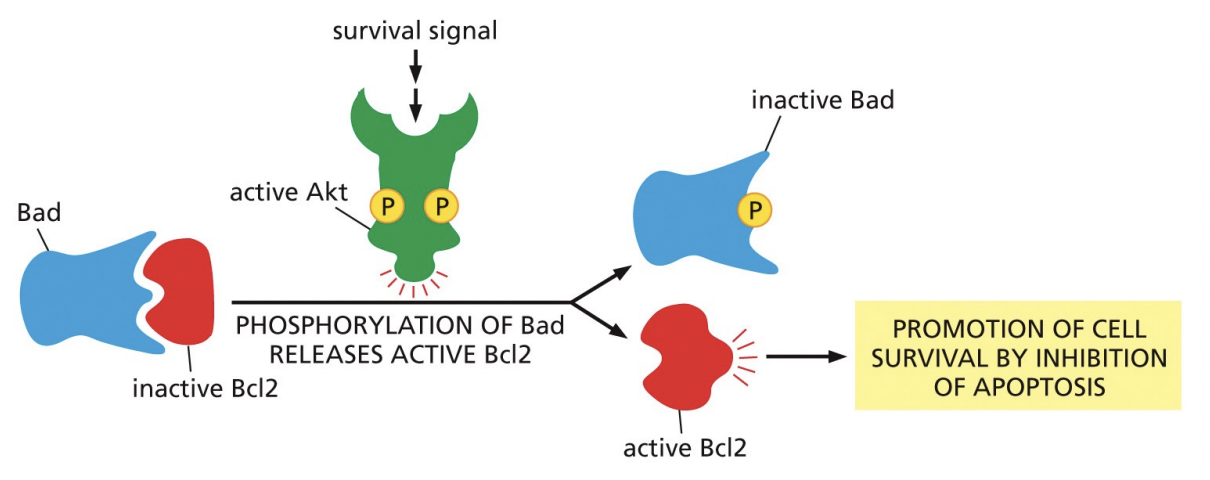
What does activation of Akt promote
cell survival by inhibition of apoptosis: Bad is bound to inactive Bcl2 and phosphorylation of Bad releases active Bcl as a result of active Akt/survival signal. This leads to inactivated Bad and active Bcl2
How does IFG → PI 3-kinase → Akt → Tor process lead to cell grwoth
PI-3-kinase-Akt signaling pathway also Akt indirectly activates Tor by phosphorylation and
inhibiting a protein that helps to keep Tor inactive.
What is Tor
a serine/threonine kinase that stimulates protein synthesis and inhibits protein degradation
What is disruption of Tor signaling associated with
multiple diseases from cancer to neurodegeneration
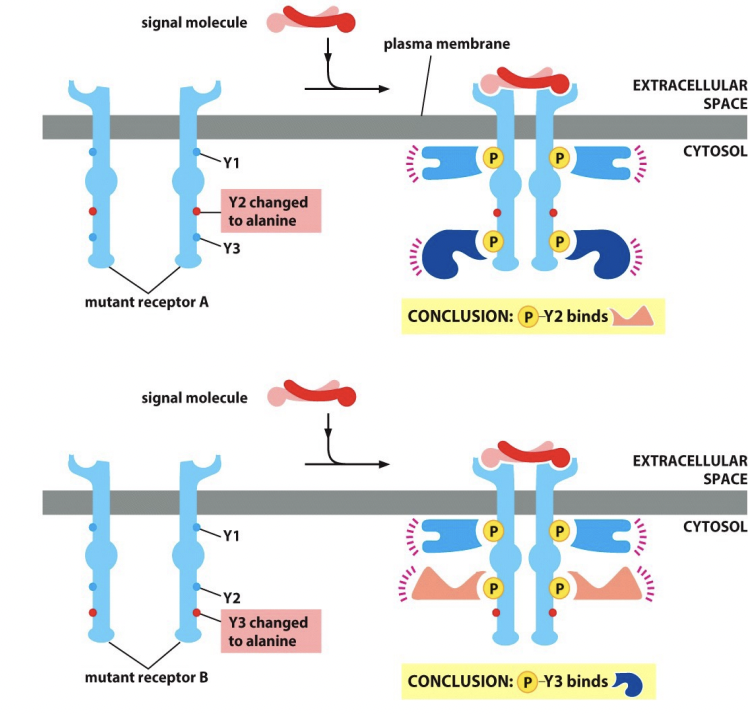
What do mutant proteins do
help determine exactly where an intracellular signaling molecule binds
What occurs to tyrosines (Y2 anord Y3) in point mutations and what does that do ********redo
replaced by an alanine which means the mutant receptor no longer binds to one of the intracellular signaling proteins (ex: if Y2 changed to alanine, Y3 can’t bind), which can then determine the effect on the cell’s response to the signal
How can study genetic analyses through signaling pathways
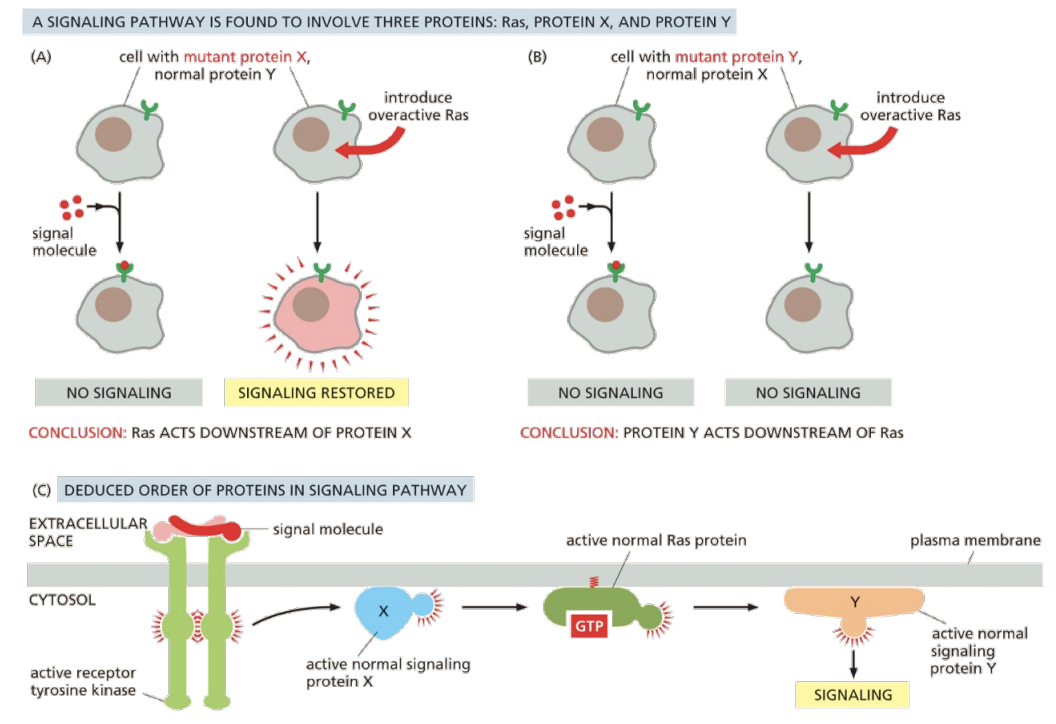
Ex: if a pathway involved Ras, protein x, and protein y,
(a) In a cell with mutant protein X, if the introduction of overactive Ras restores signaling, you can conclude that Ras acts downstream of protein X
(b) In a cell with mutant protein Y, if the introduction of overactive Ras does nothing, you can conclude that protein Y acts downstream of Ras
Ex 2: You can deduce the order of proteins in a pathway