Endodontic Treatment for the Young Permanent Dentition
 Call Kai
 Learn
Learn Practice Test
 Spaced Repetition
 Match
Match Flashcards
 Knowt Play
1/89

There's no tags or description
Looks like no tags are added yet.
Name | Mastery | Learn | Test | Matching | Spaced | Call with Kai |
|---|
No analytics yet
Send a link to your students to track their progress
90 Terms
What is a pulp cap?
Treatment of an exposed vital pulp by sealing the pulpal wound with a dental material such as calcium hydroxide or MTA to facilitate the formation of repartive dentin and maintenance of a vital pulp
What is a direct pulp cap
Dental material placed directly on a mechanical or traumatic vital pulp exposure
What is an indirect pulp cap?
A procedure in which a material is placed on a thin portion of remaining carious dentin that, if removed, might exposure the pulp in immature permanent teeth
What is a pulpotomy (pulp amputation)?
Removal of the coronal portion of a vital pulp as a means of preserving the vitality of the remaining radicular portion; may be performed as emergency procedure for temporary relief of symptoms or therapeutic measure, as in the instance of a Cvek pulpotomy
What is a partial pulpotomy (shallow pulpotomy, Cvek pulpotomy)
The removal of a small portion of the vital coronal pulp as a means of preserving the remaining coronal and radicular pulp tissues
What are the 2 major factors in treatment planning?
(1) Pulpal status and (2) degree of root formation
What is the treatment for reversible pulpitis?
Vital pulp therapy
What is the treatment for irreversible pulpitis with a CLOSED apex?
RCT
What is the treatment for irreversible pulpitis with an OPEN apex?
Vital pulp therapy or root end closure and obturation
What is the treatment for PULPAL NECROSIS with a CLOSED apex?
RCT
What is the treatment for PULPAL NECROSIS with an OPEN apex?
Root end closure and obturation or regeneration
If you have teeth with open apices that have thin dentin walls, what is important of the pulp?
Maintain vitality, if possible
What are different types od vital pulp therapies?
Indirect pulp cap
Direct pulp cap
Pulpotomy or Cvek Pulpotomy
T/F: The success of vital pulp therapy depends on the status of the pulp BEFORE the procedure, and proper diagnosis and clinical judgement
True
The success of any vital pulp therapy technique depends on?
The placement of a restoration that precludes bacterial microleakage
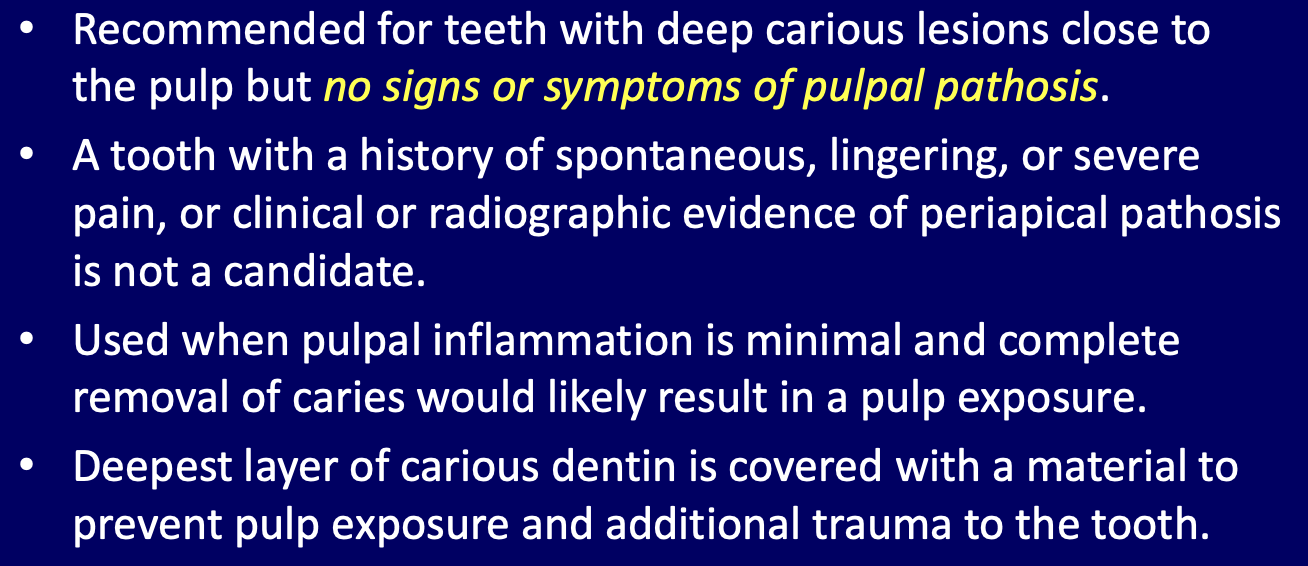
When is an indirect pulp cap indicated?
Recommended for teeth with deep carious lesions close to the pulp but NO SIGNS OR SYMPTOMS OF PULPAL PATHOSIS
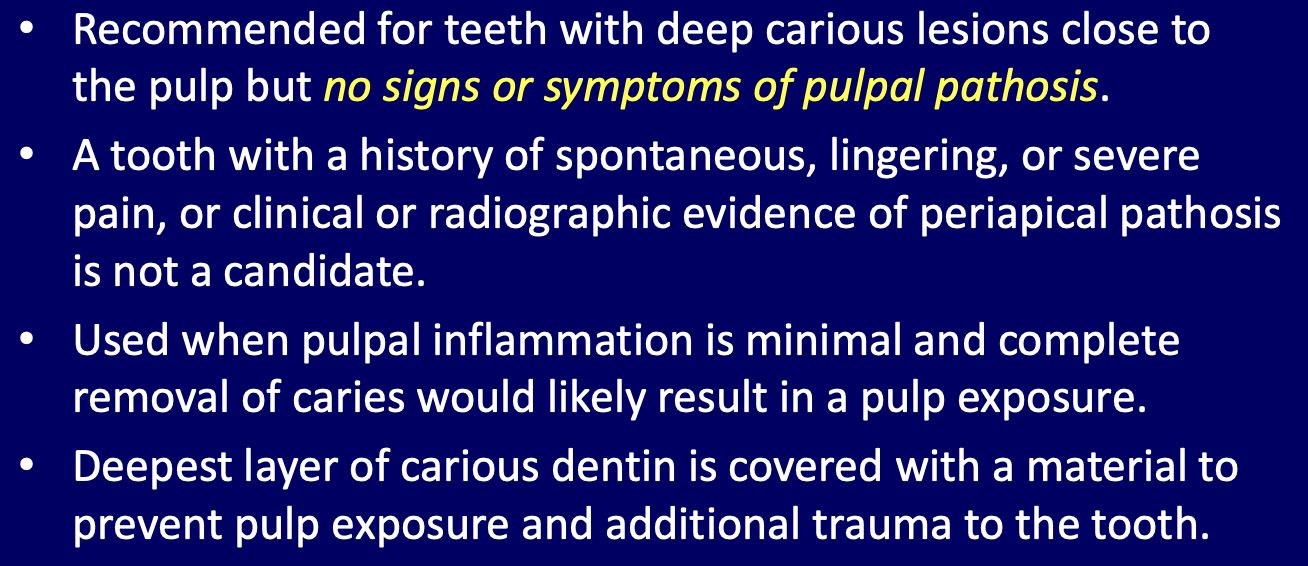
What type of pain makes a tooth NOT a candidate for an indirect pulp cap?
Spontaneous, lingering, or severe pain
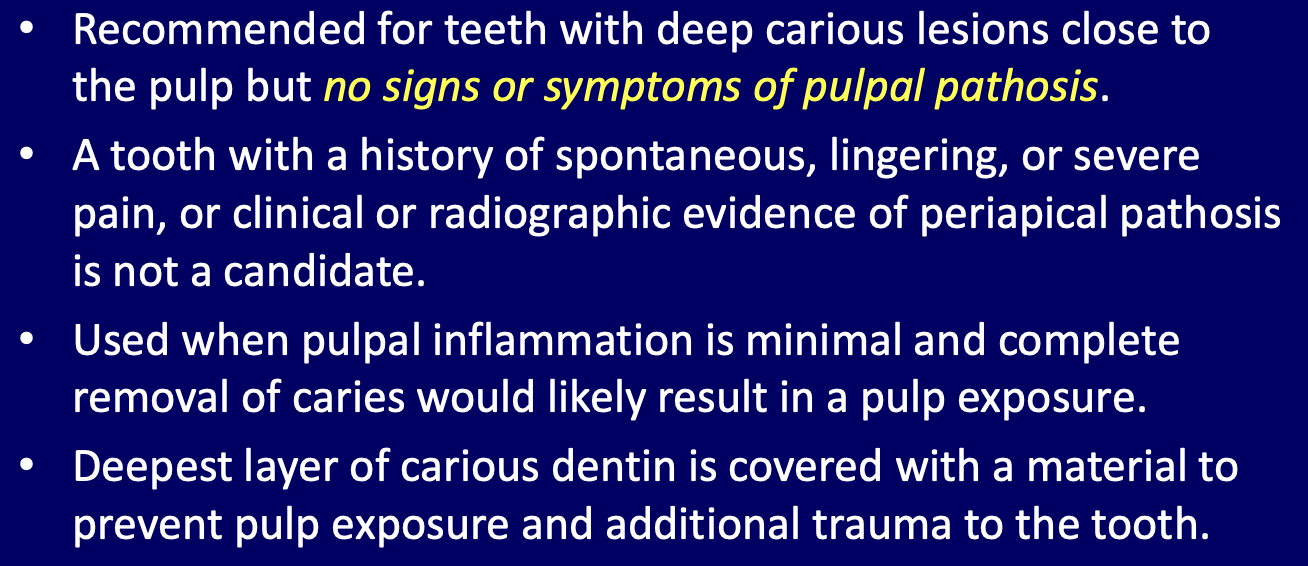
What is the pulpal condition required for an indirect pulp cap?
Minimal pulpal inflammation- complete removal of caries would result ina pulp exposure
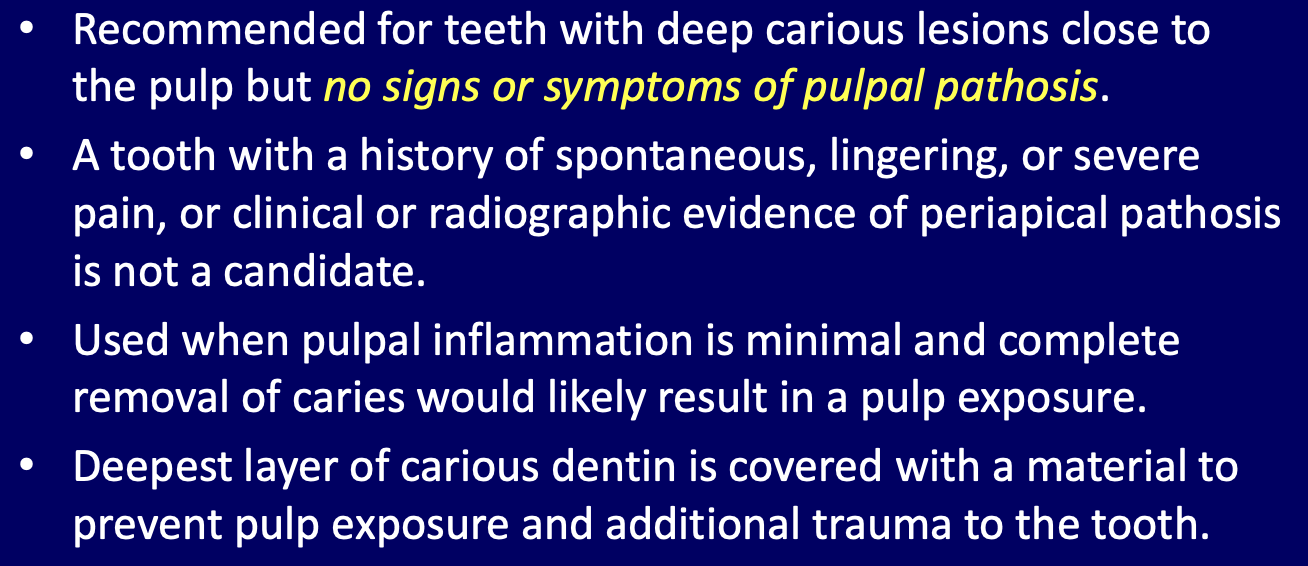
What is placed over the deepest carious dentin during an indirect pulp cap?
A protective material to prevent pulp exposure and additional trauma
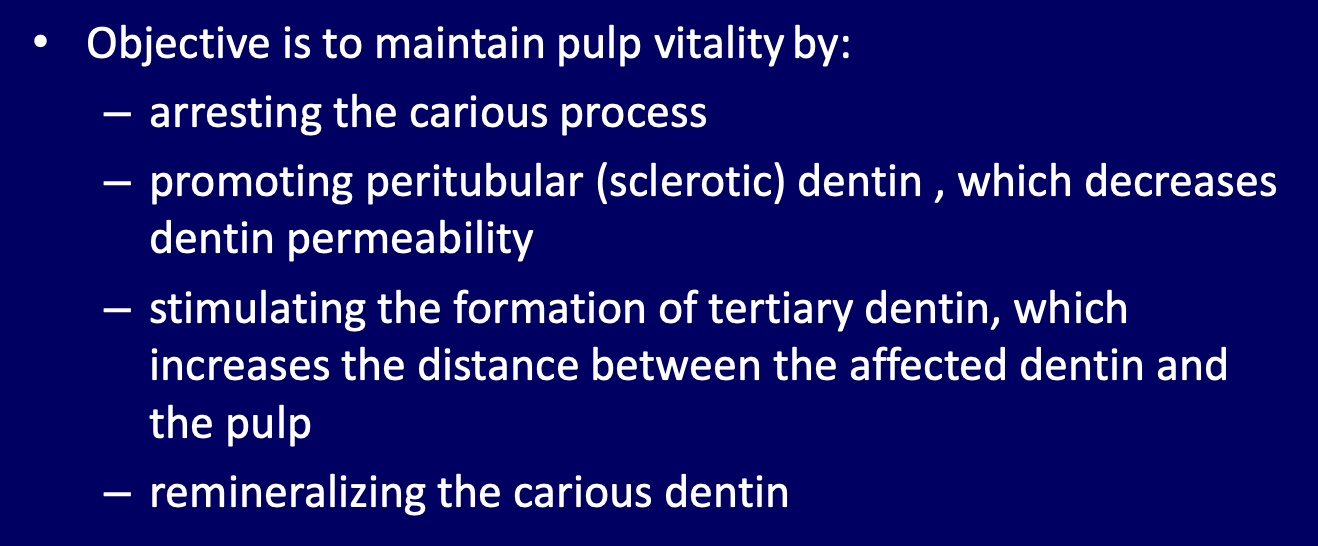
In an indirect pulp cap, what is the objective to maintain pulp vitality?
Arrest carious process
Promote peritubular (sclerotic) dentin, which decreases dentin permeability
Stimulating the formation of tertiary dentin and the pulp
Remineralizing the carious dentin
What is the goal of a direct pulp cap?
To preserve pulp vitality by placing a dressing directly over an exposed pulp
What is the main difference between a pulpotomy and a direct pulp cap?
In a pulpotomy, part of the pulp tissue is removed before placing the capping material
What happens to odontoblasts at the pulp exposure site?
They are lost- Progenitor cells from the pulp differentiate into odontoblast-like cells that secrete dentin matrix
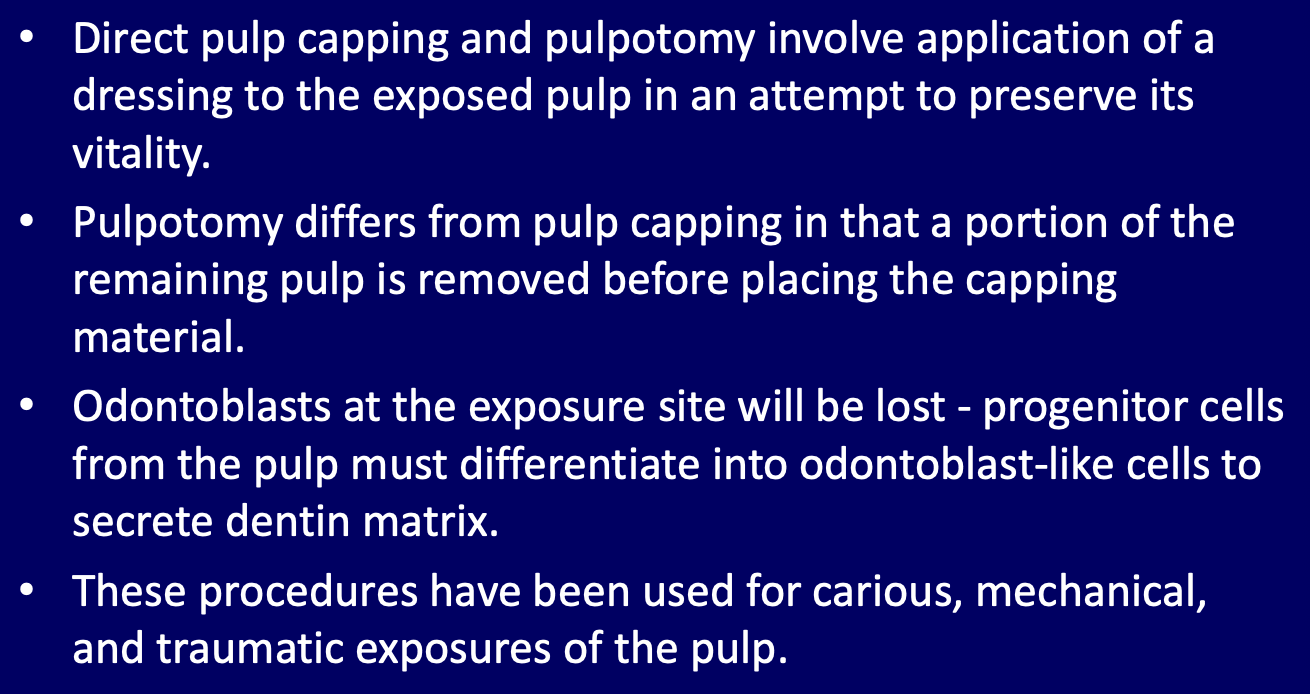
What types of pulp exposures can be treated with direct pulp caps or pulpotomies?
Carious, mechanical, and traumatic exposures
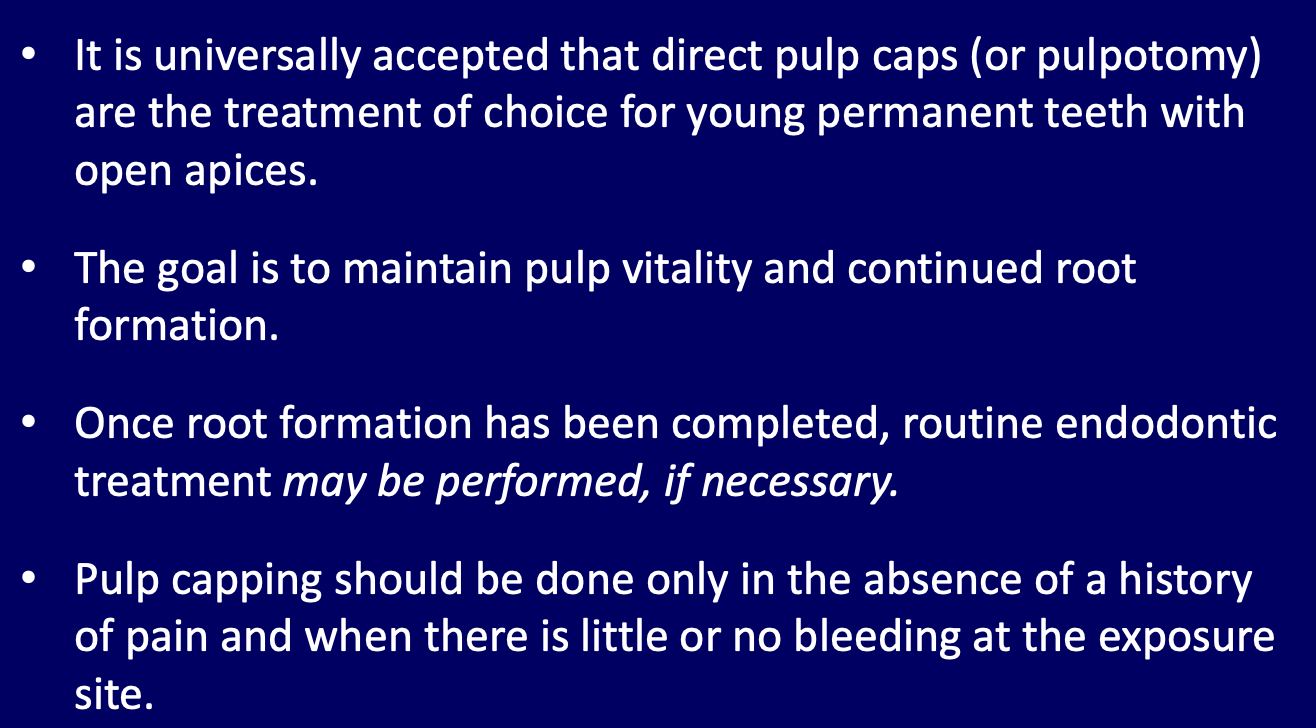
Why are direct pulp caps especially important in young permanent teeth with open apices?
Because maintaining pulp vitality allows continued root formation
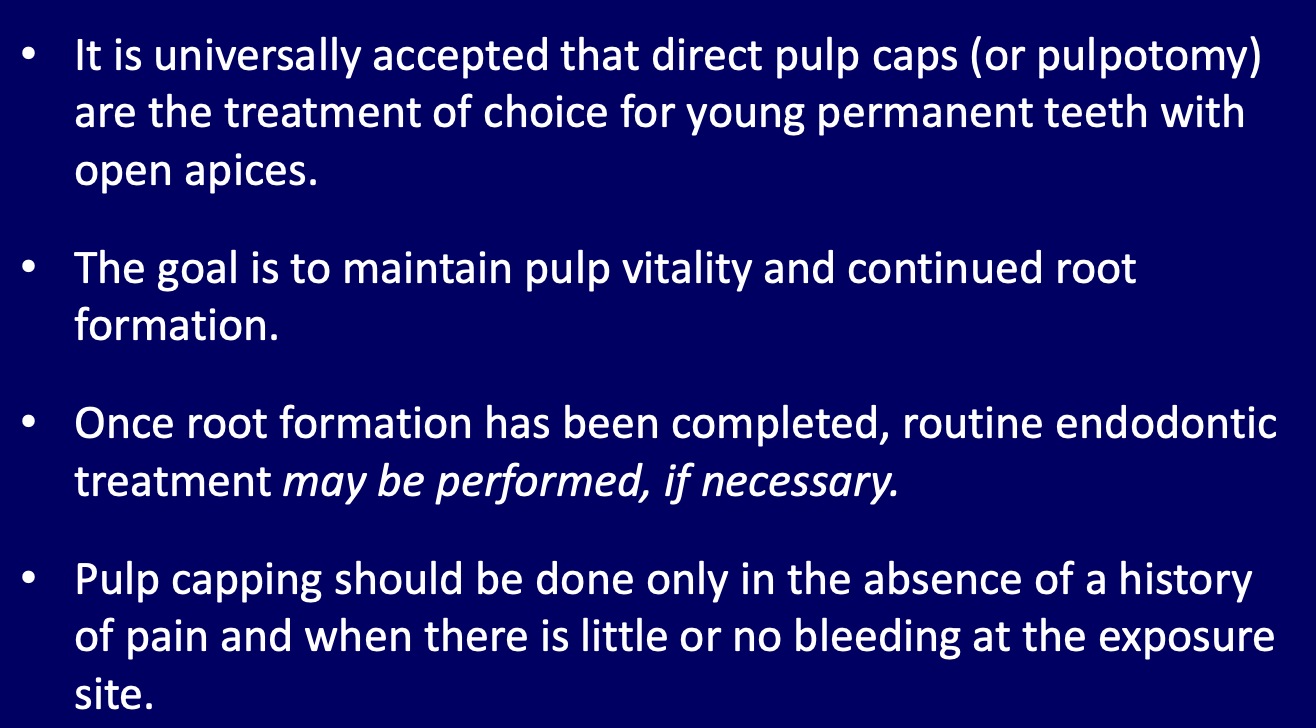
Once root formation is complete, what treatment can be done if needed?
Routine root canal treatment (RCT)
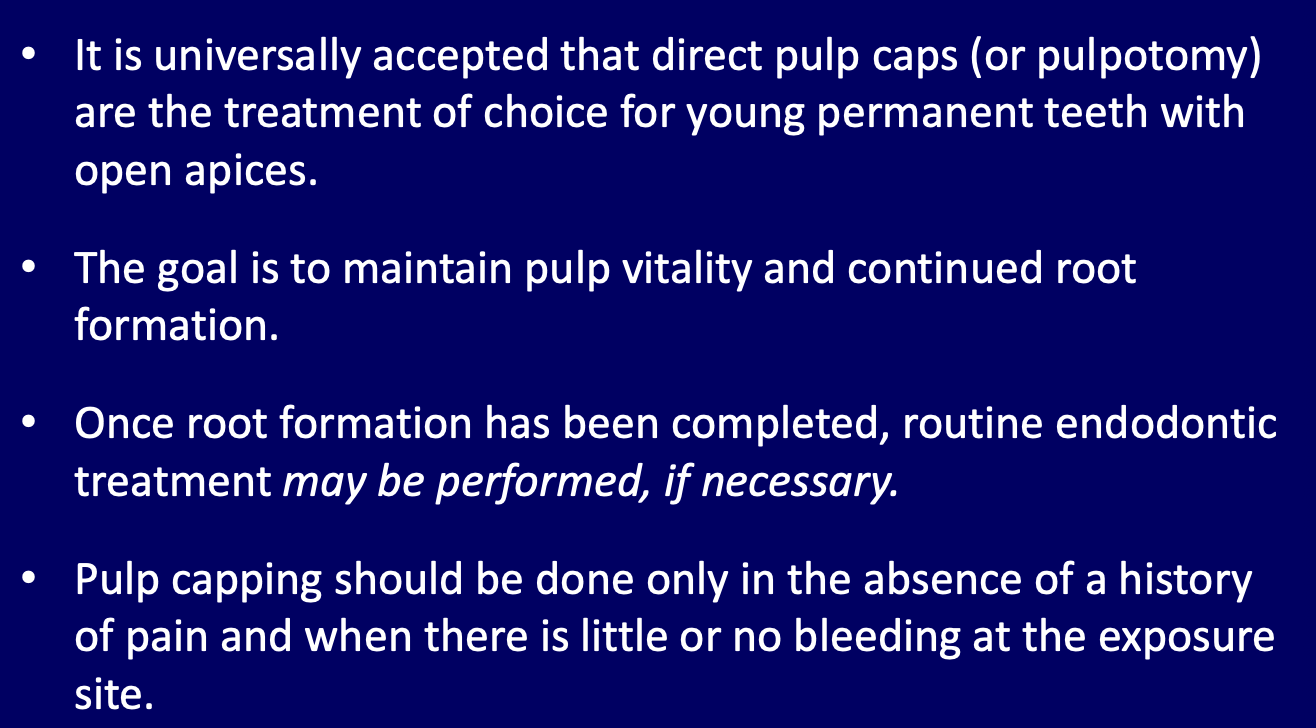
When should direct pulp capping be performed regarding pain history?
Only when there is no history of spontaneous pain with little or no bleeding
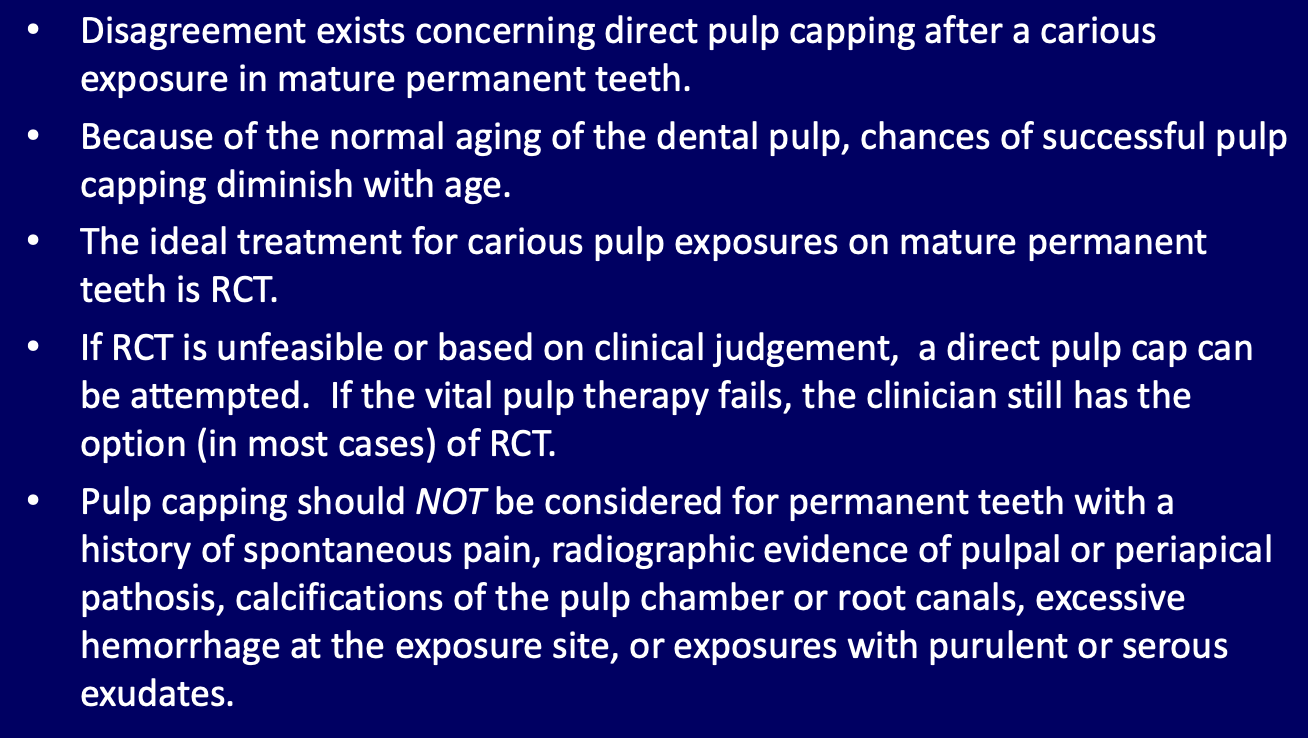
Why is direct pulp capping controversial in mature permanent teeth with carious exposures?
Because aging pulp has a lower healing capacity and reduced success rates
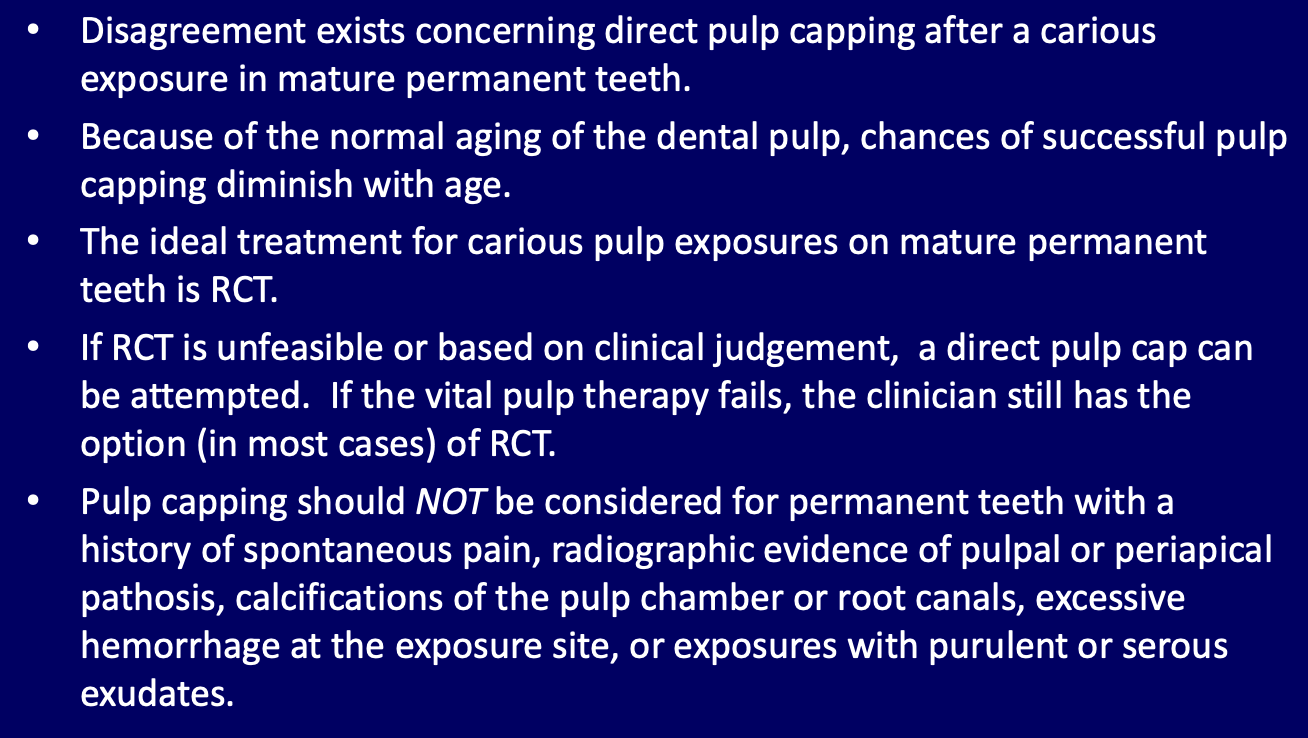
What is considered the ideal treatment for carious pulp exposures in mature permanent teeth?
RCT
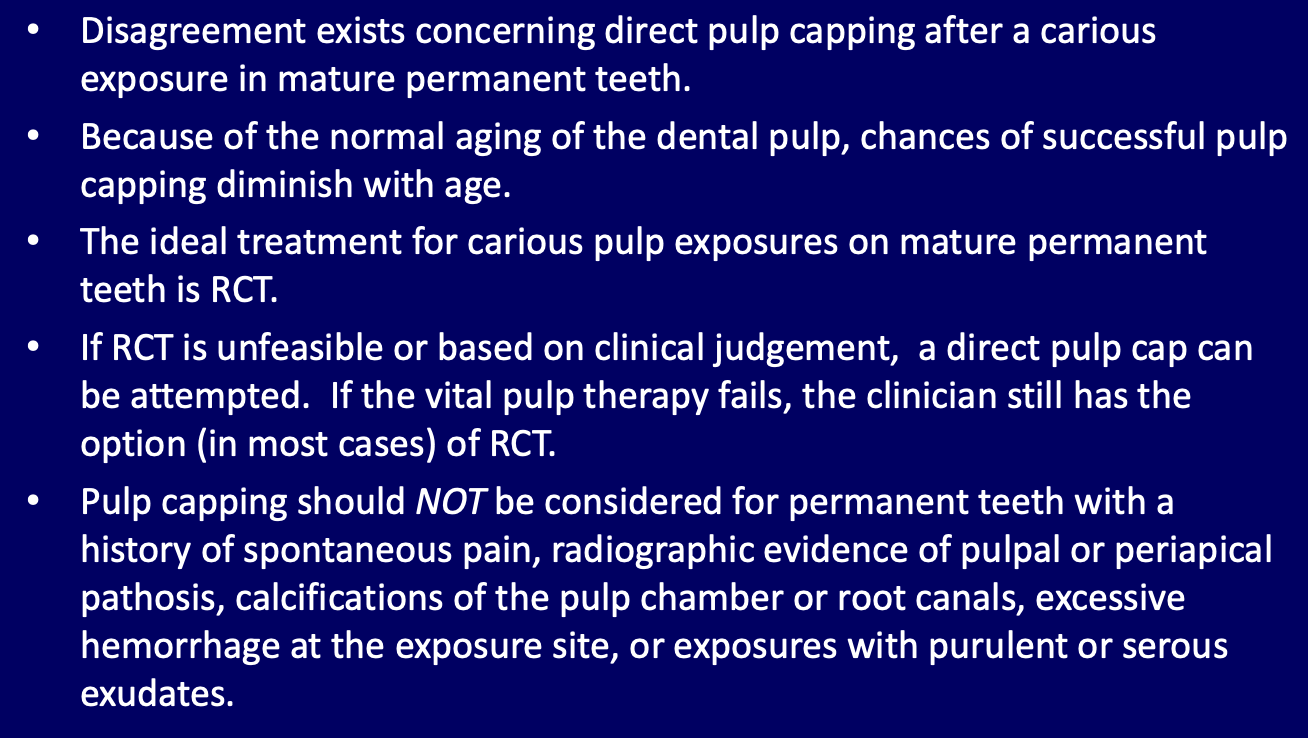
When might a direct pulp cap still be attempted in a mature tooth with carious exposure?
When RCT is unfeasible or based on clinical judgment
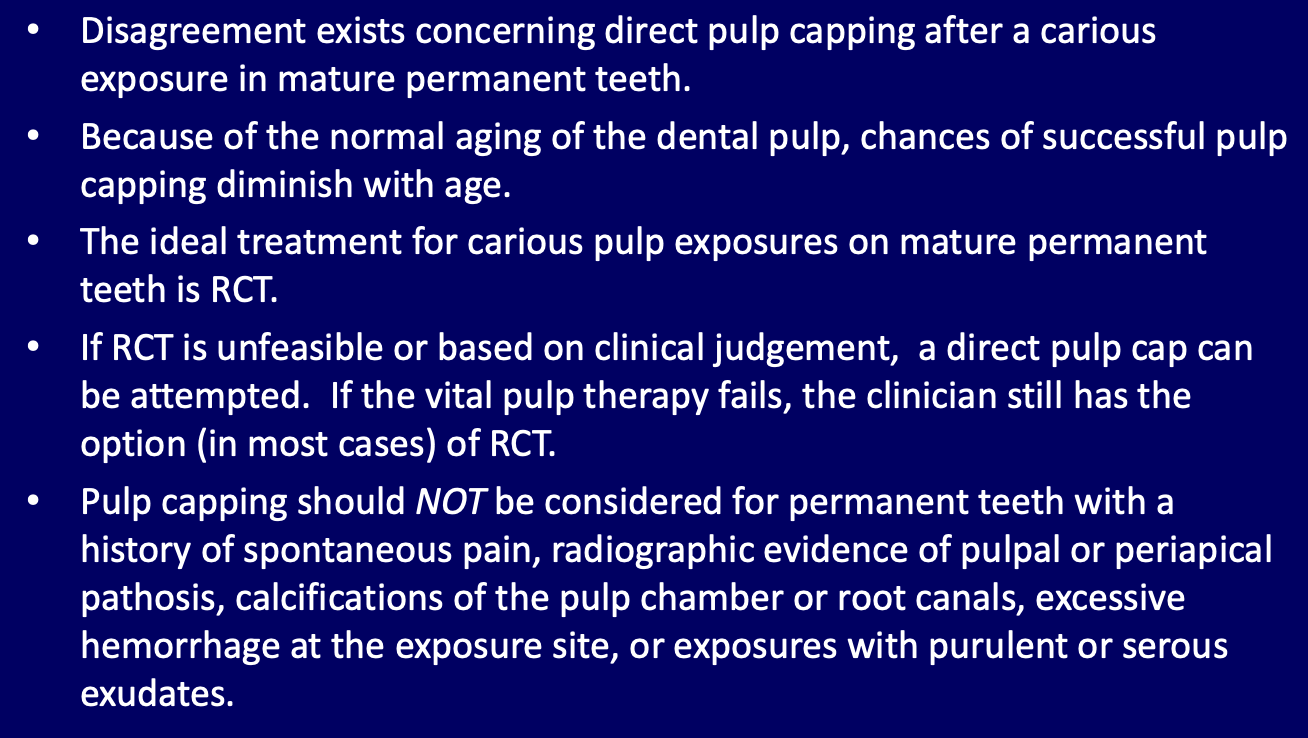
What type of pain is a contraindication for direct pulp capping?
Spontaneous pain
Name radiographic findings that contraindicate direct pulp capping
Pulpal or periapical pathosis and pulp chamber/root canal calcifications
Why is excessive hemorrhage at the exposure site or purulent or serous exudate a bad sign for direct pulp capping?
Significant pulpal inflammation or infection making pulp capping inappropriate
How does exposure size affect prognosis for direct pulp capping?
Larger exposures have a poorer prognosis
Why do larger pulp exposures have worse outcomes?
More pulp tissue is inflamed and contamination risk is higher
What can happen if microorganisms are pushed into the pulp during treatment?
Severe inflammation and treatment failure
What type of inflammation occurs after a mechanical pulp exposure?
Acute inflammation at the exposure site
What can happen if tissue damage from a mechanical exposure is severe?
Chronic inflammation and eventual pulpal necrosis
Why do mechanical pulp exposures have a better prognosis than carious exposures?
They lack the preexisting inflammation associated with caries
What are some direct pulp cap materials?
Calcium hydroxide (Ca(OH)2) - past
Mineral trioxide aggregate (MTA) - present
Bioceramics- present / future
What did clinicians noticed happened when they placed calcium hydroxide directly to pulp tissue?
Necrosis of the pulp tissue and inflammation of the subjacent tissue occurs
Clinicians noticed that dentin bridge formation occurs at the junction of necrotic tissue and the vital inflamed tissue. How does this happen?
It results from a low-grade irritation of the underlying pulp tissue. Beneath the region of necrosis, cells of the pulp tissue differentiate into odontoblast-like cells and produce dentin matrix
Where does the calcium for the dentin bridge come from?
Bloodstream
When comparing Ca(OH)2 with MTA, what did clinicians see in regards to dentinal bridging?
MTA produced more dentinal bridging in a shorter period of time with less inflammation
How does MTA work biologically?
It interacts with synthetic tissue fluid to produce an adherent precipitate with the same composition and structure as hydroxyapatite
What role does calcium play, the dominant ion released from MTA?
It reacts with phosphate in tissue fluid, producing hydroxyapatite. These reactions help with its sealingability, biocompatibility and dentinogenic activity
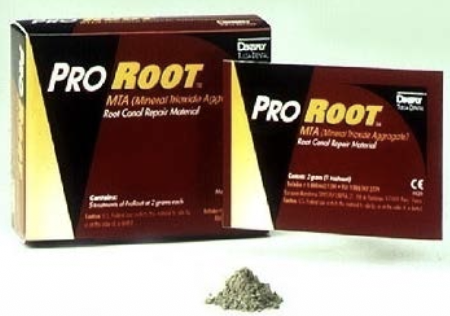
MTA stands for
Mineral trioxide aggregate and is commercially available as ProRoot MTA (Dentsply Tulsa Dental) in gray and white versions

What is MTA made of?
A portland cement with a radiopacifier (bismuth oxide)

How does MTA set?
It hydrates in the presence of water, forming a colloidal gel that solidifies
What are the three main components of MTA?
Tricalcium silicate
Tricalcium aluminate
Tricalcium oxide
What is the pH of MTA?
Approximately 12.5 (highly alkaline)
Is MTA highly soluble or poorly soluble?
Poorly soluble (low solubility)
Does MTA have high or low compressive strength?
Low compressive strength
T/F: MTA is biocompatible
True
What is a major disadvantage of MTA?
Long setting time (~4 hours)
Why is MTA useful for procedures involving perforations or root-end surgery?
It sets in the presence of moisture, blood, and tissue fluids
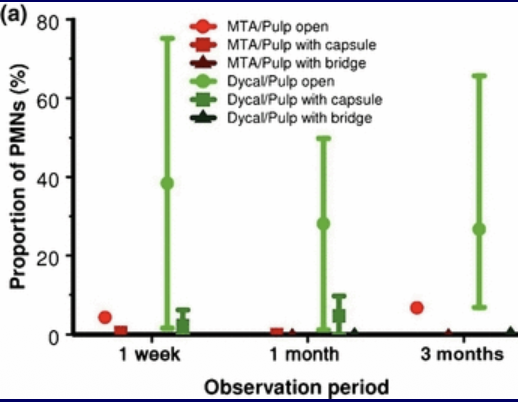
What did researchers find regarding MTA vs. Dycal?
MTA produced less pulpal inflammation and more predictable hard tissue barrier formation than Dycal
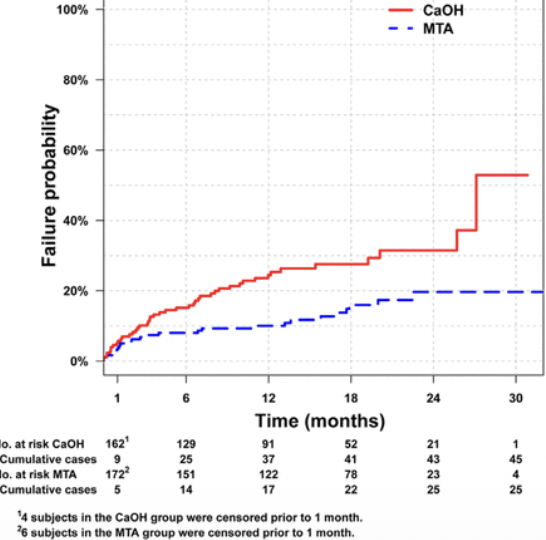
What did researchers find regarding MTA vs. CaOH for direct pulp capping?
MTA is superior to calcium hydroxide for direct pulp capping
What are 4 advantages of MTA?
Evaluated extensively
Biocompatibility
Sealing ability
Clinical outcomes for perforation repairs, vital pulp therapy, root-end fillings and apical plugs
What are 4 drawbacks of MTA?
Long setting time
Tooth discoloration
High cost
Difficult handling characteristics
Due to the drawbacks of MTA, newer bioceramics were developed to address them. What are some qualities of newer bioceramics?
The chemical compositions may vary but calcium and silicate are common and bioactive: they all release calcium, they are electroconductive, produce Ca(OH)2, form an interfacial layer between material and dentin and form apatite crystals over material in a synthetic tissue fluid environment
What is a pulpotomy?
Involves removing pulp tissue that has inflammatory or degenerative changes. The remaining vital tissue is left intact and covered with a pulp-capping agent to promote healing at the amputation site
What is the difference between a pulpotomy and pulp capping?
Additional tissue is removed from the exposed pulp in pulpotomy
How would a clinician know how much pulp to remove?
The depth to which tissue is removed is determined by clinical judgement. All tissue judged to be inflamed should be removed to place the dressing on healthy, uninflamed pulp tissue
T/F: When performing a pulpotomy, you may leave some carious dentin in the tooth
False, as much carious dentin as possible is removed prior to exposing the pulp; only pulp tissue judged to be inflamed is removed
What is the pulpal response in traumatic pulp exposures?
A proliferative response with inflammation extending only a few mm into the pulp. When this hyperplastic, inflamed tissue is removed, healthy pulp tissue is uncovered.
How much tissue should you remove in carious pulp exposures?
It may be necessary to remove pulp tissue to a greater depth to reach uninflamed tissue
How is pulp tissue removed in a pulpotomy?
With a round carbide or diamond bur, using high-speed and water cooling. This creates the least damage to the underlying tissue. All pulp tissue coronal to the amputation site must be removed to control hemorrhage
What is the tooth washed with after pulp amputation in a pulpotomy?
Physiologic saline or sterile water to remove debris. The area may be dried by vacuum and cotton pellets. Air should not be blown on the exposed pulp
How is hemorrhage controlled in a pulpotomy?
By cotton pellets slightly moistened with saline placed against the plup, or NaOCl. Do not place dry cotton pellets directly on the pulp. Dry cotton pellets are placed over the moist pellets, and slight pressure is exerted to control hemorrhage.
Hemmorrhage should be controlled within minutes. What should you do if it hemorrhage continues and it cannot be controlled?
Ensure that all pulp coronal to the amputation site was removed and that its cleaned. If not, amputation should be performed at a more apical level. Once controlled, place MTA against the pulp stump
What is the protcol for placing MTA because it takes hours to set?
A moist cotton pellet is usually placed over the MTA and the tooth is temporized. The patient returns at a later date for removal of the cotton and temporary restoration and then the definitive restoration is placed
Endodontic management of the necrotic permanent tooth with an incompletely formed apex is a challenge. What are 3 most historically used techniques?
Calcium hydroxide apexification
MTA apical barrier
Regeneration / revascularization
What are some of the most important factors in achieving apexification?
Thorough debridement of the canal (to remove all necrotic pulp tissue)
Sealing the tooth coronally (to prevent ingress of bacteria and substrate)
During calcium hydroxide apexification, what types of calcified tissue form?
Osteoid or cementoid, not true dentin
Where does the calcified barrier form relative to the calcium hydroxide?
Adjacent to the filling material- may be short of radiographic apex
Why is the calcified barrier called a "cap" or "bridge"?
Because it forms continuous with the lateral root surfaces
What is a major limitation of calcium hydroxide apexification?
The barrier formed may be porous
When performing apexification with calcium hydroxide, after you fill the canal with CaOH paste and seal coronally, how frequently do you want to see your patient?
At 3-6 month intervals verifying the calcified barrier radiographically and clinically
What if you take a radiograph and check clinically, and there is no calcified barrier?
Repack with CaOH and continue periodic recall
If there is a calcified barrier present, what should you do?
Obturate and restore. This whole process usually requires 6-18 months
Calcium hydroxide apexification is predictable. What are some disadvantages to it?
Patient compliance
Fractures
Long-term CaOH may weaken dentin
What are some alternatives to calcium hydroxide apexification
Using an artificial apical barrier that allows immediate obturation: MTA
According to researchers, how did MTA compare with calcium hydroxide?
MTA induced apical hard tissue formation more often than osteogenic protein-1 or CaOH. They also found that MTA favored apexification and periapical healing; CaOH was not necessary first
How is MTA placed in the apex as a barrier?
The resorbable barrier is pushed through the apex to create an extraradicular matrix, where the MTA will sit. The MTA plug should be compacted into the apical 4-5mm. Wet cotton pellet + seal coronally or immediate filling. The entire canal should be obturated, then restored.
When would regneration of necrotic pulp be considered possible?
Only after avulsion of an immature permanent tooth
What are some advantages of regeneration?
Possible further root development and reinforcement of dentin walls- strengthening the root against fracture.
What are some situations in which regeneration should occur
If it is possible to create an environment similar to the avulsed tooth
If the canal is disinfected, a matrix into which new tissue can grow is provided and then coronal access is sealed
Apexification
A method into induce a calcified barrier in a root with an open apex or the continued apical development of an incompletely formed root in teeth with necrotic pulps
Apexogenesis
A vital pulp therapy procedure performed to encourage continued physiological development and formation of the root end; frequently used to describe vital pulp therapy performed to encourage the continuation of this process