Explanations of forgetting
 Call Kai
 Learn
Learn Practice Test
 Spaced Repetition
 Match
Match Flashcards
 Knowt Play
1/30

There's no tags or description
Looks like no tags are added yet.
Name | Mastery | Learn | Test | Matching | Spaced | Call with Kai |
|---|
No analytics yet
Send a link to your students to track their progress
31 Terms
what are 2 explanations of forgetting?
interference
retrieval failure
what is the definition of forgetting?
a person’s loss of ability to recall or recognise something they have previously learnt
what is interference?
When 2 memories become mixed up, confused, or interfere with each other so that one or the other of the memories becomes distorted or forgotten, it cannot be recalled
what is something that makes interference more likely?
when the 2 memories are similar
what are the 2 types of interference?
proactive interference
retroactive interference
what is proactive interference?
when old information interferes with new information
what is retroactive interference?
when new information interferes with old information
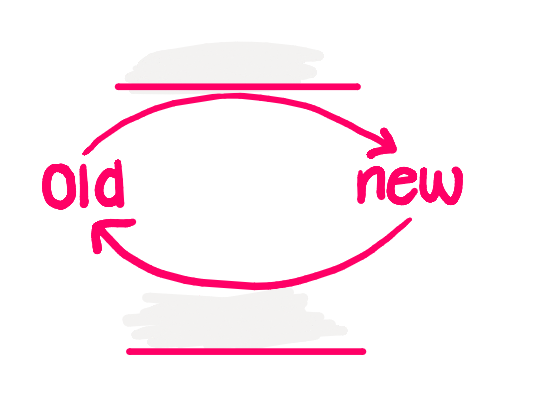
fill in the gaps to help decide if it is proactive or retroactive interference
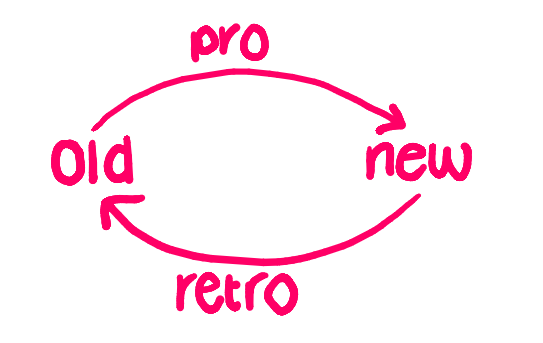
what is some research support of interference?
Georg Muller and student were first to identify retroactive interference
Gave Ps a list of nonsense syllables to learn for six minutes and then, after a retention interval asked Ps to recall list
Performance was less good if Ps had been given an intervening task between initial learning and recall (they were shown landscape paintings and asked to describe them)
The intervening task produces retroactive interference because the later task (describing pictures) interfered with what had been previously learnt
what is some research support of proactive interference?
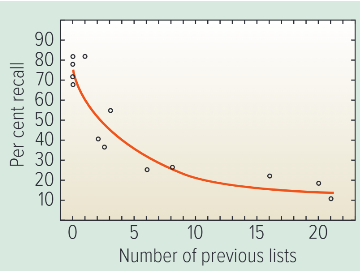
Benton Underwood showed that proactive interference could be equally significant
Analysed findings from a number of students
Concluded: when Ps have to learn series of word lists they don’t learn the lists of words encountered later on in the sequence as well as earlier on
Found: if Ps memorised 10 or more lists then after 24 hrs they remembered about 20% of what they learnt, if they only learnt one list recall was over 70%
how was similarity between information affecting interference forgetting research support?
Study by McGeoch and McDonald
Experimented with effects of similarity of words
Gave Ps list of 10 adjectives (list A)
Once list A was learned there was then a resting interval of 10 minutes during which they learned list B, followed by recall
If list B had synonyms of lost A, recall was poor (12%)
If list B was nonsense syllables this had less effect (26% recall)
If list B was numbers this had the least effect (37% recall)
This shows that interference is the strongest the more similar the items are
Only interference, rather than decay, can explain such effects
Who did the main study on interference forgetting and what was it about?
Baddley and Hitch
Rugby players recalling games
what was the method in Baddley and Hitch’s study on interference forgetting?
Baddeley and Hitch (1977) studied forgetting and interference using rugby players.
Players asked to recall the names of the teams they had played against during a rugby season.
Some players played every game, while others missed games because of injury.
The length of the season was the same for all players, so the amount of time passed was equal for everyone.
however, number of games played each differed meaning amount of interference differed
what were the findings and conclusions of Baddley and Hitch’s study on interference forgetting?
The results showed that players who played the most games forgot more team names.
This supported interference theory rather than decay theory.
The study demonstrated that interference affects forgetting in everyday life.
what did Baddley and Hitch decide the different outcomes of there study could be due to?
Decay theory predicts that all players should forget a similar amount because forgetting is caused mainly by time passing.
Interference theory predicts that players who played more games should forget more because extra games interfere with memories of previous opponents.
what is a methodical limitation to most interreference forgetting studies?
Demonstrated in artificial lab conditions which rarely occur in everyday life
P - Research is artificial
E - Most research uses artificial word lists or nonsense syllables which isn't realistic to what we would have to remember in everyday life. The lists are often very specifically contrived to have similarities making it not realistic, so it doesn’t pay a big part in forgetting in everyday life.
T - therefore the studies lack mundane realism and ecological validity and so can’t be generalised to every day life
what is another limitation of interference as an explanation of forgetting? (rare)
P - interference in real life doesn’t happen that often
E - memories have to be quite similar for interference which is quite uncommon, so it doesn’t happen very often
T - interference is considered relatively unimportant as an explanation as everyday forgetting
what is retrieval failure as an explanation of forgetting?
A form of forgetting due to the absence of the necessary retrieval cues to access the stored memory trace
The memory is available, but we are unable to retrieve/access it unless a specific cue is provided
what are cues?
other bits of information that are encoded at the same time as the memory.
They create lots of different access routes to the target memory.
what are the 2 types of contextual cues?
internal
external
what are external cues?
Features of the environment when the memory was encoded
e.g. the classroom
what are internal cues?
Physical and/or mental state when the memory was encoded
e.g. stressed, happy, drunk
what are the 2 types of forgetting within retrieval failure?
context dependant forgetting
state dependant forgetting
what is context dependant forgetting?
Environmental cues during learning are missing at retrieval
what is state dependant forgetting?
Physiological or psychological cues during learning are absent at retrieval
what is the encoding specifity principle?
Cues that are present at both coding and retrieval aid recall
You are more likely to forget something if the context at retrieval is different to the context at encoding
who came up with the encoding specifity principle?
Tulving
what is some research support done by Godden and Baddley to support context dependant forgetting?
Investigated effect of contextual cues
Researcher recruited scuba divers as Ps and arranged for them to learn a set of words either on land or in water
Subsequently they were tested again either on land or underwater
Results showed that highest recall occurred when the initial context matched the recall environment e.g. learning on land and recalling on land
what is one downside to Godden and Baddley’s research into context dependant forgetting?
land and underwater are 2 very different contexts
differences aren’t likely to be this extreme in day to day life
so generalisability is low
what is some research support into state dependant forgetting?
researcher asked Ps to learn word lists
Ps learned them in one of 2 states: drunk or sober
Those in the drunk condition consumed alcohol equal to about three times the UK drink‑driving limit.
After 24 hours, participants were tested again: some were sober, others were made drunk again.
Recall was better when the learning and recall states matched (sober → sober, drunk → drunk).
Recall was worse when the states differed (sober → drunk, drunk → sober).
what is an evaluation point that does not support the encoding specificity principle?
Encoding specificity principle is impossible to test because it is circular
If stimulus leads to retrieval of a memory than it must have been encoded in the memory
If it doesn’t lead to the retrieval of a memory then according to encoding specificity principle, it can't have been encoded in memory
But this is impossible to test for an item that hasn't been encoded in memory so this cannot be proved
Therefore the cues do not cause retrieval, they are just associated with retrieval