P2P nervous
 Call Kai
 Learn
Learn Practice Test
 Spaced Repetition
 Match
Match Flashcards
 Knowt Play
1/27

There's no tags or description
Looks like no tags are added yet.
Name | Mastery | Learn | Test | Matching | Spaced | Call with Kai |
|---|
No analytics yet
Send a link to your students to track their progress
28 Terms
what structure does the pudendal nerve provide
somatic motor innervation
somatic sensory innervation
the anal sphincter
the perineal skin
where does the pudendal nerve convey parasympathetic fibres from
sacral spinal cord to rectal smooth muscle
what is another thing that the pudendal parasympathetic division controls
urinary bladder contraction
what nerve is responsible for hamstring, distal limb muscle and cutaneous innervation below the stifle
the sciatic nerve
what is the largest foramen and what major structures pass through
foramen magnum
the spinal cord into the cranial cavity where it becomes continuous with the lower end of the medulla oblongata
vertebral arteries
anterior and posterior spinal arteries
spinal roots of the accessory nerve
3 foramina and nerves that exit through
foramen ovale: mandibular nerve
jugular foramen: glossopharyngeal nerve, vagus nerve, accessory nerve
foramen rotundum: maxillary nerve
a) Name two important structures that pass through the intervertebral spaces and foramina?
The articulation of the skull and the Atlas (the atlanto-occipital joint) creates a large space on the dorsal aspect. Identify this space. b) What might be the clinical significance of this space?
craniocervical junction
protets the structures transitioning from the skull to the spinal column
foramen magnum is a critical passage point
conduit for major blood vessels supplying the brain eg the vertebral arteires
white and grey matter of the brain
grey matter consists of neuronal cell bodies and dendrites and synpases and glial cells
white matter is myelinated axons
Identify and name the tough membrane that covers the outer surface of the brain.
dura mater
Name the other two layers of membranes that cover the brain.
arachnoid mater
pia mater
Briefly explain why the two membranes you have named in (b) above are not discernible over the brain surface.
what are the elevations and depressions on the brain called
gyri and sulci
How far caudally does the spinal cord extend in the vertebral column? Use the vertebrae number (e.g. C1, T1 etc.) as a marker.
L2
here are two areas of the spinal cord where it briefly thickens, known as the intumescences. They correspond to the regions of the forelimb and hindlimb, respectively. b) What is the likely reason for these swellings?
Describe how the spinal cord terminates at its most caudal end.
it travels inferiorly within the vertebral canal surrounded by spinal meninges containing csf
at the l2 vertebrae level the spinal cord tapers off forming the conus medullaris
the spinal nerves that arise from the end of the spinal cord are bundled together forming the cauda equina
What does the DRG consist of?
a collection of neuronal cell bodies of sensory neurons
How does the location of the dura mater in the vertebral column compare to that of the cranium?
cranial dura mater
consist of an outer periosteal layer and an inner meningeal dura
periosteal is closely attached to the internal surface of skull bones
meningeal is continuous with th dura of the spinal cord
periosteal and meningeal are tightlly fused together except for where they separate to for the dural ventral sinuses
spinal
only one layer
not closely integrated with the overlying bones
there is an epidural space
Some cranial nerves travel away from the cranium to innervate structures far away from the head. In pot 361, observe the nerve passing down the neck all the way to the thorax. The same nerve can be viewed in the additional pots and laminates, running very close to the base of the heart. i) Identify this cranial nerve
What is the effect of stimulation of this nerve on the heart?
What is the effect of stimulation of this nerve on the intestines?
Which part of the brain connects directly to the neurons projecting the nasal cavity?
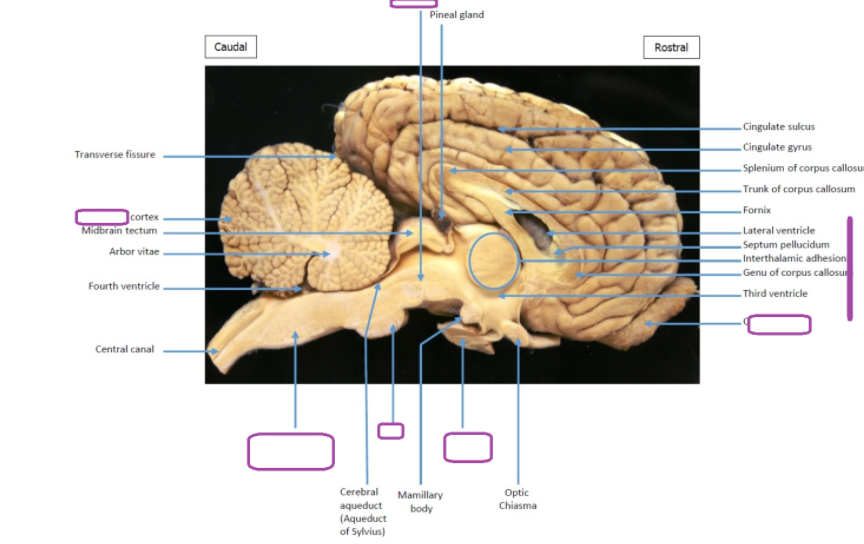
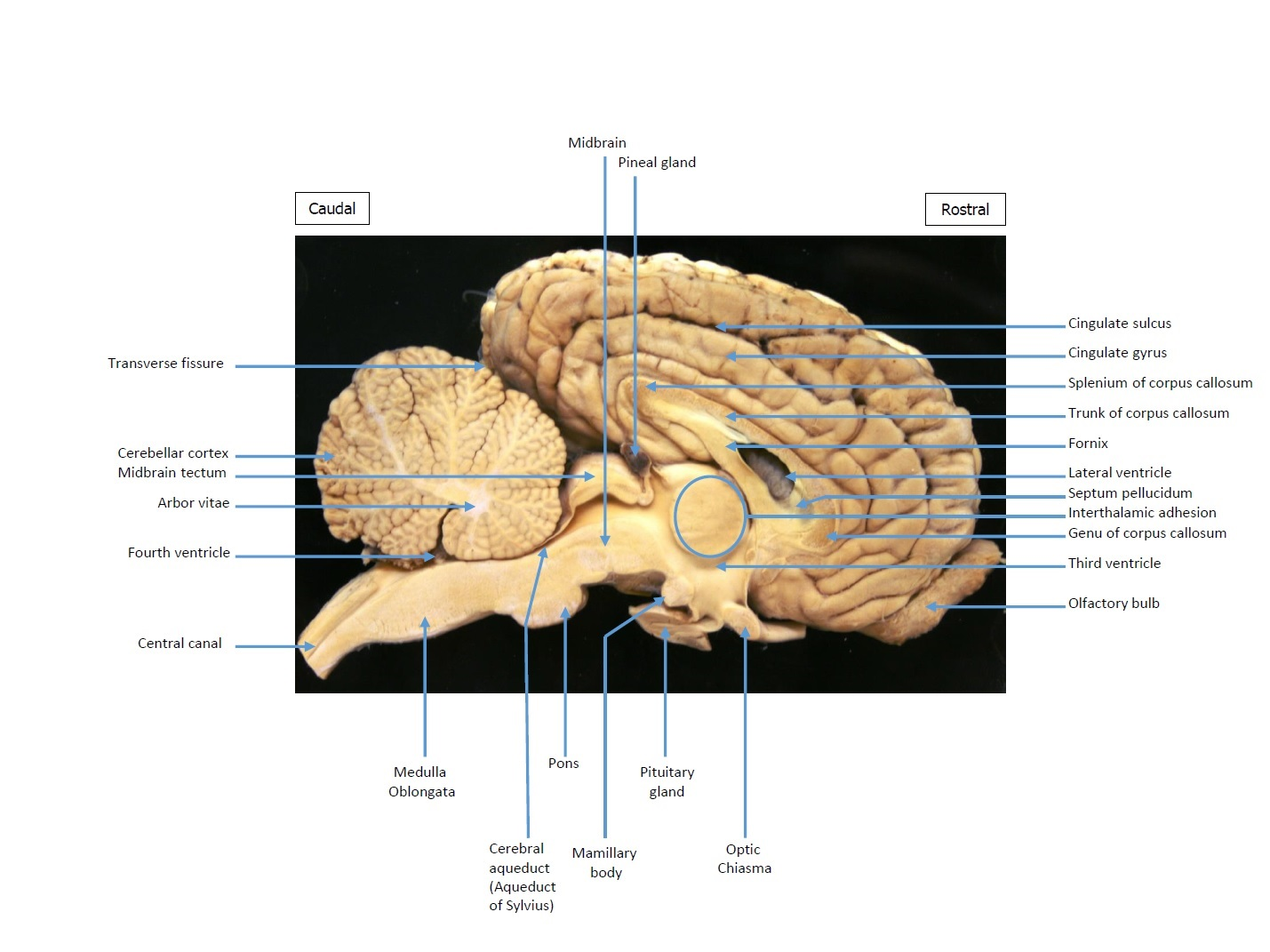
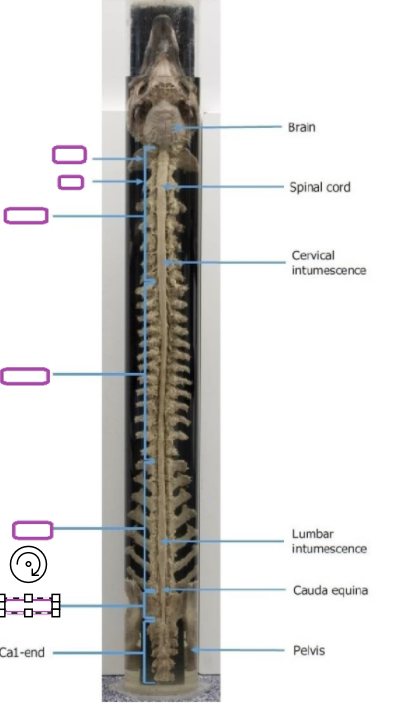
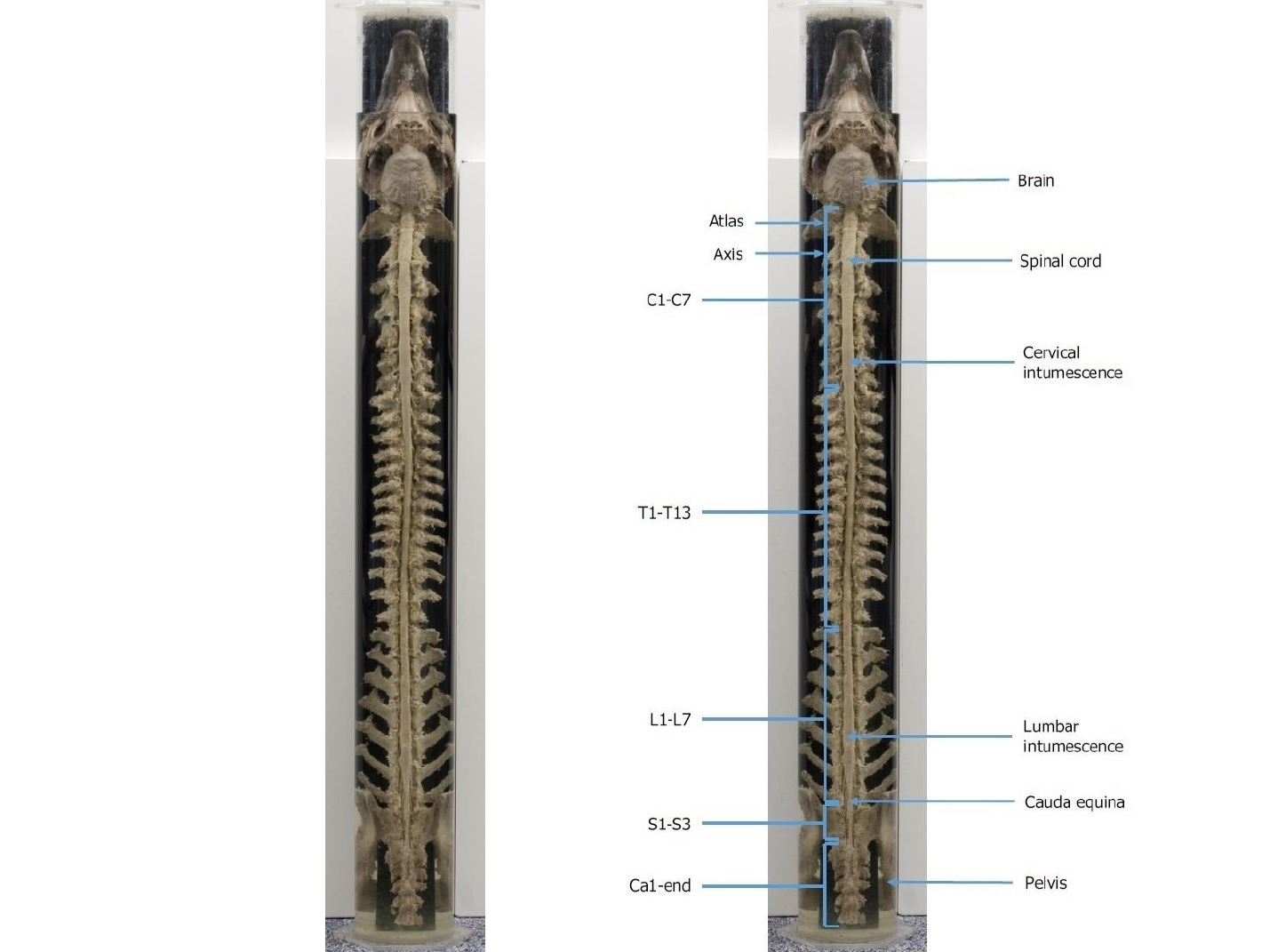
what are the 4 main nerves supplying the canine forelimb?
radial nerve
musculocutaneous nerve
median nerve
ulnar nerve
which nrve passes down the neck to the thorax and runs close to the base of the heart?
vagus nerve
mainly parasympathetic autonomic
both afferent and efferent
slow heart rate
increases intestinal activity
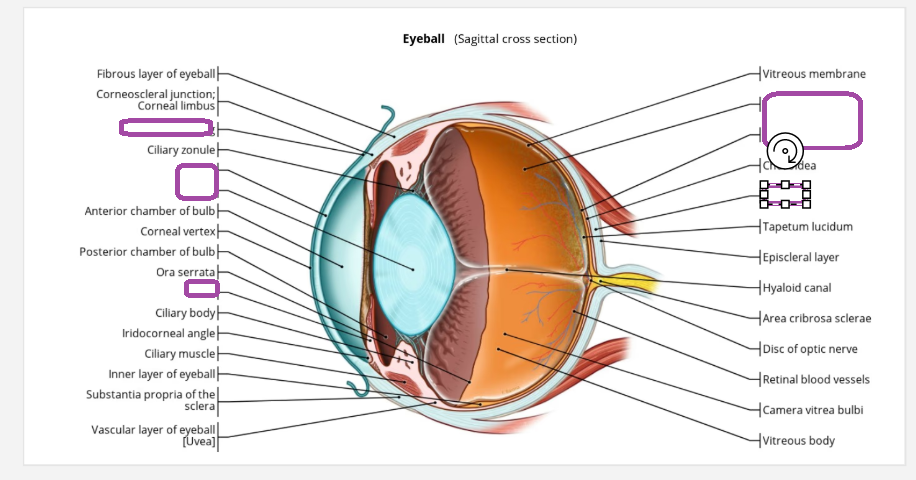
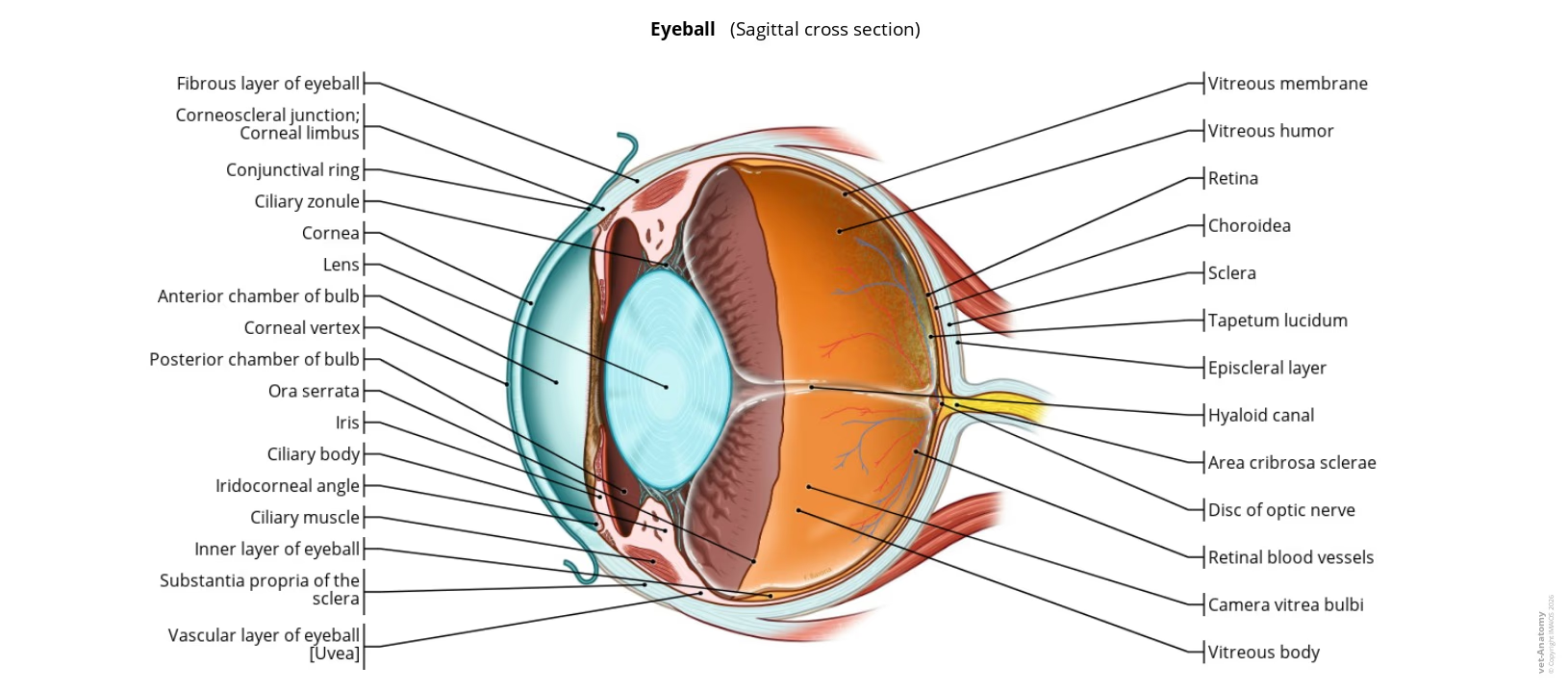
what are the major cell types found in the retina
rods and cones
retinal ganglion cells: transmit info from the rods and cones to the brain, a bundle forms the optic nerve