Pysch disorders pt. 3
 Call Kai
 Learn
Learn Practice Test
 Spaced Repetition
 Match
Match Flashcards
 Knowt Play
1/17

There's no tags or description
Looks like no tags are added yet.
Name | Mastery | Learn | Test | Matching | Spaced | Call with Kai |
|---|
No analytics yet
Send a link to your students to track their progress
18 Terms
Schizophrenia
Profound disruption of basic psychological processes
Distorted perception of reality
Altered or blunted emotion
Disturbances in thought, motivation, and behavior
Positive, negative, & cognitive symptoms
Positive symptoms
Changes in behavior or thoughts
Negative symptoms
Absence/withdrawal of traits or experiences
Hallucinations
false perceptual experiences (hearing, seeing, smelling)
Delusions
false beliefs, often strange and gradiose
Disorganized speech
ideas shift rapidly and incoherently among unrelated topics
Atypical or repetitive behavior
behavior that is inappropriate or ineffective in attaining goals (motor disturbances)
Negative symptoms of schizophrenia
Emotional or social withdrawal (loss of interest in socializing)
Blunted/flat affect
Apathy, loss of motivation
Poverty of speech (very minimal talking/responding)
Cognitive symptoms in schizophrenia
Deficits in cognitive abilities (EF, attention, memory, problem-solving)
Prevent people with schizophrenia from maintaining high-level/typical functioning (keeping a job, maintaining friendships)
Schizophrenia genetic factors
Typically appears in adolescence or young adulthood
no one gene, combination based
Concordance
Sharing of a characteristic
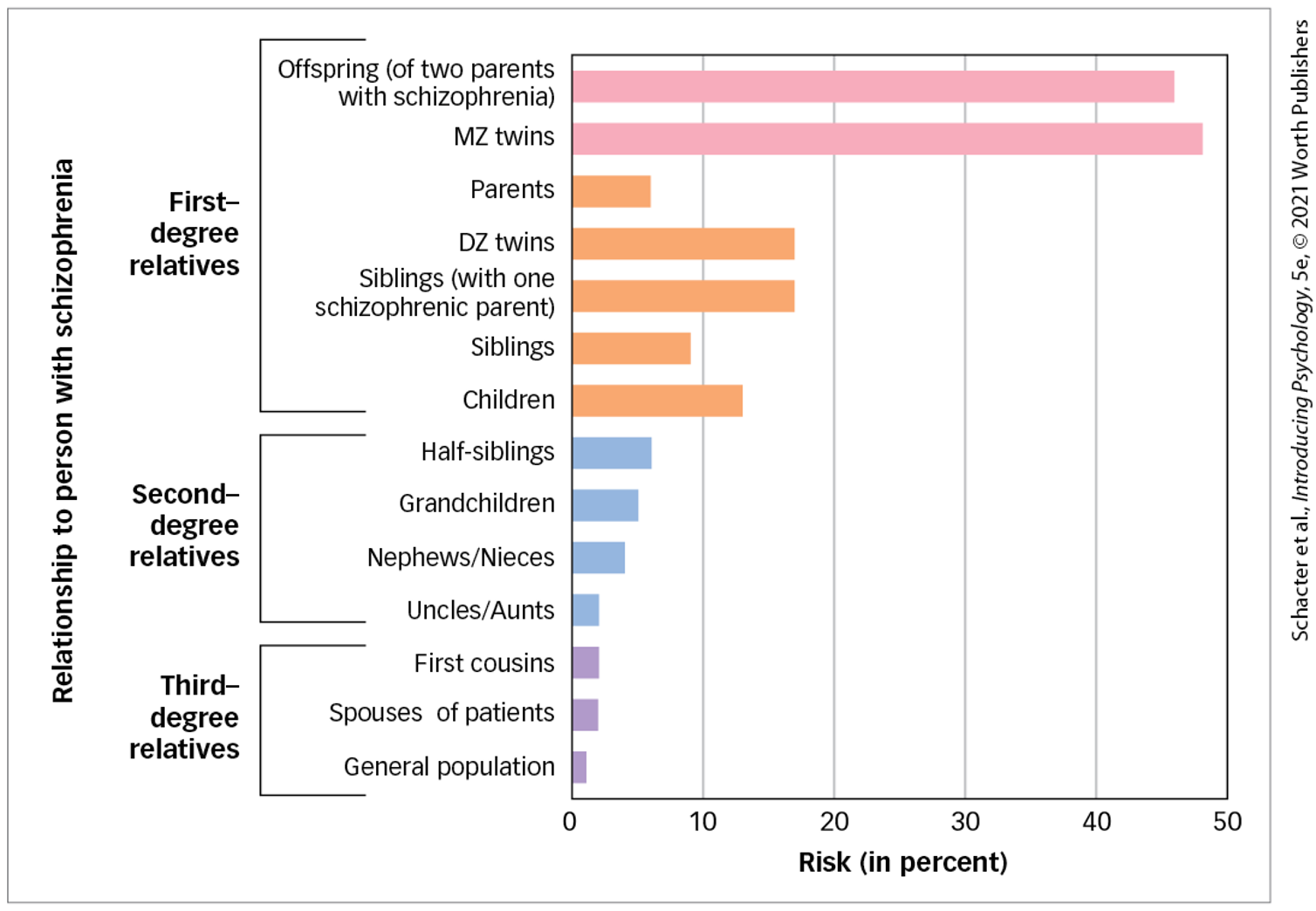
Schizophrenia concordance
Family, adoptive, and twin studies show a higher incidence among biological relatives
In identical twins, concordance is 50%
Fraternal twins, concordance is 17%
Schizophrenia stressors
Adversity in childhood (trauma)
Prenatal stress, maternal illnesses
City living—possibly due to pollutants, exposure to other diseases, crowded conditions, tense social interactions
Vulnerable life stages for developing schizophrenia
Before birth, complications during birth, type of environment during childhood
Experiencing stress during more sensitive/critical periods - increases likelihood of developing schizophrenia
Schizophrenia drug treatments
Chlorpromazine (Thorazine) – discovered in early 1950s
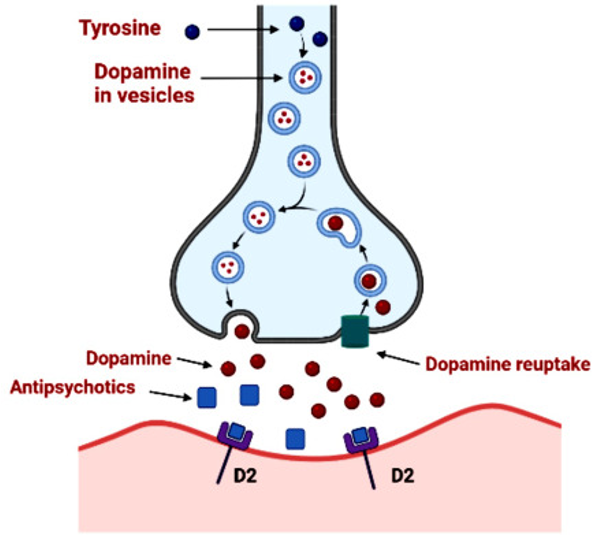
First generation antipsychotics = antagonists, blocked dopamine receptors (D2 receptors)
Relieved positive symptoms
Dopamine hypothesis
Schizophrenia results from either excessive levels of dopamine release or dopamine receptors
Second generation antipsychotics
Effective in treating positive & negative symptoms
Ex: clozapine
Clozapine = blocks dopamine AND serotonin receptors
Some 2nd gen antipsychotics increased dopamine release