3. Discharge of a River
 Call Kai
 Learn
Learn Practice Test
 Spaced Repetition
 Match
Match Flashcards
 Knowt Play
1/14

There's no tags or description
Looks like no tags are added yet.
Name | Mastery | Learn | Test | Matching | Spaced | Call with Kai |
|---|
No analytics yet
Send a link to your students to track their progress
15 Terms
Discharge
The amount of water across the full width of a river flowing past a point in a given time. Measured in cubic metres per second (cumecs / m³/s).
Storm Hydrograph
A graph showing the rise and fall of a river's water level (discharge) during and after a rainstorm. Records the discharge figures over time.
Annual Hydrograph
A graph showing the discharge of a river over an entire year.
Cumec
The unit used to measure river discharge = cubic metres per second (m³/s).
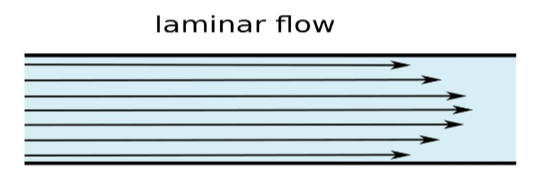
Laminar Flow
Water flows smoothly over a smooth surface in thin layers/sheets. Little friction, can achieve high speed. Water does NOT change levels. Associated with a flat, even riverbed.
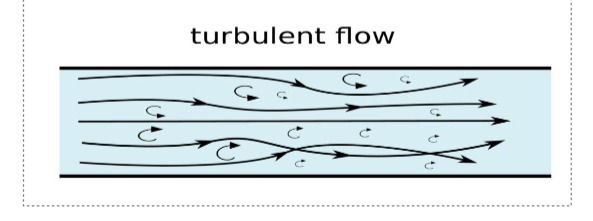
Turbulent Flow
Water flows in a bubbling, chaotic motion. The riverbed is UNEVEN so water continuously changes levels, creating much internal friction. This reduces the speed of flow.
Where is flow speed highest in a straight river?
In the MIDDLE of the water, just below the surface — least frictional drag from the bed, banks and surface.
Where is flow speed highest in a meandering river?
Toward the OUTER bank of the meander — where erosion occurs.
Factor: Amount of rainfall and discharge
More rain → more surface runoff → higher discharge.
Factor: Gradient and discharge
Steeper gradient → water flows faster → higher discharge.
Factor: Soil type and discharge
Impermeable soil → less infiltration → more runoff → higher discharge. Permeable soil → more infiltration → lower discharge.
Factor: Rock type and discharge
Impermeable rock → no infiltration → more runoff → higher discharge.
Factor: Vegetation and discharge
Dense vegetation → more interception and transpiration → less runoff → lower discharge.
Factor: Human activities and discharge
Urbanisation (tar, concrete) → less infiltration → more runoff → higher discharge. Dams reduce discharge downstream.
Factors That Influence Discharge?
Amount of rai
Gradient of the land
Soil type
Rock type
Vegetation
Human activities