Module 4
 Call Kai
 Learn
Learn Practice Test
 Spaced Repetition
 Match
Match Flashcards
 Knowt Play
1/26

There's no tags or description
Looks like no tags are added yet.
Name | Mastery | Learn | Test | Matching | Spaced | Call with Kai |
|---|
No analytics yet
Send a link to your students to track their progress
27 Terms
What is the chemical form in food fat and body fat?
Triglyceride is the basic unit of fat and is made up of one glycerol backbone with three fatty acids
Saturated fat is a type of what?
type of fatty acid where there are no double bonds (or “kinks”) in the chain of carbon atoms, so the fatty acids are able to pack closely together, forming a solid structure at room temperature
Fats are made up of what?
made up of one glycerol backbone with three fatty acids
If saturated fatty acids predominate in a fat, the fat will
A) be solid at room temperature
B) be liquid at room temperature
A) be solid at room temperature
In an 18:1 fatty acid, what do the numbers represent?
“18” refers to the number of carbons in the chain and the “1” refers to the number of double bonds we know that the fatty acid is 18 carbons long and has 1 double bond
What fats are essential?
Linolenic (18:3) and Linoleic acid (18:2)
True or False: In a given food fat such as flaxseed oil, the triglyceride contains exclusively one type of fatty acid (saturated or unsaturated).
False, Fats in foods are a mix of saturated, monounsaturated, and polyunsaturated fatty acids
Which of the following are good food sources of linolenic acid (18:3)?
Walnut, fatty fish (salmon, tuna), flaxseed meal, and flaxseed oil
Which of the following are good food sources of linoleic acid (18:2)?
corn oil, safflower oil, and sunflower oil
Essential fats are used to make what?
used to make hormone-like substances, called prostaglandins, which help mediate the inflammatory response from the immune system
liver → cholesterol is made from C2 units from the breakdown of the macronutrients (protein, fat, and carbohydrate)
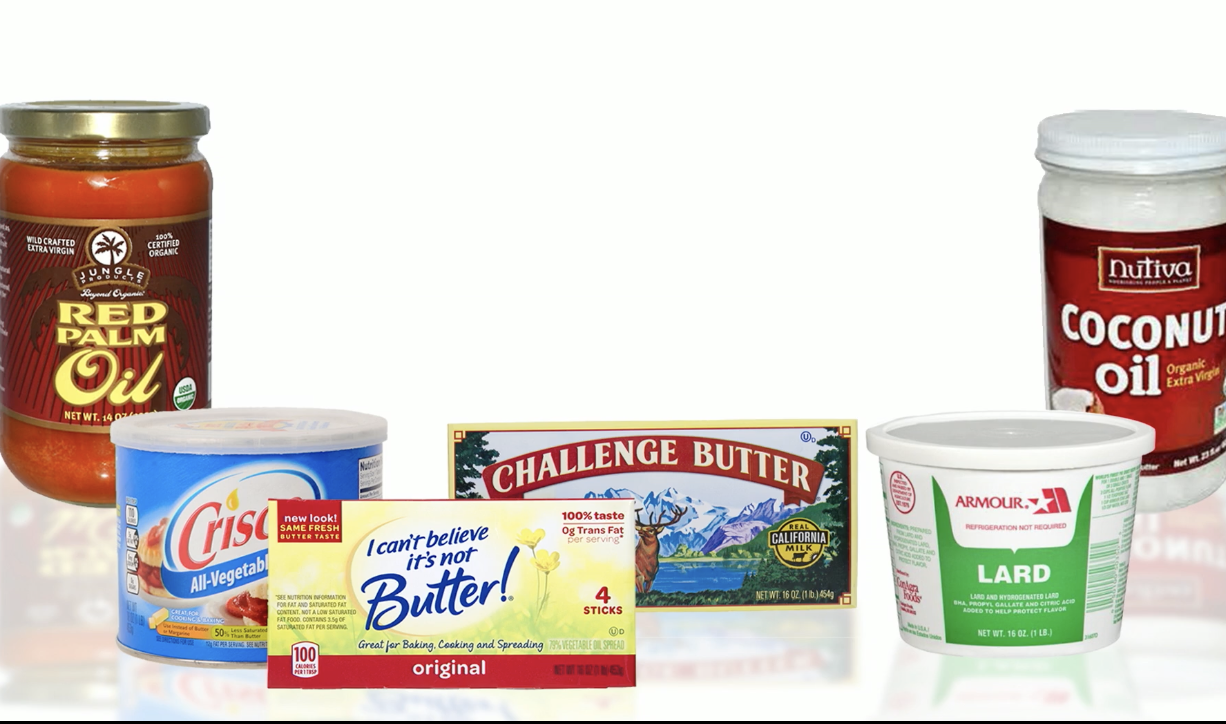
What type of fat is pictured here?
A) linoleic acid (18:2, omega-6)
B) monounsaturated fat
C) polyunsaturated fat
D) linolenic acid (18:3, omega-3)
E) saturated fat
E) saturated fat
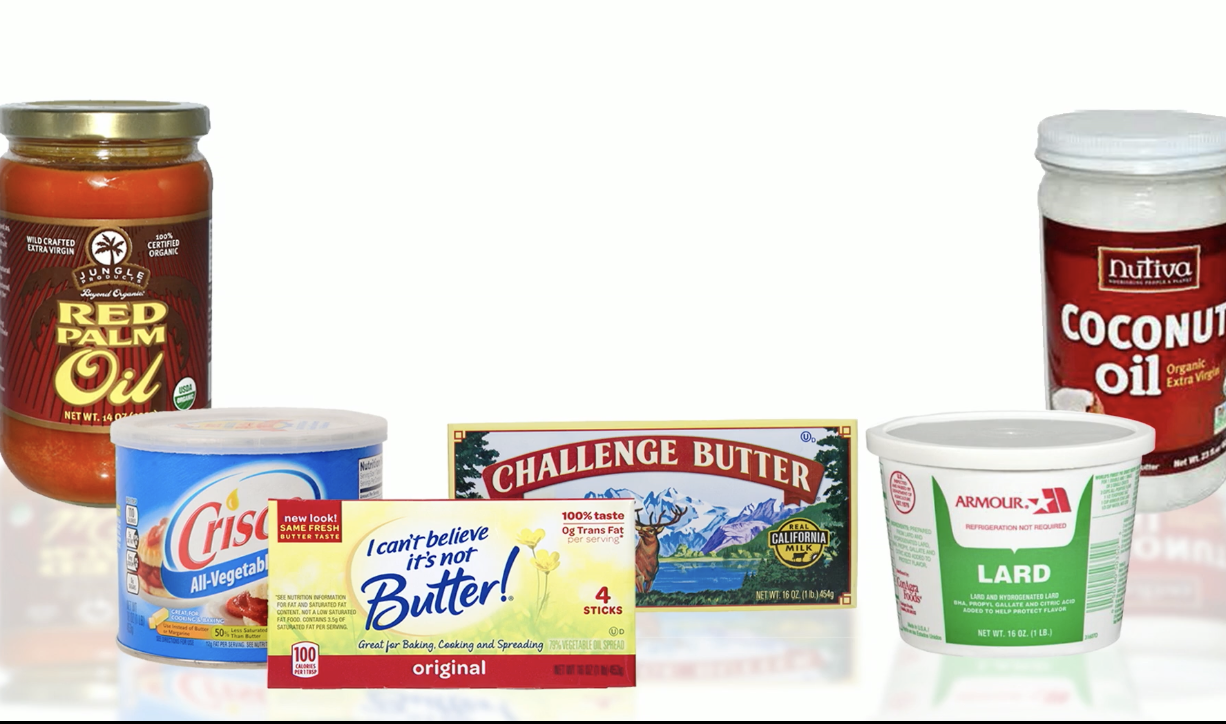
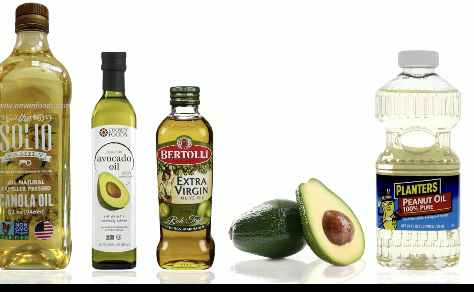
What type of fat is pictured here?
A) linoleic acid (18:2, omega-6)
B) monounsaturated fat
C) polyunsaturated fat
D) linolenic acid (18:3, omega-3)
E) saturated fat
B) monounsaturated fat
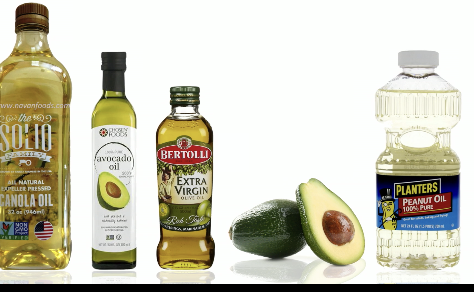
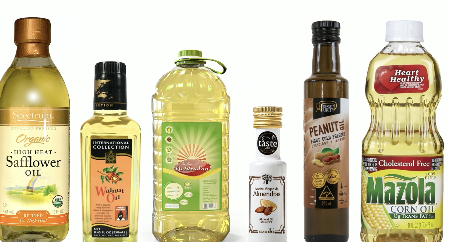
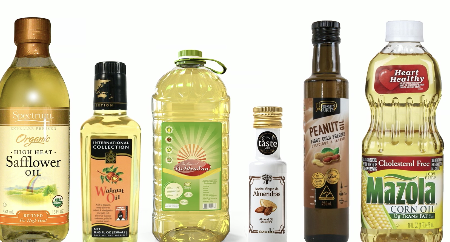
What type of fat is pictured here?
A) monounsaturated fat
B) polyunsaturated fat
C) saturated fat
B) polyunsaturated fat
Pistachios, brazil nuts, and cashews are good sources of what?
nuts are a good source of polyunsaturated fat, particularly linoleic acid (18:2, omega 6)
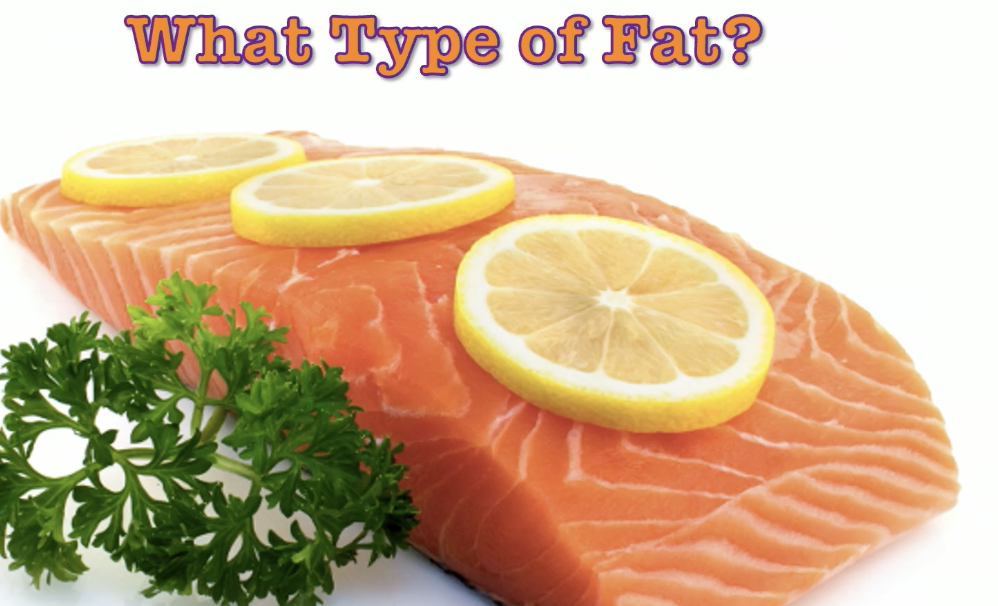
Salmon is a good source of what?
Salmon is a fatty fish and is a good source of the polyunsaturated fat, linolenic acid (18:3, omega-3)
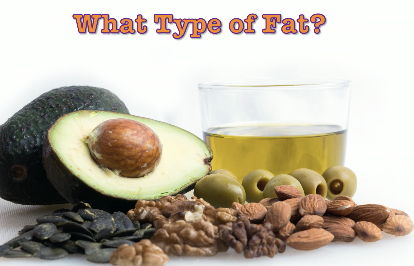
The main type of fat found in avocados, olives, and olive oil are what?
good sources of monounsaturated fat (18:1, oleic acid)
True or False: Olive oil and olives supply essential fats.
False, Olive oil and olives are good sources of monounsaturated fat (18:1, oleic acid), but monounsaturated fat is not an essential fatty acid since the body is able to make it
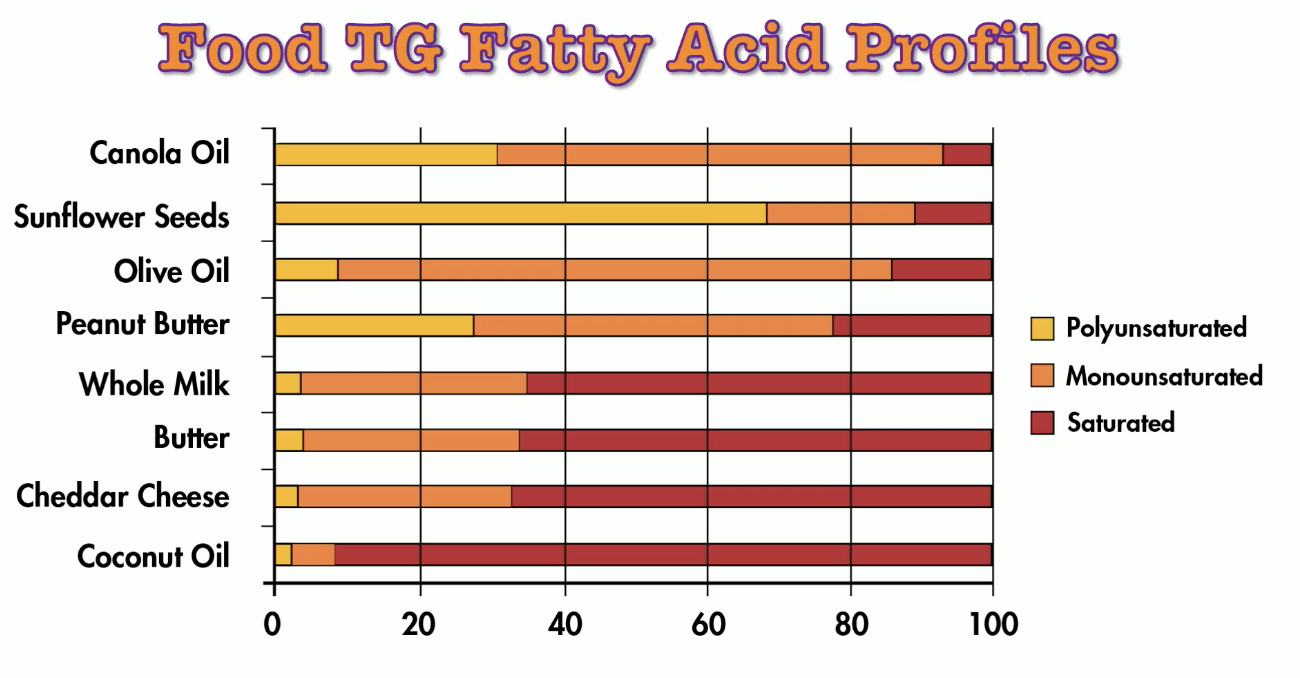
Hydrogenation is a process that makes unsaturated fats what?
makes unsaturated fats more solid, more resistant to oxidation (more stable) and contain trans fat
changes the conformation of the double bond from the cis form to a trans form which stabilizes the fat since it’s more difficult for the fat to become oxidized and go bad
converts a plant-based unsaturated fat (no cholesterol) to a type of saturated fat, called a “trans fat” (still no cholesterol)
What is the Daily Value for trans fat?
daily value for trans fat has not been established, so the current recommendation is to avoid foods with trans fat from hydrogenation and partially hydrogenated oil
diets containing several grams of trans fat increase risk for heart disease
True or False: Fat’s insolubility in water affects digestion, absorption, and transport through the circulation.
True, and fat must be emulsified to make fat soluble in water and be “accepted” by the body
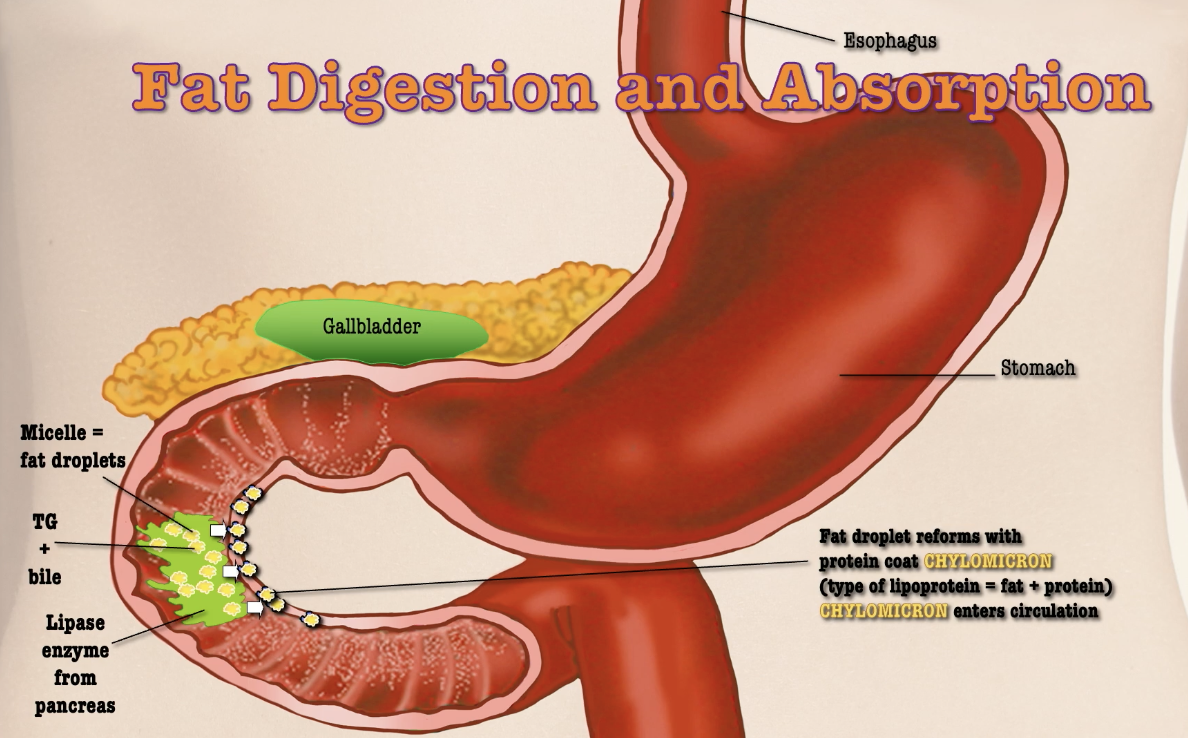
Digestive enzymes for protein, carbohydrate, and fat come from where?
comes from the Pancreas where mouth begins the process of digestion with chewing and saliva, the gallbladder stores and secretes bile, the small intestine is the primary site for absorption, and the liver detoxifies chemicals and metabolizes drugs
The transport form of fat and cholesterol in the bloodstream resulting directly from a meal is what?
Chylomicrons are the lipoproteins formed from dietary fat that transport triglycerides from the meal
form in the small intestine and move to the circulation to deliver triglycerides to body cells
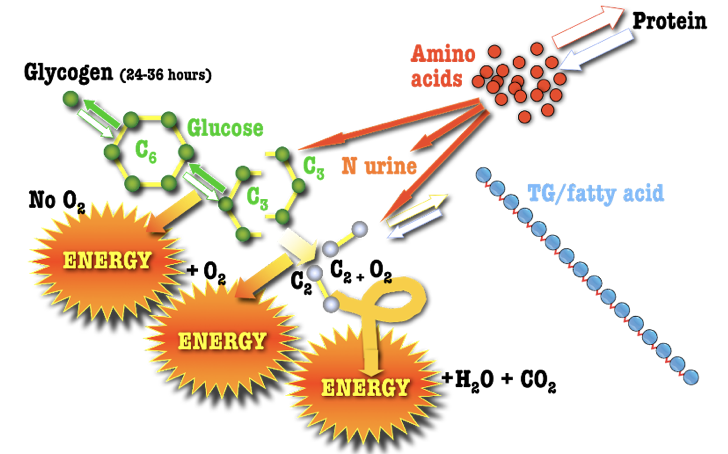
The end products of fat energy metabolism are what?
once the triglyceride is broken apart and the fatty acids are broken down into C2 units, energy is released where the process uses oxygen, so it’s referred to as “aerobic” energy metabolism, which is the same as carbohydrate energy metabolism
C2 units are also sent through the TCA cycle to release more energy and this process releases CO2 and makes water (H2O)
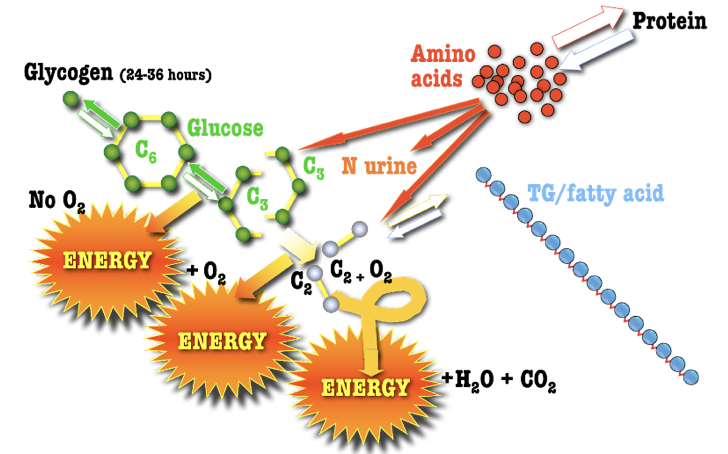
You ate dinner last night, went to bed, and woke up in the morning. Describe energy metabolism this morning.
after an overnight fast, energy nutrients are brought out of storage where Glycogen in the muscle and liver provides the brain with glucose for energy and the rest is used as energy for other tissues
Triglycerides/fatty acids from body fat stores are broken down through aerobic energy metabolism to use as energy (9 kcal/g) for other tissues
Body protein (functional tissue) is not touched since there is adequate carbohydrate fuel to use for glucose
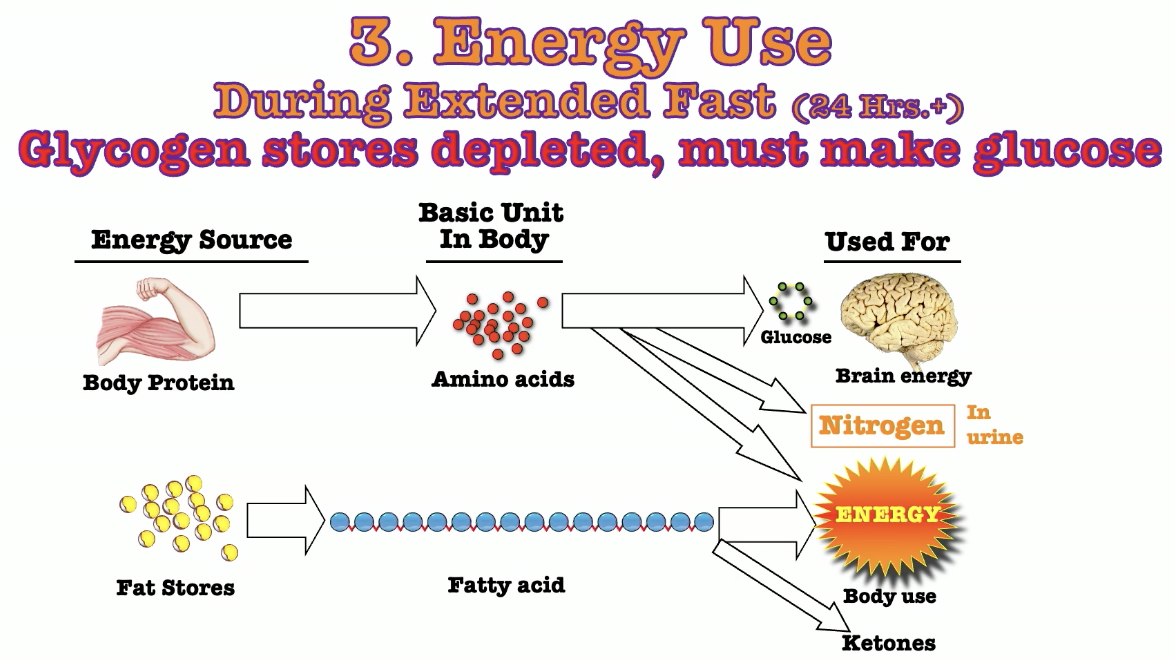
After a prolonged fast ( > 24 hrs), levels of nitrogen in the urine compared to the fed state do what?
causes the levels of nitrogen in the urine to increase as body isn’t receiving a dietary source of protein, so muscles are broken down to supply amino acids for the body to replenish protein needs
nitrogen is stripped off and made into urea to be excreted in the urine
What foods contain cholesterol?
butter, beef, and salmon all contain cholesterol, since all animal products (anything that has a liver) is a source of cholesterol
tofu, margarine, peanut butter, palm oil, and coconut oil are all fats from vegetable sources, so they do not contain cholesterol
Cholesterol:
substance made in the liver that performs essential processes, which include being a precursor to bile, being made into vitamin D, and being incorporated into cell membrane
not broken down into C3 or C2, so it does not provide any energy, nor is it used to make the digestive enzyme, lipase