2.3 Alkanes
 Call Kai
 Learn
Learn Practice Test
 Spaced Repetition
 Match
Match Flashcards
 Knowt Play
1/28

There's no tags or description
Looks like no tags are added yet.
Name | Mastery | Learn | Test | Matching | Spaced | Call with Kai |
|---|
No analytics yet
Send a link to your students to track their progress
29 Terms
What does saturated molecule mean
Hydrocarbon does not contain C=C bonds
General formula
CnH2n+2
No functional group - unreactive
Alkanes polarity
Non-polar- electro negativity of carbon and hydrogen similar- only van der waals
Alkanes boiling point
Increases as carbon chain length increases- increasing van der waals- more energy to release individuals molecules as gas,
short chains- gas, pentane - liquid
Branched alkanes- lower melting point as cannot pack together as closely as unbranched chains -van der waals not so effective
Aldehydes boiling point
Higher than alkanes as has permeant dipole dipole attractions
Solubility alkanes
Insoluble- water held. By hydrogen bonds much Stronger than van der waals forces between alkane molecules, alkanes mix with non-polar liquid e.g TOLUENE OR BENZO
Combustion reaction definition
The chemical reaction of fuels with oxygen, releasing heat and forming oxides
Hydrocarbon combustion general equation
Hydrocarbon + oxygen → carbon dioxide + water
Complete combustion- plentiful. Supply of oxygen
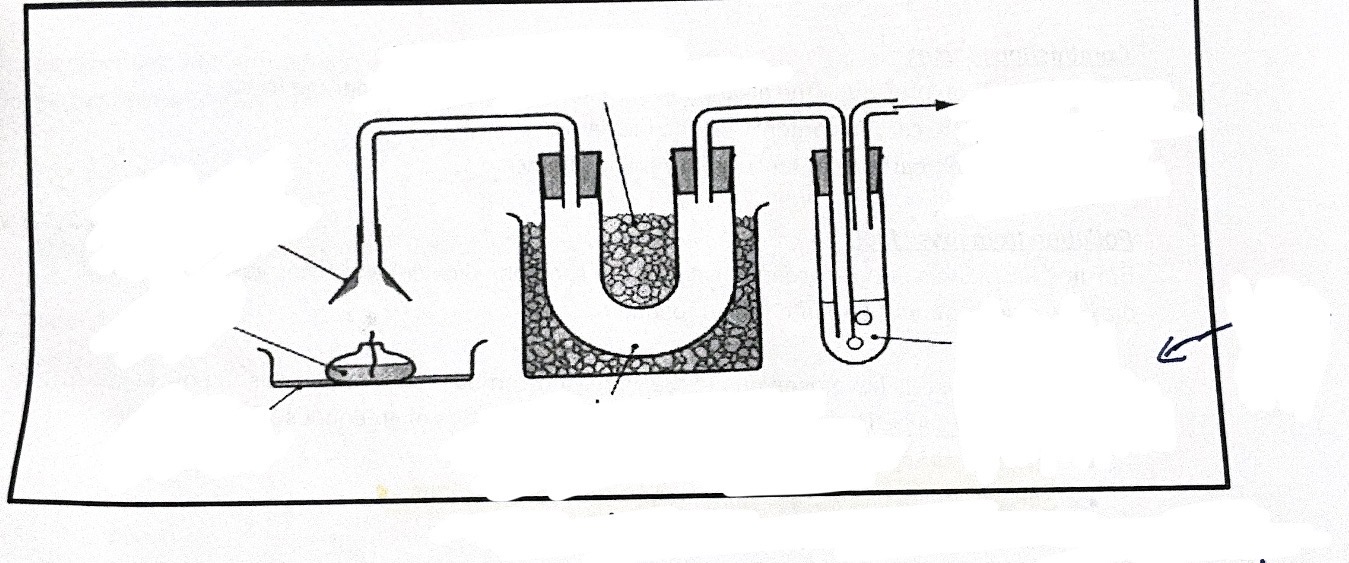
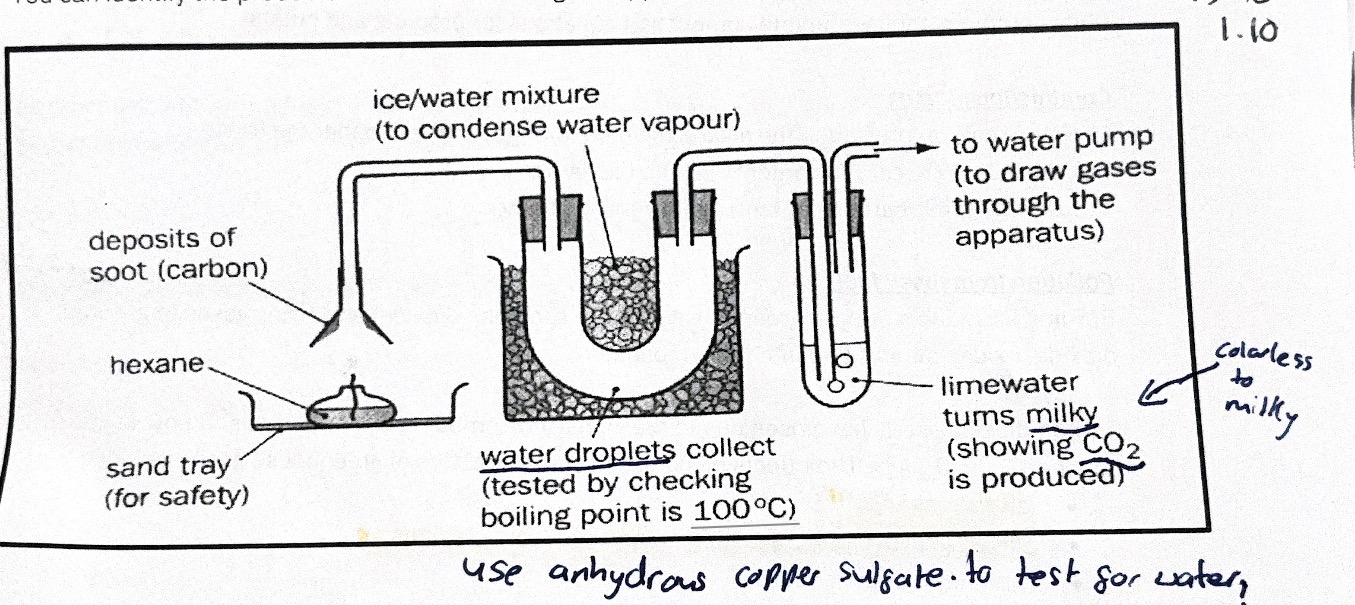
Incomplete combustion
Not all carbon atoms converted to CO2,
Carbon monoxide (toxic, poisonous, danger of running car engine in enclosed space ) or carbon (soot) produced
Incomplete supply of oxygen
Combustion equations order balance
E.g C4H10 + O2 → CO2 + H2O
C, H, O
C4H10+ 6.5O2 → 4CO2 + 5H2O
Combustion flames
More carbon - more orange sootier
E.g ethanol (52%carbon)- clean blue flame
Hexane(84% carbon) - smoky orange flame
Pollution from fossil fuels
Burning fossil fuels- greenhouse gasses e.g CO2 and acidic gases e.g sulfur dioxide (acid rain), nitrogen oxides.
Effects of increased greenhouse gases
climate change
raised sea levels/increased flooding of low-lying regions
melting of polar icecaps
Effects of acid rain
corrosion of limestone buildings/statues
death of fish
defoliation of trees..
Methods to limit production of greenhouse and acidic gases (URSU)
Using catalytic convertors
remove sulfur from fuels
scrubbing emissions from power stations/factories
using alkalis using renewables energies
Harmful combustion products from car exhausts
Carbon monoxide, (CO) poisonous gas produced by incomplete combustion.
Unburnt hydrocarbons, (CxHy) may also enter the atmosphere and these are significant greenhouse gases. contribute photochemical smog cause variety health problems.
Oxides of nitrogen, (NO / NO2) acidic gases leading to acid rain.
Catalytic converters in cars function how
Remove toxic gases from exhaust emissions, contain honeycomb structure thin layer of platinum, palladium, rhodium
Harmful gases catalytic converters equations
2NO → N2 + 02 - reduction
2NO2 → N2 + 202 - reduction
2CO+ 02 → 2C02 - combustion
CxHy + (x + y/4)O2 → xCO2 + (y/2)H2O - combustion
Combine e.g 2CO + 2NO → N2 + 2CO2
Methane chlorine reaction in sunlight, EQUATIONS
CH4 + Cl2 → CH3Cl + HCI
Monochloromethane (a local anaesthetic)
CH3Cl + Cl2 → CH2Cl2 + HCI
Dichloromethane (paint stripper)
CH2Cl2 + Cl2 → CHCl3 + HCI
Trichloromethane (anaesthetic, solvent)
CHCl3 + Cl2 → CCl4 + HCI
Tetrachloromethane - -produced with excess chlorine (solvent used in dry cleaning)
Name of mechanism for Alkane-Primary Haloalkane
free radical photochemical substitution
Substitution definition
Replacing one atom or group with a different group or atom.
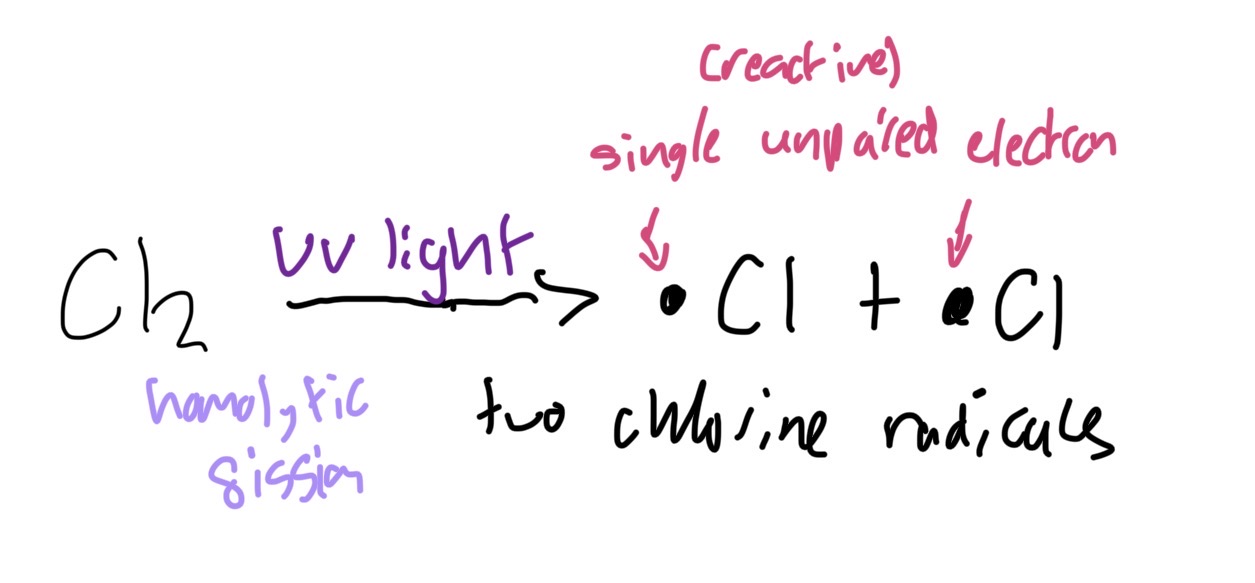
Radical definition and caused why
A radical is a particle with an unpaired electron. This unusual particle is brought about by UV light causing homolytic fission
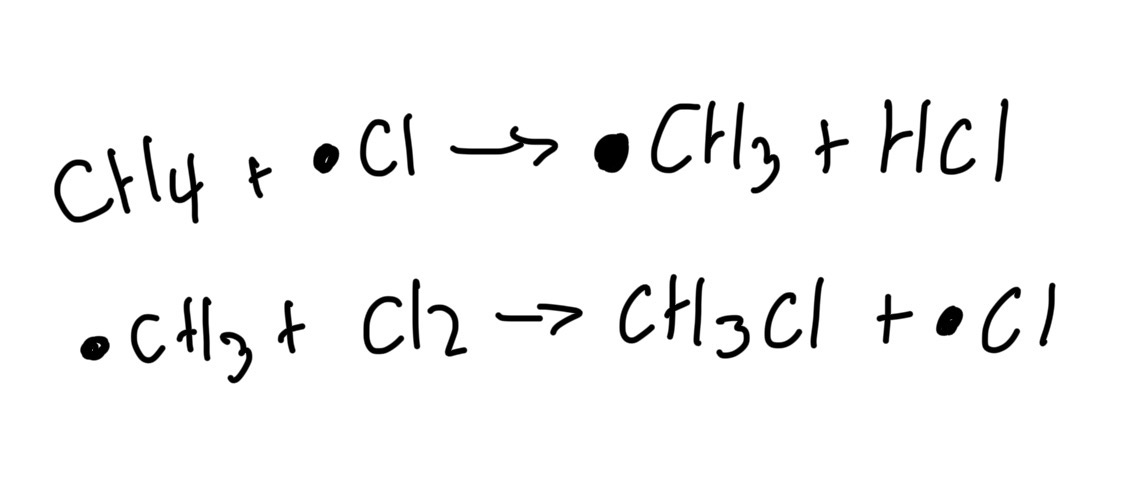
What are steps for 'free radical photochemical/substitution!'
One initiation step: one molecule forms two radicals
Two propagation steps: a molecule and a radical form a molecule and a radical
Three termination steps: two radicals form a molecule
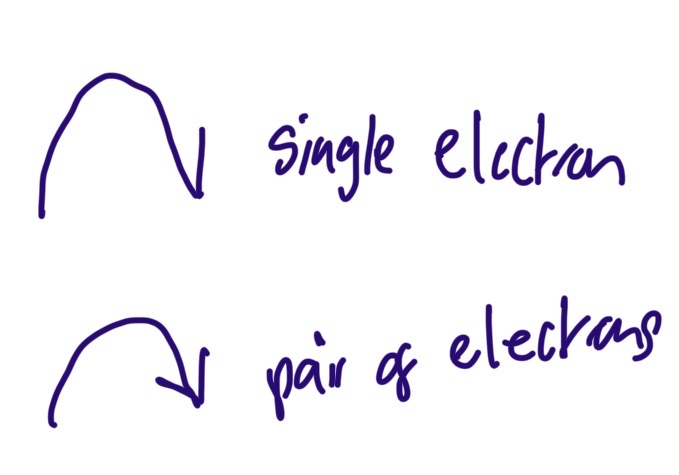
What are curly arrows used for in mechanism
Movement of electrons
Initiation step
Halogen molecule (uv light)→ radicals
Step 2 propagation
Molecule + radical → radical + molecule
Termination step 3
( 2 radicals → molecules)
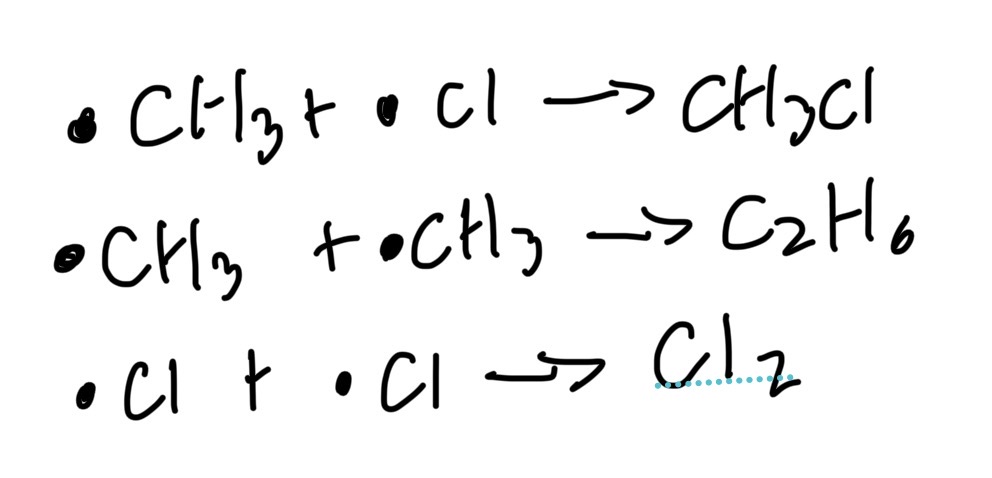
Termination products
Small amount of ethane, attacked by free readicals