CE 124 Final Exam
 Call Kai
 Learn
Learn Practice Test
 Spaced Repetition
 Match
Match Flashcards
 Knowt Play
1/101

There's no tags or description
Looks like no tags are added yet.
Name | Mastery | Learn | Test | Matching | Spaced | Call with Kai |
|---|
No analytics yet
Send a link to your students to track their progress
102 Terms
What are the phases of a construction project?
1.Initiation
2.Detailed Planning
3.Execution
4.Continuous Monitoring and Control
5.Formal Closure
What is the purpose of project initiation?
defines the project’s purpose and its alignment with
organizational goals
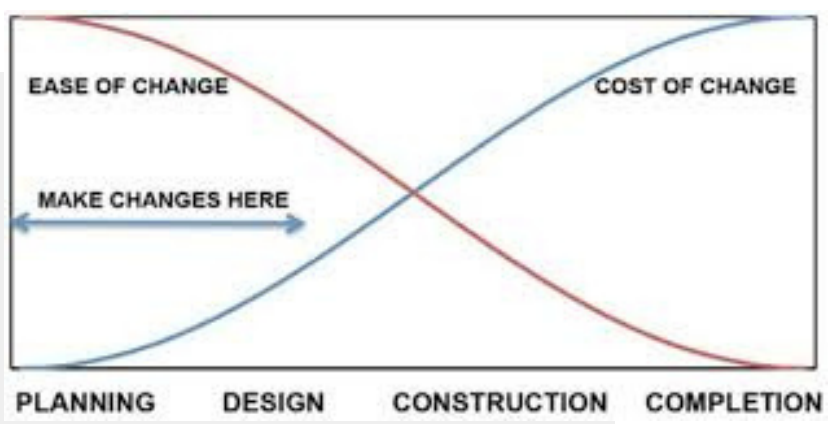
What are the key activities of project initiation?
needs assessments
feasibility studies
project charter
What is a project charter?
an official document authorizing the project and manager, outlining high-level requirements
What are the key activities of project planning?
project roadmap
goal setting (smart approach)
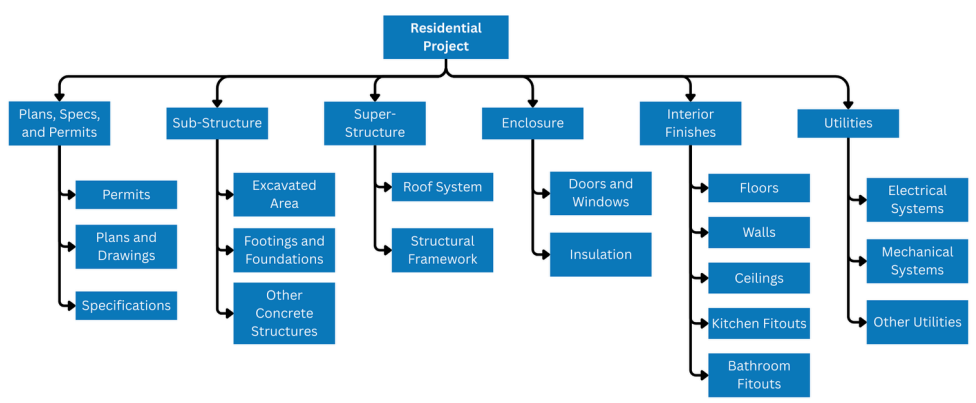
What is a work breakdown structure?
A hierarchical decomposition of the total work.
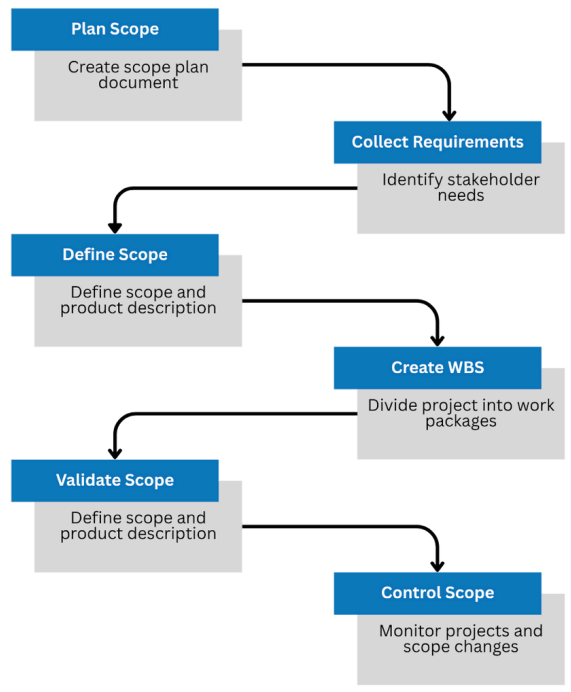
What are the 6 steps of scope management?
Plan Scope
Collect Requirements
Define Scope
Create WBS
Validate Scope
Control Scope
What are the 3 main steps of the design phase
Schematic Design (SD)
Design Development (DD)
Construction Documents (CD)
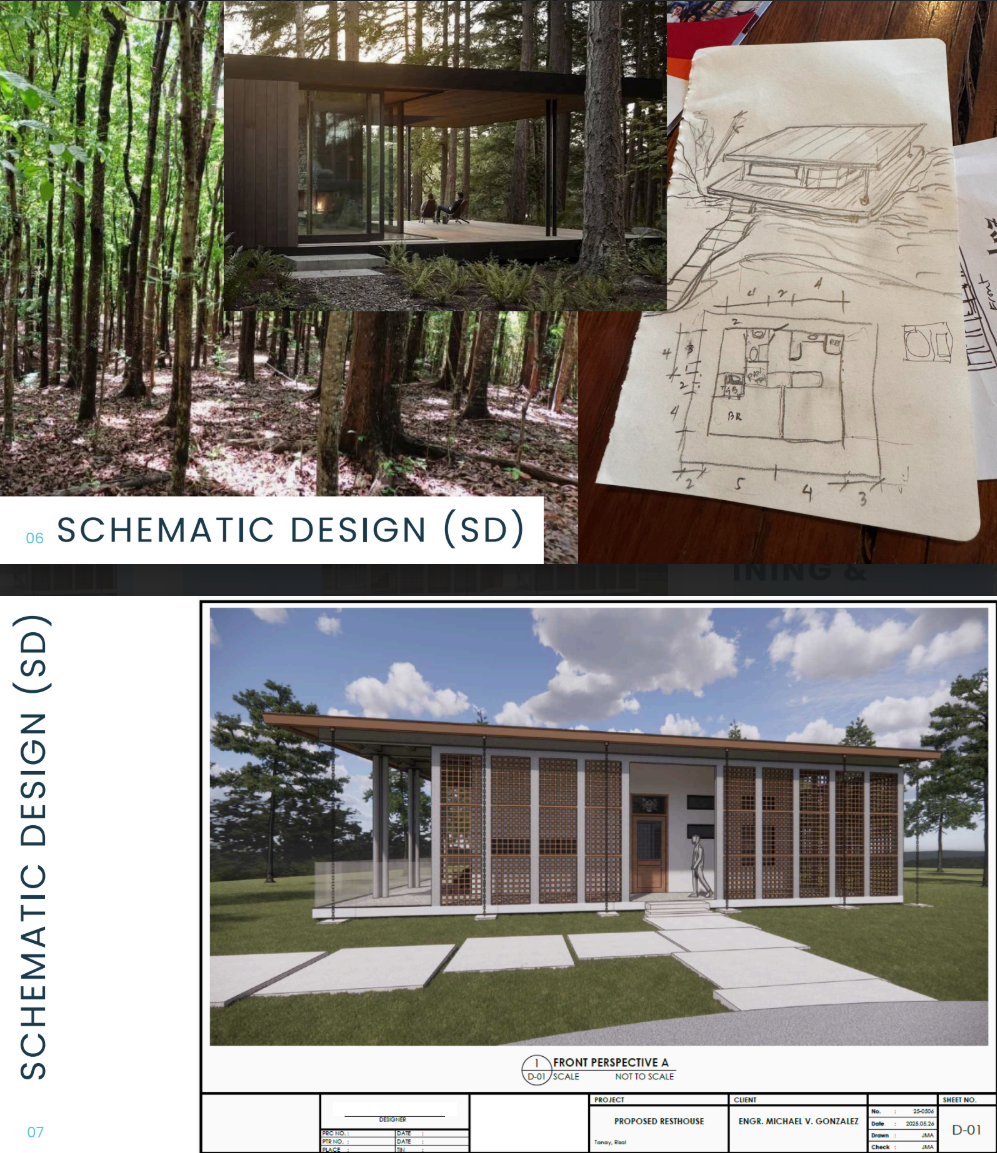
What is the purpose of a schematic design?
Focuses on the “look and feel”, establishing initial site plans, floor plans, and perspectives.
What id the purpose of design development (DD)
serves as a “deep dive” into details, refining building systems (structural, MEP) and material selections
What are sample outputs of design development (DD)?
ground floor plan
RCP on roof
front, rear, left, & right elevation
cross sections
long sections
What are some examples of construction documents (CD)?
right and left elevations
cross sections
plan view
wall detail
ground floor slab detail
beam-base plate connection detail
base plate connection 3D detail
door schedule
window schedule
foundation & pedestal details
connection details
catch basin details
septic tank details
plumbing isometric
What are construction documents?
The final blueprints and specifications used for permitting and as a guide for builders.
What are the key activities of execution and control?
mobilization
procurement
monitoring & control
What are the key activities of project closure?
punch list
handover
warranty period
What is a punch list?
A list of final defects or rectifications that must be resolved.
What are the modern project delivery methods?
Traditional (design-Bid-Build)
Design-Build (DB)
EPC (Engineering, Procurement, and Construction)
What is EPC (Engineering, Procurement, and Construction)
The contractor provides a “turnkey” solution, handling everything from feasibility to logistics
What is the role of the owner during the feasibility study stage?
formulates schemes
hires consultant
pays consultant for the job
acquires funding for the project
What is the role of the engineer/consultant during the feasibility study stage?
prepares FS
project recommendation
starts technical reports
What is the role of the contractor during the feasibility study stage?
no major contribution yet
What is the role of the owner during the detailed engineering design (de) phase?
provides concepts for required structure
corrects and approves proposal of engineers
procures contractor
What is the role of the engineer/consultant during the detailed engineering design (de) phase?
prepares DE
technical reports (CE majors: structural, geotech, water, envi, transpo: traffic eng, geometric eng, pavement/structural design)(non major: sanitary, quantity take off, cost estimate, construction duration)
finalizes architectural drawings (isometric, top, etc.)
schedule of finishes (roofing, flooring, walls,etc.)
prequalifies contractor
What is the role of the contractor during the detailed engineering design (de) phase?
*Bidding Process:
submit PQ (prequalification docs)
bidding docs (specifications: material report, method of construction, method of payment)
What is the role of the owner during the construction phase?
pays advance payment
pays contractor based on works satisfactory completed
pays consultant on monthly basis
recoups advance payment
What is the role of the engineer/consultant during the construction phase?
schedules monthly coordination meetings
provides day to day inspection
certifies interim certificate of payment
insures that works are done according to specs
provides clarifications on plans
prepares variation/ extra work in coordination w/ contractor
What is the role of the contractor during the construction phase?
construct according to plan/specification
submits weekly, monthly schedule of personnel, eqpt, and materials
submit monthly billing (Interim Certificate of Payment)
submits
permits (subdivision, barangay, MGU, etc.)
What are the document (technical and bidding documents) that are to be prepared by the engineer during the feasibility study phase (FS).
4 technical reports
1. Main Report
2. Highway
3. Traffic
4. Structures
5. Environment
6. Hydrology
7. Inception Reports
8. Monthly Progress Reports
9. Sociology/ Economic
10. Final Report
11. Internal Rate of Return, Net Present Value, B/C
What are the technical documents that are to be prepared by the
engineer during the detailed engineering design (DE) phase.
3 technical documents
1. Design Calculations
2. Quantity Take off
3. Inception Report
4. Monthly Progress Report
5. S-Curve
6. Final Report
7. Hydrology Report
8. Structure Report
9. Materials Report
10. Environmental Report
What are the budding documents that are to be prepared by the engineer during the detailed engineering design (DE) phase.
3 bidding documents
1. Invitation to Bid - Letter Inviting contractors to join procurement for this project
2. Instruction to Bidders - Rules on how to fill up and how procuring entity will evaluate.
3. Building Data Sheet - Defining project to be procured
4. General Conditions of Contract - Copied from FIDIC
5. Special Conditions of Contract - Amending form of GCC
6. Project Data Sheet
7. Bill of Quantity - Bill of pay, items to undertake by contract
8. Specifications - Copy, revision on Standard Specs
9. Special Specifications
10. Proforme Contract
11. Proposal Book
12. Contract Drawings
What are the document (technical and bidding documents) that are to be prepared by the engineer during the construction phase.
3 technical documents
1. Quantity Calculations
2. Certificate of Materials/Test Results Works
3. Progress Report
What are the Core Models of Organizational Structures & Roles in Construction?
Functional Structure
Project-Based Structure
Matrix Structure (Hybrid)
What is the Functional Organizational Structure?
Traditional Departmentalization
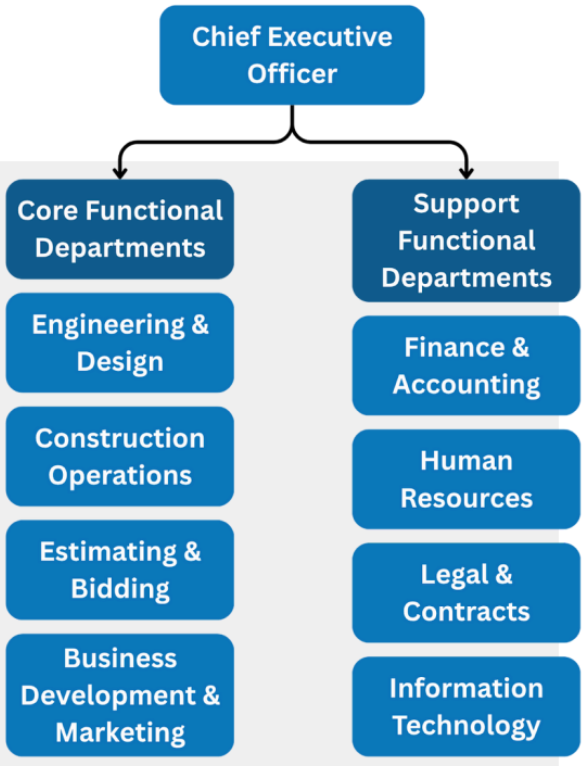
What is Traditional Departmentalization?
The company is divided into permanent departments based on specialized functions (e.g., Finance, Estimating, HR).
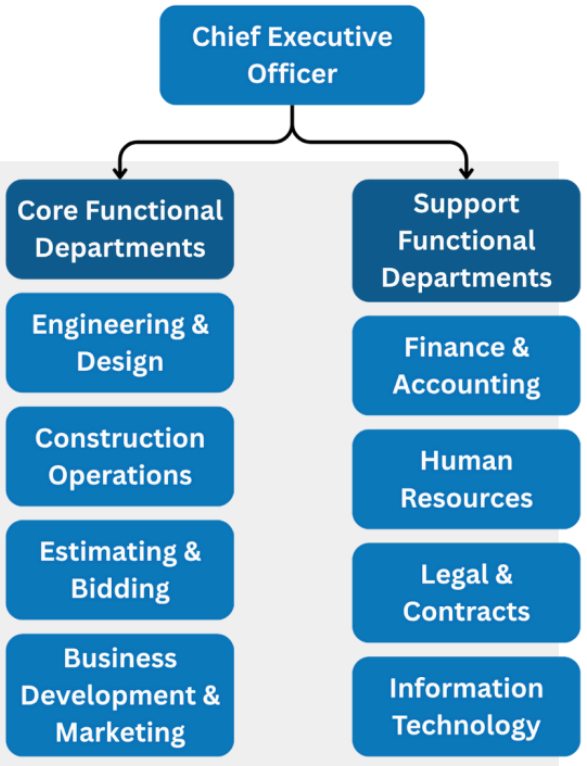
What is the defining feature of Traditional Departmentalization?
Hierarchy: Authority flows vertically within departments with a clear chain of command
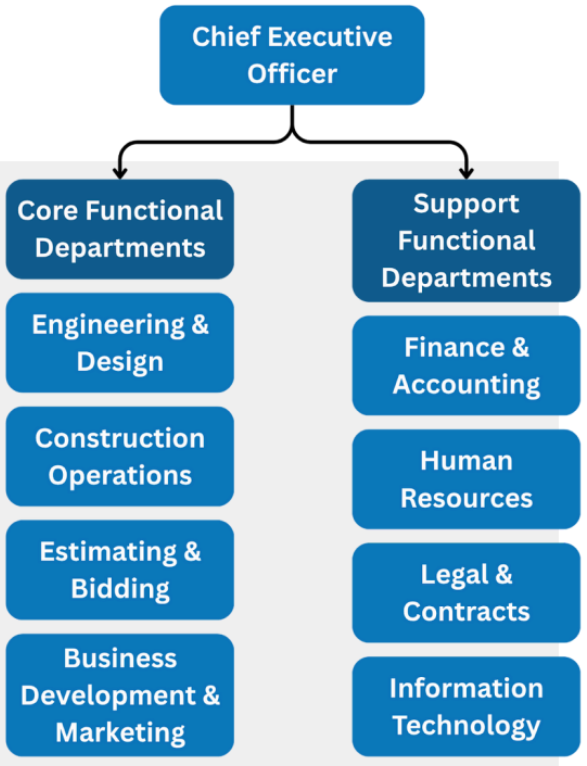
What are the pros and cons of Traditional Departmentalization?
Pros: High level of technical specialization.
Cons: Rigid, slow to adapt, and creates “silos” that hinder cross-departmental communication.
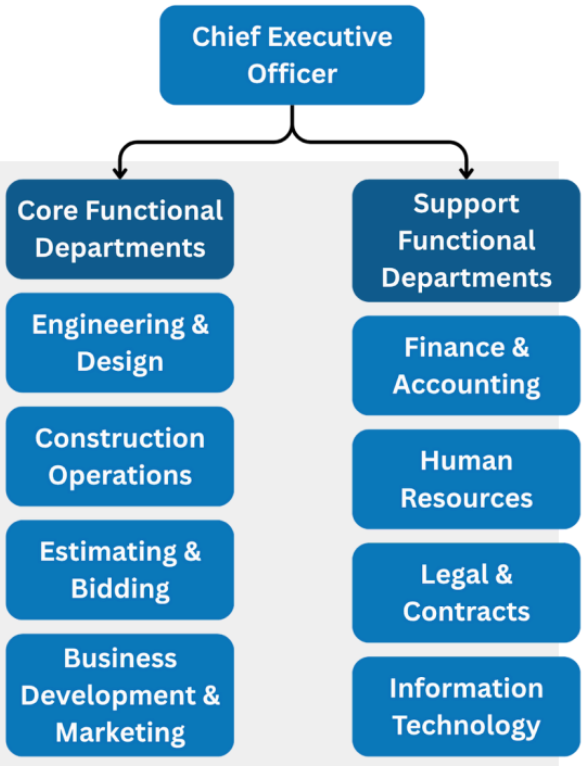
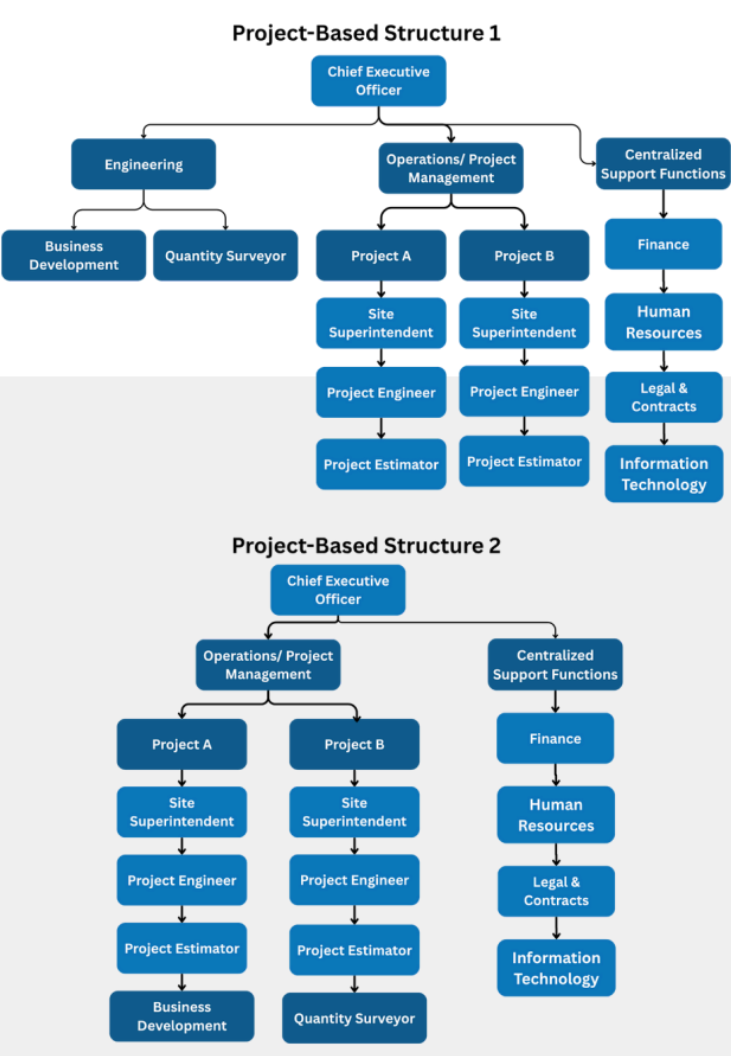
What is the Project-Based (Projectized) Structure?
Flexibility through Dedicated Teams
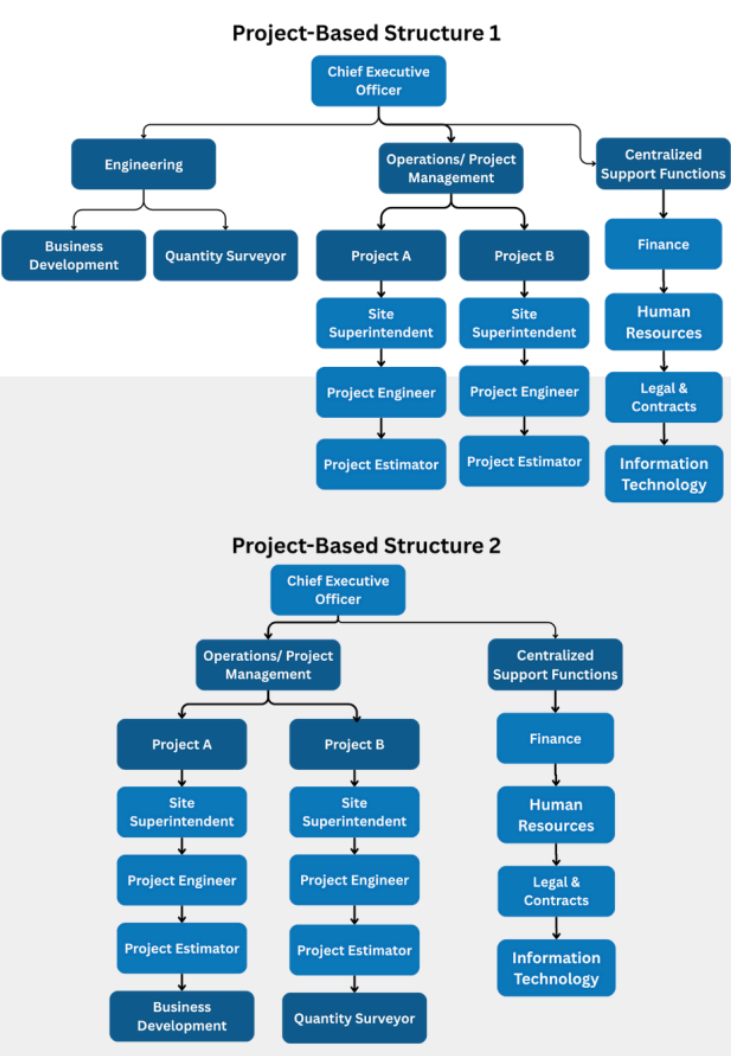
What is Flexibility through Dedicated Teams?
The organization is structured entirely around individual projects.
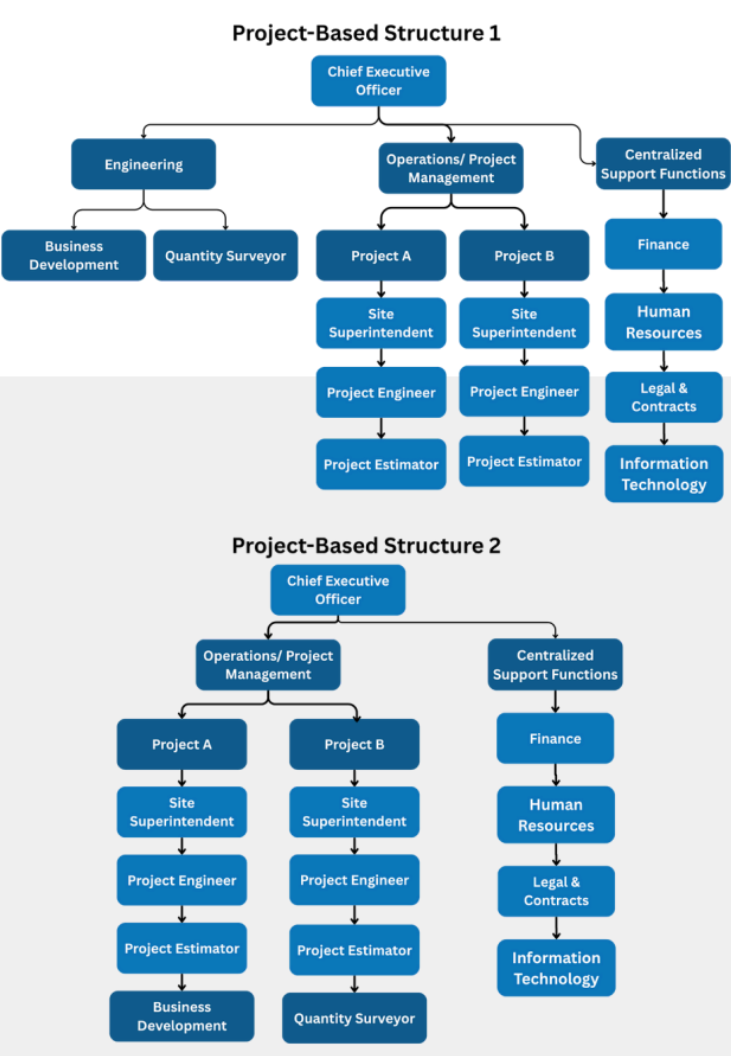
What is the defining feature of Flexibility through Dedicated Teams?
Autonomy: Each project operates like a “mini-organization” with dedicated, temporary teams assigned exclusively to it.
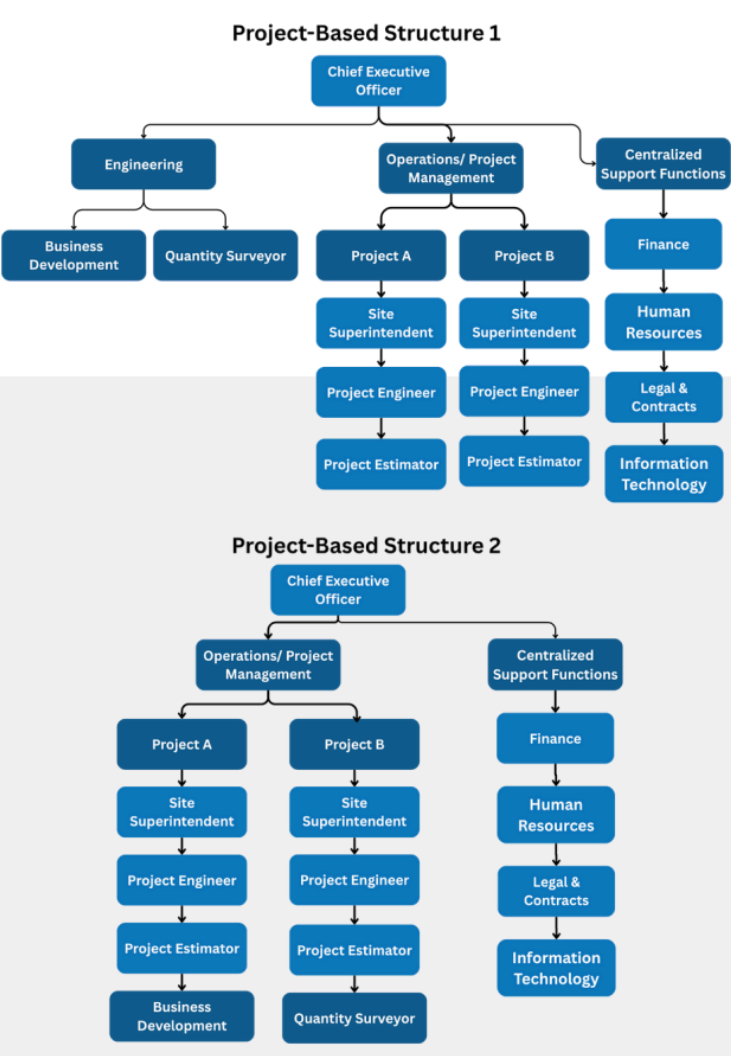
What are the pros and cons of Flexibility through Dedicated Teams?
Pros: Highly responsive to specific project
goals.
Cons: Potential for resource duplication and
poor knowledge sharing between different
projects.
What is the Matrix Structure?
The Dynamic Hybrid
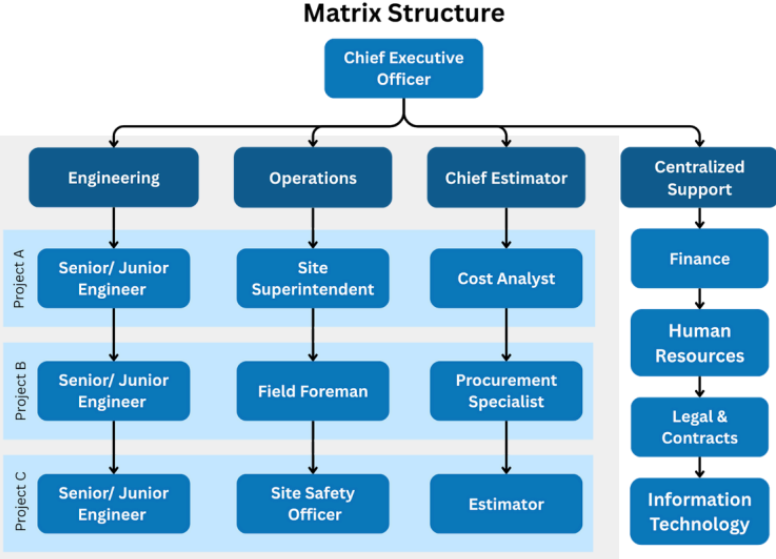
What is The Dynamic Hybrid?
Employees report to both a permanent Functional Manager (for how they do the job and a temporary Project Manager (for what to do).
COMMITTESS AND ADHOCSSSS
MY BIASSS
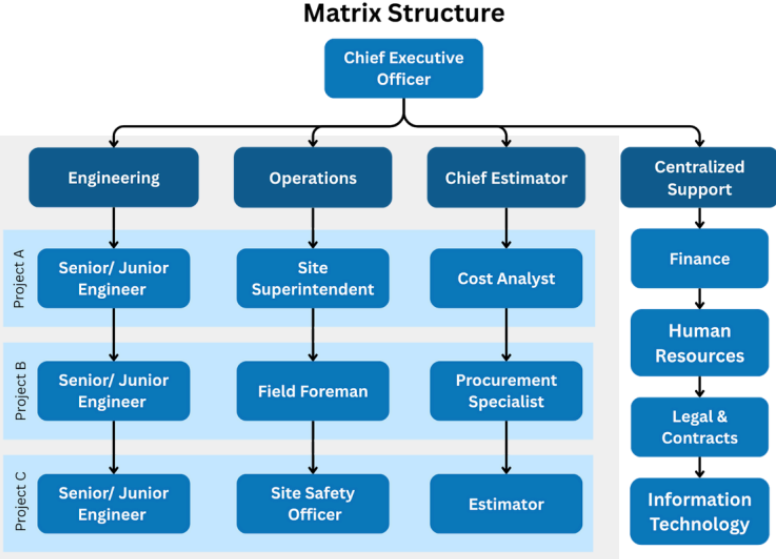
What is the defining feature of The Dynamic Hybrid?
Resource Optimization: Allows specialized or expensive resources to be shared dynamically across multiple projects.
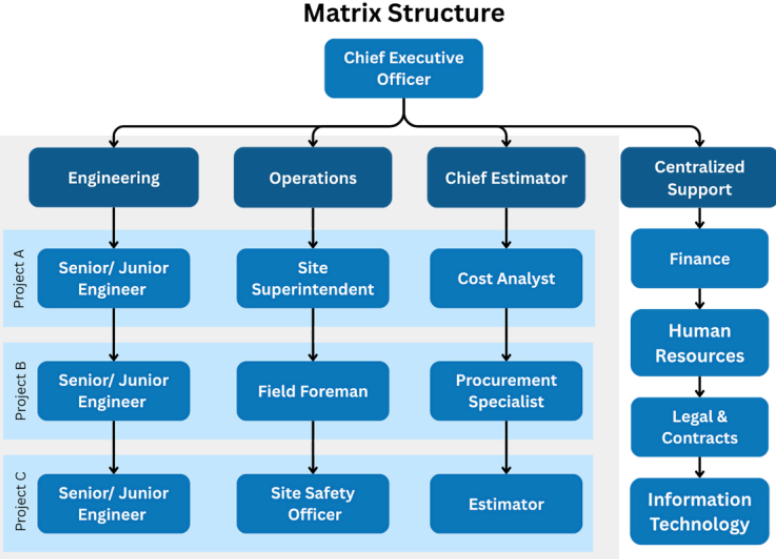
What are the Three Types of Matrices?
Weak: Power resides mostly with the Functional Manager.
Balanced: Power is shared equally between Project and Functional Managers.
Strong: Power resides mostly with the Project Manager.
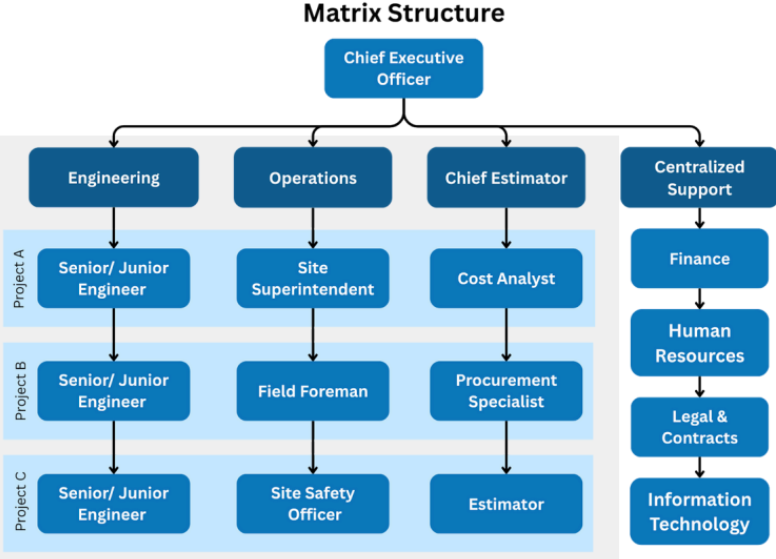
Staffing Rationale: High complexity + High Risk
Dedicated full-time leadership
Staffing Rationale: High technical uncertainty
Senior technical presence to make immediate engineering calls
Staffing Rationale: Low complexity + Established design
Cost effective, shared resource staffing
What are the Key Project Team Roles?
Project Manager (PM)
Superintendent
Project Engineering (PE)
Estimator
Safety Officer
What are the responsibilities of the Project Manager (PM)?
Overall planning, oversight, budget management, and client coordination.
What are the responsibilities of the Superintendent?
Manages daily on-site operations, subcontractors, and safety enforcement.
What are the responsibilities of the Project Engineer (PE)?
Supports the PM with document management, cost estimate, and quality control.
more on the technical requirements that the actual leadership
What are the responsibilities of the Estimator?
Analyzes blueprints to calculate accurate costs for labor, materials, and equipment.
What are the responsibilities of the Safety Officer?
Develops and implements site-specific safety plans and conducts inspections.
What are the Tasks of Leadership?
Shared Purpose
Measurable Goals
Distribute work
Monitor Progress
Feedback
How does a leader create a Shared Purpose?
Aim for a high-level goal initially to stimulate discussion and reach a compromise.
How does a leader create a Measurable Goal?
Define goals based on the shared purpose that can be graded or tracked.
How does a leader Distribute Work?
Assess member strengths and weaknesses to influence task assignment. The leader must know more of what is to be done than the members.
How does a leader Monitor Progress?
Set up checkpoints and regular meetings to see where the team stands. Use positive action to correct “weak links”.
How does a leader Provide Feedback?
Provide timely updates using tact, charm, and sometimes “guile” to keep actions aligned with the group’s betterment.
sandwich method
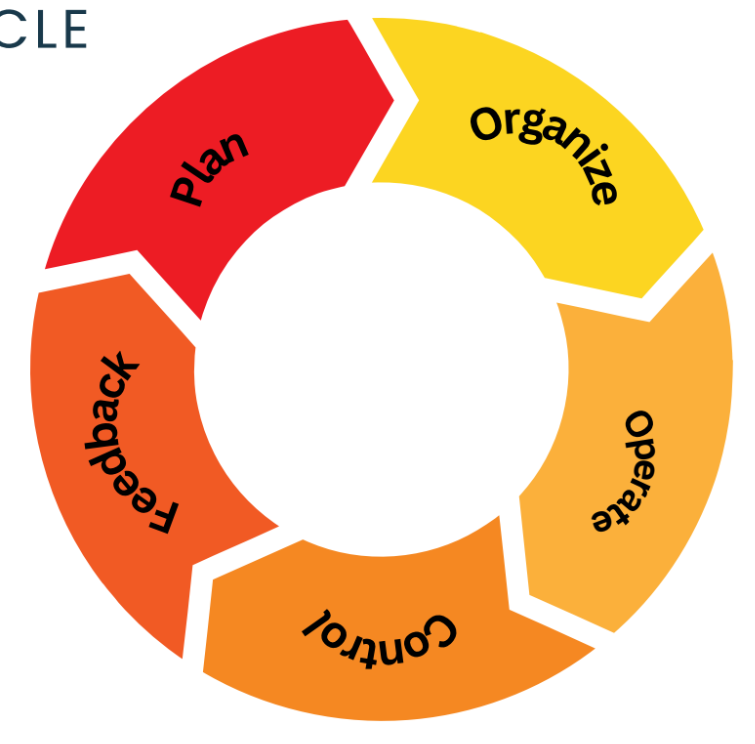
What is the Ultimate Goal of The Management Cycle?
A leader must “conduct the symphony” of human ingenuity and tenacity.
What are the Key Types of Construction Schedules?
Critical Path Method
Gantt Chart
Precedence Diagramming Metho (PDM)
What is the Critical Path Method (CPM)?
Focuses on the longest sequence of interdependent tasks.
What is the Gantt Chart?
A visual timeline using horizontal bars to show durations and overlaps.
What is Precedence Diagramming Method (PDM)?
A technique to map the execution order and dependencies of tasks.
Precedence Diagram: What is an Event?
the start and end of an activity
Precedence Diagram: What is a Milestone?
a specific point within a project’s life cycle used to measure progress toward the ultimate goal
Precedence Diagram: What is an Activity?
has time, duration, and cost; one direction
Precedence Diagram: What is an Dummy Activity?
denotes relation of activities; no time and no cost
Precedence Diagram: What is a Duration (D)?
estimated time of an activity
Precedence Diagram: What is an Early Start (ES)?
earliest start time of an activity
Precedence Diagram: What is an Early Finish (EF)?
earliest finish time of an activity; equal to the early plus duration
EF = ES + D
Precedence Diagram: What is a Late Finish (LF)?
latest time to finish an activity
Precedence Diagram: What is a Late Start (LS)?
latest time to start an activity without delaying project completion
LS = FR - D
Precedence Diagram: What is a Total Float (TF)?
amount of time an activity may be delayed without delaying the project
TF = LF - EF = LS - ES
What is Resource Leveling & Optimization?
Adjusting timelines and resource allocation to ensure efficient usage.
What tare The Primary Trade-offs of Resource Leveling & Optimization?
Limited Time: Requires adding resources (Project Crashing), leading to higher costs.
Limited Resources: Requires extending the schedule, leading to longer project duration.
What are the Key Benefits of Resource Leveling & Optimization?
Optimizing efficiency, minimizing bottlenecks, and preventing team burnout.
Resource Levelling Strategy: What are the Constraints of Adding Resources with an Extended Deadline?
Flexible Deadline, Flexible Budget
controlling costs and managing team size gradually
Resource Levelling Strategy: What are the Constraints of Adding Resources to Meet the Same Deadline?
Strict Deadline, Flexible Budget
this incurs high costs but saves time
Resource Levelling Strategy: What are the Constraints of Using the Same Resources with an Extended Deadline?
Flexible Deadline, Strict Budget
preventing burnout and costly equipment breakdowns
Resource Levelling Strategy: What are the Constraints of Using the Same Resources to Meet the Same Deadline?
Strict Deadline, Strict Budget
requires meticulous efficiency, highly aggressive prioritization of tasks, and implementing practices like just- in-time (JIT) deliveries.
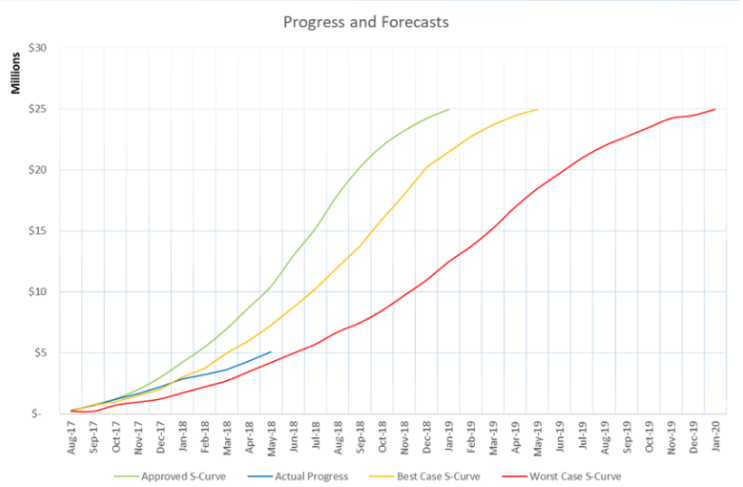
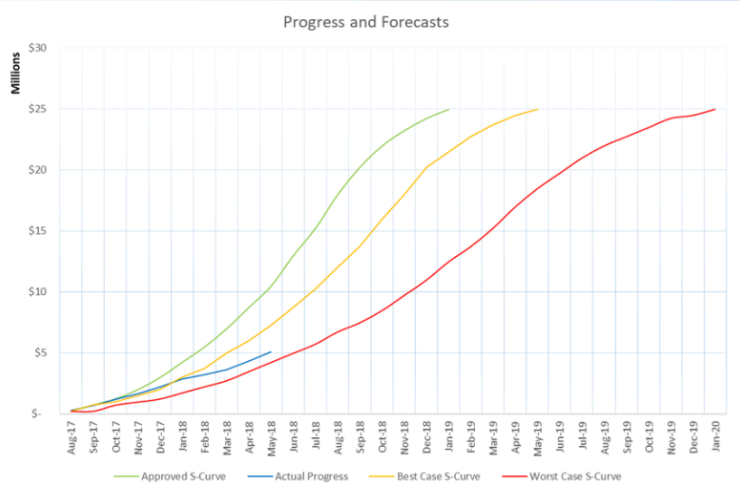
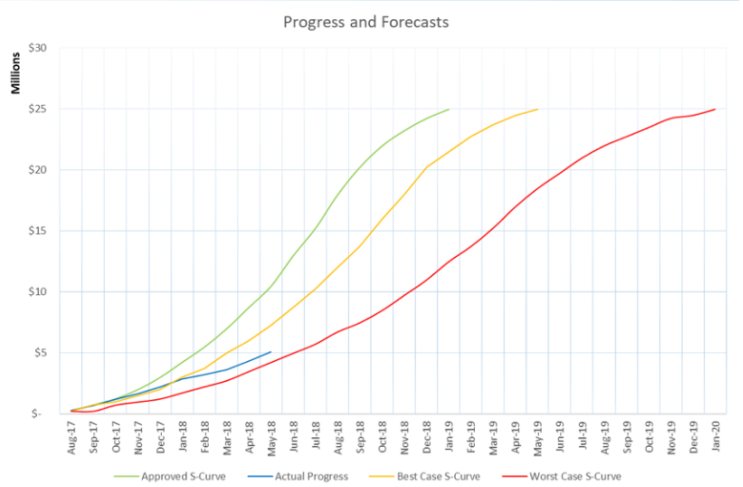
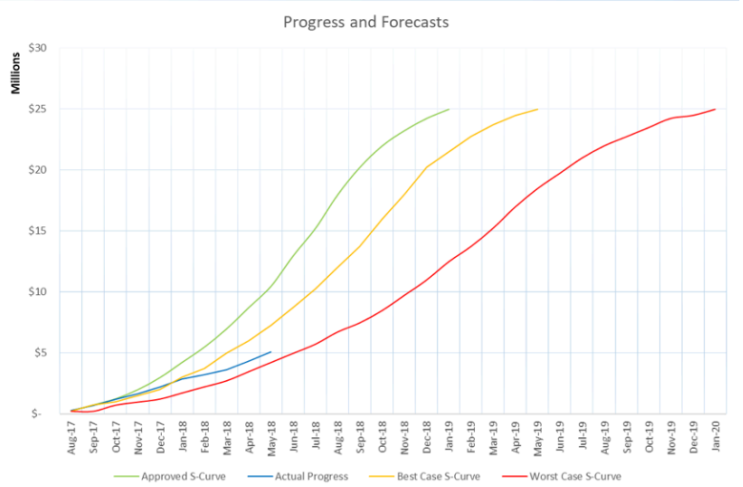
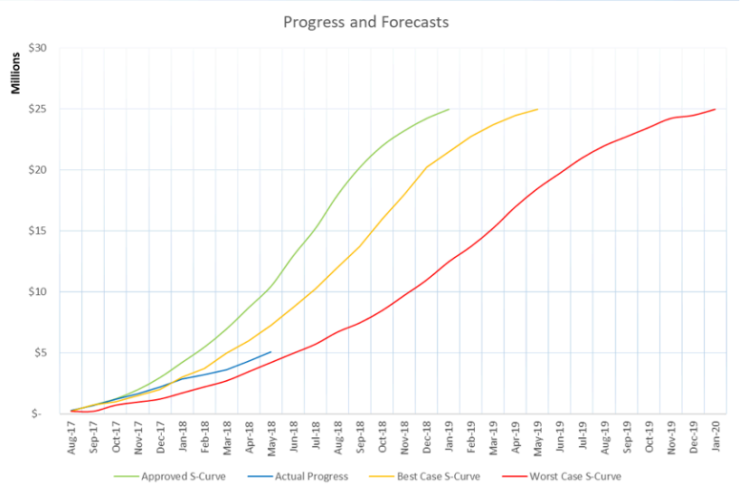
Cash Flow Management and Forecasting: What is The Forecast Model (S-Curve)?
A forward-looking tool plotting cumulative costs
Cash Flow Management and Forecasting: What is Identifying
"Cash Troughs"?
Helps managers recognize periods where expenses exceed
available funds to arrange credit or adjust schedules.
Cash Flow Management and Forecasting: What are Inflows and Outflows?
Inflows include mobilization fees and progress payments
Outflows include payroll and material invoices.
Understanding the S-Curve “Envelope”: What is the Approved S-Curve (Baseline)?
The frozen "yardstick" target derived from the original approved schedule and budget.
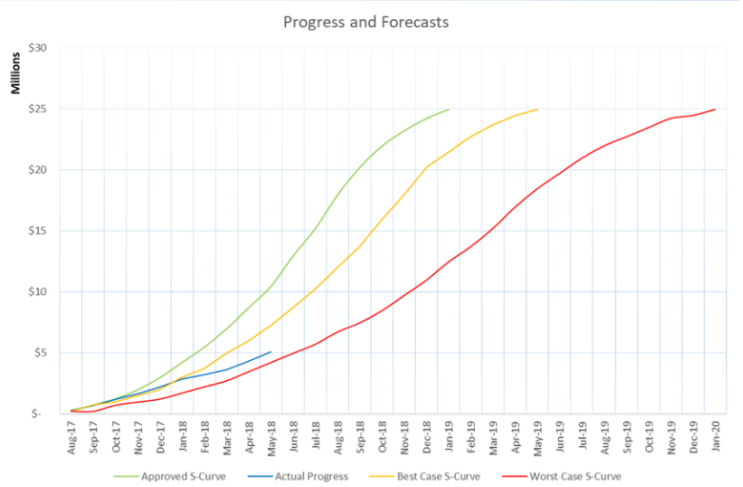
Understanding the S-Curve “Envelope”: What is the Actual Progress S-Curve?
Shows real-time performance up to the "Data Date"
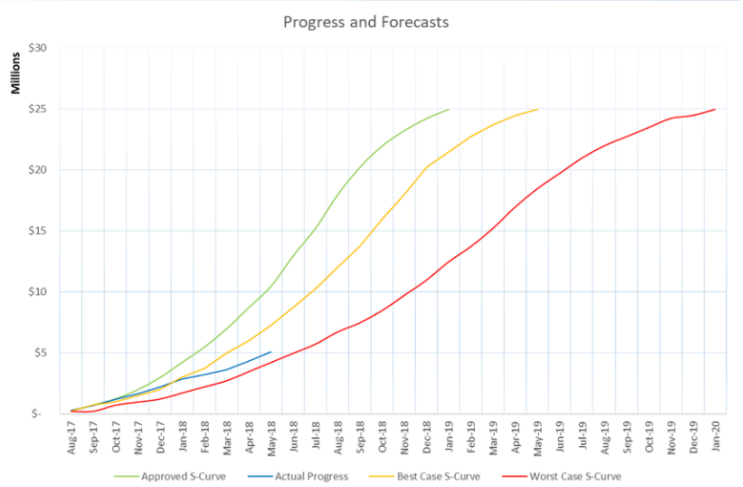
Understanding the S-Curve “Envelope”: What is the Best Case (Early Dates)?
Assumes every task starts at the earliest possible time using all available "float".
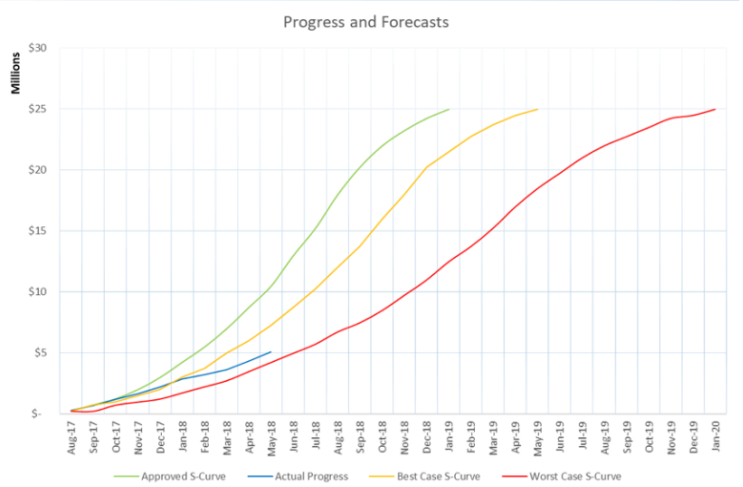
Understanding the S-Curve “Envelope”: What is the Worst Case (Late Dates)?
The "danger zone" assuming maximum delays; falling below this makes on-time completion mathematically impossible.
Progress Payments and Billing: What is the Schedule of Values (SOV)?
A detailed breakdown of every work item and cost agreed upon before the first invoice.
Progress Payments and Billing: What is the Percentage of Completion?
Billing is based on field-verified physical progress on-site.
Progress Payments and Billing: What is the Retention (Retainage)?
Owners typically withhold 5% to 10% of payments to ensure completion to standards.
Progress Payments and Billing: What is the Materials Stored on Site?
Billing for purchased but uninstalled materials requires proof of insurance and secure storage.
Project Cost tracking and Reporting: What are Cost Codes?
Assigning every expense to a specific category (e.g., concrete, electrical) for granular analysis.
Project Cost tracking and Reporting: What are Actual vs. Committed Costs?
Actual: Money already spent and invoiced.
Committed: Future obligations like signed subcontracts not yet invoiced.
Project Cost tracking and Reporting: What are Cost-to-Complete (CTC) Reports?
Vital for identifying potential overruns early enough for corrective actions like value engineering.
Financial Close-out Procedures: What is Reconciling Subcontracts?
Finalizing change orders and obtaining Lien Waivers to protect the owner from legal claims
Financial Close-out Procedures: What is Release of Retention?
Requested once the project reaches "substantial completion" and the punch list is finalized.
Financial Close-out Procedures: What is Post-Mortem Analysis?
Comparing the original budget to actual costs to improve future bid accuracy.
awww thats really cute…
Financial Close-out Procedures: What is Account Closure?
Closing project-specific bank accounts, insurance policies, and performance bonds.
Financial Close-out Procedures: What is Gross vs. Net Profit?
Gross profit covers direct costs
Net profit subtracts indirect costs like home office overhead and taxes