Surgical Instruments
 Call Kai
 Learn
Learn Practice Test
 Spaced Repetition
 Match
Match Flashcards
 Knowt Play
1/37

There's no tags or description
Looks like no tags are added yet.
Name | Mastery | Learn | Test | Matching | Spaced | Call with Kai |
|---|
No analytics yet
Send a link to your students to track their progress
38 Terms
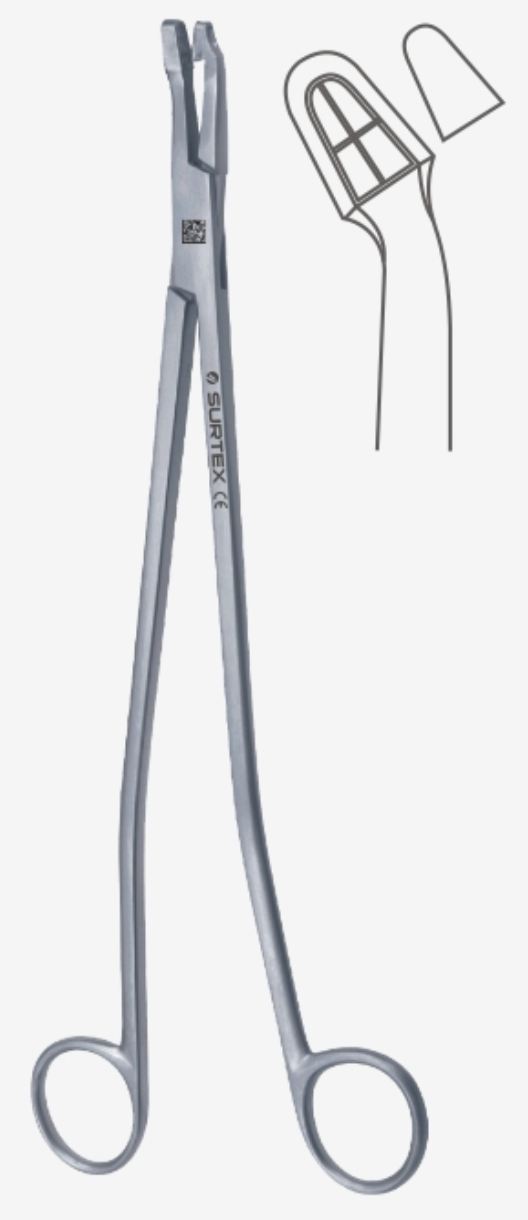
Lorna Towel Clamp
It is non-penetrating, and it has blunt, curved, and wide jaws with interlocking teeth. Holds multiple towels or drapes in place during surgery.
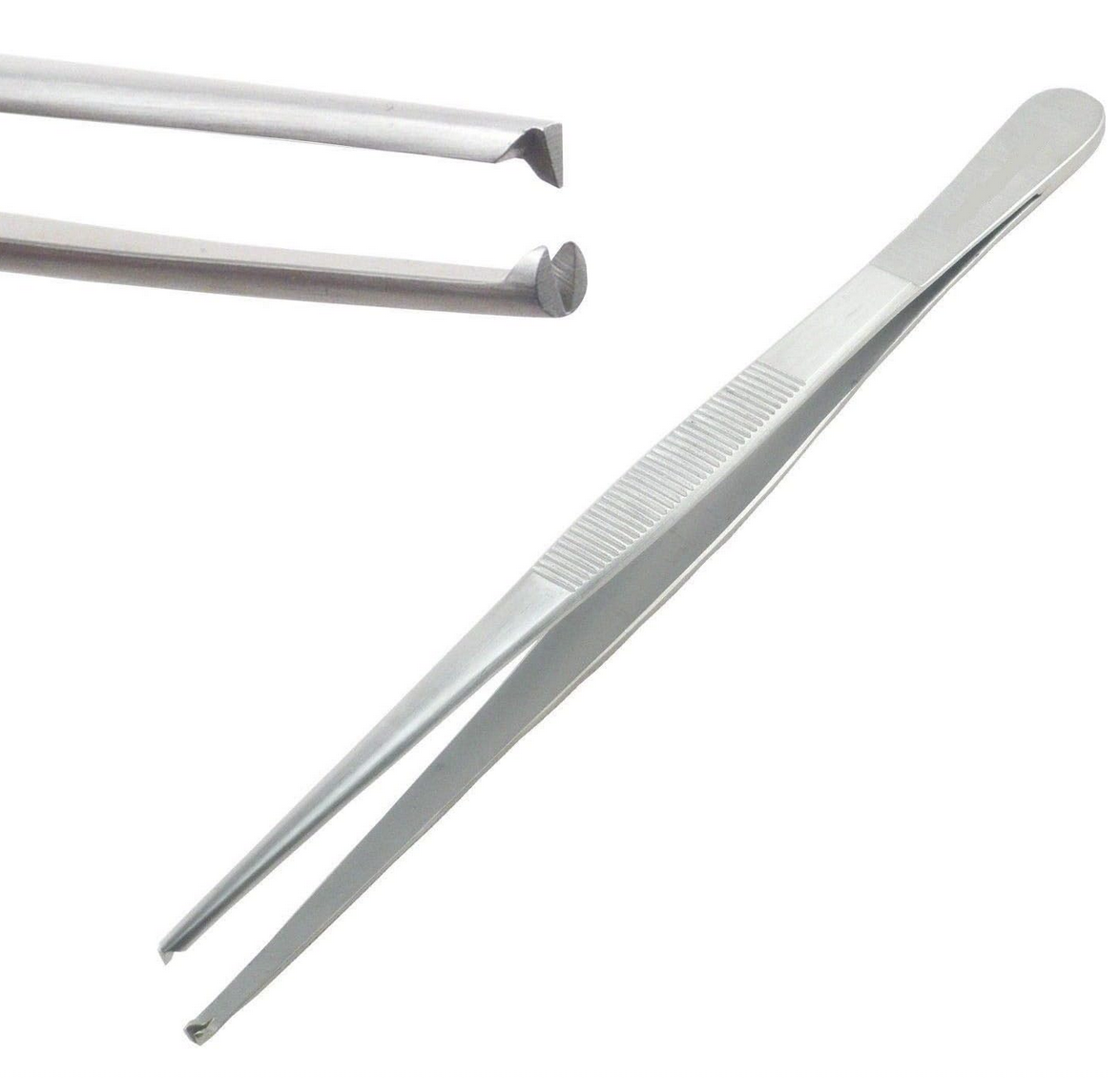
Adson ‘Rat Tooth’ Thumb Forceps
Larger interlocking teeth - one on one side and two on the other. Provides strong grasp on dense tissue however, it is slightly traumatic.
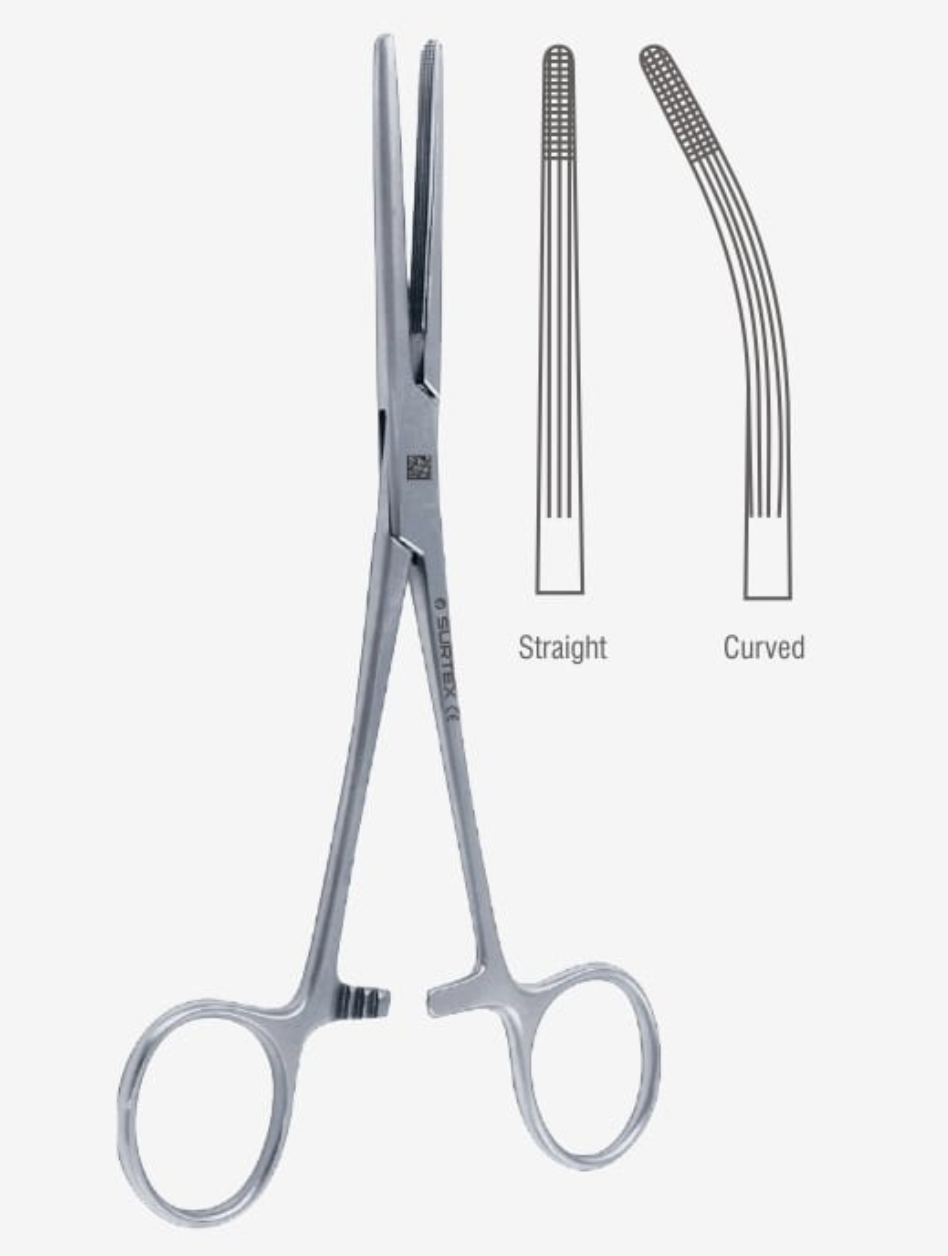
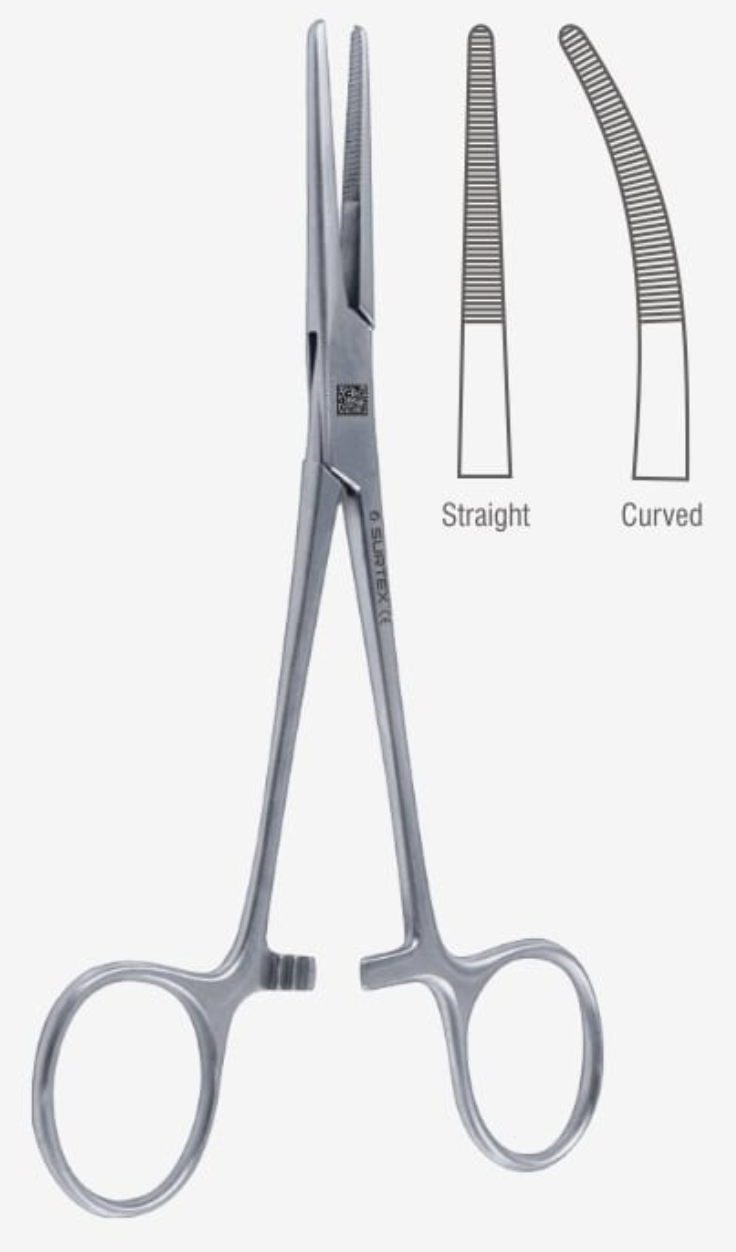
Rochester-Carmalt Hemostat
The jaws can be curved or straight. They have vertical serrations along the entire inside and horizontal serrations at the tip allowing for stronger grip. They are larger crushing forceps typically used for large tissue bundles and large vessels
Kelly Hemostat
They can have curved or straight jaws. They have horizontal serrations on the distal half of the jaws for grip. Clamps moderately sized vessels.
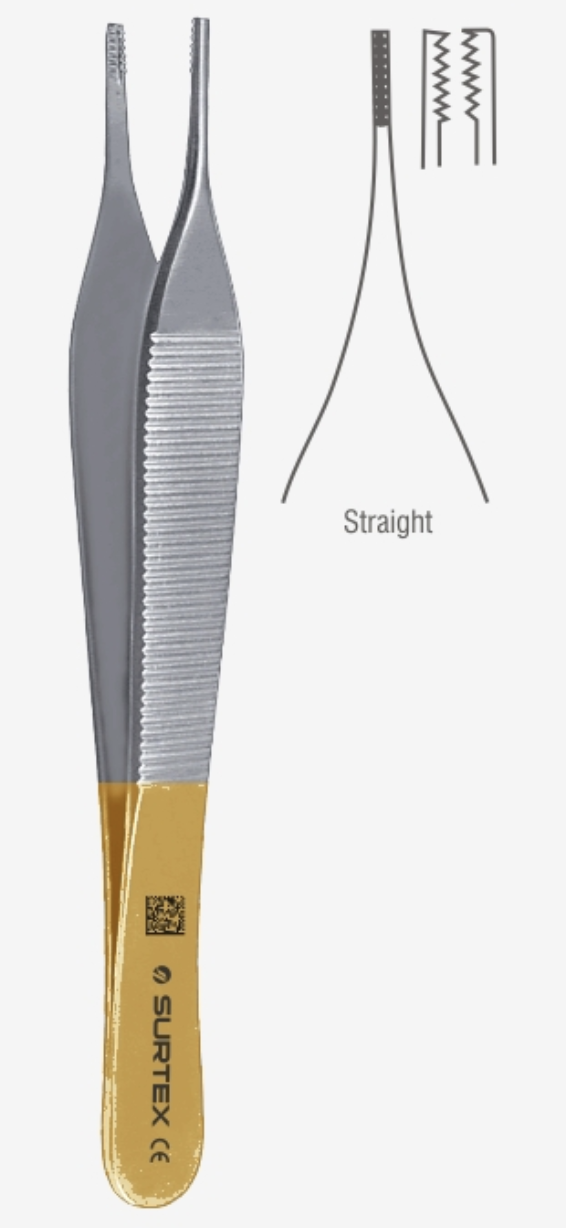
Adson Brown Tissue Forceps
Has two rows of interlocking teeth on each narrow jaw for an atraumatic grasp on fine tissue. Used for suturing wounds closed and manipulating tissue
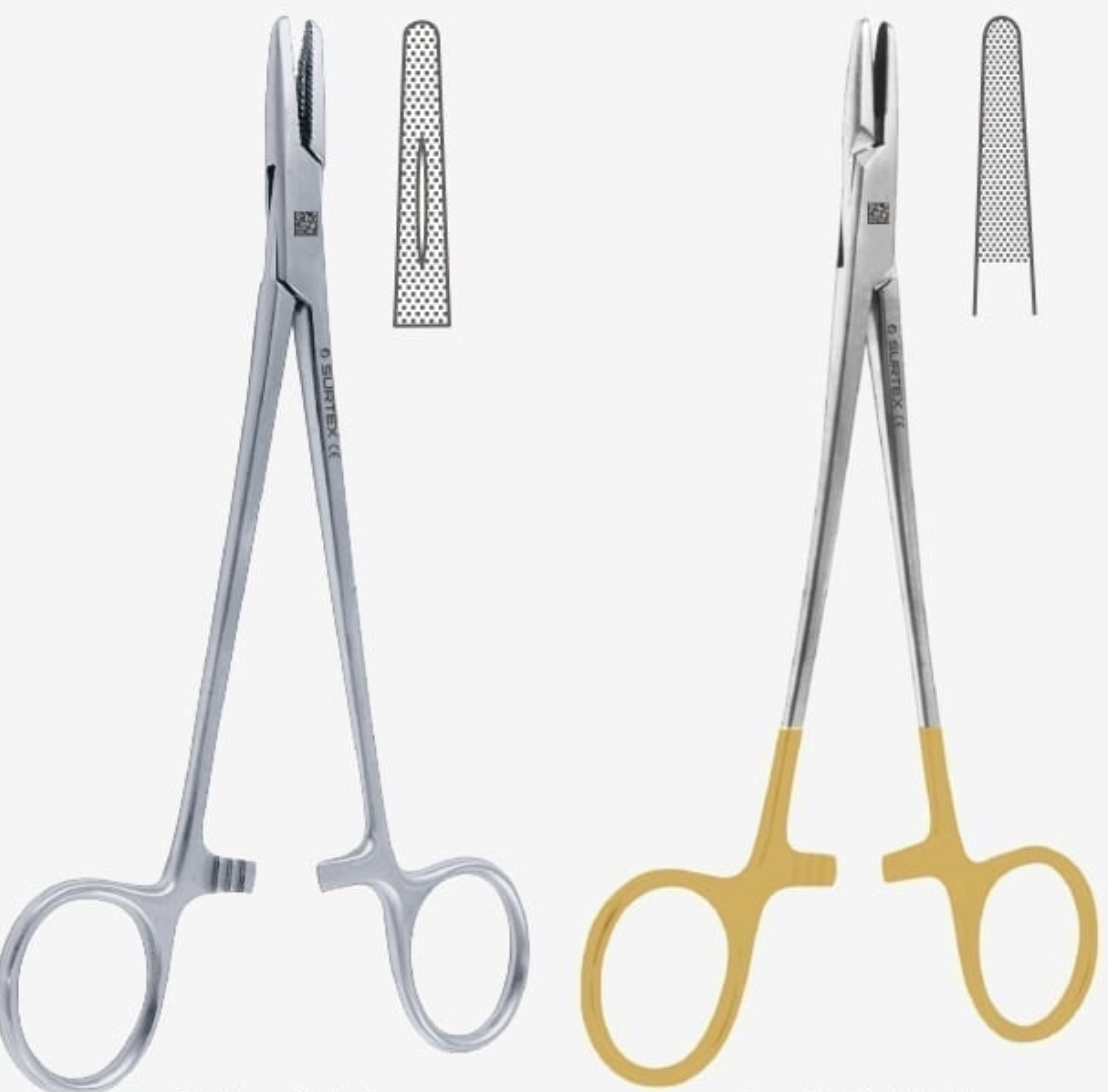
Mayo-Hegar Needle Holder
Has short strong jaws with cross serrations for a strong grip used to grasp medium - heavy needles for suturing. These do NOT include the suture scissors.
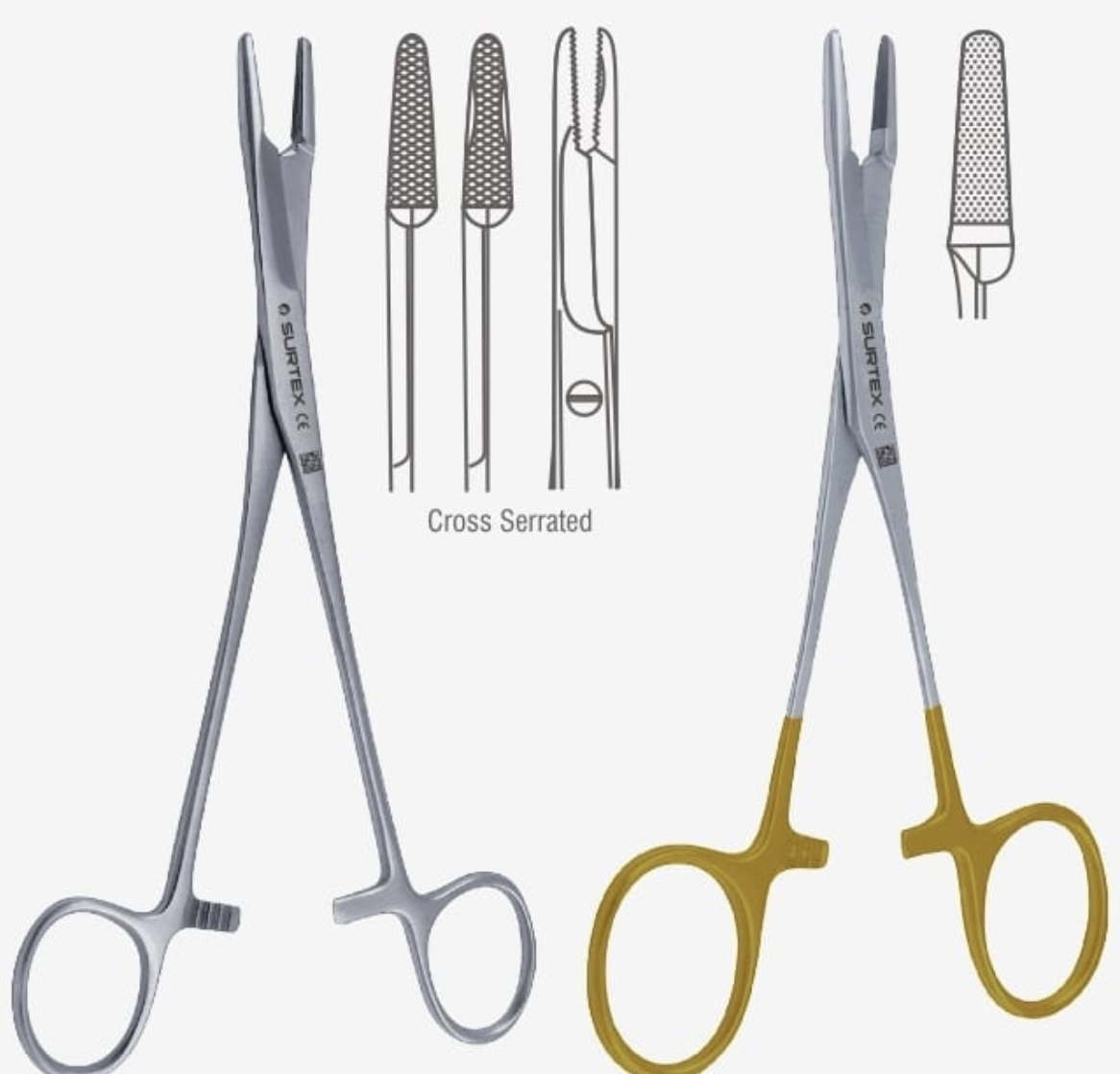
Olsen-Hegar Needle Holder
Has longer jaws with the proximal end being suture scissors and the distal end being cross serrated to give that strong grip on the needle for suturing.
Metzenbaum Scissors
Long lightweight scissors with curved or straight shorter blades and they are blunt at the tips but the narrow jaws and tips allow for cutting and dissecting of delicate or fine tissue.
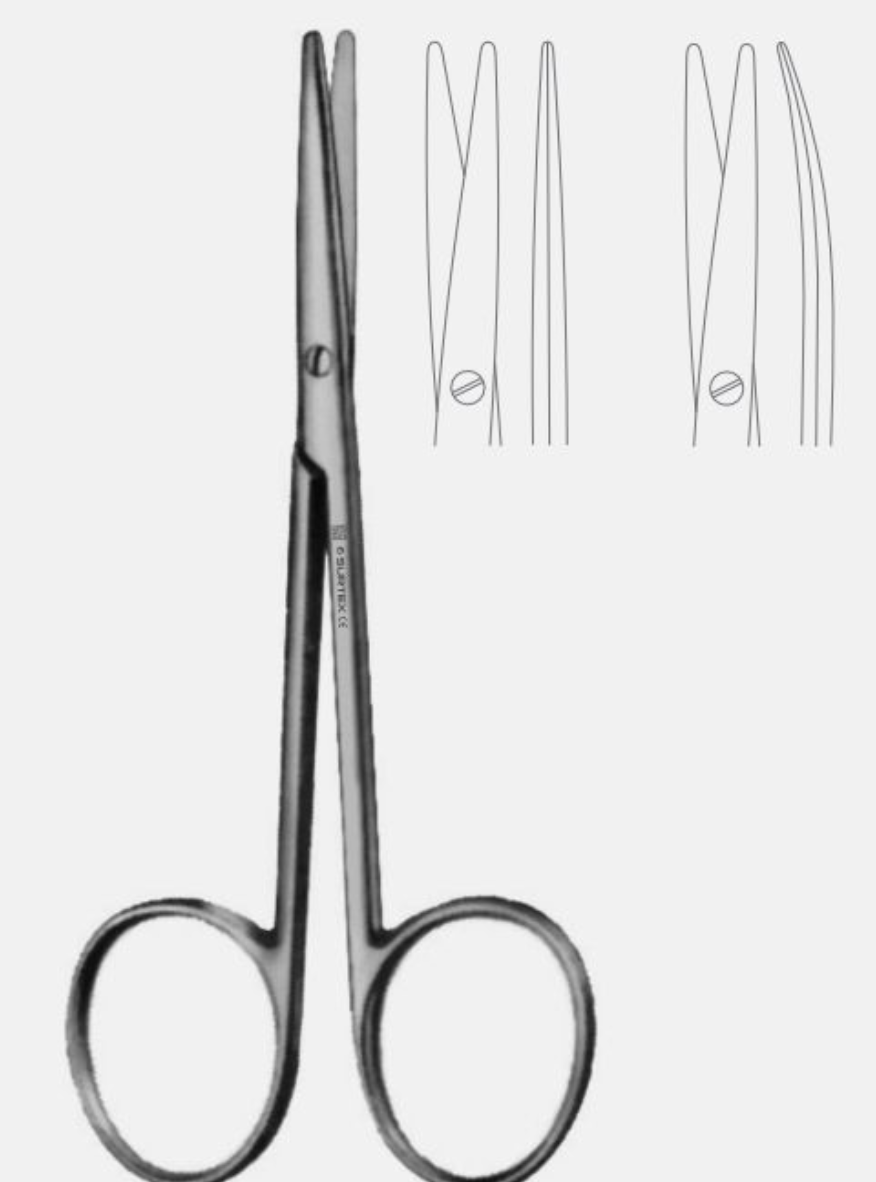
(Littauer) Suture Scissors
Short blades with a long shank with the lower blade having a hooked tip to cradle and lift the suture. The hook ensures the doctor is only cutting sutures and not the patient’s skin. They cut all sutures except wire.
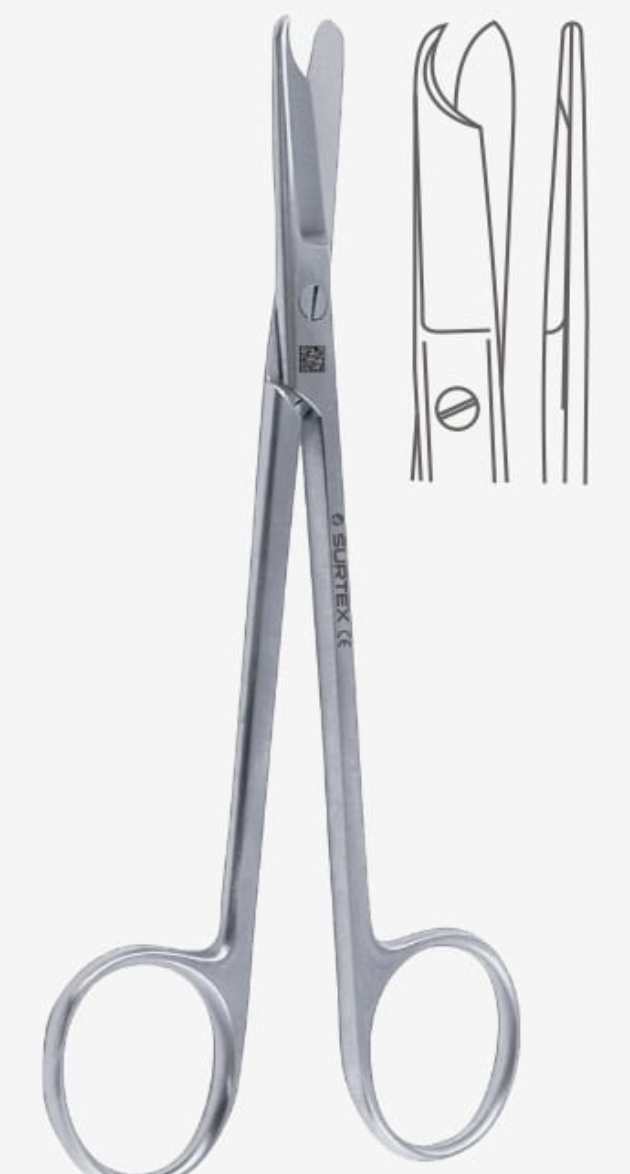
Lister Bandage Scissors
Bottom blade has a blunt end ensuring easy access between the skin or wound and the bandage. Used to cut bandage or dressing material.
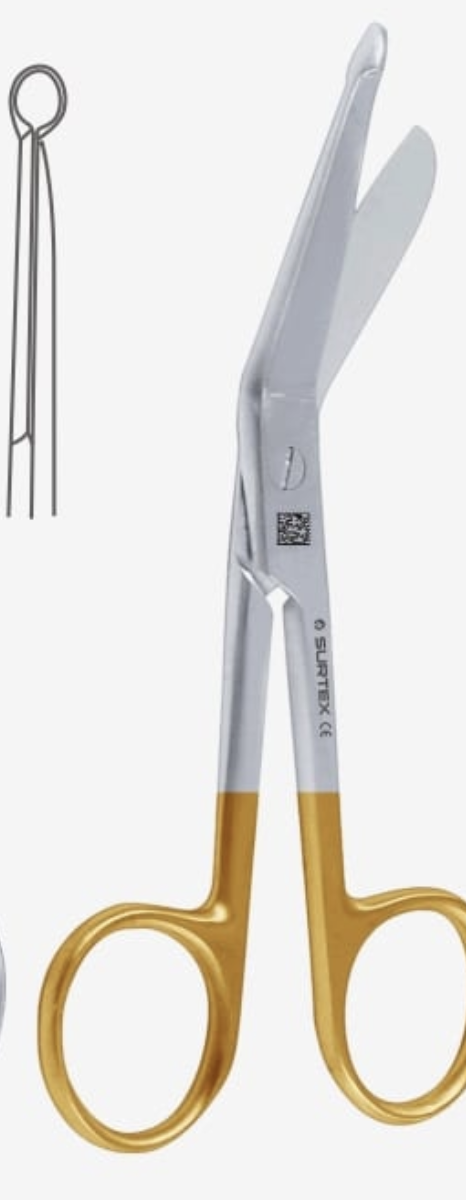
Sharp-Blunt Operating Scissors
One blade is sharp and the other blunt and these scissors are used for general cutting and dissecting, trimming of gauze or cutting sutures.
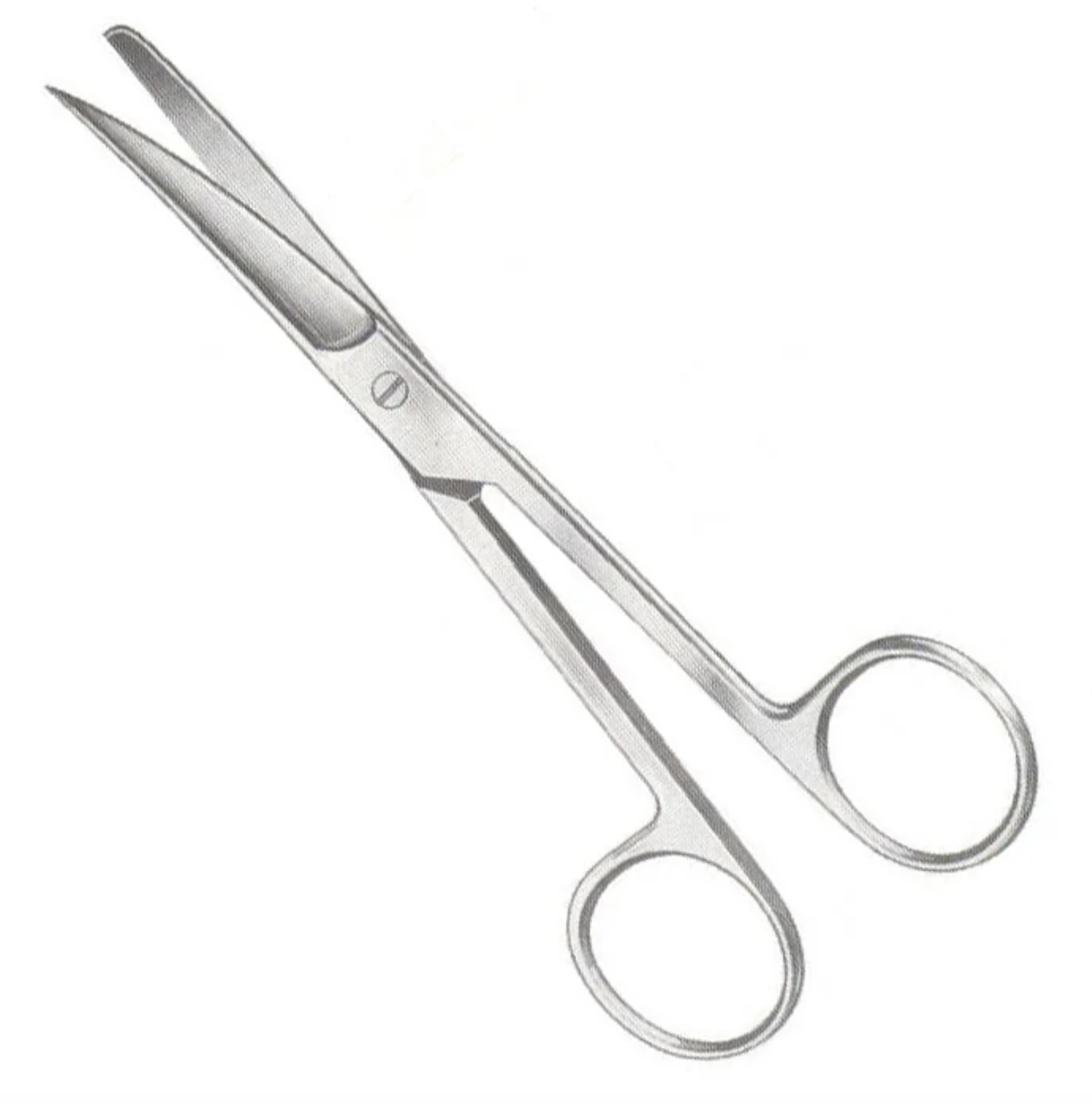
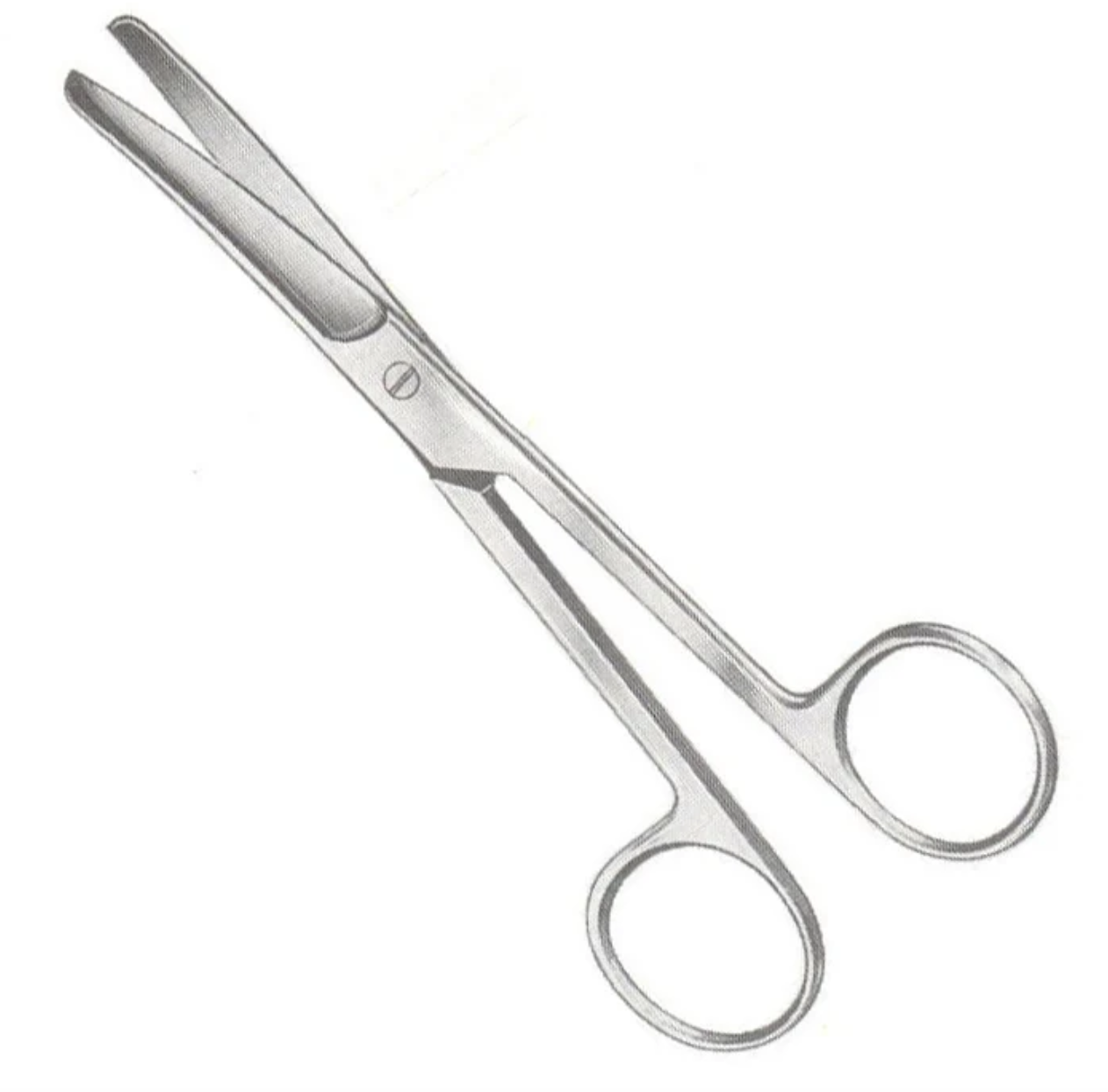
Blunt-Blunt Operating Scissors
Both blades are blunt and these are used for general cutting and dissecting, trimming of gauze or cutting sutures.
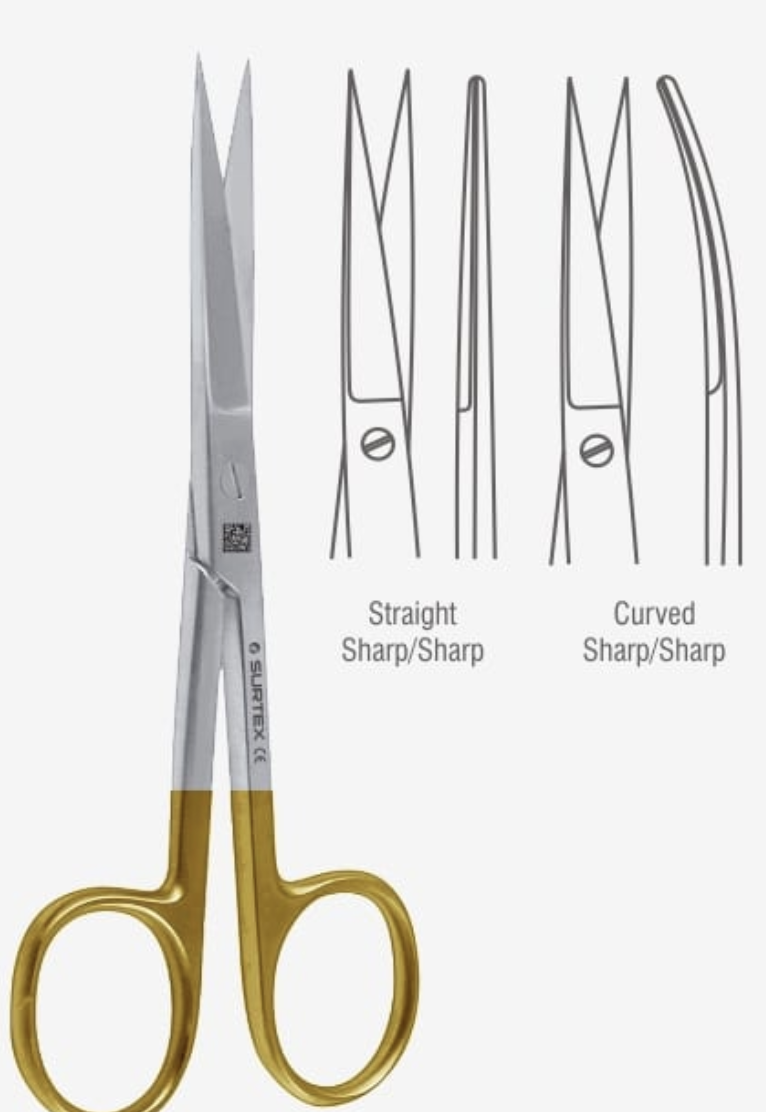
Sharp-Sharp Operating Scissors
Both blades are sharp and they are used for general deep or tough tissue cutting and dissecting or trimming of gauze or cutting sutures.
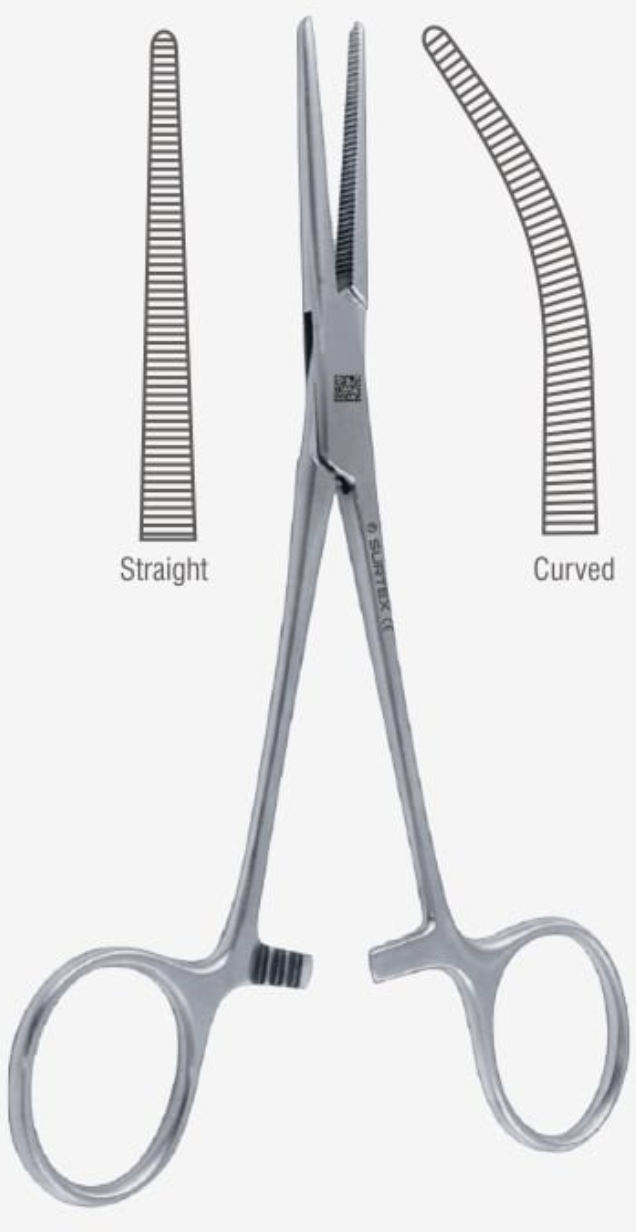
Crile Hemostat
The jaws can be curved or straight and they have horizontal serrations along the length of the jaws. They are used for the occlusion of medium sized vessels.
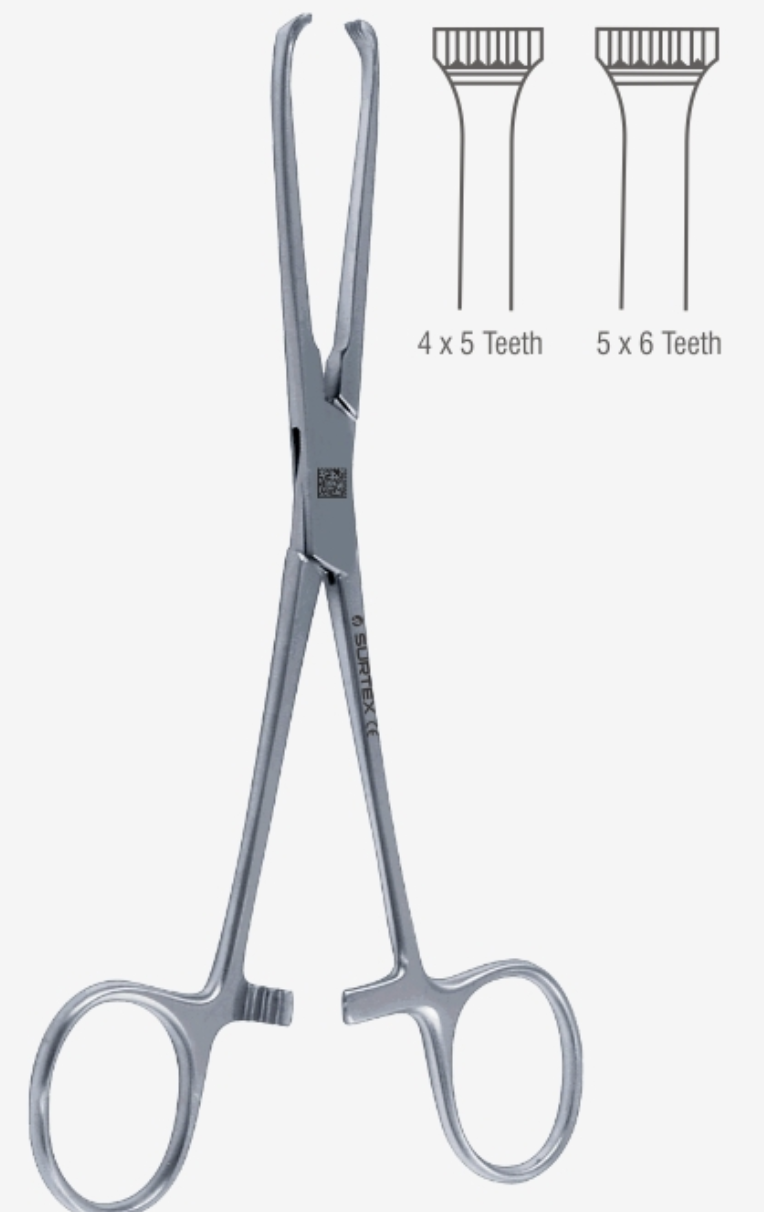
Allis Tissue Forceps
Has broad tips with interlocking teeth to grasp tissue and a ratchet for a self-retaining system. Used to lift or move dense tissues.
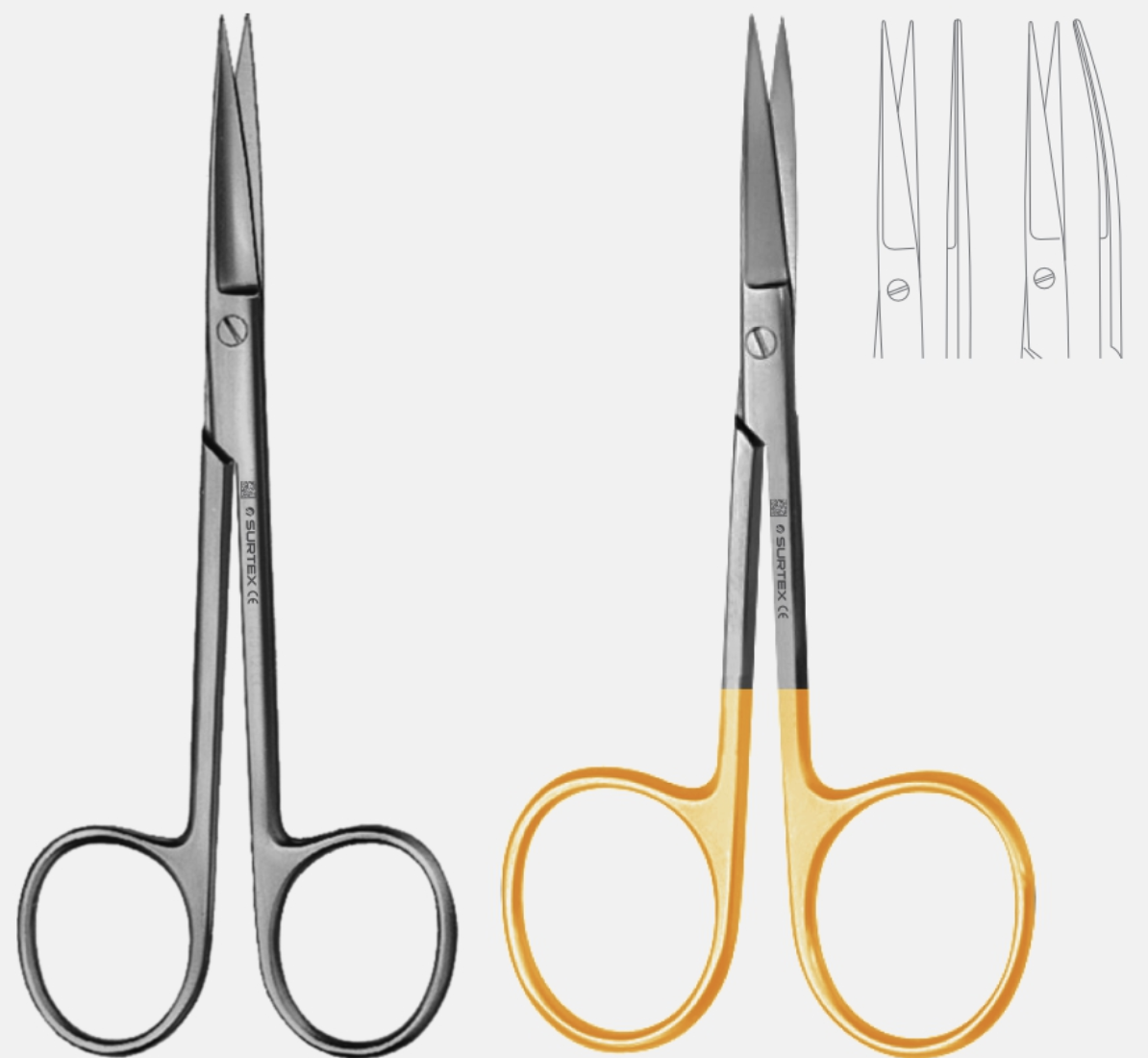
Iris Scissors
Delicate, sharp, and tiny scissors used for fine, precise cuts (ophthalmic surgeries)
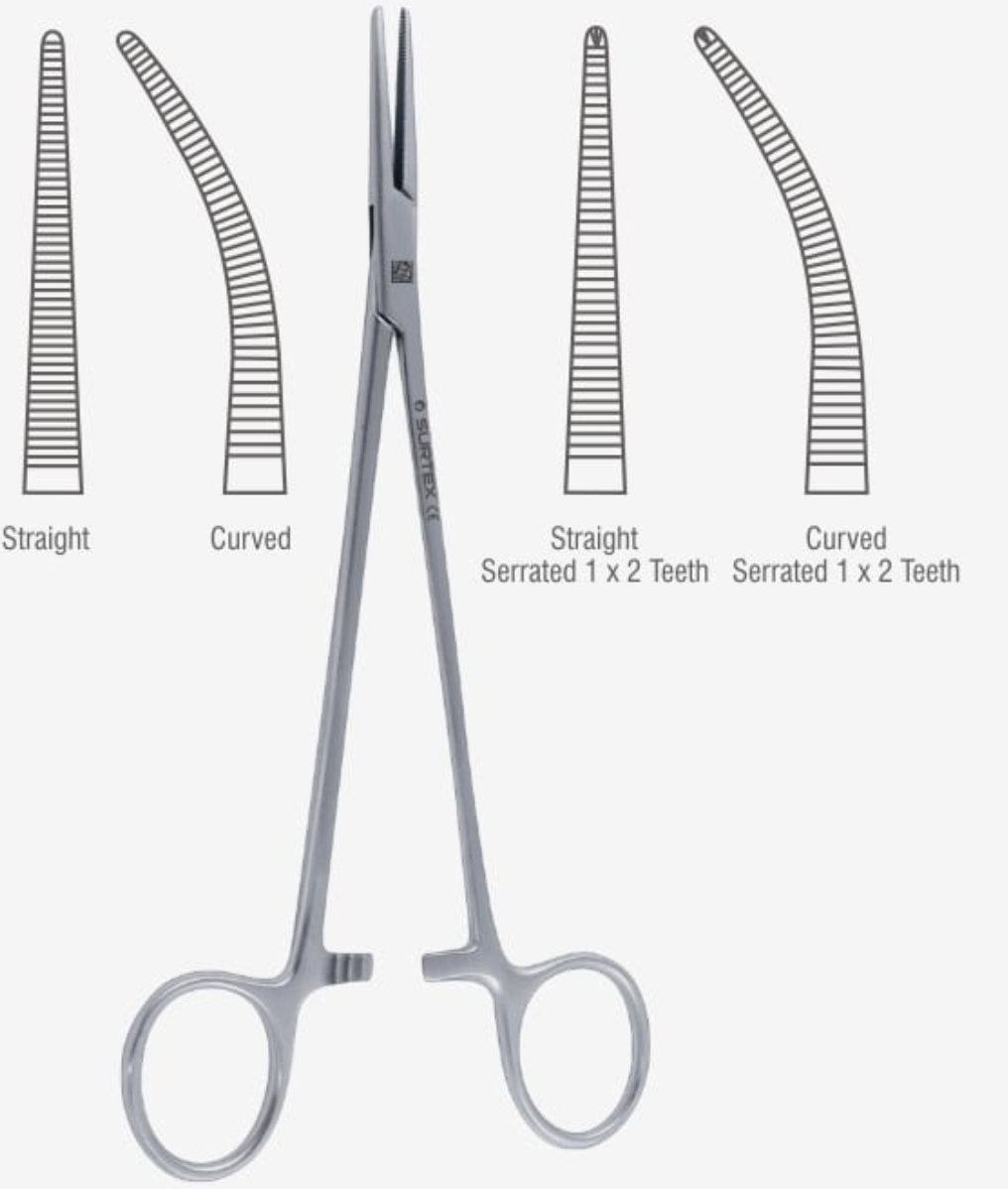
Halsted Mosquito Forcep
A small and light instrument with jaws that can be curved or straight and they have fine horizontal serrations along length of the jaws. They are used to clamp off smaller vessels
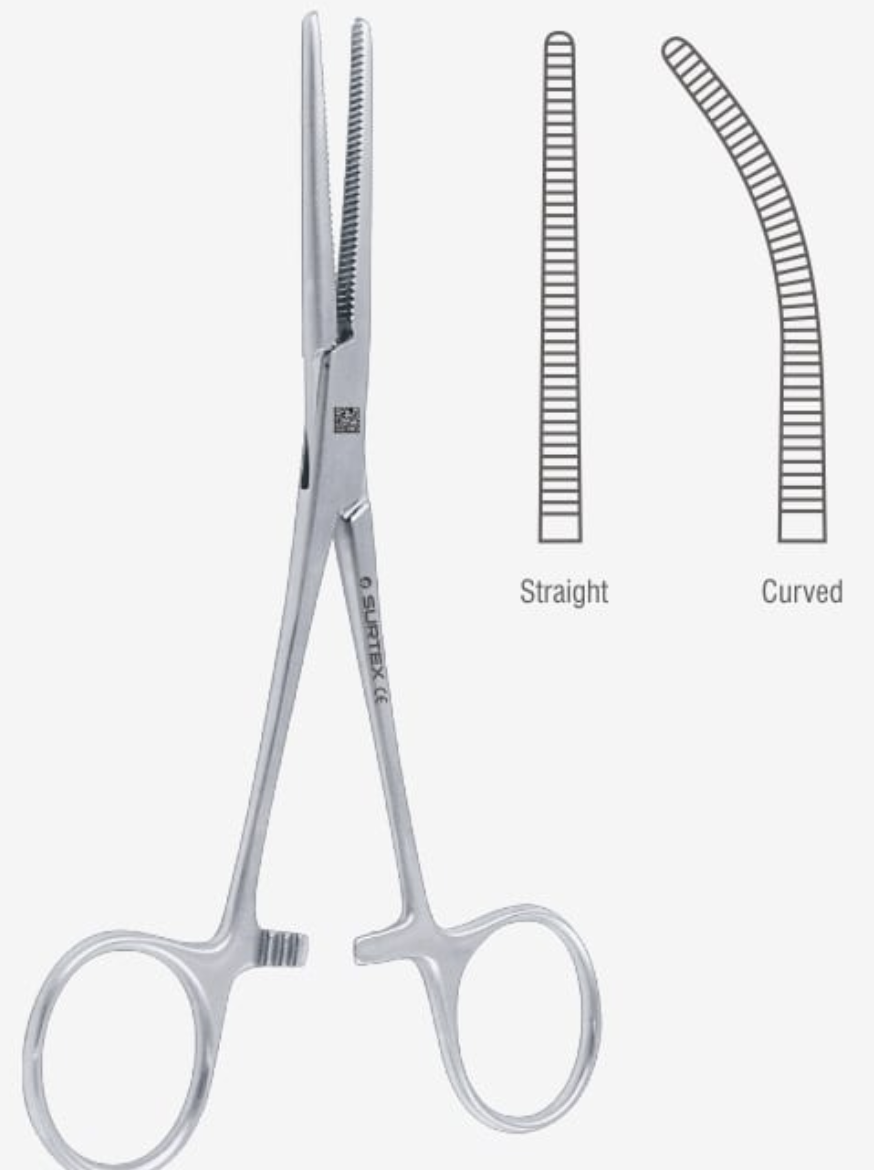
Rochester-Pean Forceps
Large instrument with jaws that can be curved or straight they have horizontal serrations along the length of the jaws and they are used to clamp large vessels or large tissue masses.
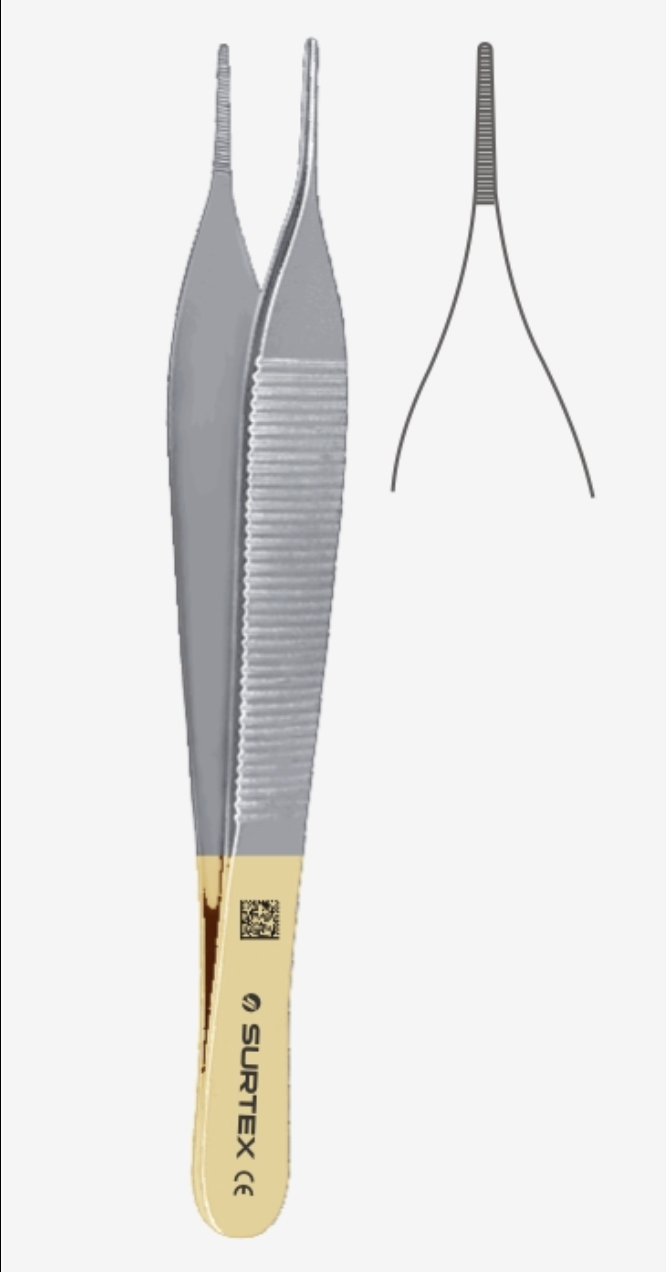
Adson Dressing Thumb Forceps
An instrument with narrow tips and no teeth but fine serrations, used to move gauze or dressing material to absorb fluid or liquid during surgery.
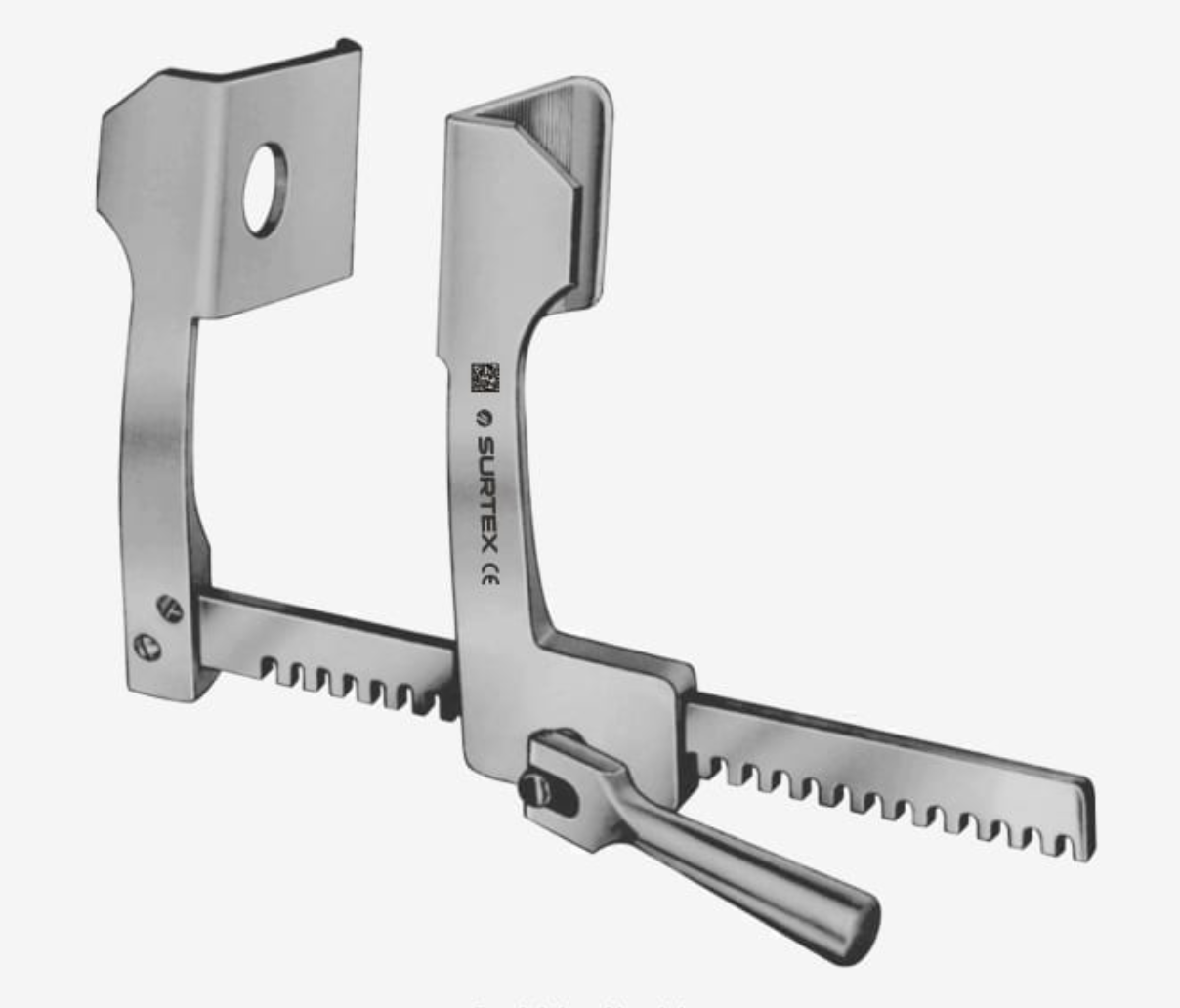
Finochietto Retractor
Large retractor used as a rib spreader in thoracic and cardio-thoracic surgeries, it is a large self-retaining instrument.
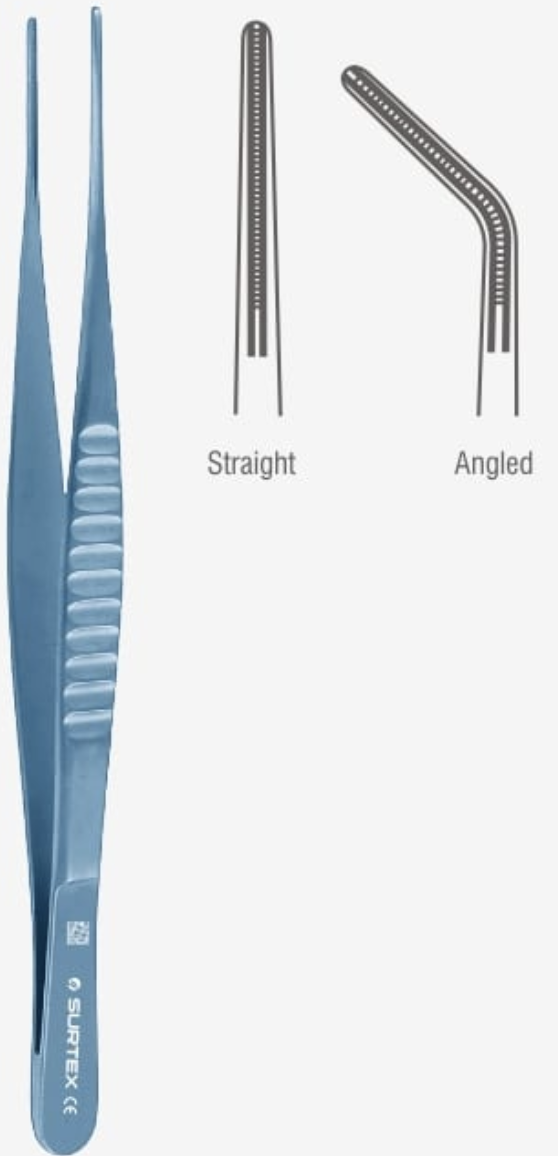
Debakey Forceps
They are an atraumatic instrument with narrow jaws and delicate teeth used in vascular procedures to move and manipulate small blood vessels and delicate soft tissue. Has a narrower shaft than the Adson Forceps
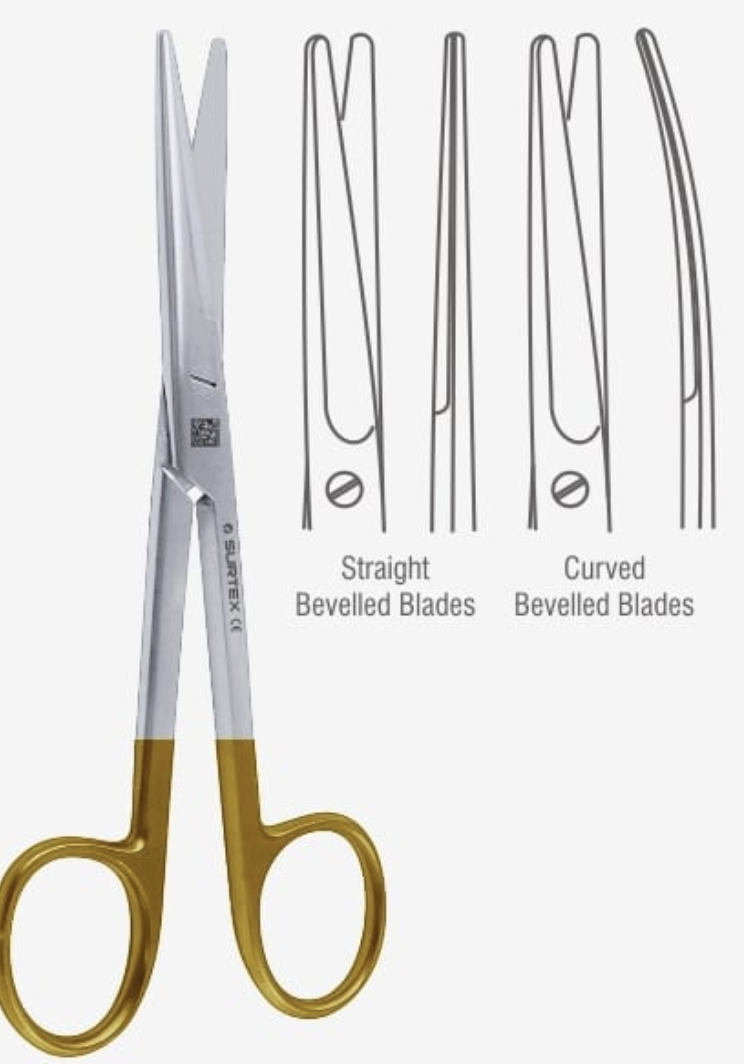
Mayo Scissors
They have blunt tips and sharp blades, the blunt tips allow for no unintentional pokes or cuts to be made and the sharp heavyweight blades allow for cutting through dense tough tissue.
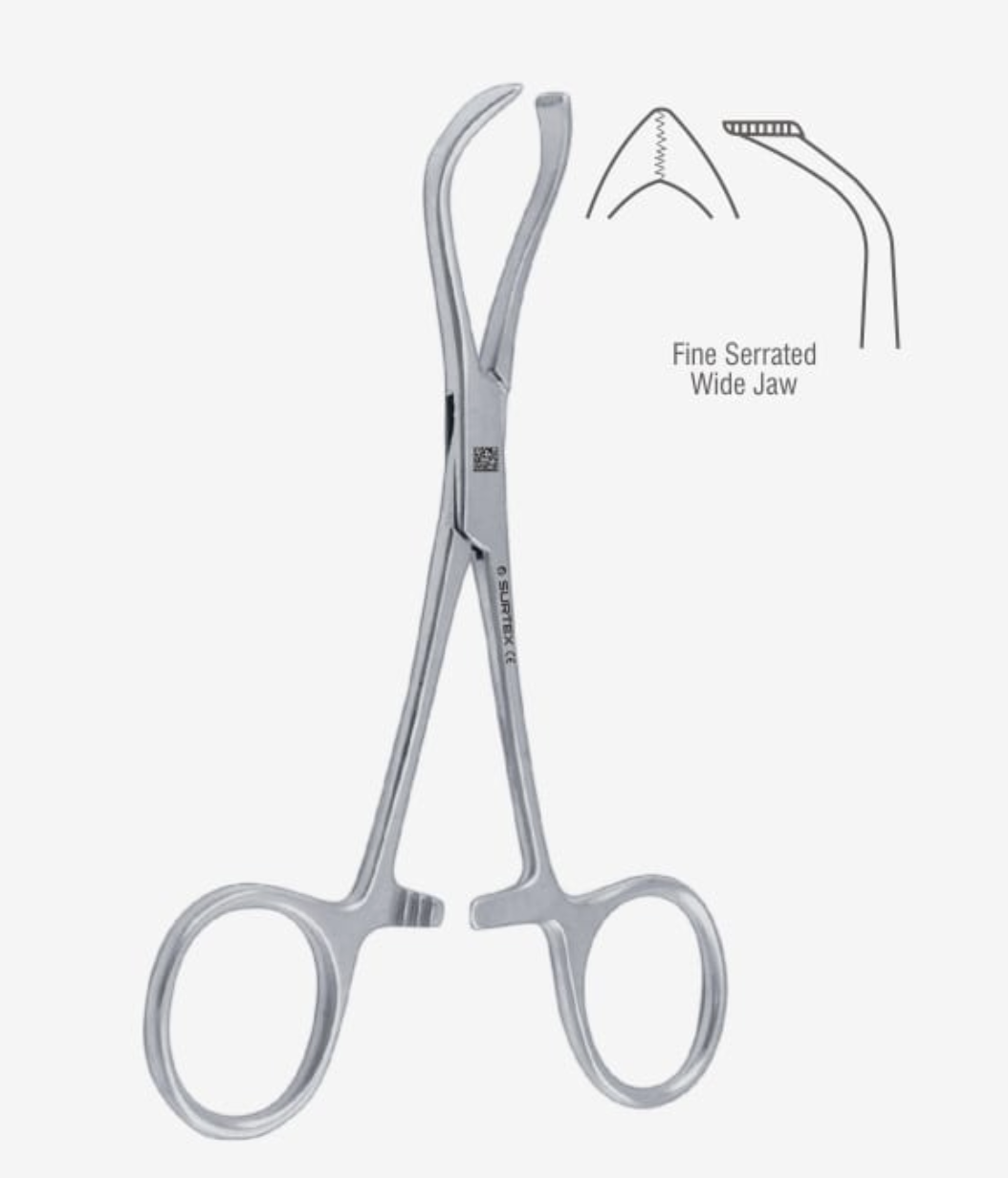
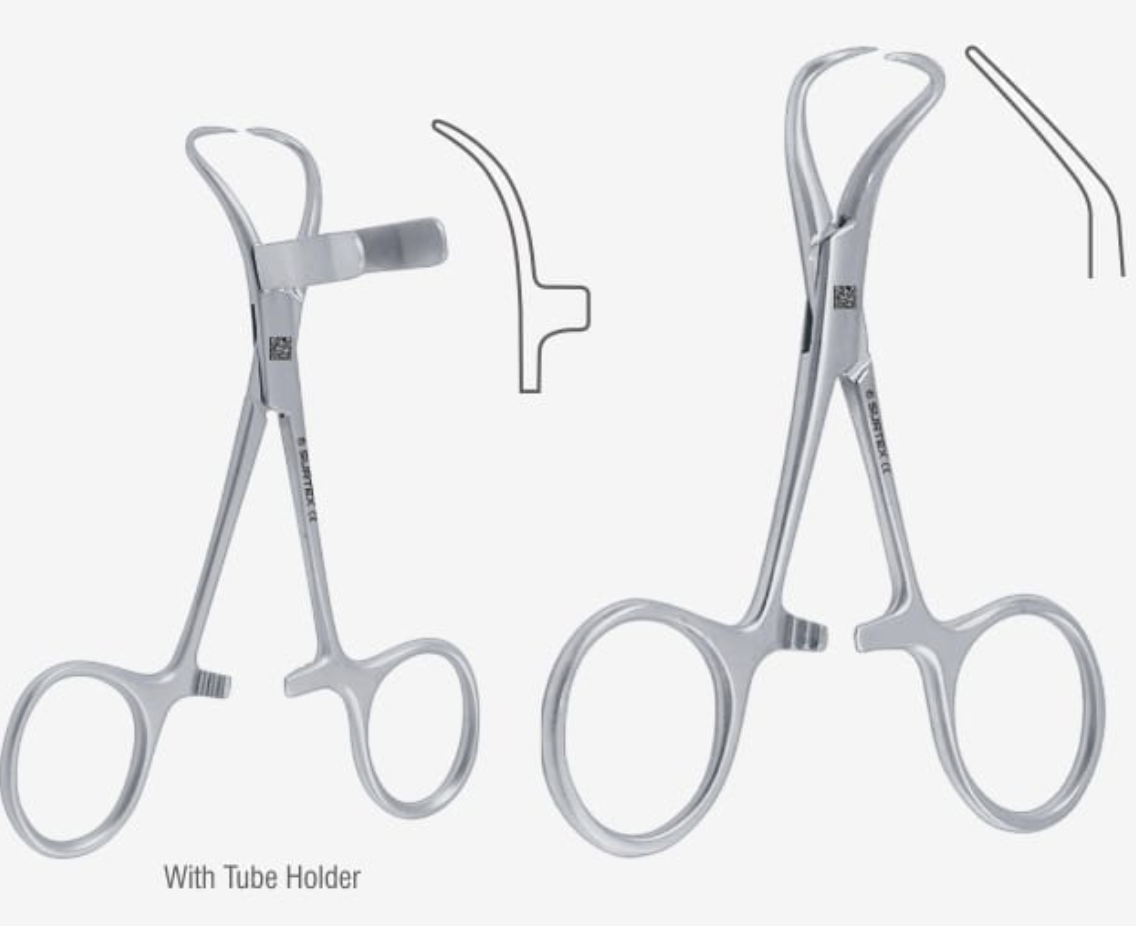
Backhaus Towel Clamp
The clamp has sharp tips that penetrate and can have a ratchet system to be self retaining instrument and it attaches drapes and surgical towels to the patient.
Snook Spay Hook
An instrument with a long shank and a hook at the tip to retrieve and pull up and out the uterine horns for a spay.

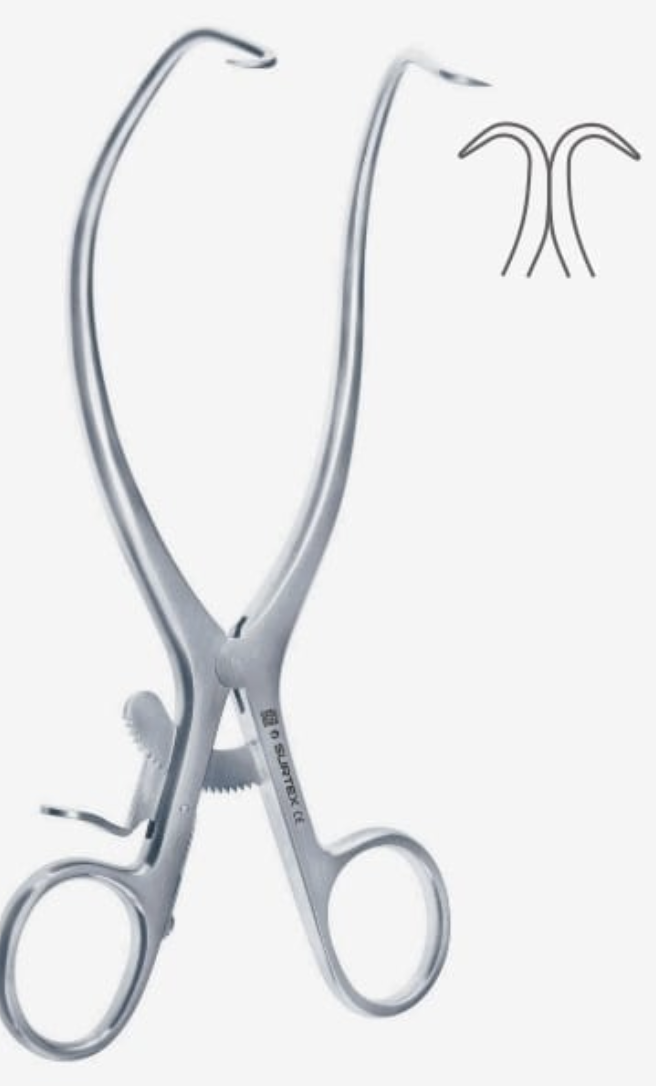
Gelpi Retractor
It has curved arms and sharp tips provide leverage on tissues being retracted, it has a ratchet to make it a self sustaining instrument. It is used to retract muscle.
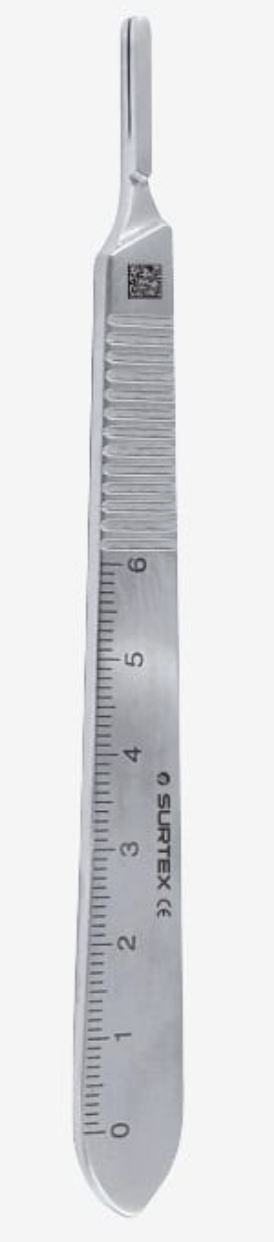
#3 Scalpel Handle
It fits the smaller curved blades (No. 10-15) used as a handle for the small blades for better grip.
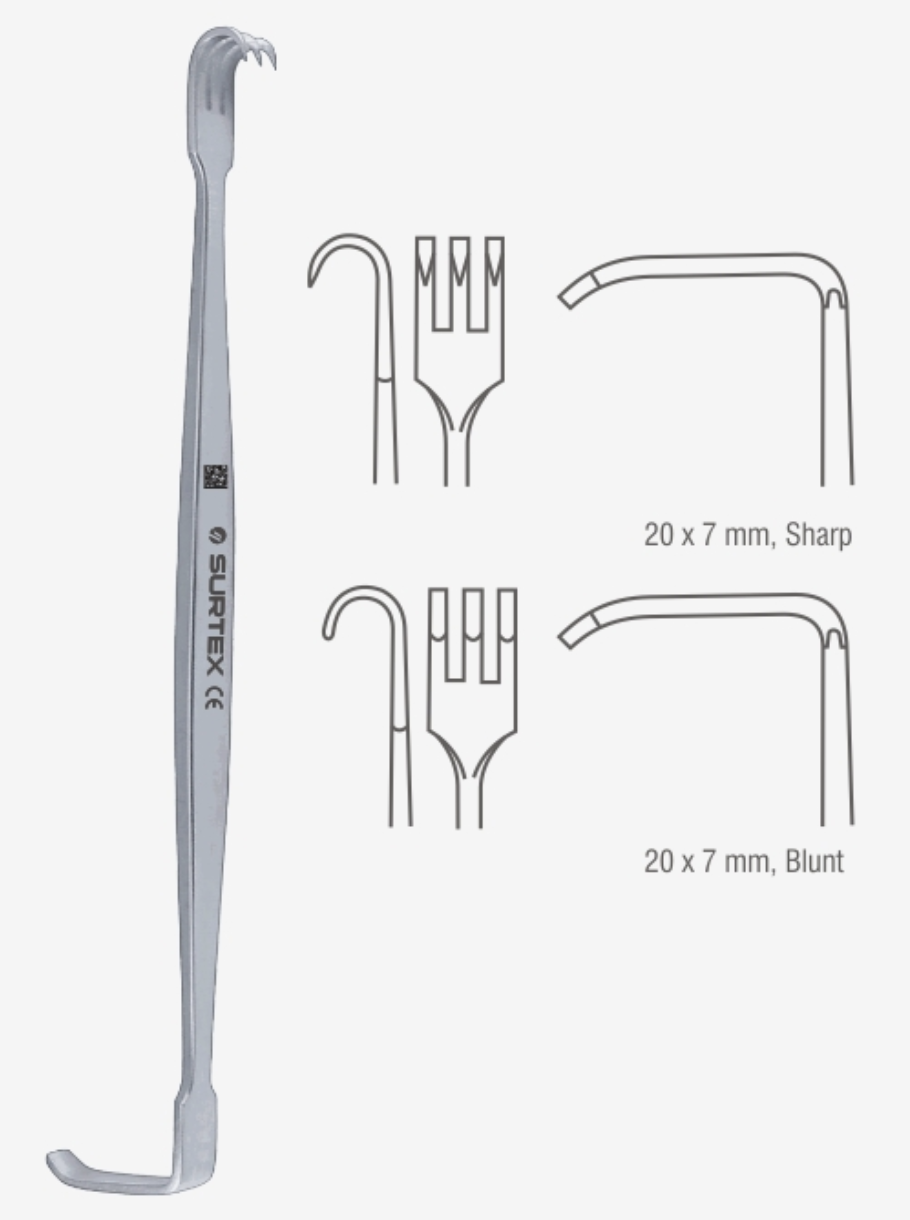
Senn Retractor
It has three blunt or sharp curved prongs and the other end has a large L shaped hook it is used to retract skin, fat and superficial muscles.
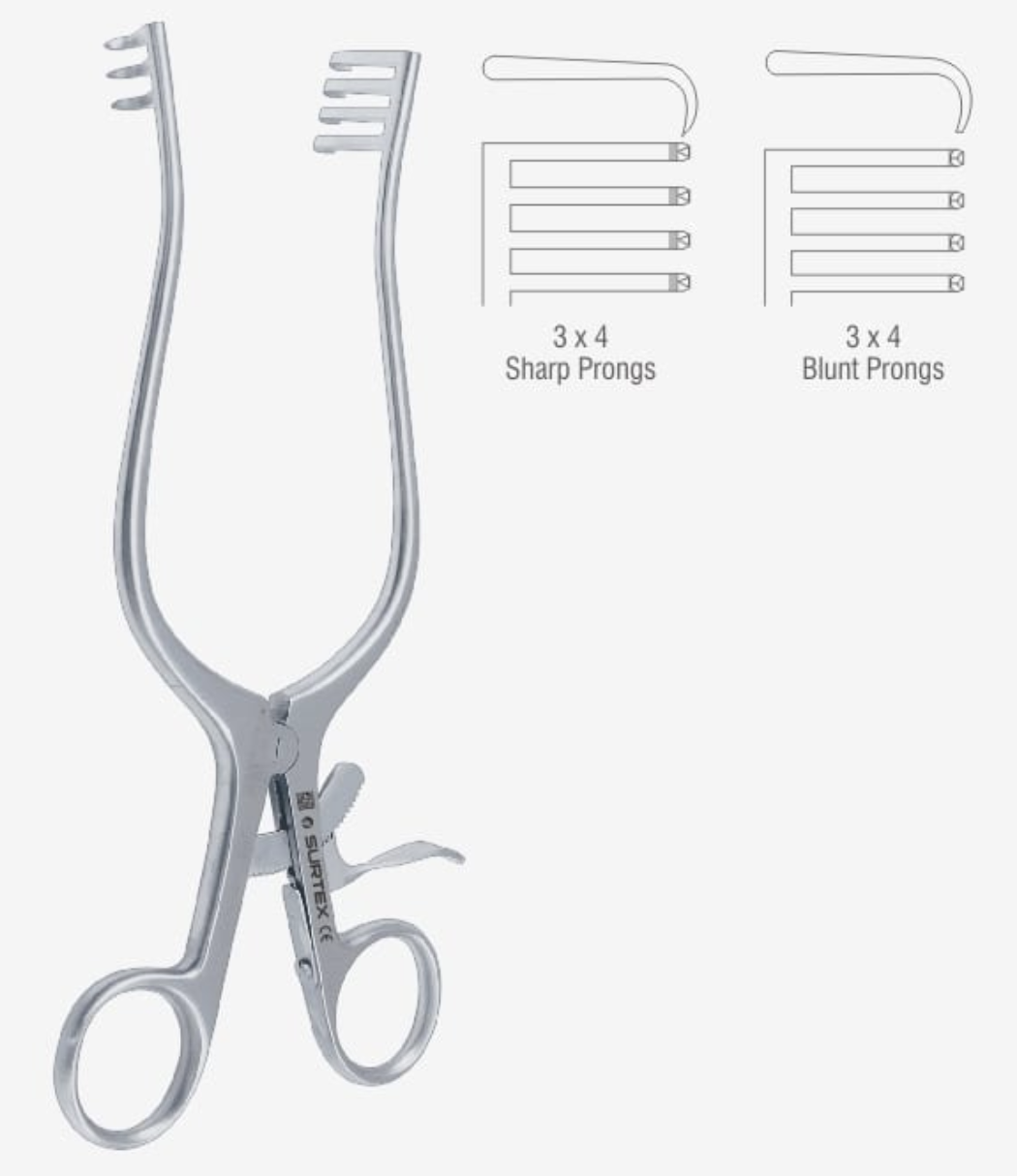
Weitlaner Retractor
It has curved arms similar to the Gelpi Retractor but instead it has sharp or blunt curved prongs, it has a ratchet - self retaining instrument. It is used to retract soft tissues.
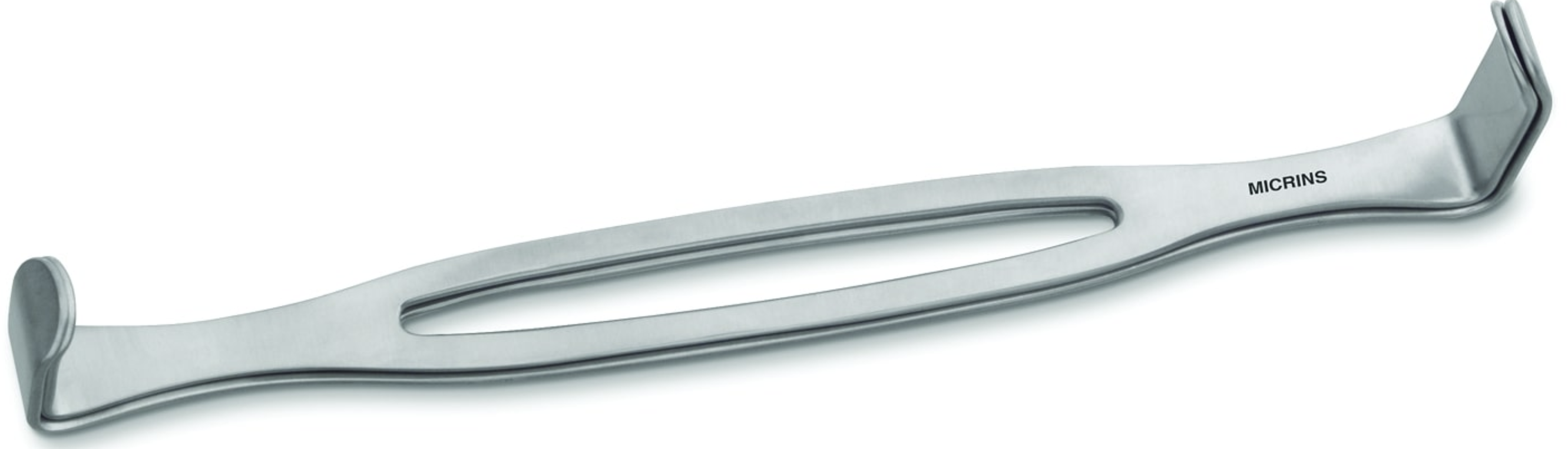
U.S Army Retractor
It is a flat instrument and has a 90° blade at either end. It is typically used to retract skin, fat and muscle
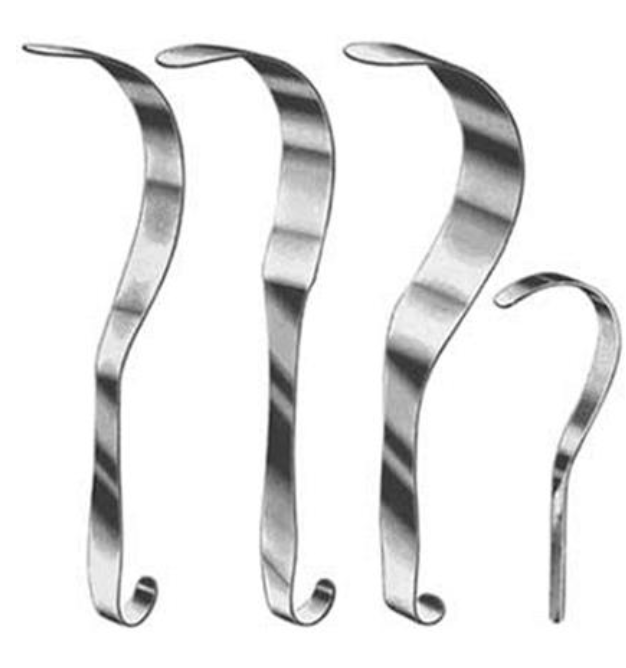
Malleable Retractor
These retractors can be repeatedly bent and curved to fit different angles and depths, typically used to retract deep tissue, organs, or intestines.
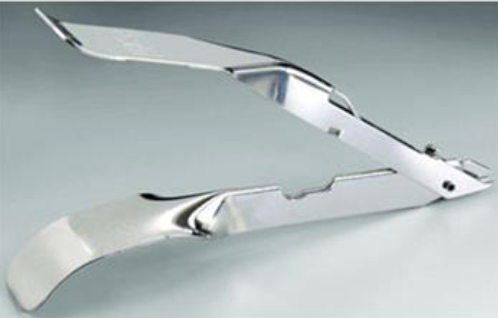
Staple Remover
Designed to take out surgical staples
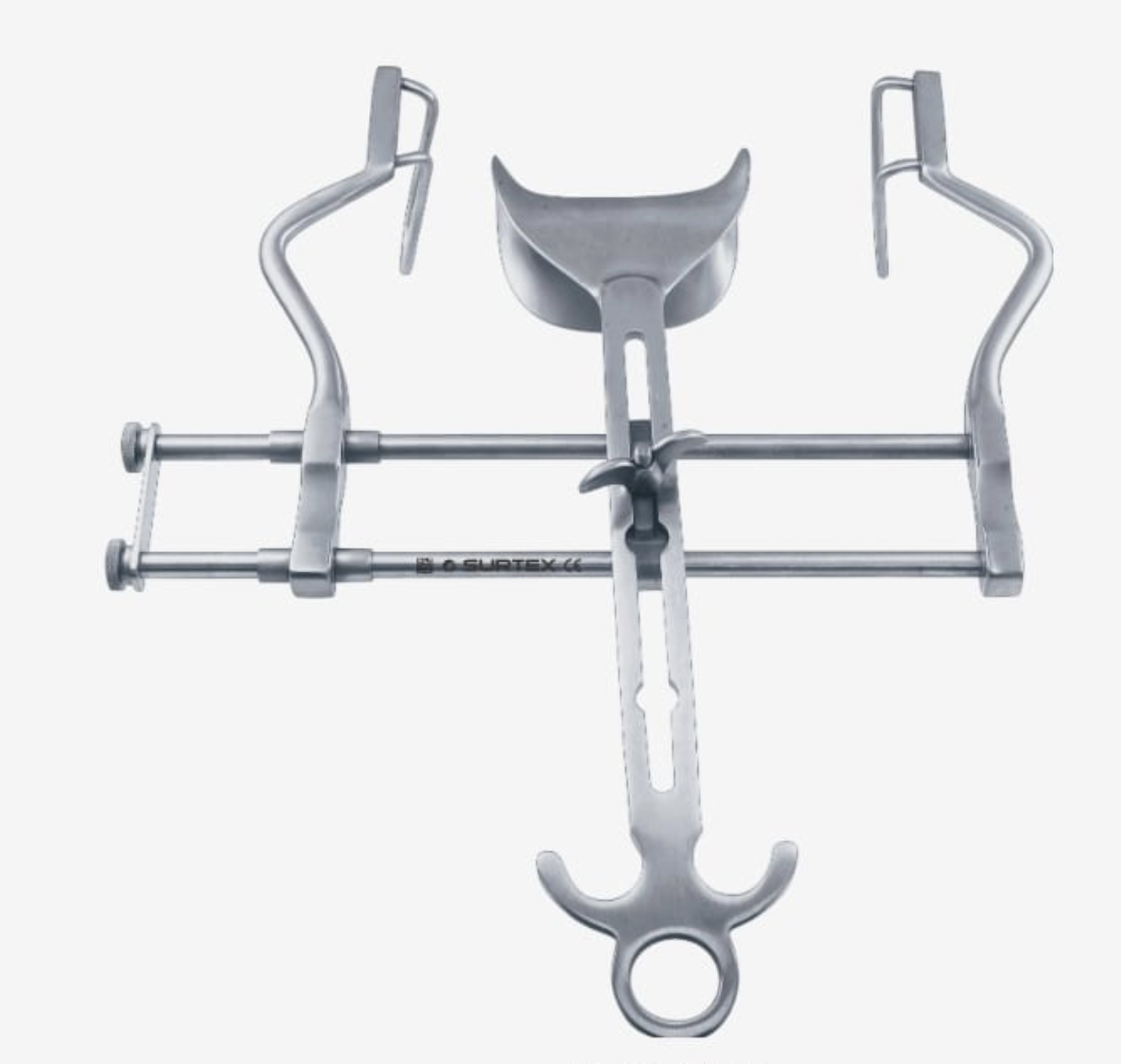
Balfour Retractor
It has two arms to retract laterally but also a third middle arm to retract upwards or downwards and it is used to increase access to abdominal cavity.
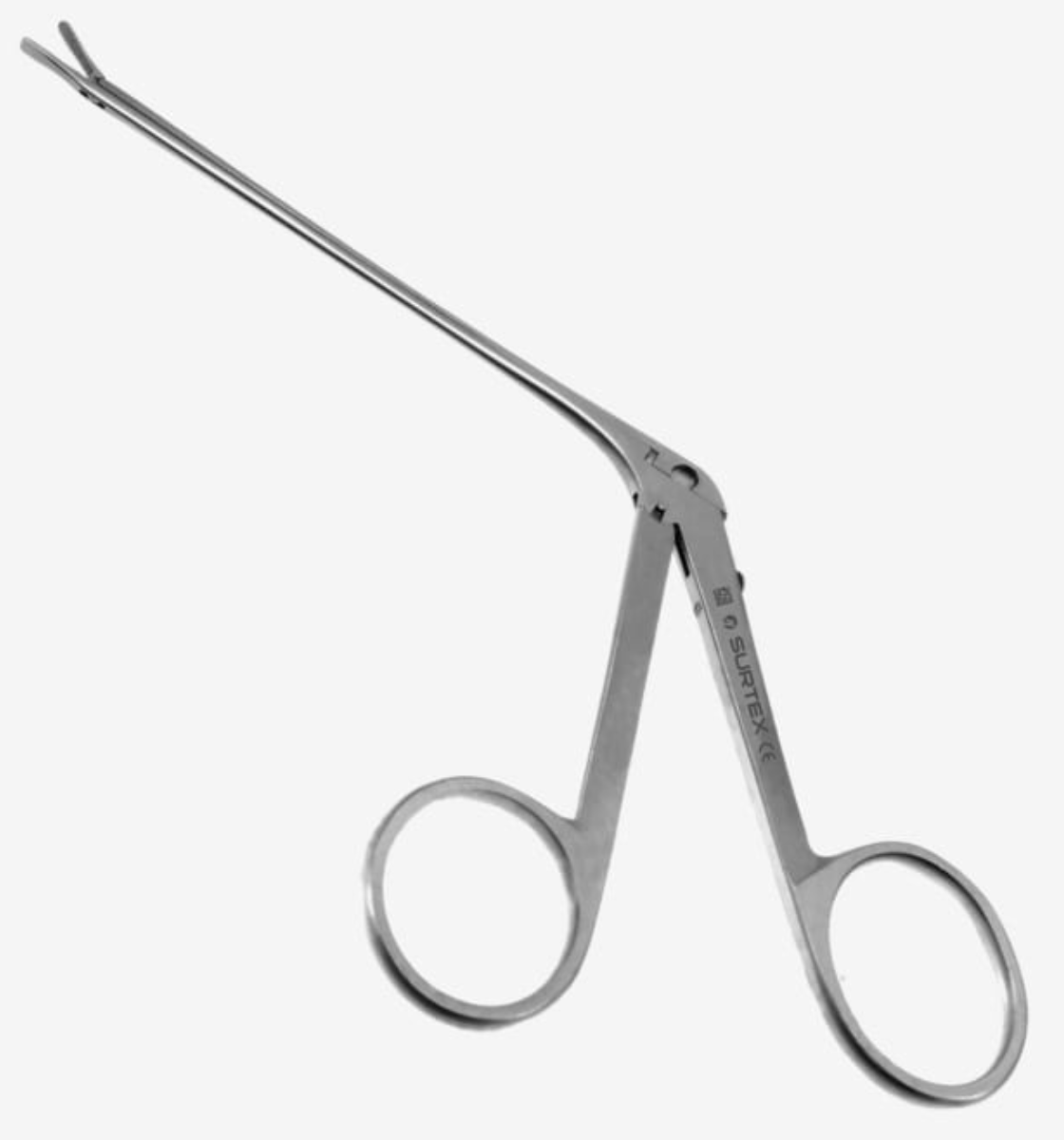
Alligator Forceps
It has a long angled shaft with small jaws and teeth can be used for precise fine maneuvers, typically used for ear, nose, and throat surgeries.
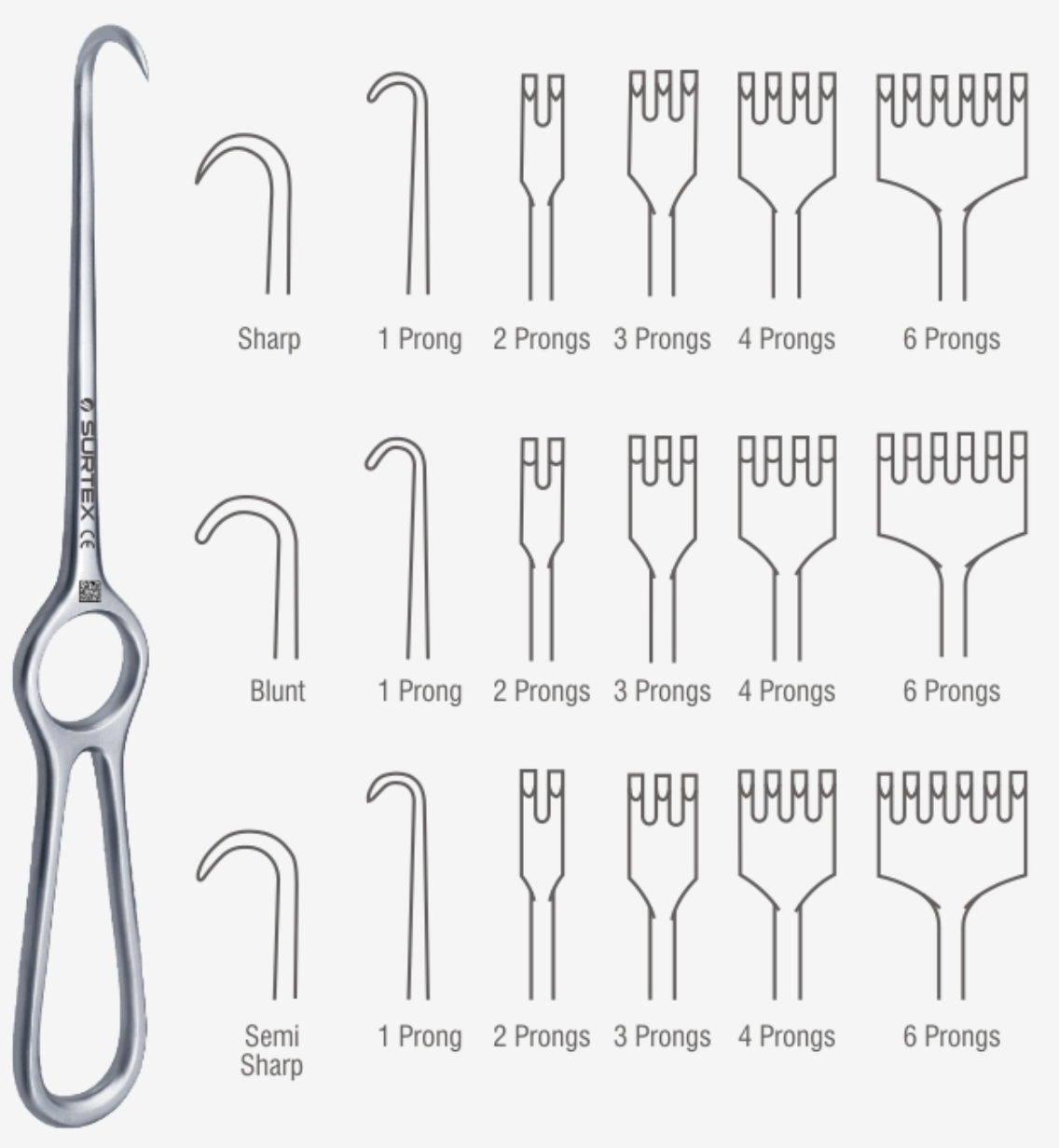
Volkmann Retractor
It has one to eight sharp or blunt curved prongs and it is ideal for retracting superficial tissues like skin, subcutaneous fat, and muscle.
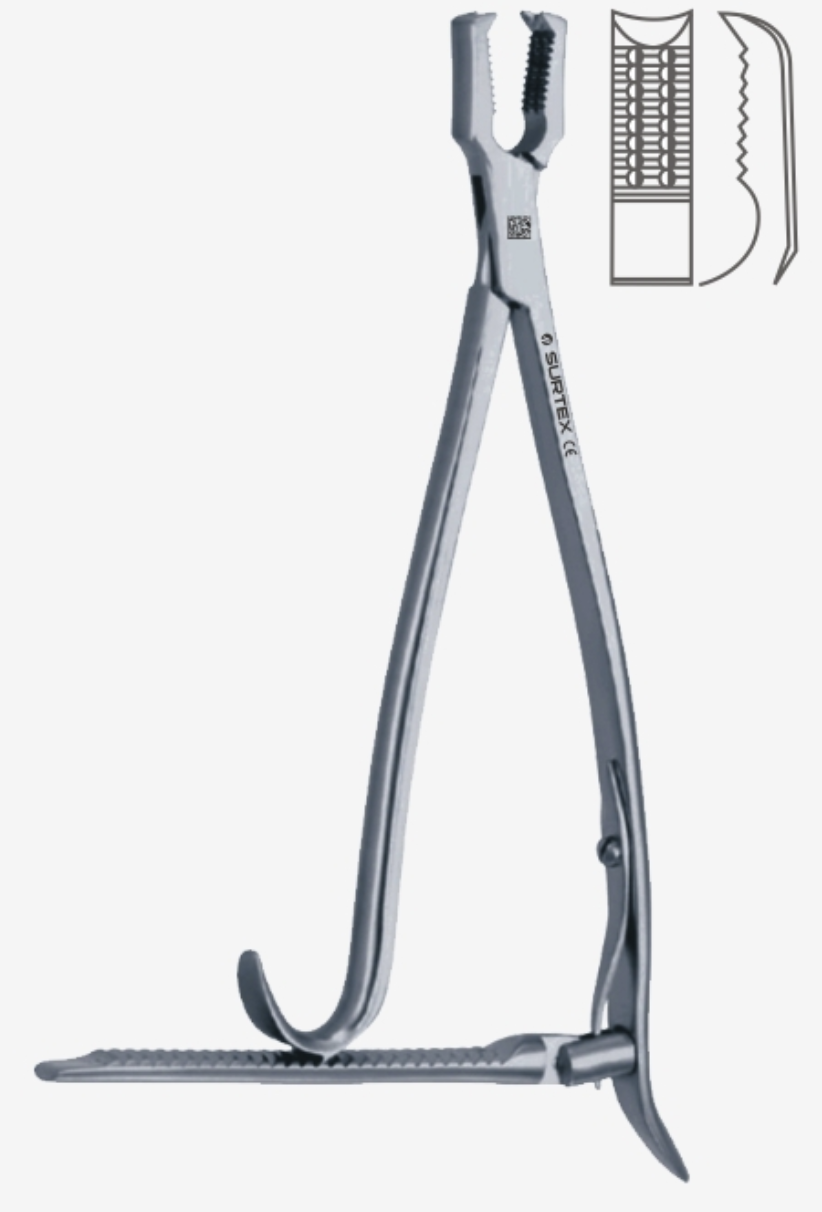
Kerns Bone Holding Forceps
Instrument with serrated bowed jaws used to securely hold and align bone in fracture repair surgeries
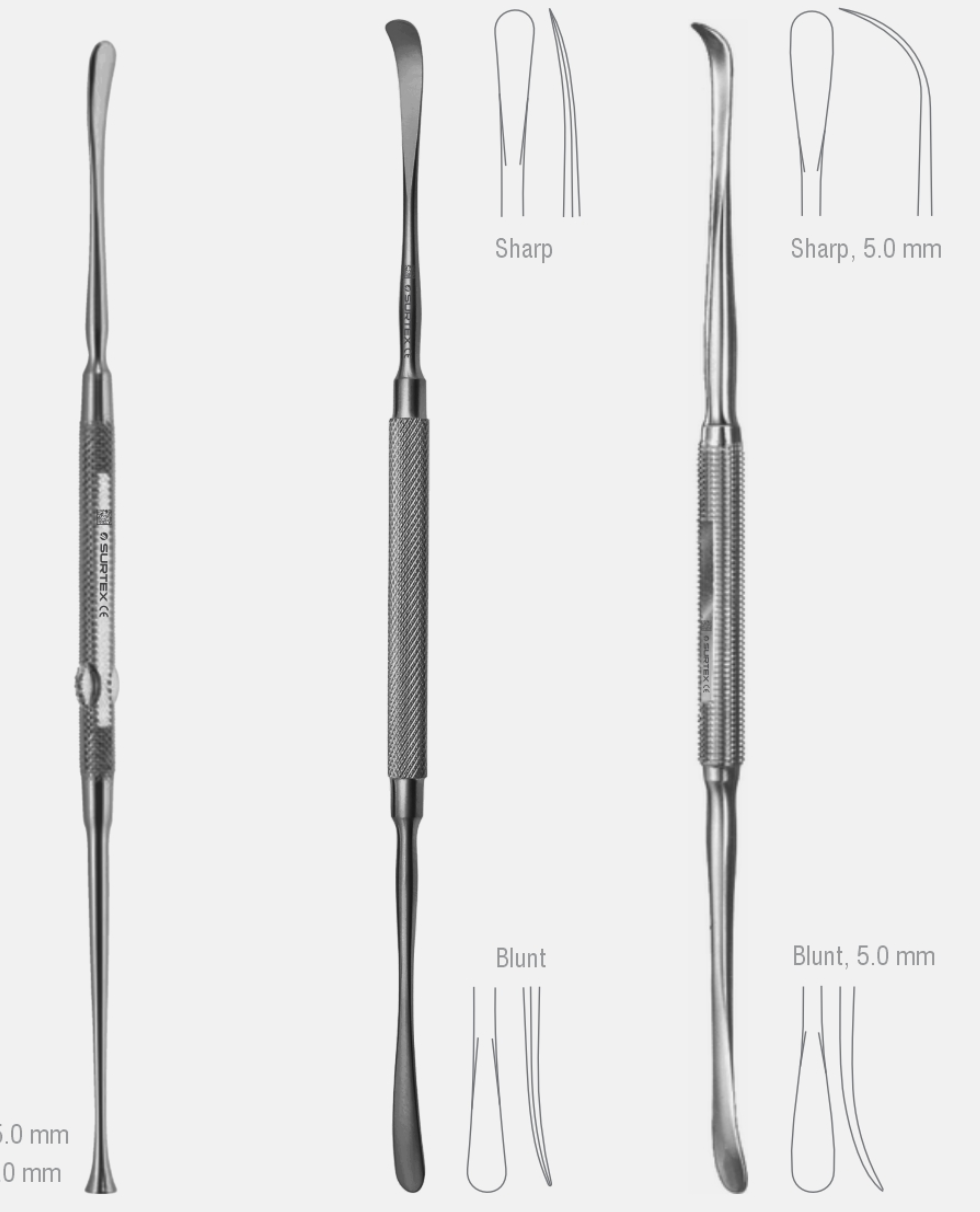
Freer Elevator
It is a double ended elevator used to elevate the bone or elevate the periosteum from the bone.
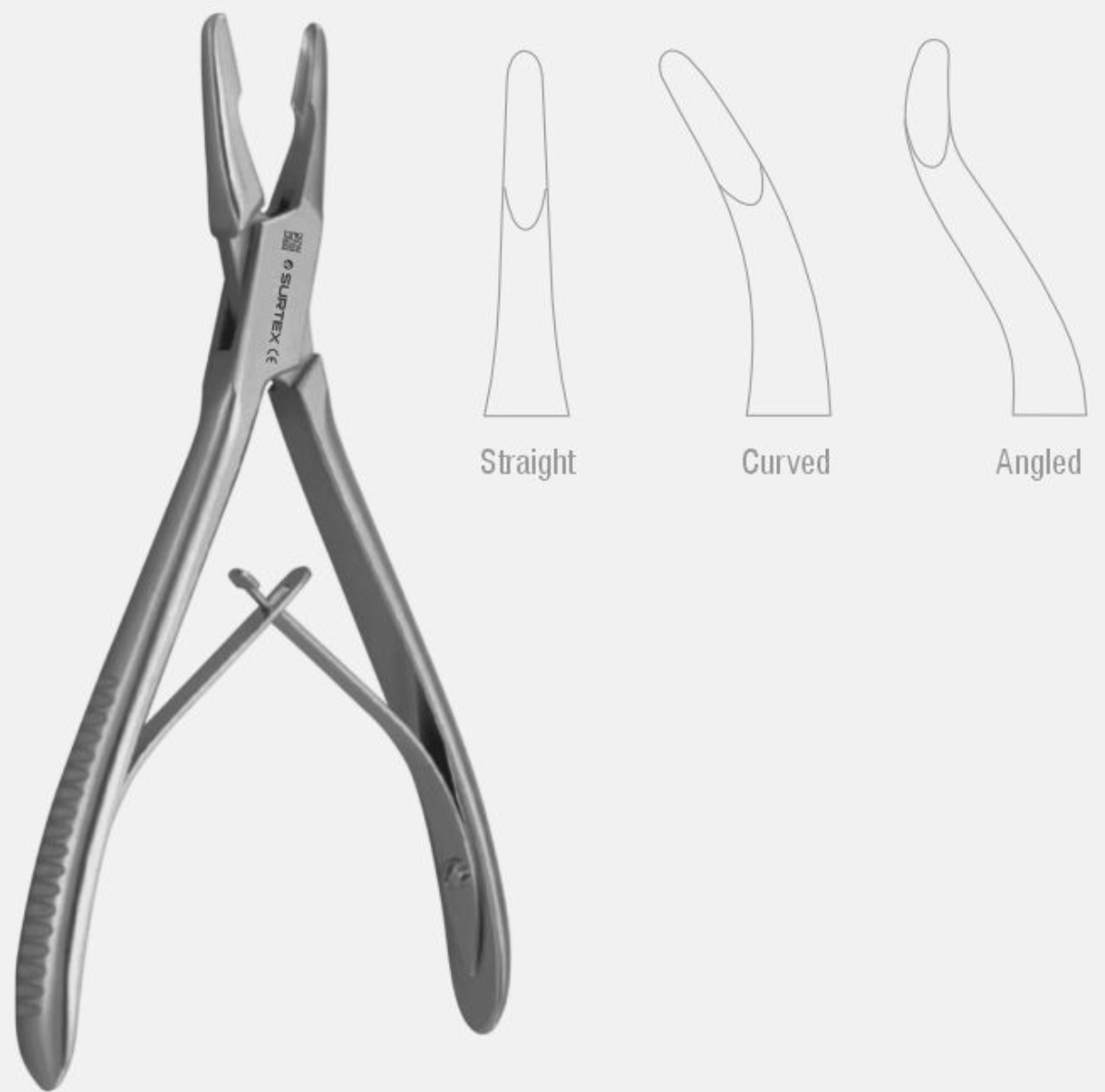
Bone Rongeur
Heavyweight plier like instrument with sharp edge, scoop shaped tip used to gouge out and cut bone fragments. Used to access surgical sites and reshape bone
Biopsy Punch
A circular hollow blade used to remove small full thickness sample of skin for diagnostic testing